
NHTSA ID Number: 10253675
Manufacturer Communication Number: OwnersH
TSB/Document Date: 2024-04-29
Summary
Tesla does not provide physical owner's manual copies. Instead, all available owner?s manual content is integrated into the vehicle software, and only the content relevant for a given vehicle, based on vehicle configuration and software version installed, is displayed on its touchscreen. This file contains all available owner?s manual content for 2021-2024 Model X vehicles converted to PDF format, and given the distribution method and NHTSA?s submission format requirements, it is the best available representative copy of owner?s manual content. However, a customer who accesses the owner?s manual via their vehicle?s touchscreen would only see the parts of this PDF file that are relevant to their vehicle.
If driving in cold temperatures or on roads where snow or ice may be present, Tesla recommends using winter tires.
WARNING: In cold temperatures or on snow or ice, summer and all-season tires do not provide adequate
traction. Selecting and installing the appropriate tires for winter conditions is important to ensure the safety
and optimum performance of your Cybertruck.
All-Terrain Tires
Use all-terrain tires if you regularly drive on gravel and dirt roads. All-terrain tires are suitable for driving on both
paved roads (city streets, highways, etc.) as well as off-road (sand, dirt, mud, etc.). All-terrain tires must be the same
diameter, brand, construction and tread pattern on all four wheels.
When driving with all-terrain tires, you may experience more road noise, shorter tread life, and less traction on dry
roads.
Winter Tires
Use winter tires to increase traction in snowy or icy conditions. When installing winter tires, always install a complete
set of four tires at the same time. Winter tires must be the same diameter, brand, construction and tread pattern on
all four wheels.
Winter tires can be identified by a mountain/snowflake symbol on the tire's sidewall.
When driving with winter tires, you may experience more road noise and shorter tread life.
Draft comment: lis
Per Devika Chaudhuri, tire config not available for SOP, just Wheel Configuration.
NOTE: If you replace your tires, reset the tire configuration by navigating to Controls > Service > Wheel & Tire
Configuration > Tires (see #unique_527 on page ). This resets the learned tire settings and improves the driving
experience on your new tires.
Driving in Low Temperatures
Tire performance is reduced in low ambient temperatures, resulting in reduced grip and an increased susceptibility
to damage from impacts. Performance tires (summer applications) have reduced traction in ambient temperatures
below 5° C40° F (5° C), and are not recommended in snow/ice conditions. Performance tires can temporarily harden
when cold, causing you to hear rotational noise for the first few miles (kilometers) until the tires warm up.
Tire Chains
Only use tire chains on the REAR tires.
Tesla has tested and approved the following tire chains to increase traction in snowy conditions. Install tire chains on
rear tires only. The approved tire chains can be purchased from Tesla.
CAUTION: You must remove wheel covers before installing tire chains. Failure to do so can cause damage not
covered by the warranty.
Tire Size
Recommended Chain
20"
Konig XD-16 Pro Size 285
247
Owner's Manual
Maintenance
When installing tire chains, follow the instructions and warnings provided by the tire chain manufacturer. Mount
them evenly and as tight as possible.
When using tire chains:
• Inspect the tire chains for loose fittings and damaged links before each use.
• Set air suspension to Medium and turn off the Preferred Ride Height to Low setting (see Suspension on page
122).
• Avoid heavily loading Cybertruck (heavy loads can reduce the clearance between the tires and the body).
• Do not drive the vehicle without the chains properly installed.
• Drive slowly. Do not exceed 30 mph (48 km/h).
• Remove the tire chains as soon as conditions allow.
NOTE: Tire chains are prohibited in some jurisdictions. Check local laws before installing tire chains.
CAUTION: Using non-recommended tire chains, or using tire chains on other sized tires can damage the
suspension, body, wheels, and/or brake lines. Damage caused by using non-recommended tire chains, or
incorrectly installing tire chains, is not covered by the warranty.
CAUTION: Never deflate your tires to put on tire chains. When re-inflated, the chains might fit too tightly and
cause tire damage.
CAUTION: Install tire chains on rear tires only. Installing chains on front tires can cause damage.
CAUTION: Ensure that the tire chains cannot touch suspension components or brake lines. If you hear the
chains making unusual noises that would indicate contact with Cybertruck, stop and investigate immediately.
Removing and Installing Wheel Covers
Draft comment: btrimboli
If you make any updates to this topic, make the same updates to the DIY Guide: #unique_529 on page
If your Cybertruck is equipped with wheel covers, you must remove them to access the valve stem and the lug nuts.
To remove a wheel cover:
1. Grasp the cover firmly with both hands.
2. Pull the cover toward you to release the retaining clips.
Owner's Manual
248
Maintenance
NOTE: Make sure the mounting ring is removed with the wheel cover.
To install a wheel cover:
1. Separate the mounting ring from the wheel cover by pulling the platic ring from the inside of the wheel cover.
249
Owner's Manual
Maintenance
2. Align the mounting ring with the spokes of the wheel. Firmly press the mounting ring into the wheel to secure it.
Owner's Manual
250
Maintenance
3. Align the wheel cover with the design of the tire.
4. Firmly press the center of the cover to secure it in place, then work your way out to firmly pressing the outer
perimeter of each spoke. You may need to hold the opposite side of the cover until all spokes are secured.
5. Firmly press the center of the cap with your hands (do not hit the cover with your hands) to ensure it is secured.
6. As a final check, quickly pull each spoke to confirm it is secured in place.
CAUTION: To prevent the wheel cover from falling off, ensure that it is fully secured before driving.
251
Owner's Manual
Maintenance
Wheel and Tire Specifications
Wheel Specifications (Factory)
Configuration - Location
Size (in)
Offset (mm)
Dual Motor - Front and Rear
20 x 9.0J
ET58.5
Tri Motor - Front and Rear
20 x 9.0J
ET58.5
Lug Nut Torque
151 lb. ft (205 Nm)
Lug Nut Socket Size
21 mm
NOTE: For instructions on how to jack/lift Cybertruck, see Jacking and Lifting on page 263.
Tire Specifications (Factory)
Location
Size/Purpose
Name
Design
Type
Front and Rear
20" All Season
Pirelli Scorpion ATR
Hard Metric
285/65R20
Front and Rear
20" All Terrain
Goodyear Wrangler
Territory RT
Light Truck
LT285/65R20
Refer to the tire pressures printed on the Tire and Loading Information label. This label is located on the center
door pillar and is visible when the driver's door is open (also see Checking and Adjusting Tire Pressures on page
243).
Winter tires can be purchased from a Tesla service center or may be available for purchase on the Tesla web site.
WARNING: Do not use tires with a load carrying capacity that is lower than the original tires. Doing so can
reduce the maximum GVWR (Gross Vehicle Weight Rating) and GAWR (Gross Axle Weight Rating) as printed
on the door pillar (Weights - Vehicle on page 280). Conversely, replacement tires with a higher load capacity
do not increase the GVWR and GAWR.
Owner's Manual
252
Maintenance
Understanding Tire Markings
Laws require tire manufacturers to place standardized information on the sidewall of all tires. This information
identifies and describes the fundamental characteristics of the tire. It also provides the tire identification number
(TIN) for certification of safety standards, and in case of a recall.
NOTE: You can identify a Tesla-approved tire by the "T-mark" specification on the tire's sidewall (for example, T0, T1,
T2).Tesla-approved tires are designed to work with your vehicle and optimize performance, safety, reliability, and
durability. For more information about Tesla-approved replacement tires, refer to the Service Manual.
1. Tire category: P (passenger), LT (light truck), or None (hard metric) indicates the tire classification and
corresponding load classification.
2. Tire width: This 3-digit number is the width (in millimeters) of the tire from sidewall edge to sidewall edge.
3. Aspect ratio: This 2-digit number is the sidewall height as a percentage of the tread width. So, if the tread width
is 205 mm, and the aspect ratio is 50, the sidewall height is 102 mm.
4. Tire construction: R indicates that the tire is of Radial ply construction.
5. Wheel diameter: This 2-digit number is the diameter of the wheel rim in inches.
6. Load index: This 2 or 3-digit number is the weight each tire can support. This number is not always shown.
253
Owner's Manual
Maintenance
7. Speed rating: When stated, indicates the maximum speed (in mph) at which the tire can be used for extended
periods. Q=99 mph (160 km/h), R=106 mph (170 km/h), S=112 mph (180 km/h), T=118 mph (190 km/h), U=124 mph
(200 km/h), H=130 mph (210 km/h), V=149 mph (240 km/h), W=168 mph (270 km/h), Y=186 mph (300 km/h),
(Y)=vehicle's top speed (exceeds the "Y" rating).
8. Load range: Shown as Standard Load (SL) or Extra Load (XL), the load range determines how much weight your
tires can support at a specified tire pressure. When replacing tires, only use tires of the same load range. If towing
with snow tires, ensure they are the same load range of the tires your vehicle came equipped with.
9. Tire composition and materials: The number of plies in both the tread area and the sidewall area indicates how
many layers of rubber coated material make up the structure of the tire. Information is also provided on the type
of materials used.
10. Maximum tire load: The maximum load which can be carried by the tire.
11. Maximum permissible inflation pressure: This pressure should not be used for normal driving.
12. U.S. DOT Tire Identification Number (TIN): Begins with the letters DOT and indicates that the tire meets all
federal standards. The next 2 digits/letters represent the plant code where it was manufactured, and the last 4
digits represent the week and year of manufacture. For example, the number 1712 is used to represent the 17th
week of 2012. The other numbers are marketing codes used at the manufacturer’s discretion. This information can
be used to contact consumers if a tire defect requires a recall.
13. Treadwear grade: This number indicates the tire’s wear rate. The higher the treadwear number is, the longer it
should take for the tread to wear down. A tire rated at 400, for example, lasts twice as long as a tire rated at 200.
14. Traction grade: Indicates a tire’s ability to stop on wet roads. A higher graded tire should allow you to stop your
vehicle in a shorter distance than a tire with a lower grade. Traction is graded from highest to lowest as AA, A, B,
and C.
15. Temperature grade: The tire’s resistance to heat is grade A, B, or C, with A indicating the greatest resistance. This
grading is provided for a correctly inflated tire, which is being used within its speed and loading limits.
Owner's Manual
254
Maintenance
Uniform Tire Quality Grading
The following information relates to the tire grading system developed by the National Highway Traffic Safety
Administration (NHTSA), which grades tires by tread wear, traction and temperature performance. Tires that have
deep tread, and winter tires, are exempt from these marking requirements.
Where applicable, quality grades are found on the tire’s sidewall between the tread shoulder and maximum section
width. For example:
• TREADWEAR 180
• TRACTION AA
• TEMPERATURE A
The quality grades are described next.
NOTE: In addition to the marking requirements, passenger car tires must conform to Federal Safety Requirements.
Treadwear
The treadwear grade is a comparative rating based on the wear rate of the tire when tested under controlled
conditions on a specified government test course.
For example, a tire graded 150 wears one and a half times better on a government test course than a tire graded 100.
The relative performance of tires depends on the actual conditions of their use, however, and can depart significantly
from the norm due to variations in driving habits, service practices, road characteristics, and climate.
Traction
The traction grades, from highest to lowest, are: AA, A, B, and C. These grades represent a tire’s ability to stop on
wet pavement as measured under controlled conditions on test surfaces of asphalt and concrete. A tire marked C
might have poor traction performance.
WARNING: Defective tires are dangerous. Do not drive if a tire is damaged, excessively worn, or is inflated to
an incorrect pressure. The safety of the vehicle and occupants can be adversely affected. Check tires regularly
for wear and to ensure there are no cuts, bulges or exposure of the ply/cord structure.
WARNING: The traction grade assigned to the tire is based on straight-ahead braking tests, and does not
include: acceleration, cornering, hydroplaning or peak traction characteristics.
Temperature
The temperature grades are A (the highest), B, and C, representing the tire’s resistance to the generation of heat and
its ability to dissipate heat when tested under controlled conditions on a specified indoor laboratory test wheel.
Sustained high temperature can cause the tire to degenerate and reduce tire life, and excessive temperature can lead
to sudden tire failure.
The grade C corresponds to the minimum level of performance that all passenger car tires must meet under the
Federal Motor Safety Standard No. 109. Grades B and A represent levels of performance on the laboratory test wheel
that exceed the minimum requirements.
WARNING: A tire’s temperature grade is established for a tire that is properly inflated and not overloaded.
Excessive speed, under-inflation, or excessive loading, either separately or in combination, can cause heat
buildup and possible tire failure.
Tire and Loading Glossaries
General Wheel and Tire Terms
Accessory Weight
255
The combined weight (in excess of those items replaced) of items available as factory
installed equipment.
Owner's Manual
Maintenance
Bead
The inner edge of a tire that is shaped to fit to the rim and form an air tight seal. The
bead is constructed of steel wires which are wrapped, or reinforced, by the ply cords.
Cold Tire Pressure
The air pressure in a tire that has been standing in excess of three hours, or driven for less
than one mile.
Curb Weight
The weight of a standard vehicle, including any optional equipment fitted, and with the
correct fluid levels.
Gross Vehicle Weight
The maximum permissible weight of a vehicle with driver, passengers, load, luggage, and
equipment.
kPa (kilo pascal)
A metric unit used to measure pressure. One kilo pascal equals approximately 0.145 psi.
Maximum Inflation
Pressure
The maximum pressure to which the tire should be inflated. This pressure is given on the
tire side wall in psi (lbf/in2).
CAUTION: This pressure marked on the tire is the maximum allowed by the tire
manufacturer. It is not the pressure Tesla recommends using for Cybertruck.
Maximum Loaded
Vehicle Weight
The sum of curb weight, accessory weight, vehicle capacity weight, and production
options weight.
Production Options
Weight
The combined weight of options installed which weigh in excess of 3 lb (1.4 kg) more
than the standard items that they replaced, and are not already considered in curb or
accessory weights.
PSI (lbf/in2)
Pounds per square inch (the unit used to measure tire pressure).
Recommended Tire
Inflation Pressure
Tire inflation pressure, established by Tesla, which is based on the type of tires that are
mounted on the vehicle at the factory. This information can be found on the Tire and
Loading Information label located on the door pillar.
Rim
The metal support for a tire, or tire and tube, upon which the tire beads are seated.
Vehicle Capacity
Weight
The number of seats multiplied by 150 lbs (68 kg) plus the rated amount of load/luggage.
Load Carrying Definitions
Normal occupant weight
68 kilograms (150 lbs) times the number of occupants specified in the second column
of the tables for calculating load limits (see the Vehicle Loading topic of this Owner's
Manual).
Occupant distribution
Distribution of occupants in a vehicle.
Passenger car tire
(P or Hard Metric) A tire intended for use on passenger cars, multipurpose passenger
vehicles, and trucks.
Light truck tire
(LT) A tire for use where additional load carrying capability is needed.
Rim diameter
Nominal diameter of the bead seat.
Rim size designation
Rim diameter and width.
Rim type designation
The manufacturing industry's designation for a rim by style or code.
Rim width
Nominal distance between the rim's flanges.
Vehicle maximum load on
the tire
Load on an individual tire that is determined by distributing to each axle its share of
the maximum loaded vehicle weight and dividing by two.
Vehicle normal load on the
tire
Load on an individual tire that is determined by distributing to each axle its share of
the curb weight, accessory weight, and normal occupant weight and dividing by two.
Pneumatic Radial Tire Definitions
Bead separation
Owner's Manual
A breakdown of the bond between components in the bead.
256
Maintenance
Bias ply tire
A pneumatic tire in which the ply cords that extend to the beads are laid at alternate angles
substantially less than 90 degrees to the center line of the tread.
Carcass
The tire structure, except tread and sidewall rubber which, that when inflated, bears the load.
Chunking
The breaking away of pieces of the tread or sidewall.
Cord
The strands forming the plies in the tire.
Cord separation
The parting of cords from adjacent rubber compounds.
Cracking
Any parting within the tread, sidewall, or inner liner of the tire extending to cord material.
Extra load tire
A tire designed to operate at higher loads and higher inflation pressure than the
corresponding standard tire.
Groove
The space between two adjacent tread ribs.
Inner liner
The layer(s) forming the inside surface of a tubeless tire that contains the inflating medium
within the tire.
Inner liner
separation
The parting of the inner liner from cord material in the carcass.
Load rating
The maximum load that a tire is rated to carry for a given inflation pressure.
Maximum load
rating
The load rating for a tire at the maximum permissible inflation pressure for that tire.
Measuring rim
The rim on which a tire is fitted for physical dimension requirements.
Open splice
Any parting at any junction of tread, sidewall, or inner liner that extends to the cord material.
Outer diameter
The overall diameter of an inflated new tire.
Overall width
The linear distance between the exteriors of the sidewalls of an inflated tire, including
elevations due to labeling, decorations, or protective bands or ribs.
Ply
A layer of rubber-coated parallel cords.
Ply separation
A parting of rubber compound between adjacent plies.
Pneumatic tire
A mechanical device made of rubber, chemicals, fabric and steel or other materials, that,
when mounted on an automotive wheel, provides the traction and contains the gas or fluid
that sustains the load.
Radial ply tire
A pneumatic tire in which the ply cords that extend to the beads are laid at substantially 90
degrees to the center line of the tread.
Reinforced tire
A tire designed to operate at higher loads and at higher inflation pressures than the
corresponding standard tire.
Section width
The linear distance between the exteriors of the sidewalls of an inflated tire, excluding
elevations due to labeling, decoration, or protective bands.
Sidewall
The portion of a tire between the tread and bead.
Sidewall separation
The parting of the rubber compound from the cord material in the sidewall.
Snow tire
A tire that attains a traction index equal to or greater than 110, compared to the ASTM
E1136-93 (re-approved 2003, incorporated by reference, see §571.5) Standard Reference Test
Tire when using the snow traction test as described in ASTM F1805-00 (incorporated by
reference, see §571.5), and that is marked with an Alpine Symbol specified in S5.5(i) on at
least one sidewall.
Test rim
The rim on which a tire is fitted for testing, and may be any rim listed as appropriate for use
with that tire.
Tread
The portion of a tire that comes into contact with the road.
Tread rib
A tread section running around the circumference of a tire.
Tread separation
The pulling away of the tread from the tire carcass.
257
Owner's Manual
Maintenance
Tread wear
indicators (TWI)
The projections within the principal grooves designed to give a visual indication of the
degrees of wear of the tread.
Wheel-holding
fixture
The fixture used to hold the wheel and tire assembly securely during testing.
Owner's Manual
258
Maintenance
Windshield Wiper Blade, Jets and Fluid
Topping Up Windshield Washer Fluid
Draft comment: btrimboli
If you make any updates to this section, make the same updates to the DIY Guide: #unique_539 on page
The only reservoir into which you can add fluid is the windshield washer fluid reservoir, which is located behind the
powered frunk liner. When the level is low, a message displays on the touchscreen.
To top up the washer fluid:
1. Open the powered frunk.
2. Use a microfiber cloth to clean around the filler cap before opening it to prevent dirt from entering the reservoir.
3. Open the filler cap.
4. While avoiding spilling, fill the reservoir until the fluid level is visible just below the filler neck. The reservoir has a
total capacity of 4.2 liters.
5. Wipe up any spills immediately and wash the affected area with water.
6. Close the filler cap.
CAUTION: Some national or local regulations restrict the use of Volatile Organic Compounds (VOCs). VOCs are
commonly used as freeze protection in washer fluid. Use a washer fluid with limited VOC content only if it
provides adequate freeze resistance for all climates in which you drive Cybertruck.
CAUTION: Use only ethanol-based windshield washer fluid meant for automotive vehicles. Using other
substances, such as untreated water, can result in bacterial growth within the climate control system resulting
in odor or potential damage that is not covered by warranty. Untreated pure water expands to ice when
freezing, which may result in damage.
259
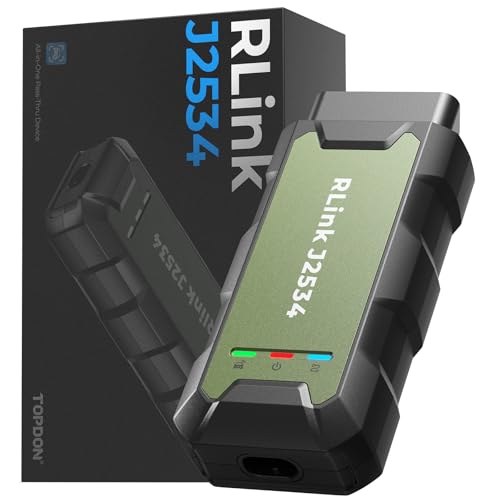
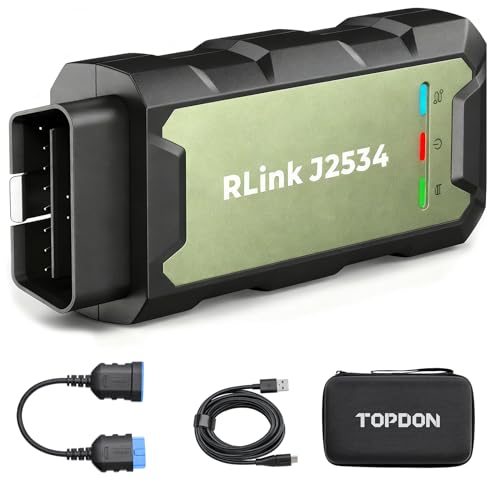
- Advanced VCI Box, Industry-leading J2534 Pass-Thru...
- High-Speed OEM-Level Diagnostics & Programming: Unlock true...
- Coverage for 17 Car Brands & Ultra Reliability: Works...
- User-Friendly RLink Platform & Expert Support: TOPDON’s...
- 6.6 ft USB-C Cable & Portable Storage Case: The RLink J...
Last update on 2026-06-23 / Affiliate links / Images from Amazon Product Advertising API
If the PDF is very large, it may not load in the preview below.
Some older TSBs had multiple PDFs — visit the NHTSA Website to view all PDFs.
If the TSB PDF does not show, download or view it on the NHTSA Website.
Click on the (+) Plus Sign
Then Click on Associated Document(s)
Search NHTSA Database for Recalls
Search NHTSA Database for Vehicle Investigations
View Latest Vehicle Investigations
Search NHTSA Database for Vehicle Complaints
View Latest Vehicle Complaints
TSB/Document ID: OwnersH
Replacement Service Bulletin Number:
MFR Communication Date: 2024-03-30
MFR Internal Campaign ID/Software Version:
Communication Type: Service Bulletin/Repair Instructions
NHTSA Components: EQUIPMENT
MFR Component System:
MFR Component Subsystem:
Previous TSB | Next TSB |
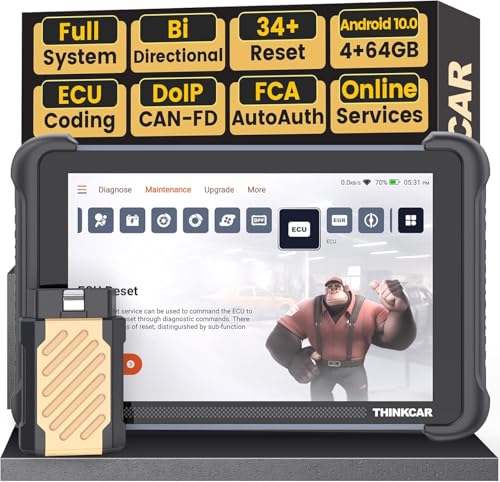
- [Notice] When you receive a used device, it may be a customer return resold by Amazon without inspection. You can exchange it for a new one through Amazon. As this situation is unavoidable, we sincerely apologize. For any issues, contacting us via Amazon's "Messages" is the best way. THINKSCAN 689BT Bidirectional Scan Tool Can Be Used Immediately After It is Turned On, Without Complicated Registration Process, Which is More Convenient & Quick.
- Full Bi-Directional Control & 3000+ Active Tests: Take control and test components like actuators, fuel injectors, relays, and cooling fans in real time. You’ll quickly see if the problem is in the part itself or the control module — saving you hours of guesswork and frustrating trial-and-error.
- Advanced ECU Coding Capabilities: Handle module matching and hidden feature activation with confidence. When you replace an ECU or want to customize settings, this obd2 scanner diagnostic bi directional tool gives you the professional-level capabilities you need without the dealership price tag.
- 34+ Useful Reset and Maintenance Functions: Complete everyday service tasks smoothly with a wide range of helpful reset and maintenance functions. Whether you’re keeping up with regular upkeep or tackling a specific job, this scanner makes maintenance simpler and less stressful for both DIYers and pros.
- Comprehensive Full System Diagnostics: Diagnose every major system — Engine, Transmission, ABS
 , SRS, TPMS, and more — all in one place. Finally stop wondering if you’re missing something important; get the full picture and clear codes with ease.
Last update on 2026-07-02 / Affiliate links / Images from Amazon Product Advertising API
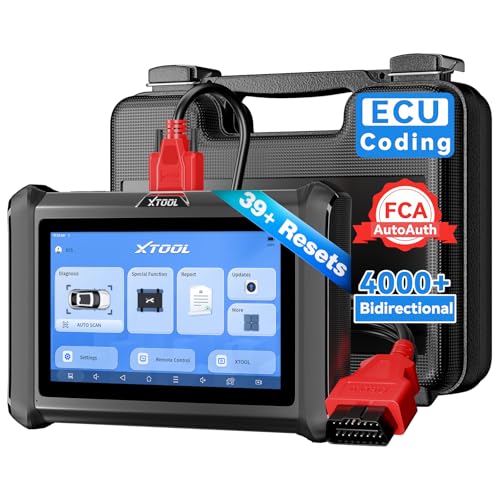
- Top Reasons to Choose the D7S OBD2 Scanner: XTOOL D7S car scan tool, an upgrade of XTOOL D7, offers comprehensive features for automotive technicians, workshops, and DIY enthusiasts 1. Upgraded Hardware: 2+64GB memory, rear camera, intuitive interface, foldable bracket 2. Complete Diagnostics: FCA Autoauth, OE-level all system scan, 39+ maintenance services, 4K+ bidirectional, CANFD/DoIP protocol 3. Advanced Capabilities: ECU c0ding, PMI functions 4. Wide Compatibility: Support 10,000+ models, covering 99% vehicle brands 5. Multi-language: Available in 22+ languages, No IP Restrictions 6. 3-Year Updates: Save 300 bucks on software updates for the latest features and optimizations
- 2026 Upgraded D7S Car Scanner Features: The newly 2026 D7S V2.0 scanner for car brings exciting features for advanced vehicle diagnostics and enhanced user experience 1. FCA AutoAuth: Now supports FCA SGW module for Chrysler, for Jeep, for Dodge (2018+), for Fiat (2017+), enabling faster vehicle communication without gateway restrictions 2. PMI (Offline ECU Pr0gramming): Allows for Ford, for Lincoln, and for Mazda ECU pr0gramming for new modules 3. Optimized Diagnostic Report 2.0: Personalized reports with logos and customer info for auto shops. Note: Compatibility varies by cars, please check before order
- 39+ Services/Resets/Adaptations/Relearns/Calibrations: XTOOL D7S full system car scanner diagnostic tool tackles 99% of common car issues through its 36+ special functions, including Oil Reset, EPB, SAS, BMS, Throttle Reset, Injector C0ding, ABS Bleed, TPMS Reset, Power Balance, etc and also covers specific-vehicle functions like Crank Sensor Relearn, ABS Initialization, Cylinder Power Balance, Fuel Trim Reset, Idle Relearn etc. This car diagnostic scanner enhances efficiency, making repairs and maintenance hassle-free. Tip: DO NOT for All vehicles, please check compatibility first
- Cost-effective ECU C0ding Scan Tool for Specific Brands: Enhance your vehicle's performance with XTOOL D7S! This obd2 scanner all systems bidirectional offers advanced capabilities at an affordable price, supports online for BMW, for Benz and offline for BENZ, for MIT, along with PMI functions for Ford, for Mazda, and for Lincoln. Ideal for technicians and DIY enthusiasts, this automotive scanner diagnostic tool optimizes vehicle performance and enhances the driving experience. Note: Not for all cars and modules, please send car VIN to check the compatibility before purchase
- OE All System Diagnostic & 8 Pids Graphing: XTOOL D7S is a comprehensive all system bi directional obd2 scanner that delivers dealer-level diagnostics, completely controlling over your vehicle’s performance and health. This automotive scan tool can read and clear DTCs, view live data and ECU information, retrieve freeze frames, and perform active tests and full obd2 functions. This bi-directional scan tool can can identify your vehicle's make, model, and year information with just one click and show up to 8 PIDs live data with options for CSV viewing, playback, and recording for in-depth analysis. It is easy-to-use for both professionals and beginners, helping pinpoint issues efficiently
Last update on 2026-06-30 / Affiliate links / Images from Amazon Product Advertising API
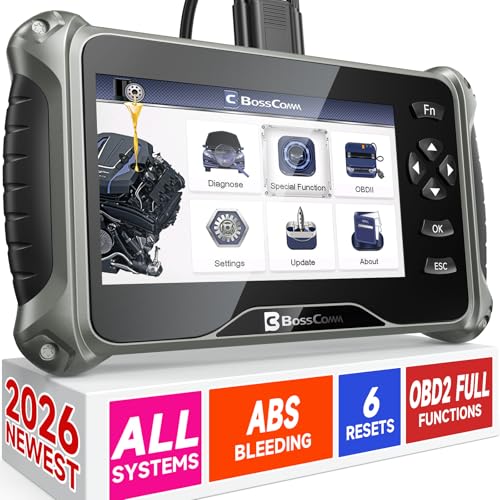
- 【✅Compared to BOSSCOMM IF742, IF745 Offers Full-System Diagnostics】The BOSSCOMM IF745 car diagnostic scanner is an upgraded model of IF742. In addition to supporting all OBD2 Code Reader functions and 6 reset options (ABS/EPB/SAS/BMS/Oil/Throttle), it expands diagnostics from 4 systems (Check Engine/ABS/SRS/Transmission) to vehicle All systems, including Steering, Suspension, and Body Electronics. This provides deeper, more comprehensive diagnostic capabilities.
- 【✨10 OBD2 Functions】The BOSSCOMM IF745 scan tool’s DTC Lookup instantly translates fault codes into user-friendly explanations, its I/M Readiness feature streamlines emissions testing with a single tap, and Freeze Frame lets you pinpoint the exact moment of a fault for in-depth root-cause diagnosis. Combined with a live data dashboard and advanced diagnostics (O2S, OBMon, EVAP), it delivers comprehensive insights for confident troubleshooting.
- 【✨Deep Diagnostics for All Vehicle System Modules】Beyond code reading/clearing and ECU information retrieval, our all-in-one data stream feature lets you inspect all current fault codes and their locations across the vehicle’s systems. This vehicle code reader helps you turn off dashboard warning lights and perform a comprehensive self-check of your car at home—no more back-and-forth trips to the repair shop or hefty inspection fees.
- 【✨6 Essential Resets: ABS Bleeding, Oil, EPB, SAS, Throttle, BMS】The BOSSCOMM IF745 obd2 scanner diagnostic tool swiftly purges air from brake lines to restore braking sensitivity, fine-tunes maintenance cycles to eliminate false alerts, resolves parking brake issues with one-click control, recalibrates steering sensors for stability, optimizes engine idling/acceleration for smoother performance, and deeply resets battery systems to extend lifespan and range via precise parameter adjustments.❗NOTE: Does NOT support bidirectional control, coding, or programming.
- 【✨10,000+ Car Models, AutoVIN, 13 Languages】The BOSSCOMM IF745 vehicle scanner diagnostic tool covers 73+ global car brands and offers support in 13 languages, making it perfect for DIYers, auto mechanics, or as a thoughtful gift. With a single-click AutoVIN feature, it instantly retrieves vehicle serial numbers, streamlining diagnostics for users globally. This adaptable tool balances user-friendliness with precision, catering to both personal and professional requirements.✅Unsure about compatibility? Compatibility will vary on vehicles' model and year, pls reach us via 📧 [email protected] 📧 before purchase.
Last update on 2026-07-02 / Affiliate links / Images from Amazon Product Advertising API
This product presentation was made with AAWP plugin.