
NHTSA ID Number: 10252949
Manufacturer Communication Number: developA
TSB/Document Date: 2024-04-08
Summary
Owner's Manual
If the PDF is very large, it may not load in the preview below.
Some older TSBs had multiple PDFs — visit the NHTSA Website to view all PDFs.
If the TSB PDF does not show, download or view it on the NHTSA Website.
Click on the (+) Plus Sign
Then Click on Associated Document(s)
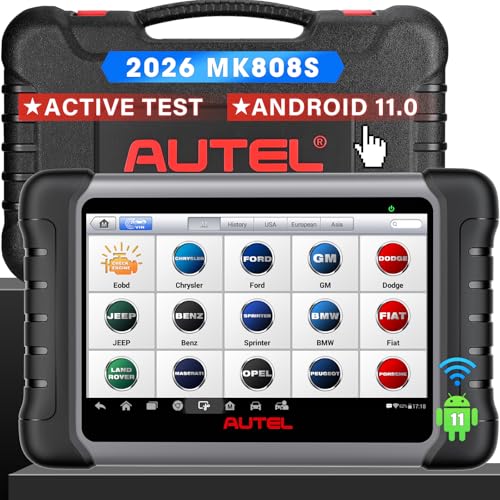
- 💝【Questions? We’re Here Anytime】MK808S is a...
- 🔥🔥🔥【2026 NEWLY RELEASED BI-DIRECTIONAL...
- 【28+ MOST POPULAR RESET SERVICE FOR 150 MAKES】Autel...
- 【ALL SYSTEM DIAGNOSTICS, FACTORY-LEVEL SCANNER】The...
- 【AUT0 SCAN & AUT0V1N, 10X FASTER】How much have you spent...

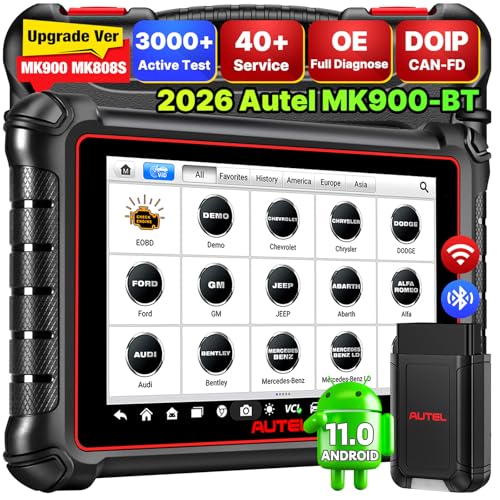
- 💯【Conta.ct us for Support Directly】If you met any...
- 🔥🔥🔥【2026 AUTEL FLAGSHIP MK900BT MK900-BT, NEW...
- 🚗【3000+ ACTIVE TESTS (50➡3000+), SAME AS MS...
- 🚗【40+ HOT SERVICES FOR 150 MAKES (28+➡40+)】Full...
- 🚗【OE ALL SYSTEM DIAGNOSE, AUTO SCAN 2.0: SCAN LICENSE...
This product presentation was made with AAWP plugin.
Search NHTSA Database for Recalls
Search NHTSA Database for Vehicle Investigations
View Latest Vehicle Investigations
Search NHTSA Database for Vehicle Complaints
View Latest Vehicle Complaints
TSB/Document ID: developA
Replacement Service Bulletin Number:
MFR Communication Date: 2024-02-07
MFR Internal Campaign ID/Software Version:
Communication Type: Service Bulletin/Repair Instructions
NHTSA Components: EQUIPMENT:OTHER:OWNERS/SERVICE/OTHER MANUAL
MFR Component System:
MFR Component Subsystem:
Previous TSB | Next TSB |
Owners documentation
Contents
Index....369
Owners Manual
Overview
Exterior
2
Owners Manual
3
Owners Manual
1. Exterior lights (Lights on page 103)
2. Door handles (Using Exterior Door Handles on page 29)
3. Sunroof (optional) (Sunroof on page 35)
4. Charge port (Charging Instructions on page 222)
5. Rear view mirrorForward looking camera (About Autopilot on page 137)Autopilot cameras (About Autopilot on
page 137)
6. Exterior mirrors (Mirrors on page 99)
7. Hood/Front trunk (Front Trunk on page 40)
8. Vehicles equipped with Autopilot hardware only: Radar sensor (hidden from view in the above image) (About
Autopilot on page 137)
9. Wheels and tires (Wheels and Tires on page 273)
10. Rear view camera (Rear Facing Camera(s) on page 136 and About Autopilot on page 137)
11. Rear trunk/liftgate (Rear Trunk on page 36)
12. Ultrasonic sensors (Park Assist on page 124 and About Autopilot on page 137)
4
Owners Manual
Interior Overview
1. Interior door handles (Opening Doors from the Interior on page 30)
2. CruiseAutopilot stalk (Cruise Control on page 120) (Traffic-Aware Cruise Control on page 141 and Autosteer on
page 150)
3. Turn signal stalk (High Beam Headlights on page 104, Turn Signals on page 105, Wipers and Washers on page
107)
4. Steering wheel buttons - left (Using Left Steering Wheel Buttons on page 96)
5. Instrument panel (Instrument Panel on page 13)
6. Steering wheel buttons - right (Using Right Steering Wheel Buttons on page 97)
7. Drive stalk (How to Shift on page 101)
8. Touchscreen (Touchscreen on page 6)
9. Glovebox button (Glovebox on page 43)
10. Cabin climate control vents (Operating Climate Controls on page 195)
11. Power window switches (Opening and Closing on page 33)
12. Exterior mirror adjustment switches (Mirrors on page 99)
13. Seats (Front and Rear Seats on page 44)
14. Steering column adjuster (hidden from view in the above image) (Steering Wheel on page 95)
15. Horn (Horn on page 98)
5
Owners Manual
16. Brake pedal (Braking and Stopping on page 109)
17. Accelerator pedal (Acceleration Modes on page 131) Accelerator pedal (Regenerative Braking on page 110)
18. Hazard warning lights (Hazard Warning Flashers on page 106)
19. Cup holders (Cup Holders on page 44)
Touchscreen
WARNING: Always pay attention to road and traffic conditions when driving. To minimize driver distraction and
ensure the safety of vehicle occupants as well as other road users, avoid using the touchscreen to adjust
settings while the vehicle is in motion.
Use the touchscreen to control many features that, in traditional cars, are controlled using physical buttons (for
example, adjusting the cabin heating and air conditioning, headlights, etc.). You also use the touchscreen to control
media, navigate, use entertainment features, and customize Model S to suit your preferences. For hands-free access
to common touchscreen controls, use voice commands (see Voice Commands on page 22).
If the touchscreen is unresponsive or demonstrates unusual behavior, you can restart it (see Restarting the
Touchscreen or Instrument Panel on page 9).
NOTE: Illustrations are provided to improve conceptual understanding only. Depending on vehicle options, software
version, market region and regional and language settings, the details displayed on the screen will differ.
6
Owners Manual
1. Status bar: Find car controls and status in the top bar (see Top Status Bar Icons on page 8).
2. Navigation: Change the orientation of the map, find or navigate to a destination, and change navigation settings
(see Maps and Navigation on page 205).
3. Controls: Control various features and customize Model S to suit your preferences. The Controls screen appears
over the map. Touch an option on the Controls screen to display the various settings and preferences associated
with the chosen option.
To search for a specific setting, touch Search at the top of the Controls screen. Make changes directly from the
result or touch the link to jump to that option in Controls.
When an information icon displays beside a specific setting, touch it to display a popup that
provides helpful details about the associated setting.
NOTE: Many vehicle controls, settings, and preferences (such as climate, media, and navigation) can be adjusted
hands-free using voice commands (see Voice Commands on page 22).
NOTE: You can send touchscreen feedback to Tesla by long-pressing this icon.
7
Owners Manual
4. Climate controls (driver): Use the left and right arrows to decrease/increase cabin temperature. Touch Split on
the popup to display separate controls for the driver and passenger. Touch the temperature icon to customize
climate control settings (see Operating Climate Controls on page 195).
5. My Apps: For one-touch access to frequently used apps and controls, you can choose what displays here. See
Customizing My Apps on page 8.
6. App Launcher: Touch the app launcher to open the app tray. Then touch any app to open it. The app you choose
displays on top of the map. To close an app, drag it downward.
7. Recent App(s): Displays the most recently used app(s). The number of recent apps displayed here depends on
how many apps have been added to My Apps. If you add the maximum number of apps to My Apps, only the
most recent app displays.
8. Climate controls (passenger): Displays when temperature controls have been Split to provide separate controls
for the driver and passenger.
9. Volume Control: Controls the volume of media player and phone calls (see Volume Controls on page 213). The
volume of navigation instructions is controlled separately (see Maps and Navigation on page 205).
Customizing My Apps
For one-touch access to commonly used apps and controls, you can customize what displays in the My Apps area on
the touchscreen's bottom bar:
1. Enter customization mode by touching and holding any app or control in the My Apps area. If this area is empty,
touch the App Launcher.
2. Drag any app or control from the app tray onto the My Apps area in the bottom bar.
NOTE: Seat heaters selected from the app tray appear next to the temperature, instead of in the My Apps area.
NOTE: When you've added the maximum number of apps or controls to My Apps, adding an additional app removes
the rightmost app.
NOTE: Remove an app or control from the My Apps area by touching and holding, then touching its associated "X".
Top Status Bar Icons
Touch to lock/unlock all doors and trunks.
4:20 pm
Your vehicle automatically updates the time. If the time is incorrect, confirm your vehicle has internet
and GPS connectivity with the latest software.
Displays when a software update is fully downloaded and ready to install. (See Software Updates on
page 234).
Add, configure, or quickly switch driver profiles (including Valet Mode and Easy Entry). See Driver
Profiles on page 132.
Control or program HomeLink devices (if equipped) (see Smart Garage on page 89).
8
Owners Manual
Displays when a notification is in effect. Touch to display information about the notification. To
display a list of the most recent notifications, with the most recent listed first, you can also touch
Service > Notifications.
Connected to a Wi-Fi network.
Connected to cellular network. Touch to connect to Wi-Fi (see Wi-Fi on page 83).
Connect to a Bluetooth device (see Bluetooth on page 84).
Status of the front passenger airbag (see Airbags on page 72).
Restarting the Touchscreen or Instrument Panel
You can restart your touchscreen if it is unresponsive or demonstrates unusual behavior.
NOTE: To ensure the safety of occupants as well as other road users, restart the touchscreen only when the vehicle is
in Park.
1. Shift into Park.
2. Hold down both scroll buttons on the steering wheel until the touchscreen turns black. Pressing the brake pedal
while holding down the scroll buttons does not have any impact and is not required.
3. After a few seconds, the Tesla logo appears. Wait approximately 30 seconds for the touchscreen to restart. If the
touchscreen is still unresponsive or demonstrating unusual behavior after a few minutes, try power cycling the
vehicle (if possible). See Power Cycling the Vehicle on page 94.
To reset the instrument panel, shift into Park and press the top two buttons on the steering wheel (Voice Commands
and Next) for 15-30 seconds, or until the screen turns black. A few seconds later, a Tesla logo appears. Wait
approximately 30 seconds for the instrument panel to restart.
NOTE: Pressing the scroll buttons only restarts the touchscreen. It does not restart any other vehicle component and
does not power Model S off and on.
9
Owners Manual
Customizing Display and Sound Settings
Touch Controls > Display to adjust display settings to suit your preferences:
• Appearance: Customize the display to be Dark or Light. When set to Auto, the brightness changes automatically
based on ambient lighting conditions.
• Brightness: Drag the slider to manually control the brightness level. If Display Mode is set to Auto, the
touchscreen further adjusts based on both the ambient lighting conditions and your brightness preference.
Model S remembers your chosen brightness preference and adjusts the touchscreen accordingly.
• Energy Saving: When toggled on, Model S reduces the amount of energy being consumed when not in use (for
newer vehicles, this is automated). See Getting Maximum Range on page 231.
• Screen Clean Mode: When enabled, your touchscreen darkens and temporarily disables to facilitate cleaning.
Follow the onscreen instructions to exit Screen Clean Mode.
• Touchscreen Language: Select the language that the touchscreen displays.
NOTE: Model S must be in Park to change the language. When you change the language, you experience a brief
delay as Model S shuts down and restarts the touchscreen.
• Voice Recognition Language: Choose the language to be used for voice commands.
• Voice Navigation Language: Choose the language that the navigation system uses for spoken instructions.
NOTE: For languages that require a download, select the language in the dropdown list to initiate the download
(Wi-Fi connection required).
• Time: Choose to display time in either 12 or 24 hour format.
• Energy Display: Choose to display remaining energy and charging units as either a percentage of battery energy
remaining, or as an estimate of the distance you can drive.When you choose Distance, you can display mileage
based on either:
◦ Rated - based on EPA testing in the United States.
◦ Ideal - assumes ideal driving conditions based on driving at a steady speed of 55 mph (89 km/h) on a flat
road, and using no additional energy (seat heaters, air conditioning, etc).
NOTE: When anticipating when you need to charge, use energy estimate as a general guideline only. Many factors
have an impact on energy consumption. See Factors Affecting Energy Consumption on page 231.
• Distance: Choose to display measurements in metric (kilometers, centimeters, etc.) or imperial (miles, inches, etc.)
units.
• Temperature: Choose to display temperature using Fahrenheit or Celsius.
• Tire Pressure: Choose to display tire pressures using BAR or PSI.
In addition to customizing the display, you can enable Joe Mode to reduce the volume of all chimes that are not
related to critical safety issues. Touch Controls > Safety > Joe Mode to enable.
Naming your Vehicle
To further personalize your vehicle, you can name it. Touch Controls > Software > Name Your Vehicle located on the
right side of the touchscreen below the image of Model S. If your vehicle already has a name, touch the existing
name to change it. Enter the new name in the popup and touch Save. The name of your Model S also appears in the
Tesla mobile app.
Erasing Personal Data
You can erase all personal data (saved addresses, music favorites, HomeLink programming, etc.) and restore all
customized settings to their factory defaults. This is useful when transferring ownership of Model S. Touch Controls >
Service > Factory Reset. Before erasing, Model S verifies your credentials by prompting you to enter the user name
and password associated with your Tesla account.
10
Owners Manual
Interior Electronics
In addition to storage compartments and cup holders (see Interior Storage on page 43), the Model S interior
supports various electronics such as USB ports, , and a 12V power socket.
USB Ports
Your Model S has two USB ports located on the front of the center console that you can use to connect USB devices.
To play audio files stored on a USB drive connected to these ports, see Playing Media from Devices on page 214.
You can also use these ports to charge USB devices.
NOTE: Do not connect multiple devices using a USB hub. This can prevent connected devices from charging or from
being recognized by the Media Player.
NOTE: Power is available whenever the vehicle is considered "awake" The vehicle may be awake for many reasons.
For example, when using features such as Summon, or when features such as Preconditioning, Cabin Overheat
Protection, Keep Climate On, Dog Mode, Camp Mode, Sentry Mode, etc. are enabled. The vehicle is also awake
whenever the low voltage battery is being charged or is in use, during HV charging, when the vehicle is
communicating with the mobile app, etc. Leaving an accessory plugged in does not deplete the low voltage battery.
Low Voltage Power Socket
Your Model S has a power socket located on the front of the center console. Power is available whenever the
instrument panel and touchscreen are on.
11
Owners Manual
The low voltage power socket is suitable for accessories requiring up to 11A continuous draw (15A peak) or a
maximum of 150 continuous watts (180 watts peak).
NOTE: Power is available whenever the vehicle is considered "awake" The vehicle may be awake for many reasons.
For example, when using features such as Summon, or when features such as Preconditioning, Cabin Overheat
Protection, Keep Climate On, Dog Mode, Camp Mode, Sentry Mode, etc. are enabled. The vehicle is also awake
whenever the low voltage battery is being charged or is in use, during HV charging, when the vehicle is
communicating with the mobile app, etc. Leaving an accessory plugged in does not deplete the low voltage battery.
NOTE: In situations where Model S is unable to detect the key fob (low battery, interference, etc.), place it
immediately below the low voltage power socket where Model S can best detect it.
WARNING: The power socket and an accessory’s connector can become hot.
12
Owners Manual
Instrument Panel
Instrument Panel Overview
The instrument panel changes depending on whether Model S is:
• Off (shown below).
• Driving (see Instrument Panel - Driving on page 16Instrument Panel - Driving on page 18Instrument Panel Driving on page 20).
• Charging (see Charging Status on page 224).
When Model S is off, the instrument panel shows remaining estimated range, status of doors, and outside
temperature. When you press the brake, indicator lights flash on briefly along the top. Unless an indicator light
applies to a current situation, it should turn off. If an indicator light fails to turn on or off, contact Tesla.
NOTE: The following illustration is provided for demonstration purposes only. Depending on vehicle options,
software version, and market region, the information displayed may be slightly different.
The following indicators illuminate on the instrument panel to advise you or alert you of a specific condition.
A brake system fault is detected or the brake fluid level is low. See Braking and Stopping on page 109.
Contact Tesla immediately.
A brake booster fault has been detected. See Braking and Stopping on page 109.
An ABS (Anti-lock Braking System) fault is detected. See Braking and Stopping on page 109. Contact
Tesla immediately.
The parking brake is manually applied. See Parking Brake on page 112.
A parking brake fault is detected. Contact Tesla. See Parking Brake on page 112.
Low beam headlights are on.
High beam headlights are on. Illuminates when high beams are on but the Auto High Beam setting is
turned off or if the Auto High Beam setting is turned on but is temporarily unavailable. See High Beam
Headlights on page 104.
High beam headlights are currently turned on, and Auto High Beam is ready to turn off the high beams
if light is detected in front of Model S. See High Beam Headlights on page 104.
High beam headlights are temporarily turned off because Auto High Beam is on and is detecting light
in front of Model S. When light is no longer detected, the high beams automatically turn back on. See
High Beam Headlights on page 104.
Parking lights (side marker lights, tail lights, and license plate lights) are on. See Lights on page 103.
13
Owners Manual
Front fog lights, if equipped. See Lights on page 103.
Adaptive Front Lighting, if equipped. See Adaptive Front Lighting System (AFS) on page 105.
Electronic stability control systems are actively minimizing wheel spin by controlling brake pressure
and motor power (indicator flashes amber). See Traction Control on page 130. If this indicator remains
on, a fault is detected and you should immediately contact Tesla.
If a fault is detected that reduces the performance of the air suspension system, this amber indicator
light displays (see Air Suspension on page 114Air Suspension on page 116Air Suspension on page
118). If the problem persists, contact Tesla.
If a fault is detected that disables the air suspension system, a red indicator lights up on the instrument
panel (see Air Suspension on page 114Air Suspension on page 116Air Suspension on page 118).
Contact Tesla.
Airbag safety. If this red indicator does not flash on briefly when Model S prepares to drive, or if it
remains on, contact Tesla immediately. See Airbags on page 72.
Vehicle Hold is actively applying the brakes. See Vehicle Hold on page 128.
Tire pressure warning. The pressure of a tire is out of range. If a fault with the Tire Pressure Monitoring
System (TPMS) is detected, the indicator flashes. For a TPMS fault, contact Tesla. See Tire Care and
Maintenance on page 238.
A door or trunk is open. See Keys and Doors on page 27, Rear Trunk on page 36, or Front Trunk on
page 40.
A seat belt for an occupied seat is not fastened. See Seat Belts on page 51.
NOTE: Depending on the date of manufacture, rear seating positions may not be equipped with a seat
belt reminder.
Electronic stability control systems are no longer minimizing wheel spin. On a Rear Wheel Drive vehicle,
the traction control system has been turned off, or on an All-Wheel Drive vehicle, Slip Start has been
enabled. See Traction Control on page 130.
14
Owners Manual
Model S is in Transport mode and can roll freely. It does not automatically shift into Park when you exit.
See Instructions for Transporters on page 280Instructions for Transporters on page 286.
Appears when some of the energy stored in the Battery may not be available due to cold weather
conditions. During these cold weather conditions, charging rates may also be limited. If Model S is
plugged in, you can heat your Battery by turning on climate control with the mobile app. The snowflake
icon disappears when the Battery is sufficiently warm.
Vehicle power is currently being limited because the energy remaining in the Battery is low or the
vehicle's systems are being heated or cooled.
Flashes green when the left turn signal is operating. Both turn signal indicators flash green when the
hazard warning flashers are operating.
Flashes green when the right turn signal is operating. Both turn signal indicators flash green when the
hazard warning flashers are operating.
Popup Messages and Vehicle Alerts
Popup messages appear on the instrument panel. For example, a seat belt reminder appears if a seat belt is
unfastened in an occupied seat, an alert appears to notify you of an incoming phone call, a text message appears
(when applicable), and voice commands appear when in use.
You can view a list of vehicle alerts and notifications by touching the notifications icon on the touchscreen.
NOTE: Not all alerts provide additional information at this time.
15
Owners Manual
Instrument Panel - Driving
When Model S is driving (or ready to drive), the instrument panel shows your current driving status and a real-time
visualization of the road as detected by the Autopilot components (see About Autopilot on page 137). The
visualization automatically zooms in and out as needed to inform you when a vehicle is detected in your blind spot.
NOTE: The following illustration is provided for demonstration purposes only. Depending on vehicle options,
software version, and market region, the information displayed may be slightly different.
NOTE: Touch Controls > Autopilot > Full Self-Driving Visualization Preview (if equipped) to display more details
about the roadway and its surroundings, such as road markings, stop lights, objects (such as trash cans and poles),
etc.
1. Indicator lights display along the top to provide status (see Instrument Panel Overview on page 13).
2. When you are actively navigating to a destination, navigation instructions display here. Use the left steering wheel
buttons to change what displays on the left side of the instrument panel whenever navigation instructions are not
displayed (see Using Left Steering Wheel Buttons on page 96).
3. Autosteer is actively steering Model S. When Autosteer is available but you haven't activated it, the icon is gray
(see Autosteer on page 150).
4. Traffic-Aware Cruise Control is cruising at a set speed. When Traffic-Aware Cruise Control is available but you
haven't set a cruising speed, the icon is gray and the speed is not shown (see Traffic-Aware Cruise Control on
page 141).
5. Driving speed.
6. The speed limit (if available) that is currently being detected by Speed Assist (see Speed Assist on page 186).
7. On the Energy graph, dashed lines appear on the power meter if Model S is limiting power. The dashed lines
appear on the top portion (energy being used) when power available for acceleration is being limited, and on the
bottom portion (energy being gained) when power that can be gained by regenerative braking is limited. Model S
limits power for many reasons. Here are just a few examples:
◦ Acceleration may be limited when the Battery is reaching a low state of charge or if the powertrain is hot.
◦ Both acceleration and regenerative braking may be limited when the ambient temperature is either very high
or very low.
◦ Regenerative braking may be limited when the Battery is fully charged.
16
Owners Manual
NOTE: Use the right steering wheel buttons to control what displays on the right side of the instrument panel
(see Using Right Steering Wheel Buttons on page 97).
8. Pay attention to important alert messages that display here. If any alerts are in effect, you can view information
about them by touching the alert icon (exclamation mark) on the touchscreen’s status bar (the topmost area of
the touchscreen).
9. Use the right steering wheel buttons to change what displays on the right side of the instrument panel whenever
a phone call is not active (see Using Right Steering Wheel Buttons on page 97).
10. Total estimated driving distance (or energy) available. Instead of driving distance, you can display the percentage
of battery energy remaining. To do so, touch Controls > Display > Energy Display.
NOTE: When anticipating when you need to charge, use range estimates as a general guideline only.
11. Currently selected drive mode: Park, Reverse, Neutral, or Drive.
12. The car in front of you (if applicable).
NOTE: In situations where Autosteer is unable to detect lane markings, the driving lane is determined based on
the vehicle you are following. In these situations, the car in front of you is highlighted in blue.
13. Pay attention to important driving-related messages that appear at the bottom center of the instrument panel.
14. Your Model S.
15. When Autosteer is active and detects the driving lane, it is highlighted in blue (see Autosteer on page 150).
Depending on the current driving scenario, you may see neighboring lanes.
NOTE: If Navigate on Autopilot is active, the driving lane displays as a single blue line in front of Model S (see
Navigate on Autopilot on page 155).
WARNING: Although the instrument panel shows surrounding traffic, some vehicles may not be displayed.
Never rely on the instrument panel to determine if a vehicle is present (for example, in your blind spot). Always
use your mirrors and perform shoulder checks.
17
Owners Manual
Instrument Panel - Driving
When Model S is driving (or ready to drive), the instrument panel shows your current driving status. The visualization
automatically zooms in and out to as needed to inform you when a vehicle is detected in your blind spot.
NOTE: The following illustration is provided for demonstration purposes only. Depending on vehicle options,
software version, and market region, the information displayed may be slightly different.
1. Indicator lights display along the top to provide status (see Instrument Panel Overview on page 13).
2. When you are actively navigating to a destination, navigation instructions display here. Use the left steering wheel
buttons to change what displays on the left side of the instrument panel whenever navigation instructions are not
displayed (see Using Left Steering Wheel Buttons on page 96).
3. When you set a cruising speed using cruise control, the set speed displays on the cruise control icon (see Cruise
Control on page 120).
4. Driving speed.
5. The speed limit (if available) that is currently being detected by Speed Assist (see Speed Assist on page 186).
6. On the Energy graph, dashed lines appear on the power meter if Model S is limiting power. The dashed lines
appear on the top portion (energy being used) when power available for acceleration is being limited, and on the
bottom portion (energy being gained) when power that can be gained by regenerative braking is limited. Model S
limits power for many reasons. Here are just a few examples:
◦ Acceleration may be limited when the Battery is reaching a low state of charge or if the powertrain is hot.
◦ Both acceleration and regenerative braking may be limited when the ambient temperature is either very high
or very low.
◦ Regenerative braking may be limited when the Battery is fully charged.
7. Pay attention to important alert messages that display here. If any alerts are in effect, you can view information
about them by touching the alert icon (exclamation mark) on the touchscreen’s status bar (the topmost area of
the touchscreen).
8. Use the right steering wheel buttons to change what displays on the right side of the instrument panel whenever
a phone call is not active (see Using Right Steering Wheel Buttons on page 97).
9. Total estimated driving distance (or energy) available. Instead of driving distance, you can display the percentage
of battery energy remaining. To do so, touch Controls > Display > Energy Display.
18
Owners Manual
NOTE: When anticipating when you need to charge, use range estimates as a general guideline only.
NOTE: In cold weather, some of the stored energy in the Battery may not be available on your drive because the
Battery is too cold. When this happens, a portion of the Battery meter is blue and the driving distance value has a
snowflake image next to it. If Model S is plugged in, you can heat your Battery using wall power by turning on
climate control using the mobile app. When the Battery warms up, the blue portion on the meter and the
snowflake image are no longer displayed.
10. Currently selected drive mode: Park, Reverse, Neutral, or Drive.
11. The car in front of you (if applicable).
12. Pay attention to important driving-related messages that appear at the bottom center of the instrument panel.
13. Your Model S.
14. Driving lane (if detected). Depending on the current driving scenario, you may see neighboring lanes.
WARNING: Although the instrument panel shows surrounding traffic, some vehicles may not be displayed.
Never rely on the instrument panel to determine if a vehicle is present (for example, in your blind spot). Always
use your mirrors and perform shoulder checks.
19
Owners Manual
Instrument Panel - Driving
When Model S is driving (or ready to drive), the instrument panel shows your current driving status.
NOTE: The following illustration is provided for demonstration purposes only. Depending on vehicle options,
software version, and market region, the information displayed may be slightly different.
1. Indicator lights display along the top to provide status (see Instrument Panel Overview on page 13).
2. When you are actively navigating to a destination, navigation instructions display here. Use the left steering wheel
buttons to change what displays on the left side of the instrument panel whenever navigation instructions are not
displayed (see Using Left Steering Wheel Buttons on page 96).
3. Cruise control status displays here, if engaged (see Cruise Control on page 120).
4. Dashed lines appear on the power meter if Model S is limiting power. The dashed lines appear on the top portion
(energy being used) when power available for acceleration is being limited, and on the bottom portion (energy
being gained) when power that can be gained by regenerative braking is limited. Model S limits power for many
reasons. Here are just a few examples:
◦ Acceleration may be limited when the Battery is reaching a low state of charge or if the powertrain is hot.
◦ Both acceleration and regenerative braking may be limited when the ambient temperature is either very high
or very low.
◦ Regenerative braking may be limited when the Battery is fully charged.
5. Driving speed.
6. Pay attention to important alert messages that display here. If any alerts are in effect, you can view information
about them by touching the alert icon (exclamation mark) on the touchscreen’s status bar (the topmost area of
the touchscreen).
7. Use the right steering wheel buttons to change what displays on the right side of the instrument panel whenever
a phone call is not active (see Using Right Steering Wheel Buttons on page 97).
8. Total estimated driving distance (or energy) available. Instead of driving distance, you can display the percentage
of battery energy remaining. To do so, touch Controls > Display > Energy Display.
NOTE: When anticipating when you need to charge, use range estimates as a general guideline only.
20
Owners Manual
NOTE: In cold weather, some of the stored energy in the Battery may not be available on your drive because the
Battery is too cold. When this happens, a portion of the Battery meter is blue and the driving distance value has a
snowflake image next to it. If Model S is plugged in, you can heat your Battery using wall power by turning on
climate control using the mobile app. When the Battery warms up, the blue portion on the meter and the
snowflake image are no longer displayed.
9. Currently selected drive mode: Park, Reverse, Neutral, or Drive.
10. Pay attention to important driving-related messages that appear at the bottom center of the instrument panel.
11. Your Model S.
21
Owners Manual
Voice Commands
NOTE: Voice commands are not available in all languages. To choose the language you want to use for voice
commands, touch Controls > Display > Voice Recognition Language.
Use voice commands to easily control settings and preferences without using the touchscreen. Voice commands are
designed to understand natural requests. Use them to:
• Adjust climate preferences.
• Tweak the windshield wiper speed and frequency.
• Control various aspects of your vehicle.
• Navigate to a location.
• Call a contact.
• Interact with apps and settings.
To initiate a voice command, touch the voice button on the right side of the steering wheel. When a chime sounds,
make your request, then Model S provides onscreen responses.
Examples of Voice Commands
Here is a list of example voice commands. This is not an exhaustive list. Tesla is constantly working to improve voice
commands.
Climate Controls
Adjust your climate preferences using voice commands:
• "Make it cooler"
• "Make it warmer"
• "Turn on/off the driver's seat heater"
• "Cool down the passenger"
• "Direct airflow to my face"
• "Sync climate"
22
Owners Manual
• "Increase/decrease the fan speed"
• "Turn on/off rear defroster"
• "Set the temperature/fan..."
• "Turn on recirculate"
Windshield Wipers
Update the windshield wiper speed and frequency based on changing road and weather conditions:
• "Speed up the wipers"
• "Increase/decrease windshield wiper speed by..."
• "Turn on/off the wipers"
Vehicle Controls
You can also modify various controls in your vehicle using voice commands:
NOTE: Your vehicle must be in Park to enable some voice commands (such as Sentry Mode, Dog Mode, etc.).
• "Sentry Mode on/off"
• "Keep my car safe"
• "Lock/unlock the doors"
• "Turn on Dog Mode"
• "Fold/unfold the mirrors"
• "Open/close charge port"
• "Start/stop charging"
• "Open service settings"
• "Open the glovebox"
Navigation
To search for, or navigate to, a location, say:
• "Where is [location]?"
• "Drive to [location]"
• "Navigate to [location]"
• "Show nearby Superchargers"
• "I'm feeling hungry/lucky" (see Maps and Navigation on page 205).
• "Stop navigation"
• "Mute voice guidance"
If you have defined a navigation address for your home or work locations, you can use a voice command to navigate
there by saying "Navigate home" or "Take me to work".
Contacts
To call or text a contact on your Bluetooth-connected phone (see Phone, Calendar, and Web Conferencing on page

- Affordable Solution for Professional-grade Car Diagnostics & Repair: As the budget-friendly OBD2 scanner under $300, the VD70 Lite car diagnostic tool offers 31+ hot resets, full bi-directional controls with 4000+ active tests, all system diagnostics, 8-in-One live data graphing (export as CSV Export/Recording/Playback), CAN FD & DoIP protocols, and long-term free update. Additional features include Auto VIN & Auto Scan, diagnostic report sharing/printing, with coverage for over 10,000 vehicle models worldwide, suitable for DIYers, Car Owners, Technicians, and Mechanics on car repairs and maintenance tasks.
- OBD2 Scanner with Full Bi-directional Control: The Bidirectional scan tool VIDAGTOOL VD70 Lite performs 4000+ active tests that can send execution commands to the ECU module and identify the repair status, covering for windows, doors, ABS, valves, wipers, headlights, rear mirrors, sunroof,and more in-vehicle components. This bidirectional OBD2 scanner is a must-have diagnostic tool for auto technicians and mechanics on a budget! The available function tests vary by model—please check compatibility via vdiagtool2 @ outlook . c o m before purchase.
- OE All Systems Diagnostics & 8-IN-One Data Graphing: VD70 Lite is a dealer-level car scanner diagnostic tool with Auto VIN that can do in-depth diagnostics for 100+ modern car brands, covering all systems including engine, transmission, airbag, ABS, ESP, TPMS, radio, etc, to read/clear code, view live data, freeze frame, and read ECU info. This advanced OBD2 Scanner with 8-in-one data graphing and detailed diagnostic reports makes data viewing more intuitive, ensures quickly accurate repairs by identifying issues, and easily masters the car situation.
- Stay Ahead with 31+ Reset for Faster & Easier Repairs: VDIAGTOOL VD70 Lite scanner for car meets almost all daily maintenance needs for both home mechanics and workshops as a professional automotive scan tool. It can perform Oil Reset, ABS Bleed, Crank Sensor Relearn, Idle Relearn, Injector Coding, Window Initialization, HVAC Calibration, Suspension Calibration, Throttle Matching, etc, ensuring efficient repairs and complete maintenance. Besides, long-term free updates keep its functionality and broad vehicle compatibility up to date. Functions vary by model, please send us the Vehicle Model, Year, VIN for compatibility before purchase.
- 150+ Models, 10000+ Car Coverage & 22 Languages:As a powerful car computer diagnostic tool, VD70 Lite helps you to quickly troubleshoot issues for 95% of US, European, and Asian vehicles. Supporting 22 languages makes it a global car diagnostic scanner for auto mechanics worldwide without language barriers. Note: Simply provide your tool’s S/N and reach out to vdiagtool2 @ outlook . c o m to change the menu language.
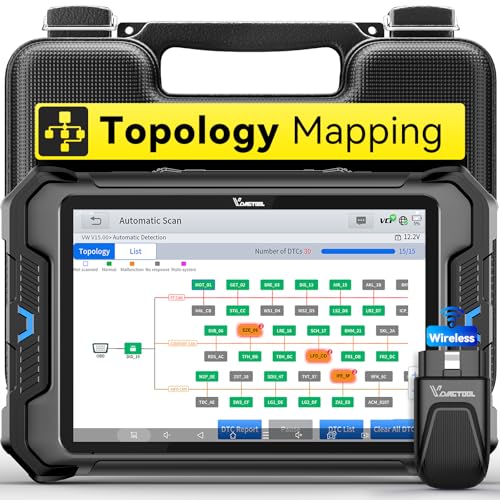
- Smarter Diagnostics, Broader Coverage, Greater Value Than $1,000+ Tools: The game-changing VD80BT OBD2 scanner delivers 4000+ active tests, 42+ hot services, advanced ECU coding, PMI & V.A.G Guided—all in one scanner for car. With OE-level full system scan and intelligent topology mapping that cuts diagnostic time by up to 50%, you'll work smarter and faster. Supporting FCA
 AutoAuth, CAN FD & DoIP protocols, this car scanner covers over 10,000 vehicle models worldwide. Built for serious pros and DIYers, it features 8" HD screen & 4+64GB storage, 7.3V fast charging with long-lasting battery, and 33–66ft stable wireless connection—making it the most complete diagnostic solution you’ll ever own
 - Intuitive Topology Map, Fast Locate Faults: Why waste time clicking module by module? VD80BT car diagnostic scanner takes diagnostics to the next level with its intuitive Topology Map—a premium feature usually found in $1000+ obd scanner. With one tap, it performs all system scan and presents all modules and DTCs in a clear, color-coded layout, boosting diagnostic efficiency by up to 200% and helping you locate issues instantly and reduce repair time and costs. Whether you're a pro boosting efficiency or a beginner learning diagnostics, this obd2 scanner diagnostic tool makes fault-finding faster and smarter for you. Note: varies by vehicle model, please check compatibility before purchase
- Wireless Connectivity Simplifies Bi-Directional Control: With 4000+ active tests, including throttle reset, window calibration and solenoid check, VD80BT bidirectional scan tool lets you diagnose and verify functions faster, smarter, and more efficiently. This scanner for car redefines flexibility in bi-directional control through a fully wireless connection, freeing you from the constraints of wired car diagnostic tool in the workshop. Imagine actively controlling components like the A/C clutch, fuel injector, ABS pump, or radiator fan within a wireless range of 33–66ft around the vehicle—all while enjoying stable, high-speed wireless diagnostic and real-time data monitoring
- 42+ Hot Services, One Powerful Scanner for Car: Why pay a shop $100 just to reset a light? VD80BT car scanner diagnostic tool gives you 42+ hot services from basic resets to advanced maintenance tasks like Crank Sensor Relearn, Injector Coding, ABS Bleeding, Oil Reset, Throttle Relearn, EPB, BMS Reset, Tire Size Reset and more. Plus, it offers 100+ vehicle-specific features including Idle Relearn, VIN Write, Brake Fluid Replacement, Fuel Trim Reset, ABS Initialization and more. Whether you’re resetting TPMS or fixing a stubborn SAS, this car computer diagnostic reader delivers shop-grade precision at a fraction of the cost. Varies by model. Send VIN to verify compatibility before purchase
- OE-Level Full System Diagnostics in Your Hands: Dominate diagnostics like a dealership with VD80BT scan tool for all vehicles, delivering factory-grade scanning for aLL systems—including ABS, SRS, ECM, TCM and more. View up to 8 PID graphs simultaneously to quickly catch intermittent issues and troubleshoot with confidence. Easily read and clear DTCs, retrieve freeze frame data, and run active tests for faster, more accurate repairs. It’s like having a dealership-grade scan tool in your pocket, complete with data playback and CSV export for in-depth analysis. Stop guessing and start fixing with surgical precision—professional diagnostics made simple and portable. Check compatibility Please
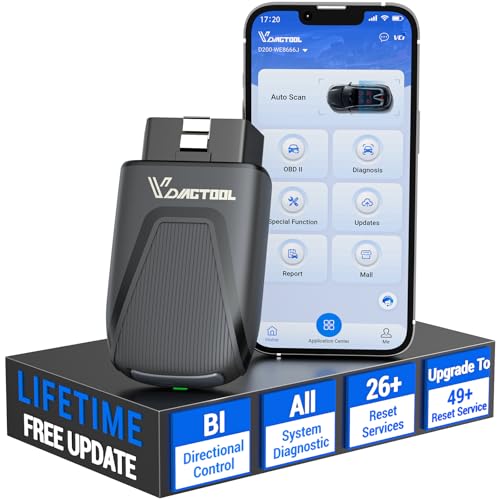
- 【OE-Level Full System Diagnostics-Lifetime F*REE Software Updates】The VDIAGTOOL D200 OBD2 Scanner for cars is a all system bidirectional scan tool that enjoy lifetime f*ree software updates, delivers complete system coverage. reading/clearing codes across engine, transmission, ABS, SAS, EPB, TPMS plus full access to body, chassis, powertrain and all control modules. This D200 Bidirectional car scanner works with most 1996+ OBD2 gasoline and hybrid cars and light trucks. It does NOT support pure electric and heavy-duty trucks. PLEASE CHECK COMPATIBILITY BEFORE ORDERING or Contact us with VIN to confirm compatibility.
- 【Supports OBD2 Full Functions-ZERO Subscription Fees】D200 Bidirectional OBD2 Scanner is a upgarde of universal car code reader. It supports OBD2 full functions to help you turn off the annoying instrument fault indicator, such as read/clear codes, O2 sensor test, I/M readiness, on-board monitor test, datastream, freeze frame, E-VAP system test, and retrieve vehicle information. This professional obd2 scanner diagnostic tool can full access to diagnostics, reset tools and maintenance features with a single payment. NOTE: The fault code can only be cleared after the vehicle's malfunction has been repaired; please ensure the vehicle issue is fixed before clearing the code.
- 【D200 Hidden 2 Advantages: 1. $169 Expandable 49+ Advanced Resets. 2. $199 Get J2534 P*a*s*s-Thru Programming】Your core car diagnostics and 26 reset remain lifetime f*ree for everyday maintenance. When you need deeper repair capability, upgrade with 3-year access for $169 in Store on VDIAGTOOL App, gaining 49+ advanced resets. D200 configured with J2534 hardware, upgrade only when you need without replacing the entire device. You also can Lifetime Unlock for $199 in Store one-time, perform module programming, software re~flashing and ECU data updates directly. Supports 17+ major brands, including for BMW, for Audi, for GM, for Ford and more. Note:D200 does‘t provide any OE software.
- 【Full Bidirectional Control / Active Tests】The D200 car scanner diagnostic tool is a true bidirectional scan tool that lets you send commands directly to the vehicle’s ECU for active tests. Quickly test fuel pumps, relays, solenoids, injectors, cooling fans, windows, sunroofs and more to verify operation instantly. Get dealership-level diagnostic control at a fraction of the cost (ofter $100-200$ per diagnostic visit), reduce guessworkand confirm repairs faster, avoid unnecessary parts replacement, towing fees and wait times.
- 【26 F*ree Essential Reset & Relearn Functions – Everyday Maintenance Made Easy】Handle common maintenance and repair jobs without visiting the shop. The D200 code readers & scan tools includes 26 f*ree high-demand reset functions, including Oil Reset, EPB Service, SAS Calibration, ABS Brake Bleeding, Throttle Relearn, Injector Coding, Headlight Adjustment, Tire Size Reset and more. Perfect for home car owners, mechanics and DIYers – just plug and diagnose anytime, anywhere! Note: Service functions vary by vehicle model—please confirm compatibility.
This product presentation was made with AAWP plugin.
Last update on 2026-05-13 / Affiliate links / Images from Amazon Product Advertising API