
NHTSA ID Number: 10250641
Manufacturer Communication Number: 990143
TSB/Document Date: 2024-02-26
Summary
The 2015 Audi A3 Introduction
eSelf Study Program 990143
The 2015 Audi A3 Introduction
Audi of America, LLC
Service Training
Created in the U.S.A.
Created 11/2013
Course Number 990143
©2013 Audi of America, LLC
All rights reserved. Information contained in this manual is based on
the latest information available at the time of printing and is subject to
the copyright and other intellectual property rights of Audi of America,
LLC., its affiliated companies and its licensors. All rights are reserved
to make changes at any time without notice. No part of this document
may be reproduced, stored in a retrieval system, or transmitted in any
form or by any means, electronic, mechanical, photocopying, recording
or otherwise, nor may these materials be modified or reposted to other
sites without the prior expressed written permission of the publisher.
All requests for permission to copy and redistribute information should
be referred to Audi of America, LLC.
Always check Technical Bulletins and the latest electronic service repair
literature for information that may supersede any information included
in this booklet.
Revision 4: 12/2013
3
Contents
Introduction.................................................................................................6
The A3 sedan body.......................................................................................7
Dimensions ............................................................................................................................................................... 7
Vehicle architecture (MQB) ...................................................................................................................................... 9
MQB and the Audi A3 .............................................................................................................................................. 9
Materials - ultra lightweight construction .......................................................................................................... 11
Body panels ............................................................................................................................................................ 13
Joining techniques ................................................................................................................................................. 13
Panorama tilt sunroof ........................................................................................................................................... 16
Bumper system ...................................................................................................................................................... 18
Underbody .............................................................................................................................................................. 18
Passive safety.............................................................................................19
Components ........................................................................................................................................................... 19
System overview .................................................................................................................................................... 20
Vehicle Airbags ....................................................................................................................................................... 21
Front safety belt tensioner ................................................................................................................................... 26
Pelvic belt tensioner with locking buckle ............................................................................................................ 27
Active Safety...............................................................................................31
Audi pre sense ........................................................................................................................................................ 31
Engines.......................................................................................................37
1.8L and 2.0L TFSI engines ................................................................................................................................... 37
Diesel engines ........................................................................................................................................................ 39
Engine/transmission combinations ..................................................................................................................... 41
Power transmission....................................................................................43
Overview ................................................................................................................................................................. 43
5th generation Haldex coupling ........................................................................................................................... 45
Transmission selector mechanism ....................................................................................................................... 52
Fuel tanks...................................................................................................53
Exhaust system ...................................................................................................................................................... 54
Running gear..............................................................................................55
Design concept ....................................................................................................................................................... 55
Suspension variations ........................................................................................................................................... 57
Tire Pressure Monitoring System ......................................................................................................................... 57
Wheels and tires .................................................................................................................................................... 58
Electrical system........................................................................................59
Audi drive select ..................................................................................................................................................... 59
Installation locations of control modules ........................................................................................................... 61
Topology ................................................................................................................................................................. 63
Climate control...........................................................................................65
Introduction ........................................................................................................................................................... 65
Connected components ........................................................................................................................................ 67
Connected components ........................................................................................................................................ 68
Infotainment..............................................................................................69
Overview of versions .............................................................................................................................................. 69
Standard MIB ......................................................................................................................................................... 72
High spec MIB with navigation ............................................................................................................................. 73
Multimedia System Control Head E380 ............................................................................................................... 75
MMI display ............................................................................................................................................................ 76
4
Contents
Audi Connect..............................................................................................77
Overview ................................................................................................................................................................. 77
LTE ........................................................................................................................................................................... 78
Antenna overview .................................................................................................................................................. 81
LTE antennas .......................................................................................................................................................... 83
Sound systems ....................................................................................................................................................... 85
Service........................................................................................................87
Service interval overview for North American region ......................................................................................... 87
Special tools and workshop equipment .............................................................................................................. 88
Self Study Program....................................................................................91
Knowledge Assessment.............................................................................92
This eSSP contains video links which you
can use to access interactive media.
This eSelf Study Program teaches a basic knowledge of the design and functions of new models,
new automotive components or technologies.
It is not a Repair Manual! All values given are intended as a guideline only.
For maintenance and repair work, always refer to the current technical literature.
Note
Reference
5
Introduction
The Audi A3 can look back on a 16-year success story. The
first generation of the series, which debuted in 1996 as a
three door, established an entirely new market segment
– the premium compact class. In 1999 the five-door hatchback and the sporty Audi S3 completed the family. In total,
around 990,000 vehicles were sold. The second generation,
launched in 2003, was even more successful, achieving
sales of approximately 1.8 million vehicles.
The lightweight body and newly developed engines have
had major consequential effects throughout the vehicle,
reducing the weight of many suspension, exhaust and
interior components. At launch, the vehicle will be offered
with two recently refined engines from the EA888 family.
The Modular Infotainment Platform (MIB) makes its debut
in the A3 sedan. It represents a big step forward in mobile
communication electronics.
With the newest generation of the A3, the Group has set
itself the goal of improving the fuel economy of its internal
combustion engines, extending its product range to include
alternative drive systems such as natural gas engines and
electric motors, and equipping the vehicles with the latest
technical innovations. The basis for implementing these
objectives is the MQB or “modular transverse platform”, a
standardized architecture in which various vehicle components can be combined in any configuration on modular
principles. This broadens the diversity of the model range,
resulting in more efficient production, engines and combinations of materials.
The A3 also sets new standards in the premium compact
class when it comes to driver assistance systems. One of
the most important of these is Audi pre sense. In the event
of an impending collision, the system warns the driver in
progressive stages and, if necessary, can initiate partial
braking in order to reduce the car’s speed at impact.
The 2015 A3 sedan represents the cumulative technological expertise of Audi in a compact format. In its lightweight
body, its interior architecture and its user interfaces, the A3
sedan will once again set standards in its class. Its engines
impress with their efficiency and power, and the range of
driver assistance systems and infotainment solutions is
unparalleled in the premium compact class.
The Audi A3 and S3 sedans are assembled in Györ, Hungary.
The site in northwestern Hungary is one of the largest
automobile factories in the world. This is where Audi has
assembled the TT coupe, and in the near future will assemble the A3 cabriolet. It is an ultra modern facility with the
capability of complete production work—from stamping to
final assembly.
625_001
6
The A3 sedan body
55.7 in (1416 mm)
Dimensions
37.0 in (942 mm)
61.2 in (1555 mm)
60.0 in (1526 mm)
70.7 in (1796 mm)
77.1 in (1960 mm)
625_037
34.2 in (869 mm)
103.8 in (2637 mm)
m)
24
m
3 (9
27.0 in (688 mm)
36.
39.
6 in
(10
0
6m
m)
625_036
37.4 in (950 mm)
175.4 in (4456 mm)
625_038
7
39.3 in (1000 mm)
52.9 in (1345 mm)
56.0 in (1423 mm)
54.8 in (1392 mm)
57.2 in (1453 mm)
37.4 in (951 mm)
625_039
Dimensions and weight
Length
175.4 in (4456 mm)
Front elbow room
57.2 in (1453 mm)
Width
70.7 in (1796 mm)
Rear elbow room
56.0 in (1423 mm)
Height
55.7 in (1416 mm)
Front head room
39.6 in (1006 mm)
Front track width
61.2 in (1555 mm)
Rear head room
36.3 (924 mm)
Rear track width
60.0 in (1526 mm)
Load pass-through width
39.3 in (1000 mm)
Wheelbase
103.8 in (2637 mm)
Load lift-over height
27.0 in (688 mm)
Luggage compartment volume
15.0/31 1) cu ft
(425/880 1) l)
Curb weight (approximate)
2899.0 lb (1325 kg)
Permissible total vehicle weight
4111.6 (1865 kg)
1)
Rear seat folded
A3 sedan compared to A4 sedan
8
Vehicle architecture (MQB)
The Audi A3 sedan builds on the body structure of the
three-door A3. It is part of the MQB strategy used by the
Volkswagen Group of which Audi is a part. MQB stands for
modular transverse baukasten or modular transverse
platform.
vehicle size or brand. MQB uses a core group of components
across a wide variety of platforms — for example, sharing a
common engine-mounting for all drivetrains. The concept
allows diverse models, including those from the company‘s
various brands, to be manufactured at the same plant,
further saving cost.
It is not so much a platform per-se, but rather a system for
introducing commonality across disparate platforms that
share the same engine orientation — regardless of model,
Wheelbase + 1.37 in (35 mm)
Variable
Uniform
MQB and the Audi A3
The underbody of the A3 series consists of 3 modules:
•
•
•
the front section
Floor pan, center section
Trunk floor
Variable
Longer overhang +
6.4 in (165 mm)
625_118
Compared to the three-door A3, the A3 sedan needed a
longer central floor pan and a longer rear floor pan but are
based on the same basic design and manufacturing processes.
625_119
9
Notes
10
Materials - ultra lightweight
construction
Body developers at Audi have broad-based engineering
expertise spanning all relevant materials. This know-how is
not limited to just a specific material, rather the motto is:
“The right material at the right place for optimal function.”
The multi-material body of the Audi A3 lives up to this
maxim.
Ultra high-strength hot-formed steel
components
Ultra high-strength hot-formed steel components provide
approximately a 24% share of the A3 sedan body structure.
Before the components are stamped, special steel is heated
to nearly 1832 °F (1000 °C) in a continuous oven. After
heating, it is immediately placed in a water cooled press
tool. The steel is quickly cooled to approximately 392 °F
(200 °C) before it is stamped. The rapid cooling of the
steel changes its iron/carbon structure and creates a steel
with high tensile strength which in turn allows thinner wall
thicknesses for the particular components. Steels created
in this manner require special care and procedures during
repairs.
11
All the ultra lightweight design principles that have made
all A3 models lighter than their predecessors have been
applied to the design of the new A3 sedan.
At the same time, the A3 sedan meets the highest
demands in the area of vehicle safety. The basis for this is
that only materials used are those that meet the high
quality standards of Audi.
High-strength steel 30%
Ultra high-strength hotformed steel 24%
Soft steel 28.5%
Modern high-strength steel 17%
Aluminum 0.5%
625_110
625_109
Ultra high-strength
A3 sedan B pillar
The B-pillar with striker plate is partially tempered during
the forming process. The component assembly is very hard
at the top end and softer below a narrow transition zone.
This enables side impact forces to be absorbed effectively.
High-strength
Ultra high-strength
625_111
12
Body panels
Some inner and outer body panels such as the fenders,
doors, rear bumper, cross member, and the rear trunk lid
are all made from light steel.
The following components are made from aluminum:
•
•
•
the front bumper cross member
the hood
the rear hat shelf
The use of both light steel and aluminum further helps
reduce the weight of the body.
Joining techniques
Both old and new body component joining techniques are in
use. In addition to the 4803 classic resistance spot welds
used during assembly of the body, the following joining
methods are also used:
•
•
•
•
MAG welding
Laser welding
Clinching (attachments only)
Solid punch riveting
In each A3 sedan there are over 196 ft (60 m) of glued
joints.
The joint between the body side wall and roof is laser
welded and then smoothed by brushes to produce a nearly
invisible zero joint.
The water drainage paths in the area of the rear trunk lid
are joined by Plasmatron welding.
To save more weight, doors and window frames are pressed
in one piece. The inner and outer doors are welded by the
ultra-modern remote laser technique.
13
625_112
Key:
Ultra high-strength hot-formed steel
Modern high-strength steel
High-strength steel
Soft steel
Sheet aluminum
Aluminum profile
14
Ultra high strength hot-formed steel components are installed in the following areas
Forming the backbone of the occupant cell is what are
known as form-hardened steels. An extreme temperature
change during forming process gives these steels extremely
high strength; the parts can be designed with relatively
thin walls, making them lightweight.
Form-hardened steels represent a 24 percent share of body
materials. They are used in the transition from the front of
the vehicle to the occupant cell, in the A-pillars, B-pillars,
roof arch, center tunnel, side sills and floor panels. Altogether, they lower the car’s weight yet provide excellent
strength.
10
9
4
8
11
5
6
1
7
2
3
625_114
1
Long members (2 left / 2 right)
7
Rear seat crossmember
2
Upper foot room crossmember
8
Rear transverse crossmember
3
Lower foot room crossmember
9
Left and right upper A pillars
4
Left and right inner A pillars
10

If the PDF is very large, it may not load in the preview below.
Some older TSBs had multiple PDFs — visit the NHTSA Website to view all PDFs.
If the TSB PDF does not show, download or view it on the NHTSA Website.
Click on the (+) Plus Sign
Then Click on Associated Document(s)
Search NHTSA Database for Recalls
Search NHTSA Database for Vehicle Investigations
View Latest Vehicle Investigations
Search NHTSA Database for Vehicle Complaints
View Latest Vehicle Complaints
TSB/Document ID: 990143
Replacement Service Bulletin Number:
MFR Communication Date: 2013-12-01
MFR Internal Campaign ID/Software Version:
Communication Type: Service Bulletin/Repair Instructions
NHTSA Components: EQUIPMENT:OTHER:OWNERS/SERVICE/OTHER MANUAL
MFR Component System:
MFR Component Subsystem:
Previous TSB | Next TSB |
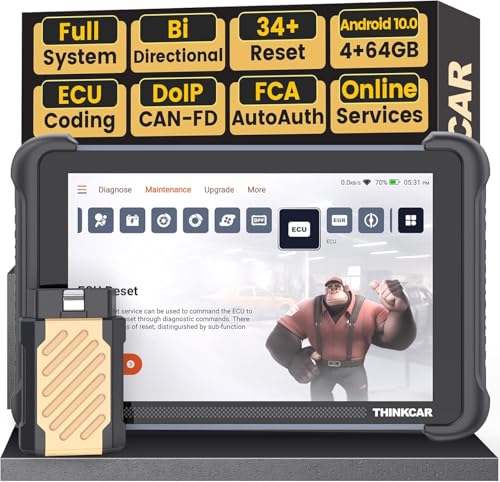
- [Notice] When you receive a used device, it may be a customer return resold by Amazon without inspection. You can exchange it for a new one through Amazon. As this situation is unavoidable, we sincerely apologize. For any issues, contacting us via Amazon's "Messages" is the best way. THINKSCAN 689BT Bidirectional Scan Tool Can Be Used Immediately After It is Turned On, Without Complicated Registration Process, Which is More Convenient & Quick.
- Full Bi-Directional Control & 3000+ Active Tests: Take control and test components like actuators, fuel injectors, relays, and cooling fans in real time. You’ll quickly see if the problem is in the part itself or the control module — saving you hours of guesswork and frustrating trial-and-error.
- Advanced ECU Coding Capabilities: Handle module matching and hidden feature activation with confidence. When you replace an ECU or want to customize settings, this obd2 scanner diagnostic bi directional tool gives you the professional-level capabilities you need without the dealership price tag.
- 34+ Useful Reset and Maintenance Functions: Complete everyday service tasks smoothly with a wide range of helpful reset and maintenance functions. Whether you’re keeping up with regular upkeep or tackling a specific job, this scanner makes maintenance simpler and less stressful for both DIYers and pros.
- Comprehensive Full System Diagnostics: Diagnose every major system — Engine, Transmission, ABS, SRS, TPMS, and more — all in one place. Finally stop wondering if you’re missing something important; get the full picture and clear codes with ease.

- Top Reasons to Choose the D7S OBD2 Scanner: XTOOL D7S car scan tool, an upgrade of XTOOL D7, offers comprehensive features for automotive technicians, workshops, and DIY enthusiasts 1. Upgraded Hardware: 2+64GB memory, rear camera, intuitive interface, foldable bracket 2. Complete Diagnostics: FCA
 Autoauth, OE-level all system scan, 39+ maintenance services, 4K+ bidirectional, CANFD/DoIP protocol 3. Advanced Capabilities: ECU c0ding, PMI functions 4. Wide Compatibility: Support 10,000+ models, covering 99% vehicle brands 5. Multi-language: Available in 22+ languages, No IP Restrictions 6. 3-Year Updates: Save 300 bucks on software updates for the latest features and optimizations
 - 2026 Upgraded D7S Car Scanner Features: The newly 2026 D7S V2.0 scanner for car brings exciting features for advanced vehicle diagnostics and enhanced user experience 1. FCA AutoAuth: Now supports FCA SGW module for Chrysler, for Jeep, for Dodge (2018+), for Fiat (2017+), enabling faster vehicle communication without gateway restrictions 2. PMI (Offline ECU Pr0gramming): Allows for Ford, for Lincoln, and for Mazda ECU pr0gramming for new modules 3. Optimized Diagnostic Report 2.0: Personalized reports with logos and customer info for auto shops. Note: Compatibility varies by cars, please check before order
- 39+ Services/Resets/Adaptations/Relearns/Calibrations: XTOOL D7S full system car scanner diagnostic tool tackles 99% of common car issues through its 36+ special functions, including Oil Reset, EPB, SAS, BMS, Throttle Reset, Injector C0ding, ABS Bleed, TPMS Reset, Power Balance, etc and also covers specific-vehicle functions like Crank Sensor Relearn, ABS Initialization, Cylinder Power Balance, Fuel Trim Reset, Idle Relearn etc. This car diagnostic scanner enhances efficiency, making repairs and maintenance hassle-free. Tip: DO NOT for All vehicles, please check compatibility first
- Cost-effective ECU C0ding Scan Tool for Specific Brands: Enhance your vehicle's performance with XTOOL D7S! This obd2 scanner all systems bidirectional offers advanced capabilities at an affordable price, supports online for BMW, for Benz and offline for BENZ, for MIT, along with PMI functions for Ford, for Mazda, and for Lincoln. Ideal for technicians and DIY enthusiasts, this automotive scanner diagnostic tool optimizes vehicle performance and enhances the driving experience. Note: Not for all cars and modules, please send car VIN to check the compatibility before purchase
- OE All System Diagnostic & 8 Pids Graphing: XTOOL D7S is a comprehensive all system bi directional obd2 scanner that delivers dealer-level diagnostics, completely controlling over your vehicle’s performance and health. This automotive scan tool can read and clear DTCs, view live data and ECU information, retrieve freeze frames, and perform active tests and full obd2 functions. This bi-directional scan tool can can identify your vehicle's make, model, and year information with just one click and show up to 8 PIDs live data with options for CSV viewing, playback, and recording for in-depth analysis. It is easy-to-use for both professionals and beginners, helping pinpoint issues efficiently
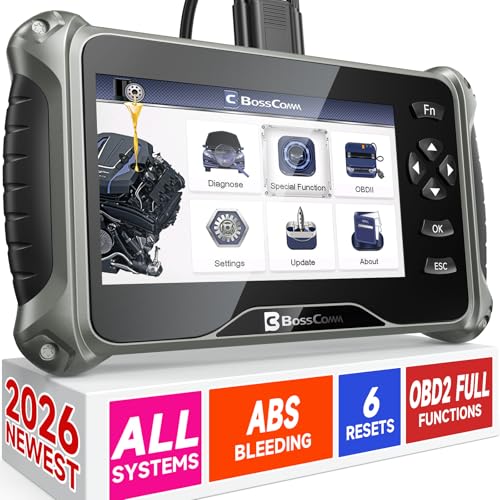
- 【✅Compared to BOSSCOMM IF742, IF745 Offers Full-System Diagnostics】The BOSSCOMM IF745 car diagnostic scanner is an upgraded model of IF742. In addition to supporting all OBD2 Code Reader functions and 6 reset options (ABS/EPB/SAS/BMS/Oil/Throttle), it expands diagnostics from 4 systems (Check Engine/ABS/SRS/Transmission) to vehicle All systems, including Steering, Suspension, and Body Electronics. This provides deeper, more comprehensive diagnostic capabilities.
- 【✨10 OBD2 Functions】The BOSSCOMM IF745 scan tool’s DTC Lookup instantly translates fault codes into user-friendly explanations, its I/M Readiness feature streamlines emissions testing with a single tap, and Freeze Frame lets you pinpoint the exact moment of a fault for in-depth root-cause diagnosis. Combined with a live data dashboard and advanced diagnostics (O2S, OBMon, EVAP), it delivers comprehensive insights for confident troubleshooting.
- 【✨Deep Diagnostics for All Vehicle System Modules】Beyond code reading/clearing and ECU information retrieval, our all-in-one data stream feature lets you inspect all current fault codes and their locations across the vehicle’s systems. This vehicle code reader helps you turn off dashboard warning lights and perform a comprehensive self-check of your car at home—no more back-and-forth trips to the repair shop or hefty inspection fees.
- 【✨6 Essential Resets: ABS Bleeding, Oil, EPB, SAS, Throttle, BMS】The BOSSCOMM IF745 obd2 scanner diagnostic tool swiftly purges air from brake lines to restore braking sensitivity, fine-tunes maintenance cycles to eliminate false alerts, resolves parking brake issues with one-click control, recalibrates steering sensors for stability, optimizes engine idling/acceleration for smoother performance, and deeply resets battery systems to extend lifespan and range via precise parameter adjustments.❗NOTE: Does NOT support bidirectional control, coding, or programming.
- 【✨10,000+ Car Models, AutoVIN, 13 Languages】The BOSSCOMM IF745 vehicle scanner diagnostic tool covers 73+ global car brands and offers support in 13 languages, making it perfect for DIYers, auto mechanics, or as a thoughtful gift. With a single-click AutoVIN feature, it instantly retrieves vehicle serial numbers, streamlining diagnostics for users globally. This adaptable tool balances user-friendliness with precision, catering to both personal and professional requirements.✅Unsure about compatibility? Compatibility will vary on vehicles' model and year, pls reach us via 📧 [email protected] 📧 before purchase.
This product presentation was made with AAWP plugin.