
NHTSA ID Number: 10250482
Manufacturer Communication Number: ManualB
TSB/Document Date: 2024-02-20
Summary
Tesla does not provide physical owner's manual copies. Instead, all available owner?s manual content is integrated into the vehicle software, and only the content relevant for a given vehicle, based on vehicle configuration and software version installed, is displayed on its touchscreen. This file contains all available owner?s manual content for 2021-2023 Model S vehicles converted to PDF format, and given the distribution method and NHTSA?s submission format requirements, it is the best available representative copy of owner?s manual content. However, a customer who accesses the owner?s manual via their vehicle?s touchscreen would only see the parts of this PDF file that are relevant to their vehicle.
Activation), Autosteer engages when you pull the Autopilot stalk toward you once. If set to Double Pull, you must
pull the Autopilot stalk toward you twice in quick succession to engage Autosteer.
To indicate that Autosteer is now actively steering Model S, the instrument panel displays the Autosteer
icon in blue. When Autosteer is able to detect lane markings, it also displays the driving lane in blue.
Autosteer briefly displays a message on the instrument panel reminding you to pay attention to the road and be
ready to take over at any time.
The speed at which you can initiate Autosteer can vary depending on various conditions and whether or not a
vehicle is detected ahead of you. When no vehicle is detected ahead of you, you must be driving at least 18 mph
(30 km/h), unless certain vehicle and environmental conditions are met, in which case, you may be able to initiate it
at lower speeds. When a vehicle is detected ahead of you, you can initiate Autosteer at any speed, even when
stationary, provided Model S is at least 5 feet (150 cm) behind the detected vehicle.
NOTE: The maximum cruising speed is 90 mph (150 km/h). It is the driver's responsibility to cruise at a safe speed
based on road conditions and speed limits.
NOTE: When Autosteer is engaged, Auto High Beam is automatically enabled and the maximum cruising speed is 85
mph (140 km/h).
WARNING: Never depend on Autopilot features to determine the presence of emergency vehicles. Model S
may not detect lights from emergency vehicles. Keep your eyes on your driving path and always be prepared
to take immediate action.
In situations where Autosteer is temporarily unavailable, the Autosteer icon disappears. For example, your driving
speed is not within the speed required for Autosteer to operate. Autosteer may also be unavailable if it is not
receiving adequate data from the camera(s).
NOTE: In low light conditions (dusk or dark), Autosteer aborts or is unavailable if headlights are set to Off. For best
results, set headlights to Auto.
If unable to detect lane markings, Autosteer may determine the driving lane based on a vehicle you are following. In
these situations, the vehicle in front of you is highlighted in blue.
In most cases, Autosteer attempts to center Model S in the driving lane. However, there may be situations in which
Autosteer may steer Model S in a driving path that is offset from the center of the lane (for example, detection of
guard rails).
WARNING: Autosteer is not designed to, and will not, steer Model S around objects partially in a driving lane
and in some cases, may not stop for objects that are completely blocking the driving lane. Always watch the
road in front of you and stay prepared to take immediate action. It is the driver's responsibility to be in control
of Model S at all times.
Restricted Speed
On a controlled-access highway, the cruising speed reflects the speed limit, taking into consideration any offset
you've specified using Speed Assist. However, if you choose to use Autosteer on residential roads, a road without a
center divider, or a road where access is not limited, Autosteer may limit the maximum allowed cruising speed and
the instrument panel displays a message indicating that speed is restricted. The restricted speed will be the speed
limit of the road plus 5 mph (10 km/h).
In situations where the speed limit cannot be detected when Autosteer is engaged, Autosteer reduces your driving
speed and limits the set cruising speed to 45 mph (70 km/h). Although you can manually accelerate to exceed the
limited speed, Model S may not brake for detected obstacles. Autosteer slows down to the limited speed when you
release the accelerator pedal. When you leave the road, or disengage Autosteer by using the steering wheel, you can
increase your set speed again, if desired.
150
Owners Manual
Hold Steering Wheel
Autosteer determines how best to steer Model S. When active, Autosteer requires you to hold the steering wheel. If it
does not detect your hands on the steering wheel for a period of time, a flashing light appears along the top of the
instrument panel and the following message displays:
Apply slight turning force to steering wheel
Autosteer detects your hands by recognizing slight resistance as the steering wheel turns, or from you manually
turning the steering wheel very lightly (without enough force to take over steering). Autosteer also qualifies your
hands as being detected if you engage a turn signal use the Autopilot stalk, or use a button or scroll wheel on the
steering wheel.
NOTE: When your hands are detected, the message disappears and Autosteer resumes normal operation.
Autosteer requires that you pay attention to your surroundings and remain prepared to take control at any time. If
Autosteer still does not detect your hands on the steering wheel, the flashing light on the instrument panel increases
in frequency and a chime sounds.
If you repeatedly ignore Autosteer's prompts to apply slight force to the steering wheel, Autosteer disables for the
rest of the drive and displays the following message requesting you to drive manually. If you don't resume manual
steering, Autosteer sounds a continuous chime, turns on the warning flashers, and slows the vehicle to a complete
stop.
Autosteer unavailable for the rest of this drive. Hold steering wheel to drive manually.
For the rest of the drive, you must steer manually. Autosteer is available again on your next drive (after you stop and
shift Model S into Park).
Take Over Immediately
In situations where Autosteer is unable to steer Model S, Autosteer sounds a warning chime and displays the
following message on the instrument panel:
Take over immediately
When you see this message, TAKE OVER STEERING IMMEDIATELY.
Canceling Autosteer
Autosteer cancels when:
• You press the brake pedal.
• You push the Autopilot stalk away from you.
• You exceed the maximum speed at which Autosteer operates – 90 mph (150 km/h).
• You shift.
• A door is opened.
• An Automatic Emergency Braking event occurs (see Collision Avoidance Assist on page 180).
151
Owners Manual
When Autosteer cancels, it sounds a chime and the Autosteer icon either turns gray to indicate that Autosteer is no
longer active, or disappears to indicate that it is not currently available.
NOTE: If Autosteer cancels because you , Traffic-Aware Cruise Control remains active. Disengage Traffic-Aware
Cruise Control as you normally would, by pressing the brake pedal or briefly pushing the Autopilot stalk away from
you or.
To disable Autosteer so it is no longer available, touch Controls > Autopilot > Autopilot Features > Autosteer (Beta).
Auto Lane Change
NOTE: Depending on market region, vehicle configuration, options purchased, and software version, your vehicle may
not be equipped with Auto Lane Change, or the feature may not operate exactly as described.
When Autosteer is active, engage a turn signal to move Model S into an adjacent lane (moving the steering wheel
would cancel Autosteer).
WARNING: It is the driver's responsibility to determine whether a lane change is safe and appropriate. Auto
Lane Change cannot detect oncoming traffic in the target lane, especially fast moving vehicles from the rear.
Therefore, before initiating a lane change, always check blind spots, lane markings, and the surrounding
roadway to confirm it is safe and appropriate to move into the target lane.
WARNING: Never depend on Auto Lane Change to determine an appropriate driving path. Drive attentively by
watching the road and traffic ahead of you, checking the surrounding area, and monitoring the instrument
panel for warnings. Always be prepared to take immediate action.
WARNING: Do not use Auto Lane Change on roads where traffic conditions are constantly changing and where
bicycles and pedestrians are present.
WARNING: The performance of Auto Lane Change depends on the ability of the camera(s) to recognize lane
markings.
WARNING: Do not use Auto Lane Change on winding roads with sharp curves, on icy or slippery roads, or
when weather conditions (such as heavy rain, snow, fog, etc.) may be obstructing the view from the camera(s)
or sensors (if equipped).
WARNING: Failure to follow all warnings and instructions can result in property damage, serious injury or
death.
Operating Auto Lane Change
Auto Lane Change is available whenever Autosteer is active. To change lanes using Auto Lane Change:
1. Perform visual checks to make sure it is safe and appropriate to move into the target lane.
2. Engage the appropriate turn signal, keeping your hands on the steering wheel.
3. If needed, cancel the turn signal once you are in the target lane.
NOTE: The minimum speed at which Auto Lane Change operates may vary depending on region, adjacent lane
speeds, and other factors. Always be ready to manually steer and change lanes as necessary.
Auto Lane Change moves Model S into the adjacent lane in the direction indicated by the turn signal, provided the
following conditions are met:
• The turn signal is engaged.
• Model S does not detect a vehicle in its blind spot, or a vehicle or obstacle up to the center of the target lane.
• Lane markings indicate that a lane change is permitted.
• Midway through the lane change, Model S must detect the target lane's outside lane marking. If this lane marking
is not detected, the lane change is aborted and Model S returns to its original driving lane.
• The view of the camera(s) is not obstructed.
When an automatic lane change is in progress, Overtake Acceleration is activated, allowing Model S to accelerate
closer to a vehicle in front (see Overtake Acceleration on page 145).
152
Owners Manual
NOTE: Auto Lane Change moves Model S one lane at a time. Moving into an additional lane requires you to engage
the turn signal a second time after the first lane change is complete.
When using Auto Lane Change, it is important to monitor its performance by watching the driving path in front of
you and the surrounding area. Stay prepared to take over steering at any time. As you are crossing over into the
adjacent lane, the instrument panel displays the location in the lane that Model S is moving into.
In situations where Auto Lane Change is unable to operate at optimal performance, or cannot operate due to
inadequate data, the instrument panel displays a series of warnings. Therefore, when using Auto Lane Change,
always pay attention to the instrument panel and be prepared to manually steer Model S.
Adjacent Lane Speed
NOTE: Depending on market region, vehicle configuration, options purchased, and software version, your vehicle may
not be equipped with Adjacent Lane Speed, or the feature may not operate exactly as described.
When moving significantly faster than vehicles in adjacent lanes, Model S automatically reduces the driving speed.
This is especially helpful in heavy traffic situations or when vehicles are constantly merging into different lanes.
When Model S detects other vehicles driving significantly slower, the instrument panel highlights the adjacent lanes
with arrows and detected vehicles in gray, and Model S reduces the driving speed as appropriate. To temporarily
override this feature, press the accelerator pedal.
WARNING: Never depend on Autopilot to determine a safe driving speed; you are responsible for driving
safely and according to traffic laws in your market region.
Stop Light and Stop Sign Warning
NOTE: Depending on market region, vehicle configuration, options purchased, and software version, your vehicle may
not be equipped with Stop Light and Stop Sign Warning, or the feature may not operate exactly as described.
While Autosteer is in use, Model S displays a warning on the instrument panel and sounds a chime if it detects that
you are likely to run through a red stop light or stop sign. If this happens, TAKE IMMEDIATE CORRECTIVE ACTION!
The visual and audible warnings cancel after a few seconds, or when you press the brake pedal, whichever comes
first.
Stop Light and Stop Sign Warning provides warnings only. It does not slow down or stop Model S at red traffic lights,
stop signs, road markings, etc. If equipped with Traffic Light and Stop Sign Control, you can enable this feature to
automatically stop Model S at traffic lights and stop signs (see Traffic Light and Stop Sign Control on page 161).
CAUTION: Stop Light and Stop Sign Warning requires on-board maps to know that a particular stop light or
stop sign exists at a location. In some cases, map data is inaccurate or outdated and may not include all stop
lights or stop signs. Therefore, Stop Light and Stop Sign Warning may not detect all stop lights and stop signs.
153
Owners Manual
WARNING: The Stop Light and Stop Sign Warning feature does not apply the brakes or decelerate Model S
and may not detect all stop lights and stop signs. Stop Light and Stop Sign Warning is designed for guidance
purposes only and is not a substitute for attentive driving and sound judgment. Keep your eyes on the road
when driving and never depend on Stop Light and Stop Sign Warning to warn you of a stop light or stop sign.
WARNING: Stop Light and Stop Sign Warning is designed to warn you only when approaching a visible red
stop sign, solid red or later portion of a yellow traffic light. It may not warn you of intersections with flashing
lights and it does not warn you of yield signs or temporary stop and yield signs (such as those used in
construction areas). Additionally, Stop Light and Stop Sign Warning does not warn you of approaching stop
lights or stop signs when you are pressing the accelerator pedal or brake pedal (which disables Autosteer).
Limitations
Autosteer and its associated functions are particularly unlikely to operate as intended when:
• Autosteer is unable to accurately determine lane markings. For example, lane markings are excessively worn, have
visible previous markings, have been adjusted due to road construction, are changing quickly (lanes branching
off, crossing over, or merging), objects or landscape features are casting strong shadows on the lane markings, or
the road surface contains pavement seams or other high-contrast lines.
• Visibility is poor (heavy rain, snow, fog, etc.) or weather conditions are interfering with sensor operation.
• A camera(s) or sensor(s) is obstructed, covered, or damaged.
• Driving on hills.
• Approaching a toll booth.
• Driving on a road that has sharp curves or is excessively rough.
• Bright light (such as direct sunlight) is interfering with the view of the camera(s).
• The sensors (if equipped) are affected by other electrical equipment or devices that generate ultrasonic waves.
• A vehicle is detected in your blind spot when you engage the turn signal.
• Model S is being driven very close to a vehicle in front of it, which is blocking the view of the camera(s).
WARNING: Many unforeseen circumstances can impair the operation of Autosteer. Always keep this in mind
and remember that as a result, Autosteer may not steer Model S appropriately. Always drive attentively and be
prepared to take immediate action.
Navigate on Autopilot
NOTE: Depending on market region, vehicle configuration, options purchased, and software version, your vehicle may
not be equipped with Navigate on Autopilot, or the feature may not operate exactly as described.
NOTE: Navigate on Autopilot is a BETA feature.
When using Autosteer on a controlled-access highway (a main highway on which road users enter and exit using onramps and off-ramps). Navigate on Autopilot guides Model S to off-ramps and interchanges based on your
navigation route. Along the highway portion of a navigation route, Navigate on Autopilot also changes lanes to
prepare for exits (route-based lane changes) and to minimize the driving time to your destination (speed-based lane
changes).
WARNING: Navigate on Autopilot does not make driving autonomous. You must pay attention to the road,
keep your hands on the steering wheel at all times, and remain aware of your navigation route.
WARNING: As is the case with normal driving, be extra careful around blind corners, interchanges, and onramps and off-ramps - obstacles can appear quickly and at any time.
WARNING: Navigate on Autopilot may not recognize or detect oncoming vehicles, stationary objects, and
special-use lanes such as those used exclusively for bikes, carpools, emergency vehicles, etc. Remain alert at all
times and be prepared to take immediate action. Failure to do so can cause damage, injury or death.
Enabling and Customizing Navigate on Autopilot
To enable Navigate on Autopilot, touch Controls > Autopilot > Autopilot Features > Autosteer > Navigate on
Autopilot (Beta). Then, to customize how you want Navigate on Autopilot to operate, touch Customize Navigate on
Autopilot:
154
Owners Manual
• Enable At Start Of Every Trip: Choose whether or not you want to automatically enable Navigate on Autopilot for
every navigation route. When enabled, the Navigate on Autopilot button on the turn-by-turn direction list is
already enabled at the start of every trip.
• Speed Based Lane Changes: Navigate on Autopilot is designed to perform both route-based and speed-based
lane changes. Route-based lane changes are designed to keep you on your navigation route (for example, moving
you into an adjacent lane to prepare for an upcoming off-ramp) whereas speed-based lane changes are designed
to maintain a driving speed (not to exceed your cruising speed) that allows you to minimize the time it takes to
reach your destination (for example, moving into an adjacent lane to pass a vehicle in front of you). Speed-based
lanes changes are optional. You can use this setting to disable speed-based lane changes or to specify how
aggressively you want Navigate on Autopilot to change lanes to achieve the set cruising speed. The Mild setting
is more conservative about lane changes and may result in a slightly longer driving time whereas Mad Max is
designed to allow you to reach your destination in the shortest driving time possible, but changes lanes only
when safe to do so.
• Exit Passing Lane: Choose whether you want Navigate on Autopilot to maneuver out of a passing lane when
navigating to a destination.
NOTE: In addition to route-based and speed-based lane changes, Navigate on Autopilot requests a lane change
out of a passing lane as a reminder to stay in a slower lane when you are not passing other vehicles. Choose NO
to disable this and keep Model S in a passing lane except when needed to stay on the navigation route.
• Require Lane Change Confirmation (if equipped): By default, Navigate on Autopilot requires your confirmation
before proceeding with a lane change by pulling the Autopilot stalk toward you or engaging the appropriate turn
signal. However, if you want Navigate on Autopilot to change lanes without requiring this confirmation, turn this
setting off. When you turn the setting off, you can specify if or how you want to be notified of lane changes (Off,
Chime, Vibrate, or Both).
WARNING: If you turn off Require Lane Change Confirmation, Navigate on Autopilot notifies you of
upcoming lane changes and off-ramps, but it remains your responsibility to monitor the environment and
maintain control of Model S at all times. Lane changes can occur quickly and suddenly. Always keep your
hands on the wheel and your eyes on the driving path in front of you.
NOTE: The touchscreen displays route-based lane changes at the top of the map's turn-by-turn direction list to
notify you that an upcoming lane change is needed to stay on the navigation route.
Operating Navigate on Autopilot
Once enabled, the Navigate on Autopilot button appears on the map’s turn-by-turn direction list whenever a
navigation route is active and the route includes at least one controlled-access highway. When enabled, the Navigate
on Autopilot button is blue and the turn-by-turn direction displays the Autosteer icon next to the maneuvers (such
as off-ramps) that Navigate on Autopilot will handle.
NOTE: If Enable At Start Of Every Trip is turned off, you must touch the Navigate on Autopilot button to enable it
for each navigation route.
Navigate on Autopilot activates and deactivates as appropriate, based on the type of road you are driving on. For
example, if Autosteer is active and Navigate on Autopilot is enabled, Navigate on Autopilot automatically becomes
active when you reach a controlled-access highway on your navigation route.
Whenever Navigate on Autopilot is active, the instrument panel displays the driving lane as a single blue line in front
of Model S:
155
Owners Manual
When Navigate on Autopilot is active and you approach an off-ramp or interchange along your navigation route, the
appropriate turn signal engages and Autosteer maneuvers Model S onto the off-ramp or interchange.
WARNING: Never depend on Navigate on Autopilot to determine an appropriate lane at an off-ramp. Stay alert
and perform visual checks to ensure that the driving lane is safe and appropriate.
When you leave a controlled-access highway (for example, you take an exit or you enter a section of the navigation
route that is no longer supported), Navigate on Autopilot reverts to Autosteer— a chime sounds and the instrument
panel displays the driving lane lines in blue (instead of the single blue in front of Model S).
NOTE: When determining navigation routes, and maneuvers at interchanges, Navigate on Autopilot considers
whether or not you want to use High Occupancy Vehicle (HOV) lanes. Therefore, ensure the Use HOV Lanes setting
is appropriate for your circumstances (see Maps and Navigation on page 200). If the setting is off, Navigate on
Autopilot never uses a HOV lane, regardless of time of day. If the setting is on, Navigate on Autopilot uses HOV
lanes, whenever applicable.
WARNING: When Navigate on Autopilot deactivates, Autosteer remains active. Always be prepared to take
appropriate action.
WARNING: Navigate on Autopilot may not always attempt to exit at an off-ramp or change lanes, even when
an exit or lane change is determined by the navigation route. Always remain alert and be prepared to manually
steer onto an off-ramp, or make a lane change to prepare for, or to exit at, an off-ramp or interchange.
You can cancel Navigate on Autopilot at any time by touching Navigate on Autopilot on the map’s turn-by-turn
direction list (Model S reverts to Autosteer), or by canceling Autosteer entirely (see Canceling Autosteer on page
151).
Lane Changes
Navigate on Autopilot changes lanes to either prepare Model S for an upcoming off-ramp, to increase your driving
speed (not to exceed your set cruising speed), or to move Model S out of a passing lane when you are not actively
passing other road users. A message displays at the top of the map's turn-by-turn direction list to notify you when
an upcoming lane change is required to stay on your navigation route. The instrument panel displays the upcoming
driving path:
156
Owners Manual
If Require Lane Change Confirmation is turned off, Navigate on Autopilot engages the appropriate turn signal,
checks for vehicles and objects, and when appropriate, maneuvers Model S into the adjacent lane.
If Require Lane Change Confirmation is turned on, you must engage the appropriate turn signal or pull the Autopilot
stalk toward you to confirm that you want Navigate on Autopilot to proceed with the lane change. If you do not
confirm the lane change within three seconds, a chime sounds to remind you that Navigate on Autopilot requires
your confirmation to change lanes.
NOTE: If you ignore a route-based lane change suggestion (for example, you are driving in the left lane while
approaching an off-ramp on the right side of the highway), Navigate on Autopilot is unable to maneuver onto the
off-ramp and as a result, you are re-routed to your destination.
WARNING: Navigate on Autopilot may not always attempt to exit at an off-ramp or change lanes, even when
an exit or lane change is determined by the navigation route. Always remain alert and be prepared to manually
steer onto an off-ramp, or make a lane change to prepare for, or to exit at, an off-ramp or interchange.
Be Ready to Assist
When attempting to change lanes or maneuver Model S, or when approaching construction zones, Navigate on
Autopilot may be unable to determine the appropriate driving lane (for example, complex clover leafs and multi-lane
off-ramps) and the instrument panel displays an alert indicating that Navigate on Autopilot is trying to maneuver
and may require assistance. When you see the message, be prepared to take immediate action to ensure that it is
safe and appropriate to complete the lane change or maneuver.
157
Owners Manual
Full Self-Driving (Beta)
WARNING: As Full Self-Driving (Beta) deployment expands, Tesla will gradually make it available to eligible
customers in select countries outside the United States. Because every country contains unique infrastructure,
driving behaviors, and traffic patterns that Full Self-Driving (Beta) must adapt to over time, it is essential for
drivers using Full Self-Driving (Beta) in newly eligible countries to be extra attentive and overly cautious. You
must be ready to take over safely at any time.
Full Self-Driving (Beta) is an early access feature and must be used with additional caution. When Full Self-Driving
(Beta) is actively engaged, Model S attempts to navigate to your destination, by following road curves, adjusting
speed for traffic, stopping at and negotiating intersections, making turns, selecting forks, and entering/exiting
highways.
WARNING: Full Self-Driving (Beta) does not make Model S autonomous and may not perform as expected at
all times – do not become complacent. It requires a fully attentive driver who is ready to take immediate action
at all times. Full Self-Driving (Beta) does not replace the driver’s responsibility to operate Model S.
WARNING: Failure to follow all warnings and instructions can result in property damage, serious injury or
death.
Full Self-Driving (Beta) Settings
To enable Full Self-Driving (Beta), touch Controls > Autopilot > Autopilot Features > Full Self-Driving (Beta) and
then, after carefully reading and understanding the popup window, touch Yes.
If desired, change the setting for Full Self-Driving (Beta) Profile from the default setting of Average to Chill or
Assertive. Chill provides a more relaxed driving style and Assertive drives with more urgency.
To change how you engage Full Self-Driving (Beta), touch Controls > Autopilot > Autosteer Activation. If you select
Single Pull, pulling the Autopilot stalk toward you once activates Full Self-Driving (Beta). If you choose Double Pull,
pulling the Autopilot Stalk toward you twice activates Full Self-Driving (Beta).
How to Use Full Self-Driving (Beta)
To indicate that Full Self-Driving (Beta) is available but not engaged, the top corner of the touchscreen
displays a gray steering wheel icon next to the driving gear.
To engage Full-Self Driving (Beta), enter a destination (if desired) and pull the Autopilot stalk toward you twice in
quick succession. If you do not enter a destination, Model S chooses the most probable driving path or suggests a
destination based on your driving.
158
Owners Manual
NOTE: If the setting for Autosteer Activation is set to Single Pull (touch Controls > Autopilot > Autosteer
Activation), Autosteer engages when you pull the Autopilot stalk toward you once.
While Full Self-Driving (Beta) is engaged:
1. The steering wheel icon next to the driving gear is blue and a blue line represents your driving path.
2. The instrument panel displays a visualization of the environment surrounding Model S, including the roadway and
detected objects such as vehicles, pedestrians, curbs, etc.
3. Be ready to take over: There may be occasions where driver intervention is required and you must take over
immediately to maintain safe driving. For example, the vehicle may alert you or the visualization may indicate
indecisiveness by incessant flickering.
NOTE: Practicing a safe disengage before it is necessary is ideal.
In addition, like Autosteer, Full Self-Driving (Beta) checks for driver attentiveness and requires your hands on the
steering wheel at all times. If your hands are not detected, the instrument panel displays escalating warnings and
failure to respond to these warnings cancels Full Self-Driving (Beta) until your next drive.
NOTE: Failure to use Full Self-Driving (Beta) appropriately may cause the feature to be disabled.
4. Safe disengage: To disengage Full Self-Driving (Beta) safely, be aware of your surroundings and push the
Autopilot stalk away from you once, press the brake pedal, or take over and steer manually.
When arriving at a chosen destination, Full Self-Driving (Beta) stops Model S and displays a message indicating that
navigation is complete.
NOTE: Full Self-Driving (Beta) uses Tesla's vision-based system and therefore radar (if equipped) is disabled.
Tips
• Fullscreen visualization: You can widen the visualization area to fullscreen. First enable the setting by touching
Controls > Autopilot > Full Self-Driving > Expanded Full Self-Driving Visualization.
• Feedback:
159
Owners Manual
If you experience incorrect or unexpected behavior, touch the snapshot icon (if equipped) at the top
of the touchscreen to send data to Tesla for analysis. Tesla uses this data to improve the intelligence
of Full Self-Driving (Beta).
• Maintain software updates and cameras: Always remember that Full Self-Driving (Beta) does not make Model S
autonomous. Full autonomy is dependent on achieving reliability far in excess of human drivers as demonstrated
by billions of miles of experience, as well as regulatory approval. As Tesla’s Full Self-Driving capabilities evolve,
Model S is continuously upgraded through over-the-air software updates. Download updates as soon as they
become available. To ensure an optimum experience, keep all cameras clean and unobstructed.
Limitations
Full Self-Driving (Beta) and its associated functions may not operate as intended and there are numerous situations
in which driver intervention may be needed. Examples include (but are not limited to):
• Interactions with pedestrians, bicyclists, and other road users.
• Unprotected turns with high-speed cross traffic.
• Multi-lane turns.
• Simultaneous lane changes.
• Narrow roads with oncoming cars or double-parked vehicles.
• Rare objects such as trailers, ramps, cargo, open doors, etc. protruding from vehicles.
• Merges onto high-traffic, high-speed roads.
• Debris in the road.
• Construction zones.
• High curvature roads, particularly at fast driving speeds.
WARNING: In addition, visibility is critical for Full Self-Driving (Beta) to operate. Low visibility, such as low light
or poor weather conditions (rain, snow, direct sun, fog, etc.) can significantly degrade performance.
WARNING: Model S may quickly and suddenly make unexpected maneuvers or mistakes that require
immediate driver intervention. The list above represents only a fraction of the possible scenarios that can cause
Full Self-Driving (Beta) to make sudden maneuvers and behave unexpectedly. In fact, Model S can suddenly
swerve even when driving conditions appear normal and straight-forward. Stay alert and always pay attention
to the roadway so you can anticipate the need to take corrective action as early as possible. Remember that
this is an early access feature that must be used with extra caution.
160
Owners Manual
Traffic Light and Stop Sign Control
NOTE: Depending on market region, vehicle configuration, options purchased, and software version, your vehicle may
not be equipped with Traffic Light and Stop Sign Control, or the feature may not operate exactly as described.
NOTE: Traffic Light and Stop Sign Control is a BETA feature and works best on roads that are frequently driven by
Tesla vehicles. Traffic Light and Stop Sign Control attempts to stop at all traffic lights and may also stop at green
lights.
Traffic Light and Stop Sign Control is designed to recognize and respond to traffic lights and stop signs, slowing
Model S to a stop when using Traffic-Aware cruise control or Autosteer. This feature uses the vehicle's forward-facing
cameras, in addition to GPS data, and slows the car for all detected traffic lights, including green, blinking yellow,
and off lights in addition to stop signs and some road markings. As Model S approaches an intersection, the
instrument panel displays a notification indicating the intention to slow down. You must confirm that you want to
continue or Model S stops at the red line displayed on the instrument panel's driving visualization.
WARNING: NEVER make assumptions and predict when and where Traffic Light and Stop Sign Control will
stop or continue through an intersection or road marking. From a driver's perspective, the behavior of Traffic
Light and Stop Sign Control may appear inconsistent. Always pay attention to the roadway and be prepared to
take immediate action. It is the driver's responsibility to determine whether to stop or continue through an
intersection. Never depend on Traffic Light and Stop Sign Control to determine when it is safe and/or
appropriate to stop or continue through an intersection.
Before Using
Before using Traffic Light and Stop Sign Control, you must:
• Ensure that forward-facing cameras are unobstructed (see Cleaning a Camera on page 246) and calibrated (see
Drive to Calibrate Cameras on page 138). Traffic Light and Stop Sign Control depends on the ability of the
cameras to detect traffic lights, stop signs, and road markings.
• Ensure that the latest version of maps has been downloaded to Model S. Although Traffic Light and Stop Sign
Control primarily uses visual data received from the vehicle's cameras, greater accuracy is achieved when using
the most recent map data. To check which version of maps is currently downloaded, touch Controls > Software.
You must connect to a Wi-Fi network to receive updated maps (see Map Updates on page 207).
• Enable the feature. With the vehicle in Park, touch Controls > Autopilot > Traffic Light and Stop Sign Control.
Once enabled, Traffic Light and Stop Sign Control operates whenever Traffic-Aware Cruise Control or Autosteer is
active.
How it Works
When Traffic Light and Stop Sign Control is enabled and you are using Autosteer or Traffic-Aware Cruise Control, the
instrument panel displays a popup message to inform you that an upcoming traffic light, stop sign, or road marking
has been detected. As it approaches the stop location, even at an intersection where the traffic light is green,
Model S slows down and displays a red line to indicate where Model S will stop. To continue through the intersection
—even if the traffic light is green —you must pull the Autopilot stalk toward you or briefly press the accelerator pedal
to give the vehicle permission to proceed. When you've confirmed that you want to proceed, the red stop line turns
gray and Model S continues through the intersection and resumes your set cruising speed.
NOTE: If Model S is approaching a green light and detects that a vehicle in front of you is continuing through the
intersection, Model S continues through the intersection without requiring your confirmation, provided you are not in
a turning lane and the vehicle can detect that your hands are on the steering wheel.
NOTE: If, after you pull the Autopilot stalk toward you or briefly press the accelerator pedal to confirm that you want
to continue through the intersection, the traffic signal changes before you enter the intersection (for example, the
light changes from green to yellow or from yellow to red), Model S may determine that it is not appropriate to
proceed. Therefore, Model S stops and you must press the accelerator to proceed. At all times, it is your
responsibility to ensure the vehicle stops or accelerates appropriately and safely.
WARNING: Traffic Light and Stop Sign Control DOES NOT turn Model S through an intersection. When in a
turning lane, Model S stops at the red stop line. To proceed, pull the Autopilot stalk toward you or briefly press
the accelerator pedal—Model S continues straight through the intersection (even when in a turning lane), so
you MUST manually steer Model S through the intersection (which cancels Autosteer).
161
Owners Manual
Traffic Light and Stop Sign Control is designed to operate as described only when the following conditions are met:
• Autosteer or Traffic-Aware Cruise Control is engaged.
• The cameras can detect an upcoming traffic light, stop sign or road marking (for example, cameras are
unobstructed and have a clear line-of-sight to the traffic light, stop sign, or road marking).
• The instrument panel on Model S is displaying an upcoming traffic light in "bold" format. Model S does not
acknowledge traffic lights that the instrument panel shows as faded. If a traffic light is not directly ahead of the
camera (for example, it is located at an angle of the camera's view, or located in an adjacent lane) the instrument
panel displays it as faded and Model S does not slow down and stop for it.
WARNING: If the instrument panel is not displaying a red stop line at an upcoming intersection, Model S does
not slow down or stop. It is the driver's responsibility to pay attention to upcoming intersections and monitor
traffic conditions to determine when and if the vehicle should stop and then to take appropriate action as
needed.
WARNING: Never depend on Traffic Light and Stop Sign Control to determine whether to stop at, or proceed
through, an intersection. Drive attentively by watching the road and paying attention to the roadway,
upcoming intersections, traffic conditions, crosswalks, and other road users. It is always the driver's
responsibility to determine whether to stop or proceed. Be prepared to take immediate action. Failure to do so
can result in injury or death.
WARNING: In some situations, Traffic Light and Stop Sign Control may inaccurately detect a traffic light or
stop sign, causing Model S to slow down unexpectedly. Be prepared to take immediate action at all times.
WARNING: You must pull the Autopilot stalk toward you or briefly press the accelerator pedal to confirm that
you want to proceed through an intersection, regardless of the status of the traffic light. If you do not confirm,
Model S stops at the red stop line displayed on the instrument panel, even if stopping may be inappropriate.
Stopping at a green light may confuse other drivers and may result in a collision, injury or death. Therefore,
always pay attention to upcoming intersections and be prepared to manually brake or accelerate in response
to surroundings.
WARNING: Never assume that your ability to see a traffic light, stop sign, or road marking (especially at a
complex intersection, or an intersection in which a traffic light or sign is partially obstructed, etc.) means that
Model S can also see it and respond appropriately.
WARNING: Even the most recent map data does not include all traffic lights and stop signs. Therefore, Traffic
Light and Stop Sign Control relies heavily on the ability of the cameras to detect traffic lights, stop signs, road
markings, etc. As a result, Model S may ignore an intersection that is blocked from the camera's view (for
example, obstructed by a tree or a large vehicle or object, or located near a steep hill or sharp curve).
WARNING: Traffic Light and Stop Sign Control is not a substitute for attentive driving and sound judgment.
162
Owners Manual
Traffic Lights
When driving with Autosteer or Traffic-Aware Cruise Control engaged, and Traffic Light and Stop Sign Control
enabled, Model S is designed to respond as follows when approaching intersections controlled by a traffic light:
Type of Traffic Light
Vehicle Intended Response
At a solid green traffic light, or at a traffic light that is currently off (not
illuminated), Model S slows down.
If you are following a car in front of you that continues through the intersection,
the instrument panel displays a green stop line and provided your hands are
detected on the steering wheel, Model S also continues. If a car is not in front of
you, the instrument panel displays a red stop line and you must confirm that you
want to continue through the intersection by pulling the Autopilot stalk toward you
or briefly pressing the accelerator pedal. If you don’t confirm, Model S stops at the
red stop line.
NOTE: Model S resumes the set cruising speed when it continues through the
intersection, taking into consideration the speed of a vehicle in front of you.
Model S slows down and comes to a complete stop at the red stop line displayed
on the instrument panel. When you want to continue through the intersection (for
example, the light turns green again, or once Model S has come to a complete
stop), you must pull the Autopilot stalk toward you or briefly press the accelerator
pedal.
Model S slows down and comes to a complete stop at the red stop line displayed
on the instrument panel. When you want to proceed through the intersection (for
example, the light turns green again), you must pull the Autopilot stalk toward you
or briefly press the accelerator pedal.
NOTE: If the traffic light changes after you've confirmed that you want to proceed
(for example, a green traffic light turns yellow), Model S may stop instead of
continuing, especially if Model S determines that it can safely stop before entering
the intersection.
NOTE: Model S is not designed to proceed through an intersection when the traffic
light is red or if the light turns yellow in situations when there is adequate distance
to safely stop before entering the intersection.
NOTE: You can take over driving at any time by manually braking to cancel
Autosteer or Traffic-aware Cruise Control.
163
Owners Manual
Type of Traffic Light
Vehicle Intended Response
Model S slows down. To proceed, you must pull the Autopilot stalk toward you or
briefly press the accelerator pedal. If you don’t, Model S stops at the red stop line
displayed on the instrument panel.
NOTE: To prevent Model S from stopping, and to minimize how much it slows
down as it approaches, you can confirm that you want to proceed by pulling the
Autopilot stalk toward you or briefly pressing the accelerator pedal at any time
after the instrument panel displays the red stop line. Model S resumes your set
cruising speed immediately after you confirm (taking into consideration the speed
of a vehicle in front of you).
WARNING: Approach attentively and be prepared to press the brake pedal to
slow down or stop.
Model S slows down and comes to a complete stop at the red stop line displayed
on the instrument panel. When you want to proceed through the intersection (for
example, traffic laws and conditions indicate it is safe and legal to proceed), you
must pull the Autopilot stalk toward you or briefly press the accelerator pedal.
164
Owners Manual
Stop Signs and Road Markings
When driving with Autosteer or Traffic-aware Cruise Control engaged, and Traffic Light and Stop Sign Control
enabled, Model S is designed to respond as follows when approaching intersections controlled by stop signs, stop
lines, or road markings:
Type of Intersection
Vehicle Intended Response
Model S assumes the right of way and continues straight without slowing down or
stopping.
If the PDF is very large, it may not load in the preview below.
Some older TSBs had multiple PDFs — visit the NHTSA Website to view all PDFs.
If the TSB PDF does not show, download or view it on the NHTSA Website.
Click on the (+) Plus Sign
Then Click on Associated Document(s)
Search NHTSA Database for Recalls
Search NHTSA Database for Vehicle Investigations
View Latest Vehicle Investigations
Search NHTSA Database for Vehicle Complaints
View Latest Vehicle Complaints
TSB/Document ID: ManualB
Replacement Service Bulletin Number:
MFR Communication Date: 2023-12-01
MFR Internal Campaign ID/Software Version:
Communication Type: Service Bulletin/Repair Instructions
NHTSA Components: EQUIPMENT
MFR Component System:
MFR Component Subsystem:
Previous TSB | Next TSB |
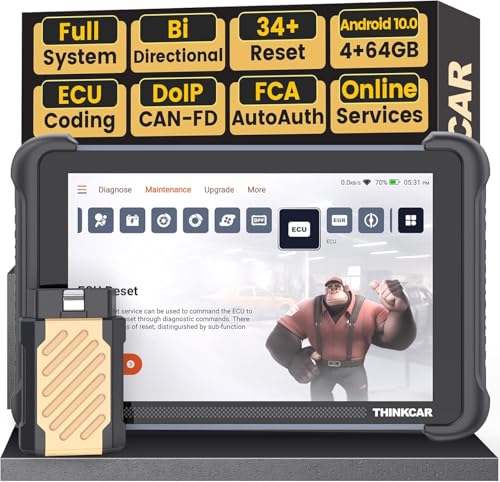
- [Notice] When you receive a used device, it may be a customer return resold by Amazon without inspection. You can exchange it for a new one through Amazon. As this situation is unavoidable, we sincerely apologize. For any issues, contacting us via Amazon's "Messages" is the best way. THINKSCAN 689BT Bidirectional Scan Tool Can Be Used Immediately After It is Turned On, Without Complicated Registration Process, Which is More Convenient & Quick.
- Full Bi-Directional Control & 3000+ Active Tests: Take control and test components like actuators, fuel injectors, relays, and cooling fans in real time. You’ll quickly see if the problem is in the part itself or the control module — saving you hours of guesswork and frustrating trial-and-error.
- Advanced ECU Coding Capabilities: Handle module matching and hidden feature activation with confidence. When you replace an ECU or want to customize settings, this obd2 scanner diagnostic bi directional tool gives you the professional-level capabilities you need without the dealership price tag.
- 34+ Useful Reset and Maintenance Functions: Complete everyday service tasks smoothly with a wide range of helpful reset and maintenance functions. Whether you’re keeping up with regular upkeep or tackling a specific job, this scanner makes maintenance simpler and less stressful for both DIYers and pros.
- Comprehensive Full System Diagnostics: Diagnose every major system — Engine, Transmission, ABS, SRS, TPMS, and more — all in one place. Finally stop wondering if you’re missing something important; get the full picture and clear codes with ease.
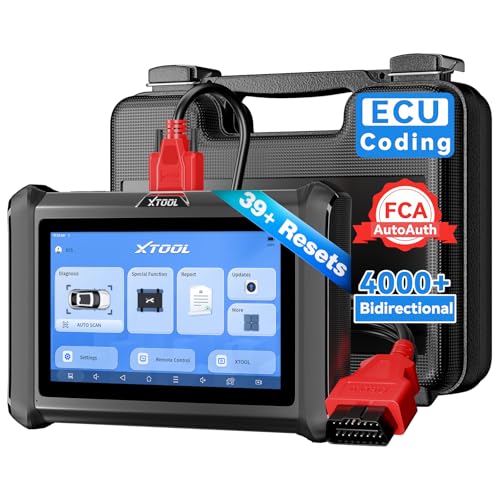
- Top Reasons to Choose the D7S OBD2 Scanner: XTOOL D7S car scan tool, an upgrade of XTOOL D7, offers comprehensive features for automotive technicians, workshops, and DIY enthusiasts 1. Upgraded Hardware: 2+64GB memory, rear camera, intuitive interface, foldable bracket 2. Complete Diagnostics: FCA
 Autoauth, OE-level all system scan, 39+ maintenance services, 4K+ bidirectional, CANFD/DoIP protocol 3. Advanced Capabilities: ECU c0ding, PMI functions 4. Wide Compatibility: Support 10,000+ models, covering 99% vehicle brands 5. Multi-language: Available in 22+ languages, No IP Restrictions 6. 3-Year Updates: Save 300 bucks on software updates for the latest features and optimizations
 - 2026 Upgraded D7S Car Scanner Features: The newly 2026 D7S V2.0 scanner for car brings exciting features for advanced vehicle diagnostics and enhanced user experience 1. FCA AutoAuth: Now supports FCA SGW module for Chrysler, for Jeep, for Dodge (2018+), for Fiat (2017+), enabling faster vehicle communication without gateway restrictions 2. PMI (Offline ECU Pr0gramming): Allows for Ford, for Lincoln, and for Mazda ECU pr0gramming for new modules 3. Optimized Diagnostic Report 2.0: Personalized reports with logos and customer info for auto shops. Note: Compatibility varies by cars, please check before order
- 39+ Services/Resets/Adaptations/Relearns/Calibrations: XTOOL D7S full system car scanner diagnostic tool tackles 99% of common car issues through its 36+ special functions, including Oil Reset, EPB, SAS, BMS, Throttle Reset, Injector C0ding, ABS Bleed, TPMS Reset, Power Balance, etc and also covers specific-vehicle functions like Crank Sensor Relearn, ABS Initialization, Cylinder Power Balance, Fuel Trim Reset, Idle Relearn etc. This car diagnostic scanner enhances efficiency, making repairs and maintenance hassle-free. Tip: DO NOT for All vehicles, please check compatibility first
- Cost-effective ECU C0ding Scan Tool for Specific Brands: Enhance your vehicle's performance with XTOOL D7S! This obd2 scanner all systems bidirectional offers advanced capabilities at an affordable price, supports online for BMW, for Benz and offline for BENZ, for MIT, along with PMI functions for Ford, for Mazda, and for Lincoln. Ideal for technicians and DIY enthusiasts, this automotive scanner diagnostic tool optimizes vehicle performance and enhances the driving experience. Note: Not for all cars and modules, please send car VIN to check the compatibility before purchase
- OE All System Diagnostic & 8 Pids Graphing: XTOOL D7S is a comprehensive all system bi directional obd2 scanner that delivers dealer-level diagnostics, completely controlling over your vehicle’s performance and health. This automotive scan tool can read and clear DTCs, view live data and ECU information, retrieve freeze frames, and perform active tests and full obd2 functions. This bi-directional scan tool can can identify your vehicle's make, model, and year information with just one click and show up to 8 PIDs live data with options for CSV viewing, playback, and recording for in-depth analysis. It is easy-to-use for both professionals and beginners, helping pinpoint issues efficiently
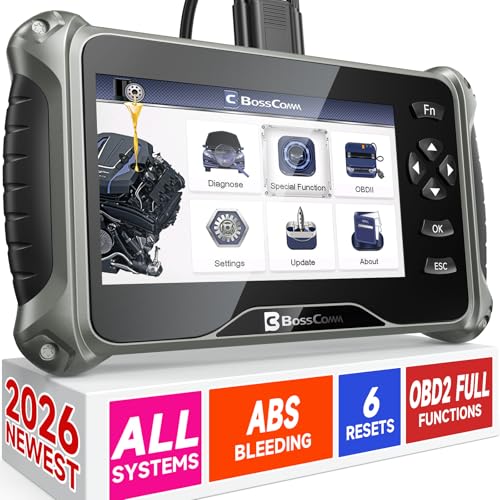
- 【✅Compared to BOSSCOMM IF742, IF745 Offers Full-System Diagnostics】The BOSSCOMM IF745 car diagnostic scanner is an upgraded model of IF742. In addition to supporting all OBD2 Code Reader functions and 6 reset options (ABS/EPB/SAS/BMS/Oil/Throttle), it expands diagnostics from 4 systems (Check Engine/ABS/SRS/Transmission) to vehicle All systems, including Steering, Suspension, and Body Electronics. This provides deeper, more comprehensive diagnostic capabilities.
- 【✨10 OBD2 Functions】The BOSSCOMM IF745 scan tool’s DTC Lookup instantly translates fault codes into user-friendly explanations, its I/M Readiness feature streamlines emissions testing with a single tap, and Freeze Frame lets you pinpoint the exact moment of a fault for in-depth root-cause diagnosis. Combined with a live data dashboard and advanced diagnostics (O2S, OBMon, EVAP), it delivers comprehensive insights for confident troubleshooting.
- 【✨Deep Diagnostics for All Vehicle System Modules】Beyond code reading/clearing and ECU information retrieval, our all-in-one data stream feature lets you inspect all current fault codes and their locations across the vehicle’s systems. This vehicle code reader helps you turn off dashboard warning lights and perform a comprehensive self-check of your car at home—no more back-and-forth trips to the repair shop or hefty inspection fees.
- 【✨6 Essential Resets: ABS Bleeding, Oil, EPB, SAS, Throttle, BMS】The BOSSCOMM IF745 obd2 scanner diagnostic tool swiftly purges air from brake lines to restore braking sensitivity, fine-tunes maintenance cycles to eliminate false alerts, resolves parking brake issues with one-click control, recalibrates steering sensors for stability, optimizes engine idling/acceleration for smoother performance, and deeply resets battery systems to extend lifespan and range via precise parameter adjustments.❗NOTE: Does NOT support bidirectional control, coding, or programming.
- 【✨10,000+ Car Models, AutoVIN, 13 Languages】The BOSSCOMM IF745 vehicle scanner diagnostic tool covers 73+ global car brands and offers support in 13 languages, making it perfect for DIYers, auto mechanics, or as a thoughtful gift. With a single-click AutoVIN feature, it instantly retrieves vehicle serial numbers, streamlining diagnostics for users globally. This adaptable tool balances user-friendliness with precision, catering to both personal and professional requirements.✅Unsure about compatibility? Compatibility will vary on vehicles' model and year, pls reach us via 📧 [email protected] 📧 before purchase.

This product presentation was made with AAWP plugin.