
NHTSA ID Number: 10246643
Manufacturer Communication Number: 130310002
TSB/Document Date: 2023-12-11
Summary
Diagnostic Tips for Difficult to Resolve Tire/Wheel Vibration Concerns
File in Section:
Bulletin No.:
Service Bulletin
Date:
03 - Suspension
13-03-10-002
September, 2013
INFORMATION
Subject:
Diagnostic Tips for Difficult to Resolve Tire/Wheel Vibration Concerns
Models:
2014 Chevrolet Silverado 1500
2014 GMC Sierra 1500
Attention: The completed worksheets, within this bulletin, must be attached to the hard copy of
the repair order.
Some customers may comment on a vibration felt in the
steering wheel, seat or floorboard of the vehicle.
Early attempts at resolving this issue may have been
unsuccessful and this bulletin focuses on work required
beyond basic balancing.
The tire/wheel assembly may be out of balance, out of
specification for radial force variation, out of
specification for run-out and/or damaged.
Important:
• Before measuring tires on GM approved tire force
variation measurement equipment, the vehicle
MUST be driven a minimum of 24 km (15 mi) to
ensure removal of any flat-spotting. Refer to the
latest version of Corporate Bulletin
Number 03-03-10-007: Tire/Wheel Characteristics
of GM Original Equipment Tires.
• GM approved tire force variation measurement
equipment MUST be calibrated prior to measuring
tire/wheel assemblies for each vehicle.
• When re-mounting the tires to the wheels, a paste
type lubricant should be used to assure proper
wheel flange to tire bead alignment. Conversely,
when a match mounting procedure is complete,
care should be taken to assure wheels do not slip
on the rim when the vehicle is driven. For
complete information and guidelines on tire
lubricants, refer to the latest version of Corporate
Bulletin Number 12-03-10-001.
• When performing a wheel centering check, the
use of collet adapters and/or precision alignment
adapters may be useful.
Diagnostic Analysis
1. Gather details from the customer describing
exactly the condition they are experiencing.
2. Visually inspect the vehicle for issues that could
contribute to vibration.
3. Test drive the vehicle using the EVA tool. Also
measure the on vehicle run-out.
4. Check tire radial force variation, balance and
run-out using GM approved equipment such as the
Hunter GSP9700 or Snap-On RFV 2000.
5. Check hub-centering.
Copyright 2013 General Motors LLC. All Rights Reserved.
6. Verify that the condition has been corrected.
7. If vibration is still not at acceptable levels and
road-force numbers are within specifications,
contact TAC with the completed worksheets from
this bulletin.
The individual sections below will guide you through
this process.
1) Gather Detailed Information
Discuss the issue with the customer and ask specific
questions about the vibration concern. The latest
version of Corporate Bulletin Number 01-00-89-010 has
Customer Concern Verification Worksheets that are a
good starting point. For example:
• Speed condition is noticed.
• Does the vibration occur at a constant speed,
during acceleration, braking or coasting?
• Where is the vibration felt?
• Is the vibration intermittent?
• When did the vibration start?
• Is there any related history (alignment, new tires
or wheels, tire rotation, accidents, extreme
usage).
2) Visually inspect Tires and Wheels
Inspect for evidence of the following:
• Proper tire size and type, including if the tires are
original equipment
• Missing balance weights
• Verify tire pressures
• Damaged wheel
• Damaged tire
• Lug nut torque
• Tire or tire wear irregularities
• Mud/ice or other material build-up in the wheel
• Any modifications to wheels, suspension or other
components that could be related, including
verification that the factory tires and wheels are
installed.
Page 2
September, 2013
3) Test Drive Vehicle
A. Using EVA and Recording Results
Inspect for evidence of the following:
• Using the Electronic Vibration Analysis (EVA) tool,
determine the magnitude and frequency of the
vibration concern. Record this information on the
Tire/Wheel And Propshaft Rotation (Reference
Document #1) and the Vibration Analysis
Worksheet (Reference Document #2).
Basic EVA set up example:
• As an example, setting up the EVA can be done
by manually inputting the tire.
• EVA set up summary (see operating manual for
details). Select the following options and input
data as appropriate:
2.1. Auto Mode
2.2. Vehicle Speed
2.3. Manual Entry
2.4. Tire Width
2.5. Aspect ratio
2.6. Rim
2.7. RWD
2.8. MPH
2.9. Speed
2.10. Speed increment 5 mph
2.11. Press enter 3 times to get the vehicle
vibration readings and be sure to use the
arrow keys to change the speed
• Plan on a 24-32 km (15-20 mi) test drive to ensure
that the tires are warmed up, or have the customer
bring the vehicle in and immediately take it for a
test drive. If additional diagnostics are needed, be
sure to lift the vehicle immediately after the drive
(to minimize flat spotting).
• Identify where the vibration is felt.
• Verify the speed of the vibration and measure the
frequency and magnitude.
Important: When using the EVA Vibration Analyzer, or
any other comparable vibration analyzer (MTS 4100),
typical magnitudes of vibration, causing a customer
complaint for first order wheel, are generally above
0.012 mg. Vibration magnitudes below 0.012 mg are
generally within an acceptable range.
• While the EVA should be used for identifying the
source of the vibration, below are some
characteristics that may help:
• A vibration that gets worse as speed increases
may be balance related.
• Move the EVA sensor to different corners to
assist in determining the highest input to the
vibration concern.
• A vibration that occurs at only one speed may
be run-out related.
• A vibration that phases in and out indicates a
condition at more than one source and/or 2nd
or higher order vibration.
• Low speed wobble is most likely run-out
related – not a balance problem.
Bulletin No.: 13-03-10-002
• A vibration that occurs when accelerating or
decelerating is probably driveline component
related.
• If a vibration concern is identified, and is
related to the tire and wheel assembly, perform
the next steps. If it is not related to tire wheel
assembly, please refer to SI for appropriate
vibration diagnostics.
B. Measuring On-Vehicle Run-out
With a focus on the corner that has the highest input to
the customer’s concern:
1. Raise and support the vehicle.
176957
2. Wrap the circumference of each tire with tape (1) in
the center tread area. Wrapping the tread with tape
allows for a smooth and accurate reading of radial
run-out to be obtained.
Important: The dial indicator should be securely
clamped in order to obtain accurate readings.
3. Position the dial indicator on the taped portion of
the tire tread so that the dial indicator is
perpendicular to the tire tread surface.
4. Slowly rotate the tire and wheel assembly one
complete revolution in order to find the low spot.
5. Set the dial indicator to zero at the low spot.
6. Slowly rotate the tire and wheel assembly one
more complete revolution and measure the total
amount of radial run-out, marking the high point on
the tire and wheel assembly ignoring small
imperfections on the tire or tape.
Important: Before and after run-out measurements
must be recorded on the repair order for each tire and
wheel assembly that is balanced and/or
match-mounted.
Note: Current specifications for maximum tire and
wheel assembly radial run-out - measured
on-vehicle: 1.52 mm (0.060 in). Verify the current
specification within SI.
Bulletin No.: 13-03-10-002
September, 2013
176958
7. For measuring lateral run-out, position the dial
indicator on a smooth portion of the tire sidewall,
as close to the tread as possible, so that the dial
indicator is perpendicular to the tire sidewall
surface.
8. Slowly rotate the tire and wheel assembly one
complete revolution in order to find the low spot.
Ignore any jumps or dips due to sidewall splices.
9. Set the dial indicator to zero at the low spot.
10. Slowly rotate the tire and wheel assembly one
more complete revolution and measure the total
amount of lateral run-out. Ignore any jumps or dips
due to sidewall splices and attain an average
run-out measurement.
Notice: Maximum tire and wheel assembly lateral
run-out - measured on-vehicle: 1.52 mm (0.060 in).
11. Repeat steps 3 through 10 until all of the tire and
wheel assembly radial and lateral run-out
measurements have been taken.
12. If excessive run-out is identified, refer to Section 5
of this document, Tire RFV, Balance and Run-out,
Measurement below for details and replace the tire
or wheel assembly as needed.
4) Tire Radial Force Variation, Balance
and Run-out
Important: GM approved equipment such as the
Hunter GSP9700 or Snap-On RFv 2000 must be used
to verify proper tire radial force vibration.
Tire radial force vibration (RFV) can be defined as the
amount of stiffness variation the tire will produce in one
revolution under a constant load. Radial force variation
is what the vehicle feels because the load (weight) of
the vehicle is always on the tires. Although free run-out
of tires (not under load) is not always a good indicator
of a smooth ride, it is critical that total tire/wheel
assembly run-out be within specification.
Page 3
GM approved equipment such as the Hunter GSP9700
or Snap-On RFV 2000 loads the tire, similar to on the
vehicle, and measures radial force variation of the tire/
wheel assembly. Note that the wheel is affecting the
tire's RFV measurement at this point. To isolate the
wheel, its run-out must be measured. This can be
easily done on the Hunter, without the need to set up
dial indicators. If the wheel meets the run-out
specification, the tire's RFV can then be addressed.
1. Set the tire pressure to the placard values.
2. Using the Hunter GSP9700 or Snap-On RFV 2000,
check the balance of the tire/wheel assembly and
make corrections as necessary.
3. Measure radial force variation and radial run-out.
4. Make corrections to out of specification RFV and
run-out by Tire-to-Wheel Match-Mounting (refer to
Document ID: 2084548).
5. Record your measurements before and after on
the Balance Summary (Reference Document #3)
at the end of this bulletin. It may be of benefit to
have the lowest RFV assembly to the front left
corner. Re-check on the EVA and if the problem
still exists, test another vehicle to find tire(s) that do
not exhibit the same frequency and swap those
tires onto the subject vehicle (prior to installation,
RFV should be checked on the test vehicle tire
assemblies).
6. Mark the high point of the tire/wheel assembly to
assist with match mounting the assembly to
the hub.
Important: After balancing the tire/wheel assemblies,
make sure to make a mark on the tire where the valve
stem is located. This is to verify that there is no tire slip
occurring on the vehicle.
P-Metric tires on passenger cars
18 lbs (8 kg) or less
P-Metric tires on light trucks
24 lbs (11 kg)
or less
LT-tires on light trucks
35 lbs (16 kg)
or less
If match mounting tires to in-spec wheels produces
assembly values higher than these, tire replacement
may be necessary. Replacing tires at lower values will
probably mean good tires are being condemned.
Because tires can sometimes become temporarily
flat-spotted, which will affect force variation, it is
important that the vehicle be driven at least 26 km
(15 mi) prior to measuring. Tire pressure must also be
adjusted to the usage pressure on the vehicle's tire
placard prior to measuring.
Most Trucks will tolerate radial force variation up to
these levels. However, some trucks are more
sensitive, and may require lower levels. Also, there are
other tire parameters that equipment such as the
Hunter GSP9700 or Snap-On RFV 2000 cannot
measure that may be a factor.
Page 4
September, 2013
Important:
• When mounting a GM wheel to a wheel balancer/
force variation machine, always use the wheel's
center pilot hole. This is the primary centering
mechanism on all GM wheels; the bolt holes are
secondary. Usually a back cone method to the
machine should be used. For added accuracy and
repeatability, a flange plate should be used to
clamp the wheel onto the cone and machine. This
system is offered by all balancer manufacturers in
GM's dealer program.
• The use of “Quick Match” should be avoided when
using the Hunter GSP9700 and a centering check
must be performed on each wheel.
• Any type of service equipment that removes tread
rubber by grinding, buffing or truing is NOT
recommended, and may void the tire warranty.
However, tires may have been ground by the tire
company as part of their tire manufacturing
process. This is a legitimate procedure.
Bulletin No.: 13-03-10-002
5) Verify Correction
Drive the truck and evaluate at speeds as defined by
the customer and previously proven during your test
drive.
6) Contact TAC
If the Customer Concern still exists and all of the
measurements are in specification, contact the
Technical Assistance Center (TAC) with completed
worksheets.
Bulletin No.: 13-03-10-002
September, 2013
Page 5
Reference Document #1
3218154
Page 6
September, 2013
Bulletin No.: 13-03-10-002
Reference Document #2
Steering Wheel Shake Worksheet
To:
Dealer:
Fax Number:
VIN__ __ __ __ __ __ __ __ __ __ __ __ __ __ __ __ __
Procedure Performed By:
Date:
Model:
Year:
Odometer:
VIN __ __ __ __ __ __ __ __ __ __ __ __ __ __ __ __ __
TAC Case #, if applicable:
Conditions During Road Test Procedures
As condition occurs: Engine RPM_____________
Vehicle Speed__________________
Vibration/Noise detected during the following road test procedures:
Engine RPM_______________ Vehicle Speed_______________
Slow Acceleration Test: Yes__________ No__________
Neutral Coast-Down Test: Yes__________ No__________
Downshift Test: Yes__________ No__________
Neutral Run-Up Test: Yes__________ No__________
Steering Input Test: Yes__________ No__________
When using the EVA, always take a snapshot. This will help determine which vibration shows up the most.
Important: Vibrate software can also be used to assist in vibration diagnosis. Refer to Vibrate Software Description and
Operation in SI.
EVA Readings
Refer to Electronic Vibration Analyzer (EVA) Description and Operation in SI for more detailed information.
Important: As a reminder, place the EVA sensor where the vibration is mostly felt. Ensure the word “UP” on the sensor is
physically facing up. The typical areas are the seat track, the steering column or the instrument panel. Locating the EVA sensor
on additional area (i.e. the right fender, left fender, right quarter panel, left quarter panel, rear seat track, etc.) may also assist in
determining the component causing the vibration/noise. The key is to look for the same Hz reading with the greatest amplitude
G readings.
Bulletin No.: 13-03-10-002
September, 2013
Steering Wheel Shake Worksheet
FILL OUT ONLY THE APPLICABLE PORTION OF THE WORKSHEET THAT APPLIES TO THE VIBRATION/NOISE:
Sensor at Steering Column:
1st Line MPH/KPH:__________ HZ:__________ Gs:__________
2nd Line MPH/KPH:__________ HZ:__________ Gs:__________
Sensor at Roof:
1st Line MPH/KPH:__________ HZ:__________ Gs:__________
2nd Line MPH/KPH:__________ HZ:__________ Gs:__________
Sensor at Passenger Seat Rail:
1st Line MPH/KPH:__________ HZ:__________ Gs:__________
2nd Line MPH/KPH:__________ HZ:__________ Gs:__________
Tire Size and Brand:_____________________________________
Wheel/Tire Runouts on vehicle (max. 0.050 in (1.27 mm))
Refer to Corporate Bulletin Number 00-03-10-006D for tire radial force variation.
Right rear: Inner lateral:__________ Center radial:__________
Left rear: Inner lateral:__________ Center radial:__________
Right front: Inner lateral:__________ Center radial:__________
Left front: Inner lateral:__________ Center radial:__________
Mounting surface runouts (max. 0.005 in (0.127 mm))
Flange, right rear:__________ Hub, right front:__________
Flange, left rear:__________ Hub, left front:__________
Wheel stud runouts (max. 0.008 in (0.203 mm))
Flange, right rear:__________ Hub, right front:__________
Flange, left rear:__________ Hub, left front:__________
List Additional Repairs, If Applicable
Page 7
Page 8
September, 2013
Bulletin No.: 13-03-10-002
Reference Document #3
3218151
GM bulletins are intended for use by professional technicians, NOT a "do-it-yourselfer". They are written to inform these
technicians of conditions that may occur on some vehicles, or to provide information that could assist in the proper
service of a vehicle. Properly trained technicians have the equipment, tools, safety instructions, and know-how to do a
job properly and safely. If a condition is described, DO NOT assume that the bulletin applies to your vehicle, or that your
vehicle will have that condition. See your GM dealer for information on whether your vehicle may benefit from the
information.
WE SUPPORT VOLUNTARY
TECHNICIAN
CERTIFICATION
- 【Perfect Emergency Repair Solution】This kit includes...
- 【Premium Materials for Safe Repairs】Our tire screw plugs...
- 【2 Sizes for Every Puncture】Choose the right size for...
- 【5-Minute DIY Repair】Skip the auto shop and fix flats...
- 【Emergency-Ready Design】Compact & ready for...
Last update on 2026-06-23 / Affiliate links / Images from Amazon Product Advertising API
If the PDF is very large, it may not load in the preview below.
Some older TSBs had multiple PDFs — visit the NHTSA Website to view all PDFs.
If the TSB PDF does not show, download or view it on the NHTSA Website.
Click on the (+) Plus Sign
Then Click on Associated Document(s)
Search NHTSA Database for Recalls
Search NHTSA Database for Vehicle Investigations
View Latest Vehicle Investigations
Search NHTSA Database for Vehicle Complaints
View Latest Vehicle Complaints
TSB/Document ID: 130310002
Replacement Service Bulletin Number:
MFR Communication Date: 2013-09-01
MFR Internal Campaign ID/Software Version:
Communication Type: Service Bulletin/Repair Instructions
NHTSA Components: SUSPENSION
MFR Component System:
MFR Component Subsystem:
Previous TSB | Next TSB |
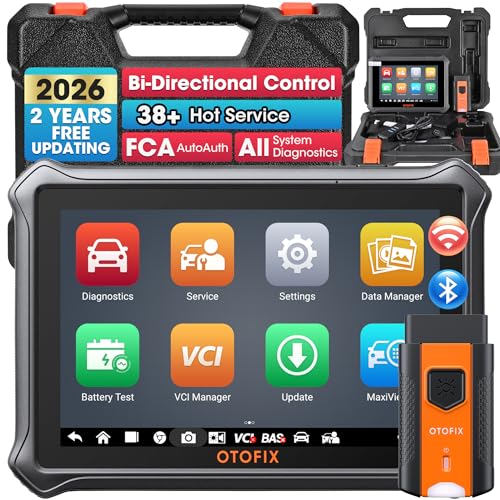
- 🎉[OTOFIX D1 Lite, Perfect Cost-effective Diagnostic Tool]: OTOFIX D1 Lite, a newest bidirectional scan tool from OTOFIX company, is a great choice for DIYers and repair shops. 👉This obd2 scanner diagnostic tool packs all practical functions: OE level all systems diagnoses, Bi-Directional Control, 38+ reset services fixing 99% of common problems, support DoIP & CANDF protocols and FCA
 AutoAuth, high-end hardware configuration. Worldwide vehicles and 🔥2 Years Free Updating🔥 covered.
 - 🎉[Bi-Directional Scan Tool, Active Test]: OTOFIX D1 Lite bluetooth obd2 scanner can also command ECUs and monitor the operation of the actuators to track down the problems of certain parts, like windows, sunroof, wipers, fuel pumps, etc., saving repair time & trouble. This makes OTOFIX D1 Lite the most cost-effective bidirectional scan tool.
- 🎉[2026 Newest, 38+ Hot Reset Functions]: Equipped with 38+ reset functions in one, the OTOFIX D1 lite automotive scanner diagnostic tool allows you to troubleshoot 99% of common vehicle problems. You can use this car diagnostic scanner holding enough functions to easily repair common vehicle models in your repair shops. Including Oil Reset, Injector Coding, Throttle, DPF Reset, SCR Reset, Gear Learning, Clutch Learning, Suspension, etc. Note* Reset functions vary by model.
- 🎉[OE Level Full Systems Diagnostics]: Unlike the 2-system and 4-system diagnostic tools, the OTOFIX auto scan tool can complete comprehensive system diagnostics within 5 minutes. It accesses and scans all available onboard systems like for Engine /AT /ABS /EPB /BMS /TPMS /SRS /SAS /Audio System /BCM /Air Conditioning / etc., to read & clear codes, view live data, and check ECU information. Note: Active test is not involved.
- 🎉[Powerful Hardware Configuration]: Designed with a fashion appearance & a 7” touchscreen and a weight of 463g, this OTOFIX D1 Lite OBD2 diagnostic scanner scan tool is convenient for everywhere and easy to use & store. Android9.0 OS and 2+64GB memory enhance multi-task smoothness and diagnostic operation, no more wasting too much time. 5800mAh battery allows hours-lasting use. WiFi & VCI1 also bring faster communication for your diagnostics.

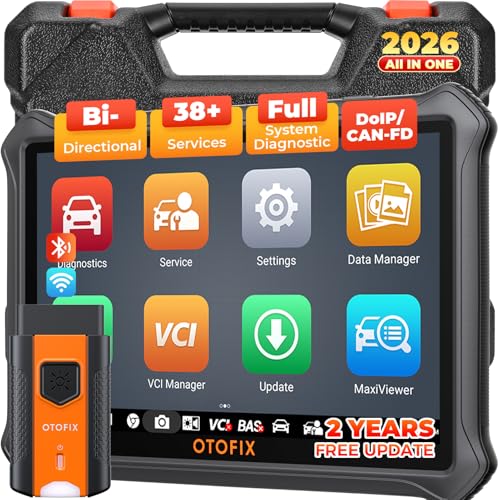
- 🏆【2026 TOP OBD2 Scanner Diagnostic Tool】OTOFIX D1 Lite wireless obd2 scanner has upgraded hardware configuration and car coverage. The newly upgraded D1 Lite with 🔥OS Android 9.0🔥1.5Ghz 4 core high efficiency processor🔥2GB RAM+64GB ROM large storage🔥5800mAh large battery, more stable and longer lasting diagnostics🔥 38+ Reset🔥action tests🔥full system diagnostic🔥Supports MV105 endoscope🔥21+ Language Supports🔥100000+ vehicle coverage to meet all your daily maintenance needs.
- 👍【Bi-Directional Control / Active Test】D1 Lite obd2 scanner has bidirectional control(worth $300+), which is the most beloved feature among mechanic. If your headlights or car windows are broken, going to a repair shop will cost a lot of money. You can use D1 Lite to send execution commands to the ECU module and identify the repair status. Such as ABS, car windows, doors, valves, wipers, headlights, etc., effectively shorten diagnostic time and reduce diagnostic costs.
- 🔥【All Systems Diagnostics, In-depth Checking】This advanced OBD2 Scanner D1 Lite can perform OE-level diagnosis of all systems including engine, transmission, airbag, ABS, ESP, TPMS, gateway, steering, radio, and air conditioning for more than 100 brands. This diagnostic scanner supports essential functions, such as reading ECU version info, reading and clearing fault codes, and reading data streams.With just a simple click, it provides you with accurate and in-depth diagnostics.
- 🏆【38+ Reset Hot Functions】For repair workshops, holding an OTOFIX D1 Lite Auto scanner is a strong advantage over others. Its 38+ maintenance functions provide various solutions for all module repairs, including Oil Reset, TPMS Reset, Injector Coding, Suspension, Throttle Matching, etc., which will usher your repair business to a new pinnacle. Continuously updating will never make the functionality & compatibility out-of-date.
- 🏆【150+ Models, 10000+ Car Coverage & 16 Languages】D1 Lite is a comprehensive car diagnostic scan tool, help you to troubleshoot car issues fast for 95% US, European, Asian auto makes. ✅ With frequent updates and optimizations allow D1 Lite to cover more vehicles to meet your needs. ✅ Multilingual menu allows auto mechanics around the world to use it without language barriers. 🚩Note: Kindly send us the S/N of the device to authorize new language updates before changing the menu language.
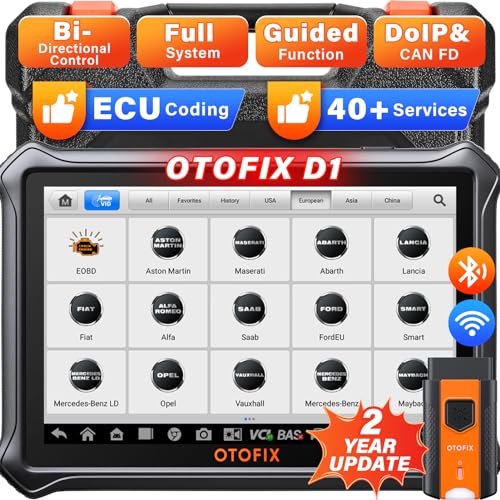
- 2026 Newest Wireless Bluetooth Scan Tool D1: OTOFIX D1 Diagnostic scanner is upgraded version with Enhanced Hardwares & Newest Functions, FASTER and SMARTER! ✅Alternative Bluetooth 5.0 +USB connect✅2G+64GB✅Android 9.0 OS✅5G & 2.4 GHz Dual WiFi✅5800mAh battery👍VAG Guided Function👍ECU Online Coding👍CANFD&DOIP👍40+ Services👍Bi-Directional Control👍Full Systems Diagnose👍2 Years Free Update👍150+ Vehicle Coverage🎁Contact to get gift: otofixaftersales-amz@ outlook.com
- ECU Coding to Unlock the Hidden Features: OTOFIX D1 obd2 scanner diagnostic tool newly adds ECU Coding which can Online Coding(ONLY for VW/Au.di/Sk0da), Variant Coding/Offline Programming, Flash Hidden Functions, Reset Adaptive Data, Match Replaced Components, Customize OE-Settings. Such as: halogen fog lamps retrofitted with xenon fog lamps, different capacity battery retrofit, disbale auto start-stop, sunroof initialization, injector calibration, etc. PS: Coding functions vary by model&year.
- Full Bidirectional Control for Active Car Tests: The D1 OTOFIX scanner also offers bi-directional control, allowing you to perform powerful active tests on car subsystems. This means that you can check the working status and functionality of open & close solenoids, energize injectors, turn cooling fan on & off, and more, all from the device itself.🚩The D1 bi-directional obd2 scanner can quickly help you to check if a system or component goes well,Improving 200% Efficiency.**Note that Active Tests available depend on the make/model/year of your car.
- 40+ Popular Maintenance Functions: OTOFIX D1 obd scanner for car performs 40+ hot services, including Oil Reset, EPB, TPMS, BMS, E.GR, G.PF, D.PF, SAS Calibration, ABS Bleeding, Injector Coding, Gearbox Match, Suspension, Crankshaft Relearn, Power Balance, etc., still growing. Great choice for DIYers, technician, repair shop. 🚩Get MORE special functions from "Car Brand>System>Service". Check compatibility before purchase via 📧 otofixaftersales-amz@ outlook.com.
- OE-Level All Systems Diagnostic + One-Click AutoVIN & AutoSCAN: OTOFIX D1 scanner automotriz gives you the ability to troubleshoot entire car systems including engion system,transmission system,body system,chassis,etc. 🚩One of the standout features of the D1 obd2 scanner diagnostic tool is the one-click AutoVIN & AutoScan function. This feature allows you to quickly and easily scan all diagnosable ECUs with just one click, and identify any problems hidden in your vehicle's systems.
Last update on 2026-06-23 / Affiliate links / Images from Amazon Product Advertising API
This product presentation was made with AAWP plugin.