
NHTSA ID Number: 10244504
Manufacturer Communication Number: B612523
TSB/Document Date: 2023-11-01
Summary
The purpose of this Service Bulletin (SIB) is informational regarding DC (direct current) charging complaints on Gen 5 Battery Electric Vehicles (BEV). It serves as a supporting argument and is intended to help distinguish between a standard designed function or component operation from an actual system fault in a DC charging customer complaint (i.e., “DC Not charging or “DC charging too slowâ€Â. Helpful “Tips and Tricks†have been included on each topic within the document that can be used as reference to aid in the diagnosis or in understanding the system. The situation involves several possible causes: 1. Limitation of charging power by the charging station or charging app configuration. 2. Decreasing charging power at a very high state of charge (SoC). 3. Too frequent DC charging attempts within a short period of time. 4. The high-voltage battery is not at the ideal temperature. 5. Ageing of the high-voltage battery.
10/25/23, 2:51 PM
61 25 23_BEV - REASONS FOR NO/SLOW DC CHARGING COMPLAINT
SIB 61 25 23
BEV - REASONS FOR NO/SLOW DC CHARGING COMPLAINT
2023-10-25
MODEL
E-Series
G26 BEV
Model Description
i4 Gran Coupe (BEV)
G60 BEV
i5 Sedan Battery Electric Vehicle (BEV)
G70 BEV
i7 Sedan Battery Electric Vehicle (BEV)
i20
iX Sports Activity Vehicle (SAV)
SITUATION
The purpose of this Service Bulletin (SIB) is informational regarding DC (direct current) charging complaints
on Gen 5 Battery Electric Vehicles (BEV). It serves as a supporting argument and is intended to help
distinguish between a standard designed function or component operation from an actual system fault in a
DC charging customer complaint (i.e., “DC Not charging or “DC charging too slow”.
Helpful “Tips and Tricks” have been included on each topic within the document that can be used as
reference to aid in the diagnosis or in understanding the system.
The situation involves several possible causes:
1. Limitation of charging power by the charging station or charging app configuration.
2. Decreasing charging power at a very high state of charge (SoC).
3. Too frequent DC charging attempts within a short period of time.
4. The high-voltage battery is not at the ideal temperature.
5. Ageing of the high-voltage battery.
SOLUTION
For a detailed description of the above topics along with many useful tips and tricks to help understand the
BEV vehicle DC charging system and to verify the related DC charging customer complaints, please
download the attachment SI B61 25 23 - “BEV - Reasons for No/Slow DC Charging Complaint.
B61 25 23 BEV - Reasons for No_Slow DC Charging Complaint.pdf
For more information regarding AC and DC charging please download the “Gen 5 Vehicle Quick Reference
Guide for the Service Drive” attachment, also available on TIS.
B61 25 23 Attachment Gen 5 Vehicle Quick Reference Guide for the Service Drive
The following subjects are discussed in this guide:
What is AC vs. DC Charging
Charging Socket
BMW Flexible Fast Charger 2.0
Vehicle Charging and what to expect (times, speeds)
Battery Preconditioning
Main factors affecting range
Quick Links to BMW’s YouTube Tutorials
FEEDBACK REGARDING THIS BULLETIN
Technical Feedback
To submit feedback for the technical topic of this bulletin: Submit your
feedback in the rating box at the top of this bulletin
Copyright ©2023 BMW of North America, Inc.
about:blank
1/3
10/25/23, 2:51 PM
Warranty Feedback
Parts Feedback
61 25 23_BEV - REASONS FOR NO/SLOW DC CHARGING COMPLAINT
To submit feedback for the CLAIMS section of this bulletin: Submit an IDS
ticket to the Warranty Department, or use the chat available in the
Warranty Documentation Portal
To submit feedback for the PARTS section of this bulletin: Submit an IDS
ticket to the Parts Department
Supporting Materials
picture_as_pdf B61 25 23 Attachment Gen 5 Vehicle Quick Reference Guide for the Service Drive.pdf
picture_as_pdf B61 25 23 Attachment BEV Reasons For NoSlow DC Charging Complaint .pdf
Copyright ©2023 BMW of North America, Inc.
about:blank
2/3
10/25/23, 2:51 PM
61 25 23_BEV - REASONS FOR NO/SLOW DC CHARGING COMPLAINT
Copyright ©2023 BMW of North America, Inc.
about:blank
3/3
Attachment 1 to SI B61 25 23
October 2023
BEV - Reasons For No/Slow DC Charging Complaint
The purpose of this Service Bulletin (SIB) is informational regarding DC charging complaints on
Gen 5 Battery Electric Vehicles (BEV). It serves as a supporting argument and is intended to help
distinguish between a standard designed function or component operation from an actual system
fault in a DC charging customer complaint (i.e., “DC Not charging or “DC charging too slow”.
Helpful “Tips and Tricks” have been included on each topic within the document that can be used
as reference to aid in the diagnosis or in understanding the system.
The situation involves several possible causes:
1.
2.
3.
4.
5.
Limitation of charging power by the charging station or charging app configuration
Decreasing charging power at a very high state of charge (SOC)
Too frequent DC charging attempts within a short period of time
The high-voltage battery is not at the ideal temperature.
Ageing of high-voltage battery
1. Limitation of charging power by the charging station or charging app
configuration
Possible cause for the situation #1 may be associated with the charging station/provider/
installation:
•
•
•
•
•
•
The maximum charging power of the vehicle is higher than that of the charging station.
Quality state or internal fault of the charging station
Charging station (installation/grid/post) current limitation with effect on the charging
power
Delayed increase in charging power at the charging station (installation/grid/post)
Charging power of the charger is limited, as the power is divided amongst various
chargers at that location.
As DC charging is currently only available at public charging stations located in shopping
malls, convenience/service stations and highway rest areas. The customer interacts with
these charging stations via charging apps in their mobile phone.
o Mobile charging apps require configuration and signing up with a valid email and
a form of payment entered (even if the service is free, with the account).
o Inconsistencies in the customer’s account information may result in the vehicle
not charging at that facility/charger.
Tip:
Signing up to the Electrify America charging plan, is easy, just follow the prompts within the My
BMW App. Various free charging programs are offered and coverage differs depending on the
vehicle.
Trick:
In cases where the charging app configuration is suspected, the customer can verify the vehicle
will charge by connecting to a “known good” DC charger (outside that app network in question)
or by simply bringing the vehicle to the dealer for charging verification.
1
Tip:
The customer can access the last charging events stored in their My BMW app.
This information can be shared with their BMW Service Center to help aid in the
charging complaint diagnosis.
The My BMW App stores the most recent charging history including the most important information
about the last charging events. The information may be pertinent in many charging complaints that
involve a specific charging station or charger location or even the charging power that was delivered.
The data extracted can be helpful in identifying the root of the problem or the faulty charger that was
used. However, it is up to the customer if they would like to share this with the BMW service center.
To access this the My BMW app charging history, follow the path below:
Open My BMW app > Charging > Charging history >Share > Select how you would like to share.
Tip:
The BMW Service Center can print and provide the customer a detailed “Charging Check
report” of the vehicle’s High-voltage AC and DC charging system directly from the ISTA
charging system test plan.
To verify the customer charging complaint, use ISTA charging history test plan as a diagnostic option in
service. The charging history can be read out via a service function in the following path:
Service functions > Electric drive > Charging > Read the history of the last charging processes.
Note: Only the last 5 charging processes are stored and available to review.
Trick:
Do not to attempt to plug in a charger before the charging history is read out or the events that
the customer has experienced and is complaining about will be erased.
2
Tip:
The charging indicator LED display at the
HV charging plug should not be used as a
diagnostic tool in service. This is designed
as a quick indicator of charging state to the
user (customer).
Instead:
• perform ISTA diagnosis,
• check fault codes,
• run the charging history test plan to
verify the customer concerns and
• then the fault relevant charging test
plans to verify why the car is not
charging.
HV charging plug blue LED indicating charging
Instrument cluster charging indicator display (DC charger limitation).
If a shaded area (///////) is displayed to the right
of the charging bar in the instrument cluster
charge indicator during the charging process,
this indicates a restriction imposed by the
charger or the infrastructure the charger is
connected to. In this example, the vehicle is
charging at a rate of 106 kW out of a possible
200 kW.
In the second example only 48 kW are being
charged. Notice the shaded area (///////)
displayed is larger.
Instrument cluster charging indicator display (DC
charger limitation)
2. Decreasing charging power at a very high state of charge (SOC)
During a typical charging session, the charging power decreases as the state of charge of the
HV battery increases; this is designed as a protective function of the high-voltage battery.
3
Instrument cluster charging indicator display (vehicle charging rate limitation).
The blue shaded area displayed on the left of
the charging bar, in the instrument cluster
charge indicator during charging, indicates the
charging rate “currently allowed” by the vehicle
at this moment.
This value will be displayed in Kilowatts (kW)
directly above the charge bar and will vary:
• depending on the charger used,
• the charge settings in the vehicle and
• will display a lower rate at the beginning
and near the end of the charging
session, especially due to battery
temperature.
Instrument cluster charging rate indicator display
3. Too frequent DC charging attempts within a short period of time
When driving for a long time without stationary period with four DC charging processes in quick
succession, there is a power reduction in the vehicle after the fifth charging process.
This is a standard protective function designed to prevent the high-voltage battery from ageing
too quickly under repeated DC charging events without sufficient stationary time to balance the
HV cells in the HV battery.
•
•
The full charging power will be available again no later than 48 hours after the last DC
charging process.
The car may be driven to deplete the state of charge (SOC) further before charging
again.
Tip:
In this case to restore the frequent DC charging limitation, it is recommended to drive the
vehicle normally to deplete the state of charge further than usual (for example to 40% SOC)
and perform the next charging session with an AC charger (if possible).
A Check Control message (CCM) is generated to alert the customer of when this protective function
has triggered in the vehicle corresponding to “too frequent DC charging events without stationary
period”.
4
The CCM is available from I level 23-07-5xx onwards with the information below.
Charging power reduced. Extended charging
time.
DC charging power temporarily reduced to
conserve the high-voltage battery.
Full DC charging power available again after
DC charging pause of up to 2 days.
Charging power temporarily reduced Check
Control Message
4. The high-voltage battery is not at the ideal temperature.
This is a normal function when the high-voltage battery temperature limits are exceeded.
•
•
•
The high-voltage battery is too cold to charge (due to excessively low outside temperature) and
it has not yet had time to “precondition “to warm up the cells before the charging process
started.
The high-voltage battery is too hot to charge (due to excessively high outside temperature or
spirited summer driving without cool down period.
Inadequate cooling of the high-voltage battery due to faults in the HV battery cooling system,
insufficient coolant quantity and/or refrigerant in air-conditioning (A/C) the system.
Tip:
It is a good practice to set preconditioning of the HV battery before charging in extreme (high or
low) temperatures to avoid slow charging or having to wait at the charger while the battery
ready’s itself to charge.
From July 2022 vehicle production onwards, when the outside temperature is below
15 °C / 59 °F, a blue car with temperature symbol appears in the instrument cluster during charging to
indicate to the driver a temperature related charging limitation has been enabled.
The “cell temperature too high / cell
temperature too low” is specified in the
Charging History test plan and available for up
to 5 previous charging events stored.
ISTA Path:
Service functions > Electric drive >
Charging > Read the history of the last
charging processes.
Instrument cluster charging indicator display
(temperature limitation)
5
Trick:
Setting the charging station location as a navigation destination or an intermediate destination
(route optimized for charging), is also good practice so the high-voltage battery is automatically
preconditioned to the ideal temperature to charge, if there is sufficient time to do so on the way
to the destination.
Note:
Preconditioning preparation can also be activated manually as from vehicle production in
November 2022 onwards.
5. Ageing of high-voltage battery
High-voltage battery state of health (SOH)
As with any battery and because of use, over time, the capacity of the high-voltage battery is reduced
(therefore “SOH = battery condition” decreases).
The maximum current depends on the battery condition and is reduced if necessary.
The values are relatively proportional, so that, for example, at 90% battery condition, about 90% of the
maximum charge current is still available.
Determination of battery condition (SOH) is assessed by testing the battery capacity via ISTA service
function.
The path is as follows:
Vehicle management > Troubleshooting > Function structure > Electric drive > High-voltage
battery unit > High-voltage battery: Evaluate battery condition.
The following sources of information about “charging”.
•
•
•
•
•
The vehicle's owner’s manual,
Technipedia
Charging the high-voltage battery unit FUB
DC charging FUB
Target values / procedure in case of customer complaint involving charging of the high-voltage
battery in Aftersales Information Research (AIR).
For more information regarding AC and DC charging please download the “Gen 5 Vehicle Quick
Reference Guide for the Service Drive” SIB 61 25 23 attachment, also available on TIS.
Following Subjects are discussed in this guide:
•
•
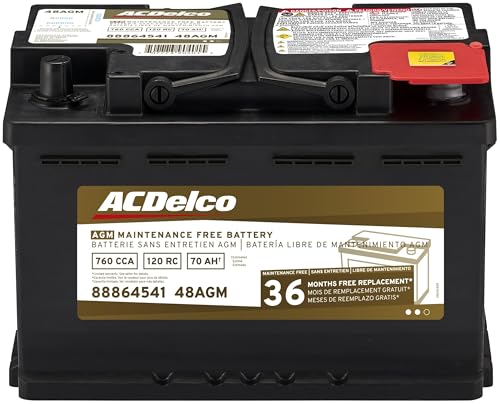
- High density negative paste, improves performance and...
- Enhanced life alloy or Silver Calcium stamped alloy...
- Calcium lead positive grid, maximizes conductivity and...
- Robust envelope separator with puncture resistant back...
- Vent cap design that resists acid leakage

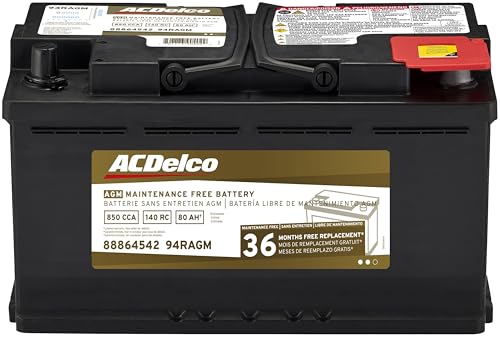
- High density negative paste, improves performance and...
- Enhanced life alloy or Silver Calcium stamped alloy...
- Calcium Lead positive grid, maximizes conductivity and...
- Robust Envelope Separator with puncture-resistant back...
- Vent cap design that resists acid leakage
Last update on 2026-06-29 / Affiliate links / Images from Amazon Product Advertising API
If the PDF is very large, it may not load in the preview below.
Some older TSBs had multiple PDFs — visit the NHTSA Website to view all PDFs.
If the TSB PDF does not show, download or view it on the NHTSA Website.
Click on the (+) Plus Sign
Then Click on Associated Document(s)
Search NHTSA Database for Recalls
Search NHTSA Database for Vehicle Investigations
View Latest Vehicle Investigations
Search NHTSA Database for Vehicle Complaints
View Latest Vehicle Complaints
TSB/Document ID: B612523
Replacement Service Bulletin Number:
MFR Communication Date: 2023-10-25
MFR Internal Campaign ID/Software Version:
Communication Type: Service Bulletin/Repair Instructions
NHTSA Components: ELECTRICAL SYSTEM
MFR Component System:
MFR Component Subsystem:
Previous TSB | Next TSB |
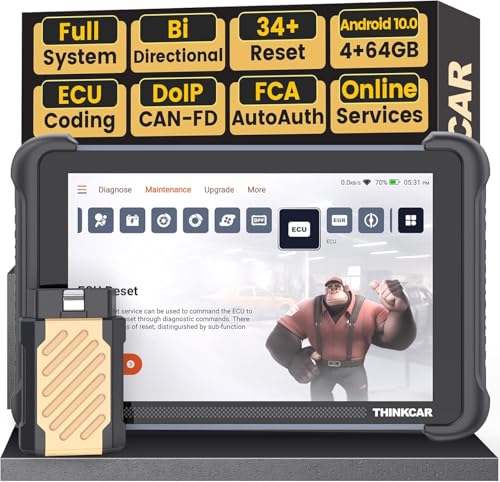
- [Notice] When you receive a used device, it may be a customer return resold by Amazon without inspection. You can exchange it for a new one through Amazon. As this situation is unavoidable, we sincerely apologize. For any issues, contacting us via Amazon's "Messages" is the best way. THINKSCAN 689BT Bidirectional Scan Tool Can Be Used Immediately After It is Turned On, Without Complicated Registration Process, Which is More Convenient & Quick.
- Full Bi-Directional Control & 3000+ Active Tests: Take control and test components like actuators, fuel injectors, relays, and cooling fans in real time. You’ll quickly see if the problem is in the part itself or the control module — saving you hours of guesswork and frustrating trial-and-error.
- Advanced ECU Coding Capabilities: Handle module matching and hidden feature activation with confidence. When you replace an ECU or want to customize settings, this obd2 scanner diagnostic bi directional tool gives you the professional-level capabilities you need without the dealership price tag.
- 34+ Useful Reset and Maintenance Functions: Complete everyday service tasks smoothly with a wide range of helpful reset and maintenance functions. Whether you’re keeping up with regular upkeep or tackling a specific job, this scanner makes maintenance simpler and less stressful for both DIYers and pros.
- Comprehensive Full System Diagnostics: Diagnose every major system — Engine, Transmission, ABS, SRS, TPMS, and more — all in one place. Finally stop wondering if you’re missing something important; get the full picture and clear codes with ease.
Last update on 2026-07-02 / Affiliate links / Images from Amazon Product Advertising API
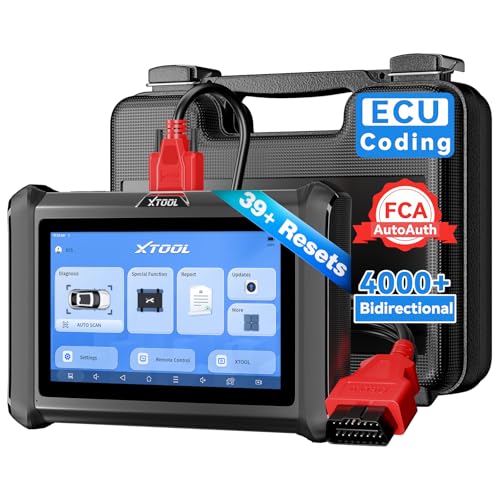
- Top Reasons to Choose the D7S OBD2 Scanner: XTOOL D7S car scan tool, an upgrade of XTOOL D7, offers comprehensive features for automotive technicians, workshops, and DIY enthusiasts 1. Upgraded Hardware: 2+64GB memory, rear camera, intuitive interface, foldable bracket 2. Complete Diagnostics: FCA
 Autoauth, OE-level all system scan, 39+ maintenance services, 4K+ bidirectional, CANFD/DoIP protocol 3. Advanced Capabilities: ECU c0ding, PMI functions 4. Wide Compatibility: Support 10,000+ models, covering 99% vehicle brands 5. Multi-language: Available in 22+ languages, No IP Restrictions 6. 3-Year Updates: Save 300 bucks on software updates for the latest features and optimizations
 - 2026 Upgraded D7S Car Scanner Features: The newly 2026 D7S V2.0 scanner for car brings exciting features for advanced vehicle diagnostics and enhanced user experience 1. FCA AutoAuth: Now supports FCA SGW module for Chrysler, for Jeep, for Dodge (2018+), for Fiat (2017+), enabling faster vehicle communication without gateway restrictions 2. PMI (Offline ECU Pr0gramming): Allows for Ford, for Lincoln, and for Mazda ECU pr0gramming for new modules 3. Optimized Diagnostic Report 2.0: Personalized reports with logos and customer info for auto shops. Note: Compatibility varies by cars, please check before order
- 39+ Services/Resets/Adaptations/Relearns/Calibrations: XTOOL D7S full system car scanner diagnostic tool tackles 99% of common car issues through its 36+ special functions, including Oil Reset, EPB, SAS, BMS, Throttle Reset, Injector C0ding, ABS Bleed, TPMS Reset, Power Balance, etc and also covers specific-vehicle functions like Crank Sensor Relearn, ABS Initialization, Cylinder Power Balance, Fuel Trim Reset, Idle Relearn etc. This car diagnostic scanner enhances efficiency, making repairs and maintenance hassle-free. Tip: DO NOT for All vehicles, please check compatibility first
- Cost-effective ECU C0ding Scan Tool for Specific Brands: Enhance your vehicle's performance with XTOOL D7S! This obd2 scanner all systems bidirectional offers advanced capabilities at an affordable price, supports online for BMW, for Benz and offline for BENZ, for MIT, along with PMI functions for Ford, for Mazda, and for Lincoln. Ideal for technicians and DIY enthusiasts, this automotive scanner diagnostic tool optimizes vehicle performance and enhances the driving experience. Note: Not for all cars and modules, please send car VIN to check the compatibility before purchase
- OE All System Diagnostic & 8 Pids Graphing: XTOOL D7S is a comprehensive all system bi directional obd2 scanner that delivers dealer-level diagnostics, completely controlling over your vehicle’s performance and health. This automotive scan tool can read and clear DTCs, view live data and ECU information, retrieve freeze frames, and perform active tests and full obd2 functions. This bi-directional scan tool can can identify your vehicle's make, model, and year information with just one click and show up to 8 PIDs live data with options for CSV viewing, playback, and recording for in-depth analysis. It is easy-to-use for both professionals and beginners, helping pinpoint issues efficiently
Last update on 2026-06-30 / Affiliate links / Images from Amazon Product Advertising API
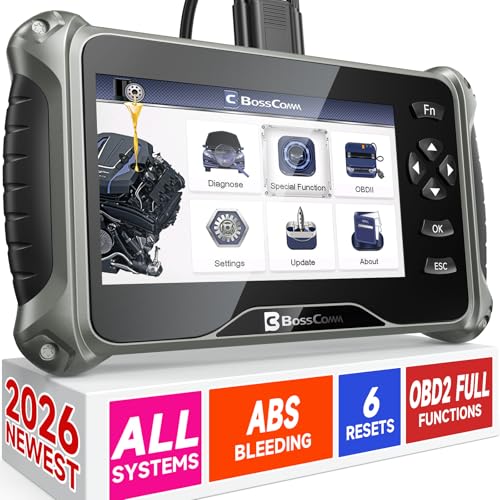
- 【✅Compared to BOSSCOMM IF742, IF745 Offers Full-System Diagnostics】The BOSSCOMM IF745 car diagnostic scanner is an upgraded model of IF742. In addition to supporting all OBD2 Code Reader functions and 6 reset options (ABS/EPB/SAS/BMS/Oil/Throttle), it expands diagnostics from 4 systems (Check Engine/ABS/SRS/Transmission) to vehicle All systems, including Steering, Suspension, and Body Electronics. This provides deeper, more comprehensive diagnostic capabilities.
- 【✨10 OBD2 Functions】The BOSSCOMM IF745 scan tool’s DTC Lookup instantly translates fault codes into user-friendly explanations, its I/M Readiness feature streamlines emissions testing with a single tap, and Freeze Frame lets you pinpoint the exact moment of a fault for in-depth root-cause diagnosis. Combined with a live data dashboard and advanced diagnostics (O2S, OBMon, EVAP), it delivers comprehensive insights for confident troubleshooting.
- 【✨Deep Diagnostics for All Vehicle System Modules】Beyond code reading/clearing and ECU information retrieval, our all-in-one data stream feature lets you inspect all current fault codes and their locations across the vehicle’s systems. This vehicle code reader helps you turn off dashboard warning lights and perform a comprehensive self-check of your car at home—no more back-and-forth trips to the repair shop or hefty inspection fees.
- 【✨6 Essential Resets: ABS Bleeding, Oil, EPB, SAS, Throttle, BMS】The BOSSCOMM IF745 obd2 scanner diagnostic tool swiftly purges air from brake lines to restore braking sensitivity, fine-tunes maintenance cycles to eliminate false alerts, resolves parking brake issues with one-click control, recalibrates steering sensors for stability, optimizes engine idling/acceleration for smoother performance, and deeply resets battery systems to extend lifespan and range via precise parameter adjustments.❗NOTE: Does NOT support bidirectional control, coding, or programming.
- 【✨10,000+ Car Models, AutoVIN, 13 Languages】The BOSSCOMM IF745 vehicle scanner diagnostic tool covers 73+ global car brands and offers support in 13 languages, making it perfect for DIYers, auto mechanics, or as a thoughtful gift. With a single-click AutoVIN feature, it instantly retrieves vehicle serial numbers, streamlining diagnostics for users globally. This adaptable tool balances user-friendliness with precision, catering to both personal and professional requirements.✅Unsure about compatibility? Compatibility will vary on vehicles' model and year, pls reach us via 📧 [email protected] 📧 before purchase.
Last update on 2026-07-02 / Affiliate links / Images from Amazon Product Advertising API
This product presentation was made with AAWP plugin.