NHTSA ID Number: 10236295
Manufacturer Communication Number: DSM.0084
TSB/Document Date: 2023-05-15
Summary
Updated CNG Cylinder Inspection Manual. CHANGED reference from "Hexagon Agility Customer Care and Technical Support" to "Hexagon Agility FleetCare." ADDED: ?design parameters" (DP) at first mention.
damage to composite shell including cuts, gouges, scrapes, scuffs, chips, punctures,
and change in coloration or appearance. Surface cracks may appear circular or linear.
permanent
deformation
depression of composite surface resembling a dent
softness or
deflection
composite surface moves in response to pressure applied with hands
damage to cylinder
end bosses and /or
hardware
damage to dome
protection
signs of physical scrapes and scuffs to cylinder components including valves, plumbing,
fittings, pressure relief devices, and mount hardware
cracks in or loss to cylinder end dome caps
If signs of impact damage are observed, a tap test may be performed to help determine whether impact damage
is present.
The tap test is a method to identify delamination within the composite and may be performed on areas of possible
damage by tapping the surface with a quarter, or similarly size metal object, grasped between the fingers.
Differences in sound are evidence of damage.
NOTICE
False indications may be heard if the tap test is performed on the dome (end) areas. The tap test should
be limited to the main portion of the cylinder and not the dome ends.
WARNING
Decommission and dispose of the cylinder if a known impact has occurred, if signs of impact damage
are present, or if there is any uncertainty in assessing damage.
Weathering Damage
The outside layer of resin will naturally yellow over time. This is normal and does not affect cylinder performance.
Weathering damage can occur when the cylinder has prolonged exposure to sunlight and weather. Weathering
damage is evident by areas of resin degradation (chalking) and loose or broken fibers. FIGURE 7
NOTICE
Contact Hexagon Agility for evaluation of weathering damage.
a
b
c
FIGURE 7. a) cylinder not exposed to weathering, b) a weathered cylinder with yellowed resin and loose surface
fibers, c) a macro of the weathered cylinder showing the visible fibers.
Excessive Heat Damage
Hexagon Agility cylinders have a maximum service temperature as noted in the Statement of Service.
Heat damage may occur if the cylinder is involved in a fire or is near a heat source such as an exhaust system.
Evidence of heat damage includes discoloration, charring, soot, melted resin, loose fibers, melted labels, or
activation of a T-PRD. FIGURE 8
WARNING
Cylinders exhibiting evidence of heat damage must be decommissioned and disposed of.
FIGURE 8. Cylinder exposed to excessive heat. Left: surface charring, melted resin; right: melted label and resin.
Chemical Damage
Hexagon Agility cylinders are resistant to common chemicals encountered in the typical fuel service environment.
Chemical damage types are listed in TABLE 3.
TABLE 3. Chemical Damage Types
Chemical damage categories
corrosion
swelling
discoloration
softening
pitting
cracks
blistering
loose fiber
WARNING
Cylinders exhibiting evidence of chemical damage must be decommissioned and disposed of.
Leakage
Prior to leaving a Hexagon Agility production facility, cylinders are leak tested with a trace gas detector. This
testing method can detect extremely small amounts of gas and is more accurate than any possible leak check
done in the field or at the installer. No cylinder leaves the factory without a passing leak test.
Signs of leakage include the following:
1.
an audible sound—hissing—of a leak
2.
a strong smell of CNG
3.
icing, frost, or condensation visible on fuel system fittings and lines
4.
an inexplicable drop in fuel pressure over time
When investigating a potential leak in the field or at the installer, Hexagon Agility recommends performing a
bubble leak check. Using handheld electronic leak detectors often results in false-positive readings due to the
sensitivity of the equipment. A bubble leak check is performed by simply applying a certified leak detecting
solution (e.g., Swagelok Snoop®) to potential leak sources, waiting three minutes, and looking for bubbles.
WARNING
If a leak is found, remove cylinder / vehicle from service.
WARNING
If the leak source is in the plumbing or associated hardware, defuel cylinder before tightening fitting /
component connections or replace per OEM specifications, as necessary.
If the source of the leak has been isolated to the cylinder, the procedure below may be used to confirm a cylinder
leak.
False Indications of a Leak
Often, when a cylinder is filled for the first time, some amount of air will be present in the space between the liner
and composite. With time and pressure cycling, the air will work its way out. If a bubble leak check is performed
during this time, the escaping air can generate bubbles around the metallic end boss or on the surface of the
composite. This is not a leak. The number of bubbles and how long it takes to dissipate depends on the size of
the cylinder and variation in porosity of the composite. Normally, trapped air escapes within 24 hours. If bubbles
are observed during the first fill, no action is necessary unless there is a strong smell of natural gas.
A similar condition can occur if a cylinder is at low pressure or defueled. In this case, permeated gas evolving
from the liner can collect and mix with the air. When filled again, a handheld electronic leak detector may have
the sensitivity to pick up low concentrations of gas. While gas is present, the source is not a leak. Like the firstfill scenario, trapped gas normally escapes within 24 hours. If bubbles are observed during this inspection
scenario, no action is necessary unless there is a strong smell of natural gas.
Confirming a Cylinder Leak
If uncertain whether a cylinder has trapped gas or is leaking, first keep the cylinder at pressure for 24 hours, in
a well-ventilated area (preferably outdoors), then repeat the bubble leak check.
If bubbling appears the same, reduce cylinder pressure to 500 psi (35 bar) to help lower the interface pressure
between the liner and composite. This can sometimes help the trapped gas to escape more quickly. Hold at this
pressure for 24 hours and then repeat the bubble leak check.
If there are noticeably fewer bubbles, this indicates the source is trapped gas and will work its way out naturally.
The cylinder may return to service. If bubbling appears the same, contact Hexagon Agility.
WARNING
A cylinder with a confirmed gas leak must be decommissioned and disposed of.
Unraveling
Damage to cylinders can lead to unravelling when broken fiber progressively delaminates from the composite
surface. FIGURE 9
If there is evidence of lifted fiber without unraveling, it may be repaired.
WARNING
If fiber has begun to unravel, cylinder must be decommissioned and disposed of. Refer to CNG Cylinder
Decommissioning and Disposal Manual.
FIGURE 9. Fiber unraveling with a section of the composite lifted.
Composite Finish Imperfections
The method of manufacturing composite cylinders sometimes leaves surface characteristics which look like
defects, but which are simply cosmetic and do not affect the performance or integrity of the cylinder. TABLE 4
TABLE 4. Composite Finish Imperfection Types and Descriptions
Imperfection category Description
Image
hairline micro-cracking of the resin; common on composite
cylinders.
FIGURE
10
resin bubbles or
pock marks
formed as entrapped air works its way through the composite
FIGURE
11
resin and paint runs
formed when excess resin or paint drips down the composite
surface
FIGURE
12
raised fiber
occurs when fiber is lifted from the surface of the composite
creating a raised edge
FIGURE
13
tucked fiber
creates a bump where the cut fiber is tucked underneath the
final layer at the end of the winding process
FIGURE
14
appear around the dome; may be present on cylinders that
utilize wound-in dome protection
FIGURE
15
crazing
fiber gaps
NOTICE
If it is unclear whether a cylinder has a cosmetic defect or damage, contact Hexagon Agility.
FIGURE 10. Resin crazing on the cylinder composite (circled).
FIGURE 11. Solidified resin bubbles on the cylinder surface (circled).
FIGURE 12. Resin run on the cylinder surface (circled).
raised fiber
FIGURE 13. Raised fiber on the cylinder surface.
fiber tuck
FIGURE 14. Fiber tuck on the cylinder surface.
FIGURE 15. Dome end of cylinder displaying gaps in a fiber band (arrows) showing the band underneath.
End Mounted Cylinders
Visually inspect cylinder bosses, mount blocks, and hardware for damage and loosening.
Fixed End Inspection
Inspect the fixed end to ensure the cylinder is properly secured.
Signs of wear or a loose mount include the following:
block or cylinder movement
metallic dust around the boss/block interface.
WARNING
If damage is present, remove vehicle from service.
Disassemble loose mounts and inspect for damage (e.g., missing nuts, worn threads, broken bolts). Contact
Hexagon Agility for replacement components.
Sliding End Inspection
Inspect the sliding boss surface, block, and bushing for wear. Signs of wear include the following:
exposed aluminum FIGURE 16
variation in diameter along the length of the boss FIGURE 16
plastic shavings
contact between the boss and block.
a gap between the bushing and boss FIGURE 17
Wear severity and associated disposition for each sliding boss end component is shown in TABLE 5.
TABLE 5. Sliding Boss Wear Damage Severity and Disposition
Component
sliding
boss
block
bushing
Wear Depth
inches
millimeters
Disposition
≤ 0.050 in
≤ 1.27 mm
note in inspection record
0.051 ≤ 0.125 in
1.30 ≤ 3.18 mm
> 0.125 in
> 3.18 mm
decommission and dispose of cylinder
≤ 0.050 in
≤ 1.27 mm
note in inspection record
> 0.050 in
> 1.27 mm
replace
≤ 0.050 in
≤ 1.27 mm
note in inspection record
> 0.050 in
> 1.27 mm
replace
refer to “Resurfacing Sliding Boss Wear”
in CNG Cylinder Repair Procedure
WARNING
Inspect block bolts and nuts for signs of loosening. Tighten or replace hardware as necessary. Contact
Hexagon Agility for replacement components.
check for variation in diameter across boss
exposed aluminum
FIGURE 16. Indicators of sliding end cylinder boss wear.
bushing
sliding block
cylinder neck
mount
go no-go
gauge
Gap (arrow) exceeds allowed
tolerance of 1/16-in (1.6 mm) and
requires repair. Remove vehicle
from service and contact
®
Hexagon Agility CCTS.
plug
FIGURE 17. Gap indicative of bushing wear.
Strap Mounted Cylinders
Strap mount cylinders should be inspected for signs of movement relative to the strap and cracked or displaced
rubber.
WARNING
If signs of movement are present, or the rubber is cracked or displaced it must be inspected and possibly
replaced. Contact Hexagon Agility for replacement.
Inspect straps for signs of damage including corrosion, cracks, deformations, breakages, and broken bolts.
If straps are disassembled or loosened, replace rubber pads.
WARNING
If damage is present, remove vehicle from service and contact Hexagon Agility.
Labels
Check OEM cylinder labels for signs of damage including tears and weathering.
WARNING
If label is missing or illegible, remove vehicle from service and contact Hexagon Agility.
NOTICE
Contact Hexagon Agility for replacement.
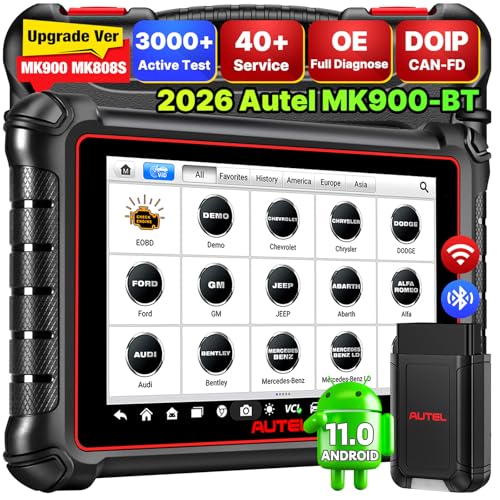
- 💯【Conta.ct us for Support Directly】If you met any...
- 🔥🔥🔥【2026 AUTEL FLAGSHIP MK900BT MK900-BT, NEW...
- 🚗【3000+ ACTIVE TESTS (50➡3000+), SAME AS MS...
- 🚗【40+ HOT SERVICES FOR 150 MAKES (28+➡40+)】Full...
- 🚗【OE ALL SYSTEM DIAGNOSE, AUTO SCAN 2.0: SCAN LICENSE...

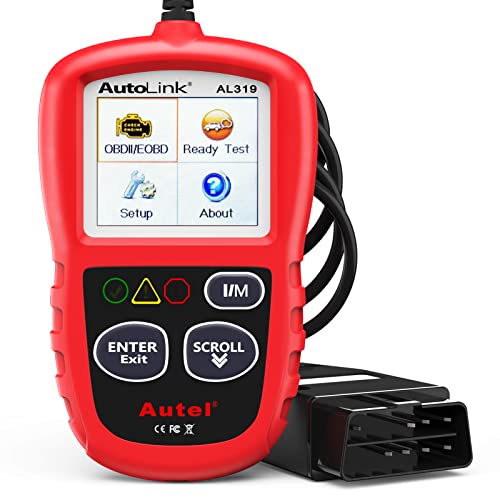
- 【TURN OFF CEL】 This AL319 car scanner diagnostic tool...
- 【EXTENSIVE APPLICATION】 Autel AL319 Compatible with...
- 【FOR END USER & DIYERS】 This error code reader AL319 is...
- 【USER-FRIENDLY DESIGN】 This OBD2 scanner and check...
- 【HIGH-QUALITY SERVICES】 12 months war.ranty from the...
If the PDF is very large, it may not load in the preview below.
Some older TSBs had multiple PDFs — visit the NHTSA Website to view all PDFs.
If the TSB PDF does not show, download or view it on the NHTSA Website.
Click on the (+) Plus Sign
Then Click on Associated Document(s)
Search NHTSA Database for Recalls
Search NHTSA Database for Vehicle Investigations
View Latest Vehicle Investigations
Search NHTSA Database for Vehicle Complaints
View Latest Vehicle Complaints
TSB/Document ID: DSM.0084
Replacement Service Bulletin Number:
MFR Communication Date: 2023-04-25
MFR Internal Campaign ID/Software Version:
Communication Type: Service Bulletin/Repair Instructions
NHTSA Components: EQUIPMENT:OTHER:OWNERS/SERVICE/OTHER MANUAL
MFR Component System:
MFR Component Subsystem:
Previous TSB | Next TSB |
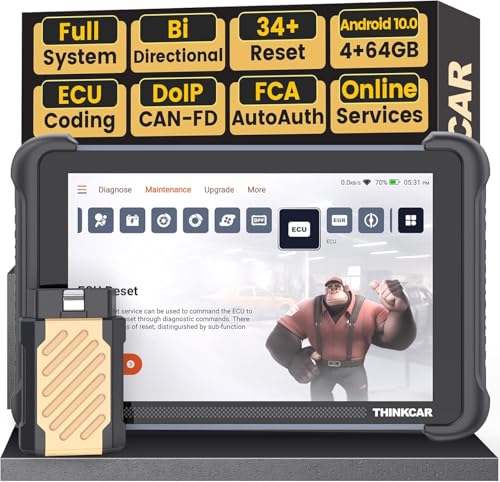
- [Notice] When you receive a used device, it may be a customer return resold by Amazon without inspection. You can exchange it for a new one through Amazon. As this situation is unavoidable, we sincerely apologize. For any issues, contacting us via Amazon's "Messages" is the best way. THINKSCAN 689BT Bidirectional Scan Tool Can Be Used Immediately After It is Turned On, Without Complicated Registration Process, Which is More Convenient & Quick.
- Full Bi-Directional Control & 3000+ Active Tests: Take control and test components like actuators, fuel injectors, relays, and cooling fans in real time. You’ll quickly see if the problem is in the part itself or the control module — saving you hours of guesswork and frustrating trial-and-error.
- Advanced ECU Coding Capabilities: Handle module matching and hidden feature activation with confidence. When you replace an ECU or want to customize settings, this obd2 scanner diagnostic bi directional tool gives you the professional-level capabilities you need without the dealership price tag.
- 34+ Useful Reset and Maintenance Functions: Complete everyday service tasks smoothly with a wide range of helpful reset and maintenance functions. Whether you’re keeping up with regular upkeep or tackling a specific job, this scanner makes maintenance simpler and less stressful for both DIYers and pros.
- Comprehensive Full System Diagnostics: Diagnose every major system — Engine, Transmission, ABS, SRS, TPMS, and more — all in one place. Finally stop wondering if you’re missing something important; get the full picture and clear codes with ease.
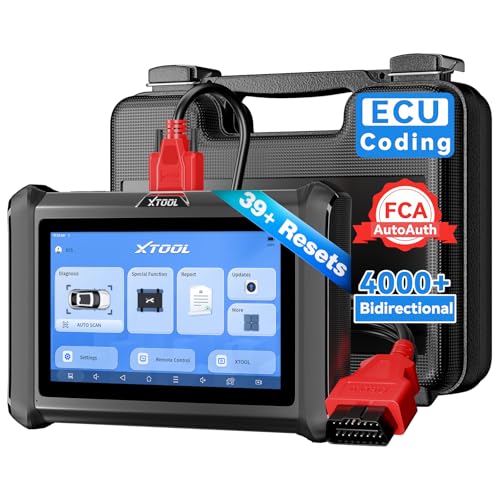
- Top Reasons to Choose the D7S OBD2 Scanner: XTOOL D7S car scan tool, an upgrade of XTOOL D7, offers comprehensive features for automotive technicians, workshops, and DIY enthusiasts 1. Upgraded Hardware: 2+64GB memory, rear camera, intuitive interface, foldable bracket 2. Complete Diagnostics: FCA
 Autoauth, OE-level all system scan, 39+ maintenance services, 4K+ bidirectional, CANFD/DoIP protocol 3. Advanced Capabilities: ECU c0ding, PMI functions 4. Wide Compatibility: Support 10,000+ models, covering 99% vehicle brands 5. Multi-language: Available in 22+ languages, No IP Restrictions 6. 3-Year Updates: Save 300 bucks on software updates for the latest features and optimizations
 - 2026 Upgraded D7S Car Scanner Features: The newly 2026 D7S V2.0 scanner for car brings exciting features for advanced vehicle diagnostics and enhanced user experience 1. FCA AutoAuth: Now supports FCA SGW module for Chrysler, for Jeep, for Dodge (2018+), for Fiat (2017+), enabling faster vehicle communication without gateway restrictions 2. PMI (Offline ECU Pr0gramming): Allows for Ford, for Lincoln, and for Mazda ECU pr0gramming for new modules 3. Optimized Diagnostic Report 2.0: Personalized reports with logos and customer info for auto shops. Note: Compatibility varies by cars, please check before order
- 39+ Services/Resets/Adaptations/Relearns/Calibrations: XTOOL D7S full system car scanner diagnostic tool tackles 99% of common car issues through its 36+ special functions, including Oil Reset, EPB, SAS, BMS, Throttle Reset, Injector C0ding, ABS Bleed, TPMS Reset, Power Balance, etc and also covers specific-vehicle functions like Crank Sensor Relearn, ABS Initialization, Cylinder Power Balance, Fuel Trim Reset, Idle Relearn etc. This car diagnostic scanner enhances efficiency, making repairs and maintenance hassle-free. Tip: DO NOT for All vehicles, please check compatibility first
- Cost-effective ECU C0ding Scan Tool for Specific Brands: Enhance your vehicle's performance with XTOOL D7S! This obd2 scanner all systems bidirectional offers advanced capabilities at an affordable price, supports online for BMW, for Benz and offline for BENZ, for MIT, along with PMI functions for Ford, for Mazda, and for Lincoln
 . Ideal for technicians and DIY enthusiasts, this automotive scanner diagnostic tool optimizes vehicle performance and enhances the driving experience. Note: Not for all cars and modules, please send car VIN to check the compatibility before purchase
 - OE All System Diagnostic & 8 Pids Graphing: XTOOL D7S is a comprehensive all system bi directional obd2 scanner that delivers dealer-level diagnostics, completely controlling over your vehicle’s performance and health. This automotive scan tool can read and clear DTCs, view live data and ECU information, retrieve freeze frames, and perform active tests and full obd2 functions. This bi-directional scan tool can can identify your vehicle's make, model, and year information with just one click and show up to 8 PIDs live data with options for CSV viewing, playback, and recording for in-depth analysis. It is easy-to-use for both professionals and beginners, helping pinpoint issues efficiently
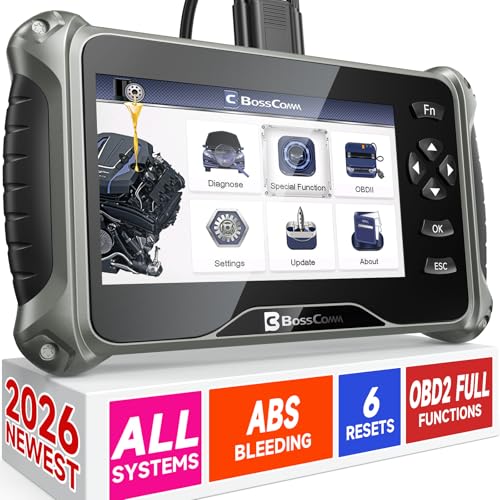
- 【✅Compared to BOSSCOMM IF742, IF745 Offers Full-System Diagnostics】The BOSSCOMM IF745 car diagnostic scanner is an upgraded model of IF742. In addition to supporting all OBD2 Code Reader functions and 6 reset options (ABS/EPB/SAS/BMS/Oil/Throttle), it expands diagnostics from 4 systems (Check Engine/ABS/SRS/Transmission) to vehicle All systems, including Steering, Suspension, and Body Electronics. This provides deeper, more comprehensive diagnostic capabilities.
- 【✨10 OBD2 Functions】The BOSSCOMM IF745 scan tool’s DTC Lookup instantly translates fault codes into user-friendly explanations, its I/M Readiness feature streamlines emissions testing with a single tap, and Freeze Frame lets you pinpoint the exact moment of a fault for in-depth root-cause diagnosis. Combined with a live data dashboard and advanced diagnostics (O2S, OBMon, EVAP), it delivers comprehensive insights for confident troubleshooting.
- 【✨Deep Diagnostics for All Vehicle System Modules】Beyond code reading/clearing and ECU information retrieval, our all-in-one data stream feature lets you inspect all current fault codes and their locations across the vehicle’s systems. This vehicle code reader helps you turn off dashboard warning lights and perform a comprehensive self-check of your car at home—no more back-and-forth trips to the repair shop or hefty inspection fees.
- 【✨6 Essential Resets: ABS Bleeding, Oil, EPB, SAS, Throttle, BMS】The BOSSCOMM IF745 obd2 scanner diagnostic tool swiftly purges air from brake lines to restore braking sensitivity, fine-tunes maintenance cycles to eliminate false alerts, resolves parking brake issues with one-click control, recalibrates steering sensors for stability, optimizes engine idling/acceleration for smoother performance, and deeply resets battery systems to extend lifespan and range via precise parameter adjustments.❗NOTE: Does NOT support bidirectional control, coding, or programming.
- 【✨10,000+ Car Models, AutoVIN, 13 Languages】The BOSSCOMM IF745 vehicle scanner diagnostic tool covers 73+ global car brands and offers support in 13 languages, making it perfect for DIYers, auto mechanics, or as a thoughtful gift. With a single-click AutoVIN feature, it instantly retrieves vehicle serial numbers, streamlining diagnostics for users globally. This adaptable tool balances user-friendliness with precision, catering to both personal and professional requirements.✅Unsure about compatibility? Compatibility will vary on vehicles' model and year, pls reach us via 📧 [email protected] 📧 before purchase.
This product presentation was made with AAWP plugin.