NHTSA ID Number: 10235762
Manufacturer Communication Number: 22-NA-122
TSB/Document Date: 2023-05-06
Summary
This informational bulletin provides a possible cause of transmission issues from debris in the valve body and how to test/diagnose the trans to determine a possible cause of the customer's concern.
Service Bulletin
Bulletin No.:
22-NA-122
Date:
April, 2023
INFORMATION
Subject:
Diagnostic Tip for DTCs Set at a Low Mileage for 8L45/90 Automatic Transmissions
Model Year:
VIN:
Brand:
Model:
CT4
M5N
to
from
to
Camaro
M5T
Colorado
M5T
Express
M5U, MQD
Silverado 1500 - LTD
(RPO J21, VIN Digit
5 = W/Y)
Silverado 1500 - New
(RPO J22, VIN Digit
5 = A/D)
from
MQE
2022
2022
Canyon
M5T
Savana
M5U, MQD
Sierra 1500 - Limited
(RPO J21, VIN Digit
5 = 8/9)
MQE
Sierra 1500 - New
(RPO J22, VIN Digit
5 = H/U)
Involved Region or Country
North America, Middle East
Condition
Some customers may comment that the MIL is illuminated.
Cause
This condition may be caused by manufacturing debris that clears itself from the valve
body and then becomes captured by the filter.
Information
The purpose of this bulletin is to aid the service technician in diagnosing 8L45/90
automatic transmissions with low mileage and DTCs current or history related to the
transmission control solenoids and valves. Intent is to assist in diagnosing the correct
issue, minimize return customer visits for the same issue, and reduce unnecessary
repairs in cases of transient or momentary issues that may happen during vehicle initial
break-in period.
Follow the Service Procedure steps below to determine repair strategy.
Important: Service agents must comply with all
International , Federal, State, Provincial, and/or
Local laws applicable to the activities it performs
under this bulletin, including but not limited to
handling, deploying, preparing, classifying,
packaging, marking, labeling, and shipping
dangerous goods. In the event of a conflict between
the procedures set forth in this bulletin and the
laws that apply to your dealership, you must follow
those applicable laws.
Copyright 2023 General Motors LLC. All Rights Reserved.
Important: Please refer to these service publications
for resolutions to customer comments prior to
proceeding with this bulletin:
• 21-NA-149: Engine Wire Harness Chafing
• 20-NA-187: Delayed and/or Harsh Engagement of
Transmission Shift After Vehicle Sitting with
Engine Off
• 19-NA-136: Howling, Whining/Whirring, Shudder/
Vibration, and/or Grinding Noise While in 4HI, 4HI
Auto and/or During Parking Lot Maneuvers in
Auto Mode
Page 2
•
•
•
April, 2023
16-NA-361: Information on Transmission Harsh
1-2 Shift Upon First Start Up/Shift of the Day
Under Light Throttle
16-NA-019: Information on Transmission Adaptive
Functions and Correcting Low Mileage Harsh
Shifts, Slips, or Flares
18-NA-285: Information on Slight Movement in
Park at Ignition On and Vehicle Start Up and/or
During a Remote Vehicle Start Event
Service Procedure
Step One — Check DTCs
Check all Modules for DTCs. Record all DTCs, Current
or History, and which Module the codes are in on the
work order.
Step Two — Road Test
Before the Road Test, Ensure the Following:
• The engine is performing properly. Often engine
misfires or engine lack of power for any reason
can cause erratic transmission shifting or
vibrations that may seem like torque converter
shudder concerns. Don’t overlook issues like
plugged or restricted exhaust.
• Don’t overlook engine or chassis DTCs that may
be related to the cause of the transmission shifting
concerns.
• Tire pressure is correct, and tires are matching
brand and of equal size. Different brand tires of
the same size can have different circumference
measurements.
Electrical Function Check:
Note: Perform this procedure first, in order to ensure
the electronic transmission components are functioning
properly. If these components are not checked, a
simple electrical condition could be misdiagnosed.
1. Connect the scan tool.
2. Ensure the gear selector is in PARK and set the
parking brake.
3. Start the engine.
4. Verify that the following scan tool data can be
obtained and is functioning properly:
• Engine Speed
• Transmission ISS
• Transmission OSS
• Vehicle Speed
• IMS
• Commanded Gear
• Gear Ratio
• Brake Pedal Position
• ECT (Included in GDS Engine Data List)
• Trans. Fluid Temp.
• Calc. Throttle Position
• Ignition Voltage
• Trans. Control Solenoid Valve 1-9
• TCC Slip Speed
Bulletin No.: 22-NA-122
5. Check the garage shifts.
– Apply the brake pedal and ensure the parking
brake is set.
– Move the gear selector through the following
ranges:
⇒ Park to Reverse
⇒ Reverse to Neutral
⇒ Neutral to Drive
⇒ Drive to Reverse
⇒ Reverse to Drive
– Pause 2 to 3 seconds in each gear position.
– Verify the gear engagements are immediate (less
than 3 seconds to complete if trans fluid
temperature is above 20°C) and not harsh. Note
that these shifts may be almost imperceptible in
some applications. Using the scan tool to monitor
Transmission ISS achieving 0 rpm can be used
to check delay in these cases.
Note: Harsh engagement may be caused by any of the
following conditions:
– High engine idle speed—Compare engine idle
speed to desired idle speed.
– Incorrect line pressure—Investigate
Transmission Control Solenoid Valve 6 Cmd.
– A default condition caused by certain DTCs that
result in maximum line pressure to prevent clutch
slippage.
– Incomplete adapting or incorrect adapting—
Repeat maneuver multiple times to see if shift
quality improves. If it does not, refer to service
procedures and field bulletins for Harsh Garage
Shift.
Note: Delayed engagement may be caused by any of
the following conditions:
– Low idle speed—Compare engine idle speed to
desired idle speed.
– Low fluid level.
– Incorrect line pressure—Investigate
Transmission Control Solenoid Valve 6 Cmd.
– Cold transmission fluid temperature (TFT)—Use
the scan tool to determine TFT.
– Selector linkage—Inspect and adjust as
necessary.
– Incomplete adapting or incorrect adapting—
Repeat maneuver multiple times to see if delay
improves. If it does not, refer to service
procedures and field bulletins for Harsh, Soft,
Delayed or Slipping First, Second, Seventh,
Eighth, or Reverse Shift.
6. Monitor transmission range on the scan tool,
transmission data list.
– Apply the brake pedal and ensure the parking
brake is set.
– Move the gear selector through all ranges.
– Pause 2 to 3 seconds in each range.
Bulletin No.: 22-NA-122
April, 2023
– Return gear selector to PARK.
– Verify that all selector positions match the scan
tool display.
7. Check throttle position input.
– Apply the brake pedal and ensure the parking
brake is set.
– Ensure the gear selector is in PARK.
– Monitor the scan tool Calc. Throttle Position
while increasing and decreasing engine speed
with the throttle pedal. The scan tool Calc.
Throttle Position percentage should increase and
decrease with engine speed.
If any of the above checks do not perform properly,
record the result for reference after completion of the
road test.
During the Road Test:
– Perform the test only when traffic conditions permit.
– Operate the vehicle in a controlled, safe manner.
– Observe all traffic regulations.
– Take along qualified help in order to operate the
vehicle safely and view the scan tool data while
conducting this test. Do not attempt to view data
while operating the vehicle yourself.
– Observe any unusual sounds or smells.
– Abort test if DTC/MIL resets at any point and follow
Service Information.
Upshift Control and Torque Converter Clutch (TCC)
Apply:
The TCM calculates the upshift points based primarily
on 2 inputs: throttle position and vehicle speed. When
the TCM determines that conditions are met for a shift
to occur, the TCM commands the shift by varying
current to the appropriate transmission control
solenoids to control oncoming and offgoing clutch
pressures.
1. Monitor the following scan tool parameters:
• Calc. Throttle Position
• Vehicle Speed
• Engine Speed
• Transmission ISS
• Transmission OSS
• Commanded Gear
• Transmission Control Solenoid Valve 1-9
• TCC Slip Speed
2. Place the gear selector in the DRIVE position.
3. Accelerate the vehicle using a steady throttle
position between 15 and 20 percent. Hold the
throttle steady.
4. As the transmission upshifts, there should be a
noticeable shift feel or engine speed change within
1 to 2 seconds of the commanded gear change.
The transmission control solenoid valve pressure
command should change to “ON” for the oncoming
clutch and “OFF” for the offgoing clutch.
5. Note any harsh, soft or delayed shifts or slipping.
Note any noise or vibration.
Page 3
6. The TCC feel may not be noticeable. In many
applications the TCC will apply after the 1-2 shift
and TCC events will not be easily detected using
engine speed.
Note: This transmission is equipped with an
electronically controlled capacity clutch (ECCC), which
allows operation of the clutch without fully locking to the
torque converter cover. The clutch maintains a small
amount of slippage, approximately 0-50 RPM,
depending on the vehicle application. TCC may apply
in 1st through 8th gear. ECCC was developed to
reduce the possibility of noise, vibration or chuggle
caused by TCC apply. Full lockup is available at
highway speeds on some applications.
7. Monitor Transmission Control Solenoid Valve 7
current while driving and check TCC slip speed
when the pressure command indicates that the
TCC is commanded to apply.
When the TCC applies, slip speed should be
controlled to below 100 RPM when the
transmission is not shifting, and the throttle is held
steady. If the TCC slip exceeds this value for more
than 6 seconds after the Transmission Control
Solenoid Valve 7 current indicates that the TCC is
commanded on:
– Check for DTCs.
– Refer to Torque Converter Diagnosis in SI.
Part Throttle Step-In Downshifts:
1. Place the gear selector in the DRIVE position
2. Accelerate the vehicle at light throttle (5–15
percent) until 3rd gear is just achieved.
3. Quickly increase throttle angle until commanded
gear indicates that a downshift to 2nd gear is
commanded.
4. Verify that the transmission downshifts within 2
seconds of the throttle movement.
5. Repeat steps 2 to 4 at higher speed to achieve 4th
gear and then step in to command a 4th gear to 3rd
gear downshift.
6. Repeat steps 2 to 4 at higher speed to achieve 5th
gear and then step in to command a 5th to 4th gear
downshift.
7. Repeat steps 2 to 4 at higher speed to achieve 6th
gear and then step in to command a 6th gear to 5th
gear downshift.
8. Repeat steps 2 to 4 at higher speed to achieve 7th
gear and then step in to command to a 7th to 6th
gear downshift.
9. Repeat steps 2 to 4 at a higher speed to achieve
8th gear and then step in to command an 8th to 7th
gear downshift.
10. Note any harsh, soft or delayed shifts or slipping.
Note any noise or vibration.
Page 4
April, 2023
Bulletin No.: 22-NA-122
Manual Downshifts:
Manual downshift testing is not required since all
vehicles equipped with the 8L90 are also equipped with
some form of Driver Control Mode (DCM). The TCM will
automatically override DCM downshifts to protect the
transmission from damage.
• Coasting Downshifts:
1. Place the gear selector in the DRIVE
position.
2. Accelerate the vehicle to 8th gear with the
TCC applied.
3. Release the throttle and apply the brakes.
4. Verify that the downshifts occur as
commanded by monitoring gear ratio, which
should change after commanded gear
changes.
Manual Gear Range Selection:
Perform the following test using a 10–15 percent
throttle position.
• Reverse:
1. With the vehicle stopped, move the gear
selector to REVERSE.
2. Slowly accelerate the vehicle.
3. Verify that there is no noticeable slip, noise or
vibration.
Note: Complete the test in the sequence given.
Incomplete testing cannot guarantee an accurate
evaluation.
appropriately to driver's commands. The TCM will
upshift automatically when maximum engine speed is
achieved and will protect from any downshift which may
cause excessive engine RPMs.
Tow/Haul Mode:
Tow/Haul Mode Grade Braking is only enabled while
the Tow/Haul Mode is selected, and the vehicle is not in
the Range Selection Mode. See Manual Mode. Tow/
Haul Mode Grade Braking assists in maintaining
desired vehicle speeds when driving on downhill
grades by using the engine and transmission to slow
the vehicle.
See Towing Equipment.
After the Road Test, Check the Following:
⇒ Inspect for any diagnostic trouble codes (DTCs)
that may have set during the testing. Refer to the
applicable DTC information in Service Information
for diagnosis.
⇒ Monitor the scan tool data for any abnormal
readings or data.
⇒ Inspect for fluid leaks. Refer to Fluid Leak
Diagnosis in SI.
• If the codes could not be duplicated during the
road test, please return the vehicle to the
customer without attempting any repairs.
• If any DTCs reset, please follow Service
Information for the appropriate diagnostics.
Note: If the vehicle you are testing is a Hybrid/Electric
Vehicle and is equipped with an E-Assist or BAS
propulsion system, please refer to the applicable
vehicle Owner Manual/Supplement for a complete
description and an explanation of operating conditions
for the automatic stop/start feature. When performing
this Road Test, the auto stop/start must be verified to
ensure the shifting characteristics of this feature are
operating as designed
Parts Information
Driver Control Mode (DCM):
Refer to the owner's manual for specific instructions on
the type of DCM available in this application. Utilize the
DCM to ensure that the transmission responds
No parts are required for this repair.
Warranty Information
For vehicles repaired under the Powertrain coverage,
use the following labor operation. Reference the
Applicable Warranties section of Investigate Vehicle
History (IVH) for coverage information.
Labor Operation
Description
Labor Time
8486178*
Diagnosing and Testing 8L45/90 Automatic Transmissions
0.8 hr
*This is a unique Labor Operation for Bulletin use only.
Version
2
Modified
Released June 17, 2022
Revised April 17, 2023 - Removed 21-NA-275 Information.
GM bulletins are intended for use by professional technicians, NOT a "do-it-yourselfer". They are written to inform these
technicians of conditions that may occur on some vehicles, or to provide information that could assist in the proper
service of a vehicle. Properly trained technicians have the equipment, tools, safety instructions, and know-how to do a
job properly and safely. If a condition is described, DO NOT assume that the bulletin applies to your vehicle, or that your
vehicle will have that condition. See your GM dealer for information on whether your vehicle may benefit from the
information.
WE SUPPORT VOLUNTARY
TECHNICIAN
CERTIFICATION

- CUTTING EDGE TECHNOLOGY - Shockproof technology designed to...
- QUIET SMOOTH SHIFTING - V-Twin Transmission oil dampens...
- IMPROVES PERFORMANCE - Transmission fluid that dramatically...
- POPULAR POWESPORTS OIL FOR - UTVs & Side by Sides, ATVs...
- WHY RED LINE - Established in 1979, Red Line Products...
- CUTTING EDGE TECHNOLOGY - Shockproof technology designed to...
- QUIET SMOOTH SHIFTING - V-Twin Transmission oil dampens...
- IMPROVES PERFORMANCE - Transmission fluid that dramatically...
- POPULAR POWESPORTS OIL FOR - UTVs & Side by Sides, ATVs...
- WHY RED LINE - Established in 1979, Red Line Products...
If the PDF is very large, it may not load in the preview below.
Some older TSBs had multiple PDFs — visit the NHTSA Website to view all PDFs.
If the TSB PDF does not show, download or view it on the NHTSA Website.
Click on the (+) Plus Sign
Then Click on Associated Document(s)
Search NHTSA Database for Recalls
Search NHTSA Database for Vehicle Investigations
View Latest Vehicle Investigations
Search NHTSA Database for Vehicle Complaints
View Latest Vehicle Complaints
TSB/Document ID: 22-NA-122
Replacement Service Bulletin Number:
MFR Communication Date: 2023-04-17
MFR Internal Campaign ID/Software Version:
Communication Type: Service Bulletin/Repair Instructions
NHTSA Components: POWER TRAIN
MFR Component System:
MFR Component Subsystem:
Previous TSB | Next TSB |
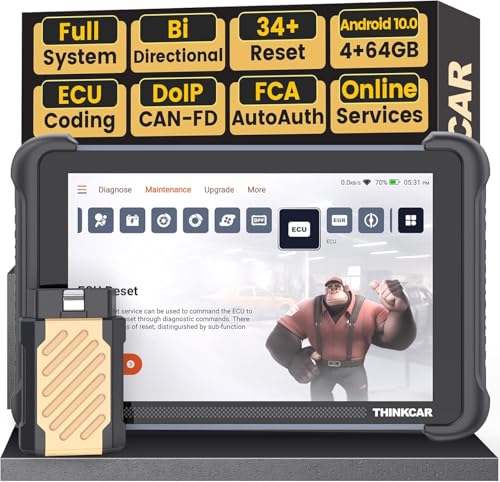
- [Notice] When you receive a used device, it may be a customer return resold by Amazon without inspection. You can exchange it for a new one through Amazon. As this situation is unavoidable, we sincerely apologize. For any issues, contacting us via Amazon's "Messages" is the best way. THINKSCAN 689BT Bidirectional Scan Tool Can Be Used Immediately After It is Turned On, Without Complicated Registration Process, Which is More Convenient & Quick.
- Full Bi-Directional Control & 3000+ Active Tests: Take control and test components like actuators, fuel injectors, relays, and cooling fans in real time. You’ll quickly see if the problem is in the part itself or the control module — saving you hours of guesswork and frustrating trial-and-error.
- Advanced ECU Coding Capabilities: Handle module matching and hidden feature activation with confidence. When you replace an ECU or want to customize settings, this obd2 scanner diagnostic bi directional tool gives you the professional-level capabilities you need without the dealership price tag.
- 34+ Useful Reset and Maintenance Functions: Complete everyday service tasks smoothly with a wide range of helpful reset and maintenance functions. Whether you’re keeping up with regular upkeep or tackling a specific job, this scanner makes maintenance simpler and less stressful for both DIYers and pros.
- Comprehensive Full System Diagnostics: Diagnose every major system — Engine, Transmission, ABS, SRS, TPMS, and more — all in one place. Finally stop wondering if you’re missing something important; get the full picture and clear codes with ease.
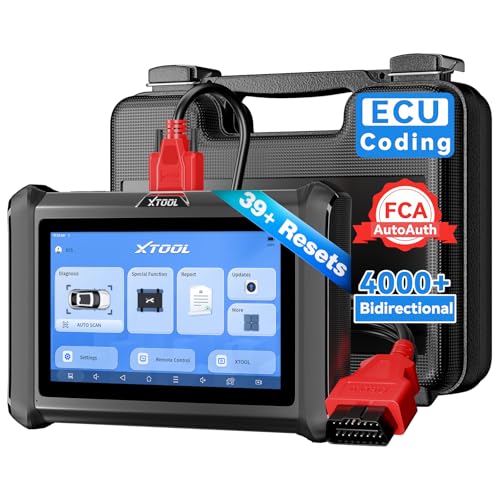
- Top Reasons to Choose the D7S OBD2 Scanner: XTOOL D7S car scan tool, an upgrade of XTOOL D7, offers comprehensive features for automotive technicians, workshops, and DIY enthusiasts 1. Upgraded Hardware: 2+64GB memory, rear camera, intuitive interface, foldable bracket 2. Complete Diagnostics: FCA
 Autoauth, OE-level all system scan, 39+ maintenance services, 4K+ bidirectional, CANFD/DoIP protocol 3. Advanced Capabilities: ECU c0ding, PMI functions 4. Wide Compatibility: Support 10,000+ models, covering 99% vehicle brands 5. Multi-language: Available in 22+ languages, No IP Restrictions 6. 3-Year Updates: Save 300 bucks on software updates for the latest features and optimizations
 - 2026 Upgraded D7S Car Scanner Features: The newly 2026 D7S V2.0 scanner for car brings exciting features for advanced vehicle diagnostics and enhanced user experience 1. FCA AutoAuth: Now supports FCA SGW module for Chrysler, for Jeep, for Dodge (2018+), for Fiat (2017+), enabling faster vehicle communication without gateway restrictions 2. PMI (Offline ECU Pr0gramming): Allows for Ford, for Lincoln, and for Mazda ECU pr0gramming for new modules 3. Optimized Diagnostic Report 2.0: Personalized reports with logos and customer info for auto shops. Note: Compatibility varies by cars, please check before order
- 39+ Services/Resets/Adaptations/Relearns/Calibrations: XTOOL D7S full system car scanner diagnostic tool tackles 99% of common car issues through its 36+ special functions, including Oil Reset, EPB, SAS, BMS, Throttle Reset, Injector C0ding, ABS Bleed, TPMS Reset, Power Balance, etc and also covers specific-vehicle functions like Crank Sensor Relearn, ABS Initialization, Cylinder Power Balance, Fuel Trim Reset, Idle Relearn etc. This car diagnostic scanner enhances efficiency, making repairs and maintenance hassle-free. Tip: DO NOT for All vehicles, please check compatibility first
- Cost-effective ECU C0ding Scan Tool for Specific Brands: Enhance your vehicle's performance with XTOOL D7S! This obd2 scanner all systems bidirectional offers advanced capabilities at an affordable price, supports online for BMW, for Benz and offline for BENZ, for MIT, along with PMI functions for Ford, for Mazda, and for Lincoln. Ideal for technicians and DIY enthusiasts, this automotive scanner diagnostic tool optimizes vehicle performance and enhances the driving experience. Note: Not for all cars and modules, please send car VIN to check the compatibility before purchase
- OE All System Diagnostic & 8 Pids Graphing: XTOOL D7S is a comprehensive all system bi directional obd2 scanner that delivers dealer-level diagnostics, completely controlling over your vehicle’s performance and health. This automotive scan tool can read and clear DTCs, view live data and ECU information, retrieve freeze frames, and perform active tests and full obd2 functions. This bi-directional scan tool can can identify your vehicle's make, model, and year information with just one click and show up to 8 PIDs live data with options for CSV viewing, playback, and recording for in-depth analysis. It is easy-to-use for both professionals and beginners, helping pinpoint issues efficiently
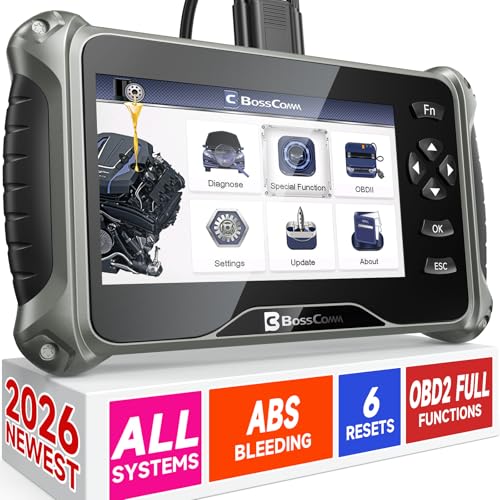
- 【✅Compared to BOSSCOMM IF742, IF745 Offers Full-System Diagnostics】The BOSSCOMM IF745 car diagnostic scanner is an upgraded model of IF742. In addition to supporting all OBD2 Code Reader functions and 6 reset options (ABS/EPB/SAS/BMS/Oil/Throttle), it expands diagnostics from 4 systems (Check Engine/ABS/SRS/Transmission) to vehicle All systems, including Steering, Suspension, and Body Electronics. This provides deeper, more comprehensive diagnostic capabilities.
- 【✨10 OBD2 Functions】The BOSSCOMM IF745 scan tool’s DTC Lookup instantly translates fault codes into user-friendly explanations, its I/M Readiness feature streamlines emissions testing with a single tap, and Freeze Frame lets you pinpoint the exact moment of a fault for in-depth root-cause diagnosis. Combined with a live data dashboard and advanced diagnostics (O2S, OBMon, EVAP), it delivers comprehensive insights for confident troubleshooting.
- 【✨Deep Diagnostics for All Vehicle System Modules】Beyond code reading/clearing and ECU information retrieval, our all-in-one data stream feature lets you inspect all current fault codes and their locations across the vehicle’s systems. This vehicle code reader helps you turn off dashboard warning lights and perform a comprehensive self-check of your car at home—no more back-and-forth trips to the repair shop or hefty inspection fees.
- 【✨6 Essential Resets: ABS Bleeding, Oil, EPB, SAS, Throttle, BMS】The BOSSCOMM IF745 obd2 scanner diagnostic tool swiftly purges air from brake lines to restore braking sensitivity, fine-tunes maintenance cycles to eliminate false alerts, resolves parking brake issues with one-click control, recalibrates steering sensors for stability, optimizes engine idling/acceleration for smoother performance, and deeply resets battery systems to extend lifespan and range via precise parameter adjustments.❗NOTE: Does NOT support bidirectional control, coding, or programming.
- 【✨10,000+ Car Models, AutoVIN, 13 Languages】The BOSSCOMM IF745 vehicle scanner diagnostic tool covers 73+ global car brands and offers support in 13 languages, making it perfect for DIYers, auto mechanics, or as a thoughtful gift. With a single-click AutoVIN feature, it instantly retrieves vehicle serial numbers, streamlining diagnostics for users globally. This adaptable tool balances user-friendliness with precision, catering to both personal and professional requirements.✅Unsure about compatibility? Compatibility will vary on vehicles' model and year, pls reach us via 📧 [email protected] 📧 before purchase.

This product presentation was made with AAWP plugin.