NHTSA ID Number: 10234868
Manufacturer Communication Number: MSA5P0135C
TSB/Document Date: 2023-04-24
Summary
Electrical Systems Operation & Diagnosis Module
Technician
Reference
Booklet
ELECTRICAL SYSTEMS
OPERATION & DIAGNOSIS
Module 602
MSA5P0135C
June 2013
This Technical Reference Booklet (TRB) is designed to be used in a
classroom environment or as a guide for self study.
The TRB is not intended to be used as a supplement or substitute for the
Subaru Service Manual. Always consult the appropriate Service Manual when
performing any diagnostics, maintenance or repair to any Subaru vehicle.
© Copyright 2013
Subaru of America, Inc.
All rights reserved. This book may not be
reproduced in whole or in part without the
express permission of Subaru of America,
Inc. Specifications in this Guide are based
on the latest product information available at
the time of publication. Some images shown
are for illustration purposes only.
Subaru of America, Inc. reserves the right at
any time to make changes or modifications
to systems, procedures, descriptions, and
illustrations contained in this book without
necessarily updating this document.
Information contained herein is considered
current as of June 2013.
Product Material Disclosure
© 2013 Subaru of America, Inc. Printed in USA. All rights reserved. Contents may not be reproduced in whole or in part without prior
written permission of publisher. Specifications in this Guide are based on the latest product information available at the time of publication.
Some images shown are for illustration purposes only. Some equipment shown in photography within this Guide is optional at extra cost.
Specific options may be available only in combination with other options. Specific combinations of equipment or features may vary from
time to time, and by geographic area. Subaru of America, Inc. reserves the right to change or discontinue at any time, without notice:
Prices, colors, materials, equipment, accessories, specifications, models and packages, without incurring any obligation to make the same
or similar changes on vehicles previously sold. Colors shown may vary due to reproduction and printing processes. Subaru of America,
Inc. is not responsible for typographical errors. Alcantara® is a registered trademark of Alcantara S.p.A., and Alcantara is produced by
the Toray Group. Audyssey MultEQ® is a registered trademark of Audyssey Laboratories, Inc. BBS® is a registered trademark of BBS
Kraftahrzeugtechnik AG. Bilstein® is a registered trademark of August-Bilstein GmbH & Co. Bluetooth® is a registered trademark of
Bluetooth SIG, Inc. Brembo® is a registered trademark of Freni Brembo S.p.A. CS Auto, Circle Surround Automotive and WOW are
trademarks of SRS Labs, Inc. Ecsaine® is a registered trademark of Toray Industries, Inc. harman/kardon® is a registered trademark of
Harman International Industries, Inc. HD RadioTM is a trademark of iBiquity Digital Corporation. HomeLink® is a registered trademark of
Johnson Controls. iPod® is a registered trademark of Apple Inc. iTunes® is a registered trademark of Apple Inc. Metal-Matrix Diaphragm
(MMD®) is a registered trademark of Harman International Industries, Inc. MOMO® is a registered trademark of Momo S.p.A. Corporation.
SIRIUS® satellite radio is a registered trademark of SIRIUS Satellite Radio, Inc. Smart Way® is a registered trademark of the U.S.
Environmental Protection Agency. SRS(•)® Circle Surround Automotive and WOW are registered trademarks of SRS Labs, Inc. TomTom®
is a registered trademark of TomTom international. TORSEN LSD® is a registered trademark of JTEKT TORSEN North America, Inc. XM®
is a registered trademark of XM Satellite Radio, Inc. / XM NavTraffic® is a registered trademark of XM Satellite Radio, Inc. Added Security,
BRZ, EyeSight, Impreza, Forester, Lineartronic, Legacy, Outback, Subaru, SUBARU BOXER, Tribeca, and WRX, STI, and XV Crosstrek are
registered trademarks.
© Subaru of America, Inc. 2013
913-924
Electrical Systems Operation & Diagnosis Module
(602)
Table of Contents
Introduction................................................................................................... 8
LAN/CAN Introduction.................................................................................. 8
High Speed CAN Signal Construction................................................. 12
Outline of Data Frame................................................................................. 13
High Speed CAN Communication Circuit.................................................... 15
Can High Wire................................................................................... 16
Can Low Wire.................................................................................... 16
Open Circuit in Main Bus............................................................................ 17
Open Circuit in Branch Bus........................................................................ 18
Ground Short of CAN High Wire................................................................. 19
Ground Short of CAN low Wire................................................................... 20
Diagnostic Procedure using HS-CAN DTCs............................................... 21
CAN Bus B or KAC.......................................................................................... 22
Low Speed CAN............................................................................................... 23
Local Interconnect Network (LIN)...................................................... 24
Monitoring of Trouble in the System............................................................ 25
CAN Trouble Codes........................................................................... 25
Combination Meter...................................................................................... 27
Select Monitor............................................................................................. 28
BIU Customizing............................................................................................ 29
Body Integrated Unit Customizing .................................................... 30
(New Items)....................................................................................... 30
Keyless Access with Push Button Start System........................... 31
Normal Operation....................................................................................... 31
Vehicle Entry and Locking.......................................................................... 31
Ignition and Engine Start............................................................................ 37
Key Warning................................................................................................ 41
Wireless Communications.......................................................................... 42
Collation and Immobilizer........................................................................... 42
Headlights..................................................................................................... 43
Lighting Switch.................................................................................. 43
Headlight Operation.......................................................................... 43
4
June 2013
Electrical Systems Operation & Diagnosis Module
(602)
Immobilizer Type A....................................................................................... 45
System Construction................................................................................... 45
Key.............................................................................................................. 47
BIU.............................................................................................................. 47
Combination Meter or Engine Control Module.................................. 48
Registration Process......................................................................... 48
ECM Replacement...................................................................................... 50
2012 Impreza Immobilizer Type B............................................................. 52
Immobilizer System Registration................................................................. 56
Engine ECU Registration............................................................................ 58
Meter/SCU Registration.............................................................................. 59
The Registration Number Read.................................................................. 60
Immobilizer Key ID Deletion........................................................................ 60
Remote Control Engine Starter Registration............................................... 61
Keyless Entry............................................................................................... 64
How To Register the Transmitter................................................................. 65
Using the Subaru Select Monitor...................................................... 65
Security System.......................................................................................... 67
Remote Engine Start System (RES)........................................................ 69
Tachometer Idle Speed Programming......................................................... 69
Anti-Grind.......................................................................................... 75
Starter Motor Operation.................................................................... 76
Accessory Power Supply............................................................................ 77
RES Diagnostics........................................................................................... 78
2010 and Newer Legacy.............................................................................. 81
Other 2010MY and Newer Electrical Advancements..................... 82
Multi-Function-Display (MFD) (2014 Forester)................................... 83
Power Rear Gate (PRG) (2014 Forester)............................................... 87
Operation Mode.......................................................................................... 88
PRG Components and Operation..................................................... 89
PRG Auto Closer Parked............................................................................ 97
PRG Auto Closer Opening.......................................................................... 98
PRG Auto Closer Closing............................................................................ 98
Touch Sensors.......................................................................................... 101
“Memory Height” Learning Procedure....................................................... 103
5
June 2013
Electrical Systems Operation & Diagnosis Module
(602)
Electrical.................................................................................................... 105
2014 Combination Meter........................................................................... 110
Subaru Select Monitor III (SSMIII).............................................................110
Instrumentation/Driver Information.................................................. 115
Service Bulletins...................................................................................... 116
TechTIPS......................................................................................................... 118
6
June 2013
Electrical Systems Operation & Diagnosis Module
(602)
Supplemental Information................................................................... 123
Audio and Navigation Systems.............................................................. 123
Subaru Tribeca and Legacy Navigation System (2006)............................ 123
Navigation Components.................................................................. 123
Navigation Operation...................................................................... 125
Map Screen..................................................................................... 125
Tribeca Rear Entertainment System............................................... 126
Vehicle Information.......................................................................... 128
Legacy Audio System (2005-2009)........................................................... 129
Satellite Audio Controls............................................................................. 130
2008 Navigation Impreza.......................................................................... 131
Navigation Diagnosis (2008)........................................................... 133
2010 Navigation System............................................................................ 135
2012 Audio and Navigation....................................................................... 136
2013 Legacy/Outback............................................................................... 137
Combination Meters................................................................................. 138
(Legacy 2005)........................................................................................... 138
Subaru Tribeca Combination Meter.......................................................... 141
Combination Meter D Check........................................................... 141
2012 Impreza Combination Meter............................................................. 143
Rear Vision Camera................................................................................... 144
Supplemental Information for Keyless Entry
Registration of Newer Vehicles......................................................... 147
2012 to 2013 Impreza (Immobilizer Type B).............................................. 147
Registration of Keyless Transmitter with Subaru Select Monitor..... 147
BRZ Keyless Entry System {Mechanical Key}.......................................... 149
Key Registration........................................................................................ 149
To register a new keyless ID while keeping existing
registered codes.............................................................................. 149
BRZ with Keyless Access and Push Button Start (KAC)........................... 151
Key Registration (Additional key ID registration)............................. 151
Legacy and Outback Keyless Access and Push Button Start (KAC)........ 155
Key Registration (Additional key ID registration)............................. 155
7
June 2013
Electrical Systems Operation & Diagnosis Module
Introduction
(602)
This module will provide information and hands on experience that will provide you with an
understanding of Subaru Electrical System Operation and Diagnosis.
Classroom and lab participation is encouraged so that you may gain the experience needed to
repair Subaru electrical Systems on your first attempt correctly and in a timely manner.
LAN/CAN Introduction
LAN/CAN systems first appeared on the 2005 Legacy vehicles and were phased into new
generations of all existing models. Any new model introduced from 2005 was equipped with LAN/
CAN. The LAN (Local Area Network), a system where multiple computers are linked together with
a single pair of twisted wires, improves equipment operation and functions while reducing the
weight of the vehicle by eliminating a considerable amount of wiring harnesses. LAN (Bus) is a
type of computer network topology or wiring that connects all computers of a system or device.
6
LAN Topologies
LAN BUS configuration allows communications between computers to continue if one of the other
members of the LAN drops out or malfunctions.
The LAN operates using Controller Area Network (CAN) communications protocol. CAN
communications are frames of vehicle data that deliver and share all vehicle information among
the computers of the LAN. The frames of data are composed of binary code or 0s and 1s that are
coded and decoded by the LAN. The voltage values that represent the 0s and 1s varies depending
on the type of CAN. Two types of CAN will be reviewed in this section of the reference booklet,
the High speed and Low speed CAN. The first LAN/CAN system equipped on Subaru vehicles
was a combination of the High speed and Low speed CAN. As the years progressed a switch to
High speed CAN only was employed.
8
June 2013
Electrical Systems Operation & Diagnosis Module
(602)
A Controller Area Network (CAN) signal is composed of two separate pulses. One pulse is low
voltage changing to high voltage and one pulse is high voltage changing to low voltage. Each pulse
has its own wire. The two pulses are sent simultaneously from one control unit to all the other
control units on the Local Area Network (LAN). A control unit receiving the two pulses compares
the potential difference between them.
7
Potential Difference
Each control module has a transmitter and receiver, which enables bidirectional communication
among the control modules.
8
Bidirectional Communication
9
June 2013
Electrical Systems Operation & Diagnosis Module
(602)
The CAN wires are twisted together along the entire length of the LAN. This protects the integrity
of the CAN signal if an unintentional signal is created in the circuit from an overlying circuit that
induces a magnetic field into the CAN wires. This magnetic field will place noise or an unwanted
voltage signal into the CAN signal.
The polarity of the unwanted signal will usually be constant. Superimposed over the CAN signal
the noise will cancel itself out as the control units only view the potential difference between the
two wires. The more twists per meter a wire has the more it reduces noise.
9
Noise (ARTWORK)
CAN communications are designed to operate at different speed levels dependant on the operating
speeds of the components on different parts of the LAN. The power train side of the LAN operates
at 500 Kbps (500,000 bytes per second). The body side of the LAN operates at a slower rate of
125 Kbps (125,000 bytes per second). The individual sides of the LAN are referred to as bus. Any
references to the high speed bus are referencing to the power train side of the LAN and the low
speed bus is referring to the body side of the LAN. Communications between the high speed and
low speed bus sides of the LAN are not possible unless the data to be shared is adjusted to the
same rate of speed. This adjusting process is referred to as passing through the gateway. The
gateway function is accomplished by the Body Integrated Unit (BIU). Additional functions of the BIU
control and monitor body related electrical circuits such as the rear defogger and door switches.
Components of the high speed bus include the Engine ECM, Transmission Control Module,
ABS/VDC ECM and the Steering Angle Sensor (Vehicles with VDC). The number of control
modules on the CAN continue to increase. The most recent additions are the Keyless Access and
EyeSight™ Control Modules.
Components of the low speed bus include the Combination Meter and A/C Control Unit (Auto A/C).
The twisted wire connecting all components of the CAN to the BIU must maintain its twisted shape
to help with keeping out electrical interference. Repairs to the wire are allowed but the length of
the twisted wire cannot differ more than 3.94 inches (8 cm).
10
June 2013
Electrical Systems Operation & Diagnosis Module
Combination Meter
(602)
Clock
Speed meter, Tachometer
Clock, Fuel consumption
Warning lamp
Fuel gauge,
Coolant temp. gauge
Coolant
temp.
Engine
speed
ECM
Engine control
CAN
125kbps
Fuel level
Room lamp
Timer control
(Illumination,
Rear defogger,
Wiper deicer)
Shift SW
Rear fog light
CAN
500kbps
TCM
AT-EGI communication
Slope angle estimation
Belt warning
Door SW
Shift range
10.4kbps
Door lock
A/C
control
panel
Illumination
control
Audio & A/C
operation panel
Illumination control
Wheel rotation speed
Rear wiper
Vehicle speed
calculation
Body integrated
module
VDC/ABS
Keyless entry
control unit
Steering angle
sensor
SSM
10
LAN (ARTWORK)
Notes:
11
June 2013
Electrical Systems Operation & Diagnosis Module
High Speed CAN Signal Construction
(602)
When reviewing the service manual you will find references to High Speed CAN and Low Speed
CAN. Each of these has a CAN-High wire and a CAN-Low wire. The differences in operating speed
have already been discussed and now the construction of the two circuits needs to be understood
before fully understanding operational differences.
12
High Speed CAN (ARTWORK)
When the logic value of the High Speed CAN is 1 there is no potential difference between the
voltage levels of CAN High and CAN Low. The level of both signals is 2.5 volts. When the logic
value changes to a 0 the voltage level of both signals move away from each other. CAN High will
be 3.5 volts and CAN Low will be 1.4 volts. This operation helps to ensure that there is no electrical
interference and the signals received by the various components of the LAN are receiving genuine
signals.
12
June 2013
Electrical Systems Operation & Diagnosis Module
(602)
Outline of Data Frame
When data is generated, the signal “Frame” comprises of a “start bit” and a “stop bit” to indicate
the beginning and end of a signal. The frame also includes identification data, main data, and an
error detection code.
Example
13
Outline of Data Frame Example
(1) Bus idle: Idle state
(2) Frame: Data transmission state
(3) Start bit: Transmission starts
(4) ID bit: It shows what kind of data, for example, TCM, ABS, or ECM.
(5) Data bit: It shows what contents of the data, for example, RPM, shift Position, etc.
(6) Error detection code: It is to avoid wrong recognition of data.
(7) Stop bit: Data transmission stops
“Bus idle” refers to the area between data when no information is being transmitted. At this time,
the data logic value is “1”. Therefore, when the High Speed CAN circuit is 2.5 volts, the system is
at “Bus idle”.,
When a CAN High or CAN Low wire of the High speed CAN carries a transmitted signal, the signal
travels in both directions until the signal reaches the end of the respective wire. At this point the
signal is absorbed by the terminator to the opposite CAN wire.
Notes:
13
June 2013
Electrical Systems Operation & Diagnosis Module
(602)
14
B, C CAN High Wire and E, F CAN Low Wire
For example the CAN High Wire (B, C) receives a voltage signal ranging from 2.5 volts to 3.6 volts.
The signal originates at point A and travels to point B and point C simultaneously.
The potential difference between B, C and E, F during One state is 0 volts but during the Zero
state, the potential difference is 2.2 volts.
During normal operation this potential difference will remain constant.
The voltage output of B, C during the Zero state is actually higher than 3.6 volts but the terminators
allow paths to E, F and 3.6 is the remaining voltage.
The voltage output of EF during the Zero state is actually lower than 1.4 volts but the voltage from
terminators and BC increase the minimum voltage reading to 1.4 volts.
Fail-safe and driveability conditions resulting from problems with the CAN change from year to
year and model to model. These conditions could result in no engine start, limited Electronic
Power Steering operation, non-operative shifter control and many more conditions that control or
monitor normal vehicle operations.
Diagnostics for CAN issues vary as much as the fail-safe and driveability conditions. However;
all High speed CAN circuits share the same circuit structure for the main CAN bus circuit. This
commonality allows the following checks to be performed regardless of model or year of production:
CAN diagnostic checks
1. Resistance
A. Ohm meter
2. Voltage
A. Voltmeter
B. Oscilloscope
3. Communications
A. CAN diagnostic
B. K line
14
June 2013
Electrical Systems Operation & Diagnosis Module
(602)
High Speed CAN Communication Circuit
The high speed CAN communication circuit is configured as shown in the illustration.
The communication line connecting the ECM and the VDC is called the main bus, and the
communication lines connecting the main bus and the other control modules are called the branch
buses. Main bus and branch buses are connected by joint connectors.
There is a 120 Ohm resistor in the ECM and VDC CM. They are connected to the circuit as
terminator resistors.
COMBINATION
METER
ELECTRIC
POWER
STEERING CM
STEERING
ANGLE
SENSOR
Main bus
BODY
INTEGRATED
UNIT
VDC CM
120Ω
120Ω
DATA LINK
CONNECTOR
TCM
Branch bus
A/C CM
ELECTRONIC
PARKING
BRAKE CM
15
High Speed CAN Resistance Check
The DLC is the most accessible connector to measure the resistance of the main bus. If the DLC
is correctly connected to the main bus, the total circuit resistance of the main bus should be 60
ohms. Two 120 ohm resistors wired in parallel provide two paths for the CAN circuit. Since the
resistors have the same value this simple formula determines the total circuit resistance:
RT = V/N
RT = 120/2 RT = 60
RT = Resistance total
V = Value of the resistor
N = Number of like resistors
An open, short, or additional resistance added from a malfunction in a control module will affect
the total circuit resistance. This can be measured from the DLC provided no electrical power is
flowing through the CAN.
Note:
The total circuit resistance of a parallel circuit is always lower than the
smallest value resistor in the circuit.
15
June 2013
Electrical Systems Operation & Diagnosis Module
(602)
16
High Speed CAN Voltage Check
Voltage checks from the DLC are possible with the CAN active (Ignition on, Engine off). The
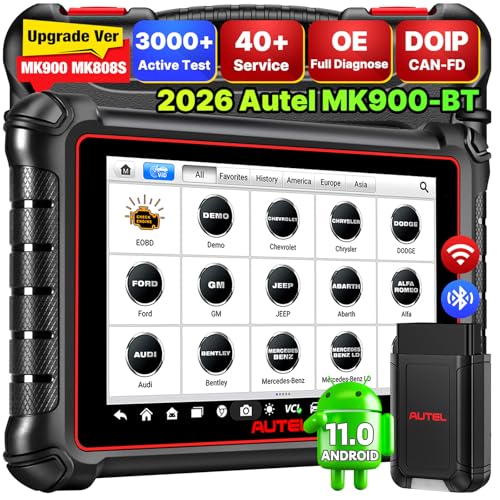
- 💯【Conta.ct us for Support Directly】If you met any...
- 🔥🔥🔥【2026 AUTEL FLAGSHIP MK900BT MK900-BT, NEW...
- 🚗【3000+ ACTIVE TESTS (50➡3000+), SAME AS MS...
- 🚗【40+ HOT SERVICES FOR 150 MAKES (28+➡40+)】Full...
- 🚗【OE ALL SYSTEM DIAGNOSE, AUTO SCAN 2.0: SCAN LICENSE...

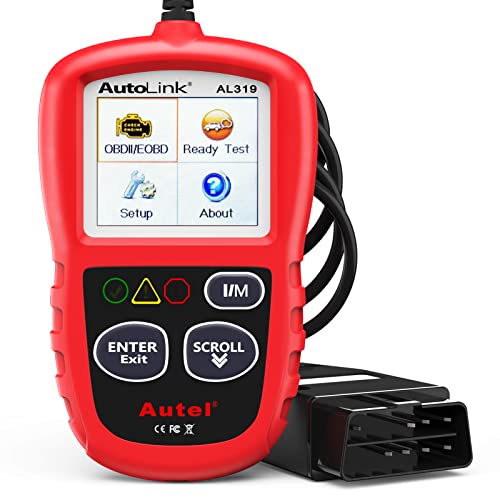
- 【TURN OFF CEL】 This AL319 car scanner diagnostic tool...
- 【EXTENSIVE APPLICATION】 Autel AL319 Compatible with...
- 【FOR END USER & DIYERS】 This error code reader AL319 is...
- 【USER-FRIENDLY DESIGN】 This OBD2 scanner and check...
- 【HIGH-QUALITY SERVICES】 12 months war.ranty from the...
Last update on 2026-06-23 / Affiliate links / Images from Amazon Product Advertising API
If the PDF is very large, it may not load in the preview below.
Some older TSBs had multiple PDFs — visit the NHTSA Website to view all PDFs.
If the TSB PDF does not show, download or view it on the NHTSA Website.
Click on the (+) Plus Sign
Then Click on Associated Document(s)
Search NHTSA Database for Recalls
Search NHTSA Database for Vehicle Investigations
View Latest Vehicle Investigations
Search NHTSA Database for Vehicle Complaints
View Latest Vehicle Complaints
TSB/Document ID: MSA5P0135C
Replacement Service Bulletin Number:
MFR Communication Date: 2013-06-01
MFR Internal Campaign ID/Software Version:
Communication Type: Service Bulletin/Repair Instructions
NHTSA Components: ELECTRICAL SYSTEM
MFR Component System:
MFR Component Subsystem:
Previous TSB | Next TSB |
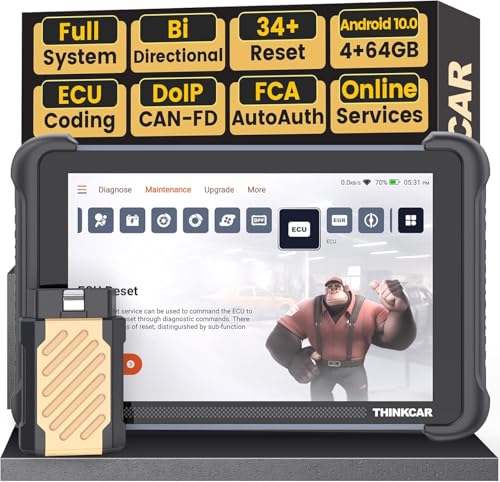
- [Notice] When you receive a used device, it may be a customer return resold by Amazon without inspection. You can exchange it for a new one through Amazon. As this situation is unavoidable, we sincerely apologize. For any issues, contacting us via Amazon's "Messages" is the best way. THINKSCAN 689BT Bidirectional Scan Tool Can Be Used Immediately After It is Turned On, Without Complicated Registration Process, Which is More Convenient & Quick.
- Full Bi-Directional Control & 3000+ Active Tests: Take control and test components like actuators, fuel injectors, relays, and cooling fans in real time. You’ll quickly see if the problem is in the part itself or the control module — saving you hours of guesswork and frustrating trial-and-error.
- Advanced ECU Coding Capabilities: Handle module matching and hidden feature activation with confidence. When you replace an ECU or want to customize settings, this obd2 scanner diagnostic bi directional tool gives you the professional-level capabilities you need without the dealership price tag.
- 34+ Useful Reset and Maintenance Functions: Complete everyday service tasks smoothly with a wide range of helpful reset and maintenance functions. Whether you’re keeping up with regular upkeep or tackling a specific job, this scanner makes maintenance simpler and less stressful for both DIYers and pros.
- Comprehensive Full System Diagnostics: Diagnose every major system — Engine, Transmission, ABS
 , SRS, TPMS, and more — all in one place. Finally stop wondering if you’re missing something important; get the full picture and clear codes with ease.
Last update on 2026-07-02 / Affiliate links / Images from Amazon Product Advertising API
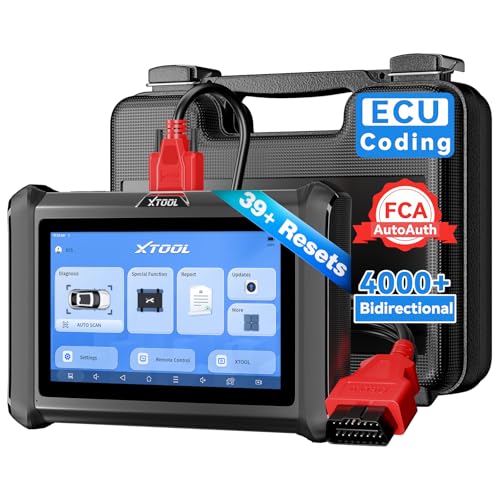
- Top Reasons to Choose the D7S OBD2 Scanner: XTOOL D7S car scan tool, an upgrade of XTOOL D7, offers comprehensive features for automotive technicians, workshops, and DIY enthusiasts 1. Upgraded Hardware: 2+64GB memory, rear camera, intuitive interface, foldable bracket 2. Complete Diagnostics: FCA Autoauth, OE-level all system scan, 39+ maintenance services, 4K+ bidirectional, CANFD/DoIP protocol 3. Advanced Capabilities: ECU c0ding, PMI functions 4. Wide Compatibility: Support 10,000+ models, covering 99% vehicle brands 5. Multi-language: Available in 22+ languages, No IP Restrictions 6. 3-Year Updates: Save 300 bucks on software updates for the latest features and optimizations
- 2026 Upgraded D7S Car Scanner Features: The newly 2026 D7S V2.0 scanner for car brings exciting features for advanced vehicle diagnostics and enhanced user experience 1. FCA AutoAuth: Now supports FCA SGW module for Chrysler, for Jeep, for Dodge (2018+), for Fiat (2017+), enabling faster vehicle communication without gateway restrictions 2. PMI (Offline ECU Pr0gramming): Allows for Ford, for Lincoln, and for Mazda ECU pr0gramming for new modules 3. Optimized Diagnostic Report 2.0: Personalized reports with logos and customer info for auto shops. Note: Compatibility varies by cars, please check before order
- 39+ Services/Resets/Adaptations/Relearns/Calibrations: XTOOL D7S full system car scanner diagnostic tool tackles 99% of common car issues through its 36+ special functions, including Oil Reset, EPB, SAS, BMS, Throttle Reset, Injector C0ding, ABS Bleed, TPMS Reset, Power Balance, etc and also covers specific-vehicle functions like Crank Sensor Relearn, ABS Initialization, Cylinder Power Balance, Fuel Trim Reset, Idle Relearn etc. This car diagnostic scanner enhances efficiency, making repairs and maintenance hassle-free. Tip: DO NOT for All vehicles, please check compatibility first
- Cost-effective ECU C0ding Scan Tool for Specific Brands: Enhance your vehicle's performance with XTOOL D7S! This obd2 scanner all systems bidirectional offers advanced capabilities at an affordable price, supports online for BMW, for Benz and offline for BENZ, for MIT, along with PMI functions for Ford, for Mazda, and for Lincoln. Ideal for technicians and DIY enthusiasts, this automotive scanner diagnostic tool optimizes vehicle performance and enhances the driving experience. Note: Not for all cars and modules, please send car VIN to check the compatibility before purchase
- OE All System Diagnostic & 8 Pids Graphing: XTOOL D7S is a comprehensive all system bi directional obd2 scanner that delivers dealer-level diagnostics, completely controlling over your vehicle’s performance and health. This automotive scan tool can read and clear DTCs, view live data and ECU information, retrieve freeze frames, and perform active tests and full obd2 functions. This bi-directional scan tool can can identify your vehicle's make, model, and year information with just one click and show up to 8 PIDs live data with options for CSV viewing, playback, and recording for in-depth analysis. It is easy-to-use for both professionals and beginners, helping pinpoint issues efficiently
Last update on 2026-06-30 / Affiliate links / Images from Amazon Product Advertising API
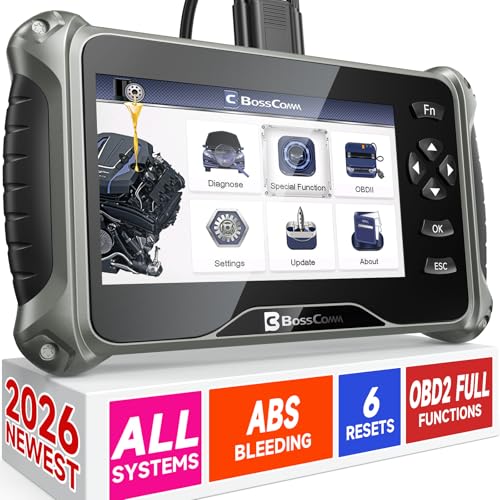
- 【✅Compared to BOSSCOMM IF742, IF745 Offers Full-System Diagnostics】The BOSSCOMM IF745 car diagnostic scanner is an upgraded model of IF742. In addition to supporting all OBD2 Code Reader functions and 6 reset options (ABS/EPB/SAS/BMS/Oil/Throttle), it expands diagnostics from 4 systems (Check Engine/ABS/SRS/Transmission) to vehicle All systems, including Steering, Suspension, and Body Electronics. This provides deeper, more comprehensive diagnostic capabilities.
- 【✨10 OBD2 Functions】The BOSSCOMM IF745 scan tool’s DTC Lookup instantly translates fault codes into user-friendly explanations, its I/M Readiness feature streamlines emissions testing with a single tap, and Freeze Frame lets you pinpoint the exact moment of a fault for in-depth root-cause diagnosis. Combined with a live data dashboard and advanced diagnostics (O2S, OBMon, EVAP), it delivers comprehensive insights for confident troubleshooting.
- 【✨Deep Diagnostics for All Vehicle System Modules】Beyond code reading/clearing and ECU information retrieval, our all-in-one data stream feature lets you inspect all current fault codes and their locations across the vehicle’s systems. This vehicle code reader helps you turn off dashboard warning lights and perform a comprehensive self-check of your car at home—no more back-and-forth trips to the repair shop or hefty inspection fees.
- 【✨6 Essential Resets: ABS Bleeding, Oil, EPB, SAS, Throttle, BMS】The BOSSCOMM IF745 obd2 scanner diagnostic tool swiftly purges air from brake lines to restore braking sensitivity, fine-tunes maintenance cycles to eliminate false alerts, resolves parking brake issues with one-click control, recalibrates steering sensors for stability, optimizes engine idling/acceleration for smoother performance, and deeply resets battery systems to extend lifespan and range via precise parameter adjustments.❗NOTE: Does NOT support bidirectional control, coding, or programming.
- 【✨10,000+ Car Models, AutoVIN, 13 Languages】The BOSSCOMM IF745 vehicle scanner diagnostic tool covers 73+ global car brands and offers support in 13 languages, making it perfect for DIYers, auto mechanics, or as a thoughtful gift. With a single-click AutoVIN feature, it instantly retrieves vehicle serial numbers, streamlining diagnostics for users globally. This adaptable tool balances user-friendliness with precision, catering to both personal and professional requirements.✅Unsure about compatibility? Compatibility will vary on vehicles' model and year, pls reach us via 📧 [email protected] 📧 before purchase.
Last update on 2026-07-02 / Affiliate links / Images from Amazon Product Advertising API
This product presentation was made with AAWP plugin.