
NHTSA ID Number: 10220303
Manufacturer Communication Number: 2020040001
TSB/Document Date: 2022-09-19
Summary
2020040001
The urea content is 32.5%. AdBlue® consists of urea
dissolved in demineralized water. AdBlue® is not an
additive.
Chemical formula: H2N-CO-NH2
AdBlue® dispensers are marked with the standard
designation ISO 22241 or with the trade designations
AdBlue® or Diesel Exhaust Fluid (DEF).
Transport
In vehicles with BlueTEC technology, AdBlue® is carried in
a tank.
Molecular weight (urea): 60.06 g/mol
--------------------------------------------------------------------------Physical and chemical properties of AdBlue®
State: Liquid
Color: Colorless, clear, light-yellow
Odor: Slight ammonia odor
engine oil, transmission oil, fuel, hydraulic fluid and brake
fluid and not used in the same containers and collecting
bowls. The smallest amounts of AdBlue® can damage
thermostats or temperature sensors.
pH value: 10 (aqueous solution, 10 %)
Operating fluids which contain traces of AdBlue® must not
be used again.
Crystallization temperature: –11 °C / 12 °F
Handling contaminated AdBlue®
Boiling point: 103 °C / 217 °F
Auto-ignition temperature: Not spontaneously inflammable
Density: approx. 1.09 g/cm3 at 20 °C / 68 °F
Viscosity (dynamic): approx. 1.4 mPa*s at 25 °C / 77 °F
Handling contaminated operating fluids
It is essential that AdBlue® be kept separate from other
operating fluids, fuels and lubricants such as coolant,
AdBlue® must be checked as per the repair instructions
before every fill. Individual components of the exhaust
aftertreatment system already react very sensitively with
even the smallest traces of contaminants in AdBlue®.
When handling AdBlue® it is important, therefore, to
always use clean containers and collecting bowls which are
only reserved for this purpose. Contaminated AdBlue®
must not be used again.
--------------------------------------------------------------------------Handling contaminated materials
Handling contaminated tools
It is essential that AdBlue® does not come into contact with
materials used in the interior of the vehicle. AdBlue®
exposed to air passes within just a few hours from a liquid
state into the crystalline state and can therefore damage
and destroy contaminated surfaces.
All tools coming into contact with AdBlue® must be
thoroughly cleaned with water immediately after use!
Textiles, e.g. the reversible mat in the luggage
compartment, which have been fouled with AdBlue®
should be alternately cleaned and then rinsed with water
several times.
It must be ensured that there are no further traces of
AdBlue® in the textiles.
Only fully dried measuring instruments and filling tools
should be used so as not to dilute the AdBlue®
concentration.
Protecting components when working with AdBlue®
AdBlue® leads to corrosion on electronic components and
strong fouling on all other materials. It is therefore
necessary to cover up all components in the vicinity over
the whole surface with plastic foil when working in
circumstances where AdBlue® could leak out.
Storage and packaging
Storage at temperatures between 0°C/32°F and 25°C/77°F
should be ensured in order to avoid crystallization occurring
14
a
Emissions Campaign 2020040001
Notes on use, material properties and handling of AdBlue®
in AdBlue®. To avoid deterioration in quality due to
contamination, AdBlue® must only be handled in storage
and filling systems intended exclusively for AdBlue®.
Suitable container materials are alloyed steel, various
plastics and plastic coatings in metal containers.
Not to be used are unalloyed steel, aluminum, copper,
copper-containing alloys and zinc-dipped steel.
--------------------------------------------------------------------------Service life and durability
AdBlue® breaks downs during storage into ammonium
hydroxide and carbon dioxide and then no longer fulfills the
requirements of standard ISO 22241.
If the recommended storage temperature of a maximum of
25°C/77°F is maintained, the AdBlue® will fulfill the
requirements of this standard for at least 18 months after
manufacture. If this recommended storage temperature is
exceeded then this period is reduced. Duration of storage
and the temperatures to be used are given as guideline
values at the end of the document. At temperatures below
-11°C/12 °F, the AdBlue® freezes and becomes solid.
On warming up again the frozen AdBlue® becomes liquid
again and can be reused without any loss of quality.
The maximum permissible service life of AdBlue® can be
taken from the MB Specifications for Operating Fluids.
Disposal and degradability
Disposal of AdBlue®:
When disposing of AdBlue® the legal requirements of the
country in which the AdBlue® is used must be observed.
Contaminated packaging/materials:
Packaging which contains residues of AdBlue® is to be
handled like the substance itself. Packaging should
emptied as well as possible; it can then be reused after
appropriate cleaning with water.
--------------------------------------------------------------------------Constant ambient conditions
Storage temperature in °C/°F - Durability in months
≤10 / 50 - 36
≤25 / 77 - 18
≤30 / 86 - 12
≤35 / 95 - 6
>35 / 95 - --
15
a
Emissions Campaign 2020040001
Information on preventing damage to electronic components due to electrostatic discharge
Information on preventing
damage to electronic
components due to electrostatic
discharge
Electrostatic charge
Every contact and every physical separation of materials or
every movement of solids, liquids or charged particlecontaining gases can generate electrostatic charge.
Plastics generally produce the highest electrostatic charge.
We come across electrostatic charge or discharge in lots of
everyday situations, e.g. with:
•
Combs
•
Walking on carpets or plastic floors
•
Putting on and taking off textiles with synthetic fiber
content
•
Disembarking from the vehicle
•
Contact between various electrostatically chargeable
packaging materials in shelves or in the transport
container
Topical note
The resulting electrostatic discharge (Electrostatic
Discharge (ESD)) can be so strong that a small electric
shock is detected. Even the smallest discharges which
people cannot detect can cause lasting damage to
electronic components and control units.
Effects and consequences of ESD
Electronic components and control units are very sensitive
to ESD. The damage is often not immediately obvious, but
becomes apparent some time later. In order to avoid
failures and damage due to ESD in vehicle electronics,
various procedures and safety precautions must be taken
into account and followed.
Risk of damage arises during the transportation, handling,
testing, removal and installation of electronic components
during production and repair work.
--------------------------------------------------------------------------The following electronic components listed as an example
can be damaged by ESD:
•
Airbag components
•
Control units, in particular their bus connections
Controller Area Network (data bus/CAN bus) (CAN),
Local Interconnect Network (LIN) etc.
•
The operation-specific documentation in the WIS must
be observed and the specified special tools and/or
workshop equipment must be used in each case.
•
Before unpacking, discharge ESD protective packaging
at the ESD workplace.
•
Avoid any contact with electrostatic chargeable
materials such as, e.g. polyethylene, PVC, styrofoam.
•
Use only original packaging or specially labeled and
defined packaging and transport materials.
•
Sensors
•
Mechatronic component parts (actuators etc.)
•
Antenna amplifier
•
•
Receivers and displays (Radio, TV, GPS, telephone
etc.)
Electronic components which have been removed must
be put down on an ESD workplace.
•
Electrical connectors on electronic component parts and
in the wiring harness should be touched by their
housing only. Do not touch pins or contacts!
•
Electronic components must be installed before they are
connected so that potential equalization with the body
can take place.
•
Shelves and worktables must stand directly on the floor,
there must not be any insulating materials between the
base of the shelves/feet and the floor. If the above
mentioned insulators cannot be removed, the shelves
and work tables must be grounded (e.g. low-resistance
electrical connection/line from metal shelf to a coolant
pipe).
•
Do not put down conductive containers/crates when
insulated,
Modes of behavior and safety precautions
•
Electrostatic discharge of the technician (e.g. by briefly
touching the vehicle body).
•
Suitable clothing, e.g. made of cotton.
•
Wear ESD safety shoes with conductive soles.
•
Keep workplace clean and clear away unnecessary
objects such as conventional plastics.
•
Special antistatic seat cushion protectors should be
used when performing repair work inside a vehicle.
•
Leave replacement parts in the original packing for as
long as possible, do not tear open seals but cut them
open carefully.
•
The ESD workplace must conform to the ESD
guidelines.
(e.g. on a wooden pallet), as otherwise potential
equalization will not take place.
16
a
Emissions Campaign 2020040001
Information on preventing damage to electronic components due to electrostatic discharge
•
Do not place control units and electronic components
removed from the vehicle on electrostatically
chargeable materials, such as PE, PVC, styrofoam. The
electrostatic charge is transferred to the control unit or
electronic component. An ESD service kit or a
connected ESD table mat must be used.
--------------------------------------------------------------------------Training
It is strongly recommended that every company has an
ESD officer trained in accordance with DIN EN 61340-5-1.
The ESD officer can carry out staff training courses.
The aim of the training measures is to communicate the
main problems and effects of ESD to staff:
•
Discharge generation
•
Reasoning for safety precautions
•
Effects and consequences of ESD
•
ESD rules of conduct and safety precautions
Return of electronic components in warranty and
goodwill cases
When returning electronic components it is absolutely
essential to observe the procedure and safety precautions
listed. The original fault may be falsified or hidden by
electrostatic charge/discharge.
This can lead to distorted fault symptoms in the case of the
fault analysis of the component concerned.
17
a
Emissions Campaign 2020040001
Notes on carrying out repair work in the vehicle interior
Notes on carrying out repair
work in the vehicle interior
In order to prevent soiling or damage, the following
information must be observed:
•
Before starting repairs in the vehicle interior, the
corresponding protective covers must be provided in the
repair area for the floor coverings, seats, steering
wheel, etc. to prevent them from becoming dirty.
•
Persons performing work in the vehicle interior should
ensure they have clean work clothes, clean shows and
clean hands.
Topical note
•
When removing bulky or difficult to handle parts (e.g.
bench seat, roof lining, instrument panel etc.), always
work with aid of at least a second person.
•
Do not use dirty or unapproved tools. This prevents any,
e.g. scratching or crazing of interior parts etc.
•
Always place removed interior parts on a clean and soft
surface.
--------------------------------------------------------------------------customer's request, and cannot be replaced easily if
damaged or soiled; for this reason, utmost care must be
ensured when carrying out operations in the vehicle
interior.
Further information:
•
Repair or replace damaged interior parts (particularly
mounts such as retaining clips, Velcro fasteners etc.).
•
When installing interior parts at the intended locations,
install insulation material and/or protective foils, or,
replace insulation material/protective foils as required in
order to dampen vibrations and noise.
•
Many equipment parts in the area of the vehicle interior
have been installed or made specifically to the
•
Remove any dirt present with cleaners approved by
Daimler and suitable for corresponding surfaces. When
doing so, where possible, the compatibility of the
cleaning agent should be tested at a concealed area of
the part to be cleaned.
18
a
Emissions Campaign 2020040001
Lift point locations
i
When performing procedure on a vehicle lift
i
Vehicle must be in a ready to lift position
before procedure is started.
i
Read the operating instructions for
the vehicle lift.
Lift mounting points on the vehicle
in the area of the front axle
01
spring clamp plate
02
longitudinal member
08
bracket
011
arm of hydraulic lift
012
support plate
013
long support plate
017
support drift
Lift mounting points on the vehicle in the area of the rear axle
03
front rear spring bracket
07
crossmember
04
longitudinal member
011
arm of hydraulic lift
06
front rear spring bracket
013
long support plate
014
016
v-block
prop
19
a
Emissions Campaign 2020040001
Picture reference
Pick-up point
03
04
Support at rear to front rear spring
bracket.
Rear support at longitudinal member.
06
012
Install on front rear spring bracket.
Support plate.
Information
013
Long support plate.
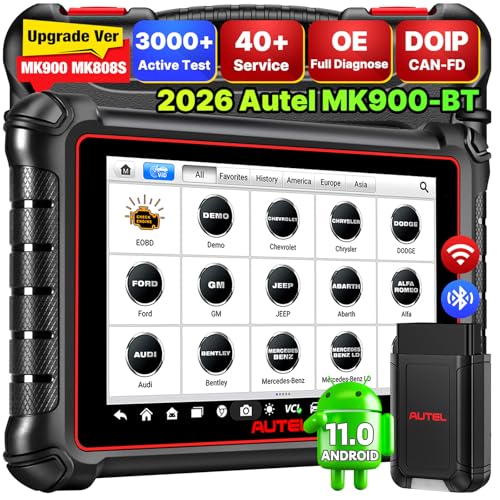
- 💯【Conta.ct us for Support Directly】If you met any...
- 🔥🔥🔥【2026 AUTEL FLAGSHIP MK900BT MK900-BT, NEW...
- 🚗【3000+ ACTIVE TESTS (50➡3000+), SAME AS MS...
- 🚗【40+ HOT SERVICES FOR 150 MAKES (28+➡40+)】Full...
- 🚗【OE ALL SYSTEM DIAGNOSE, AUTO SCAN 2.0: SCAN LICENSE...

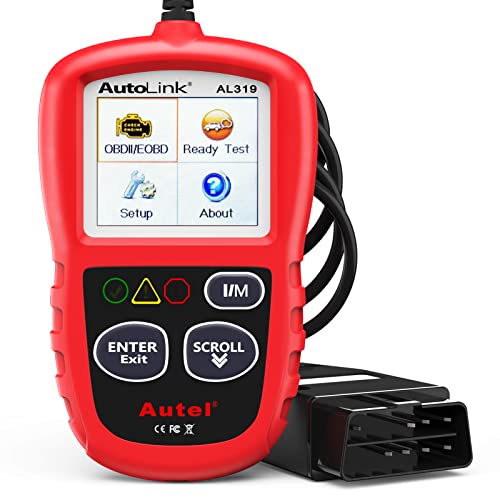
- 【TURN OFF CEL】 This AL319 car scanner diagnostic tool...
- 【EXTENSIVE APPLICATION】 Autel AL319 Compatible with...
- 【FOR END USER & DIYERS】 This error code reader AL319 is...
- 【USER-FRIENDLY DESIGN】 This OBD2 scanner and check...
- 【HIGH-QUALITY SERVICES】 12 months war.ranty from the...
Last update on 2026-06-23 / Affiliate links / Images from Amazon Product Advertising API
If the PDF is very large, it may not load in the preview below.
Some older TSBs had multiple PDFs — visit the NHTSA Website to view all PDFs.
If the TSB PDF does not show, download or view it on the NHTSA Website.
Click on the (+) Plus Sign
Then Click on Associated Document(s)
Search NHTSA Database for Recalls
Search NHTSA Database for Vehicle Investigations
View Latest Vehicle Investigations
Search NHTSA Database for Vehicle Complaints
View Latest Vehicle Complaints
TSB/Document ID: 2020040001
Replacement Service Bulletin Number:
MFR Communication Date: 2022-08-08
MFR Internal Campaign ID/Software Version:
Communication Type: Service Bulletin/Repair Instructions
NHTSA Components: ENGINE AND ENGINE COOLING
MFR Component System:
MFR Component Subsystem:
Previous TSB | Next TSB |
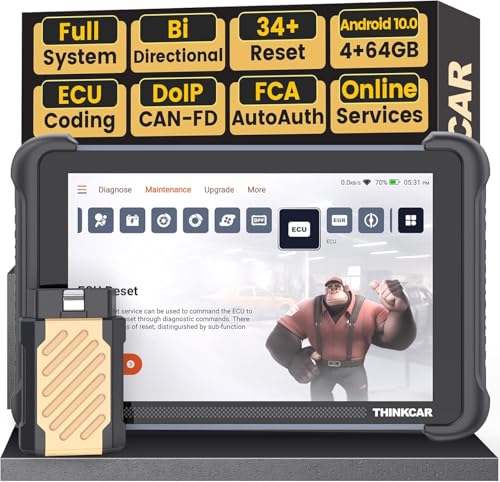
- [Notice] When you receive a used device, it may be a customer return resold by Amazon without inspection. You can exchange it for a new one through Amazon. As this situation is unavoidable, we sincerely apologize. For any issues, contacting us via Amazon's "Messages" is the best way. THINKSCAN 689BT Bidirectional Scan Tool Can Be Used Immediately After It is Turned On, Without Complicated Registration Process, Which is More Convenient & Quick.
- Full Bi-Directional Control & 3000+ Active Tests: Take control and test components like actuators, fuel injectors, relays, and cooling fans in real time. You’ll quickly see if the problem is in the part itself or the control module — saving you hours of guesswork and frustrating trial-and-error.
- Advanced ECU Coding Capabilities: Handle module matching and hidden feature activation with confidence. When you replace an ECU or want to customize settings, this obd2 scanner diagnostic bi directional tool gives you the professional-level capabilities you need without the dealership price tag.
- 34+ Useful Reset and Maintenance Functions: Complete everyday service tasks smoothly with a wide range of helpful reset and maintenance functions. Whether you’re keeping up with regular upkeep or tackling a specific job, this scanner makes maintenance simpler and less stressful for both DIYers and pros.
- Comprehensive Full System Diagnostics: Diagnose every major system — Engine, Transmission, ABS, SRS, TPMS, and more — all in one place. Finally stop wondering if you’re missing something important; get the full picture and clear codes with ease.
Last update on 2026-07-02 / Affiliate links / Images from Amazon Product Advertising API
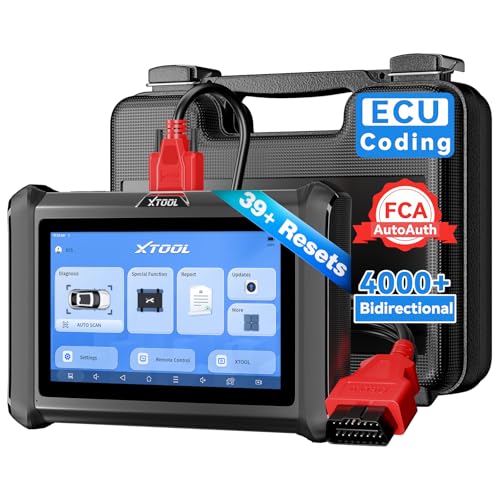
- Top Reasons to Choose the D7S OBD2 Scanner: XTOOL D7S car scan tool, an upgrade of XTOOL D7, offers comprehensive features for automotive technicians, workshops, and DIY enthusiasts 1. Upgraded Hardware: 2+64GB memory, rear camera, intuitive interface, foldable bracket 2. Complete Diagnostics: FCA
 Autoauth, OE-level all system scan, 39+ maintenance services, 4K+ bidirectional, CANFD/DoIP protocol 3. Advanced Capabilities: ECU c0ding, PMI functions 4. Wide Compatibility: Support 10,000+ models, covering 99% vehicle brands 5. Multi-language: Available in 22+ languages, No IP Restrictions 6. 3-Year Updates: Save 300 bucks on software updates for the latest features and optimizations
 - 2026 Upgraded D7S Car Scanner Features: The newly 2026 D7S V2.0 scanner for car brings exciting features for advanced vehicle diagnostics and enhanced user experience 1. FCA AutoAuth: Now supports FCA SGW module for Chrysler, for Jeep, for Dodge (2018+), for Fiat (2017+), enabling faster vehicle communication without gateway restrictions 2. PMI (Offline ECU Pr0gramming): Allows for Ford, for Lincoln, and for Mazda ECU pr0gramming for new modules 3. Optimized Diagnostic Report 2.0: Personalized reports with logos and customer info for auto shops. Note: Compatibility varies by cars, please check before order
- 39+ Services/Resets/Adaptations/Relearns/Calibrations: XTOOL D7S full system car scanner diagnostic tool tackles 99% of common car issues through its 36+ special functions, including Oil Reset, EPB, SAS, BMS, Throttle Reset, Injector C0ding, ABS Bleed, TPMS Reset, Power Balance, etc and also covers specific-vehicle functions like Crank Sensor Relearn, ABS Initialization, Cylinder Power Balance, Fuel Trim Reset, Idle Relearn etc. This car diagnostic scanner enhances efficiency, making repairs and maintenance hassle-free. Tip: DO NOT for All vehicles, please check compatibility first
- Cost-effective ECU C0ding Scan Tool for Specific Brands: Enhance your vehicle's performance with XTOOL D7S! This obd2 scanner all systems bidirectional offers advanced capabilities at an affordable price, supports online for BMW, for Benz and offline for BENZ, for MIT, along with PMI functions for Ford, for Mazda, and for Lincoln. Ideal for technicians and DIY enthusiasts, this automotive scanner diagnostic tool optimizes vehicle performance and enhances the driving experience. Note: Not for all cars and modules, please send car VIN to check the compatibility before purchase
- OE All System Diagnostic & 8 Pids Graphing: XTOOL D7S is a comprehensive all system bi directional obd2 scanner that delivers dealer-level diagnostics, completely controlling over your vehicle’s performance and health. This automotive scan tool can read and clear DTCs, view live data and ECU information, retrieve freeze frames, and perform active tests and full obd2 functions. This bi-directional scan tool can can identify your vehicle's make, model, and year information with just one click and show up to 8 PIDs live data with options for CSV viewing, playback, and recording for in-depth analysis. It is easy-to-use for both professionals and beginners, helping pinpoint issues efficiently
 Autoauth, OE-level all system scan, 39+ maintenance services, 4K+ bidirectional, CANFD/DoIP protocol 3. Advanced Capabilities: ECU c0ding, PMI functions 4. Wide Compatibility: Support 10,000+ models, covering 99% vehicle brands 5. Multi-language: Available in 22+ languages, No IP Restrictions 6. 3-Year Updates: Save 300 bucks on software updates for the latest features and optimizations
Last update on 2026-07-08 / Affiliate links / Images from Amazon Product Advertising API
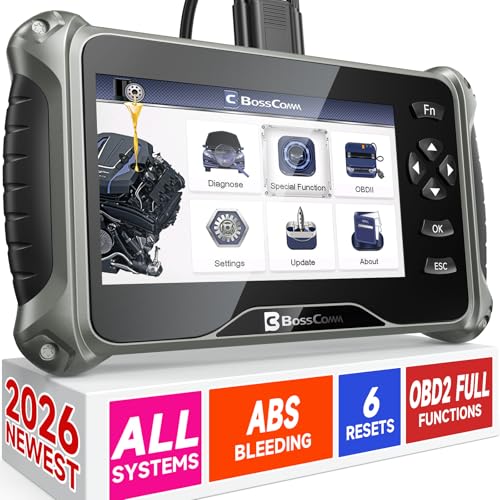
- 【✅Compared to BOSSCOMM IF742, IF745 Offers Full-System Diagnostics】The BOSSCOMM IF745 car diagnostic scanner is an upgraded model of IF742. In addition to supporting all OBD2 Code Reader functions and 6 reset options (ABS/EPB/SAS/BMS/Oil/Throttle), it expands diagnostics from 4 systems (Check Engine/ABS/SRS/Transmission) to vehicle All systems, including Steering, Suspension, and Body Electronics. This provides deeper, more comprehensive diagnostic capabilities.
- 【✨10 OBD2 Functions】The BOSSCOMM IF745 scan tool’s DTC Lookup instantly translates fault codes into user-friendly explanations, its I/M Readiness feature streamlines emissions testing with a single tap, and Freeze Frame lets you pinpoint the exact moment of a fault for in-depth root-cause diagnosis. Combined with a live data dashboard and advanced diagnostics (O2S, OBMon, EVAP), it delivers comprehensive insights for confident troubleshooting.
- 【✨Deep Diagnostics for All Vehicle System Modules】Beyond code reading/clearing and ECU information retrieval, our all-in-one data stream feature lets you inspect all current fault codes and their locations across the vehicle’s systems. This vehicle code reader helps you turn off dashboard warning lights and perform a comprehensive self-check of your car at home—no more back-and-forth trips to the repair shop or hefty inspection fees.
- 【✨6 Essential Resets: ABS Bleeding, Oil, EPB, SAS, Throttle, BMS】The BOSSCOMM IF745 obd2 scanner diagnostic tool swiftly purges air from brake lines to restore braking sensitivity, fine-tunes maintenance cycles to eliminate false alerts, resolves parking brake issues with one-click control, recalibrates steering sensors for stability, optimizes engine idling/acceleration for smoother performance, and deeply resets battery systems to extend lifespan and range via precise parameter adjustments.❗NOTE: Does NOT support bidirectional control, coding, or programming.
- 【✨10,000+ Car Models, AutoVIN, 13 Languages】The BOSSCOMM IF745 vehicle scanner diagnostic tool covers 73+ global car brands and offers support in 13 languages, making it perfect for DIYers, auto mechanics, or as a thoughtful gift. With a single-click AutoVIN feature, it instantly retrieves vehicle serial numbers, streamlining diagnostics for users globally. This adaptable tool balances user-friendliness with precision, catering to both personal and professional requirements.✅Unsure about compatibility? Compatibility will vary on vehicles' model and year, pls reach us via 📧 [email protected] 📧 before purchase.
Last update on 2026-07-02 / Affiliate links / Images from Amazon Product Advertising API
This product presentation was made with AAWP plugin.