
NHTSA ID Number: 10220119
Manufacturer Communication Number: ENP-756
TSB/Document Date: 2022-09-15
Summary
Deleted CNG HP fuel filter (Manifilter) drain interval from Maintenance table.
(Printed and Downloaded Copies are Uncontrolled)
CNG Fuel System Operation Manual
FMM with Manifilter
Hexagon® Agility® roof mount 5-cylinder systems
Covers systems equipped with the following Hexagon® Agility® Fuel Management Modules (FMMs) and
fuel storage assemblies:
Fuel Management Module (FMM) p/ns
Roof mount system p/ns
20810000
20814000
20860000
25530000 (manual cylinder valves)
20810500
20814500
20860500
25531000 (electric solenoid cylinder valves)
20811000
20815000
20861000
25533000 (electric solenoid cylinder valves)
20811500
20815500
20861500
25534000 (manual cylinder valves)
20812500
20816500
20862500
25535000 (electric solenoid cylinder valves)
20812600
20816600
20862600
25536000 (electric solenoid cylinder valves)
20813500
20817500
20863500
25537000 (electric solenoid cylinder valves)
20813600
20817600
25538000 (manual cylinder valves)
ENP-756 REV E
August 3, 2022
Hexagon® Agility®. ©2022. All Rights Reserved.
Gillig CNG Five Cylinder System Operation Manual
Table of Contents
Tables and Figures ...................................................................................................................................... 4
Preface ........................................................................................................................................................ 6
Acronyms .................................................................................................................................................... 7
1. Safety ...................................................................................................................................................... 7
1.1. Qualified Personnel .............................................................................................................................. 8
1.2. Safety Equipment ................................................................................................................................. 8
1.4. CNG Vehicle Safety Precautions .......................................................................................................... 9
1.5. Codes and Compliances .................................................................................................................... 10
1.6. First Responder Guide ....................................................................................................................... 10
1.6.1. General Information ..................................................................................................................... 10
1.6.2. Vehicle Fire Procedures .............................................................................................................. 10
1.6.3. Return to Service Inspection ........................................................................................................ 10
1.6.4. Emergency Manual Shutdown Procedures .................................................................................. 11
1.6.5. Emergency Response ................................................................................................................. 12
2. System Schematics and General Assemblies ........................................................................................ 13
3. Fuel System Components and Specifications ........................................................................................ 18
3.1. Fuel Specifications ............................................................................................................................. 18
3.2. Superstructure.................................................................................................................................... 18
3.3. Fuel Management Module (FMM) ...................................................................................................... 18
3.4. Filters ................................................................................................................................................. 19
3.4.1. High-Pressure Fuel Filter ............................................................................................................. 19
3.4.2. Low-Pressure Fuel Filter.............................................................................................................. 19
3.5. Supply Solenoid Valve ....................................................................................................................... 20
3.5.1. Supply Solenoid Principles of Operation ...................................................................................... 20
3.6. Pressure Regulator ............................................................................................................................ 20
3.7. Cylinders ............................................................................................................................................ 20
3.8. Valves ................................................................................................................................................ 21
3.8.1. Bleed Valve ................................................................................................................................. 21
3.8.2. Check Valve ................................................................................................................................ 21
3.8.3. Defuel Valve ................................................................................................................................ 21
3.8.4. 1/4-Turn Manual Shutoff Valve .................................................................................................... 21
3.8.5. Manual Cylinder Valve ................................................................................................................. 21
3.8.6. Electric Solenoid Cylinder Valve .................................................................................................. 22
3.9. Pressure Relief Devices (PRDs)......................................................................................................... 22
3.11. Fittings and Connections .................................................................................................................. 24
3.11.1. Tubing ....................................................................................................................................... 24
3.11.2. Fittings....................................................................................................................................... 24
3.11.3. Tube and Fitting Installations ..................................................................................................... 24
3.11.4. Fitting Safety Considerations: .................................................................................................... 24
4. Operation and Maintenance................................................................................................................... 25
4.1. Inspecting Components...................................................................................................................... 25
4.2. Maintenance Schedule ....................................................................................................................... 26
4.3. Leaks ................................................................................................................................................. 26
4.3.1. Tubing Bottoming Requirements ................................................................................................. 26
4.3.2. Tightening Fitting Nuts ................................................................................................................. 26
4.3.3. Testing for Leaks ......................................................................................................................... 26
4.3.4. Tightening Leaking Fittings .......................................................................................................... 26
4.3.5. Pressure Test Using an Inert Gas (Nitrogen): .............................................................................. 27
ENP-756 REV E 8/3/2022
(Printed and Downloaded Copies are Uncontrolled)
2 of 64
Gillig CNG Five Cylinder System Operation Manual
4.3.6. Repairing a Leak ......................................................................................................................... 28
4.4. Starting Vehicle .................................................................................................................................. 28
4.5. Depressurizing CNG System Tubing .................................................................................................. 29
4.6. Re-Pressurizing System ..................................................................................................................... 29
4.7. Maintaining Manifilter HP fuel filter ..................................................................................................... 30
4.7.1. Draining the Manifilter Assembly.................................................................................................. 30
4.7.2. Replacing the HP Fuel Filter Element .......................................................................................... 31
4.8. Maintaining Low-Pressure Filter ......................................................................................................... 32
4.8.1. Low-Pressure Filter Replacement and Service ............................................................................ 32
4.8.2. Draining LP Filter and Replacing the LP Filter Housing ............................................................... 32
4.9. Supply Solenoid Valve (SSV) ............................................................................................................. 33
4.10. Cylinders .......................................................................................................................................... 34
4.10.1. Inspecting Cylinders .................................................................................................................. 34
4.10.2. Cylinder Venting Procedure ....................................................................................................... 34
4.11. Valve Maintenance ........................................................................................................................... 34
4.12. Pressure Relief Devices (PRDs)....................................................................................................... 34
4.12.1. PRD Visual Inspection ............................................................................................................... 34
4.12.2. Draining Vent Lines ................................................................................................................... 35
4.13. Fill and Defuel Receptacles .............................................................................................................. 37
4.13.1. Receptacle Maintenance ........................................................................................................... 37
4.13.2. Transit (Fast) Fill Freeze-Up ...................................................................................................... 37
5. Defueling Preparation and Procedures .................................................................................................. 38
5.1. Basic Rules for Defueling ................................................................................................................... 38
5.2. Defueling Requirements ..................................................................................................................... 38
5.2.1. Vent to Atmosphere ..................................................................................................................... 38
5.2.2. Compressor Transfer ................................................................................................................... 38
5.2.3. Return to Supply .......................................................................................................................... 38
5.3. A Typical Venting Facility ................................................................................................................... 38
5.3.1. Venting Facility Minimum Equipment Figure 35 ........................................................................... 39
5.4. Defueling Procedure........................................................................................................................... 40
5.4.1. Confirm All Cylinder Valves are Open ............................................................................................. 40
5.4.2. Defuel Nozzle Operation ................................................................................................................. 40
5.5. Removing CNG Cylinders from Service.............................................................................................. 44
6. Troubleshooting ..................................................................................................................................... 45
7. Warranty and Contact Information ......................................................................................................... 48
Proprietary Statement ................................................................................................................................ 48
Trademark Notice ...................................................................................................................................... 48
Appendix A. Special considerations for electric solenoid cylinder valve fuel system defueling. .................. 49
A1. Defueling Method 1: Defuel with Audible Test Method ........................................................................ 49
A2. Defueling Method 2: Defuel Using Valve Disassembly ........................................................................ 52
A3. Defueling When No Battery Power is Available ................................................................................... 53
A4. Solenoid Cylinder Valve Disassembly ................................................................................................. 56
A5. Solenoid Valve Function Test and Cylinder Venting After Valve Disassembly..................................... 60
A6. Solenoid Cylinder Valve Reassembly after Passing Function Test...................................................... 61
A7. Remove and Replace Solenoid Cylinder Valve ................................................................................... 62
A8. Re-orient Cylinder ............................................................................................................................... 63
A9. Solenoid Cylinder Valve Function Tests .............................................................................................. 63
Contact Information ................................................................................................................................... 64
ENP-756 REV E 8/3/2022
(Printed and Downloaded Copies are Uncontrolled)
3 of 64
Gillig CNG Five Cylinder System Operation Manual
Tables and Figures
Table 1. Revision level
6
Figure 1. CNG blue diamond decal
10
Figure 2. Emergency shutdown procedure
11
Figure 3. Emergency response procedure - precautions
12
Figure 4. Electrical schematic
13
Table 2. Connector pin out
13
Table 3. Electrical BOM
13
Figure 5. CNG system schematic – electric solenoid cylinder valves
14
Figure 6. CNG system schematic – manual cylinder valves
15
Figure 7. Fuel Management Module (FMM) components, exploded (Refer to Table 4)
16
Table 4. Fuel Management Module (FMM) components (refer to Figure 5)
17
Figure 8. Roof mounted CNG storage
18
Figure 9a. FMM face plate components
18
Figure 9b. FMM components, bottom view
18
Figure 10. Remote fill option components
19
Figure 11. Manifilter high-pressure (HP) fuel filter components
19
Figure 12. Low-pressure (LP) fuel filter components
20
Figure 13. Supply solenoid valve (SSV)
20
Figure 14. Pressure regulator
20
Figure 15. Bleed valve
21
Figure 16. Check valve
21
Figure 17. Defuel valve
21
Figure 18. 1/4-turn manual shutoff valve
21
Figure 19. Manual cylinder valve
21
Figure 20. Electric solenoid cylinder valve
22
Figure 21a. Remote PRD
22
Figure 21b. Remote PRD locations
22
Figure 22a. Fuel fill and defuel receptacles
23
Figure 22b. Optional remote transit fill panel
23
Figure 23. Always use two wrenches when loosening or tightening a fitting.
24
Table 5. Maintenance Schedule
26
Figure 24. Cylinder valve manual shutoff knobs
27
Figure 25. FMM 1/4-turn manual shutoff valve operation
27
Figure 26. FMM, NGV1 defuel receptacle, dust cap
28
Figure 27. Bleed valve location within the FMM
29
ENP-756 REV E 8/3/2022
(Printed and Downloaded Copies are Uncontrolled)
4 of 64
Gillig CNG Five Cylinder System Operation Manual
Figure 28. Manifilter FMM location and drain plug
30
Figure 29. Manifilter components
31
Table 6. Manifilter torque specifications
31
Figure 30. LP fuel filter drain cock location.
32
Figure 31. Solenoid valve location in FMM.
33
Table 7. Solenoid valve troubleshooting
33
Figure 32. Cylinder plug end
35
Figure 33a. Cylinder valve end – manual cylinder valves Cylinder plug end
36
Figure 33b. Cylinder valve end – electric solenoid cylinder valves
36
Figure 34. FMM fill receptacles
37
Figure 35. Typical atmospheric venting equipment
39
Figure 36. Fuel transfer hose assembly, p/n 20110011
40
Figure 37. FMM operation
41
Figure 38. Ground wire clip must be connected to ground on the vehicle
41
Figure 39. FMM defueling valves and gauges.
41
Figure 40. FMM 1/4-turn manual shutoff valve (1) in OPEN/ON position
41
Figure 41. Defuel receptacle, dust cap
42
Figure 42. Use a pick or small screwdriver to remove defuel receptacle O-ring
42
Figure 43. Brass insert is located inside BDN nozzle lever
42
Figure 44. Brass insert, defuel receptacle
42
Figure 45. O-ring, defuel receptacle
43
Figure 46. Verify BDN nozzle valve handle is turned to VENT
42
Figure 47. Pull on BDN nozzle cotter pin to retract lever
43
Figure 48. BDN nozzle, receiver
43
Figure 49. BDN nozzle, lever, FMM defuel receptacle
43
Figure 50. Pull on BDN nozzle gently
43
Figure 51. Turn BDN nozzle valve handle to DEFUEL position
43
Figure 52. Always open defuel valve manual handle slowly
43
Table 8. Troubleshooting problems
45
Table 9. Trouble solutions
45
Figure 53. Low-pressure fuel light troubleshooting
46
Figure 54. Gas leak troubleshooting
47
Figure A1. Electric solenoid cylinder valve system valve end view.
49
Figure A2. Fuel Management Module (FMM) components: front view from below
50
Figure A3. Fuel Management Module (FMM) face plate components
50
Figure A4. OMB ESA cylinder electric solenoid valve
56
Figure A5. Solenoid valve manual knob operation
56
ENP-756 REV E 8/3/2022
(Printed and Downloaded Copies are Uncontrolled)
5 of 64
Gillig CNG Five Cylinder System Operation Manual
Figure A6. Begin solenoid valve disassembly by removing coil nut from coil
57
Figure A7. Remove solenoid coil from valve stem
58
Figure A8. Use a 25mm wrench to remove solenoid sleeve from valve body
58
Figure A9. Remove plunger and spring from valve stem
59
Figure A10. Disassembled solenoid valve assembly
61
Figure A11. ESA solenoid valve torque tool
62
Table 1. Revision level.
--
E
C. Grasso
CCTS Team
08/03/2022
--
D
C.Grasso
CCTS Team
08/01/2022
--
C
C.Grasso
CCTS Team
07/21/2022
--
B



- The world’s #1 fuel additive for both gasoline and diesel...
- A great tune-up in a bottle – treats gasoline, diesel fuel...
- Cleans and lubricates the fuel system, including fuel...
- Improves fuel economy by burning excess exhaust emissions
- Increases power and acceleration by improving fuel flow and...
If the PDF is very large, it may not load in the preview below.
Some older TSBs had multiple PDFs — visit the NHTSA Website to view all PDFs.
If the TSB PDF does not show, download or view it on the NHTSA Website.
Click on the (+) Plus Sign
Then Click on Associated Document(s)
Search NHTSA Database for Recalls
Search NHTSA Database for Vehicle Investigations
View Latest Vehicle Investigations
Search NHTSA Database for Vehicle Complaints
View Latest Vehicle Complaints
TSB/Document ID: ENP-756
Replacement Service Bulletin Number:
MFR Communication Date: 2022-08-03
MFR Internal Campaign ID/Software Version:
Communication Type: Service Bulletin/Repair Instructions
NHTSA Components: FUEL SYSTEM, OTHER:FUEL FILTER
MFR Component System:
MFR Component Subsystem:
Previous TSB | Next TSB |
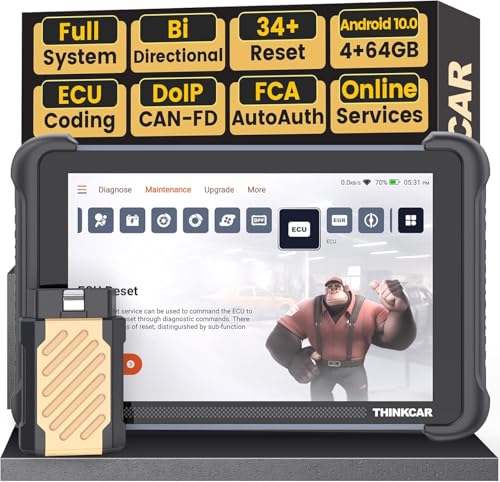
- [Notice] When you receive a used device, it may be a customer return resold by Amazon without inspection. You can exchange it for a new one through Amazon. As this situation is unavoidable, we sincerely apologize. For any issues, contacting us via Amazon's "Messages" is the best way. THINKSCAN 689BT Bidirectional Scan Tool Can Be Used Immediately After It is Turned On, Without Complicated Registration Process, Which is More Convenient & Quick.
- Full Bi-Directional Control & 3000+ Active Tests: Take control and test components like actuators, fuel injectors, relays, and cooling fans in real time. You’ll quickly see if the problem is in the part itself or the control module — saving you hours of guesswork and frustrating trial-and-error.
- Advanced ECU Coding Capabilities: Handle module matching and hidden feature activation with confidence. When you replace an ECU or want to customize settings, this obd2 scanner diagnostic bi directional tool gives you the professional-level capabilities you need without the dealership price tag.
- 34+ Useful Reset and Maintenance Functions: Complete everyday service tasks smoothly with a wide range of helpful reset and maintenance functions. Whether you’re keeping up with regular upkeep or tackling a specific job, this scanner makes maintenance simpler and less stressful for both DIYers and pros.
- Comprehensive Full System Diagnostics: Diagnose every major system — Engine, Transmission, ABS, SRS, TPMS, and more — all in one place. Finally stop wondering if you’re missing something important; get the full picture and clear codes with ease.
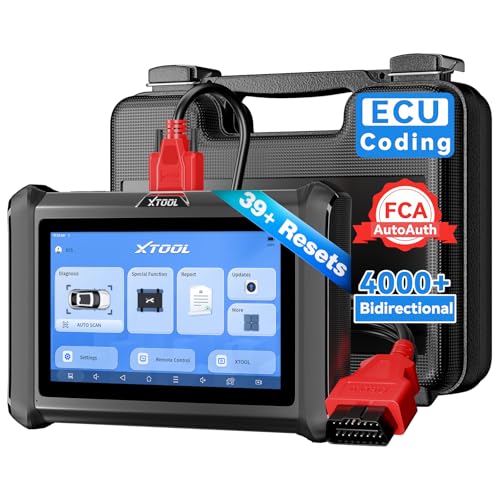
- Top Reasons to Choose the D7S OBD2 Scanner: XTOOL D7S car scan tool, an upgrade of XTOOL D7, offers comprehensive features for automotive technicians, workshops, and DIY enthusiasts 1. Upgraded Hardware: 2+64GB memory, rear camera, intuitive interface, foldable bracket 2. Complete Diagnostics: FCA
 Autoauth, OE-level all system scan, 39+ maintenance services, 4K+ bidirectional, CANFD/DoIP protocol 3. Advanced Capabilities: ECU c0ding, PMI functions 4. Wide Compatibility: Support 10,000+ models, covering 99% vehicle brands 5. Multi-language: Available in 22+ languages, No IP Restrictions 6. 3-Year Updates: Save 300 bucks on software updates for the latest features and optimizations
 - 2026 Upgraded D7S Car Scanner Features: The newly 2026 D7S V2.0 scanner for car brings exciting features for advanced vehicle diagnostics and enhanced user experience 1. FCA AutoAuth: Now supports FCA SGW module for Chrysler, for Jeep, for Dodge (2018+), for Fiat (2017+), enabling faster vehicle communication without gateway restrictions 2. PMI (Offline ECU Pr0gramming): Allows for Ford, for Lincoln, and for Mazda ECU pr0gramming for new modules 3. Optimized Diagnostic Report 2.0: Personalized reports with logos and customer info for auto shops. Note: Compatibility varies by cars, please check before order
- 39+ Services/Resets/Adaptations/Relearns/Calibrations: XTOOL D7S full system car scanner diagnostic tool tackles 99% of common car issues through its 36+ special functions, including Oil Reset, EPB, SAS, BMS, Throttle Reset, Injector C0ding, ABS Bleed, TPMS Reset, Power Balance, etc and also covers specific-vehicle functions like Crank Sensor Relearn, ABS Initialization, Cylinder Power Balance, Fuel Trim Reset, Idle Relearn etc. This car diagnostic scanner enhances efficiency, making repairs and maintenance hassle-free. Tip: DO NOT for All vehicles, please check compatibility first
- Cost-effective ECU C0ding Scan Tool for Specific Brands: Enhance your vehicle's performance with XTOOL D7S! This obd2 scanner all systems bidirectional offers advanced capabilities at an affordable price, supports online for BMW, for Benz and offline for BENZ, for MIT, along with PMI functions for Ford, for Mazda, and for Lincoln. Ideal for technicians and DIY enthusiasts, this automotive scanner diagnostic tool optimizes vehicle performance and enhances the driving experience. Note: Not for all cars and modules, please send car VIN to check the compatibility before purchase
- OE All System Diagnostic & 8 Pids Graphing: XTOOL D7S is a comprehensive all system bi directional obd2 scanner that delivers dealer-level diagnostics, completely controlling over your vehicle’s performance and health. This automotive scan tool can read and clear DTCs, view live data and ECU information, retrieve freeze frames, and perform active tests and full obd2 functions. This bi-directional scan tool can can identify your vehicle's make, model, and year information with just one click and show up to 8 PIDs live data with options for CSV viewing, playback, and recording for in-depth analysis. It is easy-to-use for both professionals and beginners, helping pinpoint issues efficiently
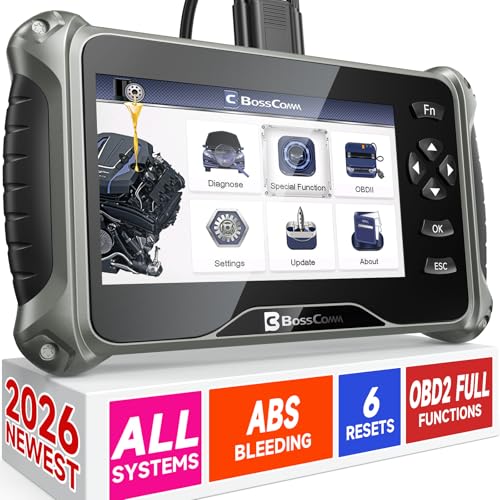
- 【✅Compared to BOSSCOMM IF742, IF745 Offers Full-System Diagnostics】The BOSSCOMM IF745 car diagnostic scanner is an upgraded model of IF742. In addition to supporting all OBD2 Code Reader functions and 6 reset options (ABS/EPB/SAS/BMS/Oil/Throttle), it expands diagnostics from 4 systems (Check Engine/ABS/SRS/Transmission) to vehicle All systems, including Steering, Suspension, and Body Electronics. This provides deeper, more comprehensive diagnostic capabilities.
- 【✨10 OBD2 Functions】The BOSSCOMM IF745 scan tool’s DTC Lookup instantly translates fault codes into user-friendly explanations, its I/M Readiness feature streamlines emissions testing with a single tap, and Freeze Frame lets you pinpoint the exact moment of a fault for in-depth root-cause diagnosis. Combined with a live data dashboard and advanced diagnostics (O2S, OBMon, EVAP), it delivers comprehensive insights for confident troubleshooting.
- 【✨Deep Diagnostics for All Vehicle System Modules】Beyond code reading/clearing and ECU information retrieval, our all-in-one data stream feature lets you inspect all current fault codes and their locations across the vehicle’s systems. This vehicle code reader helps you turn off dashboard warning lights and perform a comprehensive self-check of your car at home—no more back-and-forth trips to the repair shop or hefty inspection fees.
- 【✨6 Essential Resets: ABS Bleeding, Oil, EPB, SAS, Throttle, BMS】The BOSSCOMM IF745 obd2 scanner diagnostic tool swiftly purges air from brake lines to restore braking sensitivity, fine-tunes maintenance cycles to eliminate false alerts, resolves parking brake issues with one-click control, recalibrates steering sensors for stability, optimizes engine idling/acceleration for smoother performance, and deeply resets battery systems to extend lifespan and range via precise parameter adjustments.❗NOTE: Does NOT support bidirectional control, coding, or programming.
- 【✨10,000+ Car Models, AutoVIN, 13 Languages】The BOSSCOMM IF745 vehicle scanner diagnostic tool covers 73+ global car brands and offers support in 13 languages, making it perfect for DIYers, auto mechanics, or as a thoughtful gift. With a single-click AutoVIN feature, it instantly retrieves vehicle serial numbers, streamlining diagnostics for users globally. This adaptable tool balances user-friendliness with precision, catering to both personal and professional requirements.✅Unsure about compatibility? Compatibility will vary on vehicles' model and year, pls reach us via 📧 [email protected] 📧 before purchase.
This product presentation was made with AAWP plugin.