NHTSA ID Number: 10202170
Manufacturer Communication Number: PC832 - P8314 Ca
TSB/Document Date: 2021-10-07
Summary
P8314 Fuel Hose Campaign Quality Review ***** Retailer Announcement ***** INFINITI is committed to the safety, security and satisfaction of our clients and is conducting a quality review of specific repairs for a previously completed campaign (P8314). If the VIN displays QA campaign ID PC832, retailers should perform the procedure attached to this communication even if the National Service History indicates the remedy action was previously performed for the vehicle. VINs identified with this QA campaign ID are being inspected to ensure the service campaign remedy was performed and documented in accordance with INFINITI’s quality standards. ***** What Retailers Should Do ***** PLEASE FOLLOW THE ATTACHED PROCEDURE: 1. Verify if vehicles are affected by this quality action using Service Comm or DBS National Service History – Open Campaigns I.D. PC832. 2. Retailers should complete this action on both retailed vehicles and previously owned vehicles within retailer inventory. 3. Retailers will need to file the appropriate claim using applicable Op Code information in the repair procedure attached to this announcement to close the campaign. NOTE: Parts replaced under this activity will be placed on parts return. Monitor the Warranty Parts Return Website located at NNAnet.com for notifications. ***** Retailer Responsibility ***** It is the retailer’s responsibility to check Service Comm or DBS National Service History - Open Campaign using the appropriate campaign I.D. for the status of each vehicle currently in retailer inventory or entering the service department. This includes vehicles purchased from private parties or presented by transient (tourist) owners. If a VIN subject to this quality action was traded to another retailer, please notify the affected retailer to have this quality action and associated campaign(s) completed.
If the PDF is very large, it may not load in the preview below.
Some older TSBs had multiple PDFs — visit the NHTSA Website to view all PDFs.
If the TSB PDF does not show, download or view it on the NHTSA Website.
Click on the (+) Plus Sign
Then Click on Associated Document(s)

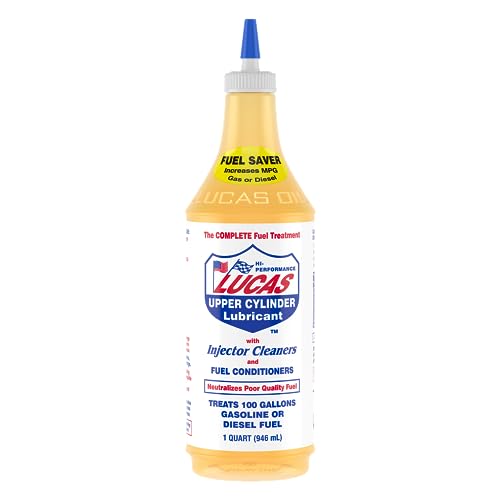
- Restores fuel economy
- Stabilizes ethanol
- Maximizes horsepower
- Improves responsiveness
- For use in both gasoline and diesel engines

This product presentation was made with AAWP plugin.
Search NHTSA Database for Recalls
Search NHTSA Database for Vehicle Investigations
View Latest Vehicle Investigations
Search NHTSA Database for Vehicle Complaints
View Latest Vehicle Complaints
TSB/Document ID: PC832 - P8314 Ca
Replacement Service Bulletin Number:
MFR Communication Date: 2021-08-27
MFR Internal Campaign ID/Software Version:
Communication Type: Service Bulletin/Repair Instructions
NHTSA Components: FUEL SYSTEM, GASOLINE
MFR Component System:
MFR Component Subsystem:
Previous TSB | Next TSB |
QUALITY ACTION
CAMPAIGN BULLETIN
P8314 Fuel Hose Campaign Quality
Review
Reference: PC832
Date: August 27, 2021
Attention: Retailer Principal, Sales, Parts and Service Managers
Affected Models/Years:
MY2016-18 Q50 (V37) and
MY2017-18 Q60 (CV37)
equipped with M274 2.0L engine
Affected
Population:
Retailer
Inventory:
SERVICE COMM
Re-Activation date:
Stop Sale
In Effect
78
NA
August 27, 2021
NO
***** Retailer Announcement *****
INFINITI is committed to the safety, security and satisfaction of our clients and is conducting a quality
review of specific repairs for a previously completed campaign (P8314). If the VIN displays QA
campaign ID PC832, retailers should perform the procedure attached to this communication even if
the National Service History indicates the remedy action was previously performed for the vehicle.
VINs identified with this QA campaign ID are being inspected to ensure the service campaign remedy
was performed and documented in accordance with INFINITI’s quality standards.
***** What Retailers Should Do *****
PLEASE FOLLOW THE ATTACHED PROCEDURE:
1.
Verify if vehicles are affected by this quality action using Service Comm or DBS National
Service History – Open Campaigns I.D. PC832.
2. Retailers should complete this action on both retailed vehicles and previously owned
vehicles within retailer inventory.
3. Retailers will need to file the appropriate claim using applicable Op Code information in
the repair procedure attached to this announcement to close the campaign.
NOTE: Parts replaced under this activity will be placed on parts return. Monitor the
Warranty Parts Return Website located at NNAnet.com for notifications.
***** Retailer Responsibility *****
It is the retailer’s responsibility to check Service Comm or DBS National Service History - Open
Campaign using the appropriate campaign I.D. for the status of each vehicle currently in retailer
inventory or entering the service department. This includes vehicles purchased from private parties or
presented by transient (tourist) owners. If a VIN subject to this quality action was traded to another
retailer, please notify the affected retailer to have this quality action and associated campaign(s)
completed.
CAMPAIGN ID: PC832 | Original Document
Thank you for your prompt attention to this matter.
Revision History:
Date
August 27, 2021
Announcement
Original
Purpose
Original Document
***** Scroll Down for Attached Repair Instructions *****
CAMPAIGN ID: PC832 | Original Document
PC832 – 2016-2018 Q50 AND 2017-2018 Q60
WITH 2.0L TURBO ENGINE;
LOW PRESSURE FUEL LINE
SERVICE PROCEDURE
Removal: Low Pressure Fuel Line
IMPORTANT: Follow all warnings, cautions, and notes in the Electronic Service Manual (ESM) when
working on the high pressure fuel system, such as a high pressure fuel pump.
1.
Set the vehicle on a lift.
2.
Release fuel pressure in the fuel lines:
a. Remove the battery cover.
Battery cover
Figure 1
1/18
b. Remove the fuse and fusible link cover, and then remove the 15 amp fuse (for fuel pump) where
shown in Figure 2.
Figure 2
c. Start the engine, and then let it idle until it stops.
NOTE: Revving the engine a few times will make the engine stop sooner.
d. After the engine stops, crank the engine a few times to release all fuel pressure.
e. Turn the engine/ignition OFF.
3.
Remove the engine cover.
The engine cover is held on with rubber insulators. Grab one corner, and then carefully pull off.
Engine cover
Figure 3
2/18
4.
Move the ECM to the side:
a. Unfasten the two (2) electrical harness clips (see circles in Figure 4).
NOTE: The electrical harness clips will be reused.
b. Unfasten the ECM from its four (4) clips (see arrows in Figure 4).
c. Carefully lift and move the ECM, still connected, to the passenger side of the engine.
ECM
Figure 4
5.
Remove the ECM bracket.
The ECM bracket is held on with rubber insulators. Grab one corner, and then carefully pull off.
ECM bracket
Figure 5
3/18
6.
Remove the six (6) ECM bracket 2 T30 bolts, and then carefully move the ECM bracket 2 partially
toward the passenger side of the engine.
ECM bracket 2
Figure 6
7.
Remove the two (2) electrical harness protector T30 bolts.
Figure 7
4/18
8.
Disconnect the high pressure fuel pump electrical connector.
Carefully use a pick or similar tool to unlatch the lock, and then pull off the connector.
Connector
Figure 8
5/18
9.
Remove the four (4) shield T45 bolts, and 10 mm bolt (see Figures 9 and 10).
Arrows = T45 bolts, circle = 10 mm bolt.
Remove the shield by holding the electrical harness protector toward the passenger side.
Shield
Harness
protector
Figure 9
Two of the T45 bolts are located behind the shield (between the engine and engine wall).
Figure 10 shows the engine out of the vehicle. This is for viewing purposes only.
Figure 10
6/18
10.
Remove the high pressure fuel pump insulator.
Insulator
Figure 11
11.
At this time, closely observe the routing of the low pressure fuel line from the top side of the vehicle.
CAUTION: It is important to know the correct routing of the low pressure fuel line. A misrouted
fuel line may cause it to contact other component parts.
Fuel line
routing
Figure 12
7/18
12.
Unfasten the low pressure fuel line upper clamp.
This is a new style clamp. Go to page 17 for further detail.
Do not disconnect the low pressure fuel line from the high pressure fuel pump at this time.
Place a shop rag under the end of the low pressure fuel line (this is to help catch any residual
fuel when disconnecting it).
Clamp
Tool
Figure 13
13.
Raise the vehicle on a lift, and then remove the floor under cover and the floor under side cover.
Cover
Side
Cover
Figure 14
8/18
At this time, closely observe the routing of the low pressure fuel line from underneath the vehicle.
NOTE: A bracket and some other parts were removed for better viewing only. These parts do not
need to be moved for this procedure. Also refer to Figure 16 on the next page.
CAUTION: It is important to know the correct routing of the low pressure fuel line. A misrouted
fuel line may cause it to contact other component parts.
Fuel line
Service
valve
Figure 15
9/18
Figure 16 shows the engine out of the vehicle. This is for viewing purposes only.
High pressure
fuel pump
Fuel line
routed
alongside
of engine
Service valve
Figure 16
10/18
14.
Place a suitable drip pan under the area of the low pressure fuel line.
15.
Properly clamp the fuel line with suitable clamping pliers.
16.
This will prevent residual fuel leakage from the lower fuel line.
Unclamp (loosen) the clamp at the service valve and move it further down the lower fuel line.
NOTE: This clamp will be reused.
Service
valve
Fuel line
Fuel line clamp
moved to here
Clamping
pliers
Transmission
Figure 17
17.
Disconnect the fuel line at the service valve.
WARNING: Some residual fuel may drain from the fuel line. Keep any fuel from contacting eyes and skin.
11/18
18.
Lower the vehicle, and then disconnect the low pressure fuel line from the high pressure fuel pump.
Figure 18
12/18
19.
Raise the vehicle, and then remove the service valve bracket’s E10 bolt.
NOTE: Figure 19 shows the lower fuel line still connected. It was disconnected previously during step 17.
Service
valve
NOTE: This fuel line
was disconnected
during step 17.
Figure 19
20.
Remove the low pressure fuel line with service valve from the vehicle.
Carefully pull out the low pressure fuel line with service valve from under the vehicle, making sure it does
not “catch” on other components.
13/18
21.
Unfasten the clamp, and then remove the low pressure fuel line from the service valve.
22.
Install the new low pressure fuel line to the service valve:
a. Slide a new clamp on the end of the new low pressure fuel line that connects to the service valve.
The blue arrows on the low pressure fuel line will be pointing away from the service valve.
b. Line up the low pressure fuel line’s blue mark with the service valve’s black mark.
WARNING: Failure to properly install the low pressure fuel line and its clamps may cause fuel leakage.
Fuel line installed
up to the rib
Arrow points away
from service valve
Service valve
Align these
marks
Clamp fits over
this blue area
(see Figure 21)
Figure 20
14/18
c. Position the clamp on the blue mark, and then fasten the clamp with suitable pliers.
Clamps fit over
each blue area
at both ends of
fuel line
Figure 21
Squeeze the clamp until it snaps together.
Figure 22
15/18
Installation: Low Pressure Fuel Line
1.
Install the new low pressure fuel line with service valve in reverse order of removal.
Refer to Figures 12, 15, and 16 to aid in low pressure fuel line routing.
CAUTION: It is important to install the low pressure fuel line correctly. A misrouted fuel line
may cause it to contact other component parts.
2.
At this time, check for fuel leaks:
a.
b.
c.
d.
e.
3.
Connect the electrical connector to the high pressure fuel pump.
Install the 15 amp “fuel pump” fuse.
Turn the ignition ON, but do not start the engine.
Check for fuel leaks.
After checking for leaks, turn the ignition OFF.
Finish reassembling the vehicle in reverse order of disassembly.
Service valve E10 bolt torque: 8.5 N•m (0.87 kg-m, 75 in lbs)
Floor under cover and floor under side cover bolts torque: 5.5 N•m (0.56 kg-m, 49 in lbs)
Shield T45 bolts torque: 20.0 N•m (2.0 kg-m,
15 ft lbs)
Shield
3
Torque the T45 bolts in the sequence
shown in Figure 23.
10 mm bolt torque: 10.0 N•m (1.0 kg-m,
89 in lbs)
10 mm bolt located
behind here
4
2
1
Figure 23
Electrical harness protector T30 bolts torque: 8.5 N•m (0.87 kg-m, 75 in lbs)
ECM bracket 2 T30 bolts torque: 8.5 N•m (0.87 kg-m, 75 in lbs)
4.
Use CONSULT-III plus (C-III plus) to erase DTCs caused by the engine being started with the fuel pump fuse
removed.
Verify no related DTCs “trip” after erasing.
16/18
Clamps: Unfasten
1.
2.
Insert a suitable pick in the location shown in Figure 24.
To unfasten, lift the edge by prying up over the lip.
Insert tool
here
Figure 24
Lip
Edge
Figure 25
17/18
PARTS INFORMATION
DESCRIPTION
PART NUMBER
QUANTITY
HOSE-FUEL (low pressure fuel line)
16446-91C1N
1
CLAMP
01555-HG00C
2
CLAIMS INFORMATION
Submit a “CM” line claim using the following claims coding:
CAMPAIGN (“CM”) ID
DESCRIPTION
PC832
Replace Low Pressure Fuel Line
18/18
OP CODE
PC8320
FRT
1.4 hrs
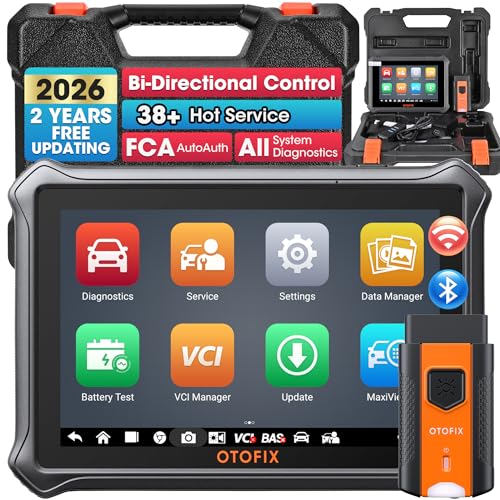
- 🎉[OTOFIX D1 Lite, Perfect Cost-effective Diagnostic Tool]: OTOFIX D1 Lite, a newest bidirectional scan tool from OTOFIX company, is a great choice for DIYers and repair shops. 👉This obd2 scanner diagnostic tool packs all practical functions: OE level all systems diagnoses, Bi-Directional Control, 38+ reset services fixing 99% of common problems, support DoIP & CANDF protocols and FCA
 AutoAuth, high-end hardware configuration. Worldwide vehicles and 🔥2 Years Free Updating🔥 covered.
 - 🎉[Bi-Directional Scan Tool, Active Test]: OTOFIX D1 Lite bluetooth obd2 scanner can also command ECUs and monitor the operation of the actuators to track down the problems of certain parts, like windows, sunroof, wipers, fuel pumps, etc., saving repair time & trouble. This makes OTOFIX D1 Lite the most cost-effective bidirectional scan tool.
- 🎉[2026 Newest, 38+ Hot Reset Functions]: Equipped with 38+ reset functions in one, the OTOFIX D1 lite automotive scanner diagnostic tool allows you to troubleshoot 99% of common vehicle problems. You can use this car diagnostic scanner holding enough functions to easily repair common vehicle models in your repair shops. Including Oil Reset, Injector Coding, Throttle, DPF Reset, SCR Reset, Gear Learning, Clutch Learning, Suspension, etc. Note* Reset functions vary by model.
- 🎉[OE Level Full Systems Diagnostics]: Unlike the 2-system and 4-system diagnostic tools, the OTOFIX auto scan tool can complete comprehensive system diagnostics within 5 minutes. It accesses and scans all available onboard systems like for Engine /AT /ABS /EPB /BMS /TPMS /SRS /SAS /Audio System /BCM /Air Conditioning / etc., to read & clear codes, view live data, and check ECU information. Note: Active test is not involved.
- 🎉[Powerful Hardware Configuration]: Designed with a fashion appearance & a 7” touchscreen and a weight of 463g, this OTOFIX D1 Lite OBD2 diagnostic scanner scan tool is convenient for everywhere and easy to use & store. Android9.0 OS and 2+64GB memory enhance multi-task smoothness and diagnostic operation, no more wasting too much time. 5800mAh battery allows hours-lasting use. WiFi & VCI1 also bring faster communication for your diagnostics.
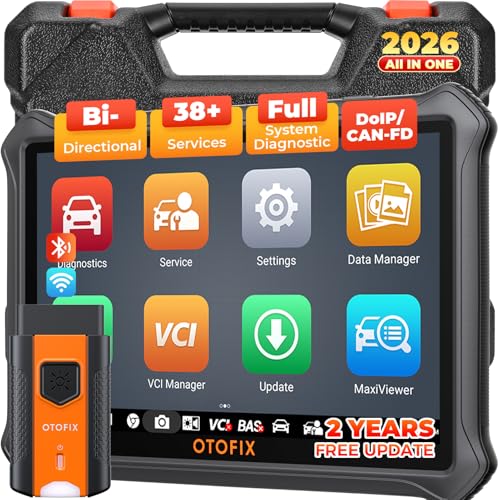
- 🏆【2026 TOP OBD2 Scanner Diagnostic Tool】OTOFIX D1 Lite wireless obd2 scanner has upgraded hardware configuration and car coverage. The newly upgraded D1 Lite with 🔥OS Android 9.0🔥1.5Ghz 4 core high efficiency processor🔥2GB RAM+64GB ROM large storage🔥5800mAh large battery, more stable and longer lasting diagnostics🔥 38+ Reset🔥action tests🔥full system diagnostic🔥Supports MV105 endoscope🔥21+ Language Supports🔥100000+ vehicle coverage to meet all your daily maintenance needs.
- 👍【Bi-Directional Control / Active Test】D1 Lite obd2 scanner has bidirectional control(worth $300+), which is the most beloved feature among mechanic. If your headlights or car windows are broken, going to a repair shop will cost a lot of money. You can use D1 Lite to send execution commands to the ECU module and identify the repair status. Such as ABS, car windows, doors, valves, wipers, headlights, etc., effectively shorten diagnostic time and reduce diagnostic costs.
- 🔥【All Systems Diagnostics, In-depth Checking】This advanced OBD2 Scanner D1 Lite can perform OE-level diagnosis of all systems including engine, transmission, airbag, ABS, ESP, TPMS, gateway, steering, radio, and air conditioning for more than 100 brands. This diagnostic scanner supports essential functions, such as reading ECU version info, reading and clearing fault codes, and reading data streams.With just a simple click, it provides you with accurate and in-depth diagnostics.
- 🏆【38+ Reset Hot Functions】For repair workshops, holding an OTOFIX D1 Lite Auto scanner is a strong advantage over others. Its 38+ maintenance functions provide various solutions for all module repairs, including Oil Reset, TPMS Reset, Injector Coding, Suspension, Throttle Matching, etc., which will usher your repair business to a new pinnacle. Continuously updating will never make the functionality & compatibility out-of-date.
- 🏆【150+ Models, 10000+ Car Coverage & 16 Languages】D1 Lite is a comprehensive car diagnostic scan tool, help you to troubleshoot car issues fast for 95% US, European, Asian auto makes. ✅ With frequent updates and optimizations allow D1 Lite to cover more vehicles to meet your needs. ✅ Multilingual menu allows auto mechanics around the world to use it without language barriers. 🚩Note: Kindly send us the S/N of the device to authorize new language updates before changing the menu language.
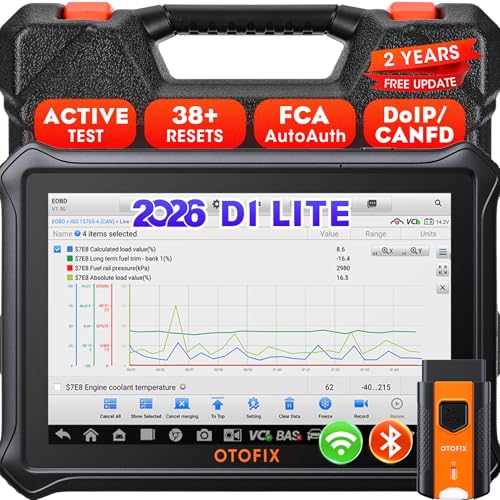
- 【2026 OTOFIX D1 Lite Gives the Best Value for Money】OTOFIX D1 Lite bidirectional scan tool is more FASTER and SMARTER with 2026 Enhanced Hardwares & New Functions! 👍Alternative Bluetooth +USB connect 👍2G+64GB 👍4x ARM Cortex-A35 (1.5GHz) Processor (5X Faster CPU) 👍Android 9.0 OS 👍5G GHz WiFi 👍CANFD&DOIP 👍 FCA AutoAuth 👍38+ Services 👍3K+ Bi-Directional Control 👍Full Systems Diagnose 👍2 Years Update 👍150+ Vehicle Coverage.
- 👍【Active Tests】 OTOFIX D1 Lite is a bi-directional scan tool that can send commands to, and also receive information from vehicle control modules. This way, you can quickly locate and repair faulty auto parts. For Example: send direct commands to ask the vehicle to turn on/off the radiator fan, lights, sound horn, fuel pump, modulate throttle, open/close windows, operate mirrors and more. *Note that only available tests will be displayed in the menu.
- 👍【38+ Service Functions】 OTOFIX D1 Lite scan tool offers 38+ of the hottest service functions that are commonly used for car repairs. That include Oil reset/SAS/EPB/BMS/Throttle/ABS bleeding, and 2065-new SUS/ADBLUE/NOX/Headlamp resets (and more) to help restore your car status after repairs are done. Compared to other diagnostic scanners for cars, the OTOFIX D1 Lite scanner is much more fully-featured. *Note that specific functions available depend on the make/model/year of your car.
- 👍【All System Diagnostics + Cloud Report Management】 This 2026 car scanner OTOFIX D1 Lite provides troubleshooting and data for all ECUs: read/clear DTCs, view graphic live data/VIN, and locate system faults for safe driving. With Cloud Report Management, you can save detailed reports to cloud servers and easily shared them with others via QR codes/emails/text messages. Others can access these reports from any device (smartphones/tablets/PCs …) anytime, and you can better manage repair work.
- 👍【99% Car Coverage】 This one-station car scanner diagnostic for all cars works on 150+ major car brands across the world. 1) It supports CAN-FD/DoIP protocols: compatible with GMCAVALIER/TRAX/Encore/Envision/GL8(LSY)/CT4/CT5 after 2019; Volvo after 2018; Land Rover/Jaguar after 2017; and BM.W F/G all chassis. 2) For models equipped with security modules (such as Renault & 2018+ FCA SGW), its built-in AutoAuth allows you to easily break diagnostic barriers after registration.
This product presentation was made with AAWP plugin.
Last update on 2026-05-12 / Affiliate links / Images from Amazon Product Advertising API