
NHTSA ID Number: 10200394
Manufacturer Communication Number: UFP Solenoid Rep
TSB/Document Date: 2021-08-16
Summary
Replace Electric Component and Plunger.
Installing a replacement electric backup solenoid
This is a fairly straightforward job, and takes an hour or two at the most, including
bleeding the brakes. A separate set of instructions is available for bleeding the air out
of the brake lines when done. If the trailer has a swing (folding) tongue and you fold
the trailer tongue open, you can see the solenoid and how it is connected. On a non-
swing tongue trailer, you will have to work from underneath the tongue, so be sure the
trailer tongue is securely supported before climbing under.
1. Have some rags handy to catch any brake fluid and keep it off trailer paint.
Disconnect the brake line going from the solenoid to the trailer. If it is a brake hose , you
, you
may have to loosen the hose to metal brake line joint on down the line so the hose will
swivel out of the solenoid as you loosen it. When the hose is disconnected, plug the
end of it to keep brake fluid from running out with a golf tee or other plug. This will save
time later during bleeding the brakes.
2. Disconnect any ground wire to the solenoid base and the blue signal wire going to
the solenoid.
3. Remove the snap rings from one side of the two 3/4" diameter slider pins for the
brake actuator. With a punch or other driving tool, drive the slider pins out the other
side of the actuator. Set the pins and snap rings aside for re-use.
Tip: These pins hold the inner workings of the inner slide together, so handle gently
and slide the inner member forward and out of the outer member housing, keeping it
together. Put the pins back in as soon as you can. Don't flip the assembly over after
pulling it out, or the rollers and other parts may fall out. A nice trick: If you Can easily
make some (slightly shorter) temporary assembly pins out of approximately 3/4" round
dowel, exactly 3 inches long, use them to drive the original pins out, and leave them in
place to hold the actuator inner slide together as you pull it out and work on it.
4. Once you have the actuator out on a workbench to replace the solenoid:
a. Cut the zip tie holding on the rubber hose to the solenoid bypass line.
b. Gently pull off the hose from the solenoid. Leave the other end of the hose
connected to the master cylinder.
c. Unthread the solenoid and pipe nipple out of the back of the master cylinder, by
gripping on the brass body bottom with a pair of channel lock or vice grip style pliers.
d. Apply a very thin coat of pipe compound or blue locktite to the second/third male
pipe threads prior to assembling the solenoid/pipe nipple back into the master cylinder.
Don't get any compound inside. The tightening torque is only 10 foot pounds/120 inch
pounds, which is practically just snug with a pair of channel lock or vice grip pliers on
the brass solenoid body. When done, the solenoid should be upright. These are
brass/aluminum parts so don't overtighten, or damage with the vice grips/pliers.
Generally, when you rethread the new solenoid and pipe nipple into the back of the
master cylinder, it should take the same number of turns to tighten back into the master
cylinder as it did to remove.
e. Reconnect the rubber hose to the solenoid bypass line, and secure with a new zip
tie.
5. Reinstall the actuator inner slide into the trailer, being careful to keep the pieces in
place. Install the front pin first. You may have to wiggle the pin slightly to line up any
rollers and the shock in the front. Once that pin is in, pull the actuator all the way to the
front of the slide, and install the rear pin. Again, you may have to wiggle the pin around
to align the rear rollers and master cylinder. If you have some major alignment issues
with the pin, don't force it. Something is out of place and needs to be fixed.
6. Reinstall the main brake line to the back of the solenoid. It seals with a double flare
into a brass fitting, and only needs to be snug, It is much easier to tighten it some more
if you have a leak than to strip or break off a fitting.
7. Reconnect the blue signal wire to the solenoid. If the solenoid does not have a
ground wire factory installed to the bottom of the solenoid body, it is a great idea to add
one now for future long term wiring reliability. Zip tie and secure the wiring as required.
8. Bleed the air out of the solenoid and main brake line to the first branch/caliper on the
line. Bleeding directions should be attached separately. If in question on the brake
bleeding, you can bleed all calipers to get the most responsive brakes.
9. Important: Now that you are done, be sure and depress the brake release lever one
more time on the bottom of the actuator to be sure the brakes were not
inadvertently left on by the bleeding operation. Be sure any swing tongue hose is not
kinked, and folds neatly into the tongue when shut.
10. Road test the trailer to be sure the bleeding was complete and the wiring was
correct.
Please feel free to contact us at UFP at 931-967-5101 x16 or [email protected]
Note: The above photos and procedure assume the actuator has to be removed from
the front of the trailer tongue for service, which is the most common arrangement.
However, on our heavy duty A160 actuators, and some trailers, the solenoid is directly
accessible for service. Also on some five inch swing tongues, it is possible to
temporarily remove the actuator safety pin and lanyard, %” actuator slider pins, and
swing tongue bolt/pin; take the swing tongue apart, and slide the actuator backward and
out the rear of the swing tongue housing without disconnecting the brake line. It is then
possible to replace only the black electric solenoid and plunger without disconnecting
brake lines and bleeding brakes, saving a lot of time. A procedure for servicing the
electric part of the solenoid and plunger (which are all of the working parts of the
solenoid assembly) follows:
= 8s SOLENOID REPAIR
Docu. #
Rev
Description Date:
oF - REPLACE ELECTRIC COMPONENTS AND PLUNGER __ [Cchectea:
age Author:
e UNPLUG SOLENOID ELECTRIC LINE.
DISASSEMBLY e LOOSE BLACK COIL PART OF SOLENOID VALVE.
e TAKE OUT OLD PLUNGER.
e PUT NEW PLUNGER INTO COIL.
e HAND TIGHT COIL.
RE-ASSEMBLY & e RETIGHT TORQUE TO 52-62 IN-LB (4.4-5.2 FT-LB).
TIGHTEN e REFERENCE: DRAWING A REFERENCE LINE ON
LINE SHIFT .03"-.07" (OR 3 - 7°).
COIL AND BRASS BASE. RETIGHT. CHECK THE
) RETIGHT
TURN .03-.07"
ALL REPLACEMENT WORK CAN BE DONE WITHIN 5-10 MINUTES WITHOUT
REBLEEDING BRAKE SYSTEM. IF YOU DISASSEMBLE AND LEAVE SOLENOID OPEN
OVER 1 HOUR, YOU NEED TO REBLEED BRAKE SYSTEM TO REMOVE ANY AIR.
Reverse Lockout Troubleshooting
The way that the backup solenoid works is: When the backup lights are lit on your tow vehicle, 12 volt power should
come down the blue wire through the trailer connector to energize the electric solenoid on the back of the A-60. The
ground path is often from the solenoid brass body back to the trailer frame, back to the white ground wire back to the tow
vehicle, a better ground path is a ground wire connected directly to the solenoid base. If you no longer can back up, it is
almost always (90% plus) a wiring problem either with the tow vehicle or trailer. The solenoids are normally very reliable.
Things to Check:
1. Make sure trailer wiring is connected to tow vehicle. The trailer will not backup without the backup light circuit powered
in reverse. If wiring is connected:
2. Set parking brake, make sure truck/trailer won't roll. Turn ignition on, but don't start tow vehicle. Shift transmission in
reverse. Check for reverse lights working on tow vehicle. If trailer has backup lights built in, see if they work too. If no
reverse lights on tow vehicle, check shift linkage for proper adjustment, you may wiggle shifter and lights come on. Still if
no reverse lights on tow vehicle, check for blown fuse. If fuse blown, figure out what happened to the wiring (probably a
short) prior to replacing fuse. If trailer has backup lights itself, and they are working, then the issue is limited to the
solenoid, skip to step 5. :
Wiring checks below assume the vehicle is in reverse, secured so it won't roll, and key is on so backup lights are
illuminated:
3. If backup lights are working on tow vehicle, check the tow vehicle connector by using a volt meter, or preferably a test
light between the blue backup positive wire and the white ground wire. The light should clearly light or you should see a
full 12 volts between the blue and white wire. The lack of a working blue wire AND ground wire on the tow vehicle are the
most common problem. Often, people will not pay attention to the ground on the tow vehicle, and lights/backup solenoid
will intermittently still work ok, because the trailer frame partially grounds through the tow ball. However, when you back
up, sometimes the actuator lifts off the ball slightly, breaking that ground path, and the solenoid will stop working. Make
sure the tow vehicle blue and white wires are correctly wired and working before proceeding.
4. One other tow vehicle test, if you have a five wire flat connector, and are not sure the backup light (blue wire) circuit is
working on the tow vehicle: Turn on the tow vehicle headlights. This will send 12v power down the brown wire of the tow
vehicle connector. See that the taillights on the trailer are working. Then, disconnect the trailer/tow vehicle connector and
temporarily reconnect in the following "incorrect" manner: the blue wire post on the trailer connector into the brown wire
socket on the tow vehicle. This will send 12v power down the blue solenoid wire on the trailer, effectively "fooling" the
trailer solenoid into working. If the solenoid works, and the trailer backs up, then the problem is again with the tow vehicle
wiring. This particular trick will only work on an older trailer with a ground path through the trailer frame.
5. Once you are satisfied that the tow vehicle wiring and connectors are clearly good, then visually inspect the trailer
wiring for loose connections. If the trailer wiring has Scotch Block type wiring tap connectors, make sure they are
securely installed. Next, check the voltage at the trailer solenoid by using either a volt meter or test light between the blue
wire at the solenoid and the brass body of the solenoid. If you have a test light with a probe point, you can pierce the
insulation of the blue wire to check for voltage without removing the wire. If you clearly get 12 volts or better, a lighted test
light between the blue wire on the solenoid and the brass solenoid body, then the solenoid itself is possibly bad (rare).
Before giving up on the solenoid, we recommend that a ground wire be run from a 8-32 screw inserted one of the
threaded holes in the bottom of solenoid brass body to the trailer frame for a secure ground. Ifa trailer has a folding
tongue, or a rubber/flexible brake line coming from the actuator, sometimes this ground wire to the trailer frame is required
for a good ground path from the solenoid. IMPORTANT: TRAILERS BUILT AFTER ABOUT 2011 often have a fully
grounded “integrated” wiring harness, grounding all the lights, but not the trailer frame, if so, be absolutely sure
a dedicated ground wire in the harness was included to run to the brass solenoid base, or the solenoid will likely
be isolated from ground and work poorly or not at all.
All this wire troubleshooting is very worthwhile, as the overwhelming majority of solenoids returned work perfectly...and it
is much easier to fix the wiring than change the solenoid. If, after checking the wiring out, the solenoid is still suspected,
please contact UFP at 931-967-5101 x16 or [email protected] for assistance.
ee e
ee
Cs
If the original backup solenoid appears to be defective, here's how to install a new one, or if
easier , to replace its working parts. Service kit number 34866 is available for the solenoid:
This is a fairly straightforward job, and takes an hour or two at the most, including
bleeding the brakes. A separate set of instructions is available for bleeding the air out
of the brake lines when done. If the trailer has a swing (folding) tongue and you fold
the trailer tongue open, you can see the solenoid and how it is connected. On a non-
swing tongue trailer, you will have to work from underneath the tongue, so be sure the
trailer tongue is securely supported before climbing under.
1. Have some rags handy to catch any brake fluid and keep it off trailer paint.
Disconnect the brake line going from the solenoid to the trailer. If it is a brake hose, you
may have to loosen the hose to metal brake line joint on down the line so the hose will
swivel out of the solenoid as you loosen it. When the hose is disconnected, plug the
end of it to keep brake fluid from running out with a golf tee or other plug. This will save
time later during bleeding the brakes.
2. Disconnect any ground wire to the solenoid base and the blue signal wire going to
the solenoid.
3. Remove the snap rings from one side of the two 3/4" diameter slider pins for the
brake actuator. With a punch or other driving tool, drive the slider pins out the other
side of the actuator. Set the pins and snap rings aside for re-use.
Tip: These pins hold the inner workings of the inner slide together, so handle gently
and slide the inner member forward and out of the outer member housing, keeping it
together. Put the pins back in as soon as you can. Don't flip the assembly over after
pulling it out, or the rollers and other parts may fall out. A nice trick: If you can easily
make some (slightly shorter) temporary assembly pins out of approximately 3/4" round
dowel, exactly 3 inches long, use them to drive the original pins out, and leave them in
place to hold the actuator inner slide together as you pull it out and work on it.
4. Once you have the actuator out on a workbench to replace the solenoid:
a. Cut the zip tie holding on the rubber hose to the solenoid bypass line.
b. Gently pull off the hose from the solenoid. Leave the other end of the hose
connected to the master cylinder.
c. Unthread the solenoid and pipe nipple out of the back of the master cylinder, by
gripping on the brass body bottom with a pair of channel lock or vice grip style pliers.
d. Apply a very thin coat of pipe compound or blue locktite to the second/third male
pipe threads prior to assembling the solenoid/pipe nipple back into the master cylinder.
Don’t get any compound inside. The tightening torque is only 10 foot pounds/120 inch
pounds, which is practically just snug with a pair of channel lock or vice grip pliers on
the brass solenoid body. When done, the solenoid should be upright. These are
brass/aluminum parts so don't overtighten, or damage with the vice grips/pliers.
Generally, when you rethread the new solenoid and pipe nipple into the back of the
master cylinder, it should take the same number of turns to tighten back into the master
cylinder as it did to remove.
e. Reconnect the rubber hose to the solenoid bypass line, and secure with a new zip
tie.
5. Reinstall the actuator inner slide into the trailer, being careful to keep the pieces in
place. Install the front pin first. You may have to wiggle the pin slightly to line up any
rollers and the shock in the front. Once that pin is in, pull the actuator all the way to the
front of the slide, and install the rear pin. Again, you may have to wiggle the pin around
to align the rear rollers and master cylinder. If you have some major alignment issues
with the pin, don't force it. Something is out of place and needs to be fixed.
6. Reinstall the main brake line to the back of the solenoid. It seals with a double flare
into a brass fitting, and only needs to be snug, It is much easier to tighten it some more
if you have a leak than to strip or break off a fitting.
7. Reconnect the blue signal wire to the solenoid. If the solenoid does not have a
ground wire factory installed to the bottom of the solenoid body, it is a great idea to add
one now for future long term wiring reliability. Zip tie and secure the wiring as required.
8. Bleed the air out of the solenoid and main brake line to the first branch/caliper on the
line. Bleeding directions should be attached separately. If in question on the brake
bleeding, you can bleed all calipers to get the most responsive brakes.
9. Important: Now that you are done, be sure and depress the brake release lever one
more time on the bottom of the actuator to be sure the brakes were not
inadvertently left on by the bleeding operation. Be sure any swing tongue hose is not
kinked, and folds neatly into the tongue when shut.
10. Road test the trailer to be sure the bleeding was complete and the wiring was
correct.
Please feel free to contact us at UFP at 931-967-5101 x16 or [email protected]
Note: The above photos and procedure assume the actuator has to be removed from
the front of the trailer tongue for service, which is the most common arrangement.
However, on our heavy duty A160 actuators, and some trailers with folding tongues, the
solenoid is directly accessible for service. Also on some five inch swing tongues, it is
possible to temporarily remove the actuator safety pin and lanyard, %” actuator slider
pins, and swing tongue bolt/pin; take the swing tongue apart, and slide the actuator
backward and out the rear of the swing tongue housing without disconnecting the brake
line. It is then possible to replace only the black electric solenoid and plunger without
disconnecting brake lines and bleeding brakes, saving a lot of time. A procedure for
servicing the electric part of the solenoid and plunger (which are all of the working parts
of the solenoid assembly) follows: The solenoid repair parts kit is UFP PN 34866.
A complete replacement solenoid assembly is UFP PN 34500.
SEBS 2 5s Docu. # |Rev
SB.52 8 SOLENOID REPAIR
WORK INSTRUCTION
Description . Date:
oF - REPLACE ELECTRIC COMPONENTS AND PLUNGER Checked:
LEage Author:
e UNPLUG SOLENOID ELECTRIC LINE.
DISASSEMBLY e LOOSE BLACK COIL PART OF SOLENOID VALVE.
e TAKE OUT OLD PLUNGER.
| TAKE
LOOSE BLACK COIL PART />RGiqunnnnnaiSriasss OUT OLD F
@ OF SOLENOIDVALVE |, 7 ae : PLUNGER
sy)
e PUT NEW PLUNGER INTO COIL.
e HAND TIGHT COIL.
RE-ASSEMBLY & e RETIGHT TORQUE TO 52-62 IN-LB (4.4-5.2 FT-LB).
TIGHTEN e REFERENCE: DRAWING A REFERENCE LINE ON
COIL AND BRASS BASE. RETIGHT. CHECK THE
LINE SHIFT .03"-.07" (OR 3 - 7°).
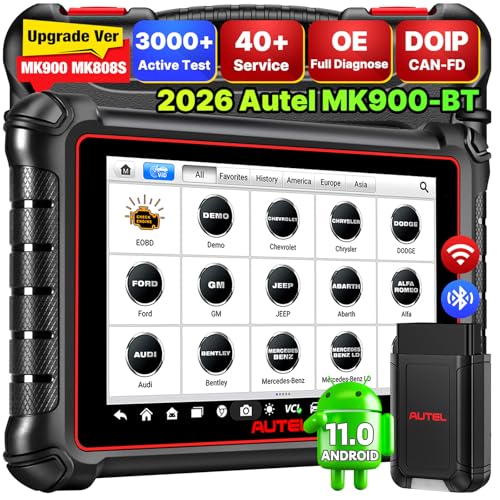
- 💯【Conta.ct us for Support Directly】If you met any...
- 🔥🔥🔥【2026 AUTEL FLAGSHIP MK900BT MK900-BT, NEW...
- 🚗【3000+ ACTIVE TESTS (50➡3000+), SAME AS MS...
- 🚗【40+ HOT SERVICES FOR 150 MAKES (28+➡40+)】Full...
- 🚗【OE ALL SYSTEM DIAGNOSE, AUTO SCAN 2.0: SCAN LICENSE...

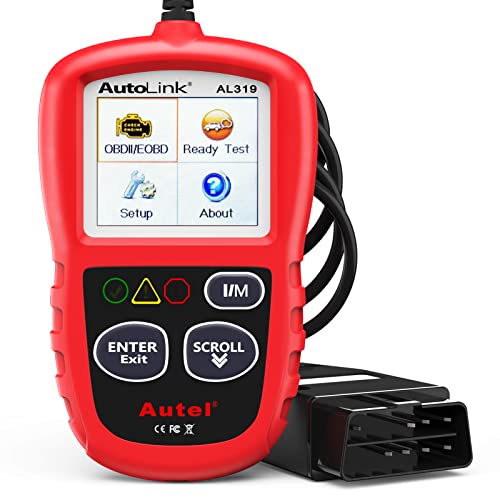
- 【TURN OFF CEL】 This AL319 car scanner diagnostic tool...
- 【EXTENSIVE APPLICATION】 Autel AL319 Compatible with...
- 【FOR END USER & DIYERS】 This error code reader AL319 is...
- 【USER-FRIENDLY DESIGN】 This OBD2 scanner and check...
- 【HIGH-QUALITY SERVICES】 12 months war.ranty from the...
Last update on 2026-06-23 / Affiliate links / Images from Amazon Product Advertising API
If the PDF is very large, it may not load in the preview below.
Some older TSBs had multiple PDFs — visit the NHTSA Website to view all PDFs.
If the TSB PDF does not show, download or view it on the NHTSA Website.
Click on the (+) Plus Sign
Then Click on Associated Document(s)
Search NHTSA Database for Recalls
Search NHTSA Database for Vehicle Investigations
View Latest Vehicle Investigations
Search NHTSA Database for Vehicle Complaints
View Latest Vehicle Complaints
TSB/Document ID: UFP Solenoid Rep
Replacement Service Bulletin Number:
MFR Communication Date: 2013-10-18
MFR Internal Campaign ID/Software Version:
Communication Type: Service Bulletin/Repair Instructions
NHTSA Components: EQUIPMENT
MFR Component System:
MFR Component Subsystem:
Previous TSB | Next TSB |
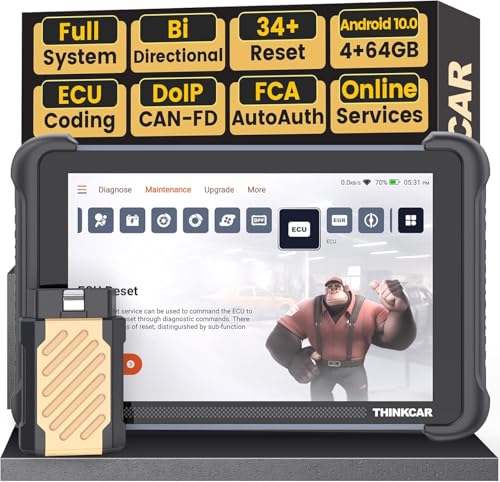
- [Notice] When you receive a used device, it may be a customer return resold by Amazon without inspection. You can exchange it for a new one through Amazon. As this situation is unavoidable, we sincerely apologize. For any issues, contacting us via Amazon's "Messages" is the best way. THINKSCAN 689BT Bidirectional Scan Tool Can Be Used Immediately After It is Turned On, Without Complicated Registration Process, Which is More Convenient & Quick.
- Full Bi-Directional Control & 3000+ Active Tests: Take control and test components like actuators, fuel injectors, relays, and cooling fans in real time. You’ll quickly see if the problem is in the part itself or the control module — saving you hours of guesswork and frustrating trial-and-error.
- Advanced ECU Coding Capabilities: Handle module matching and hidden feature activation with confidence. When you replace an ECU or want to customize settings, this obd2 scanner diagnostic bi directional tool gives you the professional-level capabilities you need without the dealership price tag.
- 34+ Useful Reset and Maintenance Functions: Complete everyday service tasks smoothly with a wide range of helpful reset and maintenance functions. Whether you’re keeping up with regular upkeep or tackling a specific job, this scanner makes maintenance simpler and less stressful for both DIYers and pros.
- Comprehensive Full System Diagnostics: Diagnose every major system — Engine, Transmission, ABS
 , SRS, TPMS, and more — all in one place. Finally stop wondering if you’re missing something important; get the full picture and clear codes with ease.
Last update on 2026-07-02 / Affiliate links / Images from Amazon Product Advertising API
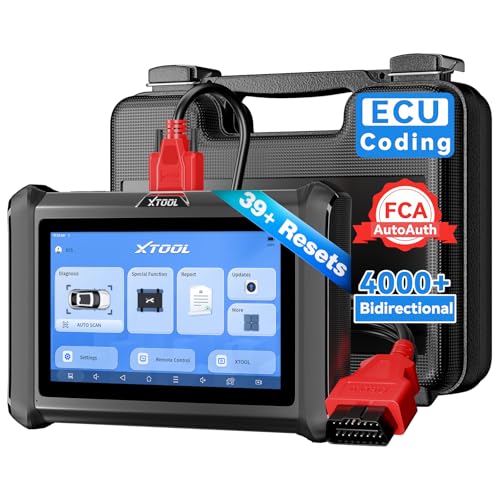
- Top Reasons to Choose the D7S OBD2 Scanner: XTOOL D7S car scan tool, an upgrade of XTOOL D7, offers comprehensive features for automotive technicians, workshops, and DIY enthusiasts 1. Upgraded Hardware: 2+64GB memory, rear camera, intuitive interface, foldable bracket 2. Complete Diagnostics: FCA Autoauth, OE-level all system scan, 39+ maintenance services, 4K+ bidirectional, CANFD/DoIP protocol 3. Advanced Capabilities: ECU c0ding, PMI functions 4. Wide Compatibility: Support 10,000+ models, covering 99% vehicle brands 5. Multi-language: Available in 22+ languages, No IP Restrictions 6. 3-Year Updates: Save 300 bucks on software updates for the latest features and optimizations
- 2026 Upgraded D7S Car Scanner Features: The newly 2026 D7S V2.0 scanner for car brings exciting features for advanced vehicle diagnostics and enhanced user experience 1. FCA AutoAuth: Now supports FCA SGW module for Chrysler, for Jeep, for Dodge (2018+), for Fiat (2017+), enabling faster vehicle communication without gateway restrictions 2. PMI (Offline ECU Pr0gramming): Allows for Ford, for Lincoln, and for Mazda ECU pr0gramming for new modules 3. Optimized Diagnostic Report 2.0: Personalized reports with logos and customer info for auto shops. Note: Compatibility varies by cars, please check before order
- 39+ Services/Resets/Adaptations/Relearns/Calibrations: XTOOL D7S full system car scanner diagnostic tool tackles 99% of common car issues through its 36+ special functions, including Oil Reset, EPB, SAS, BMS, Throttle Reset, Injector C0ding, ABS Bleed, TPMS Reset, Power Balance, etc and also covers specific-vehicle functions like Crank Sensor Relearn, ABS Initialization, Cylinder Power Balance, Fuel Trim Reset, Idle Relearn etc. This car diagnostic scanner enhances efficiency, making repairs and maintenance hassle-free. Tip: DO NOT for All vehicles, please check compatibility first
- Cost-effective ECU C0ding Scan Tool for Specific Brands: Enhance your vehicle's performance with XTOOL D7S! This obd2 scanner all systems bidirectional offers advanced capabilities at an affordable price, supports online for BMW, for Benz and offline for BENZ, for MIT, along with PMI functions for Ford, for Mazda, and for Lincoln. Ideal for technicians and DIY enthusiasts, this automotive scanner diagnostic tool optimizes vehicle performance and enhances the driving experience. Note: Not for all cars and modules, please send car VIN to check the compatibility before purchase
- OE All System Diagnostic & 8 Pids Graphing: XTOOL D7S is a comprehensive all system bi directional obd2 scanner that delivers dealer-level diagnostics, completely controlling over your vehicle’s performance and health. This automotive scan tool can read and clear DTCs, view live data and ECU information, retrieve freeze frames, and perform active tests and full obd2 functions. This bi-directional scan tool can can identify your vehicle's make, model, and year information with just one click and show up to 8 PIDs live data with options for CSV viewing, playback, and recording for in-depth analysis. It is easy-to-use for both professionals and beginners, helping pinpoint issues efficiently
Last update on 2026-06-30 / Affiliate links / Images from Amazon Product Advertising API
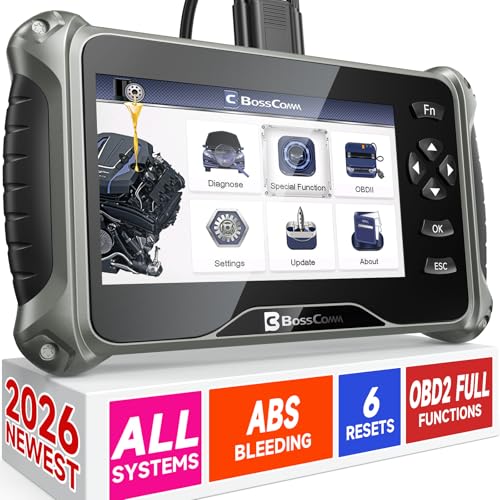
- 【✅Compared to BOSSCOMM IF742, IF745 Offers Full-System Diagnostics】The BOSSCOMM IF745 car diagnostic scanner is an upgraded model of IF742. In addition to supporting all OBD2 Code Reader functions and 6 reset options (ABS/EPB/SAS/BMS/Oil/Throttle), it expands diagnostics from 4 systems (Check Engine/ABS/SRS/Transmission) to vehicle All systems, including Steering, Suspension, and Body Electronics. This provides deeper, more comprehensive diagnostic capabilities.
- 【✨10 OBD2 Functions】The BOSSCOMM IF745 scan tool’s DTC Lookup instantly translates fault codes into user-friendly explanations, its I/M Readiness feature streamlines emissions testing with a single tap, and Freeze Frame lets you pinpoint the exact moment of a fault for in-depth root-cause diagnosis. Combined with a live data dashboard and advanced diagnostics (O2S, OBMon, EVAP), it delivers comprehensive insights for confident troubleshooting.
- 【✨Deep Diagnostics for All Vehicle System Modules】Beyond code reading/clearing and ECU information retrieval, our all-in-one data stream feature lets you inspect all current fault codes and their locations across the vehicle’s systems. This vehicle code reader helps you turn off dashboard warning lights and perform a comprehensive self-check of your car at home—no more back-and-forth trips to the repair shop or hefty inspection fees.
- 【✨6 Essential Resets: ABS Bleeding, Oil, EPB, SAS, Throttle, BMS】The BOSSCOMM IF745 obd2 scanner diagnostic tool swiftly purges air from brake lines to restore braking sensitivity, fine-tunes maintenance cycles to eliminate false alerts, resolves parking brake issues with one-click control, recalibrates steering sensors for stability, optimizes engine idling/acceleration for smoother performance, and deeply resets battery systems to extend lifespan and range via precise parameter adjustments.❗NOTE: Does NOT support bidirectional control, coding, or programming.
- 【✨10,000+ Car Models, AutoVIN, 13 Languages】The BOSSCOMM IF745 vehicle scanner diagnostic tool covers 73+ global car brands and offers support in 13 languages, making it perfect for DIYers, auto mechanics, or as a thoughtful gift. With a single-click AutoVIN feature, it instantly retrieves vehicle serial numbers, streamlining diagnostics for users globally. This adaptable tool balances user-friendliness with precision, catering to both personal and professional requirements.✅Unsure about compatibility? Compatibility will vary on vehicles' model and year, pls reach us via 📧 [email protected] 📧 before purchase.
Last update on 2026-07-02 / Affiliate links / Images from Amazon Product Advertising API
This product presentation was made with AAWP plugin.