
NHTSA ID Number: 10192007
Manufacturer Communication Number: 1150-16
TSB/Document Date: 2021-05-10
Summary
Diagnostic test- Power verification with chassis dynamometer.
11 50-16
1
11 50-16
SUBJECT
DATE
Diagnostic Test - Power Verification With Chassis Dynamometer
November 2016
Additions, Revisions, or Updates
Publication Number / Title
Platform
Section Title
DDC-SVC-MAN-0193
GHG17 DD
Platform
Medium
Duty
Power Verification with
Chassis Dynamometer
DDC-SVC-MAN-0191
GHG17 DD
Platform
Heavy Duty
Power Verification with
Chassis Dynamometer
DDC-SVC-MAN-0084
EPA07/10G
HG14 DD
Platform
Heavy Duty
Power Verification with
Chassis Dynamometer
Change
Updated diagnostic procedures, changes to the rpm range.
All information subject to change without notice.
11 50-16
Copyright © 2016 DETROIT DIESEL CORPORATION
3
2 Power Verification with Chassis Dynamometer
2
Power Verification with Chassis Dynamometer
The chassis dynamometer is a device for applying specific loads to a vehicle to determine if the vehicle will perform to
published specifications and to permit a physical inspection for leaks of any kind. It can be used for detecting improper tuneup, misfiring fuel injectors, low compression, and other malfunctions.
Chassis Dynamometer Test and Run-in Procedure
For safe and accurate dynamometer readings, the chassis dynamometer room must be properly ventilated.
WARNING: ENGINE EXHAUST
To avoid injury from inhaling engine exhaust, always operate the engine in a well-ventilated area.
Engine exhaust is toxic.
To avoid injury before starting and running the engine, ensure the vehicle is parked on a level
surface, parking brake is set, and the wheels are blocked.
If a vehicle is tested on a dynamometer located in an area without proper ventilation, the engine will be subject to high
ambient air temperatures. High air inlet temperatures can result in false low power readings on the dynamometer.
To help ensure accurate horsepower readings, the dynamometer room should have a ceiling-mounted fan with an 850 to 1133
m³ /min (30,000 to 40,000 ft³ /min) capacity. This will provide proper ventilation of exhaust gases and heat radiated by the
operating engine.
Chassis Dynamometer Test and Run-in Procedure
The function of the dynamometer is to absorb and measure the engine output after it has been transmitted through the vehicle
transmission and driveline to the drive tires.
The vehicle is connected to the dynamometer through the roller absorption unit. The load on the vehicle may be varied from
zero to maximum by decreasing or increasing the resistance in the unit. The amount of power absorbed in a water brake-type
dynamometer, as an example, is governed by the volume of fluid within the working system. The fluid offers resistance to a
rotating motion. By controlling the volume of water in the absorption unit, the load may be increased or decreased as
required.
The following are some tips to remember in preparing the vehicle before the dynamometer run and during the actual testing:
•
•
•
•
•
•
•
•
•
•
•
4
Follow all applicable safety procedures from the chassis dynamometer manufacturer.
Observe the air intake duct and charge air fan shrouding to identify misalignments. Correct as necessary.
Make sure the differential lock is ON.
Make sure the radiator/charge air cooler system fan(s) are locked ON.
If the vehicle is equipped with anti-lock brakes (ABS), disable the ABS controller by unplugging it or removing its power
fuse/breaker.
Instrument the engine for fuel pressure, air inlet restriction, exhaust backpressure, and crankcase pressure, and note these
readings during the dynamometer run.
Make sure the vehicle hood is down and locked into its normal position.
Make sure the engine is fully warmed up before placing the vehicle on the dynamometer. Both oil and coolant temperature
should be at least 82°C (180°F).
When loading the vehicle on the dynamometer, make sure the vehicle is positioned onto the rollers as straight as possible.
For direct engine cooling, Detroit™ recommends the use of a 368 m³ /min (13,000 ft³ /min) or greater capacity barrel-type
ram air fan. This should be portable so that it can be conveniently placed three to five feet (approximately one to two
meters) in front of the truck and aimed directly at the charge air cooler. This is especially important at high altitudes.
During high ambient temperature conditions 32°C (90°F), it may also be necessary to use a water spray mist fan in front of
the vehicle to prevent overheating.
All information subject to change without notice.
Copyright © 2016 DETROIT DIESEL CORPORATION 11 50-16
11 50-16
• Running the dynamometer in manual mode instead of automatic mode allows for maximum control of the test process and
may result in more consistent test results.
• During the horsepower test, make sure percent engine load and torque limiting factor are 100% by monitoring them with a
computer equipped with DiagnosticLink.
• Select a transmission gear with a 1:1 gear ratio during the horsepower test.
• Take horsepower reading at peak torque and peak horse power rpm. Stabilize at rated speed for at least one minute before
taking a final horsepower reading. Compare the recorded horsepower to the appropriate minimum horsepower table for the
particular rating.
• Note that vehicles with automatic transmissions (i.e. equipped with torque converters) will have slightly lower minimum
horsepower values than those with manual transmissions (with no torque converters).
All information subject to change without notice.
11 50-16
Copyright © 2016 DETROIT DIESEL CORPORATION
5
3 Power Verification With Chassis Dynamometer
3
Power Verification With Chassis Dynamometer
The chassis dynamometer is a device for applying specific loads to a vehicle to determine if the vehicle will perform to
published specifications and to permit a physical inspection for leaks of any kind. It can be used for detecting improper tuneup, misfiring fuel injectors, low compression, and other malfunctions.
Chassis Dynamometer Room Ventilation Recommendations
For safe and accurate dynamometer readings, the chassis dynamometer room must be properly ventilated.
WARNING: ENGINE EXHAUST
To avoid injury from inhaling engine exhaust, always operate the engine in a well-ventilated area.
Engine exhaust is toxic.
To avoid injury before starting and running the engine, ensure the vehicle is parked on a level
surface, parking brake is set, and the wheels are blocked.
If a vehicle is tested on a dynamometer located in an area without proper ventilation, the engine will be subject to high
ambient air temperatures. High air inlet temperatures can result in false low power readings on the dynamometer.
To help ensure accurate horsepower readings, the dynamometer room should have a ceiling-mounted fan with an 850 to 1133
m³ /min (30,000 to 40,000 ft³ /min) capacity. This will provide proper ventilation of exhaust gases and heat radiated by the
operating engine.
Chassis Dynamometer Test and Run-in Procedure
The function of the dynamometer is to absorb and measure the engine output after it has been transmitted through the vehicle
transmission and driveline to the drive tires.
The vehicle is connected to the dynamometer through the roller absorption unit. The load on the vehicle may be varied from
zero to maximum by decreasing or increasing the resistance in the unit. The amount of power absorbed in a water brake-type
dynamometer, as an example, is governed by the volume of fluid within the working system. The fluid offers resistance to a
rotating motion. By controlling the volume of water in the absorption unit, the load may be increased or decreased as
required.
The following are some tips to remember in preparing the vehicle before the dynamometer run and during the actual testing:
• Follow all applicable safety procedures from the chassis dynamometer manufacturer.
• Observe the air intake duct and charge air fan shrouding to identify misalignments. Correct as necessary.
• Make sure the differential lock is ON.
• Make sure the radiator/charge air cooler system fan(s) are locked ON.
• If the vehicle is equipped with anti-lock brakes (ABS), disable the ABS controller by unplugging it or removing its power
fuse/breaker.
• Instrument the engine for fuel pressure, air inlet restriction, exhaust backpressure, and crankcase pressure, and note these
readings during the dynamometer run.
• Make sure the vehicle hood is down and locked into its normal position.
• Make sure the engine is fully warmed up before placing the vehicle on the dynamometer. Both oil and coolant temperature
should be at least 82°C (180°F).
• When loading the vehicle on the dynamometer, make sure the vehicle is positioned onto the rollers as straight as possible.
• For direct engine cooling, Detroit™ recommends the use of a 368 m³/min (13,000 ft³/min) or greater capacity barrel-type
ram air fan. This should be portable so that it can be conveniently placed three to five feet (approximately one to two
meters) in front of the truck and aimed directly at the charge air cooler. This is especially important at high altitudes.
• During high ambient temperature conditions 32°C (90°F), it may also be necessary to use a water spray mist fan in front of
the vehicle to prevent overheating.
6
All information subject to change without notice.
Copyright © 2016 DETROIT DIESEL CORPORATION 11 50-16
11 50-16
• Running the dynamometer in manual mode instead of automatic mode allows for maximum control of the test process and
may result in more consistent test results.
• During the horsepower test, make sure percent engine load and torque limiting factor are 100% by monitoring them with a
computer equipped with DiagnosticLink.
• Select a transmission gear with a 1:1 gear ratio during the horsepower test.
• Take horsepower reading at peak torque and peak horse power rpm. Stabilize at rated speed for at least one minute before
taking a final horsepower reading. Compare the recorded horsepower to the appropriate minimum horsepower table for the
particular rating.
• Note that "Minimum Acceptable Wheel Horse Power" information is for vehicles with manual transmissions. Vehicles
with automatic transmissions (i.e. equipped with torque converters) will have slightly lower minimum horsepower values
than those listed. Refer to section "Minimum Acceptable Wheel Horsepower".
All information subject to change without notice.
11 50-16
Copyright © 2016 DETROIT DIESEL CORPORATION
7
4 Power Verification With Chassis Dynamometer
4
Power Verification With Chassis Dynamometer
The chassis dynamometer is a device for applying specific loads to a vehicle to determine if the vehicle will perform to
published specifications and to permit a physical inspection for leaks of any kind. It is an excellent method for detecting
improper tune-up, misfiring fuel injectors, low compression, and other malfunctions.
Chassis Dynamometer Room Ventilation Recommendations
For safe and accurate dynamometer readings, the chassis dynamometer room must be properly ventilated.
WARNING: ENGINE EXHAUST
To avoid injury from inhaling engine exhaust, always operate the engine in a well-ventilated area.
Engine exhaust is toxic.
To avoid injury before starting and running the engine, ensure the vehicle is parked on a level
surface, parking brake is set, and the wheels are blocked.
If a vehicle is tested on a dynamometer located in an area without proper ventilation, the engine will be subject to high
ambient air temperatures. High air inlet temperatures can result in false low power readings on the dynamometer.
To help ensure accurate horsepower readings, the dynamometer room should have a ceiling-mounted fan with a 850 to 1133
m³ /min (30,000 to 40,000 ft³ /min) capacity. This will provide proper ventilation of exhaust gases and heat radiated by the
operating engine.
For direct engine cooling, Detroit™ recommends the use of a 368 m³ /min (13,000 ft³ /min) or greater capacity barrel-type
ram air fan. This should be portable so that it can be conveniently placed three to five feet (approximately one to two meters)
in front of the truck and aimed directly at the radiator/charge air cooler package.
Chassis Dynamometer Test and Run-in Procedure
The function of the dynamometer is to absorb and measure the engine output after it has been transmitted through the vehicle
transmission and driveline to the drive tires.
The vehicle is connected to dynamometer through the roller absorption unit. The load on the vehicle may be varied from zero
to maximum by decreasing or increasing the resistance in the unit. The amount of power absorbed in a water brake type
dynamometer, as an example, is governed by the volume of fluid within the working system. The fluid offers resistance to a
rotating motion. By controlling the volume of water in the absorption unit, the load may be increased or decreased as
required.
The following are some tips to remember in preparing the vehicle before the dynamometer run and during the actual testing:
• Follow all applicable safety procedures from the chassis dynamometer manufacturer.
• Observe the air intake duct and charge air fan shrouding to identify misalignments. Correct as necessary.
• Make sure the differential lock is ON.
• Make sure the radiator/charge air cooler system fan(s) are locked ON.
• If the vehicle is equipped with anti-lock brakes (ABS), disable the ABS controller by unplugging it or removing its power
fuse/breaker.
• Instrument the engine for fuel pressure, air inlet restriction, exhaust backpressure, and crankcase pressure, and note these
readings during the dynamometer run.
• Make sure the vehicle hood is down and locked into its normal position.
• Make sure the engine is fully warmed up before placing the vehicle on the dynamometer. Both oil and coolant temperature
should be at least 82° C (180° F).
• When loading the vehicle on the dynamometer, make sure the vehicle is positioned onto the rollers as straight as possible.
8
All information subject to change without notice.
Copyright © 2016 DETROIT DIESEL CORPORATION 11 50-16
11 50-16
• For direct engine cooling, Detroit™ recommends the use of a 368 m³ /min (13,000 ft³ /min) or greater capacity barrel-type
ram air fan. This should be portable so that it can be conveniently placed three to five feet (approximately one to two
meters) in front of the truck and aimed directly at the charge air cooler. This is especially important at high altitudes.
• During high ambient temperature conditions 32°C (90°F), it may also be necessary to use a water spray mist fan in front of
the vehicle to prevent overheating
• Running the dynamometer in manual mode instead of automatic mode allows for maximum control of the test process and
may result in more consistent test results.
• During the horsepower test, make sure percent engine load and torque limiting factor are 100% by monitoring them with a
computer equipped with DiagnosticLink.
• Select a transmission gear with a 1:1 gear ratio during the horsepower test.
• Take horsepower reading at peak torque and peak horse power rpm. Stabilize at rated speed for at least one minute before
taking a final horsepower reading. Compare the recorded horsepower to the appropriate minimum horsepower table for the
particular rating.
• Note that "Minimum Acceptable Wheel Horse Power" information is for vehicles with manual transmissions. Vehicles
with automatic transmissions (i.e. equipped with torque converters) will have slightly lower minimum horsepower values
than those listed. Refer to section "Minimum Acceptable Wheel Horsepower".
All information subject to change without notice.
11 50-16
Copyright © 2016 DETROIT DIESEL CORPORATION
9
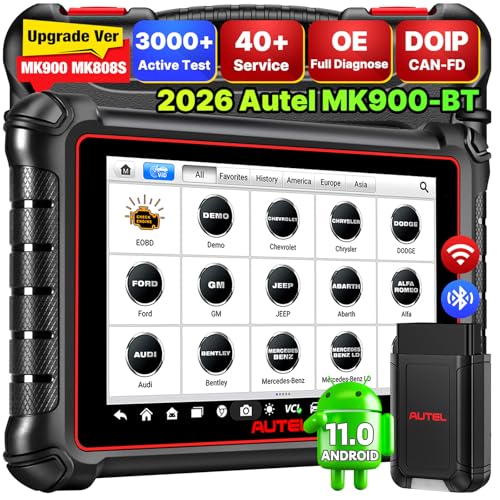
- 💯【Conta.ct us for Support Directly】If you met any...
- 🔥🔥🔥【2026 AUTEL FLAGSHIP MK900BT MK900-BT, NEW...
- 🚗【3000+ ACTIVE TESTS (50➡3000+), SAME AS MS...
- 🚗【40+ HOT SERVICES FOR 150 MAKES (28+➡40+)】Full...
- 🚗【OE ALL SYSTEM DIAGNOSE, AUTO SCAN 2.0: SCAN LICENSE...

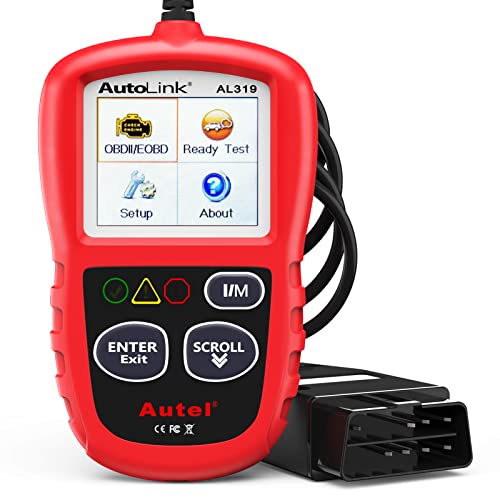
- 【TURN OFF CEL】 This AL319 car scanner diagnostic tool...
- 【EXTENSIVE APPLICATION】 Autel AL319 Compatible with...
- 【FOR END USER & DIYERS】 This error code reader AL319 is...
- 【USER-FRIENDLY DESIGN】 This OBD2 scanner and check...
- 【HIGH-QUALITY SERVICES】 12 months war.ranty from the...
If the PDF is very large, it may not load in the preview below.
Some older TSBs had multiple PDFs — visit the NHTSA Website to view all PDFs.
If the TSB PDF does not show, download or view it on the NHTSA Website.
Click on the (+) Plus Sign
Then Click on Associated Document(s)
Search NHTSA Database for Recalls
Search NHTSA Database for Vehicle Investigations
View Latest Vehicle Investigations
Search NHTSA Database for Vehicle Complaints
View Latest Vehicle Complaints
TSB/Document ID: 1150-16
Replacement Service Bulletin Number:
MFR Communication Date: 2016-11-05
MFR Internal Campaign ID/Software Version:
Communication Type: Service Bulletin/Repair Instructions
NHTSA Components: EQUIPMENT
MFR Component System:
MFR Component Subsystem:
Previous TSB | Next TSB |
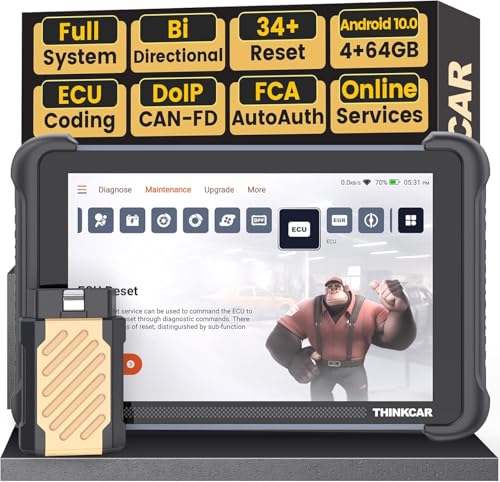
- [Notice] When you receive a used device, it may be a customer return resold by Amazon without inspection. You can exchange it for a new one through Amazon. As this situation is unavoidable, we sincerely apologize. For any issues, contacting us via Amazon's "Messages" is the best way. THINKSCAN 689BT Bidirectional Scan Tool Can Be Used Immediately After It is Turned On, Without Complicated Registration Process, Which is More Convenient & Quick.
- Full Bi-Directional Control & 3000+ Active Tests: Take control and test components like actuators, fuel injectors, relays, and cooling fans in real time. You’ll quickly see if the problem is in the part itself or the control module — saving you hours of guesswork and frustrating trial-and-error.
- Advanced ECU Coding Capabilities: Handle module matching and hidden feature activation with confidence. When you replace an ECU or want to customize settings, this obd2 scanner diagnostic bi directional tool gives you the professional-level capabilities you need without the dealership price tag.
- 34+ Useful Reset and Maintenance Functions: Complete everyday service tasks smoothly with a wide range of helpful reset and maintenance functions. Whether you’re keeping up with regular upkeep or tackling a specific job, this scanner makes maintenance simpler and less stressful for both DIYers and pros.
- Comprehensive Full System Diagnostics: Diagnose every major system — Engine, Transmission, ABS, SRS, TPMS, and more — all in one place. Finally stop wondering if you’re missing something important; get the full picture and clear codes with ease.
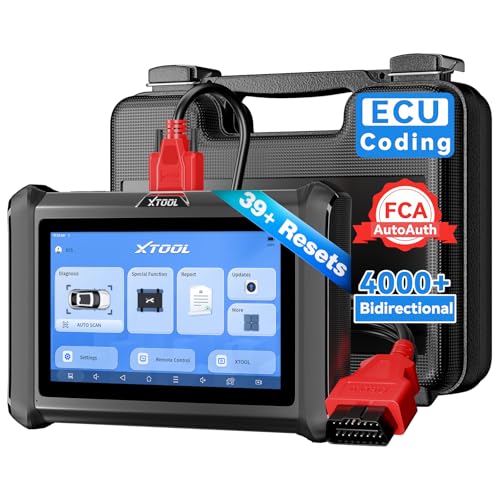
- Top Reasons to Choose the D7S OBD2 Scanner: XTOOL D7S car scan tool, an upgrade of XTOOL D7, offers comprehensive features for automotive technicians, workshops, and DIY enthusiasts 1. Upgraded Hardware: 2+64GB memory, rear camera, intuitive interface, foldable bracket 2. Complete Diagnostics: FCA
 Autoauth, OE-level all system scan, 39+ maintenance services, 4K+ bidirectional, CANFD/DoIP protocol 3. Advanced Capabilities: ECU c0ding, PMI functions 4. Wide Compatibility: Support 10,000+ models, covering 99% vehicle brands 5. Multi-language: Available in 22+ languages, No IP Restrictions 6. 3-Year Updates: Save 300 bucks on software updates for the latest features and optimizations
 - 2026 Upgraded D7S Car Scanner Features: The newly 2026 D7S V2.0 scanner for car brings exciting features for advanced vehicle diagnostics and enhanced user experience 1. FCA AutoAuth: Now supports FCA SGW module for Chrysler, for Jeep, for Dodge (2018+), for Fiat (2017+), enabling faster vehicle communication without gateway restrictions 2. PMI (Offline ECU Pr0gramming): Allows for Ford, for Lincoln, and for Mazda ECU pr0gramming for new modules 3. Optimized Diagnostic Report 2.0: Personalized reports with logos and customer info for auto shops. Note: Compatibility varies by cars, please check before order
- 39+ Services/Resets/Adaptations/Relearns/Calibrations: XTOOL D7S full system car scanner diagnostic tool tackles 99% of common car issues through its 36+ special functions, including Oil Reset, EPB, SAS, BMS, Throttle Reset, Injector C0ding, ABS Bleed, TPMS Reset, Power Balance, etc and also covers specific-vehicle functions like Crank Sensor Relearn, ABS Initialization, Cylinder Power Balance, Fuel Trim Reset, Idle Relearn etc. This car diagnostic scanner enhances efficiency, making repairs and maintenance hassle-free. Tip: DO NOT for All vehicles, please check compatibility first
- Cost-effective ECU C0ding Scan Tool for Specific Brands: Enhance your vehicle's performance with XTOOL D7S! This obd2 scanner all systems bidirectional offers advanced capabilities at an affordable price, supports online for BMW, for Benz and offline for BENZ, for MIT, along with PMI functions for Ford, for Mazda, and for Lincoln. Ideal for technicians and DIY enthusiasts, this automotive scanner diagnostic tool optimizes vehicle performance and enhances the driving experience. Note: Not for all cars and modules, please send car VIN to check the compatibility before purchase
- OE All System Diagnostic & 8 Pids Graphing: XTOOL D7S is a comprehensive all system bi directional obd2 scanner that delivers dealer-level diagnostics, completely controlling over your vehicle’s performance and health. This automotive scan tool can read and clear DTCs, view live data and ECU information, retrieve freeze frames, and perform active tests and full obd2 functions. This bi-directional scan tool can can identify your vehicle's make, model, and year information with just one click and show up to 8 PIDs live data with options for CSV viewing, playback, and recording for in-depth analysis. It is easy-to-use for both professionals and beginners, helping pinpoint issues efficiently
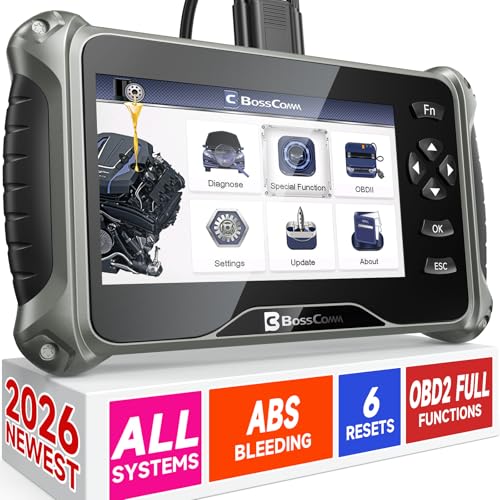
- 【✅Compared to BOSSCOMM IF742, IF745 Offers Full-System Diagnostics】The BOSSCOMM IF745 car diagnostic scanner is an upgraded model of IF742. In addition to supporting all OBD2 Code Reader functions and 6 reset options (ABS/EPB/SAS/BMS/Oil/Throttle), it expands diagnostics from 4 systems (Check Engine/ABS/SRS/Transmission) to vehicle All systems, including Steering, Suspension, and Body Electronics. This provides deeper, more comprehensive diagnostic capabilities.
- 【✨10 OBD2 Functions】The BOSSCOMM IF745 scan tool’s DTC Lookup instantly translates fault codes into user-friendly explanations, its I/M Readiness feature streamlines emissions testing with a single tap, and Freeze Frame lets you pinpoint the exact moment of a fault for in-depth root-cause diagnosis. Combined with a live data dashboard and advanced diagnostics (O2S, OBMon, EVAP), it delivers comprehensive insights for confident troubleshooting.
- 【✨Deep Diagnostics for All Vehicle System Modules】Beyond code reading/clearing and ECU information retrieval, our all-in-one data stream feature lets you inspect all current fault codes and their locations across the vehicle’s systems. This vehicle code reader helps you turn off dashboard warning lights and perform a comprehensive self-check of your car at home—no more back-and-forth trips to the repair shop or hefty inspection fees.
- 【✨6 Essential Resets: ABS Bleeding, Oil, EPB, SAS, Throttle, BMS】The BOSSCOMM IF745 obd2 scanner diagnostic tool swiftly purges air from brake lines to restore braking sensitivity, fine-tunes maintenance cycles to eliminate false alerts, resolves parking brake issues with one-click control, recalibrates steering sensors for stability, optimizes engine idling/acceleration for smoother performance, and deeply resets battery systems to extend lifespan and range via precise parameter adjustments.❗NOTE: Does NOT support bidirectional control, coding, or programming.
- 【✨10,000+ Car Models, AutoVIN, 13 Languages】The BOSSCOMM IF745 vehicle scanner diagnostic tool covers 73+ global car brands and offers support in 13 languages, making it perfect for DIYers, auto mechanics, or as a thoughtful gift. With a single-click AutoVIN feature, it instantly retrieves vehicle serial numbers, streamlining diagnostics for users globally. This adaptable tool balances user-friendliness with precision, catering to both personal and professional requirements.✅Unsure about compatibility? Compatibility will vary on vehicles' model and year, pls reach us via 📧 [email protected] 📧 before purchase.
This product presentation was made with AAWP plugin.