
NHTSA ID Number: 10186993
Manufacturer Communication Number: A462123202258410
TSB/Document Date: 2021-03-04
Summary
This informational bulletin provides diagnostic information for brake conditions.
If the PDF is very large, it may not load in the preview below.
Some older TSBs had multiple PDFs — visit the NHTSA Website to view all PDFs.
If the TSB PDF does not show, download or view it on the NHTSA Website.
Click on the (+) Plus Sign
Then Click on Associated Document(s)

- Mixes well with conventional fluids
- Low-moisture formula provides excellent vapor lock...
- Ideal for hydraulic and disc brakes


- Provides an extra margin of safety in extreme braking...
- Mix of polyglycol ethers ensures hot brake-system operation...
- Excellent for ABS, disc and drum brake systems
- Delivers braking power when needed by avoiding a spongy...
- Both wet and dry boiling points exceed the minimum...
This product presentation was made with AAWP plugin.
Search NHTSA Database for Recalls
Search NHTSA Database for Vehicle Investigations
View Latest Vehicle Investigations
Search NHTSA Database for Vehicle Complaints
View Latest Vehicle Complaints
TSB/Document ID: A462123202258410
Replacement Service Bulletin Number:
MFR Communication Date: 2021-02-10
MFR Internal Campaign ID/Software Version:
Communication Type: Service Bulletin/Repair Instructions
NHTSA Components: SERVICE BRAKES
MFR Component System:
MFR Component Subsystem:
Previous TSB | Next TSB |
46 Brake pulsation diagnostic guidelines
46 21 23 2022584/10 February 10, 2021. Supersedes Technical Service Bulletin Group 46 number 19-12 dated
May 31, 2019 for reasons listed below.
Model(s)
Year
VIN Range
Vehicle-Specific Equipment
All
2006 - 2022
All
Not Applicable
Condition
REVISION HISTORY
Revision
Date
Purpose
10
-
Revised header (Added model years)
9
05/31/2019
Revised header (Added model years)
8
03/15/2017
Revised attachments (Brake Steel Measurement Form)
Note:
DO NOT use this TSB if there is another TSB for same concern applicable to the VIN. This TSB is only
intended for diagnostic purposes and does not serve as a guideline for determining warrantable
conditions.
Customer states:
The steering wheel vibrates or pulsates when the brakes are applied.
Technical Background
Brake-related vibrations and pulsations can have multiple root causes, which include—but are not limited to:
driving style, environmental conditions, and the service history of the vehicle. Additionally, as brake pads and
discs wear, their dampening ability is reduced.
Disc thickness variation (DTV) is a common condition that contributes to brake
pulsation (Figure 1). DTV occurs when the two braking surfaces of the brake
disc are no longer parallel to each other. This condition cannot be accurately
measured with normal workshop tools. Most common conditions that create
DTV include:
Page 1 of 8
© 2021 Audi of America, Inc.
All rights reserved. Information contained in this document is based on the latest information available at the time of printing and is subject to the copyright and other intellectual property rights of Audi of
America, Inc., its affiliated companies and its licensors. All rights are reserved to make changes at any time without notice. No part of this document may be reproduced, stored in a retrieval system, or transmitted
in any form or by any means, electronic, mechanical, photocopying, recording, or otherwise, nor may these materials be modified or reposted to other sites, without the prior expressed written permission of the
publisher.
Corrosion/rust build-up.
Pad material transfer.
Prolonged use of a disc with the high run-out condition.
Figure 1. Example of DTV.
Production Solution
Not applicable.
Service
Brake pulsation may be noticeable only with specific vehicle speed, brake pedal pressure, and temperature of the
brake components. In order to accurately diagnose the vehicle, it is critical to test drive the vehicle under the
same conditions as the customers would (e.g., speed, braking pressure, etc.). The following are examples of
other conditions that can cause brake pulsation.
Overheated brake components
Overheated brake components can cause permanent damage to the brake discs and brake pads.
Condition: Brake pad material smeared on the brake disc
(Figure 2). This condition can create DTV.
Common cause: An overly-aggressive driving style, which
results in frequent sharp braking without proper cooling off
periods.
Service: Replace the brake discs and pads.
Figure 2. Deposits on the brake disc.
Page 2 of 8
© 2021 Audi of America, Inc.
All rights reserved. Information contained in this document is based on the latest information available at the time of printing and is subject to the copyright and other intellectual property rights of Audi of
America, Inc., its affiliated companies and its licensors. All rights are reserved to make changes at any time without notice. No part of this document may be reproduced, stored in a retrieval system, or transmitted
in any form or by any means, electronic, mechanical, photocopying, recording, or otherwise, nor may these materials be modified or reposted to other sites, without the prior expressed written permission of the
publisher.
Condition: Blue-tempered or overheated brake discs (Figure 3).
Common cause: Failed component(s) causing constant brake
application. This can also be caused by an overly-aggressive
driving style, which results in frequent sharp braking without
proper cooling off periods.
Service: Replace the brake disc and pads.
Figure 3. Brake disc with heat marks.
Corrosion/rust build-up
The ability to remove any build-up on a brake disc is impacted by the severity of the build-up. If left unattended,
the build-up can permanently damage brake discs and pads.
Condition: Corrosion/rust build-up on the brake discs
(Figure 4). This condition can create DTV.
Common causes:
Exposure to road salt during winter months, high
humidity, or moisture.
Vehicle not being driven for prolonged periods of time.
A gentle driving style with very light brake application
may not be enough to remove build-up (such as rust or
corrosion) on the brake discs and pads.
Service: With careful consideration of the traffic situation,
perform 2-3 ABS stops from speeds above 50mph. Between Figure 4. Corrosion/rust build-up.
each stop, allow the brake components to cool by driving the
vehicle for more than one minute at speeds greater than
50mph. Do not perform ABS stops if brand new pads and/or
discs are installed. Replace brake disc and pads if the
condition is not eliminated.
Page 3 of 8
© 2021 Audi of America, Inc.
All rights reserved. Information contained in this document is based on the latest information available at the time of printing and is subject to the copyright and other intellectual property rights of Audi of
America, Inc., its affiliated companies and its licensors. All rights are reserved to make changes at any time without notice. No part of this document may be reproduced, stored in a retrieval system, or transmitted
in any form or by any means, electronic, mechanical, photocopying, recording, or otherwise, nor may these materials be modified or reposted to other sites, without the prior expressed written permission of the
publisher.
Condition: Pad material transfer or corrosion marks from
brake pads on the brake disc, also known as “pad marks”
(Figure 5). This condition can create DTV.
Common cause: These marks can appear if the vehicle has
not been driven for a prolonged period of time or if the
brakes are exposed to high humidity or moisture.
Service: With careful consideration of the traffic situation,
perform 2-3 ABS-stops from speeds above 50mph. Between
each stop, allow the brake components to cool by driving the Figure 5. Pad marks on the brake disc.
vehicle for more than one minute at speeds greater than
50mph. Do not perform ABS stops if brand new pads and/or
discs are installed. Replace brake disc and pads if the
condition is not eliminated.
Condition: Excessive brake disc or wheel hub run-out
(Figure 6). Measure according to the Run-out Measurement
Instructions listed below.
Common causes:
Over-torqued or improperly-torqued wheels (torque
sticks, impact gun, etc.) can distort the brake disc and
hub, causing a run-out condition. Refer to Elsa for proper
torque values and procedures for the VIN.
Wheels that are not Audi-approved may not have the
same contact surface on the back of the wheel and may
not have the correct center bore dimension, which can
distort the brake disc and hub, causing a run-out
condition.
External impact or rust build-up between brake disc
and hub.
Service: Replace brake disc(s) and/or hub(s) if
measurements exceed the maximum value listed in the RunFigure 6. True disc rotation (a) and disc lateral
out Measurement Instructions.
run-out (b).
Page 4 of 8
© 2021 Audi of America, Inc.
All rights reserved. Information contained in this document is based on the latest information available at the time of printing and is subject to the copyright and other intellectual property rights of Audi of
America, Inc., its affiliated companies and its licensors. All rights are reserved to make changes at any time without notice. No part of this document may be reproduced, stored in a retrieval system, or transmitted
in any form or by any means, electronic, mechanical, photocopying, recording, or otherwise, nor may these materials be modified or reposted to other sites, without the prior expressed written permission of the
publisher.
Condition: Worn brake pads (Figure 7).
Common cause: As brake pads and discs reach their wear
limit, their dampening characteristics are reduced.
Service: Replace worn brake pads and discs.
Figure 7. Worn brake pad.
Other common causes
The following factors can impact the condition of the brake and suspension components, which can lead to
pulsation during braking. Always check the repair history and the overall condition of the vehicle.
Condition: Faulty, damaged, or aftermarket suspension
components (ball joints, links, tie rods, bushing, etc.) can
significantly amplify vibration/pulsation or lead to body vibrations
which only become noticeable when braking (Figure 8 and
Figure 9).
Service: Diagnose these components accordingly.
Figure 8. Damaged suspension bushing.
Page 5 of 8
© 2021 Audi of America, Inc.
All rights reserved. Information contained in this document is based on the latest information available at the time of printing and is subject to the copyright and other intellectual property rights of Audi of
America, Inc., its affiliated companies and its licensors. All rights are reserved to make changes at any time without notice. No part of this document may be reproduced, stored in a retrieval system, or transmitted
in any form or by any means, electronic, mechanical, photocopying, recording, or otherwise, nor may these materials be modified or reposted to other sites, without the prior expressed written permission of the
publisher.
Figure 9. Damaged suspension link.
Condition: Wheel/tire imbalance (Figure 10) or radial run-out
can significantly amplify the vibration/pulsation or lead to body
vibrations which only become noticeable when braking.
Service: Inspect the condition of these components and
diagnose accordingly.
Figure 10. Wheel/ tire imbalance.
Run-out Measurement Instructions
To obtain accurate run-out measurements, the following conditions must apply:
Page 6 of 8
© 2021 Audi of America, Inc.
All rights reserved. Information contained in this document is based on the latest information available at the time of printing and is subject to the copyright and other intellectual property rights of Audi of
America, Inc., its affiliated companies and its licensors. All rights are reserved to make changes at any time without notice. No part of this document may be reproduced, stored in a retrieval system, or transmitted
in any form or by any means, electronic, mechanical, photocopying, recording, or otherwise, nor may these materials be modified or reposted to other sites, without the prior expressed written permission of the
publisher.
All surfaces that will be measured must be free of
rust/corrosion build-up or pad material transfer.
VAS6079/1 (or similar measurement tool) is securely
attached to the vehicle (Figure 11).
The brake disc is secured to the hub with 5 bolts.
Axle bolt/nut is installed and properly torqued.
Run-out measurements should be taken with all parts
installed on the vehicle.
Figure 11. Example of the run-out
measurement tool VAS6079/1 properly secured
to a solid suspension component.
Use the following values to determine the severity of the runout:
Disc braking surface (Figure 12, point 1):
Disc hub and wheel hub run-out impact this value.
Maximum run-out: 0.06 mm / 0.002”.
Disc hub (center of the brake disc) (Figure 12, point 2):
Wheel hub run-out impacts this value.
Disc hub run-out impacts the disc braking surface run-out.
Maximum run-out: 0.03 mm / 0.0012”.
Wheel hub (without the disc installed) (Figure 12, point 3):
This value impacts the disc hub and disc braking surface
run-out. High run-out can distort the brake disc.
Figure 12. Run-out measurement locations:
disc braking surface (1), disc hub (2), wheel
hub (3).
Maximum run-out: 0.02 mm / 0.0008”.
Warranty
This TSB is informational only and not applicable to any Audi Warranty.
Page 7 of 8
© 2021 Audi of America, Inc.
All rights reserved. Information contained in this document is based on the latest information available at the time of printing and is subject to the copyright and other intellectual property rights of Audi of
America, Inc., its affiliated companies and its licensors. All rights are reserved to make changes at any time without notice. No part of this document may be reproduced, stored in a retrieval system, or transmitted
in any form or by any means, electronic, mechanical, photocopying, recording, or otherwise, nor may these materials be modified or reposted to other sites, without the prior expressed written permission of the
publisher.
Additional Information
All parts and service references provided in this TSB (2022584) are subject to change and/or removal. Always
check with your Parts Department and/or ETKA for the latest information and parts bulletins. Please check the
Repair Manual for fasteners, bolts, nuts, and screws that require replacement during the repair.
©2021 Audi of America, Inc. All rights reserved. The information contained in this document is based on the
latest information available at the time of printing and is subject to the copyright and other intellectual property
rights of Audi of America, Inc., its affiliated companies and its licensors. All rights are reserved to make changes
at any time without notice. No part of this document may be reproduced, stored in a retrieval system, or
transmitted in any form or by any means, electronic, mechanical, photocopying, recording, or otherwise, nor may
these materials be modified or reposted to other sites without the prior expressed written permission of the
publisher.
Page 8 of 8
© 2021 Audi of America, Inc.
All rights reserved. Information contained in this document is based on the latest information available at the time of printing and is subject to the copyright and other intellectual property rights of Audi of
America, Inc., its affiliated companies and its licensors. All rights are reserved to make changes at any time without notice. No part of this document may be reproduced, stored in a retrieval system, or transmitted
in any form or by any means, electronic, mechanical, photocopying, recording, or otherwise, nor may these materials be modified or reposted to other sites, without the prior expressed written permission of the
publisher.
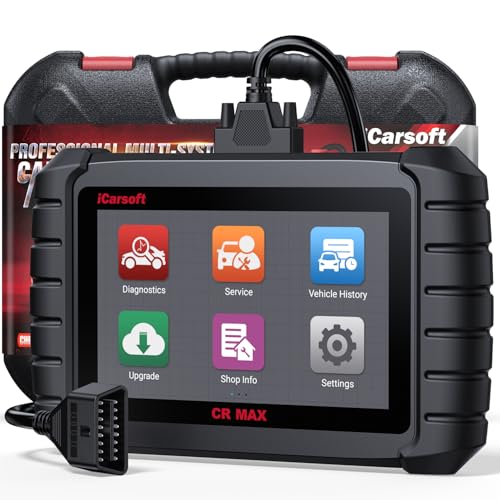
- WHY CHOOSE THE 2025 CR MAX -Upgrade the latest diagnostic capabilities for all vehicles after 1996: upgrade to 49+maintenance services; 46 extra specific functions; real all systems/all control modules diagnose; over 40K+ bidirectional actuation tests for diagnosing all control moduels of cars; Powerful full OBD2 Functions; built-in ECU Coding for BMW
 / Audi/ VW/ RollsRoyce; Fr ee V.A.G Guide Function; Battery retistration for new battery adaptation and more. It covers all vehicle diagnostic services and some special professional vehicle maintenance servces, assists you to do home DIY vehicle maintenance or car repair as a pro technician.
 - NEWEST IN INNOVATION FULL OBD2 SERVICES- iCarsoft auto car diagnostic scanner compatible with CAN-FD, CR MAX can do it all-reads and clears trouble codes, ALL SYSTEM DIAGNOSIS such as engine, transmission, ABS and airbag etc. CR MAX code reader for all cars can perform I/M Readiness, Live Data, Freeze Frame, Vehicle Information, Monitor Test, On-Board Monitor, E vap System Test,O2 Sensor Test,DTC Library Lookup,etc. (Warm Tips: If you car is after 2023,please contact us for compatibility; 3. It comes with 16PIN OBD2 diagnostic adapter, please check your car diagnostic socket if it is 16pin socket, if your car is 14pin diagnostic socket please contact us for the solution.)
- 49 RESET+ 46 SERVICES- Performs: Oil Reset, EPB,SAS,Throttle, D-P - F, Battery, ABS, Injector, TPMS, Suspension, AC, Head Lamp, Body Stablity, Engine, Tramsmission, Airbag, Seat, Door-Win-Roof, Fuel Pump, Door, E-G- R.+21 NEWEST SERVICES( Need update scanner)-AdBlue, Clutch, Crankshaft, High Voltage Battery, Cruise Control, NO xSensor, Rain Sensor, Stop And Start, Turbocharger, Head Up Display, Radar Camera, Vehicle Setup, Cyliner Misfire Check,Speedlimitassist, ControlUnitReset,OxygenSensor, Seatbelt. Extra 46+ extra services based on car brand.(Tips: Quantity of reset/ calibration fucitons are based on car system that your vehicle model has)
- REVOLUTIONARY 40000+BIDIRECTIONAL ACTIVE TESTS: Upgraded CR Max scanner equip with numberous of actuational test items for covering all available vehicle control modules, no longer only do simple light test or window test like other scanners, performs hardware modules test and software control modules test for checking car units or new updated control moduels work well or not after maintenance/ repair/ re-installation/ control system updated (Example for Benz- Roller Sun Blind test; Backup Camera test ;Self-test; EPB test; Transport Mode test;Boost Pressure Positioner test; Fuel Pump test; AND MORE!!).(Warm tip: The available test items are based on control modules your car has)
- ECU CODING+ BATTERY REGISTRATION- Powerful ECU Coding service for BMW/MINI/RollsRoyce / Audi/VW/Seat/Skoda/Bentley/Bugatti/Lamborghini, Improves Engine Power Performance and Optimizes Fuel Efficiency and Match New Hardware Unit to car and Customized a comfortable Driving Modes and Fixes & Updates Original Software Bug. The battery test function for checking car battery health, perform battery reset (BMS ) for replacing a damaged or aging car battery with a new one and register new battery to car ECU

- Scanner POR V2.0 with all obd2 services
- Do the scanning for engine
- Support OBDII/EOBD Ten Modes of Operation

- 【Designed for Most Mercedes-Benz, Sprinter and Smart from 1996-2023】As every car model of Benz has its-owned specific car system and ECUs, not all models are equipped with a complete vehicle ECU, which may cause the scanner to be unable to perform all listed reset services on some models, or even completely incompatible. Like For Sprinter's newer models, it support diagnostic functions only, lacking support for specialized service functions.. So please tell us the car's VIN and required service before purchase for compatibility check. You may also refer to the instructions in the eighth image of the main product photos to perform your inquiry.
- 【Up to 38 Reset Services】MB V3.0 2026 Version diagnostic tool performs Up to 38 maintenance services - Oil Rest , SAS, EPB, ETC, D-P-F, TPMS, ABS, Suspension, Air Conditioner, Head Lamp, Body Stability, Engine Control, Seat, Fuel Pump, Air-Filter, Engine Idle, Door, Im-mo-bilizer, Injector Coding, Transmission Control, Miscellaneous, Adblue, BMS, Cluth, Water Pump, NOxSensor, Rain/Light Sensor, Start/Stop, Radar/Camera, Cylinder Shutoff Test, Speed Limit Assist, Control Unit Reset, Oxygen Sensor, Seat Belt, Cruise Control System, Turbocharger, Crankshaft, Language Setting and etc. (Tips: Please update the software after receiving the product to obtain new service functions)
- 【OE-Level All System OBD2 Scanner】iCarsoft MB V3.0 (2026 Version) diagnostic scanner offers comprehensive OBDII services, allowing you to quickly scan all systems, including the Engine, ABS, SAS, SRS, TPMS, TCM, Fuel Pump System, ESP, EPB, EPS, Suspension, SCM, Adaptive Systems, and more. It supports functions such as reading and erasing codes, checking I/M readiness, viewing freeze frame data, performing O2 sensor tests, conducting on-board monitoring, testing the evap system, auto VIN retrieval, and reading both generic and specific codes, as well as DTCs and battery tests.
- 【Bidirectional Scan Tool】iCarsoft MB V3.0 (2026 Version) Bidirectional scanner supports activate or control a vehicle system or component, allows commanding cars’ modules and receiving info from the ECU to perform active tests on individual components, including EVAP/ABS Motor Pump/Windows/Sunroof and more, to pinpoint fault causes & resolve issues,and allows you to re-learn certain components after making repairs or replacement.
- 【Real Time Record & Graph View】iCarsoft MB V3.0 (2026 Version) can automatically record vehicle text history and identify vehicle information. Preserve real-time data information. View & Graph Live Data. Support Data Review and Print. Multi-language: English, German, Dutch, Spanish, French and so on. We promise to offer Lifetime updates (Lifetime free Update via PC), and confidence in products. We also provide 1 year warranty + extra lifetime hardware free repair if you need it in the future. We prioritize user experience & strive to meet your expectations. Please do feel free to reach out to us if you have any question or problem about the usage, our tech team will service you in time.
This product presentation was made with AAWP plugin.
Last update on 2026-05-12 / Affiliate links / Images from Amazon Product Advertising API