
NHTSA ID Number: 10177809
Manufacturer Communication Number: MI18-18B
TSB/Document Date: 2020-08-03
Summary
GENERAL HOISTING AND TOWING PROCEDURES Revision: B Updated 2.1 to show rubber chocks, secure front and rear.
MAINTENANCE
INFORMATION
DATE :
SUBJECT :
Revision: B
MI18-18B
June 2018
SECTION : 18 BODY
GENERAL HOISTING AND TOWING PROCEDURES
Updated 2.1 to show rubber chocks, secure front and rear.
2020-06-29
APPLICATION
All Prevost vehicles models
Model Year : 2014 - Current
DESCRIPTION
This maintenance information is for towing and hoisting Prevost vehicles.
Tower experience, local rules and regulations apply in conjunction with the procedures outlined in this
document.
Images are for representation purpose only, actual vehicles may differ.
Table of contents
1.
HOISTING AND TOWING POINTS ................................................................................................................... 2
JACK STANDS................................................................................................................................................. 3
AXLE HOISTING POINTS................................................................................................................................. 4
USING WHEELS AS LIFTING POINTS ............................................................................................................... 6
OPTIONAL CHASSIS HOISTING POINTS .......................................................................................................... 7
2.
TOWING......................................................................................................................................................... 9
PREPARATION BEFORE TOWING................................................................................................................... 9
Engine compartment emergency air-fill valve........................................................................................ 10
X Series optional front air supply connections........................................................................................ 10
Drive Axle Flange Shaft Removal ............................................................................................................ 11
After Towing ........................................................................................................................................... 13
TOWING FROM THE FRONT ........................................................................................................................ 13
2.2.1 First Lift................................................................................................................................................... 14
2.2.2 Second Lift- Front Tow Eye Pads as Lifting Point for Towing .................................................................. 15
2.2.3 Second Lift- Using I-Beam Front Axle as Lifting Point for Towing .......................................................... 18
X-SERIES RECOVERY USING OPTIONAL REAR TOW EYES ............................................................................. 22
2.1.1
2.1.2
2.1.3
2.1.4
3.
EMERGENCY TOWING ...................................................................................................................................23
3.1
REAR TOW USING NON-APPROVED LIFTING POINTS - EMERGENCY ONLY ................................................. 23
3.1.1 PRECAUTIONS ......................................................................................................................................... 23
3.1.2 FIRST LIFT................................................................................................................................................ 24
3.1.3 SECOND LIFT ........................................................................................................................................... 25
3.2
VOLVO I-SHIFT TRANSMISSION TOWING MODE ......................................................................................... 29
Writer:
FL
MI18-18B
Page 2 / 30
1. HOISTING AND TOWING POINTS
As much as possible, use the wheels as the preferred lifting points. If lifting by the wheels is not possible
or appropriate, there are several hoisting and towing points under the vehicle.
Lifting should be performed without passengers and no luggage remaining in the vehicle.
Use these points exclusively for hoisting and towing operations (Figure 1, Figure 2).
FIGURE 1 FRONT HOISTING AND LIFTING POINTS DIAGRAM
FIGURE 2 REAR HOISTING AND LIFTING POINTS DIAGRAM
The vehicle is provided with four standard chassis hoisting points. When axles or wheels are serviced, use
the chassis hoisting points.
Writer:
FL
MI18-18B
Page 3 / 30
When using the chassis hoisting points to support the vehicle, the tag axle must be unloaded at all times.
To prevent damage to the suspension, always support the drive and front axles using jack stands when
using chassis hoisting points.
CHASSIS HOISTING POINTS
2 hoisting points located aft of the tag axle (Figure3)
2 hoisting points or optional hoisting pads with receptacles located aft of the front axle (Figure4)
FIGURE 3 : CHASSIS HOISTING POINTS
- AFT OF TAG AXLE (BOTH SIDES)
FIGURE 4 : JACK STAND AT CHASSIS HOISTING
POINT - AFT OF FRONT AXLE (BOTH SIDES)
JACK STANDS
As a general recommendation, the minimum safe working load (SWL) for any jack stand should be
10 US tons (20 000 lb; 9072 kg). Figure5, Figure6 and Figure7 show general examples of this type of jack
stand.
The vehicle can be supported at the chassis hoisting points (refer to HOISTING AND LIFTING POINTS
diagram). Use a jack stand of 10 US tons (20 000 lb; 9072 kg) capacity at each of the four standard chassis
hoisting points.
WARNING
Hydraulic jacks are intended for lifting only. Do not get under the vehicle while using hydraulic jacks
unless it is properly supported with safety jack stands.
Writer:
FL
MI18-18B
Page 4 / 30
FIGURE 5 : 20 000 LB (10 US TON)
CAPACITY JACK STAND
FIGURE 6 : 16500 LBF
CAPACITY
FIGURE 7 : 40 000 LB (20 US TON) CAPACITY
JACK STAND
AXLE HOISTING POINTS
AXLE HOISTING POINTS
2 front axle hoisting points (Figure8, Figure9, Figure10)
2 drive axle sub frame hoisting points (Figure11)
2 hoisting points under the tag axle (tag axle must be unloaded) (Figure12)
To ensure stability, always use the two hoisting points under a specific axle simultaneously.
WARNING
Two hoisting points are located under the tag axle. Using the tag axle as rear hoisting points for the
vehicle should be avoided. When possible, use the drive axle as hoisting point.
The vehicle can be lifted from the front axle and the drive axle sub frame using lifting equipment of
appropriate capacity.
APPROXIMATE WEIGHT PER AXLE
COACHES
Front axle: 12,000 lb. (5 443 kg)
Drive axle: 26,500 lb. (12 020 kg)
MOTORHOMES / SPECIALTY VEHICLES
Contact the owner of the vehicle. The Gross Axle
Weight Rating (GAWR) for the front and rear axle
should not be exceeded.
GAWR values for a particular vehicle appear on
the vehicle’s certification plate installed on the
driver’s left-hand console.
WARNING
The suspension must be in the normal ride position before hoisting.
WARNING
To prevent damage to suspension components, always unload the tag axle before hoisting the vehicle.
Writer:
FL
MI18-18B
Page 5 / 30
FRONT AXLE HOISTING POINTS
FIGURE 8 : I-BEAM AXLE HOISTING POINT - CURBSIDE
FIGURE 9 : I-BEAM AXLE HOISTING POINT – ROAD SIDE
FIGURE 10 : INDEPENDENT FRONT SUSPENSION (IFS) HOISTING POINTS.
Writer:
FL
MI18-18B
Page 6 / 30
DRIVE AXLE SUB FRAME HOISTING POINTS
FIGURE 11 : DRIVE AXLE SUB FRAME HOISTING POINTS.
TAG AXLE HOISTING POINTS
FIGURE 12 : TAG AXLE HOISTING POINTS (USE ONLY TO SUPPORT THE TAG AXLE)
USING WHEELS AS LIFTING POINTS
Use the front and drive axle wheels to lift the vehicle when using mobile column lifts. When doing so, the
tag axle must be unloaded at all time.
Avoid using the tag axle wheels as the only lifting point for the rear of the vehicle. However, if the rear of the
vehicle has to be lifted using the tag axle wheels, the tag axle must be unloaded at all times.
Writer:
FL
MI18-18B
Page 7 / 30
X-SERIES COMMUTER OPTIONAL CHASSIS HOISTING POINTS
On certain vehicles, lifting pads and rear emergency recovery toe eyes may be added on the chassis. When
axles or wheels are serviced, use the chassis hoisting points.
FIGURE 13 : OPTIONAL FRONT CHASSIS HOISTING POINTS
FIGURE 14 : X-SERIES OPTIONAL REAR CHASSIS HOISTING POINTS
When using the chassis hoisting points to support the vehicle, the tag axle must be unloaded at all times.
To prevent damage to the suspension, always support the drive and front axles using jack stands when
using chassis hoisting points.
X-SERIES OPTIONAL CHASSIS HOISTING POINTS
2 optional hoisting pads with receptacles located aft of the front axle (Figure16)
2 optional hoisting pads with receptacles located aft of the tag axle (Figure15)
Writer:
FL
MI18-18B
Page 8 / 30
FIGURE 15 : OPTIONAL CHASSIS HOISTING
RECEPTACLES - AFT OF TAG AXLE
FIGURE 16 : OPTIONAL CHASSIS HOISTING
RECEPTACLES - AFT OF FRONT AXLE
FIGURE 17 : JACK STAND AT CHASSIS HOISTING
RECEPTACLE - AFT OF FRONT AXLE, ROAD SIDE
FIGURE 18 : JACK STAND AT CHASSIS HOISTING
RECEPTACLE - AFT OF FRONT AXLE, CURB SIDE
FIGURE 19 : JACK STAND AT CHASSIS HOISTING
RECEPTACLE – AFT OF TAG AXLE, ROAD SIDE
FIGURE 20 : JACK STAND AT CHASSIS HOISTING
RECEPTACLE – AFT OF TAG AXLE, CURB SIDE
Writer:
FL
MI18-18B
Page 9 / 30
2.
Towing from the front is the recommended method. Prevost does not recommend towing from the rear using
unapproved hoisting points as the vehicle may sustain structural damage.
Observe normal precautions including, but not limited to list below:
• Make sure the parking brake or the emergency brake is released at time of towing.
• Do not allow passengers to ride on board.
• Tow the vehicle at a safe speed.
• Accelerate and decelerate slowly and cautiously.
• Avoid sharp turns where possible.
WARNING
Do not carry passengers while the vehicle is being towed.
CAUTION
Avoid towing the vehicle from the rear using hoisting points that are not approved as this will cause
structural damage. In case of damage to the drive train components use a low-bed semi-trailer.
WARNING
Engage the parking brake to prevent the vehicle from moving before you begin maintenance or service
procedures that require you to be under the vehicle. Serious personal injury can result.
CAUTION
Lift the vehicle at the minimal height required for the vehicle to trail the tow truck.
PREPARATION BEFORE TOWING
WARNING
Prior to hoisting, park the vehicle on a level
surface and apply parking brake.
Chock the front and rear wheels to prevent the
vehicle from moving at time of releasing the
parking brake during the towing preparation.
On the L.H. dashboard panel, turn on the hazard
warning flashers. Preferably, use a towing light
bar.
FIGURE 21 CHOCK THE FRONT AND REAR WHEELS
Writer:
FL
MI18-18B
Page 10 / 30
Place the front wheels in a straight-ahead position
and keep the steering wheel from turning. To do
so, slide the driver’s seat close to the steering
wheel. Wrap the safety belt around and through
the steering wheel and then fasten safety belts.
This will ensure the vehicle rolls in straight
direction to be stopped by the tow truck in case of
mechanical failure of the lifting equipment.
FIGURE 22
2.1.1
Engine compartment emergency air-fill valve
Use the emergency fill valve to supply air to the
system when the engine cannot be operated. This
valve is located in the engine compartment
(Figure23) and supplies air for all systems (brakes,
suspension and accessories).
FIGURE 23 : ENGINE COMPARTMENT EMERGENCY AIRFILL VALVE
CAUTION
Do not tow the vehicle without external air pressure applied to the emergency fill valve if the engine does
not operate. Without brake system air pressure, the emergency spring brakes may apply automatically.
If failure prevents releasing the parking brakes with air pressure, disengage the parking brakes
mechanically.
2.1.2
X Series Optional Front Air Supply Connections
Operate the engine when towing to maintain brake system air pressure. If the engine cannot be operated,
connect external air pressure lines from the tow truck.
“Brake” quick connect fitting
Flip down the access door located on the front bumper, connect an auxiliary air supply from the tow truck to
the quick connect fitting identified BRAKE in order to supply air for operation of the vehicle service brake
from the tow truck (Figure24, Figure25).
“Air supply” quick connect fitting
Writer:
FL
MI18-18B
Page 11 / 30
While the vehicle is being towed, connect an auxiliary air supply from the tow truck to the quick connect
fitting identified AIR SUPPLY to supply air for all systems (brakes, suspension, accessories) through the air
dryer (Figure24, Figure25).
FIGURE 25 : FRONT TOWING AIR SUPPLY
ACCESS PANEL QUICK CONNECT FITTINGS
FIGURE 24
2.1.3
Drive Axle Flange Shaft Removal
1. Apply the parking brake.
2. Remove the stud nuts and the washers (with
Meritor drive axle) or cap screws (with ZF drive
axle) from the flange shaft.
NOTE: there is oil behind the flange shaft which
comes out during disassembly
FIGURE 26 : ZF A-132 AXLE
Writer:
FL
MI18-18B
Page 12 / 30
FIGURE 27: MERITOR RC23-165 AXLE
CAUTION
Do not use a chisel or wedge to loosen the axle flange shaft and tapered dowels. Using a chisel or
edge can result in damage to the axle shaft, the gasket and seal, and/or the axle hub.
3. Meritor axle: Loosen the tapered dowels in the
flange of the axle shaft using the following
methods.
a) Do not strike the round driving lugs on the
flange of an axle shaft. Pieces can break off
and cause serious personal injury. A 1.5-inch
(38.1 mm) diameter brass hammer can be
used as a drift.
b) Hold a 1.5-inch (38.1 mm) diameter brass drift
against the center of the axle shaft flange,
inside the round driving lugs.
c) Hit the end of the drift with a large hammer (5
to 6 lbs.’) to loosen the axle shaft and tapered
dowels from the hub.
4. Identify each axle shaft that is removed from the
axle assembly so they can be installed in the same
location after transporting or repair is completed.
(Example: Match mark a mating axle shaft and
hub).
FIGURE 28: MERITOR RC23-165 AXLE
5. Remove the tapered dowels (if used), gasket or O-ring and the axle shaft from the axle assembly.
Use a container to recover the oil.
Writer:
FL
MI18-18B
Page 13 / 30
6. Remove opposite flange shaft similarly.
7. Install a temporary cover over the open end of each hub where an axle shaft was removed. This will
prevent dirt from entering the bearing cavity and loss of lubricant.
2.1.4
After Towing
1. Remove the covers from the hubs.
2. Install the gasket or O-ring, and axle shaft into the axle housing and carrier in the same location it was
removed from. The gasket and flange of the axle shaft must be flat against the hub. Rotate the axle
shaft and/or the driveline as necessary to align the splines and the holes in the flange with the studs or
holes in the hub.
3. Meritor axle only: Install the dowels over each stud and into the tapered holes of the flange.
4. Install the washers and stud nuts or cap screws.
ZF A-132 AXLE
Determine the size of the fasteners and tighten the nuts to the
corresponding torque value shown below.
Tightening torque M18x1.5 G10.9 screw
•
9/16-18 plain nuts: 110 - 165 lbf-ft (149-224 Nm)
•
5/8-18 plain nuts: 150 - 230 lbf-ft (203-312 Nm)
325 lbf-ft (440 Nm)
5. Mount opposite flange shaft similarly.
6. Inspect the lubricant level in the axles and hubs where the axle shafts were removed. Add the correct
type and amount of lubricant if necessary.
CAUTION
Make sure axle shafts or driveshaft are installed correctly after towing. Tighten axle shaft and driveshaft
nuts to the correct torque settings. Do not invert shafts.
TOWING FROM THE FRONT
The towed vehicle must be lifted from the front with front wheels off the ground. The tow truck must be
equipped with the proper lifting equipment i.e. tow bar, axle forks and holders to reach under the front axle
or the front tow eye pads. No other lifting points are recommended for towing.
Lifting and towing from any other point is not authorized as it may cause structural damage. To prevent
overloading the drive axle, do not unload or raise the tag axle when towing the vehicle.
To prevent damage to the vehicle, use the front tow eye pads fixed to the vehicle chassis between the
front axle and the front bumper. Only use a solid link tow bar and safety chains to tow the vehicle.
1. Block the wheels to prevent the vehicle from moving.
2. Perform the PREPARATION BEFORE TOWING. Refer to paragraph 2.1.
3. Disconnect both drive axle shafts to prevent damage to the transmission. Plug axle tubes to prevent oil
loss. Refer to 2.1.3 DRIVE AXLE FLANGE SHAFT REMOVAL.
Writer:
FL
MI18-18B
Page 14 / 30
CAUTION
The axle shafts must be disconnected to avoid serious damage to the Allison transmission. Lubrication
is inadequate when towing.
To prevent damage to the drive train components, disconnect drive axle shafts before towing. Do not
attempt to push or pull start a vehicle equipped with an automatic transmission.
Failure to disconnect the propeller shaft, remove the drive axle shafts or lift the drive wheels off
the ground before towing can cause serious transmission damage and void the warranty.
2.2.1
First Lift
To allow lifting equipment fitted with axle forks to reach under the front axle or tow eyes, it is necessary
to perform a first lift of the front of the vehicle using the tow eye pads as lifting points. This first lift will
allow tow cans or blocks to be placed underneath front tires.
1. Retract the tow truck stinger arm.
2. On the first lift, position the tow bar
fork holders under the front tow eye
pads (Figure 30 and Figure 31) to lift
the vehicle in order to place the front
wheels firmly on the tow cans or
blocks.
Center to center measurement between
tow eyes= 37 inches (Figure 29)
Note: No axle forks are needed for this
first lift
FIGURE 29
FIGURE 30
Writer:
FL
MI18-18B
Page 15 / 30
FIGURE 31: TOW EYE
3. Deploy the tow truck stinger arm,
placing the axle fork holders under the
tow eye pads (Figure 32).
FIGURE 32
4. Lift the front end of the vehicle high
enough to allow installation of tow
cans or blocks. Place the tow cans or
blocks perfectly centered underneath
each front wheel (Figure 33).
5. With precaution, lower the front of the
vehicle
FIGURE 33
2.2.2
Second Lift- Front Tow Eye Pads as Lifting Point for Towing
The tow eye pads are fixed to the vehicle chassis, fore of the front axle will be used as front end lifting
points for towing.
Writer:
FL
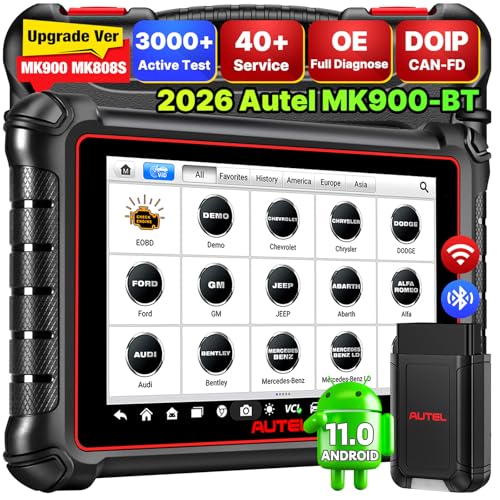
- 💯【Conta.ct us for Support Directly】If you met any...
- 🔥🔥🔥【2026 AUTEL FLAGSHIP MK900BT MK900-BT, NEW...
- 🚗【3000+ ACTIVE TESTS (50➡3000+), SAME AS MS...
- 🚗【40+ HOT SERVICES FOR 150 MAKES (28+➡40+)】Full...
- 🚗【OE ALL SYSTEM DIAGNOSE, AUTO SCAN 2.0: SCAN LICENSE...

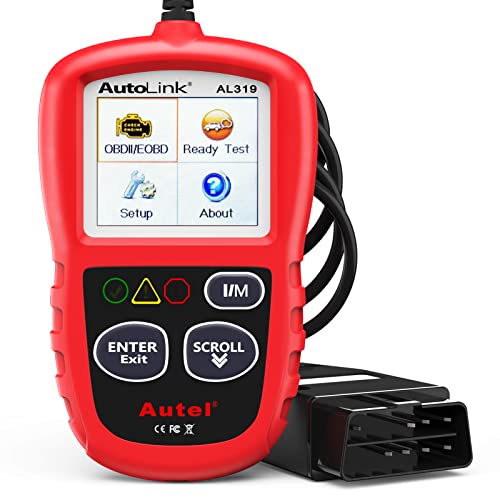
- 【TURN OFF CEL】 This AL319 car scanner diagnostic tool...
- 【EXTENSIVE APPLICATION】 Autel AL319 Compatible with...
- 【FOR END USER & DIYERS】 This error code reader AL319 is...
- 【USER-FRIENDLY DESIGN】 This OBD2 scanner and check...
- 【HIGH-QUALITY SERVICES】 12 months war.ranty from the...
Last update on 2026-06-12 / Affiliate links / Images from Amazon Product Advertising API
If the PDF is very large, it may not load in the preview below.
Some older TSBs had multiple PDFs — visit the NHTSA Website to view all PDFs.
If the TSB PDF does not show, download or view it on the NHTSA Website.
Click on the (+) Plus Sign
Then Click on Associated Document(s)
Search NHTSA Database for Recalls
Search NHTSA Database for Vehicle Investigations
View Latest Vehicle Investigations
Search NHTSA Database for Vehicle Complaints
View Latest Vehicle Complaints
TSB/Document ID: MI18-18B
Replacement Service Bulletin Number:
MFR Communication Date: 2020-07-06
MFR Internal Campaign ID/Software Version:
Communication Type: Service Bulletin/Repair Instructions
NHTSA Components: EQUIPMENT
MFR Component System:
MFR Component Subsystem:
Previous TSB | Next TSB |

- Stay Updated with Lifetime Access: This obd2 scanner includes lifetime free software updates for all app service functions. With a single payment, enjoy full access to diagnostics, reset tools, and maintenance features — zero subscription fees. A budget-friendly choice for weekend mechanics, home car owners, and DIYers, supporting vehicles from 1996 onward. Come to us with your VIN to check compatibility.
- Full Bidirectional Control/Active Tests & Stable Wireless Connectivity: This car code reader features full bidirectional control, allowing you to send commands to the vehicle's ECU for active tests on components such as fuel pumps, injectors, A/C clutches, windows, sunroofs, and more. This car scanner diagnostic tool helps DIYers quickly diagnose and test vehicle parts, cutting down troubleshooting and repair time. With BT 4.0 wireless connectivity, you can enjoy cable-free diagnostics up to 33 feet. Stand in your garage and test windows, wipers, or even engine components—all without needing to move around your car.
- Portable Car Scanner with 26 Special Functions: Scheduled vehicle maintenance with the A30M car diagnostic scanner can keep your vehicle in peak condition and save you big on dealership trips. The XTOOL A30M obd2 scanner diagnostic tool features essential reset and relearn functions, such as Oil Reset, EPB Reset (Electronic Parking Brake Release), SAS, ABS Brake Bleeding, Throttle Body Relearn, Injector Coding, Crank Sensor Relearn, Headlight Adjustment, and Tire Size Reset. Note: Service functions may vary by vehicle model – check compatibility beforehand!
- Wide Compatibility CAN FD & FCA
 Autoauth: This obd2 scanner diagnostic tool is compatible with over 85+ car brands from the U.S., Europe, and Asia, providing extensive coverage through a BT connection with your smartphone or iPad. Now upgraded to support the latest protocols, it includes FCA AutoAuth access for Chrysler, Jeep, Dodge, and Fiat (2018+), and supports CAN FD for GM (2020+) models, giving you greater access to newer vehicles and systems. Note: The FCA AutoAuth account is not included with the device. Users must register and pay separately through the official FCA AutoAuth website to access diagnostic functions for vehicles that require it.
 - Up to 8 Live Data Streams Graphing – Real-Time Graphing for Deeper Insight: This car scanner supports up to 8 live data streams simultaneously with intuitive, real-time graphing. Gain comprehensive insights into your vehicle’s performance, making it easier to spot issues, detect trends, and make informed diagnostic decisions with confidence.
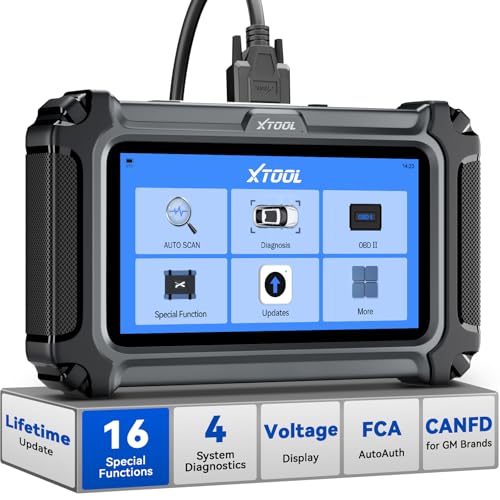
- Comprehensive OBD2 Scanner with 16 Resets: The XTOOL D5S car code reader and vehicle reset tool provides an advanced diagnostic solution with 16 commonly needed reset functions, including Electronic Parking Brake Reset (EPB Reset), SAS, BMS Reset (Battery Test), Throttle Body Relearn, TPMS Reset, ABS Bleeding, Injector Coding, Gearbox Match, Suspension Adjustment, Headlight, Window Initialization, Crank Sensor Relearn and more. Equipped with CAN FD Protocol and FAC AutoAuth, the D5S obd2 scanner diagnostic tool ensures compatibility with a broad range of modern vehicles, allowing users to address common maintenance needs quickly. NOTE: Please Check the Compatibility before ordering.
- 4 Main System Car Scanner & Full OBD2 Diagnostics: The XTOOL D5S car code reader is ideal for home mechanics, DIYers, and professionals, providing access to Transmission/Engine/ABS/SRS systems to read DTCs, Live data can be displayed in text or up to 4 PID data graphs, along with full OBD2 diagnostics to check the engine light on, other obd2 issues and routine maintenance. This car diagnostic scanner ensures you can keep your vehicles in top condition, avoiding costly repairs or unexpected breakdowns. NOTE: Some vehicles display three systems after connection because the transmission and engine of some vehicles are integrated into one.
- Check Engine Code Reader & Real-Time Engine Monitoring: Whether you're a car owner, a DIYer, or run a repair shop, the XTOOL D5S obd2 scanner diagnostic tool makes engine diagnostics fast and frustration-free, reading and explaining trouble codes in seconds—no confusion. Check live data like fuel trim, 02 sensor voltage, RPM, and coolant temp to pinpoint mis~fires, rough idle, or sensor issues. After repairs, simply use the D5S check engine code reader and reset tool to turn off the check engine light and confirm the problem’s fixed—saving time, money, and unnecessary shop visits. - Note: If the check engine light comes back on, it indicates the original problem still exists.
- Portable Car Scanner for ABS and SRS: XTOOL D5S gives you peace of mind when ABS or airbag warning lights come on. It reads and clears ABS codes to help you fix brake sensor, traction control, or wheel speed issues, and supports ABS bleeding after repairs like caliper or master cylinder replacement. For airbag systems, it scans and clears SRS codes related to airbags, seatbelt tensioners, and crash sensors. Whether you're doing repairs at home or running a small shop, the D5S is a cost-effective solution for safety diagnostics. Note: If a fault code returns after clearing, it usually means the issue hasn’t been fully resolved. Please check the compatibility before ordering.
- Transmission Warning Light ON? Here’s the Transmission Diagnostic and Reset Tool You Need: The XTOOL D5S is more than just a basic car scanner—it’s an easy-to-use transmission diagnostic tool. From rough shifts to slipping gears, the D5S lets you read and clear transmission trouble codes, monitor real-time TCM data, and perform transmission resets after fluid changes or repairs. Whether you’re a hands-on car owner or a pro running a busy shop, this OBD2 scanner with transmission functions helps you catch problems early—saving you time, money, and future headaches.. Note: Clearing fault codes is equivalent to a reset on some vehicles, but not all. For help, contact XTOOL Tech Support.
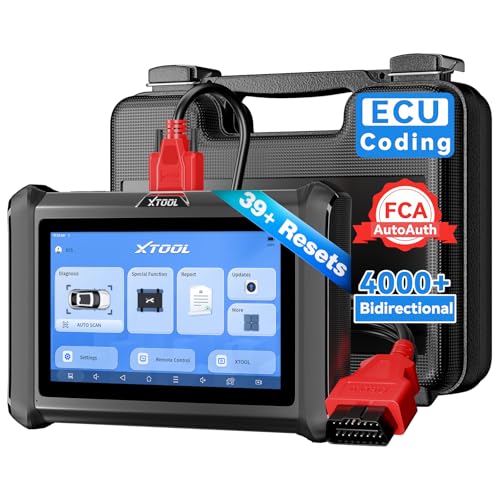
- Top Reasons to Choose the D7S OBD2 Scanner: XTOOL D7S car scan tool, an upgrade of XTOOL D7, offers comprehensive features for automotive technicians, workshops, and DIY enthusiasts 1. Upgraded Hardware: 2+64GB memory, rear camera, intuitive interface, foldable bracket 2. Complete Diagnostics: FCA Autoauth, OE-level all system scan, 39+ maintenance services, 4K+ bidirectional, CANFD/DoIP protocol 3. Advanced Capabilities: ECU c0ding, PMI functions 4. Wide Compatibility: Support 10,000+ models, covering 99% vehicle brands 5. Multi-language: Available in 22+ languages, No IP Restrictions 6. 3-Year Updates: Save 300 bucks on software updates for the latest features and optimizations
- 2026 Upgraded D7S Car Scanner Features: The newly 2026 D7S V2.0 scanner for car brings exciting features for advanced vehicle diagnostics and enhanced user experience 1. FCA AutoAuth: Now supports FCA SGW module for Chrysler, for Jeep, for Dodge (2018+), for Fiat (2017+), enabling faster vehicle communication without gateway restrictions 2. PMI (Offline ECU Pr0gramming): Allows for Ford, for Lincoln, and for Mazda ECU pr0gramming for new modules 3. Optimized Diagnostic Report 2.0: Personalized reports with logos and customer info for auto shops. Note: Compatibility varies by cars, please check before order
- 39+ Services/Resets/Adaptations/Relearns/Calibrations: XTOOL D7S full system car scanner diagnostic tool tackles 99% of common car issues through its 36+ special functions, including Oil Reset, EPB, SAS, BMS, Throttle Reset, Injector C0ding, ABS Bleed, TPMS Reset, Power Balance, etc and also covers specific-vehicle functions like Crank Sensor Relearn, ABS Initialization, Cylinder Power Balance, Fuel Trim Reset, Idle Relearn etc. This car diagnostic scanner enhances efficiency, making repairs and maintenance hassle-free. Tip: DO NOT for All vehicles, please check compatibility first
- Cost-effective ECU C0ding Scan Tool for Specific Brands: Enhance your vehicle's performance with XTOOL D7S! This obd2 scanner all systems bidirectional offers advanced capabilities at an affordable price, supports online for BMW, for Benz and offline for BENZ, for MIT, along with PMI functions for Ford, for Mazda, and for Lincoln. Ideal for technicians and DIY enthusiasts, this automotive scanner diagnostic tool optimizes vehicle performance and enhances the driving experience. Note: Not for all cars and modules, please send car VIN to check the compatibility before purchase
- OE All System Diagnostic & 8 Pids Graphing: XTOOL D7S is a comprehensive all system bi directional obd2 scanner that delivers dealer-level diagnostics, completely controlling over your vehicle’s performance and health. This automotive scan tool can read and clear DTCs, view live data and ECU information, retrieve freeze frames, and perform active tests and full obd2 functions. This bi-directional scan tool can can identify your vehicle's make, model, and year information with just one click and show up to 8 PIDs live data with options for CSV viewing, playback, and recording for in-depth analysis. It is easy-to-use for both professionals and beginners, helping pinpoint issues efficiently
Last update on 2026-06-12 / Affiliate links / Images from Amazon Product Advertising API
This product presentation was made with AAWP plugin.