
NHTSA ID Number: 10175966
Manufacturer Communication Number: WRD-20R
TSB/Document Date: 2020-06-02
Summary
Subaru of America, Inc. (Subaru) is initiating a new safety recall for certain 2019 model year Ascent, Impreza, Legacy, and Outback vehicles in which the fuel pump may become inoperative.
Connect a sufficient length of 5/16” rubber fuel hose to the male hose barb portion of the
adapter fitting. Always secure it with a small hose clamp to prevent leakage. Remove the
plastic plug from the adapter and connect the adapter / hose assembly to the male fuel
discharge tube of the fuel pump as shown below. Put the other end of the rubber fuel hose
securely into a safety container to collect the drained fuel. Once the drain hose assembly
is securely in place, connect the SSM4, turn the ignition ON and from the Active test item
menu, select Fuel Pump Control to operate the fuel pump. Drain the fuel tank down until the
fuel gauge reads at or below 2/3 full.
Remove
Plug and
Discard
Continued...
Bulletin Number: WRD-20R; Revised: 05/07/20
Page 22 of 47
4. Disconnect the ground terminal from battery and wait 60 seconds before proceeding.
5. If not already done in STEP 3, CAREFULLY remove the rear seat cushion assembly, set it aside
in a clean, safe place. While pushing the corners of the rear seat cushion from above, pull the
knobs of the retaining hooks forward. Lift up on the front of the cushion assembly to disengage
the rear hooks and remove it.
REMINDER: ALWAYS remove the fuel tank filler cap to release any remaining vapor pressure.
CAUTION:
• The Airbag system satellite safing sensor is located under the front center of the rear seat cushion.
Be careful not to apply any strong impacts to the sensor when working with the rear seat cushion
removed.
Continued...
Bulletin Number: WRD-20R; Revised: 05/07/20
Page 23 of 47
6. Fuel Pump Assembly Removal:
•
CAREFULLY remove the fuel pump access cover while paying close attention to avoid
damaging the foam seal between the cover and vehicle body. Replace the seal if damaged
with p.n. 96077FL00A (rare case).
•
Apply a length of door edge guard, flexible tubing or electrical tape around the pump access
opening as protection from cuts / abrasions from any sharp edges.
•
Release the quick disconnect fitting at the fuel pump outlet pipe, and while covering the pipe
and connector with a clean shop cloth to catch any residual pressurized fuel, slide the fuel
delivery pipe off the fuel pump outlet tube. Insert the plastic temporary plug into the fuel
delivery pipe connector. The one-time use temporary plug is included in the replacement fuel
pump parts kit.
•
Disconnect the harness connector from the pump.
•
CAREFULLY using HAND TOOLS ONLY and the Ring
Nut Wrench tool shown here, remove the plastic retaining
ring securing the fuel pump assembly in the fuel tank.
NOTE: Make sure the removed fuel delivery pipe is ON
TOP of the tool as shown and not pinched under it.
Ring Nut
Wrench
Removed Pipe
on TOP of Tool
•
CAREFULLY remove the fuel pump assembly from the
fuel tank. Use a vacuum tool with a reservoir, squeeze bottle or an equivalent tool to remove
residual fuel from the fuel chamber of the pump assembly along with a small catch pan to
prevent spilling fuel as the pump assembly is removed. IMPORTANT: Do not let the fuel
level sensor arm or float contact the tank opening during removal.
•
Once the fuel pump assembly has been removed, install the applicable plastic plug tool into
the fuel tank opening to prevent contamination from entering the tank and fuel vapors from
accumulating in the vehicle interior. If the plug is not available, cover the opening with a
clean shop cloth. The plug is not required when replacing the complete fuel pump assembly
due to the very short time the tank will be open for that repair.
7. After disconnecting the pump and sending unit harness connectors from the underside of the
top flange, CAREFULLY remove the fuel sending unit from the pump chamber. Release the
retaining clip (a plastic trim tool is being used here) and slide the sending unit upward. NEVER
touch the contact surface of the sending unit and use care to avoid bending or otherwise damaging
the float arm and contact point.
Continued...
Bulletin Number: WRD-20R; Revised: 05/07/20
Page 24 of 47
8. CAREFULLY disconnect both the fuel pump and fuel sending unit harness connectors and
remove the wiring from the retaining clips. Note the wire routing prior to disassembly for
reference during reassembly.
•
Compress the spring (fuel filter assembly) and remove / discard the (one-time use) c-clip.
•
IMPORTANT: When releasing the retaining claws as described in the following steps,
move them only as far as needed to disengage them. If any
break, the affected component must be replaced.
•
Using a flat-blade screwdriver wrapped with protective tape (or
equivalent), release the connector for the fuel tube at the bottom of
the fuel chamber. Remove the fuel tube from the side of the fuel
chamber as shown.
•
CAREFULLY disengage three claws of the fuel pump holder
from the fuel chamber assembly. Remove the fuel pump and filter
assembly from the chamber.
Fuel Pump Holder
•
CAREFULLY remove the fuel pump holder from the fuel filter
assembly.
•
Disengage the 3 claws at the bottom of the fuel pump.
•
Using the flat tip screwdriver or similar tool wrapped with a
protective tape, press on the fuel pump and remove the fuel
pump from the fuel filter assembly.
IMPORTANT: Remove the
o-ring and spacer from
the original fuel pump.
The spacer is reused. Put
the removed pump in a
vise and crush it as shown
here to eliminate any
chance of it being reused.
Continued...
Bulletin Number: WRD-20R; Revised: 05/07/20
Page 25 of 47
•
Transfer the white plastic spacer (B) to the new pump and install the new o-ring (A) from the
kit to hold the spacer in place. Lubricate the new o-ring with gasoline.
•
IMPORTANT: Always confirm the original o-ring came out
of the filter assembly during disassembly. If not, use a rubbertipped or plastic (non-marring) pick tool to CAREFULLY
remove it without scratching the filter assembly bore. Transfer
the white plastic spacer (B) to the new pump and install the
new o-ring (A) from the kit to hold the spacer in place. Always
lubricate the new o-rings with gasoline.
Plastic
Non-Marring
Pick Tool
(C)
(A)
(B)
9. Install the new fuel pump into the fuel filter assembly.
Make sure all 3 retaining claws are fully engaged.
•
Refit the fuel pump holder to the fuel filter assembly.
•
Reinstall the fuel filter assembly into the fuel chamber. Make
sure the fuel tube and the spring are properly positioned as
shown in the photo and illustration below.
•
Confirm the 3 claws securing the fuel filter assembly into the
fuel chamber are fully engaged.
•
Secure the fuel tube to the outside of the fuel chamber and
reconnect it at the bottom.
•
Push the fuel filter assembly in the direction
of the arrow to compress, and install the new
clip supplied in the kit.
Continued...
Bulletin Number: WRD-20R; Revised: 05/07/20
Page 26 of 47
10. CAREFULLY refit the fuel level sensor assembly to the fuel chamber. Put the (thinner) fuel
lever sensor wires into the 2 retaining clips first followed by the fuel pump wires IN THAT
ORDER.
•
IMPORTANT: Wipe clean and thoroughly dry the red circled areas (gasket / ring nut
contact surfaces) as described and shown below: fuel tank rim (A) pump flange top face (B)
and the underside of the pump flange (C).
(A) Fuel Tank Rim
•
(B) Pump Flange Top Face
(C) Underside of Pump Flange
Use CAUTION to keep the fuel level sensor arm from contacting the fuel tank opening. If
the arm were to become bent, the fuel gauge may not read properly.
11. CAREFULLY reinstall the fuel pump assembly into the tank in the proper position / orientation
as shown below. ALWAYS use the new gasket included in the kit. Position the indexing arrow ∆
between the molded-in hash marks (blue arrows) on the fuel tank.
Pump Indexing
Arrow
•
Install the new ring nut included in the kit. The new ring nut has a triangle index mark ∆
(shown in black here for illustration purposes) similar to the fuel pump to indicate the ring
nut thread starting point (if needed).
•
NOTE: In a case where there is
difficulty getting the ring nut threads
started onto the fuel tank threads,
align the starting points, install the
ring nut wrench then press down
firmly by hand on the ring nut wrench
to “jump” the ring nut thread past the
interference point. A “pop” sound
will occur, the ring nut should now be
parallel to the top of the fuel tank and
able to be tightened by hand.
Bulletin Number: WRD-20R; Revised: 05/07/20
Continued...
Page 27 of 47
12. CAUTION: SLOWLY tighten the new ring nut to 130 Nm (96 ft.
lbs.) while paying close attention to make sure the fuel pump does not
rotate along with the ring nut. If the pump were to turn more than 45
degrees, the fuel level sensor will likely be damaged. When properly
tightened, the index mark on the ring nut ∆ should align with the fuel
pump indexing arrow ∆ (Center Line (A).
13. Using a caliper with depth gauge, measure the dimension in 3 positions
between the top of the ring nut and the top of fuel tank as shown in the
illustration and photo (inset) below. The difference between the three
measurements cannot exceed ±1.5mm or .060 inch.
CAUTION:
•
If the difference between any of the three measurements exceeds ±1.5mm or .060 inch, loosen and
re-tighten the ring nut to correct any cross-threading.
•
If the ring nut or fuel pump gasket are deformed, cracked or damaged, they MUST be replaced.
14. Remove and discard the plastic temporary plug from the fuel delivery pipe and re-connect the
pipe to the fuel pump outlet tube. Make sure the connector is all the way onto the outlet tube then
lock the slider. Tug on the fuel delivery pipe to be sure it is fully locked in place.
IMPORTANT REMINDERS: Discard the plastic fuel line plug as it is a one-time use item.
Reusing the plug may damage the connector’s internal o-ring and cause a fuel leak.
•
Ensure both the pipe and tube are clean and dry
•
If the slider does not move easily, confirm the pipe is engaged on the tube
•
ALWAYS confirm the pipe is fully engaged after connecting and check for any leaks
Continued...
Bulletin Number: WRD-20R; Revised: 05/07/20
Page 28 of 47
15. REMINDER: Discard the removed temporary plug as it is a one-time use item. Reusing the plug
may damage the connector’s internal o-ring and cause a fuel leak.
16. Reconnect the harness connector to the fuel pump.
17. Reconnect the ground cable to the battery. Torque to 7.5 Nm (5.5 ft. lbs.).
18. Turn on the ignition switch to run the fuel pump. The engine does not need to be started. Check
closely for any leaks around ALL fuel delivery tube connections removed as part of this repair
(including those under the hood if fuel was drained) and around the ring nut.
19. Reinstall the inspection cover.
20. Reinstall the seat cushion assembly while making sure the seat belt buckles are properly
positioned. IMPORTANT NOTE: If any of the plastic clips securing the seat cushion to the
body were displaced when removing the seat cushion, they MUST be replaced.
21. Return any removed fuel back to the vehicle.
22. Deodorize the vehicle interior as necessary.
END OF IMPREZA SERVICE PROCEDURE
FUEL PUMP REPLACEMENT for 2019MY ASCENT Models:
IMPORTANT PRECAUTIONS:
•
Place “NO OPEN FLAMES” signs near the working area.
•
Be careful not to spill any fuel, especially when working inside the vehicle.
•
Catch any leaking fuel from the removed fuel tube(s) using a small drain pan or cloths.
•
If the fuel level in the tank is 2/3 full or more, drain the fuel to below 2/3 full before starting
this procedure to avoid spilling any fuel.
•
To prevent static electricity discharge / spark, always discharge any static electricity before
starting this procedure using an anti-static cord and / or touching a grounded metal part of the
vehicle body (e.g. door striker).
•
Insure there is plenty of ventilation by opening windows of the vehicle and the service area.
•
ALWAYS remove the fuel cap to release any accumulated evaporative / vapor pressure.
As mentioned earlier, select Fuel Filter REMOVAL in the applicable Service Manual to get the
complete, detailed procedure for separating the fuel pump / filter sock from the complete fuel pump
assembly. The following instructions will follow the Service Manual with additional photos to help
clarify the step where applicable.
Continued...
Bulletin Number: WRD-20R; Revised: 05/07/20
Page 29 of 47
1. Park the vehicle where the work will be performed. Release the fuel pressure:
•
Locate and remove the fuel pump fuse in the under-hood fuse box (M/B).
•
Start the engine and allow it to run until it stalls. NOTE: Even after the engine stalls, there
will still be a small amount of residual pressure left in the fuel system. Crank the engine
another 5 seconds with the starter.
2. Enter the driver seat and lower all windows. Using the fuel gauge in the Combination Meter,
check the fuel level.
•
If the fuel gauge shows two thirds (2/3) or more: go to STEP 3
•
If the fuel gauge shows less than two thirds: go to STEP 4.
3. (STEP 3A:) Use this procedure only when the tools in Step 3B below are
unavailable. If the fuel level is above 2/3, use the following procedure and
fuel pipe adapter 18471AA000 (required tool) for connecting to the female
fuel supply connection at the fuel rail. On Ascent, removing the intercooler
is required to access the connection point. Connect the adapter and clamp a
length of fuel hose to the other end. Empty the hose into a safety container
as shown in the photo sequence below.
Continued...
Bulletin Number: WRD-20R; Revised: 05/07/20
Page 30 of 47
IMPORTANT: When removing the intercooler, the intake duct gaskets p.n. 14497AA080 and
p.n. 21896AA130 are both 1-time use and MUST be replaced. Remove the Intercooler and duct
as an assembly. Do not separate them.
14497AA080
21896AA130
Once the drain hose assembly is securely in place, connect the SSM4, turn the ignition ON and
from the Active test item menu menu, select Fuel Pump Control to operate the fuel pump. Drain
the fuel tank down until the fuel gauge reads at or below 2/3 full.
(STEP 3B:) Once available, the PREFERRED method for draining fuel will be to use the
special adapter p.n. 42099FL030. After CAREFULLY removing the retaining bolt trim covers,
CAREFULLY remove the right rear seat assembly following the procedure in the applicable
Service Manual and set it aside in a safe place. REMINDER: Always protect the surrounding
trim and painted surfaces when removing and reinstalling the seat assembly. Using a helper for
this step is also STRONGLY recommended. Remove the section of floor mat covering the fuel
pump access cover. With the access cover removed, apply a length of door edge guard, flexible
tubing or electrical tape around the pump access opening as protection from cuts / abrasions
from any sharp edges. Release the quick disconnect fitting at the fuel pump outlet pipe. While
covering the fuel pipe with a clean shop cloth to catch any residual pressurized fuel, slide
the fuel delivery pipe off the fuel pump outlet. Insert the plastic temporary plug supplied in the
kit into the removed fuel delivery pipe. The one-time use temporary plug is included in the
replacement fuel pump parts kit. This plug is not required if the fuel pump assembly is being
replaced due to the very short disconnection time.
Continued...
Bulletin Number: WRD-20R; Revised: 05/07/20
Page 31 of 47
•
Connect a sufficient length of 5/16” rubber fuel hose to the male hose barb portion of the
adapter fitting. Always secure it with a small hose clamp to prevent leakage. Remove the
plastic plug from the adapter and connect the adapter / hose assembly to the discharge tube
of the fuel pump as shown below. Put the other end of the rubber fuel hose securely into
a safety container to collect the drained fuel. Once the drain hose assembly is securely in
place, connect the SSM4, turn the ignition ON and from the Active test item menu, select
Fuel Pump Control to operate the fuel pump. Drain the fuel tank down until the fuel gauge
reads at or below 2/3 full.
Remove
Plug and
Discard
4. While holding the battery sensor firmly with one hand to avoid damage, loosen and disconnect
the ground terminal and harness connector.
REMINDER: ALWAYS remove the fuel tank filler cap to release any remaining vapor pressure.
5. If not already done in STEP 3, CAREFULLY remove the retaining bolt trim covers and
CAREFULLY remove the right rear second row seat assembly following the procedure in
the applicable Service Manual. ALWAYS disconnect the seat heater connection (if equipped)
before lifting the seat. IMPORTANT NOTE: the side impact sensor is under the carpeting of
the center seating area. Avoid hard impacts to this area during seat removal and installation.
REMINDER: Always protect the surrounding trim and painted surfaces when removing and
reinstalling the seat assembly. Using a helper for this step is also STRONGLY recommended.
Set seat aside in a clean, safe place.
Continued...
Bulletin Number: WRD-20R; Revised: 05/07/20
Page 32 of 47
•
Remove the section of floor mat covering the fuel pump access cover. CAREFULLY
remove the fuel pump access cover while paying close attention to avoid damaging the
foam seal between the cover and vehicle body. Replace the seal if damaged with p.n.
96077FL00A (rare case). With the access cover removed, release the quick disconnect fitting
at the fuel pump outlet pipe. While covering the fuel pipe with a clean shop cloth to catch
any residual pressurized fuel, slide the fuel delivery pipe off the fuel pump outlet. Insert
the one-time use plastic temporary plug into the removed fuel delivery pipe. The plug is
included in the replacement fuel pump parts kit.
6. Fuel Pump Assembly Removal:
•
Disconnect the harness connector from the pump.
•
CAREFULLY using HAND TOOLS ONLY and the Ring Nut Wrench tool shown here,
remove the plastic retaining ring nut securing the fuel pump assembly into the fuel tank.
NOTE: Make sure the removed fuel delivery pipe is ON TOP of the tool as shown and not
pinched under it.
•
CAREFULLY remove the fuel pump assembly from the fuel tank. Use a vacuum tool with
a reservoir, squeeze bottle or an equivalent tool to remove residual fuel from the fuel
chamber of the pump assembly along with a small catch pan to prevent spilling fuel as the
pump assembly is removed. IMPORTANT: Do not let the fuel level sensor arm or float
contact the tank opening during removal.
•
IMPORTANT NOTE: Ascent has a jet pump fuel tube
connection to the fuel chamber inside the fuel tank. When
removing this line, if desired, it can be secured either with
tape or a piece of Mechanic’s wire under the connector
slider to keep it from dropping inside the fuel tank.
•
Once the fuel pump assembly has been removed, install
the applicable plastic plug tool into the fuel tank opening
to prevent contamination from entering the tank and fuel
vapors from accumulating in the vehicle interior. If the
plug is not available, cover the opening with a clean shop
cloth. The plug is not required when replacing the complete fuel pump assembly due to the
very short time the tank will be open for that repair.
Continued...
Bulletin Number: WRD-20R; Revised: 05/07/20
Page 33 of 47
7. After disconnecting the pump and sending unit harness connectors from the underside of the
top flange, CAREFULLY remove the fuel sending unit from the pump chamber. Release the
retaining clip (a plastic trim tool is being used here) and slide the sending unit upward. NEVER
touch the contact surface of the sending unit and use care to avoid bending or otherwise damaging
the float arm and contact point.
•
CAREFULLY disconnect both the fuel pump and fuel sending unit harness connectors and
remove the wiring from the retaining clips. Note the wire routing prior to disassembly for
reference during reassembly.
•
Compress the spring (fuel filter assembly) and remove / discard the (one-time use) c-clip.
•
IMPORTANT: When releasing the retaining claws as described in the following steps,
move them only as far as needed to disengage them. If any break, the affected component
must be replaced.
•
Using a screwdriver wrapped with protective tape (or equivalent), release the retaining claw
for the tube at the bottom of the fuel chamber then disengage the
fuel tube from the outside of the outside of the chamber.
•
CAREFULLY disengage three claws of the fuel pump holder
from the fuel chamber assembly. Remove the fuel pump and
filter assembly from the chamber.
•
Using a screwdriver wrapped with protective tape (or
equivalent), remove the tube assembly from the fuel chamber

- Restores fuel economy
- Stabilizes ethanol
- Maximizes horsepower
- Improves responsiveness
- For use in both gasoline and diesel engines

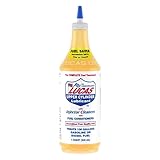
Last update on 2026-06-23 / Affiliate links / Images from Amazon Product Advertising API
If the PDF is very large, it may not load in the preview below.
Some older TSBs had multiple PDFs — visit the NHTSA Website to view all PDFs.
If the TSB PDF does not show, download or view it on the NHTSA Website.
Click on the (+) Plus Sign
Then Click on Associated Document(s)
Search NHTSA Database for Recalls
Search NHTSA Database for Vehicle Investigations
View Latest Vehicle Investigations
Search NHTSA Database for Vehicle Complaints
View Latest Vehicle Complaints
TSB/Document ID: WRD-20R
Replacement Service Bulletin Number:
MFR Communication Date: 2020-05-07
MFR Internal Campaign ID/Software Version:
Communication Type: Service Bulletin/Repair Instructions
NHTSA Components: EQUIPMENT ADAPTIVE/MOBILITY
MFR Component System:
MFR Component Subsystem:
Previous TSB | Next TSB |

- [2026 Top-Tier Hardware and Software Upgrade]: Topdon ArtiDiag900 Lite scanner has enhanced hardware and latest features, including Android 11.0, 5x faster CPU, 10000mAh battery for 12 hours of continuous operation, stable wireless diagnosis with Bluetooth 5.0, 8-inch touchscreen. Added bi-directional control, wireless diagnosis, battery testing (optional), and DTC repair guide
- [TOPDON Bidirectional Scan Tool]: This bidirectional obd2 scanner sends commands to the vehicle's ECU for active testing, enabling users to accurately and quickly locate faulty components such as injectors, coolant pumps, windows, wipers, headlights, mirrors, etc. The bidirectional control scanner is the ideal choice for workshops/automotive repair shops as it significantly reduces mechanic's diagnostic time.
- [Wireless Bluetooth Diagnostic Experience]: The AD900 Lite scan tool comes with a Bluetooth 5.0 VCI, supporting a wireless diagnostic range of up to 33 feet (10 meters), allowing you to diagnose without being confined to cables or tight spaces. Stable and fast wireless diagnosis provides a comfortable repair environment. It also offers VCI cables to increase connectivity options.
- [DTC Repair Guide Function]: Easily diagnose issues with your vehicle and receive guidance on repairs with the topdon scan tool's fault code definitions for all systems,maximize your diagnostic capabilities. This function is compatible with Chrysler
 /Dodge/Jeep/Fiat 2010-2014 and expanding with continual updates,the AritDiag 900 Lite car diagnostic scanner is the must-have tool for any technician or DIY enthusiast.
 - [OE-Level Full System Diagnostics]:AritDiag900 Lite full system diagnostic scanner can scan ALL available modules(Engine, Transmission, Airbag, ABS, ESP, TPMS, Gateway, Steering, Radio, Air conditioning, ect.) to✔read ECU info, ✔read/clear codes, ✔view live data stream, ✔retrieves freeze-frame, ✔perform active tests, and more. With just a simple click, it provides you with accurate and in-depth diagnostics.

- Dual WiFi & 10.1" Touchscreen: Provides a stable, high-speed wireless link 3x faster than bluetooth, and a responsive, professional interface. Topdon ONE obd2 scanner diagnostic tool ensures smooth, non-lagging diagnostic scan, boosting mechanic efficiency
- J2534 Pass-Thru Support: The included ONE VCI supports the J2534 standard, allowing it to function as a pass-thru device when paired with OEM diagnostic software.Through TOPDON’s RLink platform, technicians can perform dealer-level coding, expanding in-house capabilities without investing in multiple factory automotive scan tools
- OE Topology Mapping: Visualize the vehicle’s ECU network exactly as it’s built.Zoom, pan, and highlight specific modules to pinpoint component issues with precision.Topology mapping displays real-time communication between modules
- 50 Plus Service Functions: Covers high-demand services like ADAS calibration, DPF regen, TPMS reset, ABS bleed, and throttle adaptation.Expands your service menu, allows you to charge premium rates, and turns away zero jobs due to lack of tooling. Vehicle-specific functionality may vary
- Advaned ECU Coding: 10 of the most serviced brands in North America, including full ECU coding and flash hidden support for BMW, VW, Au-di, Benz, Porsche, Toyota, Ni ssan and more. Enables module replacement, feature customization, and personal settings with automatic backup or restore.Lets your shop safely offer high-margin customization services, attracting more customers and boosting profit

- Bi-Directional Control, Quickly Locate Problems: Turn your phone into a professional diagnostic tool. You can send commands from your phone to the ECU to test injectors, cooling fans, headlights, A/C clutch, windows, wipers, and more. See which one doesn't respond. Helps you quickly locate the problem and save time. No need to tear things apart, avoid blind disassembly.
- Flexible Subscription, Choose Advanced Features as Needed: TopScan Lite provides free-for-life access to core diagnostics, including full system scan, code reading, performance tests, and repair information. After purchase, advanced features (bi-directional control, service operations, live data, code clearing, and AI functions) are free-for-the-first-year. After the first year, if you want to use advanced features, you need to subscribe on a monthly, quarterly, or yearly basis. As new models and reset functions are updated, the tool will also be continuously upgraded.
- Full System Diagnostics, No Fault Hides: Unlike basic diagnostic tools that only cover 4 systems, TopScan can scan all systems. Read and clear trouble codes, view live data streams, and generate a complete vehicle health report – all issues are clear at a glance. Covers 10,000+ vehicle models and is compatible with 99.99% of vehicles.
- AI Assistant - TopFix: Think of TopFix as your personal AI mechanic. It leverages a repair database and OEM data to deliver clear, step-by-step repair solutions. Features include AI Q&A, one-click translation, and a full repair log, making your diagnostic process simpler and more efficient.
- 8+ Hot Resets, Keep Your Car in Top Shape: One-tap resets for oil, throttle, EPB, steering angle, DPF, ABS, BMS, and airbag. It enables car owners to easily perform essential maintenance, ensuring the vehicle stays in optimal condition and extends its service life.
Last update on 2026-06-23 / Affiliate links / Images from Amazon Product Advertising API
This product presentation was made with AAWP plugin.