NHTSA ID Number: 10172141
Manufacturer Communication Number: 20-SS-001HG
TSB/Document Date: 2020-03-06
Summary
This bulletin describes the requirements for all wheel alignment and/or vehicle tracking claims and best practices when diagnosing and conducting alignment-related repairs for all models and model years.
GROUP
NUMBER
SUSPENSION
DATE
20-SS-001HG
MODEL(S)
FEBRUARY 2020
Technical Service Bulletin
SUBJECT:
G80 (DH)
G90 (HI)
WHEEL ALIGNMENT REQUIREMENTS AND BEST PRACTICES
Description: This bulletin describes the requirements for all wheel alignment and/or vehicle tracking
claims and best practices when diagnosing and conducting alignment-related repairs for all models
and model years.
Applicable Vehicles: 17-18MY Genesis G80 (DH), 17-18MY Genesis G90 (HI)
NOTES
Aligner Calibration/Maintenance Schedule - All dealer alignment racks must be
calibrated by a representative every six months. This frequency allows the representative to
update vehicle specifications, and inspect and maintain equipment.
The Vehicle Alignment Data Sheet located at the end this TSB MUST be stored with the RO for
ALL alignment and/or vehicle tracking claims. (All models and model years)
Additionally, if an alignment is performed, a before and after measurements printout MUST be
stored with the RO for ALL alignment and/or vehicle tracking claims. (All models and model
years)
o The VIN MUST be included on the alignment printout.
Always refer to the applicable vehicle shop manual for alignment specifications.
For all alignment-related conditions, Dealers and Sublet Vendors must adhere to the Vehicle
Alignment Diagnostic Flowchart located on Page 2, and at the end of this TSB.
Test drives should be performed without passengers or excessive cargo in the vehicle.
The Absolute Steering Position (ASP) calibration must be performed using GDS on vehicles
equipped with Electric Power Steering (EPS/MDPS) after an alignment has been completed.
To perform a proper vehicle drift/pull diagnosis, use a Hunter GSP 9700 equipped with
StraightTrak.
Circulate To: General Manager, Service Manager, Parts Manager, Warranty Manager, Service
Advisors, Technicians, Body Shop Manager, Fleet Repair
SUBJECT:
WHEEL ALIGNMENT REQUIREMENTS AND BEST PRACTICES
Warranty Information:
Model
Op. Code
Operation
Op. Time
Causal Part
Nature
Code
Cause Code
G80 (DH)
Alignment
ALIGN52903A00
1.1
D44
ZZ5
G90 (HI)
Diagnosis/Repair
00000
The Vehicle Alignment Data Sheet must be completely filled and attached to the RO for any vehicle
drift/pull and/or alignment warranty claims.
If an alignment is performed, the machine printout displaying the before and after measurements
must also be attached to the RO, and the measurements must be included in the technician’s
comment section of the warranty claim.
Vehicle Alignment Diagnostic Flowchart
NOTES
When a vehicle is received with an alignment/drift/pull/steering wheel off-center condition, the
service writer should document the customer comments on the Vehicle Alignment Data Sheet.
Refer to the last 2 pages of this TSB for the detailed flowchart and data sheet.
Many issues can contribute to vehicle drift or pull, including tire pressure, tire uniformity, wheel
alignment, brake drag, road crown, cross winds, spring sag resulting in ride height differences,
cargo load/weight distribution, and more.
Consider all potential effects when diagnosing and confirming a vehicle drift or pull condition.
TSB #: 20-SS-001HG
Page 2 of 11
SUBJECT:
SUBJECT:
WHEEL ALIGNMENT REQUIREMENTS AND BEST PRACTICES
Road Test Procedure
NOTE
Perform road testing without passengers (driver only) and excessive weight.
1. Locate an acceptable vehicle testing road which meets the following criteria:
Recommendations
Cautions
- Road is straight for at least 250m (820 ft).
- Road grade: 1.2 to 1.7 degrees maximum. The flatter the
better.
- Lane width: 3 to 3.5 meters (10-11.5 feet).
- Conduct the test on a smooth, even road without bumps or
grooves.
- Do not test on a road with excessive grade/crown.
- Conduct the test on an uncrowded road.
- Do not test when strong winds are present.
2. Before test driving, verify that all tires are OEM, correctly installed (directional tires, correct
placement for staggered sizes, etc), and set to the correct inflation pressure.
NOTE
For best accuracy, use the GDS to measure tire pressures under TPMS system:
Current Data.
3. If equipped, turn OFF all driver’s assist systems.
4. Drive through the vehicle testing road at 40 MPH. Center the steering wheel, then slightly turn
the wheel ~3 degrees to the left and ~3 degrees to the right to identify the steering center.
With a light touch, center the steering wheel with the vehicle tracking as straight as possible.
NOTE
If the vehicle drives straight but the steering
wheel is off-center, perform an alignment to
correct the condition.
TSB #: 20-SS-001HG
Page 3 of 11
SUBJECT:
SUBJECT:
WHEEL ALIGNMENT REQUIREMENTS AND BEST PRACTICES
5. Note which direction the vehicle has a tendency to drift towards. If the vehicle tends towards
the left, place the vehicle on the right side of the lane. If the vehicle tends towards the right,
place the vehicle on the left side of lane as shown below.
NOTE
To ensure accuracy, repeat the test with the vehicle travelling in the opposite
direction (on the same road).
6. Take time measurements to determine how long it takes for the vehicle to move from one side
of the lane to the other side (case 1), as shown. Use the conditions in the table below to
confirm drifting or pulling condition.
Condition
The vehicle moves from
one side of the lane to the
other side of the lane
(about 1m or 3.3 feet).
Drift/Pull Criteria
Pass
The movement takes more than 6
seconds at 40 MPH.
Fail
The movement takes 6 seconds or
less at 40 MPH.
TSB #: 20-SS-001HG
Page 4 of 11
SUBJECT:
SUBJECT:
WHEEL ALIGNMENT REQUIREMENTS AND BEST PRACTICES
Alignment Angle Definitions
Camber The angle between the vertical axis of
the wheel and the vertical axis of the
vehicle when viewed from the front or
rear.
Caster
Positive (green line): The upper
sidewall of the tire is tilted away from
the center of the vehicle.
Negative (red line): The upper
sidewall of the tire is tilted towards
the center of the vehicle.
When viewing a vehicle from the side,
the angle of the steering axis is defined
by drawing a line through the upper and
lower ball joints (for a double wishbone
front suspension), or through the strut
tower mount and the lower ball joint (for
a MacPherson strut front suspension).
Positive (green line): The line leans
towards the rear of the car.
Negative (red line): The line leans
towards the front of the car.
TSB #: 20-SS-001HG
+º
0º
-º
-º 0º +º
Page 5 of 11
SUBJECT:
SUBJECT:
Toe
WHEEL ALIGNMENT REQUIREMENTS AND BEST PRACTICES
The amount the tires point inwards or
outwards when viewing the car from
above.
Positive (green line): Toe-in – the
tires point inwards towards the
center of the vehicle.
Negative (red line): Toe-out – the
tires point outwards away from the
center of the vehicle.
-º
0º
+º
Factors that Influence Vehicle Drift/Pull
Vehicle drift or pull can be attributed to several factors. Understanding what can affect drift/pull is
necessary to repair a vehicle with a drift or pull condition.
Air pressure – A front tire with low pressure can cause a vehicle to drift or pull towards that tire.
Alignment
Camber – A vehicle will drift or pull towards the side with more positive front camber. The camber
difference between the front tires should be less than 0.5 degrees.
Caster – A vehicle will tend to drift or pull towards the side with less positive caster.
Toe – Front and rear toe alignment will not affect vehicle drift or pull performance. Front and
rear toe alignment can cause conditions including steering wheel being off center, dog-tracking, tire
wear issues, and altered vehicle handling characteristics.
Steering Axis Inclination (SAI) – When viewed from the front of the vehicle, the angle formed by a
line drawn through the steering pivot axis with a line at true vertical. SAI is designed into the
suspension and aids in straight-line stability. This angle can be measured by an alignment
machine. For Hunter units, SAI is measured during the caster sweep process. When the SAI
difference between left and right sides is more than 1 degree, check for damaged components.
o If SAI is lower on one side of the vehicle, this may indicate a bent lower control arm.
o If SAI is higher on one side of the vehicle, this may indicate damage to the upper strut
mount.
TSB #: 20-SS-001HG
Page 6 of 11
SUBJECT:
SUBJECT:
WHEEL ALIGNMENT REQUIREMENTS AND BEST PRACTICES
Thrust angle – The direction the rear axle is pointing as a result of the rear toe angles. This can
result in an off-center steering wheel. To avoid this condition when performing an alignment, rear
camber and toe should be adjusted before adjusting the front alignment. After the rear camber and
toe are adjusted, center the steering wheel, lock the wheel in place, then adjust the front camber,
caster, and toe (if applicable).
Tires – Tires can have a significant effect on vehicle drift or pull. Arranging tires on a vehicle based
on the StraightTrak results can help improve a vehicle drift or pull condition. Tires contribute to
vehicle drift or pull through ply steer and conicity:
Ply steer – Ply steer is an inherent characteristic in a tire which creates a lateral force as the tire
rolls. Rotating the tires may aid in cancelling ply steer effects.
Conicity – Tire conicity refers to the shape of the tire, and how cone-shaped the tire is. This can
influence vehicle drift or pull. Conicity can be present in a new tire due to a manufacturing
condition, or in a used tire due to camber wear.
Weight – The amount of weight and where the weight is placed alters a vehicle’s alignment angles,
changing the drift/pull tendency. It is important to consider this when diagnosing a vehicle drift or pull.
Road Crown – Every vehicle has the tendency to follow road crown towards the low side of the
crown. It is important to road test a vehicle for a drift/pull condition on as flat a road as possible.
Brake Drag – If one side of the vehicle brakes are dragging, the vehicle can have a drift or pull
tendency towards that side. Inspect the brake system to ensure brake drag not a contributing factor
to drift or pull performance.
Cross Winds – Cross winds can push a vehicle towards one side of the road. Conduct road testing
by driving a vehicle in opposite directions to verify the effects of cross winds.
TSB #: 20-SS-001HG
Page 7 of 11
SUBJECT:
SUBJECT:
WHEEL ALIGNMENT REQUIREMENTS AND BEST PRACTICES
Proper Alignment Rack Usage and Maintenance
NOTE
Aligner Calibration/Maintenance Schedule - All dealer alignment racks must be
calibrated by a representative every six months. This frequency allows the
representative to update vehicle specifications, and inspect and maintain equipment.
These guidelines apply to Hunter Engineering alignment racks and wheel balancers that
feature StraightTrak.
The following items must be followed to ensure accurate alignment readings.
Rolling Compensation - The rolling compensation procedure is critical for ensuring an accurate
alignment. When performing rolling compensation, perform the following actions:
1. Set tire pressure to factory specification.
2. Verify that the vehicle is not excessively loaded. Remove any heavy items.
3. Ensure the lift is level so that the suspension and steering are in a neutral position.
4. Set the target levels before rolling compensation. After completing the compensation, do not
re-level the targets.
Roll the vehicle by turning the left rear tire. This
action will not disturb the suspension and steering
systems.
NOTE
Do not roll the vehicle by pushing or

- 📌【We are Here for You】Dear valued customer, please be...
- 🚀【5X Faster Next-Level Hardware, Same as MK900/ MX...
- 🔥【3000+ Active Tests = MK900/MK900BT but...
- 📢【2026 U.S. Version, All-in-One as MK808S/ MK808Z...
- 🔥【28+ Hot Services for 150+ Brands】Same as MaxiCOM...
If the PDF is very large, it may not load in the preview below.
Some older TSBs had multiple PDFs — visit the NHTSA Website to view all PDFs.
If the TSB PDF does not show, download or view it on the NHTSA Website.
Click on the (+) Plus Sign
Then Click on Associated Document(s)
Search NHTSA Database for Recalls
Search NHTSA Database for Vehicle Investigations
View Latest Vehicle Investigations
Search NHTSA Database for Vehicle Complaints
View Latest Vehicle Complaints
TSB/Document ID: 20-SS-001HG
Replacement Service Bulletin Number:
MFR Communication Date: 2020-02-05
MFR Internal Campaign ID/Software Version:
Communication Type: Service Bulletin/Repair Instructions
NHTSA Components: SUSPENSION
MFR Component System:
MFR Component Subsystem:
Previous TSB | Next TSB |
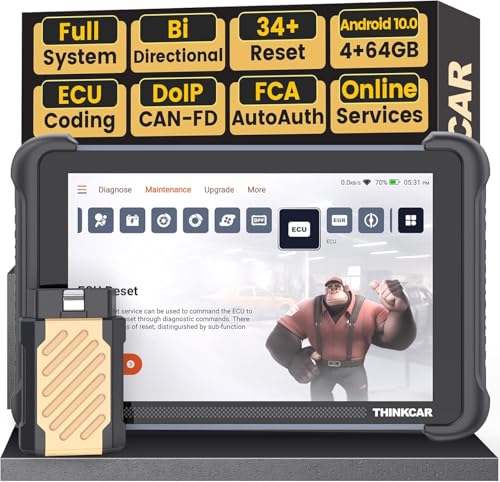
- [Notice] When you receive a used device, it may be a customer return resold by Amazon without inspection. You can exchange it for a new one through Amazon. As this situation is unavoidable, we sincerely apologize. For any issues, contacting us via Amazon's "Messages" is the best way. THINKSCAN 689BT Bidirectional Scan Tool Can Be Used Immediately After It is Turned On, Without Complicated Registration Process, Which is More Convenient & Quick.
- Full Bi-Directional Control & 3000+ Active Tests: Take control and test components like actuators, fuel injectors, relays, and cooling fans in real time. You’ll quickly see if the problem is in the part itself or the control module — saving you hours of guesswork and frustrating trial-and-error.
- Advanced ECU Coding Capabilities: Handle module matching and hidden feature activation with confidence. When you replace an ECU or want to customize settings, this obd2 scanner diagnostic bi directional tool gives you the professional-level capabilities you need without the dealership price tag.
- 34+ Useful Reset and Maintenance Functions: Complete everyday service tasks smoothly with a wide range of helpful reset and maintenance functions. Whether you’re keeping up with regular upkeep or tackling a specific job, this scanner makes maintenance simpler and less stressful for both DIYers and pros.
- Comprehensive Full System Diagnostics: Diagnose every major system — Engine, Transmission, ABS, SRS, TPMS, and more — all in one place. Finally stop wondering if you’re missing something important; get the full picture and clear codes with ease.
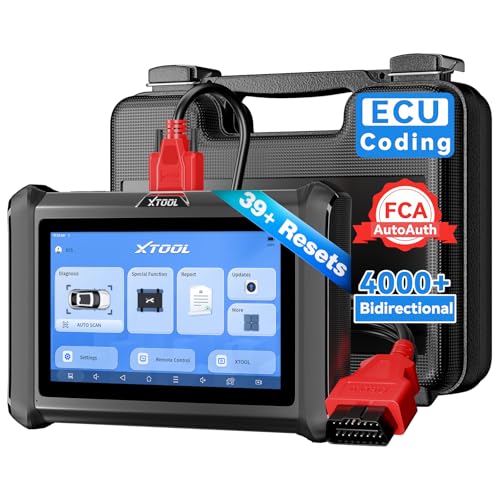
- Top Reasons to Choose the D7S OBD2 Scanner: XTOOL D7S car scan tool, an upgrade of XTOOL D7, offers comprehensive features for automotive technicians, workshops, and DIY enthusiasts 1. Upgraded Hardware: 2+64GB memory, rear camera, intuitive interface, foldable bracket 2. Complete Diagnostics: FCA
 Autoauth, OE-level all system scan, 39+ maintenance services, 4K+ bidirectional, CANFD/DoIP protocol 3. Advanced Capabilities: ECU coding, PMI functions 4. Wide Compatibility: Support 10,000+ models, covering 99% vehicle brands 5. Multi-language: Available in 22+ languages, No IP Restrictions 6. 3-Year Updates: Save 300 bucks on software updates for the latest features and optimizations
 - 2026 Upgraded D7S Car Scanner Features: The newly 2026 D7S V2.0 scanner for car brings exciting features for advanced vehicle diagnostics and enhanced user experience 1. FCA AutoAuth: Now supports FCA SGW module for Chrysler, for Jeep, for Dodge (2018+), for Fiat (2017+), enabling faster vehicle communication without gateway restrictions 2. PMI (Offline ECU Programming): Allows for Ford, for Lincoln, and for Mazda ECU programming for new modules 3. Optimized Diagnostic Report 2.0: Personalized reports with logos and customer info for auto shops. Note: Compatibility varies by cars, please check before order
- Cost-effective ECU Coding Scan Tool for Specific Brands: Enhance your vehicle's performance with XTOOL D7S! This obd2 scanner all systems bidirectional offers advanced capabilities at an affordable price, supports online for BMW, for Benz and offline for BENZ, for MIT, along with PMI functions for Ford, for Mazda, and for Lincoln. Ideal for technicians and DIY enthusiasts, this automotive scanner diagnostic tool optimizes vehicle performance and enhances the driving experience. Note: Not for all cars and modules, please send car VIN to check the compatibility before purchase
- OE All System Diagnostic & 8 Pids Graphing: XTOOL D7S is a comprehensive all system bi directional obd2 scanner that delivers dealer-level diagnostics, completely controlling over your vehicle’s performance and health. This automotive scan tool can read and clear DTCs, view live data and ECU information, retrieve freeze frames, and perform active tests and full obd2 functions. This bi-directional scan tool can can identify your vehicle's make, model, and year information with just one click and show up to 8 PIDs live data with options for CSV viewing, playback, and recording for in-depth analysis. It is easy-to-use for both professionals and beginners, helping pinpoint issues efficiently
- 3 Years Software Update, Value for Money: With 3 years of software updates and 22+ languages(no IP restrictions), XTOOL D7S auto scanner code scanner ensures ongoing compatibility for the latest car models and improved diagnostic functions. This all system vehicle diagnostic scanner comes with a 30-day return policy and a 24-month repair for dependable performance. XTOOL are dedicated to your satisfaction, so enjoy seamless support and lifetime expert assistance. Should you encounter any issues or concerns, don’t hesitate to reach out XTOOL. D7S with newest update with 22 languages freely transfer without authorization, check details from setting-language or from XTOOL
- 🔥 Historical lowest pr-ice now on sa-le--hot se-lling.
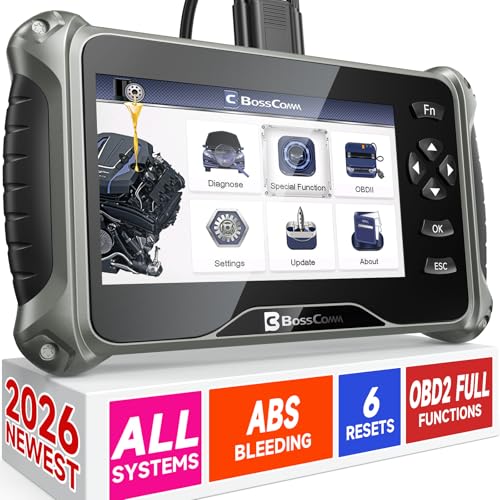
- 【🎈𝗜𝗙𝟳𝟰𝟱 𝗽𝗲𝗿𝗳𝗼𝗿𝗺𝘀 𝟲 𝗲𝘀𝘀𝗲𝗻𝘁𝗶𝗮𝗹 𝗿𝗲𝘀𝗲𝘁 𝗳𝘂𝗻𝗰𝘁𝗶𝗼𝗻𝘀—𝗔𝗕𝗦 𝗕𝗹𝗲𝗲𝗱𝗶𝗻𝗴, 𝗢𝗶𝗹 𝗥𝗲𝘀𝗲𝘁, 𝗘𝗣𝗕, 𝗦𝗔𝗦, 𝗧𝗵𝗿𝗼𝘁𝘁𝗹𝗲 𝗥𝗲𝗹𝗲𝗮𝗿𝗻, 𝗮𝗻𝗱 𝗕𝗠𝗦—𝗽𝘂𝘁𝘁𝗶𝗻𝗴 𝗽𝗿𝗼𝗳𝗲𝘀𝘀𝗶𝗼𝗻𝗮𝗹-𝗴𝗿𝗮𝗱𝗲 𝗺𝗮𝗶𝗻𝘁𝗲𝗻𝗮𝗻𝗰𝗲 𝗯𝗮𝗰𝗸 𝗶𝗻 𝘆𝗼𝘂𝗿 𝗵𝗮𝗻𝗱𝘀.】Spongy brakes? Stuck oil light? Parking brake won't release? Off-center steering? Rough idle after battery disconnect? Draining battery? IF745 handles all with a few taps. One tool covers six dealer-level resets, saving hundreds in labor costs. ❗ NOTE: Does NOT support bidirectional control, coding, or programming.
- 【✨ 𝗜𝗙𝟳𝟰𝟱 𝗴𝗼𝗲𝘀 𝗯𝗲𝘆𝗼𝗻𝗱 𝗯𝗮𝘀𝗶𝗰 𝗰𝗼𝗱𝗲 𝗿𝗲𝗮𝗱𝗶𝗻𝗴 𝘄𝗶𝘁𝗵 𝟭𝟬 𝗶𝗻𝘁𝗲𝗴𝗿𝗮𝘁𝗲𝗱 𝗳𝘂𝗻𝗰𝘁𝗶𝗼𝗻𝘀—𝗗𝗧𝗖 𝗟𝗼𝗼𝗸𝘂𝗽, 𝗜/𝗠 𝗥𝗲𝗮𝗱𝗶𝗻𝗲𝘀𝘀, 𝗙𝗿𝗲𝗲𝘇𝗲 𝗙𝗿𝗮𝗺𝗲, 𝗟𝗶𝘃𝗲 𝗗𝗮𝘁𝗮, 𝗢𝟮𝗦, 𝗢𝗕𝗠, 𝗘𝗩𝗔𝗣, 𝗮𝗻𝗱 𝗺𝗼𝗿𝗲. 】Pulling a code tells you something is wrong. IF745 tells you what the code means, when the fault happened, and what data surrounds it. Pass emissions with one I/M Readiness tap. Freeze the fault moment with Freeze Frame. Monitor live sensor data in real time. Turn cryptic codes into clear answers.
- 【🛒 𝗜𝗙𝟳𝟰𝟱 𝗽𝗲𝗿𝗳𝗼𝗿𝗺𝘀 𝗳𝘂𝗹𝗹-𝘀𝘆𝘀𝘁𝗲𝗺 𝗱𝗶𝗮𝗴𝗻𝗼𝘀𝘁𝗶𝗰𝘀 𝗮𝗰𝗿𝗼𝘀𝘀 𝗮𝗹𝗹 𝗺𝗼𝗱𝘂𝗹𝗲𝘀—𝗲𝗻𝗴𝗶𝗻𝗲, 𝗔𝗕𝗦, 𝗮𝗶𝗿𝗯𝗮𝗴, 𝘁𝗿𝗮𝗻𝘀𝗺𝗶𝘀𝘀𝗶𝗼𝗻, 𝘀𝘁𝗲𝗲𝗿𝗶𝗻𝗴, 𝘀𝘂𝘀𝗽𝗲𝗻𝘀𝗶𝗼𝗻, 𝗯𝗼𝗱𝘆 𝗲𝗹𝗲𝗰𝘁𝗿𝗼𝗻𝗶𝗰𝘀, 𝗮𝗻𝗱 𝗺𝗼𝗿𝗲. 】Warning lights on but you don't know why? Skip the $100+ diagnostic fee at the shop. Run a complete self-check from your driveway. IF745 reads and clears fault codes, retrieves ECU info, and displays live data from every accessible module—delivering a full vehicle health report in minutes, without leaving home.
- 【✅𝗜𝗙𝟳𝟰𝟱 𝗳𝗲𝗮𝘁𝘂𝗿𝗲𝘀 𝗮 𝟳-𝗶𝗻𝗰𝗵 𝗱𝗶𝘀𝗽𝗹𝗮𝘆, 𝗲𝗿𝗴𝗼𝗻𝗼𝗺𝗶𝗰 𝗱𝗲𝘀𝗶𝗴𝗻, 𝗪𝗶-𝗙𝗶 𝘂𝗽𝗱𝗮𝘁𝗲𝘀, 𝗮𝗻𝗱 𝘇𝗲𝗿𝗼 𝘀𝘂𝗯𝘀𝗰𝗿𝗶𝗽𝘁𝗶𝗼𝗻 𝗳𝗲𝗲𝘀 𝗳𝗼𝗿 𝗵𝗮𝘀𝘀𝗹𝗲-𝗳𝗿𝗲𝗲 𝗱𝗶𝗮𝗴𝗻𝗼𝘀𝘁𝗶𝗰𝘀.】Large screen means no squinting. Intuitive navigation and customizable data displays put key info at your fingertips. Wi-Fi delivers lifetime free updates without a computer. No recurring fees. No hidden costs. Just a reliable tool that works as hard as you do.
This product presentation was made with AAWP plugin.