
NHTSA ID Number: 10171239
Manufacturer Communication Number: 2019-0042
TSB/Document Date: 2020-02-10
Summary
To repair assembly of Front Cap and Roof.
If the PDF is very large, it may not load in the preview below.
Some older TSBs had multiple PDFs — visit the NHTSA Website to view all PDFs.
If the TSB PDF does not show, download or view it on the NHTSA Website.
Click on the (+) Plus Sign
Then Click on Associated Document(s)
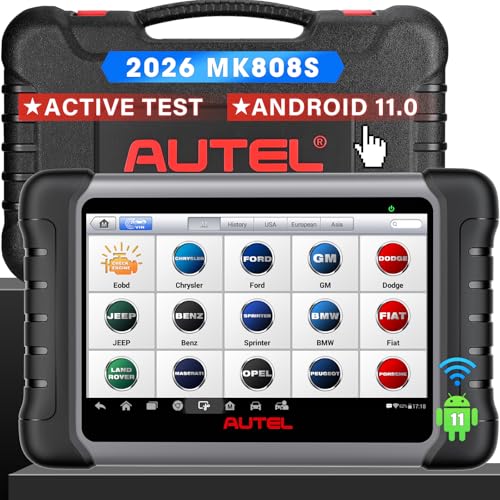
- 💝【Questions? We’re Here Anytime】MK808S is a...
- 🔥🔥🔥【2026 NEWLY RELEASED BI-DIRECTIONAL...
- 【28+ MOST POPULAR RESET SERVICE FOR 150 MAKES】Autel...
- 【ALL SYSTEM DIAGNOSTICS, FACTORY-LEVEL SCANNER】The...
- 【AUT0 SCAN & AUT0V1N, 10X FASTER】How much have you spent...

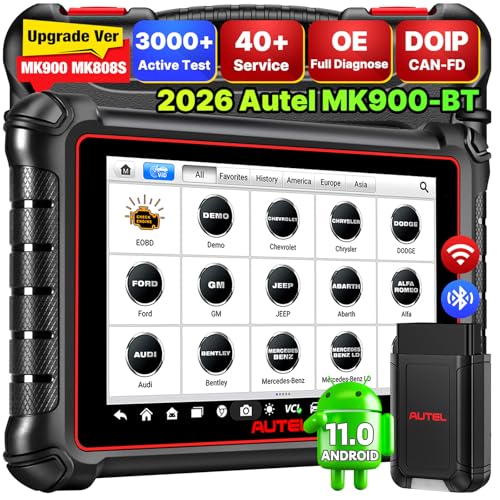
- 💯【Conta.ct us for Support Directly】If you met any...
- 🔥🔥🔥【2026 AUTEL FLAGSHIP MK900BT MK900-BT, NEW...
- 🚗【3000+ ACTIVE TESTS (50➡3000+), SAME AS MS...
- 🚗【40+ HOT SERVICES FOR 150 MAKES (28+➡40+)】Full...
- 🚗【OE ALL SYSTEM DIAGNOSE, AUTO SCAN 2.0: SCAN LICENSE...
This product presentation was made with AAWP plugin.
Search NHTSA Database for Recalls
Search NHTSA Database for Vehicle Investigations
View Latest Vehicle Investigations
Search NHTSA Database for Vehicle Complaints
View Latest Vehicle Complaints
TSB/Document ID: 2019-0042
Replacement Service Bulletin Number:
MFR Communication Date: 2020-01-28
MFR Internal Campaign ID/Software Version:
Communication Type: Service Bulletin/Repair Instructions
NHTSA Components: STRUCTURE
MFR Component System:
MFR Component Subsystem:
Previous TSB | Next TSB |
Date: January 17, 2020
Service Bulletin
Bulletin No.: 2019-0042
Product Models Affected:
AeroElite Ford , 2017MY
FORM Rev 2020-0127
Purpose:
To repair the second unit body front hood and roof attachment assembly.
Warranty Status:
Standard warranty coverage for all product models.
Tool(s) / Equipment Required:
Grinder
Cut-off Wheel
Grinding/Sanding Disk
Scraper
Chocks
Wire Brush
Safety Glasses (PPE)
Hearing Protection (PPE)
Gloves, Cut Resistant (PPE)
Gloves, Rubber/Chemical Resistant (PPE)
Dust Mask (PPE)
Tape Measure
Screwdriver, Phillips #2 & #3
Plastic Putty Knife
Steel Wool, as necessary
Utility Knife
Micro fiber Rag(s)
Paint Brush
Roller (fiberglass)
Sandpaper, 60 – 80 grit
Scissor
Heat Gun
Saw
1
Part(s) / Material Required:
Description
Part Number
Sikaflex 252 (or equivalent)
E52631
Isopropyl Alcohol
N/A
Paint Reducer
N/A
3.50 x 36.00 inch Plywood ¾ BCX
010670
3.50 x 7.00 inch Plywood ¾ BCX
010670
3M EXTREME SEALING TAPE WHT 2"
E55084
3M 94 Primer
E54713
Two-part adhesive
N/A
Everglass Short Strand Fiberglass Reinforcement Body Filler
N/A
Hardener
N/A
Fiberglass catalyst
N/A
Fiberglass resin
N/A
Chopped strand matt – fiberglass 3.0 oz/sq ft mat x .045”
N/A
H-mold
0020348
Estimate Time-To-Repair:
16 hours (not including dry time)
2
Quantity
A/R
A/R
A/R
2
2
A/R
A/R
A/R
A/R
A/R
A/R
A/R
2 YD
12 ft
General:
1. Park the vehicle on a flat level surface.
2. Chock wheels of the vehicle.
3. Ensure that the product use date is not greater than one (1) year from the expiration/manufacturing
date of adhesives and sealants. Ensure product handling and storage processes meet manufacturer
requirements.
4. Protect adjacent areas, from weld spatter and debris from grinding during hot work operations.
5. Protect adjacent areas, from overspray of paints and adhesives during assembly/finish operations.
6. Disconnect battery(ies), PCM/ECM/Modules, and other electrical device connections as described in
the Ford Service Manual for welding on the chassis.
7. Reconnect battery(ies), PCM/ECM/Modules, and other electrical device connections as described in
the Ford Service Manual for welding on the chassis only after completing all weld process operations.
8. Wear appropriate PPE during rework process operations.
9. Ensure a fire extinguisher or other fire control apparatus are available during hot work operations.
10. Follow OEM instructions regarding the removal and re-installation, or protection of alternate fuel cells
and/or components of the alternate fuel system installed on the vehicle when completing hot work
operations.
11. Move any hoses, electrical harnesses or wire, or other components from the immediate work area
where the hot work operations may be performed.
12. Follow appropriate industry standards and best practices for welding operations.
13. Follow manufacturer instructions for the handling and use of adhesives, sealants, and other materials
used in sub-assembly and assembly processes.
3
Procedure:
1. Remove passenger side stanchion & handrail assembly by removing screws in the end caps at the
ceiling, floor and sidewall. Reference Photos 1 & 2. Do not discard the screws. They will be reused
during reinstallation of the stanchion & handrail assembly.
Photo 1
Photo 2
2. Remove driver side stanchion assembly by removing screws in the end caps at the ceiling, floor and
sidewall. Reference Photo 3. Do not discard the screws. They will be reused during reinstallation of
the stanchion assembly.
Photo 3
4
3. Remove overhead handrail assembly(ies), as necessary, by removing screws in the end caps at the
ceiling. Reference Photo 4. Do not discard the screws. They will be reused during reinstallation of
the overhead handrail assembly.
Photo 4
4. Remove the overhead luggage bin assembly(ies), as necessary, by removing screws in the brackets
attached to the ceiling and the screws attaching the luggage rack to the sidewall. Reference Photo 5.
Do not discard the screws. They will be reused during reinstallation of the overhead luggage bin
assembly.
Note: Remove enough luggage bin sections to allow removal of the first section of interior ceiling
panel behind the driver area.
Photo 5
5
5. Remove the interior panel on the bulkhead behind the driver area by removing any retaining screws.
Reference Photo 6. Do not discard the screws. They will be reused during reinstallation of the
interior panel.
Photo 6
6. Remove the interior ceiling panel behind the driver area by removing any retaining screws.
Reference Photo 7. Do not discard the screws. They will be reused during reinstallation of the
interior panel.
Photo 7
7. If it is necessary to remove the interior ceiling panel over the driver;
a. Remove overhead lights by removing the retaining screws and disconnecting the electrical
plug. Reference Photo 8. Do not discard the screws. They will be reused during
reinstallation of the light fixtures.
b. Remove the ceiling panel(s) over the driver by removing any retaining screws. Reference
Photo 8. Do not discard the screws. They will be reused during reinstallation of the ceiling
panel.
6
Photo 8
8. Remove any screws holding electrical harness clamps to the ceiling/sidewall and move the harness
out of the way. Reference Photo 9.
Photo 9
NOTE
Protect adjacent areas and area under the joint from sanding operations,
fiberglass resin or from overspray of paints and adhesives
during assembly/finish operations.
9. If there is plywood in the recess area of the front cap/roof joint seam with a fiberglass matte overlay,
remove the fiberglass matte overlay and plywood pieces along the ceiling. Reference Photo 10.
Photo 10
10. If there is a fiberglass matte underneath the plywood pieces covering the front cap/roof H-mold seam,
remove the fiberglass matte, exposing the H-mold. Reference Photo 11.
7
Photo 11
11. Carefully cut the H-mold on the front cap/roof joint area from the top of window on the driver sidewall
to the top of entry door on the passenger side, and remove the H-mold from the joint area using a
diamond saw. Reference Photo 12.
Note: There should be 0.12 – 0.25 inch gap between the front cap edge and the roof edge.
Photo 12
12. Sand the interior side of the front cap and roof along the seam where the H-mold has been removed.
Ensure sanding results in the entire area between the front hood hoop and the roof offset has a rough
surface for installation of the fiberglass matte. Reference Photo 15.
13. Measure the gap between the top of the front hood hoop and the bottom of the fiberglass interior.
Ensure the gap is 0.38 inches minimum. Reference Photo 13.
8
Photo 13
14. Install new H-mold into the gap between the front cap edge and the roof edge.
Note: Using a heat gun, ensure H-mold seams are tight and there are no gaps, and the H-mold lays
flat against the interior and exterior surfaces of the fiberglass components.
15. Remove all dust and debris from the plywood joint and sanded roof area.
16. Wipe the areas with acetone to remove find particles.
NOTE
Protect adjacent areas and area under the joint from sanding operations,
fiberglass resin or from overspray of paints and adhesives
during assembly/finish operations.
17. Cut the fiberglass matting in strips approximately 6.00 inches wide by 24.00 inches long (maximum).
18. Mix fiberglass resin to the same formula as before, 20 cc of catalyst to 2 quarts of resin.
19. Saturate the fiberglass matting with the fiberglass resin mixture.
20. Apply fiberglass matting to seam in the recessed area covering the H-mold using a smoothing back
and forth motion working from one end to the other. Apply and smooth the fiberglass matte from the
front hood hoop to the rear of the vehicle. Reference Photo 14 for a representation of the process.
Roll the fiberglass matte to remove air bubbles.
9
Photo 14
21. Apply the 6.00 inch by 24.00 inches pieces of saturated matting, as needed, to cover the new H-mold
installation.
22. Allow to dry 6 hours minimum.
23. Sand off bumps, hairs or extrusions that may show through headliners.
Ensure sanding results in the entire area between the front hood hoop and the roof offset has a rough
surface for installation of the fiberglass matte.
Note: The entire area at the seams will be slightly raised and is normal.
24. Cut two pieces of 0.75 inch thick plywood 3.50 inches wide x 36 inches long, making a 45 degree
chamfer on one 36.00 inch length.
25. Cut two pieces of 0.75 inch thick plywood 3.50 inches wide x 7.00 inches long, making a 45 degree
chamfer on one 36.00 inch length.
26. Make rough the flat surfaces of the plywood using a 60 – 80 grit sandpaper.
27. Remove all dust and debris from the plywood.
28. Apply the two-part adhesive to the 3.50 x 36.00 inch cut pieces of plywood on the unchamfered side
and insert in the recess just behind the front hood hoop, pushing the plywood against roof offset.
Hold into place. Reference Photos 15 & 16.
Note: Ensure the chamfered edge is not pushed against the roof offset.
Note: Place the plywood into the recess quickly to ensure good adhesion to the fiberglass.
10
Roof offset
Photo 15
Photo 16
29. Apply the two-part adhesive to the 3.50 x 7.00 inch cut pieces of plywood on the unchamfered side
and insert in the recess just behind the front hood hoop, pushing the plywood against roof offset.
Hold into place. Reference Photos 17.
Note: Ensure the chamfered edge is not pushed against the roof offset.
Note: Place the plywood into the recess quickly to ensure good adhesion to the fiberglass.
Roof offset
Insert here
Photo 17
30. Allow plywood joint to dry for at least 2 hours with braces in place.
11
31. Remove the braces and supports.
NOTE
Protect adjacent areas and area under the joint from sanding operations,
fiberglass resin or from overspray of paints and adhesives
during assembly/finish operations.
32. Sand the fiberglass ceiling 5.00 – 6.00 inches rearward of the plywood joint from the driver sidewall to
the passenger sidewall. Reference Photo 18. Ensure sanding results in the entire area behind the
roof offset has a rough surface for installation of the fiberglass matte.
5.00 in
Photo 18
33. Remove all dust and debris from the plywood joint and sanded roof area.
34. Wipe the areas with acetone to remove find particles.
35. Apply 1.50 inch wide masking tape over the seam between the roof ceiling offset and the plywood
insert. Reference Photo 19.
12
Photo 19
36. Cut the fiberglass matting in strips approximately 10.00 inches wide x 24.00 inches long (maximum).
37. Mix fiberglass resin to the same formula as before, 20 cc of catalyst to 2 quarts of resin.
38. Saturate the fiberglass matting with the fiberglass resin mixture.
39. Apply fiberglass matting to seams using a smoothing back and forth motion working from one end to
the other, ensuring the fiberglass matting is laid flat to the front hood ceiling over the top of the front
hood hoop. Apply and smooth the fiberglass matte from the front hood hoop to the rear of the
vehicle. Roll the fiberglass matte to remove air bubbles. Reference Photo 20.
Photo 20
40. Apply the 10.00 inch by 24.00 inches pieces of saturated matting, as needed, to cover the plywood
installation.
41. Allow to dry 6 hours minimum.
13
42. Sand off bumps, hairs or extrusions that may show through headliners.
Note: The entire area at the seams will be slightly raised and is normal.
43. Remove all dust and debris from the repaired area, cleaning the unit in preparation for reinstallation of
removed components and assemblies.
44. Reinstall any electrical harness retention clamps, reversing operations completed in Step 8.
45. Reinstall ceiling panel(s) and overhead light assemblies over the driver, reversing operations
completed in Step 7.
46. Reinstall ceiling panels behind the driver, reversing operations completed in Step 6.
47. Reinstall interior panel on the bulkhead behind the driver area, reversing operations completed in
Step 5.
48. Reinstall overhead luggage bins, as applicable, reversing operations completed in Step 4.
49. Reinstall overhead handrails, as applicable, reversing operations completed in Step 3.
50. Reinstall driver stanchion, reversing operations completed in Step 2.
51. Reinstall passenger stanchion and handrail, reversing operations completed in Step 1.
52. On the exterior of the vehicle along the front cap/roof seam, apply Sika 252 sealant along either side
of the H-mold.
53. Allow Sika 252 to dry 2 hours minimum.
54. Wipe area of front cap/roof assembly seam where the 3M Sealing Tape is to be applied, using
Isopropyl Alcohol. Reference Photo 21 for a representation of the process step.
Photo 21
55. Apply 3M 94 Primer to both surfaces. Allow time to completely dry prior to tape application.
Reference Photo 22 for a representation of the process step.
14
Photo 22
56. Apply 3M Sealing Tape to the front cap/roof from the drip rail on the driver sidewall to approximately
the top of entry door, laying it over the top of the H-mold. Reference Photo 23 for a representation of
the process step.
Photo 23
57. Firmly press tape down along the seam and on either side of the H-mold. Reference Photo 24.
Photo 24
58. Clean the vehicle removing all dust and debris from the repair operations.
15
Body Paint
If Body Paint is required;
1. Ensure metal and/or fiberglass areas being painted have been appropriately prepped for painting,
ensuring the area stays clear of debris and any contaminants.
2. Protect adjacent areas from paint overspray.
3. Apply paint to metal and fiberglass areas to match surrounding area, allowing adequate time to dry
prior to any subsequent coats of paint being applied.
4. Apply additional coats of paint as desired.
5. If there are graphics applied to the fiberglass of the vehicle, ensure to protect from paint overspray, or
repair as required.
Contact Information:
Contact ElDorado Customer Service, 1655 Wall Street, Salina, KS 67401; or by calling (785) 827-1033 /
(800) 955-9086; or by Email: [email protected]; or by Fax: (785) 823-9471.
16
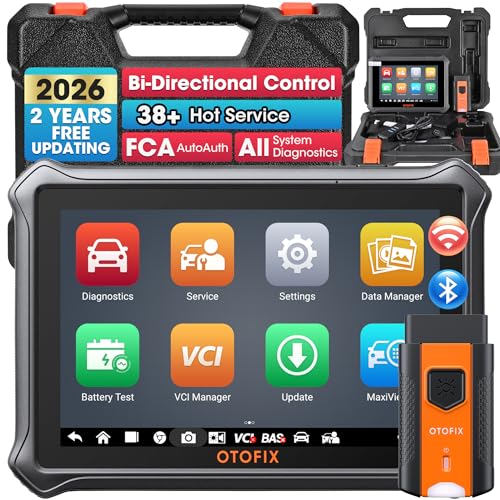
- 🎉[OTOFIX D1 Lite, Perfect Cost-effective Diagnostic Tool]: OTOFIX D1 Lite, a newest bidirectional scan tool from OTOFIX company, is a great choice for DIYers and repair shops. 👉This obd2 scanner diagnostic tool packs all practical functions: OE level all systems diagnoses, Bi-Directional Control, 38+ reset services fixing 99% of common problems, support DoIP & CANDF protocols and FCA
 AutoAuth, high-end hardware configuration. Worldwide vehicles and 🔥2 Years Free Updating🔥 covered.
 - 🎉[Bi-Directional Scan Tool, Active Test]: OTOFIX D1 Lite bluetooth obd2 scanner can also command ECUs and monitor the operation of the actuators to track down the problems of certain parts, like windows, sunroof, wipers, fuel pumps, etc., saving repair time & trouble. This makes OTOFIX D1 Lite the most cost-effective bidirectional scan tool.
- 🎉[2026 Newest, 38+ Hot Reset Functions]: Equipped with 38+ reset functions in one, the OTOFIX D1 lite automotive scanner diagnostic tool allows you to troubleshoot 99% of common vehicle problems. You can use this car diagnostic scanner holding enough functions to easily repair common vehicle models in your repair shops. Including Oil Reset, Injector Coding, Throttle, DPF Reset, SCR Reset, Gear Learning, Clutch Learning, Suspension, etc. Note* Reset functions vary by model.
- 🎉[OE Level Full Systems Diagnostics]: Unlike the 2-system and 4-system diagnostic tools, the OTOFIX auto scan tool can complete comprehensive system diagnostics within 5 minutes. It accesses and scans all available onboard systems like for Engine /AT /ABS /EPB /BMS /TPMS /SRS /SAS /Audio System /BCM /Air Conditioning / etc., to read & clear codes, view live data, and check ECU information. Note: Active test is not involved.
- 🎉[Powerful Hardware Configuration]: Designed with a fashion appearance & a 7” touchscreen and a weight of 463g, this OTOFIX D1 Lite OBD2 diagnostic scanner scan tool is convenient for everywhere and easy to use & store. Android9.0 OS and 2+64GB memory enhance multi-task smoothness and diagnostic operation, no more wasting too much time. 5800mAh battery allows hours-lasting use. WiFi & VCI1 also bring faster communication for your diagnostics.
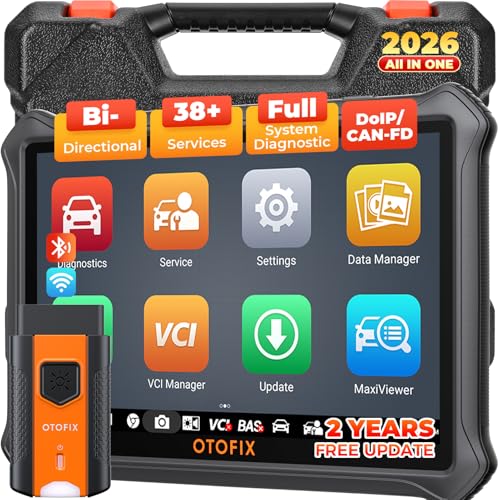
- 🏆【2026 TOP OBD2 Scanner Diagnostic Tool】OTOFIX D1 Lite wireless obd2 scanner has upgraded hardware configuration and car coverage. The newly upgraded D1 Lite with 🔥OS Android 9.0🔥1.5Ghz 4 core high efficiency processor🔥2GB RAM+64GB ROM large storage🔥5800mAh large battery, more stable and longer lasting diagnostics🔥 38+ Reset🔥action tests🔥full system diagnostic🔥Supports MV105 endoscope🔥21+ Language Supports🔥100000+ vehicle coverage to meet all your daily maintenance needs.
- 👍【Bi-Directional Control / Active Test】D1 Lite obd2 scanner has bidirectional control(worth $300+), which is the most beloved feature among mechanic. If your headlights or car windows are broken, going to a repair shop will cost a lot of money. You can use D1 Lite to send execution commands to the ECU module and identify the repair status. Such as ABS, car windows, doors, valves, wipers, headlights, etc., effectively shorten diagnostic time and reduce diagnostic costs.
- 🔥【All Systems Diagnostics, In-depth Checking】This advanced OBD2 Scanner D1 Lite can perform OE-level diagnosis of all systems including engine, transmission, airbag, ABS, ESP, TPMS, gateway, steering, radio, and air conditioning for more than 100 brands. This diagnostic scanner supports essential functions, such as reading ECU version info, reading and clearing fault codes, and reading data streams.With just a simple click, it provides you with accurate and in-depth diagnostics.
- 🏆【38+ Reset Hot Functions】For repair workshops, holding an OTOFIX D1 Lite Auto scanner is a strong advantage over others. Its 38+ maintenance functions provide various solutions for all module repairs, including Oil Reset, TPMS Reset, Injector Coding, Suspension, Throttle Matching, etc., which will usher your repair business to a new pinnacle. Continuously updating will never make the functionality & compatibility out-of-date.
- 🏆【150+ Models, 10000+ Car Coverage & 16 Languages】D1 Lite is a comprehensive car diagnostic scan tool, help you to troubleshoot car issues fast for 95% US, European, Asian auto makes. ✅ With frequent updates and optimizations allow D1 Lite to cover more vehicles to meet your needs. ✅ Multilingual menu allows auto mechanics around the world to use it without language barriers. 🚩Note: Kindly send us the S/N of the device to authorize new language updates before changing the menu language.
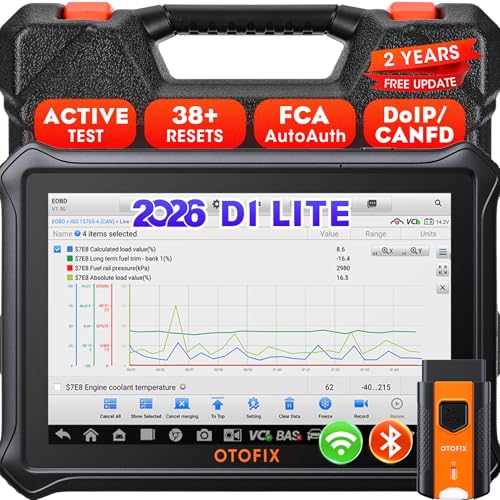
- 【2026 OTOFIX D1 Lite Gives the Best Value for Money】OTOFIX D1 Lite bidirectional scan tool is more FASTER and SMARTER with 2026 Enhanced Hardwares & New Functions! 👍Alternative Bluetooth +USB connect 👍2G+64GB 👍4x ARM Cortex-A35 (1.5GHz) Processor (5X Faster CPU) 👍Android 9.0 OS 👍5G GHz WiFi 👍CANFD&DOIP 👍 FCA AutoAuth 👍38+ Services 👍3K+ Bi-Directional Control 👍Full Systems Diagnose 👍2 Years Update 👍150+ Vehicle Coverage.
- 👍【Active Tests】 OTOFIX D1 Lite is a bi-directional scan tool that can send commands to, and also receive information from vehicle control modules. This way, you can quickly locate and repair faulty auto parts. For Example: send direct commands to ask the vehicle to turn on/off the radiator fan, lights, sound horn, fuel pump, modulate throttle, open/close windows, operate mirrors and more. *Note that only available tests will be displayed in the menu.
- 👍【38+ Service Functions】 OTOFIX D1 Lite scan tool offers 38+ of the hottest service functions that are commonly used for car repairs. That include Oil reset/SAS/EPB/BMS/Throttle/ABS bleeding, and 2065-new SUS/ADBLUE/NOX/Headlamp resets (and more) to help restore your car status after repairs are done. Compared to other diagnostic scanners for cars, the OTOFIX D1 Lite scanner is much more fully-featured. *Note that specific functions available depend on the make/model/year of your car.
- 👍【All System Diagnostics + Cloud Report Management】 This 2026 car scanner OTOFIX D1 Lite provides troubleshooting and data for all ECUs: read/clear DTCs, view graphic live data/VIN, and locate system faults for safe driving. With Cloud Report Management, you can save detailed reports to cloud servers and easily shared them with others via QR codes/emails/text messages. Others can access these reports from any device (smartphones/tablets/PCs …) anytime, and you can better manage repair work.
- 👍【99% Car Coverage】 This one-station car scanner diagnostic for all cars works on 150+ major car brands across the world. 1) It supports CAN-FD/DoIP protocols: compatible with GMCAVALIER/TRAX/Encore/Envision/GL8(LSY)/CT4/CT5 after 2019; Volvo after 2018; Land Rover/Jaguar after 2017; and BM.W F/G all chassis. 2) For models equipped with security modules (such as Renault & 2018+ FCA SGW), its built-in AutoAuth allows you to easily break diagnostic barriers after registration.
This product presentation was made with AAWP plugin.
Last update on 2026-05-12 / Affiliate links / Images from Amazon Product Advertising API