
NHTSA ID Number: 10167691
Manufacturer Communication Number: AJA04874
TSB/Document Date: 2019-11-16
Summary
"Job Aid - Next to intermittent electrical issues, rattles and squeaks are probably the most difficult issues to troubleshoot. When we asked the best rattle and squeak technicians to name their biggest challenges, they consistently named two difficulty areas: - Duplicating the noise. - Isolating the source of the suspected noise. They also mentioned that in some cases, they repaired a different noise than the one shown on the RO. They also wasted time in disassembly while tracing the source of the noise. This resource guide is designed to address these concerns by providing specific troubleshooting techniques to isolate and repair vehicle rattles and squeaks."
Job Aid
November 2019
Version 3
Noise Issues Part 1- Identification
INTRODUCTION
Next to intermittent electrical issues, rattles and squeaks are probably the most difficult issues to troubleshoot. When we
asked the best rattle and squeak technicians to name their biggest challenges, they consistently named two difficulty
areas:
•
Duplicating the noise.
•
Isolating the source of the suspected noise.
They also mentioned that in some cases, they repaired a different noise than the one shown on the RO. They also
wasted time in disassembly while tracing the source of the noise.
This resource guide is designed to address these concerns by providing specific troubleshooting techniques to isolate
and repair vehicle rattles and squeaks.
OVERVIEW
There are two rattle and squeak issues, language and location.
Language refers to finding a descriptive word for abnormal noises. For example, one person may call a noise a rattle,
while another person says it is a clunking noise.
This issue is magnified when we add the service advisor to the information loop. Both the service advisor and customer
are probably not technically oriented, so they don't use the same language as technicians.
Location refers to identifying the correct noise. In some cases, technicians repair a different noise than the one listed in
the R.O. This occurs because people hear the same rattle or squeak differently. Every person's hearing is sensitive to
different frequencies, and as people get older, they may lose their ability to hear high frequencies.
In many cars, the technician can hear several abnormal noises while driving the vehicle. Depending on the issues, the
noise complaint on the R. O. may be barely audible over other noises.
To address language and location issues, we recommend driving the car with the customer present to help hear and
identify the noise issue. If a test drive with the customer isn't possible, we've included a chart designed to help improve
communication. You can use it to help standardize body noise names, and to gather hints regarding the sources of
various noises.
©
2019 American Honda Motor Co., Inc. — All Rights Reserved
Page 1 of 9
NOISE NAMES
Noise Name
Sounds Like
Banging
Slamming a wooden screen door
Bonging
Striking a large gong
Booming
Distant thunder
Buzzing
A swarm of bees
Chafing
Rubbing dry hands together
Chattering
Wiper sweeping a dry windshield
Chirping
A cricket
Clacking
A railroad car rolling down the track
Clanging
A cow bell or triangle
Clanking
Dropping a wrench on concrete
Clapping
Clapping hands
Clashing
Striking cymbals together
Clattering
Dropping wood blocks on a concrete floor
Clicking
Flipping a switch on and off
Clinking
Empty bottles hitting each other
Clunking
Pushing a solid wood door closed
Cracking
Breaking a tree branch
Crackling
Logs burning in a fireplace
Creaking
Opening a rusty hinge
Croaking
A bullfrog calling
Crunching
Walking on gravel
Droning
A prop plane flying in the distance
Drumming
Fingers drumming on a desk.
Fluttering
A flag flapping in the wind
Grating
Raking a shovel over pavement
Grinding
A running garbage disposal
Groaning
Stepping on a loose floorboard
Growling
A dog expressing displeasure
Page 2 of 9
Noise Name
Sounds Like
Gurgling
Water flowing in a pipe
Hissing
Air leaking from a tire
Hooting
An owl call
Howling
Wind blowing through a door gap
Humming
An energized transformer
Jingling
Loose coins in a pocket
Knocking
Knuckles rapping on a door
Moaning
Saxophone playing a low note
Oil-canning
Flexing a metal sheet
Pattering
Rain Drops on a window pane
Pinging
Marbles rolling around in a can
Popping
Opening a champagne bottle
Pounding
Slamming your fist on a desktop
Rapping
A gavel striking a sound block
Rattling
Shaking a box of loose candy
Roaring
River rapids
Rumbling
Clothes tumbling in a dryer
Scratching
Rubbing two pieces of sandpaper together
Screeching
Running your fingernails across a chalkboard
Slapping
Hitting the water with the flat side on an oar
Squeaking
Wet rubber soles on a hardwood floor
Squealing
Tires making a hard, fast turn
Ticking
A mechanical clock keeping time
Whining
A distant siren
Whistling
A tea kettle at full boil
Zapping
A short, quick buzz
Page 3 of 9
TROUBLESHOOTING BODY NOISES
This section of the resource guide reviews the five steps required to effectively repair vehicles:
Gathering Information From the Customer
The initial information gathering stage is the most important step in this whole process. As we explained, identifying the
correct noise is essential.
Before performing a test drive, you need to know the exact driving conditions required to reproduce the noise.
In addition, it is also important to find out if there are any special circumstances required to duplicate the noise such as:
•
What accessories are installed?
•
Does the car need to sit before creating the noise? (If so, how long?)
•
How warm is the car when the noise first becomes noticeable?
•
Does the car need to be driven for a period of time before the noise appears?
•
What types of weather conditions are present when the customer hears the noise?
•
What are the ambient temperature and humidity levels?
•
How much weight (people, passengers, and trunk contents) is in the car when the noise occurs?
•
How is the weight distributed?
All of these factors can have a dramatic effect on the success of your noise duplication and isolation efforts.
Page 4 of 9
Duplicating the Noise
Next, you need to duplicate the noise. Duplicating a body noise is usually difficult; you need to get as much information
from the customer as possible, and be able to consistently duplicate the noise. If you can't recreate the noise, you can't
isolate the issue.
The idea is to find a way to duplicate the noise and make the noise repeatable. If you accomplish this, you can isolate it
and identify the source.
Sometimes you may have trouble duplicating the noise on a consistent basis, but you heard the noise at least once. In
this situation, look for an alternative way to consistently turn the noise "on". You have two options: Dynamic and Static.
Dynamic approaches require you to drive the car. Look for roads and locations that create the noise in a consistent
manner. Once you find a location that reliably creates the noise, you can return to the same spot after repair and confirm
the noise is gone.
You can create creaks and squeaks dynamically by entering or exiting a driveway with an elevation change. If your first
try does not work, try the same action at different angles, or use the driveway ramp to place one wheel on the curb.
Another option is to slowly drive over speed humps. All of these actions are designed to make the body twist and
generate noise.
Other dynamic options include driving the car backwards, quickly applying the throttle or brakes at low speeds, and
applying the parking brake with the car stopped, and then loading the engine with the throttle in both forward and
reverse.
Static approaches are used with the car parked in your stall. This could include applying loads to the chassis with a jack
or bouncing the car up and down to move suspension components.
In your stall, you can try several static duplication techniques. For certain types of noises, such as buzzing and rattles,
putting the car on the hoist and hitting each tire with a large rubber hammer may duplicate suspension noises. In the
interior, you can pound on the suspected area with a closed fist.
Body pops and creaks usually require flexing the body to apply stress to the body joints. To do this in your stall, place
someone in the driver's seat and lift each corner of the car with a hydraulic jack. With a corner fully lifted, "bounce" the
other corners of the vehicle while someone else listens for noises. Once you've checked that corner, quickly let it down
and repeat this check for the other corners of the car.
Static techniques are extremely helpful since they don't require you to drive to a test spot, and you don't need to remain
in the driver's seat during your checks.
Locating the General Area of the Noise
Body noise issues may be caused by interior trim rubbing together, or from exterior subassemblies, chassis
components, or sheet metal issues.
The difficulty lies in isolating the noise down to a specific location. For example, what sounds like a noisy spot weld
could be caused by a metal bracket touching a body panel. In addition, a noise generated at one spot may broadcast
from a different location. For example, a noise heard near the top of a "B" pillar may actually occur at the base of the
pillar.
In fact, noise is transmitted throughout the body in much the same manner that sound carries between two cans
connected with a string. Body sheet metal is an excellent sound transmitter, which means the driver's seat receives
sounds from all directions.
Page 5 of 9
Isolating From General to Specific
Once you have duplicated a noise issue, there are two methods to locate the source.
The first method is to isolate using your ears, and then press and probe suspected parts until the noise disappears. You
can also remove parts and drive the vehicle to see if the noise goes away. We call this the push, pull, or remove option.
The second method uses a listening tool to narrow down the location of the noise. From there, we are back to the push,
pull, or remove option.
When looking for the source of a noise, it is important that you only remove one part at a time whenever possible. If you
remove multiple parts and the noise turns off, you don't know which one caused the issue.
Listening Tools
Listening tools include the automotive stethoscope, along with an electronic stethoscope or Steelman ChassisEar
listening tools.
Automotive stethoscopes are similar to doctor's stethoscopes, but come with special tips to help probe the vehicle.
These include a solid contact probe, or an extension tube to listen inside boxed sheet metal sections.
Electronic stethoscopes are also available to probe for noises. Using this electronic tool, you shut out surrounding noise
with the headphone cups, and can adjust or amplify vehicle sounds.
If you wish to use these stethoscopes during dynamic testing, it becomes a two-technician job. One tech may have to
move all over the passenger compartment while the second tech drives the car under the conditions required to
duplicate the noise.
Page 6 of 9
To help locate the source of transmitted sounds, we recommend an electronic listening device with multiple microphones
such as the Steelman ChassisEar. During use, the technician can choose one microphone at a time, and compare noise
intensity from point to point. This allows technicians to identify the loudest test point, and then move other microphones
closer to the noise source to narrow down the transmission point. The goal is to find the spot where the noise is loudest
and clearest.
The ChassisEar microphones mount on large alligator clamps. The microphones rely on sounds transmitted to the
component they are clamped to, rather than sounds transmitted through the air. This makes them very effective when
listening for body creaks caused by noisy spot weld and metal contact issues.
Isolating the Specific Cause
Regardless of which listening method that you use (stethoscope, ChassisEAR, etc.), here are some common noise
isolation techniques:
•
Visually inspect the part for correct alignment and positioning.
•
Physically check the part for loose mounting tabs or bolts.
•
Place tension on the part to see if the noise goes away during the test drive.
•
Remove the part from the car and retest for the noise.
To help with these isolation techniques, we also interviewed our factory, engineering, and service operations people.
Based on this information, we created the noise example chart on the next page, which provides another resource to
narrow and isolate vehicle noises.
Page 7 of 9
NOISE EXAMPLES
Interior Noises
Noise Type
Possible Causes
Noise Examples
Buzz
Rapid movement of light components
at a high frequency due to looseness
or touching another component.
Combination-meter to meter panel
Chirp
Rapid movement of parts that are tight Combination meter to meter panel
and close together.
Creak
Two materials moving together at a
slow speed while in firm contact with
each other.
A & B pillar noises
Squeak
Two pieces of material in contact with
each other. The type of material
contact can be described as follows:
Rubber pieces rubbing together
•
Plastic material to plastic material
contact
Combination meter to meter panel
•
Metal parts to metal parts
Bearings and seat tracks
•
Plastic material to metal parts
Door liner touching the metal panel
with the felt missing
•
Foam material to metal parts
Seat back
Jingle
Very loose parts or detached parts.
Very loose center dash bolt (washer
rattling around)
Rattle
A clearance issue between two parts.
Door lock rod rattle
Rolling Object
Detach parts such as bolts rolling
around.
A detached bolt rolling around the
trunk
Stick and Release, Pop
A soft material that sticks to a harderinflexible material when undergoing
slow, moderate to large movement.
Instrument panel support
Tick
See Stick and Release
Twang
Steel or spring steel vibrating.
Knee bolster
Page 8 of 9
Exterior Noises
Noise Type
Possible Causes
Noise Examples
Clunk
A heavy object hitting another heavy
object (one object is usually solidly
mounted).
Strut damper, loose or broken mounts
Clatter
Loose parts inside another part.
Brake pads and shoes
Squeak or Creak
Rubber to metal movement.
Stabilizer bar bushings
Groan
Metal to rubber (partially lubricated) A
longer noise.
Damper assembly issues
Grunt
Metal to rubber (unlubricated), a brief
noise.
Stabilizer bar bushings
Knock
Similar to a clunk but more sharp.
Loose fuel filter bracket
Rattle
A clearance issue between two parts
Moon roof loose
Screech
Unlubricated metal to metal contact
Disc brake dust shield
END
Page 9 of 9
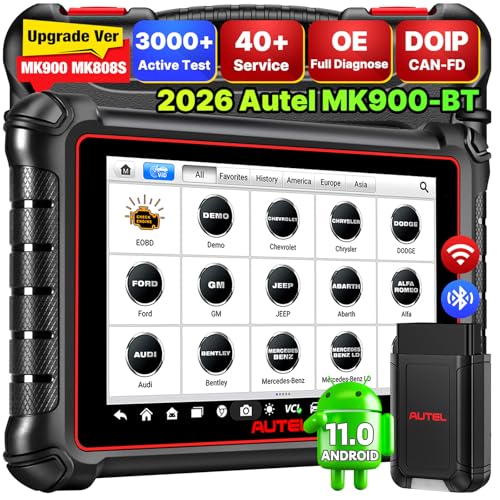
- 💯【Conta.ct us for Support Directly】If you met any...
- 🔥🔥🔥【2026 AUTEL FLAGSHIP MK900BT MK900-BT, NEW...
- 🚗【3000+ ACTIVE TESTS (50➡3000+), SAME AS MS...
- 🚗【40+ HOT SERVICES FOR 150 MAKES (28+➡40+)】Full...
- 🚗【OE ALL SYSTEM DIAGNOSE, AUTO SCAN 2.0: SCAN LICENSE...

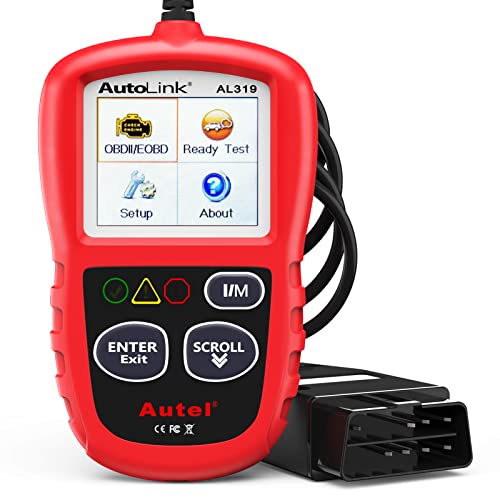
- 【TURN OFF CEL】 This AL319 car scanner diagnostic tool...
- 【EXTENSIVE APPLICATION】 Autel AL319 Compatible with...
- 【FOR END USER & DIYERS】 This error code reader AL319 is...
- 【USER-FRIENDLY DESIGN】 This OBD2 scanner and check...
- 【HIGH-QUALITY SERVICES】 12 months war.ranty from the...
Last update on 2026-06-12 / Affiliate links / Images from Amazon Product Advertising API
If the PDF is very large, it may not load in the preview below.
Some older TSBs had multiple PDFs — visit the NHTSA Website to view all PDFs.
If the TSB PDF does not show, download or view it on the NHTSA Website.
Click on the (+) Plus Sign
Then Click on Associated Document(s)
Search NHTSA Database for Recalls
Search NHTSA Database for Vehicle Investigations
View Latest Vehicle Investigations
Search NHTSA Database for Vehicle Complaints
View Latest Vehicle Complaints
TSB/Document ID: AJA04874
Replacement Service Bulletin Number:
MFR Communication Date: 2019-11-08
MFR Internal Campaign ID/Software Version:
Communication Type: Service Bulletin/Repair Instructions
NHTSA Components: STRUCTURE
MFR Component System:
MFR Component Subsystem:
Previous TSB | Next TSB |
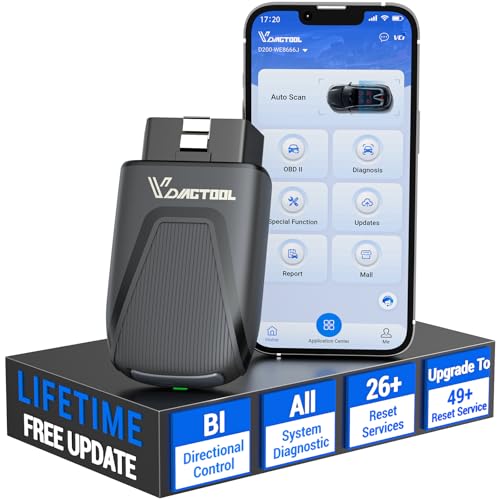
- 【OE-Level Full System Diagnostics-Lifetime F*REE Software Updates】The VDIAGTOOL D200 OBD2 Scanner for cars is a all system bidirectional scan tool that enjoy lifetime f*ree software updates, delivers complete system coverage. reading/clearing codes across engine, transmission, ABS, SAS, EPB, TPMS plus full access to body, chassis, powertrain and all control modules. This D200 Bidirectional car scanner works with most 1996+ OBD2 gasoline and hybrid
 cars and light trucks. It does NOT support pure electric and heavy-duty trucks. PLEASE CHECK COMPATIBILITY BEFORE ORDERING or Contact us with VIN to confirm compatibility.
 - 【Supports OBD2 Full Functions-ZERO Subscription Fees】D200 Bidirectional OBD2 Scanner is a upgarde of universal car code reader. It supports OBD2 full functions to help you turn off the annoying instrument fault indicator, such as read/clear codes, O2 sensor test, I/M readiness, on-board monitor test, datastream, freeze frame, E-VAP system test, and retrieve vehicle information. This professional obd2 scanner diagnostic tool can full access to diagnostics, reset tools and maintenance features with a single payment. NOTE: The fault code can only be cleared after the vehicle's malfunction has been repaired; please ensure the vehicle issue is fixed before clearing the code.
- 【D200 Hidden 2 Advantages: 1. $169 Expandable 49+ Advanced Resets. 2. $199 Get J2534 P*a*s*s-Thru Programming】Your core car diagnostics and 26 reset remain lifetime f*ree for everyday maintenance. When you need deeper repair capability, upgrade with 3-year access for $169 in Store on VDIAGTOOL App, gaining 49+ advanced resets. D200 configured with J2534 hardware, upgrade only when you need without replacing the entire device. You also can Lifetime Unlock for $199 in Store one-time, perform module programming, software re~flashing and ECU data updates directly. Supports 17+ major brands, including for BMW, for Audi, for GM, for Ford and more. Note:D200 does‘t provide any OE software.
- 【Full Bidirectional Control / Active Tests】The D200 car scanner diagnostic tool is a true bidirectional scan tool that lets you send commands directly to the vehicle’s ECU for active tests. Quickly test fuel pumps, relays, solenoids, injectors, cooling fans, windows, sunroofs and more to verify operation instantly. Get dealership-level diagnostic control at a fraction of the cost (ofter $100-200$ per diagnostic visit), reduce guessworkand confirm repairs faster, avoid unnecessary parts replacement, towing fees and wait times.
- 【26 F*ree Essential Reset & Relearn Functions – Everyday Maintenance Made Easy】Handle common maintenance and repair jobs without visiting the shop. The D200 code readers & scan tools includes 26 f*ree high-demand reset functions, including Oil Reset, EPB Service, SAS Calibration, ABS Brake Bleeding, Throttle Relearn, Injector Coding, Headlight Adjustment, Tire Size Reset and more. Perfect for home car owners, mechanics and DIYers – just plug and diagnose anytime, anywhere! Note: Service functions vary by vehicle model—please confirm compatibility.
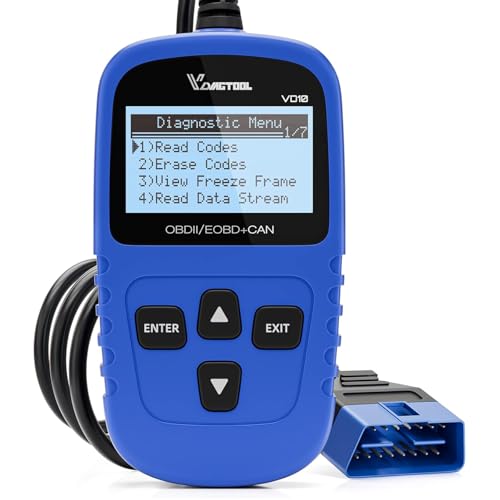
- 【A MUST-HAVE TOOL FOR DIYERS】 - VDIAGTOOL VD10 car code reader is an incredibly useful obd scanner for each car owner or hobbyist, even for those with little to no experience when it comes to vehicle mechanics! Similar to a fixd car diagnostic tool, using this car diagnostic scanner is extremely easy. All you have to do is attach it to your car OBDII port and you can diagnose car problems in seconds! Read Codes (DTCs); Clear Codes; Live Data; View Freeze Frame; I/M Readiness; Vehicle Information.
- 【KEEP ENGINE IN GOOD STATUS】 - VDIAGTOOL check engine code reader brings a fast access to scan, read the car fault code, show its definition on the screen instantly, troubleshooting to find the root causes of problems, erase the engine fault code and turn off the MIL (Malfunction Indicator Light). Similar to a fixd car diagnostic tool, this car code reader helps ensure your engine stays in top condition.
- 【READ/CLEAR CODES & DTC LOOKUP】- No search online & saving your time, this vehicle car code reader retrieves generic (P0, P2, P3, and U0), manufacturer specific (P1, P3, and U1) codes, pending codes and displays DTC definitions based on the built-in database(more than 3000 codes) on the TFT screen, find out the root causes and clear the codes after fixed.
- 【LIVE DATA & RETRIEVE FREEZE FRAME】 - This diagnostic scan tool for accurate diagnosis enables you to retrieve data from vehicle sensors, such as Engine RPM, Intake air temperature, Short/Long term fuel, Misfire data and etc. The freeze frame is stored in the PCM together with the diagnostic trouble code (DTC) related to the fault. Comparable to a fixd car diagnostic tool, the VD10 car code reader car scanner can be a valuable & practical diagnostic aid and also greatly help when diagnosing intermittent problems.
- 【I/M READINESS for THE S-nn-0-g CHECK】- OBDII vehicle may not pass the annual inspection unless the required monitors since reset are complete. So you should at least read the readiness monitors and make sure they are ready. This car obd2 scanner diagnostic tool is equipped with I/M readiness function to check the operations of the e-m-issi0n system on OBD2 compliant vehicles, run I/M monitor readiness test, checking if the pass vehicle s-m-0-g inspection.

- Pro Features, Home Mechanic Budget: Why pay thousands for factory scan tool? The VD70S scan tool delivers advanced professional diagnostic at an affordable price, including 10x faster 33-66ft wireless scanning, 4000+ active tests, 36+ hot services, ECU coding, PMI function, and OE-level full-system scan with 8-in-one data graph. It rivals expensive shop tools - perfect for DIYer, technician and small shop. Get dealer-grade power without the cost - the VD70S obd2 scanner diagnostic tool makes pro diagnostic accessible to all. The available function tests vary by model—please check compatibility via vdiagtool2 @ outlook . c o m before purchase
- Full Bidirectional Control for Precision Repair: VD70S obd2 scanner gives you direct vehicle module control to test components like fuel pump, injector, A/C clutch, window and more, enabling you to accurately and quickly locate faulty components. Unlike basic obd2 code reader, our advanced bidirectional control lets you actively command system - like triggering the ABS pump to confirm your fix worked. With pinpoint component testing and real-time validation, you can diagnose intermittent issues faster and prevent costly return visits. The VD70S auto diagnostic scanner transforms complex diagnostic into precise, time-saving repair - giving professional-grade accuracy at an unbeatable value
- 33-66FT Wireless Freedom - Faster & More Stable: Say goodbye to 2M cable limits. Easily Perform bi-directional tests like folding mirror, activating light or fuel pump while walking freely around your vehicle - no more cable dragging or repositioning your tool. Unlike other 33ft BT obd2 scanner that still need a cable to handle DOIP vehicle diagnostics, the VD70S bidirectional scan tool delivers a truly cable-free experience - with up to 66ft stable transmission range and faster, more reliable data transfer. With VD70S scanner, you get pro-level flexibility, faster workflow and stable diagnostics without cable clutter or wireless dropouts
- Powerful & Affordable Auto Scanner with 36+ Special Functions: Take control of your vehicle maintenance and save hundreds in shop fees with the VD70S car diagnostic tool. This car tool performs 36+ hot services including ✔Crank Sensor Relearn, Oil Reset, EPB, TPMS Reset, Throttle Adaptation, Injector Coding, ABS Bleed and more. ✔Besides, the VD70S bidirectional obd2 scanner unlocks 100+ advanced vehicle-specific functions under specific system menu, including Idle Relearn, VIN Write, Crankshaft Sensor Relearn, Fuel Trim Reset, ABS Initialization and more. These features help you solve complex system error and restore optimal vehicle performance. Text us your VIN we’ll check the compatibility
- OE-Level Full System Diagnostic, Simplified Workflow: The VD70S car diagnostic scanner delivers OE-level full system scanning (ABS/ECM/BCM/SRS/TCM and more) without the dealership cost. ✔Easily view 8 live data streams, retrieve freeze frame and run active test to quickly identify problem. ✔With advanced bidirectional control, test components like fuel injector and sensor directly to verify repair with certainty. ✔The 8-in-one graphing tracks performance trend to catch intermittent issue like a pro. Whether you're a technician or car owner, the diagnostic scanner provides shop-quality diagnostic to optimize performance and prevent costly repair - all in one affordable tool
Last update on 2026-06-12 / Affiliate links / Images from Amazon Product Advertising API
This product presentation was made with AAWP plugin.