
NHTSA ID Number: 10165671
Manufacturer Communication Number: 059-260-00
TSB/Document Date: 2019-10-03
Summary
Hydraulic Drum Brake Replacement Shoe Lining Kit - 10" x 2-1/4" or 12" x 2" Installation Instructions
INSTALLATION INSTRUCTIONS
Hydraulic Drum Brake Replacement Shoe Lining Kit - 10” x 2¼” or 12” x 2”
If replacement is needed, it must be done in pairs. If not replacing
bearings, return them to their original location.
5.
1A
1C
1C
1B
!
IT IS RECOMMENDED THAT ALL FOUR (4) SHOE/LININGS BE REPLACED
AT THE SAME TIME TO ENSURE BALANCED BRAKING PERFORMANCE. The
• Ensure the hydraulic pressure in the brake system is zero before
removing the drum. Pressure in the hydraulic lines will cause the
wheel cylinder pistons to be forced out.
CAUTION
• Failure to properly secure or support the weight could result in
serious injury or death. Make certain all lifting and supporting
equipment has sufficient capacity and is used properly.
6.
Screw the brake star adjuster in all the way to make it easier to
remove the brake springs.
7.
Note the correct position of the star adjuster and the brake spring
prior to removal. Each will need to be
reassembled in the same manner to
assure proper brake function.
8.
Remove the two retractor springs and the
flat washer plate using the appropriate
retractor spring removal tool. Please note
the primary shoe (front) return spring is
on top.
• Wear the appropriate safety gear to avoid injury.
Removing the Old Brake Shoe/Linings
1.
Elevate and support the trailer unit per trailer manufacturer
instructions. Remove wheel.
2.
If the brake drum does not rotate freely it may be difficult to remove.
This may require under adjusting the brakes to free the brake shoes
from the drum. This can be accomplished by rotating the star adjuster
located through the bottom rear of the brake assembly.
3.
Remove the hub dust cap by carefully
prying it progressively off or gently
tapping it to the side as the brake drum
is rotated by hand. Remove excess
grease to expose the spindle nut and its
retainer or cotter pin. Depending on how
the trailer is equipped, carefully remove
any reusable nut retainers or remove the cotter pin. Loosen and
remove the spindle nut. This can be done by hand or may require a
wrench. Be careful not to damage spindle threads on removal.
4.
Hold the outer (front) tapered roller bearing and thrust washer in
place by hand while removing the drum to prevent them falling
out during the disassembly. Turn the drum over and remove the
inner bearing seal with a seal puller or appropriate pry bar. Do not
attempt to drive the seal out by striking the seal or inner bearing.
Inspect bearings for any imperfections on the rollers, cone, or race.
©2019 Dexter Axle Company | www.dexteraxle.com
CAUTION
• There should be no force pushing on the actuator. Even slight
pressure in the hydraulic lines could cause the wheel cylinder
pistons to be forced out when the shoes are disassembled.
brakes and shoes shown above are free backing with pivoting primary
brake shoes. If your kit is for standard style brakes, both shoes will look
similar with the primary shoes having the shortest length brake linings.
Primary shoes should be installed to face the front of the trailer, while
the secondary shoes face the rear of the trailer.
!
Inspect the drum and resurface/replace if necessary. The maximum
machining diameter is typically stamped into the drum. Inspect for
seal leaks and replace components if necessary before replacing
your brake shoes.
9.
Using a hold down spring removal tool,
remove the secondary (rear) shoe-retaining
washer, retaining spring and keeper pin.
Hold outward pressure on the keeper pin
with one hand while pressing inward on the
shoe retaining washer with the tool. Turn it
a quarter turn to release the keeper pin
head. Remove the hold down spring and
washer. Lift the top of the secondary shoe
off the anchor pin and pull it out slightly.
Pivot it forward to release the tension on
the (bottom) spanner spring so that the
star adjuster and spring can be removed
and set aside. Remove the hold down pin
through the rear of the backing plate.
EXPLODED VIEW
← Primary
Secondary →
10. Remove the primary shoe retaining spring,
keeper pin and washers by the same
method and carefully pivot the shoe away
from the wheel cylinder push rod. On free
-1-
059-260-00 2019.10
backing brakes, remove the bolt, lock nut, and retaining loop from
the top of the primary shoe and the pivoting pin, spring, bolt, and nut
from the bottom of the shoe. Retain them for later re-installation on
the replacement shoes.
11. Unscrew the brake adjuster and clean
the threads with a wire brush. Lubricate
the adjuster threads lightly with a high
temperature anti-seize grease and screw
the adjuster all the way in (minimum
length) for later re-installation.
12. Inspect hydraulic wheel cylinder for fluid leaks. Replace wheel
cylinder assembly if leakage is detected.
Installing the New Brake Shoes/Lining
If you have free backing brakes, reinstall the hardware from the original
primary shoe as required onto the replacement primary shoe. Avoid
torquing lock nut and bolt together as there should be a gap between
components. The gap allows components to swivel or slide during
operation.
1.
Assemble the secondary shoe in the
same manner. The secondary shoe is
the shoe with the longest lining, and
mounts on the side of the backing
plate closest to the rear of the trailer.
3.
Spread the brake shoes slightly apart at the bottom and insert the
star adjuster into the notches at the bottom of the brake shoes in
the direction it was originally installed. Install the spanner spring in
the holes at the bottom of the primary shoe. Ensure the adjuster is
correctly seated upon reassembly.
4.
Place the flat washer over the backing plate anchor pin and install
the secondary return spring with the installation tool.
5.
Install the primary return spring with the installation tool.
6.
Inspect the assembly for all components being properly in place.
The primary and secondary shoes should be firmly seated against
their anchor pins/springs, with the ends of the pins securely
seated at 90 degrees across the slots in the spring keeper
washers. The retaining and spanner springs should be fully hooked
and seated in their respective holes in the brake shoes. The star
adjuster ends firmly seated in their notches in the brake shoes, etc.
If the completed assembly is not centered on the mounting plate,
bump the shoes from both directions with your hands to center
them and assure everything is seated at the minimum assembled
diameter.
©2019 Dexter Axle Company | www.dexteraxle.com
Remove the rubber dust plug from the rear access hole in the
backing plate. Insert a brake adjusting spoon or flat screw driver in
the access hole and TAKE NOTE which direction the star adjuster
needs to be rotated in order to expand the brake shoes.
8.
Clean, inspect, and/or replace the bearing cones and races, and
install a new inner wheel bearing seal per the Light Duty Service
Manual. Wipe a thin coat of the lubricant on the rubber lip of the
seal. Grease the bearing journals on the spindle to help with drum
installation. Avoid getting any grease on the brake linings.
9.
Center the hub-drum on the spindle and slide it over the brake
shoes. Do not nick the wheel bearing seal on installation. Slide
the drum over the shoes with a slight rotation in the direction of
forward travel to help align and fully seat the inner bearing and
seal on the spindle. Install the outer bearing, thrust washer, nut
locking tab washer (if applicable) and spindle nut finger tight.
10. Adjust the bearings in the steps below:
For standard grease or oil axles using cotter pin:
1. After placing the hub, bearings, washers, and spindle nut back
on the axle spindle in reverse order as detailed in the previous
section on hub removal, rotate the hub assembly slowly while
tightening the spindle nut to approximately 50 Ft. Lbs. (12”
wrench or pliers with full hand force.)
Assemble the primary shoe (with the shorter lining) first on the front
facing side of the backing plate. On free backing brake shoes, put
the round loop at the top of the shoe over the backing plate anchor
post before installing the keeper pin
and its hold down spring. If the shoes
in this kit have reinforcement plates
on the shoe webs, install the shoes
with the reinforcement plates towards
the backing plate. Secure the hold
down spring on the end of the hold
down pin by holding the pin pressed
outward with one hand and installing
the hold down washer by rotating the
tool a quarter turn to secure it.
2.
7.
2. Then loosen the spindle nut to remove the torque. Do not
rotate the hub.
3. Finger tighten the spindle nut until just snug.
4. Back the spindle nut out slightly until the first castellation
lines up with the cotter key hole and insert the cotter pin.
5. Bend over the cotter pin legs to secure the nut.
6. Nut should move freely with only restraint being the cotter pin.
For E-Z Lube® axles using the new nut retainer:
1. After placing the hub, bearings, washers, and spindle nut back
on the axle spindle in reverse order as detailed in the previous
section on hub removal, rotate the hub assembly slowly while
tightening the spindle nut to approximately 50 Ft. Lbs. (12”
wrench or pliers with full hand force.)
2. Then loosen the spindle nut to remove
the torque. Do not rotate the hub.
3. Finger tighten the nut until just snug,
align the retainer to the machined flat
on the spindle and press the retainer
onto the nut. The retainer should
snap into place. Once in place, the
retainer/nut assembly should be free to move slightly.
4. If the nut is too tight, remove the retainer and back the nut off
approximately one twelfth of a turn and reinstall the retainer.
The nut should now be free to move slightly.
5. Reinstall grease cap.
11. Install a new cotter pin, nut retainer, or bend tabs on the locking
tab washer to the original specifications. If moving the spindle nut
is required to install a cotter pin or locking washer only do so in a
loosing direction. A properly installed nut and retainer should make
contact with the thrust washer but not apply any tension.
12. Install the dust cap by driving it in with a method that applies
pressure to the perimeter not the face.
-2-
059-260-00 2019.10
Brake Adjustment
Dexter electric brakes that have a self adjusting feature require no
manual adjustment. Brakes not equipped with this feature can be
adjusted by using the following procedure:
Brakes should be adjusted (1) after the first 200 miles of operation
when the brake shoes and drums have “seated,” (2) at 3,000 mile
intervals, (3) or as use and performance requires. The brakes should be
adjusted in the following manner:
1.
Jack up trailer and secure on adequate capacity jack stands. Follow
trailer manufacturer’s recommendations for lifting and supporting the
unit. Make sure the wheel and drum rotates freely.
!
CAUTION
Do not lift or support the trailer on any part of the axle or
suspension system. Never go under any trailer unless it is
properly supported on jack stands which have been rated for
the load. Improperly supported vehicles can fall unexpectedly
and cause serious injury or death.
2.
If equipped, remove the adjusting hole cover, if present, from the
adjusting slot on the bottom of the brake backing plate.
3.
With a screwdriver or standard adjusting tool, rotate the star wheel of
the adjuster assembly to expand the brake shoes. Adjust the brake
shoes out until the pressure of the linings against the drum makes
the wheel very difficult to turn. Note: For drop spindle axles, a
modified adjusting tool may be necessary.
4.
Then rotate the star wheel in the opposite direction until the wheel
turns freely with a slight lining drag.
5.
Replace the adjusting hole cover, if available, and lower the wheel to
the ground.
6.
Repeat the above procedure on all brakes. For best results, the
brakes should all be set at the same clearance.
Images in this instruction sheet are used for illustration purposes only and
may not match your exact kit.
©2019 Dexter Axle Company | www.dexteraxle.com
-3-
059-260-00 2019.10

- Mixes well with conventional fluids
- Low-moisture formula provides excellent vapor lock...
- Ideal for hydraulic and disc brakes


- Provides an extra margin of safety in extreme braking...
- Mix of polyglycol ethers ensures hot brake-system operation...
- Excellent for ABS
 , disc and drum brake systems
 - Delivers braking power when needed by avoiding a spongy...
- Both wet and dry boiling points exceed the minimum...
Last update on 2026-06-23 / Affiliate links / Images from Amazon Product Advertising API
If the PDF is very large, it may not load in the preview below.
Some older TSBs had multiple PDFs — visit the NHTSA Website to view all PDFs.
If the TSB PDF does not show, download or view it on the NHTSA Website.
Click on the (+) Plus Sign
Then Click on Associated Document(s)
Search NHTSA Database for Recalls
Search NHTSA Database for Vehicle Investigations
View Latest Vehicle Investigations
Search NHTSA Database for Vehicle Complaints
View Latest Vehicle Complaints
TSB/Document ID: 059-260-00
Replacement Service Bulletin Number:
MFR Communication Date: 2019-10-02
MFR Internal Campaign ID/Software Version:
Communication Type: Service Bulletin/Repair Instructions
NHTSA Components: EQUIPMENT
MFR Component System:
MFR Component Subsystem:
Previous TSB | Next TSB |
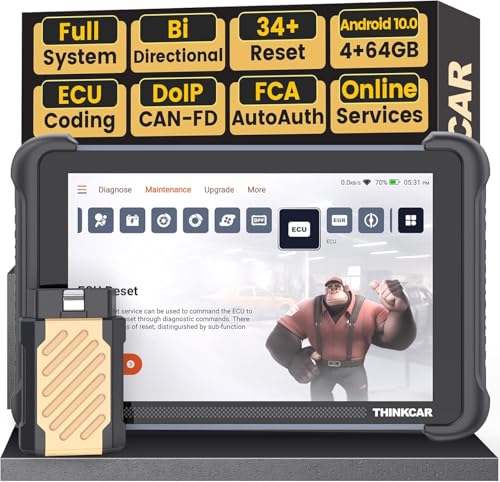
- [Notice] When you receive a used device, it may be a customer return resold by Amazon without inspection. You can exchange it for a new one through Amazon. As this situation is unavoidable, we sincerely apologize. For any issues, contacting us via Amazon's "Messages" is the best way. THINKSCAN 689BT Bidirectional Scan Tool Can Be Used Immediately After It is Turned On, Without Complicated Registration Process, Which is More Convenient & Quick.
- Full Bi-Directional Control & 3000+ Active Tests: Take control and test components like actuators, fuel injectors, relays, and cooling fans in real time. You’ll quickly see if the problem is in the part itself or the control module — saving you hours of guesswork and frustrating trial-and-error.
- Advanced ECU Coding Capabilities: Handle module matching and hidden feature activation with confidence. When you replace an ECU or want to customize settings, this obd2 scanner diagnostic bi directional tool gives you the professional-level capabilities you need without the dealership price tag.
- 34+ Useful Reset and Maintenance Functions: Complete everyday service tasks smoothly with a wide range of helpful reset and maintenance functions. Whether you’re keeping up with regular upkeep or tackling a specific job, this scanner makes maintenance simpler and less stressful for both DIYers and pros.
- Comprehensive Full System Diagnostics: Diagnose every major system — Engine, Transmission, ABS, SRS, TPMS, and more — all in one place. Finally stop wondering if you’re missing something important; get the full picture and clear codes with ease.
Last update on 2026-07-02 / Affiliate links / Images from Amazon Product Advertising API
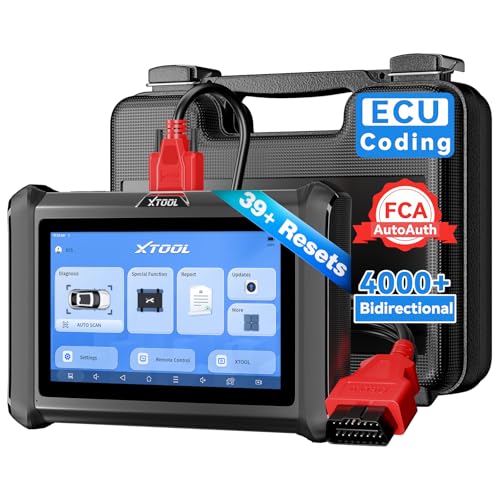
- Top Reasons to Choose the D7S OBD2 Scanner: XTOOL D7S car scan tool, an upgrade of XTOOL D7, offers comprehensive features for automotive technicians, workshops, and DIY enthusiasts 1. Upgraded Hardware: 2+64GB memory, rear camera, intuitive interface, foldable bracket 2. Complete Diagnostics: FCA Autoauth, OE-level all system scan, 39+ maintenance services, 4K+ bidirectional, CANFD/DoIP protocol 3. Advanced Capabilities: ECU c0ding, PMI functions 4. Wide Compatibility: Support 10,000+ models, covering 99% vehicle brands 5. Multi-language: Available in 22+ languages, No IP Restrictions 6. 3-Year Updates: Save 300 bucks on software updates for the latest features and optimizations
- 2026 Upgraded D7S Car Scanner Features: The newly 2026 D7S V2.0 scanner for car brings exciting features for advanced vehicle diagnostics and enhanced user experience 1. FCA AutoAuth: Now supports FCA SGW module for Chrysler, for Jeep, for Dodge (2018+), for Fiat (2017+), enabling faster vehicle communication without gateway restrictions 2. PMI (Offline ECU Pr0gramming): Allows for Ford, for Lincoln, and for Mazda ECU pr0gramming for new modules 3. Optimized Diagnostic Report 2.0: Personalized reports with logos and customer info for auto shops. Note: Compatibility varies by cars, please check before order
- 39+ Services/Resets/Adaptations/Relearns/Calibrations: XTOOL D7S full system car scanner diagnostic tool tackles 99% of common car issues through its 36+ special functions, including Oil Reset, EPB, SAS, BMS, Throttle Reset, Injector C0ding, ABS Bleed, TPMS Reset, Power Balance, etc and also covers specific-vehicle functions like Crank Sensor Relearn, ABS Initialization, Cylinder Power Balance, Fuel Trim Reset, Idle Relearn etc. This car diagnostic scanner enhances efficiency, making repairs and maintenance hassle-free. Tip: DO NOT for All vehicles, please check compatibility first
- Cost-effective ECU C0ding Scan Tool for Specific Brands: Enhance your vehicle's performance with XTOOL D7S! This obd2 scanner all systems bidirectional offers advanced capabilities at an affordable price, supports online for BMW, for Benz and offline for BENZ, for MIT, along with PMI functions for Ford, for Mazda, and for Lincoln. Ideal for technicians and DIY enthusiasts, this automotive scanner diagnostic tool optimizes vehicle performance and enhances the driving experience. Note: Not for all cars and modules, please send car VIN to check the compatibility before purchase
- OE All System Diagnostic & 8 Pids Graphing: XTOOL D7S is a comprehensive all system bi directional obd2 scanner that delivers dealer-level diagnostics, completely controlling over your vehicle’s performance and health. This automotive scan tool can read and clear DTCs, view live data and ECU information, retrieve freeze frames, and perform active tests and full obd2 functions. This bi-directional scan tool can can identify your vehicle's make, model, and year information with just one click and show up to 8 PIDs live data with options for CSV viewing, playback, and recording for in-depth analysis. It is easy-to-use for both professionals and beginners, helping pinpoint issues efficiently
Last update on 2026-06-30 / Affiliate links / Images from Amazon Product Advertising API
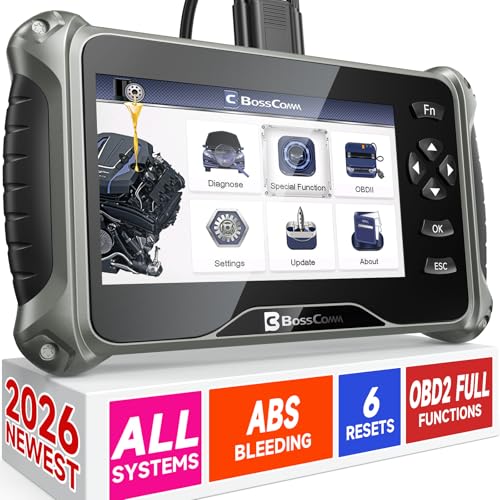
- 【✅Compared to BOSSCOMM IF742, IF745 Offers Full-System Diagnostics】The BOSSCOMM IF745 car diagnostic scanner is an upgraded model of IF742. In addition to supporting all OBD2 Code Reader functions and 6 reset options (ABS/EPB/SAS/BMS/Oil/Throttle), it expands diagnostics from 4 systems (Check Engine/ABS/SRS/Transmission) to vehicle All systems, including Steering, Suspension, and Body Electronics. This provides deeper, more comprehensive diagnostic capabilities.
- 【✨10 OBD2 Functions】The BOSSCOMM IF745 scan tool’s DTC Lookup instantly translates fault codes into user-friendly explanations, its I/M Readiness feature streamlines emissions testing with a single tap, and Freeze Frame lets you pinpoint the exact moment of a fault for in-depth root-cause diagnosis. Combined with a live data dashboard and advanced diagnostics (O2S, OBMon, EVAP), it delivers comprehensive insights for confident troubleshooting.
- 【✨Deep Diagnostics for All Vehicle System Modules】Beyond code reading/clearing and ECU information retrieval, our all-in-one data stream feature lets you inspect all current fault codes and their locations across the vehicle’s systems. This vehicle code reader helps you turn off dashboard warning lights and perform a comprehensive self-check of your car at home—no more back-and-forth trips to the repair shop or hefty inspection fees.
- 【✨6 Essential Resets: ABS Bleeding, Oil, EPB, SAS, Throttle, BMS】The BOSSCOMM IF745 obd2 scanner diagnostic tool swiftly purges air from brake lines to restore braking sensitivity, fine-tunes maintenance cycles to eliminate false alerts, resolves parking brake issues with one-click control, recalibrates steering sensors for stability, optimizes engine idling/acceleration for smoother performance, and deeply resets battery systems to extend lifespan and range via precise parameter adjustments.❗NOTE: Does NOT support bidirectional control, coding, or programming.
- 【✨10,000+ Car Models, AutoVIN, 13 Languages】The BOSSCOMM IF745 vehicle scanner diagnostic tool covers 73+ global car brands and offers support in 13 languages, making it perfect for DIYers, auto mechanics, or as a thoughtful gift. With a single-click AutoVIN feature, it instantly retrieves vehicle serial numbers, streamlining diagnostics for users globally. This adaptable tool balances user-friendliness with precision, catering to both personal and professional requirements.✅Unsure about compatibility? Compatibility will vary on vehicles' model and year, pls reach us via 📧 [email protected] 📧 before purchase.
Last update on 2026-07-02 / Affiliate links / Images from Amazon Product Advertising API
This product presentation was made with AAWP plugin.