
NHTSA ID Number: 10163239
Manufacturer Communication Number: 19NA118
TSB/Document Date: 2019-07-29
Summary
This New Model Features Bulletin provides General Information and other Topics to help the Service Personnel become familiar with some of the features of the 2020 Cadillac XT6.
XT6.
Service Bulletin
Bulletin No.:
19-NA-118
Date:
June, 2019
INFORMATION
Subject:
Brand:
2020 Cadillac XT6 New Model Features
Model:
Model Year:
From:
XT6
To:
2020
VIN:
From:
To:
—
Engine:
Gasoline, 2.0L,
4 Cylinder, L4,
Turbocharged,
SIDI, DOHC,
VVT, Aluminum,
VAR 3 — RPO
LSY
(Export Only)
Hydra-Matic®
9T60, 9-Speed,
Automatic,
ETRS, GEN 1
— RPO M3G
(Export Only)
Gasoline, 3.6L,
V6, DI, DOHC,
VVT, Aluminum,
GEN 2 —
RPO LGX
Involved Countries and Regions
Copyright 2019 General Motors LLC. All Rights Reserved.
Hydra-Matic®
9T65, 9-Speed,
Automatic,
ETRS, GEN 1
— RPO M3W
United States, Canada, Mexico, Germany, Israel, Korea, Russia, Saudi Arabia,
United Arab Emirates and United Kingdom
Page 2
June, 2019
Bulletin No.: 19-NA-118
Overview
5330502
2020 Cadillac XT6 Premium Luxury
Bulletin Purpose
The purpose of this bulletin is to introduce the 2020
Cadillac XT6, three row, luxury SUV. This bulletin will
help the Service Department Personnel become
familiar with the vehicle’s engine, transmission, brake
system, AWD with Active Twin-Clutch, Electronic
Precision Shift and some of the other vehicle systems.
Overview
The all-new XT6 centers on a luxurious, adaptable and
connected cabin, with responsive handling and a
comprehensive array of standard and available safety
technologies. The XT6 has been designed to offer a
refined, comfortable place to connect and enjoy the
ride. Providing comfort and convenience with premium
sound and technology features, the XT6 is Cadillac’s
first use of the Bose® Performance Series sound
system with 14 custom-tuned speakers, delivering
powerful audio throughout the cabin. On both six and
seven passenger models, the former has two
second-row captain's chairs, the latter has a 60/40
split-folding three-across bench seat, the
passenger-side second-row seat can be manually
folded and slid forward using only one hand for access
to the third row. Standard equipment includes power
releases for folding the second and third row
seatbacks, with controls in the rear cargo area and
second row door opening area. Also a hands-free
power opening liftgate and two USB ports for each row
of seating.
Premium Luxury and Sport models offer customized
looks with unique exterior and interior distinction.
Premium Luxury models provide an elevated level of
refinement, while Sport models offer a
performance-oriented feel. All North American models
are powered by a 3.6L V-6 engine and nine-speed
automatic transmission. Selectable drive modes allow
the XT6 to adapt to driver preferences and changing
road conditions. The modes are uniquely calibrated to
support the characteristics of the Premium Luxury or
Sport models.
FWD is standard on the Premium Luxury with available
AWD. AWD with Active Twin-Clutch is standard on the
XT6 Sport. In Canada, FWD is not available on the
Premium Luxury. All vehicles sold in Canada are AWD.
XT6 is equipped with a standard automatic heated
steering wheel and an available in-vehicle air ionizer,
automatic heated/ventilated front seats and heated
second-row rear outboard seats.
Exterior Dimensions
– Ground Clearance: 6.65-inches (16.89 cm).
– Height: 68.9-inches (175 cm) (w/o luggage rack).
– Height: 70.2-inches (178.30 cm) (incl.
luggage rack).
Bulletin No.: 19-NA-118
June, 2019
– Length: 198.8-inches (504.95 cm).
– Turning Circle: 39.1-feet (11.91 m) (20-inch
wheels)
– Turning Circle: 39-feet (11.88 m) (21-inch wheels)
– Wheelbase: 112.7-inches (286.25 cm).
– Width: 77.3-inches (196.3 cm).
Premium LuxuryTrim
– Authentic exotic wood interior accents or carbon fiber
accents depending on color.
– Uniquely styled exterior with Galvano finished
appointments.
– Luxury styled exclusive 20-inch, 6-Split-Spoke
Polished and Android finish wheels.
– Model specific interior color combinations.
– Available Platinum Package.
•
•
•
Sport Trim
– Interior sport elements with carbon fiber accents.
– Uniquely styled exterior with High Gloss black
appointments.
– Sport 20-inch, 12-Spoke Pearl Nickel finish wheels
with available 21-inch Diamond Cut with Android
Finish wheels.
– Sport Control twin-clutch AWD system.
– Available Platinum Package.
•
•
Brakes (RPO LGX Equipped Vehicles)
ABS Description and Operation
The vehicle is equipped with a Bosch ABS 9.0 brake
system. The electronic brake control module (EBCM)
and the brake pressure modulator valve are serviced
separately.
The following vehicle performance enhancement
systems are provided:
• ABS
• Brake Assist
• Electronic Brake Distribution
• Electronic Stability Control
• Hill Start Assist
• Traction Control System
• Automatic Vehicle Hold
Brake System Components
The following components are involved in the operation
of the above systems:
• Electronic Brake Control Module: The EBCM
controls the system functions and detects failures.
It supplies voltage to the solenoid valves and
pump motor.
• Brake Pressure Modulator Valve: The brake
pressure modulator valve contains the hydraulic
valves and pump motor that are controlled
electrically by the EBCM. The brake pressure
modulator uses a four circuit configuration with a
diagonal split. The brake pressure modulator
directs fluid from the reservoir of the master
•
•
•
Page 3
cylinder to the left front and right rear wheels and
fluid from the other reservoir to the right front and
left rear wheels.
Body Control Module: The BCM monitors the
brake pedal position sensor signal when the brake
pedal is applied and sends a high speed serial
data message to the EBCM indicating the brake
pedal position.
Brake Pressure Sensor: The brake pressure
sensor is used to sense the action of the driver
application of the brake pedal. The sensor
provides a voltage signal that will increase as the
brake pedal is applied. The EBCM monitors the
brake pressure sensor which is integral to the
brake pressure modulator.
Instrument Cluster: The instrument cluster
displays the vehicle speed based on the
information from the ECM. The ECM sends the
vehicle speed information via high speed serial
data to the BCM. The BCM then sends the vehicle
speed information via low speed serial data to the
instrument cluster to display the vehicle speed.
Multi-Axis Acceleration Sensor: The yaw rate,
lateral acceleration and longitudinal acceleration
sensors are combined into one multi-axis
acceleration sensor, internal to the inflatable
restraint sensing and diagnostic module.
Multifunction Switch: The traction control switch
is a multifunction momentary switch. The BCM
monitors the signal circuit from the traction control
switch and sends a high speed serial data
message to the EBCM indicating the switch
position. The traction control and stability control
are manually disabled or enabled by pressing the
traction control switch.
Steering Angle Sensor: The EBCM receives
serial data message inputs from the steering angle
sensor. The steering angle sensor is integrated in
the power steering control module. The steering
angle sensor signal is used to calculate the
desired yaw rate.
Transmission Control Module: The EBCM
receives high speed serial data message inputs
from the TCM indicating the gear position of the
transmission for hill start assist functions.
Wheel Speed Sensors: The vehicle is equipped
with unique directional wheel speed sensors that
can detect wheel direction as well as zero wheel
speed. The WSS are Active sensors that receive a
12 V power supply from the EBCM and provides
an output signal to the module. As the wheel
spins, the WSS sends the EBCM a DC square
wave signal. The EBCM uses the frequency of the
square wave signal to calculate the wheel speed.
Automatic Vehicle Hold
AVH will activate when the vehicle is stopped to prevent
it from moving. After the brake pedal has been released
and before the accelerator pedal has been pressed,
AVH uses braking pressure to hold the vehicle
stationary.
Page 4
June, 2019
Brake Assist
The EBCM receives inputs from the brake pressure
sensor. When the EBCM senses an emergency braking
situation,it will actively increase the brake pressure to a
specific maximum.
Electronic Brake Distribution
Electronic brake distribution is a control system that
enhances the hydraulic proportioning function of the
mechanical proportioning valve in the base brake
system. The electronic brake distribution control
system is part of the operation software in the
electronic brake control module. The electronic brake
distribution uses active control with existing ABS in
order to regulate the vehicle's rear brake pressure.
Electronic Stability Control
Yaw rate is the rate of rotation around the vehicle’s
vertical axis. The electronic stability control is activated
when the EBCM determines that the desired yaw rate
does not match the actual yaw rate as measured by the
yaw rate sensor.
Bulletin No.: 19-NA-118
lost traction. When drive wheel slip is noted while the
brake is not applied, the EBCM will enter traction
control mode.
Electronic Parking Brake Description
Vehicles with the electric parking brake have a switch in
the center console or on the dash, which takes the
place of the manual parking brake system including the
foot pedal and release handle. In case of insufficient
electrical power, the electric parking brake cannot be
applied or released. The parking brake function is
integrated into the Electronic Brake Control Module/
Brake System Control Module. The module contains
the logic for applying and releasing the parking brake
when commanded by the Park Brake Switch.
Engine 2.0L 4 Cylinder Turbocharged —
RPO LSY (Export Only)
Overview
Hill Start Assist
When stopped on a hill, the hill start assist feature
prevents the vehicle from rolling before driving off,
whether facing uphill or downhill by holding the brake
pressure during the transition between when the driver
releases the brake pedal and starts to accelerate.
Power-Up-Self Test
A power-up-self test is performed by the EBCM to verify
correct operation of system components. The EBCM is
able to detect many malfunctions whenever the ignition
is ON. Certain failures cannot be detected unless active
diagnostic tests are performed on the components
when they are commanded ON by the EBCM.
Pressure Decrease
The EBCM decreases the pressure to individual wheels
during a deceleration when wheel slip occurs. The inlet
valve is closed and the outlet valve is opened. The
excess fluid is stored in the accumulator until the return
pump can return the fluid to the master cylinder.
Pressure Hold
The EBCM closes the inlet valve and keeps the outlet
valve closed in order to isolate the system when wheel
slip occurs. This holds the pressure steady on the
brake so that the hydraulic pressure does not increase
or decrease.
Pressure Increase
The EBCM increases the pressure to individual wheels
during a deceleration in order to reduce the speed of
the wheel. The inlet valve is opened and the outlet
valve is closed. The increased pressure is delivered
from the master cylinder.
Traction Control
The traction control system, is typically a secondary
function of the electronic stability control. It utilizes the
same wheel-speed sensors employed by ABS to
measure differences in rotational speed in order to
determine if the wheels that are receiving power have
5126509
Typical View of the Gasoline, 2.0L, 4 Cylinder, L4,
Turbocharged, SIDI, DOHC, VVT, Aluminum, VAR 3
— RPO LSY
The turbocharged 2.0L, 4-cylinder engine utilizes a
twin-scroll turbocharger to help reduce turbo lag, with
Active Fuel Management (AFM) technology helping to
improve fuel economy.
Engine Components and Specifications
•
•
Bore/Stroke: 3.27 in (83 mm) / 3.634 in
(92.3 mm).
Camshaft:
Two camshafts are used, one for all intake valves,
the other for all exhaust valves. The camshafts are
assembled with steel lobes. The camshafts
consist of several segments that are displaceable.
As a result, two cylinders can be deactivated. The
movement of the segments of the camshaft is
controlled by the camshaft position actuators in
the camshaft carrier.
Bulletin No.: 19-NA-118
•
•
•
•
•
•
•
•
•
June, 2019
Camshaft Carrier: The two camshafts are in the
camshaft carrier. The camshaft carrier has
mounting locations for the ignition system and the
camshaft position actuators for cylinder
deactivation.
Camshaft Drive: A roller chain is used for
camshaft drive. There is a tensioner and active
guide used on the slack side of the chain to control
chain motion and noise. The chain drive promotes
long valve train life and low maintenance.
Camshaft Position Actuator: The camshaft
position actuator solenoid valve – Intake and
camshaft position actuator solenoid valve –
exhaust system enables the ECM to change
camshaft timing while the engine is running. The
camshaft position actuator assembly varies
camshaft position in response to directional
changes in oil pressure. The camshaft position
actuator solenoid valve – Intake and camshaft
position actuator solenoid valve – exhaust
controls the oil pressure that is applied to advance
or retard the camshaft. Modifying camshaft timing
under changing engine demand provides a
balance between power output, fuel economy and
reduced emissions.
Camshaft Position Sensors: The intake and
exhaust camshaft position sensors are each
triggered by a notched reluctor wheel built onto
the camshaft sprockets. The four signal pulses
occur every camshaft revolution. Each notch is a
different size which is used to identify the
compression stroke of each cylinder and to enable
the correct timing of the fuel injection pulse.
Compression Ratio: 10.0:1
Connecting Rod: The connecting rods are
powdered metal. The connecting rods are
fractured at the connecting rod journal and then
machined for the proper clearance.
Cooling System: One valve that contains two
coolant control valves, called the engine coolant
flow control valve and the block control valve that
eliminate the need for the conventional cooling
system thermostat.
Crankshaft: The crankshaft is forged micro alloy
steel. It is supported in 5 main journals with main
bearings which have oil clearance for lubricating.
The thrust bearing is located in the 4th position
which controls proper crankshaft axial end play.
The crankshaft is comprised of 4 counterweights
that have been scalloped for mass reduction and
precision engine balance. A harmonic balancer is
used to control torsional vibration.
Crankshaft Position Sensor: The crankshaft
position sensor is an external, magnetically
biased, digital output integrated circuit sensing
device. The sensor provides a pulse for each
magnetic pole of the encoder wheel on the
crankshaft. The sensor produces an ON/OFF DC
voltage of varying frequency, with 58 output pulses
per crankshaft revolution. The frequency of the
sensor output depends on the velocity of the
crankshaft.
•
•
•
•
•
•
•
•
Page 5
Cylinder Block: The cylinder block is
constructed of aluminum alloy by high-pressure
die casting with 4 cast-in-place iron cylinder liners
arranged in-line. The block has 5 crankshaft
bearings with the thrust bearing located on the
second bearing from the rear of the engine. The
cylinder block incorporates a bedplate design that
forms an upper and lower crankcase. This type of
design promotes cylinder block rigidity and
reduced noise and vibration.
Cylinder Deactivation: Active Fuel Management
(AFM) temporarily deactivates two cylinders under
light load conditions and seamlessly reactivates
them when the driver demands full power.
Cylinder Head: This cylinder head is dual over
head camshaft (DOHC) design. The cylinder head
is made of cast aluminum alloy for better strength,
hardness and less weight. The combustion
chamber of the cylinder head is designed for
increasing the squish and swirl efficiency and this
maximizes combustion efficiency. The injectors
are each seated into their individual bores in the
cylinder head with two combustion seals to
provide sealing. The exhaust manifold is
integrated into the cylinder head.
Engine Control Module: The ECM controls all
ignition system functions and constantly adjusts
the spark timing. The ECM monitors information
from various sensor inputs.
Engine Block Lower Structural Extension:
Within the engine block structural extension is the
oil pump and the balance shafts. The balance
shafts are driven by the balance chain. The chain
is tensioned by a hydraulic tensioner that is
supplied pressure by the engine oil pump. This
design promotes the maximum effectiveness of
the balance shaft system and reduces noise and
vibration. The oil pump assembly is driven by the
balancer shaft assembly. The oil pump has
variable flow capability using a circular vane
arrangement and the actuation of an oil control
valve assembly commanded by the ECM. The
variable flow capability of the pump optimizes oil
flow to the engine components as needed. During
high acceleration the oil pump operates in a
steady high pressure state. During steady low
load speeds the oil pump will operate in a steady
low pressure state.
Lower Oil Pan: The lower oil pan is made of
synthetic material and is attached to the engine
block lower structural extension.
Exhaust Manifold: The exhaust manifold is
integrated into the cylinder head.
High Pressure Fuel Pump: The high pressure
fuel pump mounts to the rear of the cylinder head
and is driven by the intake camshaft. Motion is
transmitted to the pump from a quad-lobe on the
rear of the intake camshaft through a hydraulic
roller lifter.
Horsepower: 237 hp (177 kW) @ 5000 rpm. (GM
estimate).
Torque: 258 lb-ft (350 Nm) @ 1500–4000 rpm.
(GM estimate).
Page 6
•
•
•
•
•
•
•
•
•
•
June, 2019
Idle Speed: 650 rpm.
Intake Manifold: The intake manifold is made of
a polymer composite.
Ignition Coil Module: The ignition coil module
integrates the 4 coils and the ignition control
module within a single sealed component.
Knock Sensor: The knock sensor system is used

- 💯【Conta.ct us for Support Directly】If you met any...
- 🔥🔥🔥【2026 AUTEL FLAGSHIP MK900BT MK900-BT, NEW...
- 🚗【3000+ ACTIVE TESTS (50➡3000+), SAME AS MS...
- 🚗【40+ HOT SERVICES FOR 150 MAKES (28+➡40+)】Full...
- 🚗【OE ALL SYSTEM DIAGNOSE, AUTO SCAN 2.0: SCAN LICENSE...

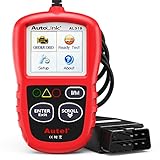
- 【TURN OFF CEL】 This AL319 car scanner diagnostic tool...
- 【EXTENSIVE APPLICATION】 Autel AL319 Compatible with...
- 【FOR END USER & DIYERS】 This error code reader AL319 is...
- 【USER-FRIENDLY DESIGN】 This OBD2 scanner and check...
- 【HIGH-QUALITY SERVICES】 12 months war.ranty from the...
Last update on 2026-06-12 / Affiliate links / Images from Amazon Product Advertising API
If the PDF is very large, it may not load in the preview below.
Some older TSBs had multiple PDFs — visit the NHTSA Website to view all PDFs.
If the TSB PDF does not show, download or view it on the NHTSA Website.
Click on the (+) Plus Sign
Then Click on Associated Document(s)
Search NHTSA Database for Recalls
Search NHTSA Database for Vehicle Investigations
View Latest Vehicle Investigations
Search NHTSA Database for Vehicle Complaints
View Latest Vehicle Complaints
TSB/Document ID: 19NA118
Replacement Service Bulletin Number:
MFR Communication Date: 2019-06-13
MFR Internal Campaign ID/Software Version:
Communication Type: Service Bulletin/Repair Instructions
NHTSA Components: EQUIPMENT
MFR Component System:
MFR Component Subsystem:
Previous TSB | Next TSB |
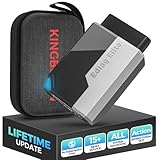
- OBD2 Bluetooth Scanner Lifetime Update: Ediag Elite offers revolutionary Advantage Lifetime Updates with unlimited access to the superior 15+ reset service, bidirectional testing and full system diagnostics.The Ediag Elite is an excellent Bluetooth OBD2 scanner diagnostic tool ideal for DIY's and private car owners.
- Bidirectional Test for Quickly Locating Problems: The Bidirectional Scan tool allows you to send commands directly from your smartphone to your vehicle for active testing. This feature helps to quickly narrow down problems such as air conditioning clutches, windows, doors, sunroofs, etc., reducing diagnostic time for mechanics and helping DIY users locate faults more easily. In addition, Ediag Elite provides fault analysis and repair guidance to help you solve problems efficiently.
- 15+ Maintenance Resets: The current version introduces 15+ popular special features: Oil Reset, Headlight Matching, Bleeding Reset, TPMS Reset, BMS Reset, Gear Box Relearn, Throttle Learning, Injector Coding, SAS Reset and more special functions in system diagnose menu. These functions make it easy for owners to carry out the necessary maintenance and servicing, ensuring that your vehicle stays in top condition, prolonging its service life and preventing common problems and breakdowns. Note: The Special function vary by model& year, Reach us check compatibility.
- Wide Compatibility CANFD & FCA
 Autoauth: Compatible with GM, Ford, Toyota, Chrysler, Honda, Mazda, Nissan, Mitsubishi, Hyundai, KIA with standard OBD2 port from 1996 to newer. More than 100+ car brands and features will be released gradually. Newest Ediag Elite scanner supports CANFD Protocol and FCA cars. Note: Coverage may vary on different vehicle by model& year ,Please contact us to confirm compatibility before purchase.
 - Perfect for Monitoring The Health of Your Vehicle: Ediag Elite is designed to make vehicle maintenance simple and efficient. With intelligent Auto VIN quick recognition, it is easy to connect to your car without the need for manual input. Real-time data is visualized in a variety of formats, including graphs, numeric, meter displays and clear 4-in-1 data charts, allowing you to effortlessly monitor real-time data. Data logging/reporting is available for playback and further analysis

- No Annual Fees & 2026 Upgraded CAN FD: Why pay $199/year or more for updates? The 2026 newest Kingbolen K7 obd2 scanner features have been upgraded to Lifetime Updates without subscription fees, saving you significant costs in the long run. K7 scan tool also adds the CAN FD protocol for the latest GM models (2019+), enabling faster data transfer, reducing the risk of undetected errors
- 2026 Newest Top-tier Car Scanner: Kingbolen K7 diagnostic scan tool is equipped with most capabilities for daily repair/maintenance: Wireless diagnosis via Bluetooth, Bidirectional Test, ECU Online/Offline Code, 31+ Resets, PMI for Ford, Lincoln, Mazda, Global version for 100+ brand vehicles and 17 languages, no area limit, FCA AutoAuth
- OE-Level Full Systems Scan Tool: K7 professional diagnostic scanner with Auto Vin can do one-click to scan ECUs on most of vehicles, like pcm, ecm, eps, bcm, tpms, sas, a/c system... to read/clear code, view live data, freeze frame, read ecu info. 4-in-1 data stream graphics can make data viewing more intuitive. Detailed diagnostic reports will help you easily master the car situation as it can be shared by bluetooth or email! Adding workshop information can help your customers to know more
- Bidirectional Test/Active Test & ECU Code: Stop guessing and start fixing. Bidirectional scan tool Kingbolen K7 can perform real active test that can send commands to the vehicle's ECU to drive the actuators to work, like window, rear mirrors, sunroof, door, solenoids, wipers, headlamp, etc, helping you quickly find out bad parts and pinpoint faulty issues. K7 bidirectional scanner will be a good choice to save money and time on car repairs when performing complex maintenance and repair
- 31 Reset Functions: Avoid expensive dealership visits for simple services. Experience tells us that just a small repair service may cost a lot of money. Kingbolen K7 is a professional diagnostic scanner with 31 common maintenance services like Oil /SAS/EPB/TPMS Reset, Battery Matching, ABS Bleeding, Injector Code, etc. It effectively handles most of the car reset and relearning jobs, perfect for experienced DIYers and mechanics. Note: Functions in the menu vary across vehicles. Kindly check the compatibility before purchase
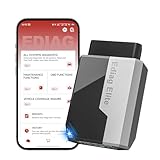
- 【Cost-effective Diagnostic Scan Tool】Lifetime updates without fee, No subscription fee required, No IP restrictions, Ediag Elite bluetooth scanner stands out. It can perform in-depth Full System diagnostics,15+ Reset Services, powerful Active Test, CANFD & FCA AutoAuth. Connect your phone via Bluetooth for diagnosis, providing a faster, smarter and smoother diagnostic experience. Easy to put in pocket, convenient to carry, keep track of the car's status anytime, anywhere. Best bang for your bucks.
- 【15+ Reset Service, Easy Problem Solving】 KINGBOLEN Ediag Elite obd2 scanner diagnostic scan tool comes with 15+ professional reset functions, including: Oil Reset, ABS Bleeding, Injector Code, SAS Reset, TPMS Reset, BMS Reset, AFS Reset, Sunroof Calibration, Brake Reset and more special functions in system diagnose menu. The ideal bluetooth scanner for mechanics and DIY enthusiasts, which can save unnecessary maintenance costs and significantly shorten repair time.
- 【Comprehensive Full Systems Diagnostic】 The Ediag Elite obd2 scanner bluetooth supports full system In-Depth diagnosis. It can read/clear fault codes, read real-time data/freeze frame, module information, and perform testing and reset functions for ECM, BCM, ABS, SRS, TPMS, TCM, BMS, SAS, A/C & RTM systems ect. It works with most car models after 1996, cover more than 150+ car brands. Supports 22 global languages for your convenience(EN, FR, ES, DE, IT, RU, PT, JP, TU...)
- 【Powerful Bidirectional Scan Tool & Active Test】 The obd2 code reader for Ediag Elite can perform real time active test that can send commands to the vehicle’s ECU to drive the actuators to work, such as turn on the radiator fan, modulate the throttle, open/close windows, etc. It can help you quickly find out the bad components and the cause of the fault, which can save you a lot of time. With BT 5.2 wireless connectivity, you can enjoy wireless diagnostics up to 33 feet.
- 【FCA AutoAuth & CANFD Compatibility】 Ediag Elite scan tool offers support with FCA Gateway Access, allowing you to perform protected functions on FCA vehicles, including Chrysler, Dodge, Jeep, Alfa Romeo, Fiat vehicles, etc.(Note:just allows you to access the FCA, but need to have your own FCA account) Supports the CAN-FD protocol, provide high-speed vehicle diagnostic communication and data transfer, working perfectly on GM vehicles produced after 2020, saving $100 to buy a CAN FD adapter.
Last update on 2026-06-12 / Affiliate links / Images from Amazon Product Advertising API
This product presentation was made with AAWP plugin.