
NHTSA ID Number: 10163236
Manufacturer Communication Number: 19NA091
TSB/Document Date: 2019-07-29
Summary
This New Model Features Bulletin provides General Information and other Topics to help the Service Personnel become familiar with features specific to the new Chevrolet Silverado and GMC Sierra 2500HD-3500HD pickup trucks.
Service Bulletin
Bulletin No.:
19-NA-091
Date:
June, 2019
INFORMATION
Subject:
Brand:
2020 Chevrolet Silverado and GMC Sierra 2500HD-3500HD New Model Features
Model:
Model Year:
From:
To:
VIN:
From:
Engine:
To:
Transmission:
6-Speed
Automatic
6L90, HMD, —
RPO MYD
6.6L, V8, SIDI,
VVT, Cast Iron,
Gasoline —
RPO L8T
Silverado
2500HD3500HD
2020
Sierra
2500HD3500HD
Involved Countries and Regions
Duramax® 6.6L
V8, DI,
Turbocharged
Diesel, GEN 5,
VAR. 1 —
RPO L5P
North America, South America, Israel and Middle East
Overview
Bulletin Purpose
This purpose of this bulletin is to introduce the
completely new 2020 Chevrolet Silverado and GMC
Sierra 2500HD-3500HD pickup trucks. This bulletin will
help the Service Department Personnel become
familiar with the all-new 6.6L V8 — RPO L8T gasoline
engine equipped with the 6-speed 6L90 automatic
transmission, and the Duramax® 6.6L V8 — RPO L5P
diesel engine equipped with the all-new Allison®
Branded - General Motors manufactured 10-speed
automatic transmission with an available integrated
PTO option, the brake system, SIR system, and other
general information for these vehicles.
Available in ¾-ton 2500, 1-ton 3500 single rear wheel,
and 1-ton 3500 dual rear wheel configurations with
2WD or 4WD. These trucks have at least 10 inches
(25.4 cm) of ground clearance, with an improved
approach angle, and a repositioned diesel exhaust fluid
(DEF) tank on the diesel models enabling additional
ground clearance.
Copyright 2019 General Motors LLC. All Rights Reserved.
—
Allison® 10Speed
Automatic
10L1000, GRX,
GEN 1, VAR 1
— RPO MGM
OR
Allison® 10Speed
Automatic
10L1000, GRX,
GEN 2, VAR 2
with PTO —
RPO MGU
The trucks are very connected, with options that
include OnStar®, Commercial Link, a built-in OnStar®
4G LTE™ Wi-Fi® Hotspot (requires a paid data plan),
as well as Inductive Charging for capable Portable
Wireless Devices and Bluetooth® capability. They also
support the Apple® CarPlay™ software feature and
Android™ Auto™ application.
Additional highlights include:
• A modular front on the trucks enables easier
mounting of a snowplow.
• Advanced cooling system for vehicles equipped
with the Duramax® 6.6L — RPO L5P. Cooling
capacity is increased by use of a larger radiator,
an immense cooling fan, and by improving the air
induction system. A dual-path intake system
draws dense, cool air through both the hood
scoop and the front grille in order to optimize
performance.
• Available 120 V alternating current power outlet
located at the rear of the box. It can be used to
plug in electrical equipment that uses a maximum
of 150 watts.
Page 2
•
•
•
•
June, 2019
Bulletin No.: 19-NA-091
Available Autotrac Active 2-speed transfer case
on 4WD models that electronically controls
“4 Auto” mode.
Available dual alternators on both engine options
make it easy to power any accessories needed for
commercial applications.
Available Power Up/Down Tailgate (Silverado)
that raises or lowers using the key fob, interior
button or the touchpad on the tailgate.
Silverado provides BedSteps located in front of
the rear wheel openings allowing easier access
from the side of the vehicle. The Sierra is
equipped with the same equipment, however they
are known as Bed side steps. Both complement
the integrated CornerSteps in the rear bumper of
the vehicles that have increased in size also to
improve access to the cargo area.
5318201
•
•
•
•
•
5286472
•
GMC’s innovative and exclusive MultiPro Tailgate
is standard on SLT, AT4, and Denali models and
can be configured and used in six different ways,
including as a step and a load stop for long items.
Other features include an easy access engine
coolant block heater outlet, easy to fill diesel
exhaust fluid (DEF) tank with its opening inside of
the fuel door.
Sierra has 12 corner tie-downs.
Silverado has 12 fixed tie-down rings, with the
corner rings rated at 500 pounds (227 kg) and the
ability to add up to nine accessory tie downs.
Vehicles have a Trailering Info Label placed on the
driver’s door jamb which identifies the truck’s
specific trailering information, including curb
weight, GVWR, GCWR, maximum payload,
maximum tongue weight and rear GAWR.
Vehicles equipped with the Duramax® 6.6L V-8
Turbocharged engine and the 10-speed automatic
transmission provide a 52 percent increase in
maximum towing capability to 35,500 pounds
(16,103 kg) on properly equipped models.
Brakes
ABS Description and Operation
The electronic brake control module (EBCM) and the
brake pressure modulator are serviced separately. The
brake pressure modulator uses a four circuit
configuration to control hydraulic pressure to each
wheel independently.
Depending on options, the following vehicle
performance enhancement systems may be provided:
• ABS
• Traction Control
• Stability Control
• Dynamic Rear Proportioning
• Hill Descent Control System
• Hill Hold Start Assist
• Hydraulic Brake Assist
• Intelligent Brake Assist
Bulletin No.: 19-NA-091
•
•
June, 2019
Trailer Brake Control System
Trailer Sway Control
ABS
When wheel slip is detected during a brake application,
an ABS event occurs. During ABS braking, hydraulic
pressure in the individual wheel circuits is controlled to
prevent any wheel from slipping as needed. A separate
hydraulic line and specific solenoid valves are provided
for each wheel. The ABS can decrease, hold, or
increase hydraulic pressure to each wheel. The ABS
does not increase hydraulic pressure above the amount
which is transmitted by the master cylinder during
braking. During an ABS braking event, a series of rapid
pulsations may be felt in the brake pedal.
ABS Activation Sequence
The typical ABS activation sequence is as follows:
• Pressure Hold: The EBCM closes the isolation
valve and keeps the dump valve closed in order to
isolate the slipping wheel when wheel slip occurs.
This holds the pressure steady on the brake so
that the hydraulic pressure does not increase or
decrease.
• Pressure Decrease: If a pressure hold does not
correct the wheel slip condition, a pressure
decrease occurs. The EBCM decreases the
pressure to individual wheels as needed during
deceleration when wheel slip occurs. The isolation
valve is closed and the dump valve is opened. The
excess fluid is stored in the accumulator until the
pump can return the fluid to the master cylinder or
fluid reservoir.
• Pressure Increase: After the wheel slip is
corrected, a pressure increase occurs. The EBCM
increases the pressure to individual wheels as
needed during deceleration in order to reduce the
speed of the wheel. The isolation valve is opened
and the dump valve is closed. The increased
pressure is delivered from the master cylinder.
Traction Control
When drive wheel slip is noted, the EBCM will enter
Traction Control (TC) mode. First, the EBCM requests
the engine control module (ECM) to reduce the amount
of torque to the drive wheels via a serial data message.
The ECM reduces torque to the drive wheels and
reports the amount of delivered torque. If the engine
torque reduction does not reduce drive wheel slip, the
EBCM will actively apply the brakes on the slipping
drive wheel. During TC braking, hydraulic pressure in
each drive wheel circuit is controlled to prevent the
drive wheels from slipping. The EBCM commands the
pump motor and appropriate solenoid valves ON and
OFF to apply brake pressure to the slipping wheel. TC
can be manually disabled or enabled by pressing the
TC switch.
Stability Control
Stability Control provides added stability during
aggressive maneuvers. Yaw rate is the rate of rotation
about the vehicle's vertical axis. The stability control is
activated when the EBCM determines that the desired
yaw rate does not match the actual yaw rate as
measured by the yaw rate sensor. The desired yaw rate
Page 3
is calculated by the EBCM using the following inputs:
steering wheel position, vehicle speed and lateral
acceleration. The difference between the desired yaw
rate and the actual yaw rate is the yaw rate error, which
is a measurement of oversteer or understeer. When a
yaw rate error is detected, the EBCM attempts to
correct the vehicle's yaw motion by applying brake
pressure to one or more of the wheels. Stability control
activations generally occur in turns during aggressive
driving. When braking during stability control activation,
the brake pedal may pulsate.
Dynamic Rear Proportioning
The dynamic rear proportioning is a control system that
replaces the mechanical proportioning valve. Under
certain driving conditions the EBCM will reduce the rear
wheel brake pressure by commanding the appropriate
solenoid valves ON and OFF.
Hill Descent Control
The Hill Descent Control system allows a smooth and
controlled hill descent in rough terrain without the driver
needing to touch the brake pedal. The vehicle will
automatically decelerate to a low speed and remain at
that speed while activated. Some noise or vibration
from the brake system may be apparent when the
system is active. The descent control system may be
activated, if equipped, by pressing the button on the
console. To activate, press the button when traveling at
speeds of less than 30 mph (50 km/h). To deactivate,
press the button on the console, the brake pedal, or the
accelerator. Descent control enables the vehicle to
descend using the ABS to control each wheel's speed.
If the vehicle accelerates without driver input, the
system automatically applies the brakes to slow the
vehicle down to the desired speed.
Hill Hold Start Assist
The Hill Hold Start Assist allows the driver to launch the
vehicle without a roll back while moving the foot from
the brake pedal to the accelerator pedal. The EBCM
calculates the brake pressure, which is needed to hold
the vehicle on an incline and locks that pressure for a
certain time by commanding the appropriate solenoid
valves ON and OFF when the brake pedal is released.
Hill hold start assist is activated when the EBCM
determines that the driver wishes to move the vehicle
up-hill, either forward or in R.
Hydraulic Brake Assist
The hydraulic brake assist function is designed to
support the driver in emergency braking situations. The
EBCM receives inputs from the brake pressure sensor
and when it senses an emergency braking situation, it
will actively increase the brake pressure to a specific
maximum.
Intelligent Brake Assist
Intelligent brake assist is designed to provide limited
braking to help prevent front and rear low speed
collisions. The EBCM receives inputs from the brake
pedal position sensor, wheel speed sensors, short
range radar and ultrasonic sensors in order to detect a
collision. When the EBCM calculates a possible
collision, it will actively increase the hydraulic brake
pressure to apply the brakes.
Page 4
June, 2019
Bulletin No.: 19-NA-091
Trailer Brake Control System
A trailer brake control system is used to control the
amount of trailer braking power that is made available
to trailers with brakes that require a controlled output
electrical signal for actuation. The trailer brake control
system determines the trailer brake type (Electric Brake
or Electric Over Hydraulic Brake) automatically.
Trailer Sway Control
Trailer sway control will detect any vehicle yaw
instability, caused by an attached trailer. When
instability is detected, the EBCM attempts to correct the
vehicle's yaw motion by applying brake pressure to one
or more of the wheels as needed. The engine torque
may be reduced also, if it is necessary to slow down the
vehicle.
Engine 6.6L V8 — RPO L8T
Overview
5319758
Typical views of the 2020 6.6L V8 gasoline engine
This new, more powerful engine is being produced by
General Motors for use in the new 2500HD, 3500HD
pickup trucks. It is equipped with spark ignited direct
injection (SIDI) for greater performance and increased
fuel efficiency, with 22 percent more torque and up to
18 percent more towing capability when compared to
the previous 6.0L V8 — RPO L96 gasoline engine.
Engine Features and Specifications
•
•
•
•
5318268
•
•
•
•
Bore/Stroke: 4.064-inches (103.25 mm) /
3.858-inches (98 mm).
Compression Ratio: 10.75:1
Cylinder Block: Cast iron with nodular iron
main caps.
Cylinder Head: The cylinder heads are made of
cast aluminum for lighter weight and rapid heat
dissipation, with overhead-valve, two valves per
cylinder and variable valve timing.
Electronic Ignition System: The electronic
ignition system produces and controls the high
energy secondary spark. This spark ignites the
compressed air/fuel mixture at precisely the
correct time, providing optimal performance, fuel
economy, and control of exhaust emissions. The
ECM collects information from the crankshaft
position sensor and camshaft position sensor to
control the sequence, dwell, and timing of the
spark.
Engine Oil Capacity with Filter: 8 Quarts (7.6 L)
Engine Oil Capacity without Filter:
7.5 Quarts (7.1 L)
Firing Order: 1-8-7-2-6-5-4-3
Fuel System: The fuel system is an electronic
returnless on-demand design, which reduces the
internal temperature of the fuel tank by not
returning hot fuel from the engine to the fuel tank.
Bulletin No.: 19-NA-091
•
•
June, 2019
Fuel: GM recommends the use of TOP TIER
Gasoline to keep the engine clean and reduce
deposits.
Horsepower: 401 hp (299 kW) @ 5200 RPM
(SAE certified).
Torque: 464 lb-ft (629 Nm) @ 4000 RPM
(SAE certified).
Engine Controls — Components
Some of the engine controls components and their
operation are as follows:
Camshaft Position Actuator System
The camshaft position actuator system is used for a
variety of engine performance enhancements. These
enhancements include lower emission output through
exhaust gas recirculation (EGR) control, a wider engine
torque range, improved fuel efficiency, and improved
engine idle stability. The CMP actuator system which is
controlled by the ECM, accomplishes these
enhancements by controlling the valve timing relative to
piston position.
Camshaft Position Actuator System Operation
The ECM sends a pulse width modulated signal to a
CMP actuator solenoid in order to control the amount of
engine oil flow to a camshaft actuator passage. There
are 2 different passages for oil to flow through, a
passage for CAM advance and a passage for CAM
retard. The camshaft actuator is attached to the front of
the camshaft, and is hydraulically operated in order to
change the angle of the camshaft relative to the
crankshaft position.
Camshaft Position Sensor
The camshaft position sensor (CMP) detects magnetic
flux changes between the four narrow and wide tooth
slots on the reluctor wheel. The camshaft position
sensor provides a digital ON/OFF DC voltage of varying
frequency per each camshaft revolution. The ECM will
recognize the narrow and wide tooth patterns to identify
camshaft position, or which cylinder is in compression
and which is in exhaust. The information is then used to
determine the correct time and sequence for fuel
injection and ignition spark events.
Crankshaft Position Sensor
The crankshaft position sensor (CKP) is an internally
magnetic biased digital output integrated circuit sensing
device. The sensor detects magnetic flux changes of
the teeth and slots of the reluctor wheel on the
crankshaft. The reluctor wheel is spaced at 60-tooth
spacing, with two missing teeth for the reference gap.
The reference gap is used to identify the crankshaft
position at each start-up. The ECM uses each
crankshaft position signal pulse to determine
crankshaft speed position, to determine the camshaft
relative position to the crankshaft, to control camshaft
phasing, and to detect cylinder misfire.
Electronic Ignition System
The electronic ignition (EI) system produces and
controls the high energy secondary spark. This spark
ignites the compressed air/fuel mixture at precisely the
correct time, providing optimal performance, fuel
economy, and control of exhaust emissions. The ECM
Page 5
utilizes information from the CKP, CMP and knock
sensor (KS) to control the sequence, dwell, and timing
of the spark.
Engine Misfire Detection
The crankshaft position sensor is used to determine
when an engine misfire is occurring. The camshaft
position sensor is used to determine which cylinder is
misfiring. By monitoring variations in the crankshaft
rotation speed for each cylinder, the ECM is able to
detect individual misfire events. For accurate detection
of engine misfire, the ECM must distinguish between
crankshaft deceleration caused by actual misfire and
deceleration caused by rough road conditions.
EVAP System
The EVAP system limits fuel vapors from escaping into
the atmosphere. Fuel tank vapors are allowed to move
from the fuel tank, due to pressure in the tank, through
the EVAP vapor tube, into the EVAP canister. Carbon in
the canister absorbs and stores the fuel vapors. Excess
pressure is vented through the vent hose and EVAP
vent solenoid valve to the atmosphere. The EVAP
canister stores the fuel vapors until the engine is able to
use them. At an appropriate time, the ECM will
command the EVAP purge solenoid valve ON, allowing
engine vacuum to be applied to the EVAP canister.
With the normally open EVAP vent solenoid valve OFF,
fresh air is drawn through the vent solenoid valve and
the vent hose to the EVAP canister. Fresh air is drawn
through the canister, pulling fuel vapors from the
carbon. The air/fuel vapor mixture continues through
the EVAP purge tube and EVAP purge solenoid valve
into the intake manifold to be consumed during normal
combustion. The ECM uses several tests to determine
if the EVAP system is leaking or restricted.
Heated Oxygen Sensor
The ECM controls a closed loop air/fuel metering
system in order to provide the best possible
combination of driveability, fuel economy, and emission
control. The ECM monitors the heated oxygen sensor
(HO2S) signal voltage and adjusts the fuel delivery
based on the signal voltage while in closed loop. The
short term fuel trim values change rapidly in response
to the HO2S signal voltages. These changes fine tune
the engine fueling. The long term fuel trim values
change in response to trends in the short term fuel trim.
The long term fuel trim makes coarse adjustments to
fueling in order to re-center and restore control to short
term fuel trim.
Ignition Coils
Each ignition coil has an ignition 1 voltage circuit and a
ground circuit. The ECM supplies a low reference and
an ignition control circuit. Each ignition coil contains a
solid state driver module. The ECM will command the
ignition control circuit ON, which allows the current to
flow through the primary coil windings. When the ECM
commands the ignition control circuit OFF, this will
interrupt current flow through the primary coil windings.
The magnetic field created by the primary coil windings
will collapse across the secondary coil windings, which
induces a high voltage across the spark plug
electrodes.
Page 6
June, 2019
Knock Sensor
The Knock Sensor (KS) system is used by the ECM to
control the ignition timing for the best possible
performance while protecting the engine from
potentially damaging levels of detonation, also known
as spark knock. The KS system uses one or two flat
response 2-wire sensors. The sensor(s) use
piezo-electric crystal technology that produces an AC
voltage signal of varying amplitude and frequency
based on the engine vibration or noise level and
provides that signal to the ECM.
Fuel System
Overview
The fuel system is an electronic returnless on-demand
design which reduces the internal temperature of the
fuel tank by not returning hot fuel from the engine to the
fuel tank. Reducing the internal temperature of the fuel
tank results in lower evaporative emissions. An electric
turbine style fuel pump attaches to the fuel tank fuel
pump module inside the fuel tank. The fuel pump
supplies fuel through the fuel feed pipe to the high
pressure fuel pump. The high pressure fuel pump
supplies fuel to a variable-pressure fuel rail. Fuel enters
the combustion chamber through precision multi-hole
fuel injectors. The high pressure fuel pump, fuel rail
pressure, fuel injection timing, and injection duration
are controlled by the ECM.
Electronic Returnless Fuel System Operation
The electronic returnless fuel system controls fuel
delivery using a microprocessor. It functions as an
electronic replacement for a traditional, mechanical fuel
pressure regulator. The pressure relief regulator valve
within the fuel tank provides an added measure of over
pressure protection. Desired fuel pressure is
commanded by the ECM, and transmitted to the K111
fuel pump driver control module via a GMLAN serial
data message. A fuel pressure sensor located on the
fuel feed pipe provides the signal used by the ECM for
Closed Loop fuel pressure control.
Fuel Pressure Sensor
The fuel pressure sensor is a serviceable 5 V, 3-pin
device. It is located on the fuel feed line forward of the
fuel tank. The ECM provides a 5 V circuit and a low
- 💯【Conta.ct us for Support Directly】If you met any...
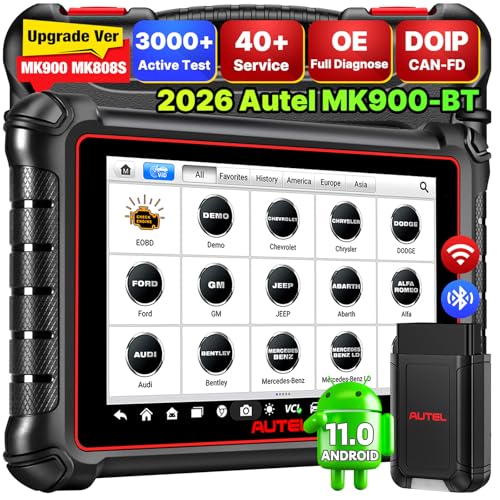
- 🔥🔥🔥【2026 AUTEL FLAGSHIP MK900BT MK900-BT, NEW...
- 🚗【3000+ ACTIVE TESTS (50➡3000+), SAME AS MS...
- 🚗【40+ HOT SERVICES FOR 150 MAKES (28+➡40+)】Full...
- 🚗【OE ALL SYSTEM DIAGNOSE, AUTO SCAN 2.0: SCAN LICENSE...

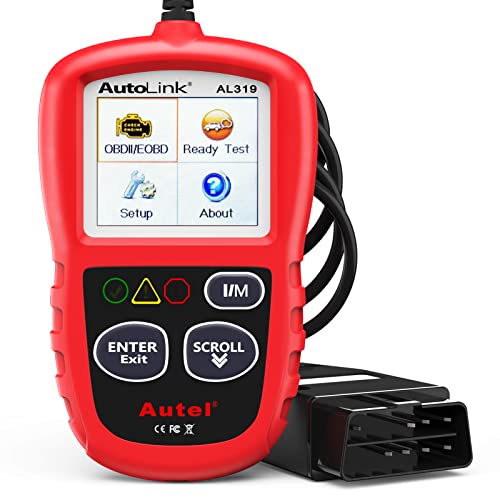
- 【TURN OFF CEL】 This AL319 car scanner diagnostic tool...
- 【EXTENSIVE APPLICATION】 Autel AL319 Compatible with...
- 【FOR END USER & DIYERS】 This error code reader AL319 is...
- 【USER-FRIENDLY DESIGN】 This OBD2 scanner and check...
- 【HIGH-QUALITY SERVICES】 12 months war.ranty from the...
This product presentation was made with AAWP plugin.
If the PDF is very large, it may not load in the preview below.
Some older TSBs had multiple PDFs — visit the NHTSA Website to view all PDFs.
If the TSB PDF does not show, download or view it on the NHTSA Website.
Click on the (+) Plus Sign
Then Click on Associated Document(s)
Search NHTSA Database for Recalls
Search NHTSA Database for Vehicle Investigations
View Latest Vehicle Investigations
Search NHTSA Database for Vehicle Complaints
View Latest Vehicle Complaints
TSB/Document ID: 19NA091
Replacement Service Bulletin Number:
MFR Communication Date: 2019-06-10
MFR Internal Campaign ID/Software Version:
Communication Type: Service Bulletin/Repair Instructions
NHTSA Components: EQUIPMENT
MFR Component System:
MFR Component Subsystem:
Previous TSB | Next TSB |
- 💯【Conta.ct us for Support Directly】If you met any issues about: Received a registered device/ Language Changing/ Function not Support/ VCI150 Blueto-oth connector malfunction/ Subscription Renewal, please conta.ct us via 📞autelsupply @outlook. com🛣️, we will provide perfect solution for you. ⚠️Note: Autel MK900BT comes with 1-Year Free Software Update, most features will remain active after update subscription expires. 1. For questions regarding updates or need more useful accessories, please conta.ct us via 📞autelsupply @outlook.com🛣️. 2. If the device fails to charge or turn on, please conta.ct us via 📞autelsupply @outlook. com🛣️, we will handle it promptly.
- 🔥🔥🔥【2026 AUTEL FLAGSHIP MK900BT MK900-BT, NEW MODEL OF MK808S MK900 MX900 MK808BT MX808S】2026 newest Autel MK900BT retains all features of MK808S MX900 MX808S MK808Z MK808Z-BT MK808K-BT, while EXTRA added powerful functions (value 2000+ bucks). The Pro-level Autel MK900BT makes a big leaps: 28+➡40+, 50+➡3000+ Active Tests, 2026 NEW✅CAN FD & DOIP protocols ✅Pre&Post diagnostic report ✅WIFI Print ✅Auto VIN&Auto Scan 2.0 ✅Scan VIN/ License ✅Battery Test (Need purcha.se BT506). If found defect or us.ed, please conta-ct 📞autelsupply @outlook. com📞 get perf-ect solut.ion.
- 🚗【3000+ ACTIVE TESTS (50➡3000+), SAME AS MS906 PRO】Differ from MS906BT MS906 MP808 MK808 MX808 MK808BT only 50 tests, Autel scanner MK900BT escaner automotriz professional offers 3000+ active tests, it can send command to ECUs & monitor actuators operation, quickly locating faulty components. Bidirectional scanning takes your diagnostics to the next level with menu lists 3000+ active tests, such as windows, rear mirrors, sunroof, wipers, fuel injector, coolant fans, radiator fan, AC clutch, coolant pump and more. Note: Functions are not available for all vehicles, please send vehicle VIN to us check compatibility.
- 🚗【40+ HOT SERVICES FOR 150 MAKES (28+➡40+)】Full level-up of OBD2 code reader MaxiCOM MK808S MK808 MK808Z MX808 MK808Z-BT with 28 service, Autel scan tool MK900BT/ MK900-BT offers 40+ maintenance service on 150+ brands 10,000 vehicles from 1996-2025-2026. Hottest Services like: Oil Reset, ABS Bleed, SAS Calibration, Injector Coding, SRS, Throttle Reset, Gearbox Reset, Battery Registration etc. Added 12+ advanced resets: rain slash light sensor reset, HVA.C/ SUS calibration etc. Welcome to send Vehicle Make>Model>Year>VIN>Functions you required to 📞autelsupply @ outlook . com📞 check compatibility.
- 🚗【OE ALL SYSTEM DIAGNOSE, AUTO SCAN 2.0: SCAN LICENSE/ AUTO VIN】2026 new release Autel MaxiCOM MK900-BT scan tool embodies all system diagnostic with its 8in display for all vehicles. Like Sna.p-on tools, it can perform ✔Read/Clear Codes✔Displays 5-in-1 Live Data✔Record & Playback Data✔Retrieve Info on all available systems like ABS ECM BCM SRS TCM etc. In addition to Auto VIN technology, Autel MK900BT adds Scan License/ Auto Scan 2.0 to identify vehicle’s VIN/ license, make, year, model, no need manual input; One-click WiFi Printing of Pre&Post comparison diagnostic reports, highlight root causes of problems.

- Autel MaxiCheck MX808S OBD2 Diagnostic Tool
- 【TURN OFF CEL】 This AL319 car scanner diagnostic tool supports Reading and Clearing DTCs, DTC Look Up, displaying Live Data, Freeze Frame & I/M Readiness, view vehicle information, etc., to figure out the root cause of the Check Engine Light (CEL) and turn it off, helping you catch any potential issues early and avoid excessive costs from unnecessary repairs.
- 【EXTENSIVE APPLICATION】 Autel AL319 Compatible with 7 languages (English, French, Spanish, etc.) and various post-1996 OBD II protocol vehicles (Toyota
 , Nissan, Honda, Ford, etc.), this OBD II scanner provides accurate and fast diagnosis for worldwide car owners.
 - 【FOR END USER & DIYERS】 This error code reader AL319 is “plug and play” and comes with an easy interface. Even if you’re not familiar with vehicle repair, you can quickly take control of this obd2 scanner, and get the information you want.
- 【USER-FRIENDLY DESIGN】 This OBD2 scanner and check engine code reader features a patented One-Click I/M Readiness, TFT color display, built-in speaker, LED Indicator etc. The cable is long enough without being too long and getting in the way. No batteries are needed.
- 【HIGH-QUALITY SERVICES】 12 months war.ranty from the date of purchase and lifetime free update are offered by this Automobile OBDII scan tool. Welcome to contact us via Q&A, email, or hotline, and our after-sale-service team for technical support.
This product presentation was made with AAWP plugin.
Last update on 2026-06-06 / Affiliate links / Images from Amazon Product Advertising API