
NHTSA ID Number: 10158729
Manufacturer Communication Number: Driver Assist
TSB/Document Date: 2019-05-06
Summary
Driver Assist Topics. This bulletin also applies to the 2018 Touareg and the 2018-2019 Tiguan LWB.
If the PDF is very large, it may not load in the preview below.
Some older TSBs had multiple PDFs — visit the NHTSA Website to view all PDFs.
If the TSB PDF does not show, download or view it on the NHTSA Website.
Click on the (+) Plus Sign
Then Click on Associated Document(s)
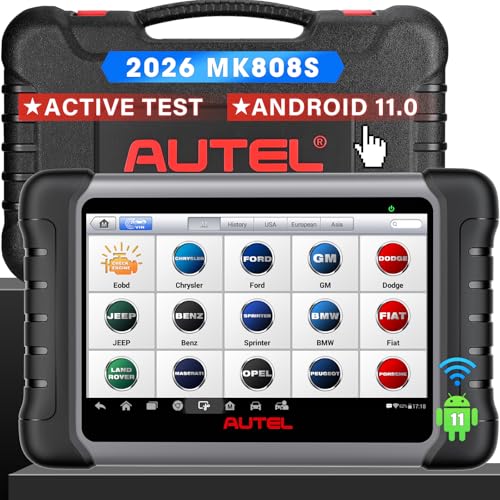
- 💝【Questions? We’re Here Anytime】MK808S is a...
- 🔥🔥🔥【2026 NEWLY RELEASED BI-DIRECTIONAL...
- 【28+ MOST POPULAR RESET SERVICE FOR 150 MAKES】Autel...
- 【ALL SYSTEM DIAGNOSTICS, FACTORY-LEVEL SCANNER】The...
- 【AUT0 SCAN & AUT0V1N, 10X FASTER】How much have you spent...

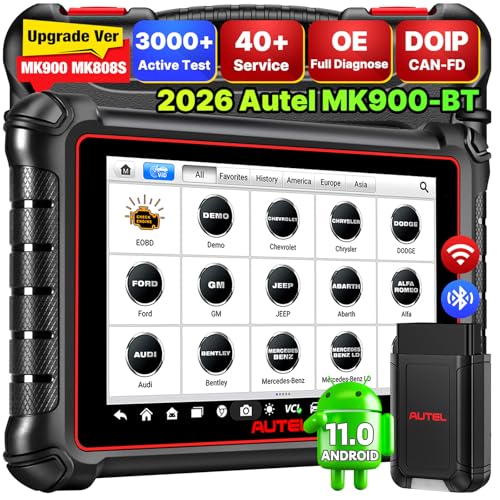
- 💯【Conta.ct us for Support Directly】If you met any...
- 🔥🔥🔥【2026 AUTEL FLAGSHIP MK900BT MK900-BT, NEW...
- 🚗【3000+ ACTIVE TESTS (50➡3000+), SAME AS MS...
- 🚗【40+ HOT SERVICES FOR 150 MAKES (28+➡40+)】Full...
- 🚗【OE ALL SYSTEM DIAGNOSE, AUTO SCAN 2.0: SCAN LICENSE...
This product presentation was made with AAWP plugin.
Search NHTSA Database for Recalls
Search NHTSA Database for Vehicle Investigations
View Latest Vehicle Investigations
Search NHTSA Database for Vehicle Complaints
View Latest Vehicle Complaints
TSB/Document ID: Driver Assist
Replacement Service Bulletin Number:
MFR Communication Date: 2019-04-16
MFR Internal Campaign ID/Software Version:
Communication Type: Service Bulletin/Repair Instructions
NHTSA Components: LANE DEPARTURE
MFR Component System:
MFR Component Subsystem:
Previous TSB | Next TSB |
Taking the Mystery Out of
Driver Assist Systems
All information in this handout was obtained from the following resources
which are available to you:
Owner’s Manual
Monroney Label
Know your VW
Training from the VW Academy
Front Assist Questionnaire
Websource/ Technology explained
Customer Care
VW Cup
TSB 00-18-09 Additional Safety Related Inquiry
and Reporting
PR codes
Warning Light Guide (Websource)
March 2019 Rev. 1.0
Lane Assist
Lane Assist helps the vehicle to maintain its lane in many different traffic situations. Lane Assist detects if the
car inadvertently leaves its lane, and it supports the driver by a corrective steering intervention at the steering
wheel. Whenever the camera recognizes that the vehicle threatens to leave the predicted lane without turn
signals on, a corrective steering movement will occur.
With the help of a camera, Lane Assist can recognize possible side markings of the current drive lane. Should
the vehicle leave this area unintentionally, for example when leaving the current drive lane without activating
a turn signal, the system will warn the driver with a corrective steering intervention. The driver can override
the corrective steering intervention at any time. Lane Assist will not warn the driver of a lane change if he or
she activates the turn signal, because the system will assume that the lane change is happening intentionally.
Component in System - R242 Camera
System Icons and Warnings
Calibration is Required When:
"No or incorrect basic setting/adaptation" is stored in the event memory.
The Driver Assistance Systems Front Camera -R242- was replaced.
The windshield was replaced or removed.
The rear axle toe was adjusted.
Work was performed on the chassis which influences the body height.
The level control system sensor was readapted on vehicles with damping regulation.
System Limitations:
Speed falls below 40 mph (60 km/h).
Distance to the next lane marking is too large.
No lane markings can be detected.
The radius of a lane marking bend is too small.
Driver overrides the corrective steering moment
using steering wheel force.
Driver uses the turn indicator.
System cannot identify a clear, active driver
steering movement for a long period of time.
Driving style is highly dynamic or aggressive.
March 2019 Rev. 1.0
Adaptive Cruise Control
Adaptive Cruise Control (ACC) controls the speed set by the driver, based on the speed of vehicles ahead. If
a vehicle is detected in front of the Volkswagen, ACC keeps a constant set distance from the other vehicle.
ACC accelerates on its own to the set maximum speed, and it automatically brakes when a detected vehicle
in front slows down. When the path in front is clear, the system will accelerate and maintain the set speed.
A sensor constantly monitors the area in front of the vehicle. The driver can use the accelerator to interrupt
the ACC control and accelerate faster. Use of the brake pedal immediately deactivates the ACC function. All
system messages appear in the central multifunction display.
ACC Basic: ACC Basic helps maintain an individually stored constant speed between about 18 mph and 95
mph and a previously set distance in time intervals between your vehicle and those in front of you. ACC Basic
will follow the vehicle in front of it until the car slows to 18mph or lower. The system will then request the
driver take over using a visual and audible warning in the instrument cluster display.
ACC with Follow to Stop: ACC with Follow to Stop will follow the vehicle in front to a complete stop. Using the
Resume function or pressing the accelerator will resume ACC, and accelerate based on the vehicle in front.
ACC with Stop and Go: After stopping, the vehicle automatically resumes driving within a defined time or
when the vehicle in front accelerates from a stop, or if the driver chooses to do so.
System Component
Radar Sensor J428
System Warnings and Icons
Calibration Requirements for Forward Radar Sensors:
Rear axle toe setting has been adjusted (thrust angle.)
The Distance Regulation Control Module J428 has been removed and reinstalled.
The front bumper support has become loose or has been moved or removed and installed.
The misalignment angle is greater than –0.8° to +0.8°.
The vehicle has been brought into the service position.
System Limitations
A limited sensor view due to a dirty sensor or inclement
weather conditions (for example, heavy rain, snowfall,
iced over sensor etc.) causes the ACC/Front Assist
functions to be temporarily unavailable. This is indicated
by the following message in the Instrument Cluster.
March 2019 Rev. 1.0
Front Assist
Forward Collision Warning and Autonomous Emergency Braking (Front Assist)
A radar sensor to help prevent rear-end collisions with a vehicle on the road ahead, moving in the same direction within physical and technical limits of the system. When the risk of a collision is identified, Forward Collision Warning and Autonomous Emergency Braking (Front Assist) can help minimize the effects of a collision.
Step 1 (Advance Warning): Optical and acoustic warning with additional “preparation” for emergency
braking (brake pads are brought closer to disc and hydraulic brake assist sensitivity is increased). No
warning prior to braking below 18 mph.
Step 2 (Immediate Warning): A warning jolt from the brakes is given.
Step 3 (Automatic Braking): If the driver does not brake after the second step, automatic braking is initiated.
Step 4: If the driver reacts by braking too lightly, the vehicle will automatically generate the brake pressure required for the situation.
Pedestrian Monitoring (Included in Front Assist)
When system anticipates that a pedestrian is about to cross the roadway or is already on the road and a
collision is possible:
For speeds between 18-40 mph, the driver is warned optically and acoustically about 1.2 seconds before
a potential collision.
For speeds below 18 mph or if the driver does not react to the optical and acoustical warning signal, the
brakes will be applied automatically and the speed of the vehicle will be reduced. If necessary to avoid an
accident and possible within the system’s boundaries, the car will be stopped completely.
System Components
J428 (ACC sensor)
R242 (lane assist camera)
System Icons and Warnings
Calibration is Required When
See ACC and Lane Assist for Details.
System Limitations:
Will not detect vehicles moving towards you in your lane. Will not prevent head on collisions.
May not detect narrow vehicles (bicycles, motorcycles)
Will only detect moving objects.
Heavy rain and snow will impede sensor view.
Will not detect stopped traffic.
Because the radar system cannot predict the intent of either driver, unwanted warnings may occur.
These can happen when vehicle turns off of the road or when overtaking another vehicle.
The Pedestrian Monitoring System does not react to animals.
March 2019 Rev. 1.0
Active Blind Spot Monitor
The system supports the driver in assessing and avoiding dangerous situations while changing lanes. The
Blind Spot Monitor uses two radar sensors to monitor the blind spot detection area and the area behind your
vehicle and alerts you to vehicles in your blind spot via indicator lights in the outside mirrors. The system
measures the distance to other vehicles and the difference in speed between your vehicle and other vehicles.
If the vehicle is also equipped with Lane Keeping System (Lane Assist), the “active” portion can step in. If the
car is about to divert from the lane when a vehicle is in your blind spot, the system will gently counter. If the
driver continues to change the lane, the system will warn the driver with additional steering wheel vibrations.
The Blind Spot Monitor automatically deactivates when driving through tight curves in the road. In this situation, the deactivation occurs without a driver information message. After driving through the curve, the Blind
Spot Monitor automatically reactivates and the system is available again.
Components in system – J1086(4),
J1087(7), K303(1), K304(2)
System Icons and Warnings
Calibration is Required When:
One of the radar sensors are replaced.
Calibration fault stored in the module.
System Limitations:
The mirror will not illuminate a “vehicle detected warning”
when your vehicle speed differential is greater than 6mph
from the vehicle in your blind spot.
The system may react to high or offset guard rails and give
false detection.
Uneven road surfaces may cause false detection.
Snow, Ice, bumper stickers or dirty rear bumper covers
may impede the radar signal.
Rear bumper cover repairs or loose objects inside the
bumper may give false detection.
March 2019 Rev. 1.0
Vehicle detected in blind spot.
Rear Traffic Alert
The Rear Traffic Alert system uses the radar sensors in the rear bumper to monitor the traffic crossing behind
the vehicle when the driver is backing out of a parking space or maneuvering, for example, in traffic situations
with poor visibility. The radar sensors measure the distance and the speed difference between your vehicle
and an approaching object and use this to calculate the time until a possible collision.
If the Rear Traffic Alert detects an approaching vehicle, the system will alert the driver acoustically and visually in the Park Pilot screen on the radio/navigation display.
If the driver does not press the brake pedal, the system can intervene with automatic braking. The Rear
Traffic Alert assists the driver with strong automatic braking that could help prevent or reduce damage that
may result from a collision. Once the system detects that the vehicle is stationary, it keeps the vehicle from
moving for up to 2 seconds.
Components in System
J1086(4), J1087(7)
System Icons and Warnings
Object Approaching
Rear of Vehicle.
Calibration is Required When:
One of the radar sensors are replaced.
Calibration fault stored in the module.
System Limitations:
Snow, Ice, bumper stickers or dirty rear bumper
covers may impede the radar signal.
Rear bumper cover repairs or loose objects inside
the bumper may give false detection.
May not detect people, animals, and things that
are moving slowly or not at all.
Non-authorized paint may impede sensor function.
March 2019 Rev. 1.0
Autonomous Braking
Activated.
Park Distance Control
The system supports the driver when he or she is parking the vehicle. Audible signals let the driver know how
much space there is behind the vehicle and, on some models, how much space there is at the front too.
The frequency of the signal tones increases as the vehicle draws closer to the obstacle. Once the distance
drops below 11.8 inches (30 cm), a continuous tone sounds.
Depending on the model of radio or radio/navigation system, the distance to any obstacle is indicated visually
in the display too (OPS – Optical Parking System). In situations that are not clear, the system makes work
easier for the driver and prevents unpleasant petty damage.
Maneuver Braking (Included in Park Distance Control)
The parking aid system has been expanded to include the Maneuver Braking function. This function works
independently of the Park Assist steering and uses only the Park Distance Control sensors. Maneuver braking applies brakes automatically when a static obstacle is detected. It should reduce collisions with static obstacles while you maneuver the vehicle and, in ideal cases, prevent them. The parking aid ultrasound sensors
are used for this function. The system is active when reverse gear is selected, the Park Distance Control
function (visual/acoustic warning) is enabled, and maneuver braking has been activated.
Parking Steering Assistant (Park Assist)
The Park Assist system can assist the driver when:
Finding a suitable parking space.
Parking in a suitable parallel parking space.
Parking in a suitable perpendicular parking space forward and backward.
Pulling out of a parallel parking space.
The driver activates the Parking Steering Assistant by the “Park Assist” button in the center console. Park Assist scans both the left-hand and right-hand sides of the road for any parking spaces as it drives past. By activating the indicator, the driver stipulates on which side of the road he or she wishes to park. When the Parking Steering Assistant detects a parking space, the message “Parking Space Found” appears on the multifunction display. The driver is then directed into the correct starting position and requested to engage reverse
gear. When reverse gear is engaged, the Parking Steering Assistant is enabled and the automatic steering is
activated. With careful use of both the accelerator and brake, the car steers into the parking space. The driver
is invited by means of further images on the display to drive forward and, if necessary, backward again. The
number of parking moves depends on the length of the parking space. The shorter the parking space, the
more parking moves will be necessary. Park Assist can be overridden by the driver at any time.
System Components
Parking Aid Sensors
G252-G255, G203-G206
Parallel Parking Sensors
G568, G569, G717, G716
(Continued on Next Page)
March 2019 Rev. 1.0
Park Distance Control
System Components
Ultrasonic Park Sensors are located in front and rear
bumper covers.
System Icons and Warnings
“Park Assist” Modes
“Park Assist” Button
“Area View” Button
“Park Assist” Display
System Does Not Require Calibration
System Limitations:
If there is a tight curve in the road, the Park Assist system cannot help you park the vehicle or pull out of a
parking space.
Automatic braking assistance ends after about 1.5 seconds
Certain types of clothing and the surfaces of certain objects do not reflect the ultrasonic waves that the
sensors send and receive. Such objects and persons wearing such clothing will not be detected by PDC
or will not be detected accurately
Noise in the area can interfere with the signals of the Park Distance Control sensors. Under certain circumstances, the system will not detect people and objects for this reason
Aftermarket components such as bicycle racks can impair the function of the Park Distance Control system
Repainting the sensors in the bumpers can impair the function of the PDC system
Dirt, snow, ice, and bumper stickers can impair the sensors
March 2019 Rev. 1.0
Warning Lights
Lights can have different meanings in different carlines.
Please check owner’s manual for more information.
March 2019 Rev. 1.0
Warning Lights
Lights can have different meanings in different carlines.
Please check owner’s manual for more information.
March 2019 Rev. 1.0

- 🔥🔥🔥2026 New Functions Making X7HD the Top Dog - Big Surprise!!! ANCEL X7HD truck scanner 10 major functional advantages .✅>Full HDOBD/OBD2 Function ✅>ALL System Diagnostic ✅>42+ Reset Function ✅>Active Test / Bi-Directional Control✅>ECU Coding✅>Graphing Live Data✅>Wide Compatibility ✅>2 Yrs Free Update✅>Remote Operation✅>Bluetooth 5.0 & Wifi In addition, 8 major hardware advantages: ✅>6000 mAh✅>10.1 inch Tablet✅>2G RAM
 ✅>32G ROM (Expandable to 128GB)✅>Data Record & Replay & Print✅>Android 10.0✅>Bluetooth 5.0 & Wifi✅>14 Languages
 - 🚛OEM DPF Forced Regen & Cylinder Cutout Test & more - ANCEL X7HD diesel scanner diagnostic tool not only supports DPF regeneration, DPF reset, DPF related information reset, DPR state reset, DPD forced regeneration etc, which helps you better solve the exhaust aftertreatment system problems, but also supports activate motor to do exhaust air in ABS Automatically. Moreover, it features TPMS activation, cylinder cut-off and learning functions
- 🚛Advanced ECU Coding & Programming - ANCEL X7HD 10.1inch truck scanner diagnostic tool is equipped with advanced ECU coding, supports Level calibration, Idle speed learning and Adjustment, Camshaft timing control learning, Control unit adaptations, Injector Codes, Read/Write VIN, Road speed limit optional vehicle speed set, etc... PLEASE NOTE that ECU codes are not compatible with all vehicles, please send us your VIN# to check vehicle compatibility
- 🚛42+ Reset Functions & Bidirectional Control - 2026 newest top heavy duty truck scan tool, comes with 42+ special services (ECU, Speed Limit and Idle Reset, Oil Reset, Injector Coding, EPB, ABS, SRS, Suspension, Throttle, etc. and always keep growing), which meet all your various needs for service and maintenance
- 🚛10 Inch All Systems Diesel Scanner & Full HDOBD/OBD2 Modes - ANCEL X7HD diesel truck scan tool supports all systems scan, such as Engine, Brake, Retarder, TECU Transmission, Tachograph, ABS, SRS, TPMS, EPB, SAS, ESP, and other vehicle systems, comes with 10 obd2 service modes: read/erase error codes, Data Stream, I/M Readiness, Vehicle Information, Actuations, DTC Lookup, EVAP, view freeze frame, etc

- 【Extensive Compatibility】HD601 heavy duty truck scanner supports 12V & 24V commercial vehicles and all major truck models that comply with standard protocols (SAE J1939, SAE J1708, ISO 14230-4, ISO 15765-4 and ISO 9141-2, ISO 27145-4 and Euro6). Fits for Cummins, Paccar, Detroit, Caterpillar, Freightliner, International, Peterbilt, Ford Heavy Truck, Class 4-Class 8 trucks, etc. It also supports engine diagnosis on most cars, minivans, light trucks and pickups
- 【 Full System Diagnostic】HD601 Diesel Scanner supports all system scans of heavy trucks compliant with standard protocols SAE J1939 & J1708, such as Engine, ABS, Transmission, Braking System, ESP, EPS, Fuel System, etc, It is a great scan tool for Cummins, Caterpillar, Detroit, Caterpillar, Maxxforce, Bendix,Wabash, Wabaco, Haldex, Allison, Eaton heavy trucks, With this truck tool, you can get deep analysis data about the system and do some repairs by yourself, saving much time and money. Note: Only heavy truck vehicles that comply with the above protocol can diagnose the entire system
- 【Enhanced Diesel OBD Scanner】The HD601 Diesel OBD Scanner offers unparalleled diagnostic capabilities for heavy-duty trucks. Beyond code reading, clearing, and live data display, it retrieves vehicle information, freeze frames, and DTCs. With 6, 9, and 16 pin cables, it ensures compatibility with various engines. This scanner's real-world testing prowess ensures comprehensive support for a wide array of heavy-duty truck engines, making it an indispensable tool for truck diagnostics
- 【DTC Library】+【Life Time Free Update】The built-in DTC library allows you to retrieve the codes directly without searching for the definition in the book. Whether you are a professional mechanic or a DIY car owner, HD601 diesel scanner explains the existing problem, makes it easier for you to understand code definitions and helps you locate vehicle faults. Note: This device cannot directly solve the fault. Plus, you get a lifetime free internet updates, so you always have the latest software for diagnostics in English and Spanish languages.
- 【Friendly Design, Easy of Use】This scanner is plug and play, simple and convenient, and very friendly for beginners. With improved buttons for easy menu navigation. The excellent 2.8 inch LCD color screen makes it easy to view the displayed results and gives you a better overview of your car's problem areas and the identified codes. In addition, the processor is super-fast and responds without lagging, providing maximum comfort and efficiency in diagnostic and service work

- Why NEXAS NL102 Truck Scan Tool? The NL102 outshines other truck scanner with its extensive diagnostic features. It offers full system diagnostics for major trucks meeting standard protocols, along with complete OBD2 functionality. Beyond read fault codes, clear codes and live data display, it enables vehicle info retrieval, freeze frame capture, and DTC lookup. Equipped with 6-pin, 9-pin, 16-pin connectors, it ensures broad truck compatibility. Plus, enjoy lifetime free updates in English, Spanish, and French, keeping your diagnostic scanner software current.
- Wide Compatibility - Friendly Reminder: To avoid compatibility issues, please confirm with us via Amazon Messages before purchasing. This heavy duty truck scanner is compatible with all heavy-duty trucks and semi that adhere to standard protocols (J1587, J1939, J1708). It covers a wide range of vehicle models, including Cummins, Detroit, Caterpillar, Freightliner, International, Kenworth, John Deere, Peterbilt, Sterling, Mack, Paccar, Western Star, Mercedes-Benz, Volvo, Scania, MAN, Renault, ERF, Foden, Seddon-Atkinson, Iveco, DAF, SISU, STEYR, ISUZU etc. Equipped with 6-pin, 9-pin, and 16-pin connectors for versatile device compatibility, ensuring stable plug-and-play connections.
- Save Hundreds of Money for All Heavy Duty Trucks – This diesel diagnostic scanner supports accurate full-system scans for all heavy-duty trucks that comply with standard protocols (J1587, J1939, and J1708). It can read and clear trouble codes across a range of vehicle systems, including the engine, transmission, instrument panel, drivetrain, brake system, suspension, ABS, ESP, EPS, fuel system, etc. The truck scanner communicates directly with your truck's computer to provide real-time data stream analysis, letting you pinpoint issues with precision. This cuts down on waste from unnecessary part replacements, saving you time and hundreds or even thousands of dollars.
- All OBD2 Functions + Battery Health Monitoring – Unlike many obd2 scanners on the market that only cover partial OBD2 features, ours gives you full OBD2 capability: read & clear codes, live data, freeze frame data, I/M readiness checks, EVAP tests, on-board monitor, O2 sensor tests, vehicle info, and DTC lookup. That means more detailed insights for pros and DIYers alike. The NL102 isn't just a code scanner – it's a battery saver. Regularly check your car's battery health, and catch issues before it dies completely. No more unexpected no-starts in the driveway or on the road. It diagnoses battery condition accurately, helping you avoid costly last-minute repairs.
- Plug and Play & One-click for DTC: NEXAS diesel scanner is user-friendly. It comes with an intuitive screen and easy-to-understand interface, making it accessible even for non-professionals to get started. And the built-in DTC library in the code reader allows you to directly retrieve codes without searching for definitions in books, making it easier to understand the code definitions and solve problems more quickly.
This product presentation was made with AAWP plugin.
Last update on 2026-05-13 / Affiliate links / Images from Amazon Product Advertising API