
NHTSA ID Number: 10154866
Manufacturer Communication Number: GCI-A0437-02
TSB/Document Date: 2019-03-18
Summary
GENERAL CONSUMER INFORMATION PERTAINING TO AN OWNER'S MANUAL
(At 80 %)
23 L
NOTE: The height of your Motorhome may vary depending upon the tire pressure, air ride
pressure and optional components mounted on the roof. The width of the motor home will very
with the positions of the outside mirrors. All measurements and capacities are approximate. There
are many variables in the construction of the vehicle for measurements to be absolute.
TIRE/ AIR RIDE PRESSURE:
Tire pressures as recommended by GM / Chevrolet Tire Size LT 245 / 75 R16 E
FRONT TIRES: 50 PSI / 340 kPa
REAR TIRES: 80 PSI / 550 kPa
10
11
LP Tank Access, remote Fill and Breather
Located on the rear bumper, through the fibreglass access door.
NOTE: Only fill your propane tank to 80% capacity.
Passenger Side Furnace Vent
Located on the passenger side in front of the rear wheel well. This vent is the exhaust and fresh air
return for your furnace. NOTE: For maximum efficiency of your furnace this vent should be free
from obstruction. Caution this surface may be hot when furnace is running.
Driver Side Exterior Shower Compartment
Located on the driver side in front of the rear wheel well, this compartment contains a retractable
showerhead with hot and cold-water taps. NOTE: When winterizing your Motorhome be sure to
winterize this tap and the shower hose.
12
Driver Side Water Heater Vent
Located on the driver side behind the rear wheel well, these vent gives you access to the exterior
working components of the 6-gallon auto ignite water heater. NOTE: Keep this vent clear from
all obstructions.
Driver Side Sewer Hose Compartment
Located on the driver side in the locking component compartment just behind the rear wheel well.
This stores the 10-foot sewer hose.
Driver Side Sewer Dump Valves
Located on the driver side behind the locking door just in font of the rear wheel well. These dump
handles allow you to dump your gray and black waste tanks.
NOTE: Dump your black water first to allow your gray water to flush the black water
through the hose.
13
Passenger Side Fridge Vents
Located on the passenger side just behind the side entry door. These vents allow for airflow for
your fridge coils, which help with the cooling process of the fridge.
NOTE: Ensure that these vents are free from all obstructions.
Driver Side Fresh Water Holding Tank Fill
Located on the driver side just behind the driver side door. This locking door provides access to fill
your fresh water tank.
Passenger’s Side Exterior 110-Volt Plug
Located on the passenger side rear in front of the rear wheel well, this plug will only function if
power is supplied through the generator or shore power.
14
Passenger Side Exterior Porch Light
Located behind the passenger side kitchen window, this light is controlled by the switch on the
kitchen end gable near the entrance handle.
Coach & Chassis Batteries:
The chassis battery is located under the hood of the vehicle, supplied by GM / Chevrolet. The
coach or auxiliary battery is an Interstate SRM 27 series deep cycle battery. This battery operates
the Motor Home portion of your vehicle. The coach battery is located on the passenger side in
front of the rear wheel well. It is installed on a slide out battery tray.
15
TRAVEL PREPARATION
Before You Leave
Prior heading off on your adventures, you should always check to ensure that:
- the LP gas is off at the main valve
- all black and gray waste water tanks are empty and closed.
- all electrical cords and exterior hoses are stored back into their respective compartments
- chassis fluid levels are at recommended levels
- chassis tire pressure levels are at recommended levels
- chassis exterior lighting is functional
- all exterior components are secure and closed
- the refrigerator power switch is changed to 12-Volt
(The 12volt/ DC system is there to maintain the coolness of the refrigerator while in
motion. The refrigerator should have been cooled on propane or AC electric before filling it
and leaving on you trip.)
- all interior compartments and drawers are closed and locked into position
- all interior components are secure and in place
- the furnace control switch on the thermostat is off
- the TV swing-out is locked into a position
- the site is left in better condition than when you arrived.
While In Motion
It is not recommended that you use any of your appliances while in motion. Warning: Do not use
any LP gas appliances while in motion. While you are in motion, you will have power to all 12Volt components such as the dome lights, water pump, roof vent, 12-Volt receptacle, TV, and
DVD. You will not have power to the microwave, 110-Volt receptacles, and roof air conditioner.
Upon Arrival at Your Site
Once you arrive at a site, please ensure that:
- your motorhome is parked in a level position so that your components will be at their
optimum performance (place a bubble level in the freezer shelf of the refrigerator to use as
a base and level your unit according to this)
- all exterior vents are clear from obstructions
- the black and gray water waste tank valves are closed
- hook up your 110-Volt power cord to your coach and then to the site receptacle (if
supplied at site)
- hook up your fresh water line to the city water pressure connection (if supplied at site)
- it is recommended for pressurized city water that a water regulator is used
- turn the LP gas on
- turn the refrigerator switch power to LP gas selection or 110-Volt power (AC).
- turn the water heater on ( Before turning it on, make sure the water heater is filled with
water)
- connect park cable and telephone jack (if supplied)
16
MOTORHOME SYSTEMS
LP Gas System
Your motorhome is equipped with a Liquid Propane (LP) gas system that provides fuel to the
appliances (refrigerator, cook top, water heater and furnace).
The LP storage tank is located at the rear bumper. The LP tank is accessed through the rear bumper
access-swinging door. The filler and bleeder valve, the LP tank gauge and the LP gas regulator are
also in this location.
Propane fuel is stored in a liquid state under extreme high pressure. As fuel is used, propane vapor
passes from the tank through the regulator into the gas lines and eventually to the appliances.
Although the propane system has undergone extensive testing for leaks, the system’s connections
and fittings are subject to road vibrations and should be checked regularly for possible leaks.
Propane fuel is extremely flammable, colorless, heavier than air and smells like rotten eggs.
The main shut-off valve to supply propane to the coach is operated by the round handle located in
the rear bumper LP access door (ensure this switch is on before operating appliances).
LP gas regulators must always be installed with the diaphragm vent facing downward. Regulators
that are not in compartments have been equipped with a protective cover. Make sure that the
regulator vent faces downward and that the cover is kept in place to minimize vent blockage that
could result in excessive gas pressure causing fire or explosion.
Warning: Do not bring or store LP gas containers, gasoline or other flammable liquids inside
the vehicle because a fire or explosion may result. LP gas containers should not be placed or
stored inside the vehicle as LP gas containers are equipped with safety devices that relieve
excessive pressure by discharging gas into the atmosphere.
Warning: It is not safe to use cooking appliances for comfort heating. Cooking appliances
need fresh air for safe operation. Unlike homes, the amount of oxygen supply in the unit is limited
due to the size of the vehicle. Proper ventilation when using the cooking appliance(s) will avoid
dangers of asphyxiation.
`
Warning: Do not use portable fuel burning equipment, including wood and charcoal grills
and stoves inside the motorhome. The use of this equipment inside the recreational vehicle may
cause fire or asphyxiation.
DO NOT FILL LP CONTAINER TO MORE THAN 80% CAPACITY. Overfilling the LP
gas container can result in uncontrolled gas flow, which can cause fire or explosion. A properly
filled container will contain approximately 80% of its volume of LP gas.
If you smell gas:
1.
2.
3.
4.
5.
6.
Extinguish any open flames, pilot lights and all smoking materials.
Do not touch any electrical switches.
Shut off the gas supply at the tank valve or gas supply connection.
Open all the doors and other ventilating openings.
Leave the area until the odour clears and you are sure there is no further risk to you.
Have the gas system checked and leakage source corrected before using again.
17
LP Off/On Valve:
Located in the rear bumper LP access door. This valve, when open, allows LP to flow to the coach.
LP Fill Valve
Located in the driver side component compartment. This valve, covered by the yellow end cap
allows you to fill the LP tank to 80% capacity.
LP Bleeder Valve
The bleeder valve allows pressure to vacate the LP tank when 80% full.
LP Tank Gauge
This gauge indicates how full the LP tank is.
18
How to Use the LP Appliances:
Turn your red key disconnect switch to the on position (located on the passenger side near floor
level through the rear doors). Turn your LP on / off valve to the on position as mentioned above.
Cook Top:
The vehicle is equipped with a two-burner flush mount cook top located in the kitchen counter top.
1) Lift the glass cover.
2) Turn the selected burner knob to the ignite (flame) position. This allows propane to flow to the
selected burner.
3) Depress the middle ignition spark knob until the burner ignites.
4) Turn the burner knob to adjust the flame to the appropriate heat setting.
5) When you have finished using the cook top, turn the burner knob to the off position allow the
burner to cool before closing the cook top cover.
Please consult the Smeve stovetop owner’s manual for complete operating and cleaning
instructions.
It is recommended that the Fantastic Fan be used for ventilation when this appliance is in use.
Furnace
Your vehicle is equipped with a 16,000 BTU Suburban LP gas Auto Ignition Furnace. The furnace
is located on the bottom right hand side of the galley.
1) Ensure that there is propane supplied to the coach.
2) Ensure there is 12V power to the coach.
3) Select Heat with the mode button on the thermostat. (The thermostat control is located above
the kitchen countertop and to the right on the passenger side upper cabinet frame.
Using the up and down arrows select the desired temperature. The Furnace will auto ignite and
cycle through fan and heating. The furnace will cycle keeping the desired temperature.
Please consult the furnace owner manual for complete operating instructions.
19
Refrigerator
Your vehicle is equipped with a Dometic three way fridge (LP gas, AC & DC).
1) To turn the fridge on, turn the on / off button to the on position. Select your power source (LP
gas, AC or DC). Then select your desired level of coolness (this may vary slightly with each fridge
and weather condition).
2) The DC or Auxiliary Battery symbol is used when the vehicle is in motion. The DC mode will
maintain your fridge while driving, but should not be used for dry camping or initial cooling of
the refrigerator.
3) The AC symbol is recommended when the vehicle is operating off of a 120-volt power source
(shore power or generator).
Note: For the best cooling results your vehicle should be level and the exterior refrigerator
vents free from obstructions. Please consult your Dometic fridge-operating manual for
complete operating and maintenance instructions.
Water Heater:
Your vehicle is equipped with a 6 gallon LP Suburban gas Auto Ignition Water Heater. The water
heater is located underneath the rear electric sofa bed on the driver side. You can access the bypass valves through the rear doors and reaching under the electric sofa bed.
1) For normal or summer operation, ensure your by-pass valves are in summer position. The
valves at the top (red line) and bottom (blue line) of the water heater should be open. The valve
between the top and bottom valve should be closed. The valves are open if the handle lines up
with the water line, and are closed when making a T with the water line.
SUMMER POSITION
WINTER POSITION
\
2) Ensure the water heater is full of water. To check this open the water heater vent on the exterior
of the coach and lift the pressure relief valve, water should flow out of the spigot.
20
3) Fill your water heater by running your water pump or hooking a pressurized source onto the
city water hook up. Open a hot water tap in the vehicle to allow the air from the hot water tank
to escape while the tank fills with water (this can also be done by opening the pressure release
valve on the water heater until water flows out of the spigot).
4) Once the water heater is full turn on the water heater switch located above the side entrance
door in the monitor panel. Ensure the liquid propane supply to the coach is also turned on.
Note: Your LP gas appliances may not light on the first try. There may be air in the LP gas
lines that will dissipate as the gas pressurizes the lines.
Fresh Water System
The water system built into your motorhome provides full service similar to the system in your
home. A 12-Volt self-priming pump draws pressurized water from the fresh water tank to all cold
faucets and the water heater. An automatic pressure switch located in the water pump maintains a
positive line pressure between 20 to 30 p.s.i. The fresh and gray water tanks are located underneath
the floor. The black water tank is located above the floor under the toilet and shower pan.
Filling the Fresh Water Tank
1) Unlock the Fresh Water Fill. Remove the large white cap.
2) Insert a garden hose into the fill opening.
3) Turn the water source on to a medium flow rate, as a high-pressure flow will cause water to
gush out of the fill opening.
4) Monitor the fresh water fill level using the FRESH button on the monitor panel located above
the passenger side entry door. Do not over fill this tank. You may see water coming out through
the fill tube or air vent screen as this also indicates the fresh water tank is full.
5) If you have over filled your fresh water tank or you want to drain some of the water out of the
fresh water tank, open the drain spigot located on the fresh water tank. This fresh water tank is
located behind the rear axle. The fresh water tank spigot is located on the driver side
underneath the coach directly beneath the fresh water fill location.
NOTE: If you notice water running out from underneath the van when filling the tank, there
is a drain spigot on the fresh water tank, turn it to the closed position.
21
City Water Connection
The city water connection is located in the driver side component compartment. The city water
connection is a convenience for you when you have access to an outside water source. When
hooking up the city water connection you should make sure that the water pump switch is turned
off and that all water faucets are closed.
1)
2)
3)
4)
5)
Open the driver side component compartment.
Remove the plastic insert from the city water connection.
Attach a garden hose to the connection using a rubber washer to ensure the fitting is tight.
Turn the water source on to a medium pressure.
Check for leaks at the city water connection, as you may have to re-tighten this connection.
NOTE: In different areas the water pressure may vary. It is advisable to use a water pressure
regulator because excessive pressure may result in water-line damage. The city water system
bypasses the fresh water holding tank and feeds the water lines directly so that you will not have to
use the water pump. To disconnect the city water system, first turn off the water source, then open
a faucet to relieve some of the pressure in the lines (if you do not open a faucet to relieve some of
the pressure, when you unhook the water line, water may spray out), then unhook the water line.
Water Pump
The 12-volt Sure Flo water pump is located beneath the floor panel in the wardrobe directly behind
the driver seat (TS and TD models). To lift the floor panel, there are two screws that are to be
removed. The filter and the inlet connection are visible on the top of the water pump. Activate the
water pump using the pump switch at the bottom of the monitor panel located above the passenger
side entrance door. Please consult your Sure Flo operating manual for complete operating and
maintenance instructions.
22
In the Lexor RL-4 and TS-4 model, the water pump is located directly behind the driver seat behind
a foot panel (bottom left). Remove the 4 corner cover snaps and remove the screws to access. In
the Lexor RD model, the water pump is located behind the bottom-curved door underneath the TV
area (bottom right). Pull the bottom-curved door for access.
Trouble Shooting:
If the pump will not prime, please check:
- to make sure there is water in the holding tank
- to make sure that the battery is not run down
- for kinks in the inlet water line
- for leaks at inlet fittings (if air is leaking into inlet fittings, tighten fittings or apply clamps as
necessary)
- for clogged lines
- the inline flow filter, located beside your water pump.
If the water pressure drops:
- make sure faucet aerators are clean
- check to make sure there is water in the holding tank
- check to make sure the battery is not run down
- check faucets and connections for leaks.
If the pump runs when there is no apparent demand for water:
- make sure there is water in the holding tank
- check all faucets and fixtures to make sure they are all shut off and not leaking
- check line for leaks.
Toilet
Please refer to the manufacturer’s operating instructions.
Toilet Trouble Shooting:
1. Water keeps running in the bowl:
- check to see if all the levers are turned all the way back. Sticking may be caused by foreign
material on the waste valve blade seal at the bottom of the bowl. If the problem persists, you may
need to replace the water valve.
2. The Toilet leaks, there is water on the floor:
- if the leak is in the back of the toilet, check the water supply line connection and refer to the
manufacturer’s installation instructions. If the leak is at the toilet flange area (where the toilet
mounts to the floor), check the toilet flange nuts to tighten.
23
3. Poor flush pressure:
- the levers must be held fully open during the flush. A good flush should be obtained within 2 to
3 seconds. If the problem persists, remove the water supply line and check the water supply.
The water supply rate should be at least 10 litres/2.5 gallons per minute to ensure an adequate
flush.
Lexor Bath and Shower System
Your Lexor motor home is equipped with a slide out bathroom door system and removable shower
pan system. To use these systems follow the procedures:
To open the slide out bathroom door system:
1. Open the rear bathroom door to 90 degrees.
2. Unsnap the center vinyl strap to release the sliding door.
3 Slide the door across to reach the kitchen counter top and insert the brass ball on the door edge
into the counter top receiver.
4 Open the front bathroom door to 90 degrees and slide the door out to meet the brass receiver on
the kitchen end panel.
To use the removable shower pan system:
1. Using the tool provided, unscrew the drain plug from the floor in front of the refrigerator.
2. With the front bathroom door swung past 90 degrees slide the shower pan out from between the
vanity an the front bathroom wall, return the front door to 90 degrees.
3. Hold the shower pan at a 60-degree angle to the toilet shroud and insert it under the toilet
shroud skirt. Drop the shower pan down so that the drain lines up with the drain hole.
4. Shower using the curtain provided to enclose the shower unit.
5. After using the shower simply reverse the steps to return you bathroom for regular use.
Remember to close off the shower drain with the cap, as this is part of your gray water system.
24
It is recommended that the fantastic fan is running while the shower is in use to remove humidity.
It is recommended that the bathroom be wiped down after the shower has been used. This will help
prevent mildew and other residues from forming on shower walls.
Waste System
The Chev Lexor is equipped with two waste tanks.
1) Black water tank located above the floor of the van directly under the toilet. Only the toilet
water and solid waste enter this tank. This tank is approximately 11 US gallons or 42 liters.
2) Grey water tank located under the passenger side of the vehicle. This tank handles wastewater
from the sinks and the shower. This tank is approximately 27 US gallons or 102 liters.
Before using your waste holding tank, deodorize it by adding one gallon of water and commercial
tank deodorizer through the toilet.
Draining Waste Holding Tanks
1) Open the driver side sewer dump door located in front of the rear wheel well. This will expose
the sewer dump outlet. Press in the black and gray dump valve handles to ensure the valves are
closed. Remove the black termination cap.
2) Access the sewer hose from the locking sewer hose compartment located in the driver side
component compartment behind the rear wheel well. Connect the sewer hose to the drain outlet,
and put the opposite end into an appropriate sewer dump outlet
25
3) Open the termination valve on the solid waste holding tank (black handle). Once this tank is
empty, then open the valve for the gray waste tank (grey handle). A garden hose may be left
running into the toilet with the valve open to further rinse the tank and sewer hose.
4) Close the termination valves and replace the cap and store your sewer hose back in the canister.
Deodorize the empty tank by adding one gallon of water and commercial holding tank deodorizer
through the tank.
NOTE: If the black water holding tank is allowed to overfill, the overflow may back up through the
toilet drain.
NOTE: If the gray water tank is allowed to overfill, the overflow may back up through the shower
drain.
If you are using a sewer hook up in a RV park, keep the valve closed until the holding tank is at
least partially full, then drain. The large quantity of waste flow will provide more effective
drainage and reduce tank stoppages.
NOTE: It is important to clean your monitor probes in your holding tank to ensure their reliability.
See your RV dealer for suggested cleaning solutions.
Winterizing
1) Drain your fresh water tank. The fresh water tank is located on the driver side in front of the
rear axle (see page 21 for approximate location). Open the drain spigot by turning the top lever
and let the water drain (there may be a small amount of water left in the tank after it is
drained.).
2) Drain your hot water tank. First, relieve pressure inside the hot water tank with the pressure
relief valve located at the top of the hot water tank. Then remove the anode rod at the bottom of
the water heater tank on the outside of the vehicle. The anode rod is a 1 1/16” nut. Loosely
reinstall the anode rod after the water heater is drained, this will prevent dust and insects from
entering the heater while in storage.
26
3) Turn the water heater bypass valves to the winter position. The water heater bypass valves are
located underneath the rear electric sofa bed on the driver side. You can access the by-pass
valves through the rear doors and reaching under the electric sofa bed.
4) The winter position means that the valve handle at the top of water heater on the red line should
be closed and the valve at the bottom of the water heater on the blue line should be closed. The
valve in between where the red and blue lines connect should be open (the valves are closed
when the handle of the valve makes a T with the water line).
SUMMER
WINTER
5) Remove the water line from the inlet side of the water pump (this is the clear plastic line going
into the water pump filter.) Connect a siphon hose to the inlet side of the water pump place the
other end in a container RV non-toxic antifreeze. Turn on you’re the pump. This will pump
non-toxic RV antifreeze through all of your fresh water lines.
NOTE: Siphon hose consists of 40” of ½” clear tubing with a fitting to attach to the water pump.
The fitting can be purchased through an RV dealer.
6) Open the kitchen and bathroom faucets one at a time allowing the antifreeze to flow through
both the hot and the cold sides. Be sure to also open the toilet valve and exterior shower faucet.
Turn off the water pump and disconnect the siphon hose, reattach the original fresh water
supply fitting.
27
7) Pour ½ cup of RV antifreeze down each drain (kitchen sink, bathroom sink and shower drain).
8) Fully charge your auxiliary coach battery and turn off and remove the red key disconnect. The
red key disconnect is located behind the rear power sofa bed accessed through the two rear
doors on the passenger side.
9) Turn you thermostat to the off position.
10) Turn your propane tank off.
11) Place your fridge door in a slightly open position for air to circulate through the fridge..
It is recommended that you start and run your vehicle and generator once a
month during the winter season.
Winter Use
We recommend that the water system not be used when the outside temperature drops below the
freezing point. You should ensure that your unit is completely winterized by that time. If it is
- 💯【Conta.ct us for Support Directly】If you met any...
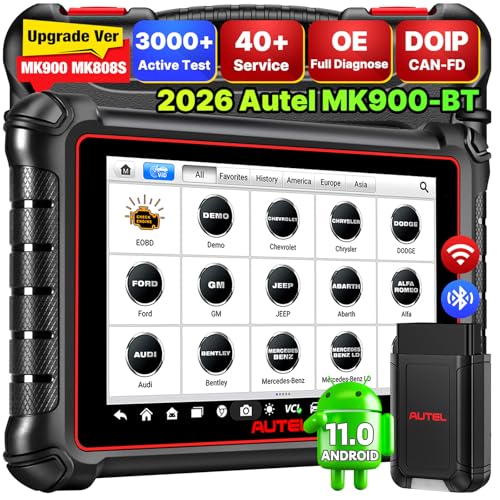
- 🔥🔥🔥【2026 AUTEL FLAGSHIP MK900BT MK900-BT, NEW...
- 🚗【3000+ ACTIVE TESTS (50➡3000+), SAME AS MS...
- 🚗【40+ HOT SERVICES FOR 150 MAKES (28+➡40+)】Full...
- 🚗【OE ALL SYSTEM DIAGNOSE, AUTO SCAN 2.0: SCAN LICENSE...

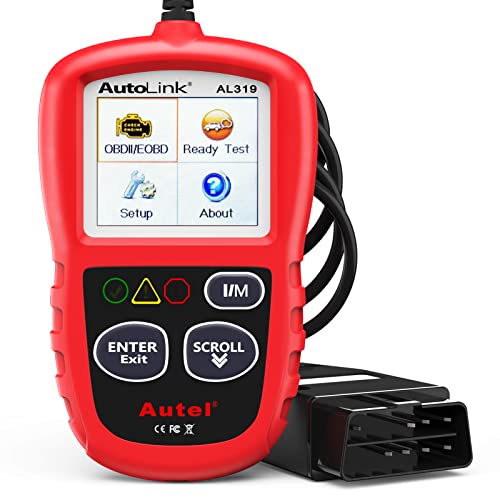
- 【TURN OFF CEL】 This AL319 car scanner diagnostic tool...
- 【EXTENSIVE APPLICATION】 Autel AL319 Compatible with...
- 【FOR END USER & DIYERS】 This error code reader AL319 is...
- 【USER-FRIENDLY DESIGN】 This OBD2 scanner and check...
- 【HIGH-QUALITY SERVICES】 12 months war.ranty from the...
Last update on 2026-06-12 / Affiliate links / Images from Amazon Product Advertising API
If the PDF is very large, it may not load in the preview below.
Some older TSBs had multiple PDFs — visit the NHTSA Website to view all PDFs.
If the TSB PDF does not show, download or view it on the NHTSA Website.
Click on the (+) Plus Sign
Then Click on Associated Document(s)
Search NHTSA Database for Recalls
Search NHTSA Database for Vehicle Investigations
View Latest Vehicle Investigations
Search NHTSA Database for Vehicle Complaints
View Latest Vehicle Complaints
TSB/Document ID: GCI-A0437-02
Replacement Service Bulletin Number:
MFR Communication Date: 2019-02-11
MFR Internal Campaign ID/Software Version:
Communication Type: Service Bulletin/Repair Instructions
NHTSA Components: EQUIPMENT:OTHER:OWNERS/SERVICE/OTHER MANUAL
MFR Component System:
MFR Component Subsystem:
Previous TSB | Next TSB |
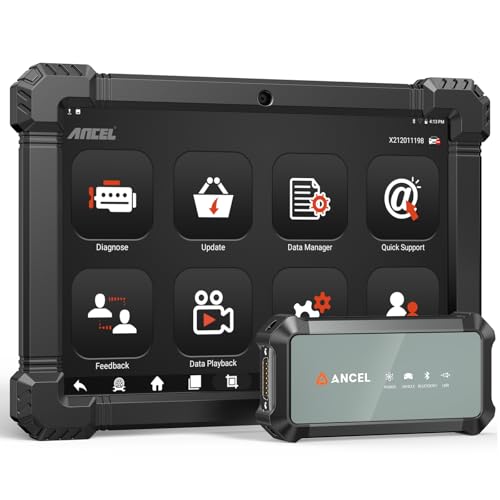
- 2026 ALL-IN-ONE HEAVY DUTY TRUCK SCANNER – BUILT FOR DIESEL DIAGNOSTICS:The ANCEL X7HD PRO combines full-system diagnostics, bi-directional control, ECU coding, HDOBD/OBD2 functions, and 42+ reset services in one powerful heavy duty truck scanner. This diesel scan tool helps technicians, fleet owners, and repair shops diagnose problems faster, reduce downtime, and complete more repairs without switching between multiple truck diagnostic tools. Features a 10.1" Android tablet, Bluetooth & Wi-Fi, live data graphing, and 2 years of f-ree updates
- 42+ RESET FUNCTIONS – MORE THAN A BASIC TRUCK CODE READER:Perform essential service functions including forced DPF regeneration, injector coding, speed limiter adjustment, idle adjustment, oil reset, ABS reset, SRS reset, EPB reset, throttle reset, and suspension calibration. Designed for real truck maintenance and fleet service, this commercial truck diagnostic scanner helps reduce dealer visits, avoid unnecessary downtime, and handle more repair jobs with one diesel diagnostic tool
- ACTIVE TEST & ECU CODING – ADVANCED BIDIRECTIONAL SCAN TOOL FOR TRUCKS:Quickly locate faults by activating components and sending commands directly to vehicle systems. Test injectors, ABS, throttle, cooling systems, and other modules in real time without unnecessary disassembly. ECU coding and module matching help adapt replacement parts, restore factory settings, and reduce repeat repairs, making this semi truck scan tool ideal for advanced troubleshooting and daily shop work
- FULL-SYSTEM HDOBD/OBD2 DIAGNOSTICS – WIDE TRUCK & ENGINE COVERAGE:Read and clear codes, monitor live data, freeze frame, and diagnose engine, transmission, ABS, body, and other major systems. Compatible with Freightliner
 , Kenworth, Peterbilt, Volvo, Mack, International, and other commercial truck brands, plus Cummins, Caterpillar, Detroit, Paccar, and Navistar diesel engines. Also supports full OBD2/EOBD diagnostics for standard vehicles, making it a versatile truck obd2 scanner for mixed fleets and repair shops
 - PROFESSIONAL HARDWARE + RELIABLE SUPPORT – BUILT FOR DAILY SHOP USE:This professional diesel diagnostic computer features a 10.1" touchscreen, Android 10.0 system, 6000mAh battery, Bluetooth/Wi-Fi connectivity, and built-in front & rear cameras for documenting repairs and remote troubleshooting. Includes 2 years of fr-ee updates, 1-year w-arranty, and responsive technical support. Contact [email protected] before purchase to confirm compatibility and supported functions for your truck or diesel engine

- 【Built for Heavy Duty Diesel Diagnostics】Designed for SAE J1939 and J1708 compliant trucks, buses, and diesel-powered commercial vehicles. HD601 truck scanner diagnostic tool helps owner-operators, small fleets, mobile technicians, and independent repair shops quickly identify fault codes, view live data, and make informed repair decisions—saving time, reducing downtime, and avoiding unnecessary shop visits
- 【Full System Diagnostics+All HD OBD Modes】The New HD601 heavy duty truck scanner delivers full-system diagnostics on SAE J1939 and J1708-compliant commercial vehicles—digging into engine, transmission, ABS, fuel, every system that keeps your rig rolling. It supports all HD OBD modes, giving you live data, freeze frame, ECU info, vehicle info, emissions data tracking, plus code reading and clearing. Not just what broke, but why—so you fix it right the first time. Pinpoint issues faster, cut repair costs, and spend less time on the shoulder
- 【Wide Heavy-Duty Vehicle Coverage】Supports a wide range of heavy-duty vehicle manufacturers and systems, including Freightliner, Kenworth, Peterbilt, Volvo, International, Detroit, Cummins, Paccar, Allison, Eaton, Bendix, Wabco, and more. Coverage varies by vehicle make, model, year, and system configuration. Contact our support team before purchase if compatibility verification is needed
- 【Speaks Major Truck Protocol】The New HD601 diesel truck scanner is built for American-made trucks—and supports the heavy‑duty protocols you' re most likely to run into on the road: SAE J1939, J1708/J1587, ISO 15765‑4, ISO 14230‑4, ISO 9141‑2, J1850 PWM/VPW, ISO 27145‑4, and EURO‑6. For most trucks, model years, and systems, it speaks the language your vehicle understands. Just plug it in and start diagnosing—no guesswork, no gatekeeping. Note: vehicle functions and module availability may vary by manufacturer and model year
- 【Save Hundreds on Diagnostic Fees】Why pay $150–300 for someone to read your codes? With the New ANCEL heavy duty truck scanner, you can pull fault codes yourself—in minutes, without leaving the truck. One or two uses pays for the tool. After that, every diagnostic is money back in your pocket. Smart investment for owner-operators, techs, and small fleets. Read and clear stored fault codes in minutes. Active fault codes may require repairs before they can be cleared
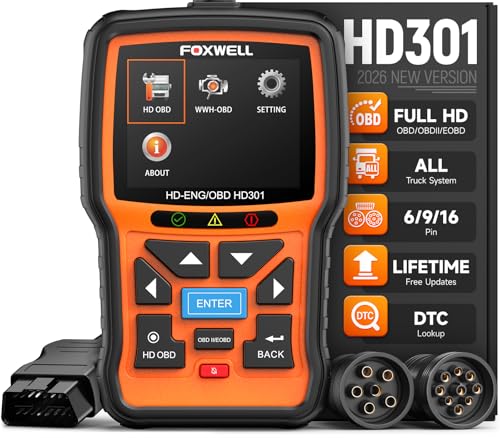
- 【One Tool, Total Fleet Coverage: 6/9/16 Pin Ready】Featuring an integrated 16-pin OBD2 connector and professional-grade 6-pin & 9-pin adapters, this heavy duty truck scanner provides extensive support for J1939, J1708, J1587, ISO 14230-4, ISO 15765-4 and ISO 9141-2, ISO 27145-4 protocols. It offers reliable diagnostic coverage for major American diesel brands—including Cummins, Paccar, Caterpillar, Detroit, and Freightliner—making it a versatile semi truck scanner for managing any diverse fleet.
- 【2 in 1 Diesel Code Reader & Advanced HD OBDII】Equipped with professional-grade diesel scanner capabilities, the HD301 features intuitive Read/Erase codes and turn off the "Check Engine" light. With the built-in DTC Lookup library, you can instantly access fault code definitions on-device without searching the internet. It also retrieves hundreds of essential live sensor data—such as coolant temperature, fuel pressure, and engine RPM—in a stable text format for precise and rapid troubleshooting. (Please note that the HD301 can not support DPF Regen.)
- 【Full System Truck Diagnostic】The FOXWELL HD301 heavy duty scan tool is engineered to deeply access and scan all available electronic control modules specifically for truck, including Engine, Transmission, ABS, SRS, Chassis, and Body Control. This professional truck scanner diagnostic tool allows you to identify issues across the entire vehicle, ensuring your rig stays in peak condition for the long haul.
- 【Versatile for most big Rigs: Commercial, Passenger & Beyond】Engineered for more than just trucks, this heavy duty scan tool offers extensive coverage for pickups, buses, trailers, and even marine vessels. From construction machinery (excavators, loaders) to agricultural equipment (tractors, harvesters), it provides a true all-in-one diagnostic solution.
- 【Plug-and-Play & No Subscription】Designed for the road! No WiFi, no batteries, and no complex App setup required. Simply plug it into your vehicle’s diagnostic port to start scanning immediately. Enjoy lifetime free software updates to keep your HD301 diesel truck scanner current with the latest vehicle models and features—without any hidden subscription fees—While overcoming language barriers with support for Spanish and English.
Last update on 2026-06-12 / Affiliate links / Images from Amazon Product Advertising API
This product presentation was made with AAWP plugin.