
NHTSA ID Number: 10153807
Manufacturer Communication Number: SB-15-17-003 R4
TSB/Document Date: 2019-02-25
Summary
It is now possible to retrofit the Continental Tire Pressure Monitoring System (TPMS) onto vehicles that were originally equipped with a Baolong TPMS.
SB-15-17-003
R4
Tesla, Inc.
December 12, 2018
Service Bulletin
Continental TPMS Retrofit
Classification
Repair Bulletin
Section/Group
17 - Electrical
Country/Region
All
Year
2012-2014
Model
Model S
Version
Baolong TPMS
Bulletin Classification: This repair bulletin provides instructions and guidelines for a noted condition or a customer
concern. The information provided can address a broad range of known or perceived issues with the operation of Tesla
vehicles. This bulletin might not be VIN-specific. These instructions assume knowledge of motor vehicle and high voltage
electrical component repairs, and should only be executed by trained professionals. Tesla assumes no liability for injury or
property damage due to a failure to properly follow these instructions or repairs attempted by unqualified individuals.
This Service Bulletin supersedes SB-15-17-003 R3, dated March 27, 2017. Each content change is marked by a vertical
line in the left margin. Discard the previous version and replace it with this one.
Condition
It is now possible to retrofit the Continental Tire Pressure Monitoring System (TPMS) onto vehicles that were originally
equipped with a Baolong TPMS.
Correction
Only perform this procedure when a customer-pay retrofit has been requested, or when instructed to do so by another
document.
Correction Description
Correction
Time
SB-15-17-003 Not Applicable
S011517003
0.00
Retrofit Continental TPMS Module Only
S021517003
1.4
Retrofit Continental TPMS Module And Harness
S031517003
3.35
SB-15-17-003
Page 1 of 26
Required Part(s): Part Number
Description
Quantity
1039955-00-A
1034601-00-B
1034602-00-A
1008246-00-B
To replace module only:
HOMELINK CONNECTOR CAP
TPMS, ECU, RECEIVER
TPMS,WHEEL_SENSOR,SILVER
DUAL LOCK 25MM X 20MM
1
1
4
2
1039955-00-A
1056262-00-A
1004969-00-A
1034601-00-B
1034602-00-A
1008246-00-B
To replace module and ECU:
HOMELINK CONNECTOR CAP
ASY,HRN,ADAPT,CONTI TPMS
BUTYL FOIL, 300X150, 2MM THICK
TPMS, ECU, RECEIVER
TPMS,WHEEL_SENSOR,SILVER
DUAL LOCK 25MM X 20MM
1
1
1
1
4
2
Shop supplies:
Wire, single core, 260 cm, (120 in), 0.35mm2 (22 AWG)
Electrical tape (1061317-00-B or equivalent)
Cable ties
These part numbers were current at the time of publication. Use the revisions listed or later,
unless otherwise specified in the Parts Manual.
Special Tool(s):
1061177-00-B
1050759-00-A
1050454-00-A
1060842-00-A
Kit, Wire Harness Repair
ATEQ TPMS Service Tool Model VT30
Ultra Heat Gun MATCO HG300 (or equivalent)
Wire Crimpers, Service (or equivalent)
Inspection
1. Remove the rear RH sill panel trim (refer to Service Manual procedure 15184802).
2. Inspect the RH main harness:
•
If there is a 6-pin connector secured to the harness at the C-pillar (Figure 1), continue to the “Retrofit Module
Only” section.
Figure 1
•
If there is no 6-pin connector, skip to the “Retrofit Module and Harness” section.
SB-15-17-003
Page 2 of 26
Retrofit TPMS Module Only
1. Disconnect 12V power (refer to Service Manual procedure 17010100).
2. Use an IPA wipe to clean the C-pillar body between the upper trim clip and the body clip (Figure 2).
Figure 2
3. Remove the backing from one side of each piece of Dual Lock fastener.
4. Affix the Dual Lock fastener pieces to the rear of the Continental TPMS ECU.
5. Release the 6-pin connector from the tape around the harness, and then connect it to the Continental TPMS ECU.
6. Remove the remaining backing from each piece of Dual Lock fastener on the rear of the Continental TPMS ECU.
7. Secure the ECU to the C-Pillar body between the upper trim clip and the body clip (Figure 3).
Figure 3
8. Install the rear RH sill panel trim (refer to Service Manual procedure 15184802).
9. Remove the mid aero shield (refer to Service Manual procedure 12030502).
SB-15-17-003
Page 3 of 26
10. Disconnect the harness connector from the Baolong TPMS ECU (Figure 4).
Figure 4
11. Remove and discard the Baolong TPMS ECU.
NOTE: The Baolong TPMS ECU is affixed to the vehicle body with Dual Lock fasteners.
12. Install the connector cap onto the harness connector that was attached to the Baolong TPMS ECU (Figure 5).
CAUTION: Make sure that the connector cap is secure to protect the active CAN communication circuits.
Figure 5
SB-15-17-003
Page 4 of 26
13. Use a cable tie to secure the connector out of the way, and then remove any excess tie (Figure 6).
Figure 6
14. If equipped, tightly roll up the TPMS antenna; and then use a cable tie to secure it to the body.
15. Install the mid aero shield (refer to Service Manual procedure 12030502).
16. Lower the vehicle to provide access to the wheels.
17. Install all components that were removed for access and reconnect 12V power.
18. Connect a laptop with Toolbox to the vehicle.
19. Use Toolbox to update the “TPMS Type” configuration variable to Continental 2.
20. Replace all 4 Baolong TPMS sensors with the Continental TPMS sensors (refer to Service Manual procedure
34040202).
21. Perform the ID Learn procedure for all 4 Continental sensors (refer to Service Manual procedure 34041100).
22. Perform a road test to make sure that there are no TPMS alerts.
Retrofit TPMS Module and Harness
1. Remove the RH side rear trunk trim (refer to Service Manual procedure 15245102).
2. Move the RH front seat fully rearward.
3. Remove the RH front sill trim panel (refer to Service Manual procedure 15180102).
4. Remove the RH lower B-Pillar trim panel (refer to Service Manual procedure 15184401).
SB-15-17-003
Page 5 of 26
5. Working in the RH sill area, peel the carpet inboard to expose the RH main electrical harness (Figure 7).
Figure 7
6. Remove the RH footwell cover assembly (refer to Service Manual procedure 14055302).
7. Carefully fold back the carpet for access to the Body Control Module (BCM) cover (Figure 8).
CAUTION: Take care not to damage components.
Figure 8
SB-15-17-003
Page 6 of 26
8. Remove the bolts (x4) that attach the BCM cover to the mounting bracket, and then remove the BCM cover (torque
5 Nm) (Figure 9).
v
Figure 9
9. Remove the bolts (x4) that attach the BCM bracket to the body, and separate the BCM bracket from the body (torque
5 Nm) (Figure 10).
Figure 10
10. Disconnect 12V power (refer to Service Manual procedure 17010100).
11. Wrap the 2nd row seat belt around the center console to provide better access to the working area (Figure 11).
Figure 11
SB-15-17-003
Page 7 of 26
12. Use an IPA wipe to clean the C-pillar body between the upper trim clip and the body clip (Figure 12).
Figure 12
13. Remove the backing from one side of each piece of Dual Lock fastener.
14. Affix the Dual Lock fastener pieces to the rear of the Continental TPMS ECU.
15. Remove the remaining backing from each piece of Dual Lock fastener on the rear of the Continental TPMS ECU.
16. Secure the ECU to the C-Pillar body between the upper trim clip and the body clip (Figure 13).
Figure 13
SB-15-17-003
Page 8 of 26
17. Route the new TPMS harness along the RH main harness from the B-Pillar to the trunk area (Figure 14).
Figure 14
18. Working near the sill area, route the end of the harness with 2 connectors underneath the HV cables toward the
B-Pillar (Figure 15).
Figure 15 (TPMS harness routed under HV cables)
19. Pull the harness forward and route it under the pretensioner.
SB-15-17-003
Page 9 of 26
20. Reach inside the B-Pillar and gently pull out the door harness (Figure 16). If equipped, release the edge clip.
Figure 16
21. Disconnect the larger (6-pin) of the 2 harness connectors (Figure 17).
CAUTION: Do not disconnect the smaller (16-pin) connector.
Figure 17
22. Plug the 2 connectors on the TPMS harness into the newly-exposed door harness connectors (Figure 18).
Figure 18 (TPMS harness highlighted)
SB-15-17-003
Page 10 of 26
23. Move the connectors and harness back inside the B-Pillar (Figure 19). Fasten the edge clip, if equipped.
Figure 19
24. Pull the harness towards the rear of the vehicle and connect the electrical connector to the TPMS ECU (Figure 20).
Figure 20
SB-15-17-003
Page 11 of 26
25. Route the 2 CAN wires on the TPMS harness under the door latch cable and pull them toward the rear of the vehicle
(Figure 21).
Figure 21 (TPMS harness highlighted)
26. In the RH trunk area beneath the electric park brake ECU, expose the 2 white harness connectors that are taped to
the RH main harness (Figures 22 and 23).
Figure 22
Figure 23
NOTE: Connector X720 has 3 green wires, and connector X719 has 3 green-white wires. The end of the TPMS harness
has a green wire with terminal, and a green-white wire with terminal.
SB-15-17-003
Page 12 of 26
27. Release the connector lock tabs of connector X720, insert the TPMS harness green wire terminal into cavity 4 of the
connector (Figure 24), and then fasten the connector lock tabs.
Figure 24 (Cavity 4)
28. Release the connector lock tabs of connector X719, insert the TPMS harness green-white wire terminal into cavity 4
of the connector (Figure 24), and then fasten the connector lock tabs.
29. Perform a push-pull-push test on both wires.
30. Use electrical tape to bundle the green and green-white wires together (Figure 25).
Figure 25
SB-15-17-003
Page 13 of 26
31. Use electrical tape to secure that bundle to the RH main harness (Figure 26).
Figure 26
32. Cut a 260 cm (120 inches) length of 0.35mm2 (22 AWG) wire, use a wire stripper to remove 7mm of insulation off one
end, and then twist the bare wire to prevent fraying.
33. Use the wire harness repair kit to splice this additional wire to the barrel crimp connector midpoint on the TPMS
harness.
34. Crimp the connection, solder the connection, and insulate the connection with heat shrink tubing and tape according
to the procedure described in SI-17-17-002, “Repairing Using a Single Splice”.
35. Route the additional wire along the RH main electrical harness, from the C-pillar, along the sill to the A-pillar, and up
to the BCM.
36. Lift the BCM bracket to the rear of the vehicle, and then disconnect connector X020 from the front of the BCM (Figure
27).
Figure 27
SB-15-17-003
Page 14 of 26
37. Remove the tape wrapping the wires between connector X020 and the body harness (Figure 28).
Figure 28
38. Identify the wire that terminates at pin 19 of connector X020 (Figure 29).
NOTE: The wire might be primarily pink, with a dark green stripe (Figure 30).
Figure 29 (Looking at end of connector)
SB-15-17-003
Figure 30 (Wire at terminal 19)
Page 15 of 26
39. Cut the wire identified in step 38 as far from connector X020 as possible (Figure 31).
CAUTION: Make sure not to cut any other wires.
Figure 31
40. Use a wire stripper to remove approximately 7 mm of insulation from the end of the wire coming from connector X020,
and then twist the bare wire to prevent fraying.
41. Slide a 30mm piece of heat shrink tubing over the wire and toward connector X020.
42. Use a wire stripper to remove 7 mm of insulation off the end of the additional wire, and then twist the bare wire to
prevent fraying.
43. Use the wire harness repair kit to splice the wire coming from connector X020 to the additional wire with a barrel
crimp.
44. Crimp the connection, solder the connection, and insulate the connection with heat shrink tubing and tape according
to the procedure described in SI-17-17-002, “Repairing Using a Single Splice”.
45. Use electrical tape to bundle the wires from connector X020 to the RH main electrical harness (Figure 32).
Figure 32
46. Use cable ties (x2) to bundle the additional wire to the RH main electrical harness from connector X020 to the A-pillar,
and then remove any excess cable tie.
SB-15-17-003
Page 16 of 26
47. Use electrical tape to wrap the bundle with a spiral pattern from connector X020 to the A-pillar (Figure 33).
Figure 33
48. Attach connector X020 to the front of the BCM (Figure 34), and then set the BCM bracket forward against the body.
Figure 34
49. Install the bolts (x4) that attach the BCM bracket to the body (torque 5 Nm) (Figure 35).
Figure 35
SB-15-17-003
Page 17 of 26
50. Install the BCM cover, and then install the bolts (x4) that attach the BCM cover to the mounting bracket (torque 5 Nm)
(Figure 36).
v
Figure 36
51. Carefully lay the carpet back over the BCM cover (Figure 37).
Figure 37
52. Use a cable tie to secure the TPMS harness to the corrugated section of the RH main electrical harness behind the Cpillar (Figure 38), and then remove any excess cable tie.
Figure 38 (TPMS harness highlighted)
SB-15-17-003
Page 18 of 26
53. Use a cable tie to secure the TPMS harness to the corrugated section of the RH main electrical harness near the Cpillar (Figure 39), and then remove any excess cable tie.
Figure 39 (TPMS harness highlighted)
54. Use a cable tie to secure the TPMS harness to the taped section of the main RH main electrical harness near the rear
of the 2nd row seat frame (Figure 40), and then remove any excess cable tie.
Figure 40 (TPMS harness highlighted)
SB-15-17-003
Page 19 of 26
55. Use a cable tie to secure the TPMS harness to the main RH main electrical harness at the rear of the charger bay
(Figure 41), and then remove any excess cable tie.
Figure 41 (TPMS harness highlighted)
56. Use a cable tie to secure the TPMS harness to the main RH main electrical harness at the base of the sill panel
between the HV cables and coolant hose (Figure 42), and then remove any excess cable tie.
Figure 42 (TPMS harness highlighted)
SB-15-17-003
Page 20 of 26
57. Use a cable tie to secure the TPMS harness to the RH main electrical harness directly behind the RH front row seat
pretensioner (Figure 43), and then remove any excess cable tie.
Figure 43
58. Use a cable tie to secure the TPMS harness to the RH main harness directly in front of the RH front row seat
pretensioner (Figure 44), and then remove any excess cable tie.
Figure 44
59. Use a cable tie to secure the TPMS harness to the RH main harness at the midpoint of the front sill panel (Figure 45),
and then remove any excess cable tie
Figure 45
SB-15-17-003
Page 21 of 26
60. Use a cable tie to secure the TPMS harness to the RH main harness at the front of the front sill panel near the A-pillar
(Figure 46), and then remove any excess cable tie.
Figure 46
61. Use electrical tape in a spiral pattern to secure the additional wire to the RH main electrical harness between the Bpillar and A-pillar (Figure 47).
Figure 47
62. Use electrical tape in a spiral pattern to secure the TPMS harness to the harnesses inside the B-pillar (Figure 48).
Figure 48
SB-15-17-003
Page 22 of 26
63. Push the harnesses completely inside the B-pillar, and then cover the hole with a butyl patch (Figure 49).
Figure 49
64. Use electrical tape in a spiral pattern to secure the additional wire and TPMS harness to the RH main electrical
harness between the B-pillar and C-pillar (Figure 50).
Figure 50
65. Use electrical tape in a spiral pattern to secure the TPMS harness to the RH main electrical harness from the TPMS
ECU and along the C-pillar (Figure 51).
Figure 51
SB-15-17-003
Page 23 of 26
66. Use electrical tape in a spiral pattern to secure the TPMS harness to the RH main electrical harness between the Cpillar and trunk (Figure 52).
Figure 52
67. Install the RH footwell cover assembly (refer to Service Manual procedure 14055302).
68. Working in the RH sill area, unfold the carpet to cover the RH main electrical harness (Figure 53).
Figure 53
69. Install the RH lower B-Pillar trim panel (refer to Service Manual procedure 15184401).
70. Install the RH front sill trim panel (refer to Service Manual procedure 15180102).
71. Move the RH front seat forward.
72. Install the RH side rear trunk trim (refer to Service Manual procedure 15245102).
73. Remove the mid aero shield (refer to Service Manual procedure 12030502).
SB-15-17-003
Page 24 of 26
74. Disconnect the harness connector from the Baolong TPMS ECU (Figure 54).
Figure 54
75. Remove and discard the Baolong TPMS ECU.
NOTE: The Baolong TPMS ECU is affixed to the vehicle body with Dual Lock fastener.
76. Install the connector cap onto the harness connector that was attached to the Baolong TPMS ECU (Figure 55).
CAUTION: Make sure that the connector cap is secure to protect the active CAN communication circuits.
Figure 55
SB-15-17-003
Page 25 of 26
77. Use a cable tie to secure the connector out of the way, and then remove any excess tie (Figure 56).
Figure 56
78. If equipped, tightly roll up the TPMS antenna; and then use a cable tie to secure it to the body.
79. Install the mid aero shield (refer to Service Manual procedure 12030502).
80. Lower the vehicle to provide access to the wheels.
81. Install all components that were removed for access and reconnect electrical power.
82. Connect a laptop with Toolbox to the vehicle.
83. Use Toolbox to update the “TPMS Type” configuration variable to Continental 2.
84. Replace all 4 Baolong TPMS sensors with the Continental TPMS sensors (refer to Service Manual procedure
34040202).
85. Perform the ID Learn procedure for all 4 Continental sensors (refer to Service Manual procedure 34041100).
86. Perform a road test to make sure that there are no TPMS alerts.
Affected VIN(s)
Affected Model S vehicles built before September 17, 2014.
NOTE: This is a simplified summary of the affected VIN list. Refer to the VIN/Bulletin Tracker or
Customer/Vehicle profile to determine applicability of this bulletin for a particular vehicle.
For feedback on the accuracy of this document, email ServiceBulletinFeedback@tesla.com.
SB-15-17-003
Page 26 of 26
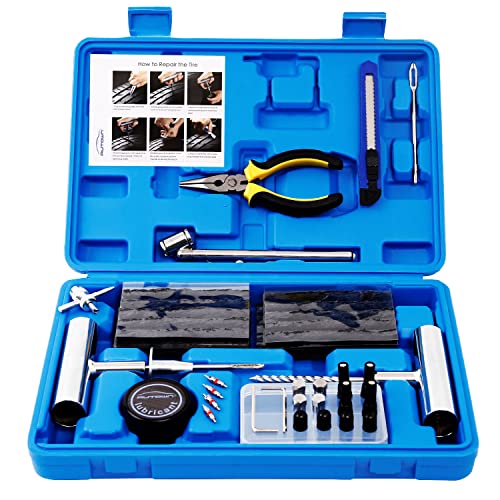
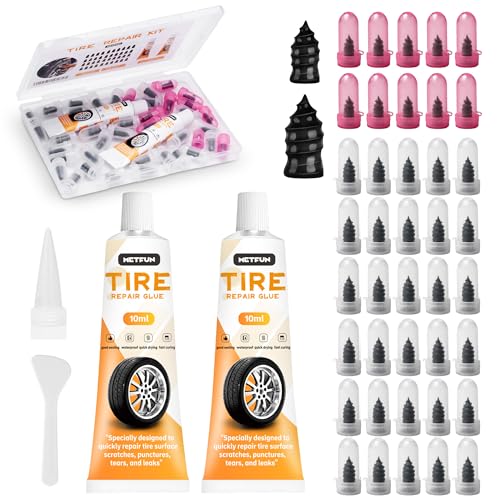
- 【Perfect Emergency Repair Solution】This kit includes...
- 【Premium Materials for Safe Repairs】Our tire screw plugs...
- 【2 Sizes for Every Puncture】Choose the right size for...
- 【5-Minute DIY Repair】Skip the auto shop and fix flats...
- 【Emergency-Ready Design】Compact & ready for...
Last update on 2026-06-23 / Affiliate links / Images from Amazon Product Advertising API
If the PDF is very large, it may not load in the preview below.
Some older TSBs had multiple PDFs — visit the NHTSA Website to view all PDFs.
If the TSB PDF does not show, download or view it on the NHTSA Website.
Click on the (+) Plus Sign
Then Click on Associated Document(s)
Search NHTSA Database for Recalls
Search NHTSA Database for Vehicle Investigations
View Latest Vehicle Investigations
Search NHTSA Database for Vehicle Complaints
View Latest Vehicle Complaints
TSB/Document ID: SB-15-17-003 R4
Replacement Service Bulletin Number:
MFR Communication Date: 2018-12-12
MFR Internal Campaign ID/Software Version:
Communication Type: Service Bulletin/Repair Instructions
NHTSA Components: TIRES
MFR Component System:
MFR Component Subsystem:
Previous TSB | Next TSB |
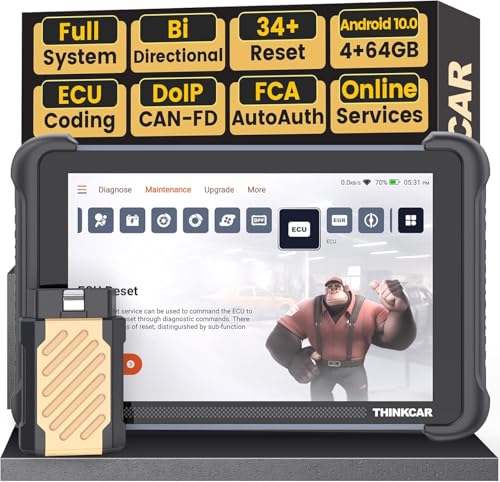
- [Notice] When you receive a used device, it may be a customer return resold by Amazon without inspection. You can exchange it for a new one through Amazon. As this situation is unavoidable, we sincerely apologize. For any issues, contacting us via Amazon's "Messages" is the best way. THINKSCAN 689BT Bidirectional Scan Tool Can Be Used Immediately After It is Turned On, Without Complicated Registration Process, Which is More Convenient & Quick.
- Full Bi-Directional Control & 3000+ Active Tests: Take control and test components like actuators, fuel injectors, relays, and cooling fans in real time. You’ll quickly see if the problem is in the part itself or the control module — saving you hours of guesswork and frustrating trial-and-error.
- Advanced ECU Coding Capabilities: Handle module matching and hidden feature activation with confidence. When you replace an ECU or want to customize settings, this obd2 scanner diagnostic bi directional tool gives you the professional-level capabilities you need without the dealership price tag.
- 34+ Useful Reset and Maintenance Functions: Complete everyday service tasks smoothly with a wide range of helpful reset and maintenance functions. Whether you’re keeping up with regular upkeep or tackling a specific job, this scanner makes maintenance simpler and less stressful for both DIYers and pros.
- Comprehensive Full System Diagnostics: Diagnose every major system — Engine, Transmission, ABS
 , SRS, TPMS, and more — all in one place. Finally stop wondering if you’re missing something important; get the full picture and clear codes with ease.
Last update on 2026-07-02 / Affiliate links / Images from Amazon Product Advertising API
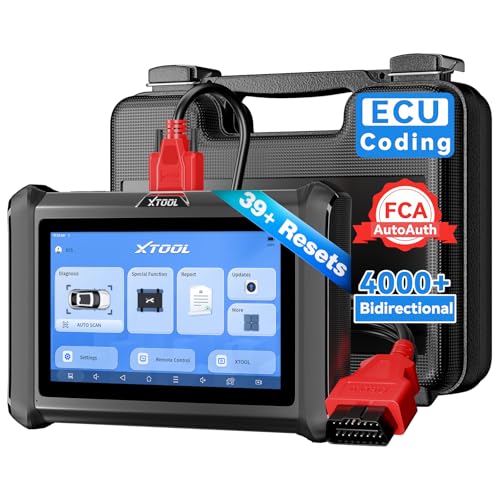
- Top Reasons to Choose the D7S OBD2 Scanner: XTOOL D7S car scan tool, an upgrade of XTOOL D7, offers comprehensive features for automotive technicians, workshops, and DIY enthusiasts 1. Upgraded Hardware: 2+64GB memory, rear camera, intuitive interface, foldable bracket 2. Complete Diagnostics: FCA Autoauth, OE-level all system scan, 39+ maintenance services, 4K+ bidirectional, CANFD/DoIP protocol 3. Advanced Capabilities: ECU c0ding, PMI functions 4. Wide Compatibility: Support 10,000+ models, covering 99% vehicle brands 5. Multi-language: Available in 22+ languages, No IP Restrictions 6. 3-Year Updates: Save 300 bucks on software updates for the latest features and optimizations
- 2026 Upgraded D7S Car Scanner Features: The newly 2026 D7S V2.0 scanner for car brings exciting features for advanced vehicle diagnostics and enhanced user experience 1. FCA AutoAuth: Now supports FCA SGW module for Chrysler, for Jeep, for Dodge (2018+), for Fiat (2017+), enabling faster vehicle communication without gateway restrictions 2. PMI (Offline ECU Pr0gramming): Allows for Ford, for Lincoln, and for Mazda ECU pr0gramming for new modules 3. Optimized Diagnostic Report 2.0: Personalized reports with logos and customer info for auto shops. Note: Compatibility varies by cars, please check before order
- 39+ Services/Resets/Adaptations/Relearns/Calibrations: XTOOL D7S full system car scanner diagnostic tool tackles 99% of common car issues through its 36+ special functions, including Oil Reset, EPB, SAS, BMS, Throttle Reset, Injector C0ding, ABS Bleed, TPMS Reset, Power Balance, etc and also covers specific-vehicle functions like Crank Sensor Relearn, ABS Initialization, Cylinder Power Balance, Fuel Trim Reset, Idle Relearn etc. This car diagnostic scanner enhances efficiency, making repairs and maintenance hassle-free. Tip: DO NOT for All vehicles, please check compatibility first
- Cost-effective ECU C0ding Scan Tool for Specific Brands: Enhance your vehicle's performance with XTOOL D7S! This obd2 scanner all systems bidirectional offers advanced capabilities at an affordable price, supports online for BMW, for Benz and offline for BENZ, for MIT, along with PMI functions for Ford, for Mazda, and for Lincoln. Ideal for technicians and DIY enthusiasts, this automotive scanner diagnostic tool optimizes vehicle performance and enhances the driving experience. Note: Not for all cars and modules, please send car VIN to check the compatibility before purchase
- OE All System Diagnostic & 8 Pids Graphing: XTOOL D7S is a comprehensive all system bi directional obd2 scanner that delivers dealer-level diagnostics, completely controlling over your vehicle’s performance and health. This automotive scan tool can read and clear DTCs, view live data and ECU information, retrieve freeze frames, and perform active tests and full obd2 functions. This bi-directional scan tool can can identify your vehicle's make, model, and year information with just one click and show up to 8 PIDs live data with options for CSV viewing, playback, and recording for in-depth analysis. It is easy-to-use for both professionals and beginners, helping pinpoint issues efficiently
Last update on 2026-06-30 / Affiliate links / Images from Amazon Product Advertising API
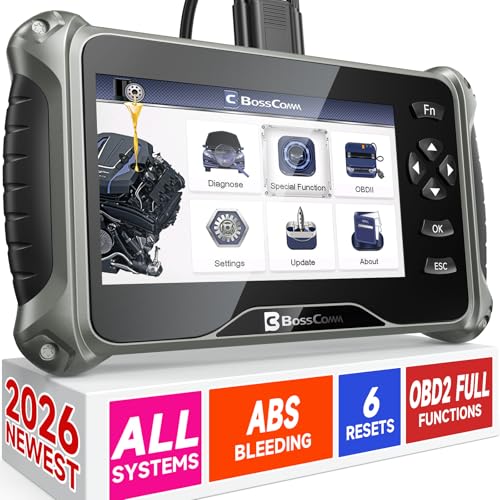
- 【✅Compared to BOSSCOMM IF742, IF745 Offers Full-System Diagnostics】The BOSSCOMM IF745 car diagnostic scanner is an upgraded model of IF742. In addition to supporting all OBD2 Code Reader functions and 6 reset options (ABS/EPB/SAS/BMS/Oil/Throttle), it expands diagnostics from 4 systems (Check Engine/ABS/SRS/Transmission) to vehicle All systems, including Steering, Suspension, and Body Electronics. This provides deeper, more comprehensive diagnostic capabilities.
- 【✨10 OBD2 Functions】The BOSSCOMM IF745 scan tool’s DTC Lookup instantly translates fault codes into user-friendly explanations, its I/M Readiness feature streamlines emissions testing with a single tap, and Freeze Frame lets you pinpoint the exact moment of a fault for in-depth root-cause diagnosis. Combined with a live data dashboard and advanced diagnostics (O2S, OBMon, EVAP), it delivers comprehensive insights for confident troubleshooting.
- 【✨Deep Diagnostics for All Vehicle System Modules】Beyond code reading/clearing and ECU information retrieval, our all-in-one data stream feature lets you inspect all current fault codes and their locations across the vehicle’s systems. This vehicle code reader helps you turn off dashboard warning lights and perform a comprehensive self-check of your car at home—no more back-and-forth trips to the repair shop or hefty inspection fees.
- 【✨6 Essential Resets: ABS Bleeding, Oil, EPB, SAS, Throttle, BMS】The BOSSCOMM IF745 obd2 scanner diagnostic tool swiftly purges air from brake lines to restore braking sensitivity, fine-tunes maintenance cycles to eliminate false alerts, resolves parking brake issues with one-click control, recalibrates steering sensors for stability, optimizes engine idling/acceleration for smoother performance, and deeply resets battery systems to extend lifespan and range via precise parameter adjustments.❗NOTE: Does NOT support bidirectional control, coding, or programming.
- 【✨10,000+ Car Models, AutoVIN, 13 Languages】The BOSSCOMM IF745 vehicle scanner diagnostic tool covers 73+ global car brands and offers support in 13 languages, making it perfect for DIYers, auto mechanics, or as a thoughtful gift. With a single-click AutoVIN feature, it instantly retrieves vehicle serial numbers, streamlining diagnostics for users globally. This adaptable tool balances user-friendliness with precision, catering to both personal and professional requirements.✅Unsure about compatibility? Compatibility will vary on vehicles' model and year, pls reach us via 📧 [email protected] 📧 before purchase.
Last update on 2026-07-02 / Affiliate links / Images from Amazon Product Advertising API
This product presentation was made with AAWP plugin.