
NHTSA ID Number: 10152441
Manufacturer Communication Number: B13-006
TSB/Document Date: 2019-01-05
Summary
"Service bulletin - American Honda is extending the warranty coverage on the Piston Rings and Pistons for 2009-11 TSX L4 to 8 years from the original date of purchase or 125,000 miles, whichever comes first. The warranty extension does not apply to any vehicle that has ever been declared a total loss or sold for salvage by a financial institution or insurer, or has a branded, or similar tittle under any state+?+?+?s law."
Disconnect TWC at the A-pipe at TWC.
•
Fuel Line/Quick-Connect Fitting Removal
•
Cylinder Head Removal
•
Cam Chain Removal
•
Rocker Arm Assembly Removal
•
Valve Adjustment
•
Oil Pan Installation
•
ECM Idle Learn Procedure
NOTES
•
Before starting work, make sure to order the correct number of “A” and “B” pistons. Refer to ORDERING
PISTONS at the end of this bulletin.
•
Use fender covers to avoid damaging painted surfaces.
•
To avoid damaging the wires and terminals, unplug the wiring connectors carefully while holding the connector
portion.
•
To avoid damaging the cylinder head, wait until the engine coolant temperature drops below 100°F (38°C) before
loosening the cylinder head bolts. If needed, connect the HDS to the DLC, and monitor ECT SENSOR 1.
•
Mark all wiring and hoses to avoid misconnection. Also, be sure that they do not contact any other wiring or hoses,
or interfere with any other parts.
Page 5 of 29
1. Make sure that Service Bulletin 11-021, Product Update: Software Update to Improve Fuel Injector and VTC Timing
is complete by checking the iN VIN status.
NOTE
If you do not confirm software update has been completed, your warranty claim could be debited.
2. Put the vehicle on a lift.
3. Relieve the fuel pressure.
4. Do the battery terminal disconnection procedure.
5. Drain the engine oil.
6. Remove the strut brace (if equipped).
7. Drain the engine coolant.
NOTE
Use a clean container to recover coolant for re-use.
8. Remove the drive belt.
9. Remove the intake manifold. Remove the intake manifold bracket lower bolt.
NOTE
It is not necessary to remove the two nuts or the bracket from the intake manifold.
10. Unbolt TWC at the A-Pipe, leaving the TWC mounted to the cylinder head assembly.
11. Disconnect the brake booster vacuum and EVAP canister hoses.
Page 6 of 29
12. Remove the quick-connect fitting cover, then disconnect the fuel feed hose.
13. Disconnect the four fuel injector connectors, the engine mount control solenoid valve connectors, and disconnect
the ground cables.
14. Remove the four bolts securing the EVAP canister purge valve bracket.
Page 7 of 29
15. Disconnect the radiator hoses and the heater hoses. Disconnect the ATF warmer bypass hose (if equipped).
NOTE
The second radiator hose is connected to the thermostat and is not shown.
16. Remove the two bolts securing the connecting pipe. Disconnect the water bypass hose.
Page 8 of 29
17. Remove the front cam chain cover and the cam chain.
18. Use zip ties to hold the intake rocker assemblies together to ease re-installation.
Page 9 of 29
19. To prevent damage to the camshafts, loosen the bolts, in sequence, two turns at a time. Remove the camshaft
holder bolts, Remove the rocker arm assembly and both cam shafts.
NOTE
Bolt #1 is not on all engines.
20. To prevent warpage, loosen the bolts in sequence 1/3 turn at a time, repeat the sequence until all the bolts are
loosened. Remove the cylinder head bolts.
Page 10 of 29
21. Remove the cylinder head with the catalytic converter attached.
NOTE
Be careful not to lose the lost-motion springs.
22. Raise the vehicle on the lift.
23. Remove the clutch case cover (M/T) or the torque converter cover (A/T), and remove the two bolts securing the oil
pan to the transmission.
Page 11 of 29
24. With A/T: Remove the shift cable cover.
25. Remove the bolts securing the oil pan.
26. Using the pan separator, separate the oil pan from the engine block in the indicated areas, and remove the oil pan.
Page 12 of 29
27. To hold the balance shaft, insert a 6 mm (1/4in.) diameter long pin punch into the maintenance hole in the balance
shaft holder and through the rear balancer shaft.
28. Remove the cam chain and oil pump chain auto-tensioner.
Page 13 of 29
29. Loosen the oil pump sprocket mounting bolt.
30. Remove the oil pump sprocket and the oil pump.
Page 14 of 29
31. Remove the baffle plate.
32. Lower the vehicle to a comfortable working height, and place a clean shop towel around the cylinder wall to prevent
debris from entering the coolant passage.
33. Cylinder Wall Inspection. If vertical scratches are noted in the cylinder wall, refer to Job Aid Using Cylinder Wall
Inspection Tool and or Tech2Tech "Using Cylinder Wall Inspection Tool".
NOTE
Do not use finger nail or pencil lead to determine if engine block is usable. Always use the cylinder wall inspection
tool to inspect any scratches. Light to moderate scratches that may be detected with your finger nail, but do not
affect the engine, will pass when using the cylinder wall inspection tool.
•
If the engine block is good, go to the next step.
•
If the engine block is no good, replace the engine block. The pistons and rings in the new engine block do not
need to be replaced. This bulletin no longer applies. You must obtain DPSM authorization and refer online to
Engine Removal and Installation to reinstall the engine.
Page 15 of 29
34. Remove the rod caps and the bearings.
NOTES
•
Before removing the rod caps, use a grease pencil or suitable marking pen to mark each cap and its
corresponding connecting rod with the cylinder number it came from.
•
Do not confuse the existing marking on the side of the connecting rod and rod cap with a cylinder number. They
are just manufacturing marks referring to the size of the big end of the rod.
•
Installing a rod cap incorrectly will result in engine knock and/or engine failure. Remove and mark one rod
assembly at a time to make sure it is assembled correctly.
•
When torqueing the rod cap bolts, refer to the service information for details.
•
Click HERE to go to the Tech2Tech® video “Tips When Working with Fracture Rods”.
35. Use a wooden hammer handle to drive out each of the piston and connecting rod assemblies.
NOTE
Be careful not to damage the cylinder walls or the crankshaft when pushing out the pistons and the connecting rod
assemblies.
36. Visually inspect all the connecting rod bearing for signs of damage.
NOTES
•
If your fingernail catches on a scratch or groove in the bearing, replace it. Pictured are normal reusable rod
bearings after about 35,000 miles. Some discoloration is normal and does not require replacement.
•
If the bearings look like they must be replaced, contact your DPSM for authorization.
Page 16 of 29
37. Measure the diameter of each connecting rod bolt at points A and B.
37.1. Calculate the difference in diameter between points A and B:
•
Point A – Point B = Difference in Diameter
•
Difference in Diameter Specification: 0 - 0.1 mm (0.004 in.)
•
If the difference in diameter is out of specification, replace the connecting rod bolt.
38. Put on eye protection, then remove the snap rings from both sides of each piston. Start at the cutout in the piston
pin bore. Remove the snap rings carefully so they don’t go flying or get lost.
39. Put on gloves, heat the piston and the small end of the connecting rod to about 158°F (70°C), then remove the
piston pin.
NOTE
The old piston, the pin, and the snap rings won’t be reused.
Page 17 of 29
40. Install a new piston pin snap ring on one side of a new piston.
41. Coat the piston pin bore in the piston, the bore in the connecting rod, and the piston pin with new engine oil.
42. Heat the piston to about 158°F (70°C).
43. Assemble the piston and the connecting rod with the arrow and the embossed mark on the same side. Install the
piston pin.
NOTE
When the piston and the rod end are heated properly, the piston pin should slide into position relatively easily. You
will damage the piston if you try to use a hammer or a press to force the piston pin in.
44. Install the remaining snap ring.
Page 18 of 29
45. Turn the snap ring in the ring grooves until the end gaps are positioned at the bottom of the piston.
46. Repeat steps 38 through 45 for the remaining pistons.
47. Using a piston ring expander, install the spacer and two oil rings. Then install the second ring and top ring with the
manufacturing marks facing up. The second ring has a “2” followed by a letter or letters. The top ring has a “1”
followed by a letter or letters.
NOTE
The new rings may not have the same manufacturing marks as the originals.
48. Rotate the rings in their grooves to make sure they do not bind.
49. Position the ring end gaps as shown.
50. Rotate the crankshaft so that cylinders 1 and 4 are at bottom dead center (BDC).
51. Remove the connecting rod cap to piston 1, and check that the bearing is securely in place.
Page 19 of 29
52. Apply new engine oil to the piston, the inside of the ring compressor, the cylinder bore, and the rod bearings.
NOTE
Cylinder wall honing is NOT required for this repair.
53. Position the mark to face the cam chain end of the engine block.
54. Set the piston in the ring compressor, and position the piston in the cylinder based on the rod/cap marks that you
made in step 34.
55. Set the ring compressor on the piston bore, then push the piston in with your hands.
Page 20 of 29
56. Stop after the ring compressor pops free, and check the connecting rod-to-rod journal alignment before pushing the
piston into place.
57. Apply new engine oil to the bolt threads, then install the connecting rod cap with the bearing. Torque the bolts to 41
N·m (30 lb-ft).
58. Tighten the connecting rod bolts an additional 120°.
NOTE
If you tighten a rod bolt beyond the specified angle, remove it and repeat steps 57 and 58. Do not loosen the bolt
back to the specified angle.
59. Repeat steps 47 through 58 for piston number 4.
60. Rotate the crankshaft so that cylinders 2 and 3 are at bottom dead center (BDC).
61. Repeat steps 47 through 58 for piston number 2 and 3.
62. Rotate the crankshaft several times after all connecting rods have been installed to ensure that nothing is binding.
63. Install the baffle plate, and torque the bolts to 12 N·m (8.7 lb-ft).
64. Set the crankshaft to top dead center (TDC). Align the TDC mark on the crankshaft sprocket with the pointer on the
engine block.
65. Apply new engine oil to the threads of the oil pump mounting bolts and the oil pump sprocket mounting bolt, then
loosely install the oil pump with a new O-ring.
Page 21 of 29
66. Torque the oil pump mounting bolts and the oil pump sprocket mounting bolt according to figure shown.
67. Align the dowel pin on the rear balancer shaft with the mark on the oil pump.
68. Install the oil pump chain on the crankshaft sprocket with the colored link plate aligned with the TDC mark on the
crankshaft sprocket.
Page 22 of 29
69. Set the oil pump sprocket on the oil pump chain with the punch mark aligned with the center of the colored link
plates, then install the oil pump chain sprocket to the oil pump.
Apply new engine oil to the threads of the oil pump sprocket mounting bolt, then install it and torque it to 44 N·m (33
lb-ft).
70. Install the oil pump chain auto-tensioner, and torque the bolts to 12 N·m (8.7 lb-ft).
71. Remove the 6 mm (1/4 in.) diameter long pin punch.
72. Remove the 3.0 mm pin from the oil pump chain auto-tensioner.
73. Remove all of the old liquid gasket from the oil pan mating surfaces, the bolts, and the bolt holes.
74. Clean and dry the oil pan mating surfaces.
Page 23 of 29
75. Apply liquid gasket, P/N 08718-0004 to the engine block mating surface of the oil pan and to the inside edge of the
threaded bolt holes. Install the component within 5 minutes of applying the liquid gasket.
NOTES
•
Apply a 2.5 mm (0.098 in) diameter bead of liquid gasket along the broken line.
•
If more than 5 minutes have passed after applying the liquid gasket, remove the old liquid gasket and residue,
then reapply new liquid gasket.
•
Do not apply any sealant where the cam chain case is installed because the sealant will dry before you can
reinstall the case.
76. Install the oil pan to the engine block.
77. Tighten the bolts in three steps. In the final step, torque all bolts, in sequence, to 12 N·m (9 lb-ft).
NOTES
•
Wait at least 30 minutes after installing the cam chain case before filling the engine with oil.
•
Do not run the engine for at least 3 hours after installing the oil pan.
78. Install a new oil filter.
79. Reinstall the clutch case cover and torque the bolts to 12 N·m (8.7 lb-ft). Reinstall the two bolts securing the oil pan
to the transmission and torque them to 64 N·m (47 lb-ft).
80. With A/T: Reinstall the shift cable cover, and torque the bolts to 12 N·m (9.0 lb-ft).
Page 24 of 29
81. Reinstall the cylinder head with a new gasket.
•
Measure the diameter of each cylinder head bolt at point A and point B.
•
If either diameter is less than 10.8 mm (0.417 in), replace the cylinder head bolt.
•
Apply new engine oil to the threads and under the bolt heads of all cylinder head bolts.
•
Torque the cylinder head bolts in sequence to 39 N·m (29 lb-ft). When using a preset click-type torque wrench,
be sure to tighten slowly and do not overtighten. If a bolt makes any noise while you are torquing it, loosen the
bolt and retighten it from the first step.
•
After torqueing, tighten all cylinder head bolts in two steps (90° per step) using the sequence shown above. If
you are using a new cylinder head bolt, tighten the bolt an extra 90°.
NOTE
Remove the cylinder head bolt if you tightened it beyond the specified angle, and go back to the second bullet to
re-measure the bolt. Do not loosen it back to the specified angle.
Page 25 of 29
82. Reinstall the rocker arm assembly and the camshafts.
83. Reinstall the cam chain.
84. Apply liquid gasket to the oil pan where it meets the cam chain case and to the inside edge of the threaded bolt
holes. Install the cam chain case within 5 minutes of applying the liquid gasket.
85. Install the cam chain cover.
86. Reinstall crank pulley and torque the bolt to 49 N·m (36 ft-lb).
Page 26 of 29
87. Adjust the valve clearance. Refer to the service manual for Valve Clearance Adjustment.
Valve Clearance:
Intake: 0.21 – 0.25 mm (0.0083 – 0.0098 in)
Exhaust: 0.25 – 0.29 mm (0.0098 – 0.0114 in)
Specified Torque (Intake & Exhaust)
7 x 0.75 mm: 14 N·m (1.4 kgf·m, 10 lbf·ft)
Apply new engine oil to the nut threads.
88. Reinstall or reconnect the following components:
•
Reinstall the cylinder head cover.
•
Reinstall the coolant connecting pipe.
•
Reinstall the EVAP canister purge valve bracket.
•
Reconnect the four fuel injectors, the engine mount control solenoid connector, and the ground cables.
•
Reconnect the fuel feed hose and the quick connect fitting cover.
•
Reconnect the EVAP canister hose.
89. Install a new gasket from TWC to A-pipe.
90. Install the intake manifold using new gaskets.
91. Reinstall the drive belt.
92. Fill the engine with coolant using recovered coolant. Add new as needed.
93. Reinstall the strut brace (if equipped), and torque the bolts to 22 N·m (16 lb-ft).
94. Fill the engine with oil.
Page 27 of 29
95. Reinstall right side engine mount.
96. Do the battery terminal reconnection procedure.
97. Crank the engine for about 5 seconds to prime the engine with oil pressure before plugging in the ignition coils.
98. Reconnect the four ignition coils.
99. Do the idle learn procedure.
Page 28 of 29
ORDERING PISTONS
Every engine has some combination of A- and B-sized pistons. You can determine the sizes and their locations in the
block by inspecting the markings on the timing chain end of the engine block or by looking at the pistons. If you look at
the piston, the pistons have identifiers; “A” pistons are unmarked; “B” pistons are marked with a “B”. Make sure you
order the appropriate number of each piston size before starting work.
END
Page 29 of 29

- 💯【Conta.ct us for Support Directly】If you met any...
- 🔥🔥🔥【2026 AUTEL FLAGSHIP MK900BT MK900-BT, NEW...
- 🚗【3000+ ACTIVE TESTS (50➡3000+), SAME AS MS...
- 🚗【40+ HOT SERVICES FOR 150 MAKES (28+➡40+)】Full...
- 🚗【OE ALL SYSTEM DIAGNOSE, AUTO SCAN 2.0: SCAN LICENSE...

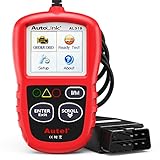
- 【TURN OFF CEL】 This AL319 car scanner diagnostic tool...
- 【EXTENSIVE APPLICATION】 Autel AL319 Compatible with...
- 【FOR END USER & DIYERS】 This error code reader AL319 is...
- 【USER-FRIENDLY DESIGN】 This OBD2 scanner and check...
- 【HIGH-QUALITY SERVICES】 12 months war.ranty from the...
Last update on 2026-06-23 / Affiliate links / Images from Amazon Product Advertising API
If the PDF is very large, it may not load in the preview below.
Some older TSBs had multiple PDFs — visit the NHTSA Website to view all PDFs.
If the TSB PDF does not show, download or view it on the NHTSA Website.
Click on the (+) Plus Sign
Then Click on Associated Document(s)
Search NHTSA Database for Recalls
Search NHTSA Database for Vehicle Investigations
View Latest Vehicle Investigations
Search NHTSA Database for Vehicle Complaints
View Latest Vehicle Complaints
TSB/Document ID: B13-006
Replacement Service Bulletin Number:
MFR Communication Date: 2018-12-19
MFR Internal Campaign ID/Software Version:
Communication Type: Service Bulletin/Repair Instructions
NHTSA Components: ENGINE AND ENGINE COOLING
MFR Component System:
MFR Component Subsystem:
Previous TSB | Next TSB |
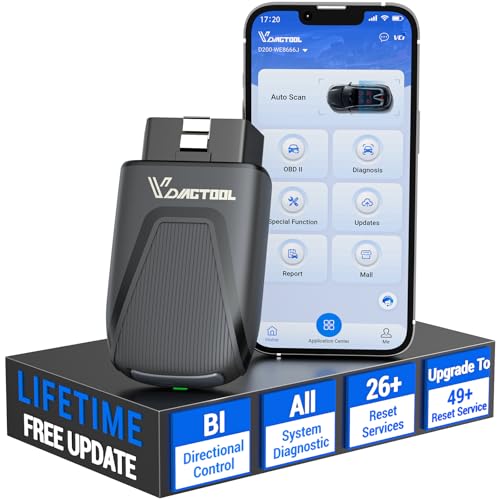
- 【OE-Level Full System Diagnostics-Lifetime F*REE Software Updates】The VDIAGTOOL D200 OBD2 Scanner for cars is a all system bidirectional scan tool that enjoy lifetime f*ree software updates, delivers complete system coverage. reading/clearing codes across engine, transmission, ABS, SAS, EPB, TPMS plus full access to body, chassis, powertrain and all control modules. This D200 Bidirectional car scanner works with most 1996+ OBD2 gasoline and hybrid
 cars and light trucks. It does NOT support pure electric and heavy-duty trucks. PLEASE CHECK COMPATIBILITY BEFORE ORDERING or Contact us with VIN to confirm compatibility.
 - 【Supports OBD2 Full Functions-ZERO Subscription Fees】D200 Bidirectional OBD2 Scanner is a upgarde of universal car code reader. It supports OBD2 full functions to help you turn off the annoying instrument fault indicator, such as read/clear codes, O2 sensor test, I/M readiness, on-board monitor test, datastream, freeze frame, E-VAP system test, and retrieve vehicle information. This professional obd2 scanner diagnostic tool can full access to diagnostics, reset tools and maintenance features with a single payment. NOTE: The fault code can only be cleared after the vehicle's malfunction has been repaired; please ensure the vehicle issue is fixed before clearing the code.
- 【D200 Hidden 2 Advantages: 1. $169 Expandable 49+ Advanced Resets. 2. $199 Get J2534 P*a*s*s-Thru Programming】Your core car diagnostics and 26 reset remain lifetime f*ree for everyday maintenance. When you need deeper repair capability, upgrade with 3-year access for $169 in Store on VDIAGTOOL App, gaining 49+ advanced resets. D200 configured with J2534 hardware, upgrade only when you need without replacing the entire device. You also can Lifetime Unlock for $199 in Store one-time, perform module programming, software re~flashing and ECU data updates directly. Supports 17+ major brands, including for BMW, for Audi, for GM, for Ford and more. Note:D200 does‘t provide any OE software.
- 【Full Bidirectional Control / Active Tests】The D200 car scanner diagnostic tool is a true bidirectional scan tool that lets you send commands directly to the vehicle’s ECU for active tests. Quickly test fuel pumps, relays, solenoids, injectors, cooling fans, windows, sunroofs and more to verify operation instantly. Get dealership-level diagnostic control at a fraction of the cost (ofter $100-200$ per diagnostic visit), reduce guessworkand confirm repairs faster, avoid unnecessary parts replacement, towing fees and wait times.
- 【26 F*ree Essential Reset & Relearn Functions – Everyday Maintenance Made Easy】Handle common maintenance and repair jobs without visiting the shop. The D200 code readers & scan tools includes 26 f*ree high-demand reset functions, including Oil Reset, EPB Service, SAS Calibration, ABS Brake Bleeding, Throttle Relearn, Injector Coding, Headlight Adjustment, Tire Size Reset and more. Perfect for home car owners, mechanics and DIYers – just plug and diagnose anytime, anywhere! Note: Service functions vary by vehicle model—please confirm compatibility.
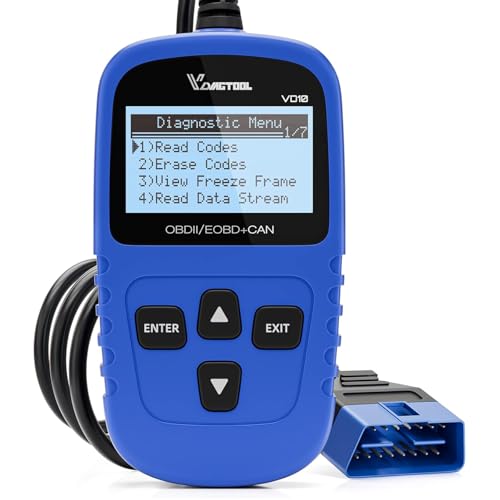
- 【A MUST-HAVE TOOL FOR DIYERS】 - VDIAGTOOL VD10 car code reader is an incredibly useful obd scanner for each car owner or hobbyist, even for those with little to no experience when it comes to vehicle mechanics! Similar to a fixd car diagnostic tool, using this car diagnostic scanner is extremely easy. All you have to do is attach it to your car OBDII port and you can diagnose car problems in seconds! Read Codes (DTCs); Clear Codes; Live Data; View Freeze Frame; I/M Readiness; Vehicle Information.
- 【KEEP ENGINE IN GOOD STATUS】 - VDIAGTOOL check engine code reader brings a fast access to scan, read the car fault code, show its definition on the screen instantly, troubleshooting to find the root causes of problems, erase the engine fault code and turn off the MIL (Malfunction Indicator Light). Similar to a fixd car diagnostic tool, this car code reader helps ensure your engine stays in top condition.
- 【READ/CLEAR CODES & DTC LOOKUP】- No search online & saving your time, this vehicle car code reader retrieves generic (P0, P2, P3, and U0), manufacturer specific (P1, P3, and U1) codes, pending codes and displays DTC definitions based on the built-in database(more than 3000 codes) on the TFT screen, find out the root causes and clear the codes after fixed.
- 【LIVE DATA & RETRIEVE FREEZE FRAME】 - This diagnostic scan tool for accurate diagnosis enables you to retrieve data from vehicle sensors, such as Engine RPM, Intake air temperature, Short/Long term fuel, Misfire data and etc. The freeze frame is stored in the PCM together with the diagnostic trouble code (DTC) related to the fault. Comparable to a fixd car diagnostic tool, the VD10 car code reader car scanner can be a valuable & practical diagnostic aid and also greatly help when diagnosing intermittent problems.
- 【I/M READINESS for THE S-nn-0-g CHECK】- OBDII vehicle may not pass the annual inspection unless the required monitors since reset are complete. So you should at least read the readiness monitors and make sure they are ready. This car obd2 scanner diagnostic tool is equipped with I/M readiness function to check the operations of the e-m-issi0n system on OBD2 compliant vehicles, run I/M monitor readiness test, checking if the pass vehicle s-m-0-g inspection.
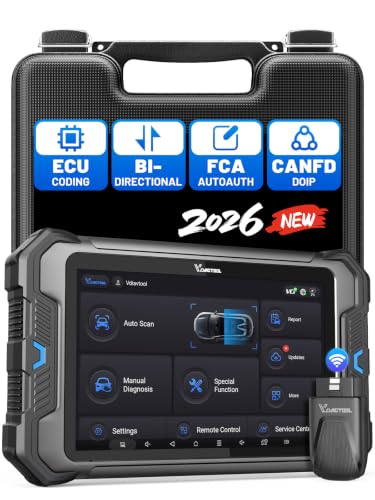
- 【Professional Diagnostics】 The VD80 BT Lite bidirectional obd2 scanner is a professional OBD2 scanner diagnostic tool, delivering vehicle diagnostics right in your own garage. It supports 4,000+ active diagnostic tests, 28+ maintenance service functions, ECU coding, PMI calibration, brake service reset, and OEM-grade full-system vehicle scanning—perfect for DIYers and pros looking for powerful automotive tools. The available function tests vary by model—please to confirm compatibility.
- 【ADVANCED ECU CODE, CUSTOMIZE OE-SETTINGS】As a complete car code reader and reset tool, the VD80 BT Lite bidirectional obd2 scanner supports ECU coding for VW, for Audi, for BMW, for Benz, for Mitsubishi and more. PMI function for Ford/for Lincoln/for Mazda, supports copy data into new module. Step-by-step Guided Diagnostics makes complex jobs easier—making this one of the most reliable code readers & scan tools on the market.
- 【100000+ Vehicles Compatibility – CAN FD/DOIP】 VD80 BT Lite Auto Scanner Compatible with 100,000+ vehicles worldwide, this bidirectiona car scanner works with all OBD2-compliant vehicles manufactured after 1996, covering more than 100 brands worldwide. It also supports CAN FD, DOIP and FCA Secure Gateway protocols, boost 2X faster data transfer, covers 99% of U.S., EU and Asian cars. With 22 languages and 2 years of f*ree updates—future-proofing your car reader diagnostic for all cars.
- 【28+ Maintenance Services & Calibration Functions】VD80 BT Lite scanner for car Supports 28 maintenance services, including resetting oil and service lights after routine maintenance, registering new batteries for proper system operation, and clear clogged filters and restore performance. Additionally, it calibrates TPMS sensors after tire rotations, resets brake systems after pad replacements, relearns steering angle sensors after alignments, and more. These functions help your vehicle quickly and accurately return to peak performance—without the costly dealer visits.
- 【True Bidirectional Control – Diagnose with Confidence】Standing out with full-system coverage and extensive active test capabilities, the VD80 BT Lite bidirectional scan tool retrieves data from electronic control units and performs a wide range of active tests. You can real-time control over modules like fuel pumps, windows, A/C clutches, and relays. Perform 100+ advanced functions including throttle adaptation, injector coding, VIN write, idle relearn, and ABS bleed—helping you fix it right the first time with this all-in-one car diagnostic scanner.
Last update on 2026-06-23 / Affiliate links / Images from Amazon Product Advertising API
This product presentation was made with AAWP plugin.