
NHTSA ID Number: 10143811
Manufacturer Communication Number: P8315
TSB/Document Date: 2018-08-20
Summary
CAMPAIGN BULLETIN Fuel Injector Replacement Retailer Inventory. Retailer Announcement ***** INFINITI is conducting a quality action to replace the high pressure fuel injectors on 53 specific MY 2019 INFINITI QX50 (J55) vehicles in new inventory. A misfire condition may occur due to insufficient fuel volume injection resulting in malfunction indicator light (MIL) illumination. Affected vehicles are not subject to stop sale and are either currently in retailer inventory or assigned and in transit to the retailer. INFINITI requests retailers to remedy all affected inventory vehicles prior to sale to ensure client satisfaction. What Retailers Should Do ***** PLEASE FOLLOW THE ATTACHED REPAIR INSTRUCTIONS: 1. Verify if vehicles are affected by this client satisfaction initiative using Service Comm or DBS National Service History ? Open Campaign I.D. P8315 - New vehicles in retailer inventory can also be identified using DBS (Sales-> Vehicle Inventory, and filter by Open Campaign). - Refer to IPSB 15-286 for additional information - Please continue to check newly arriving inventory for campaign applicability. 2. Use the attached procedure to replace the high pressure fuel injectors. - INFINITI has developed an automatic parts shipment to provide affected retailers with enough parts to repair their affected inventory plus any affected INFINITI Courtesy Vehicles (ICV). Parts will begin arriving at retailers by Tuesday, July 24, 2018. 3. The service department should submit the applicable warranty claim for the action performed so it can be closed on Service Comm and release the vehicle. ***** Retailer Responsibility ***** It is the retailer?s responsibility to check Service Comm or DBS National Service History ? Open Campaign using the appropriate campaign I.D for the inspection status on each affected vehicle currently in new vehicle inventory. Thank you for your prompt attention to this matter and we apologize for any inconvenience this may have caused.
fuel rail insulator.
CAUTION: When removing and handling, be careful not to tear the fuel rail insulator.
Insulator
Protector
Figure 36
d. While pulling back the high pressure fuel rail protector, locate and unfasten the two (2) harness clips.
Clips
Figure 37
23/58
I
e. Partially pull out the high pressure fuel rail protector, and then unfasten the last harness clip.
Clip
Protector
Figure 38
39. Remove the high pressure fuel tube:
a. Carefully remove the high pressure fuel pump insulator.
CAUTION: When removing and handling, be careful not to tear the high pressure fuel pump insulator.
Insulator
Figure 39
24/58
I
b. Remove the engine cover bracket bolt, and then move the engine cover bracket with vacuum
tube out of the way.
The vacuum tube does not need to be unbolted from the engine cover bracket.
Bracket
Tube
Figure 40
c.
d.
e.
f.
Place a shop cloth under the lower flare nut (to absorb any fuel leakage).
Loosen the lower flare nut.
Loosen the upper flare nut.
Remove the bracket bolt.
NOTE: The high pressure fuel tube is one-time use and will be replaced with a new one (see
Parts Information). Do not reuse the old high pressure fuel tube.
Upper
flare nut
Cloth
Lower
flare
nut
Fuel tube
Figure 41
25/58
I
40. Disconnect the four (4) direct fuel injector connectors (see yellow arrows in Figure 42).
Fuel rail
Figure 42
41. Place shop cloths under the high pressure fuel rail (to absorb any fuel leakage).
42. Loosen the nuts and bolts in the sequence shown in Figure 43, and then remove them.
43. Remove the high pressure fuel rail.
NOTE: Some direct fuel injectors may come out with the high pressure fuel rail. This is okay.
CAUTION: Do not remove the high pressure fuel rail fuel pressure sensor. If removed, it must be
replaced. If dropped, it must be replaced.
Fuel rail
2
4
5
3
1
Pressure sensor:
Do not drop or remove!
Figure 43
26/58
I
44. Remove the direct fuel injectors:
See yellow arrows in Figure 44.
a. Spray a suitable lubricant around the injector bore.
b. Twist/rotate the direct fuel injectors to “work in” the lubricant.
c. Pull straight out to remove the direct fuel injectors.
Injector
bore
Figure 44
27/58
I
Installation: Direct Fuel Injector
Refer to the following during direct fuel injector installation.
CAUTION:
Make sure to work in a clean area when handling the direct fuel injectors.
Handle the O-ring and seal ring on the direct fuel injectors with bare hands. Do not wear gloves.
Lubricate the O-ring with new engine oil before installing the direct fuel injectors.
Do NOT apply engine oil to the seal rings.
Do not clean the O-rings or seal rings with solvent.
Do not allow engine oil into the fuel passage of the direct fuel injectors.
Make sure there is no debris or foreign material on the O-rings or seal rings and their related mating
surfaces.
Be careful not to scratch, twist, or stretch the O-rings or seal rings.
Insert the direct fuel injectors straight into the high pressure fuel rail.
Install the direct fuel injector and high pressure fuel rail assembly straight into the bores in the cylinder
head.
Do not remove the high pressure fuel rail fuel pressure sensor. If removed, it must be replaced. If dropped,
it must be replaced.
Backup ring
Direct fuel injector
Seal ring
Injector
holder
Tab
Figure 45
28/58
I
1. Install the direct fuel injectors into the high pressure fuel rail:
a. Lubricate the O-ring with new engine oil.
b. Line up the tabs and cutouts, and then install the direct fuel injectors into the high pressure fuel rail,
straight in and fully seated.
Fuel rail
Cutout
Tab
Figure 46
Pressure sensor:
Do not drop or remove!
Fuel rail and
injectors
Figure 47
29/58
I
2. Carefully install the direct fuel injector and high pressure fuel rail assembly:
a. Align all direct fuel injectors with their bores while fitting the high pressure fuel rail onto the studs.
Figure 48
b. With the direct fuel injectors aligned straight with their bores, push on the high pressure fuel rail until
the direct fuel injectors are fully seated.
Figure 49
30/58
I
If properly installed, the high pressure fuel rail should sit near flush to the cylinder head.
Cylinder
head
Close fit
Close fit
Fuel rail
Figure 50
c. Install, and then torque the nuts and bolts in two steps and in the sequence shown in Figure 51.
Nuts and bolts torque:
First step: 10 N•m (1.0 kg-m, 7 ft lbs)
Second step: 25 N•m (2.6 kg-m, 18 ft lbs)
Fuel rail
4
2
1
3
5
Figure 51
31/58
I
3. Connect the harness connectors to the direct fuel injectors.
Fuel rail
Figure 52
4. Install a new high pressure fuel tube (see Parts Information):
a. Thread in place by hand both flare nuts and the bolt.
b. Temporarily tighten the flare nuts until the high pressure fuel tube has no in-and-out movement at either
end.
c. Tighten the flare nuts until no threads are showing on the high pressure fuel pump or high pressure fuel rail.
d. Torque the bracket bolt.
Bolt torque: 25 N•m (2.6 kg-m, 18 ft lbs)
Upper
flare nut
Lower
flare
nut
Fuel tube
Figure 53
32/58
I
e. Using a “crow’s foot”, torque the flare nuts in two steps, upper flare nut first.
Flare nuts torque:
First step: 14 N•m (1.4 kg-m, 10 ft lbs)
Second step: 41 N•m (4.1 kg-m, 30 ft lbs)
CAUTION: After installation, make sure the high pressure fuel tube does not contact adjacent parts.
Crow’s
foot
Figure 54
5. Position the engine cover bracket with vacuum tube, and then install and tighten the engine cover
bracket bolt.
10 N•m (1.0 kg-m, 7 ft lbs)
Bracket
Tube
Figure 55
33/58
I
6. Install the high pressure fuel pump insulator.
CAUTION: When installing and handling, be careful not to tear the high pressure fuel pump insulator.
Insulator
Figure 56
7. Install the high pressure fuel rail protector:
a. Install the high pressure fuel rail protector insulator.
CAUTION: When installing and handling, be careful not to tear the fuel rail protector insulator.
Insulator
Figure 57
34/58
I
b. Position the high pressure fuel rail protector as shown in Figure 58, and then fasten the first clip.
Clip
Protector
Insulator
Figure 58
c. Position the high pressure fuel rail protector as shown in Figure 59.
d. Install the bolts (see arrows and callout in Figure 59).
The bolt pointed out by the white arrow is hidden in this picture.
Bolts torque: 25 N•m (2.6 kg-m, 18 ft lbs)
e. Fasten the two (2) harness clips to the high pressure fuel rail protector (see circles in Figure 59).
Protector
Hidden
bolt
Figure 59
35/58
I
8. Connect the high pressure fuel rail sensor connector.
Sensor
Connector
Figure 60
9. Replace the water inlet pipe O-ring with a new one (see Parts Information).
Lubricate the O-ring with coolant.
Inlet pipe
Figure 61
36/58
I
10. Replace the oil level gauge guide O-ring with a new one (see Parts Information).
Lubricate the O-ring with new engine oil.
Guide
O-ring
Figure 62
11. Put the water inlet pipe in place, and then the oil level gauge guide.
Guide
Inlet pipe
Figure 63
37/58
I
12. Install the three (3) water inlet pipe bolts (see arrows in Figure 64).
Water inlet pipe bolts torque: 12 N•m (1.2 kg-m, 9 ft lbs)
13. Install and tighten the oil level gauge guide bolt.
14. Fasten the two (2) harness clips to the water inlet pipe (see circles in Figure 64).
Guide
bolt
Inlet
pipe
Figure 64
15. Replace the old intake manifold gaskets with new ones (see Parts Information).
Gaskets
Cover
Gaskets
Cover
Figure 65
38/58
I
16. Remove the covering from the cylinder head ports and air outlet tube.
17. Carefully position the intake manifold in place:
Do not reuse the old gaskets. Replace them with new ones (see previous page, step 15).
Intake
manifold
Figure 66
18. Install, and then tighten the intake manifold bolts in the sequence shown in Figure 67:
Intake manifold bolts torque: 25 N•m (2.6 kg-m, 18 ft lbs)
2
3
4
5
1, 6
Figure 67
39/58
I
19. Install the oil level gauge.
Figure 68
20. Snap in place the air outlet tube to the electronic throttle control actuator.
21. Install and tighten the air outlet tube bolt.
Air outlet tube bolt torque: 21 N•m (2.1 kg-m, 15 ft lbs)
22. Connect the electronic throttle control actuator connector.
Spring
Actuator
Outlet
tube
Connector
Radiator
fan shroud –
driver side
Figure 69
40/58
I
NOTE: The CVT fluid warmer pipes may have unfastened during repairs. Make sure they are
fastened to the cooling fan assembly.
Fan
assembly
Fluid pipe
Fluid pipe
Figure 70
23. Connect the intake manifold runner control valve position sensor connector.
24. Fasten the harness clip.
Clip
Connector
Figure 71
41/58
I
25. Connect the heater hose and water hose A, and then fasten their related clamps.
See white arrows in Figure 72.
26. Install and tighten the EVAP hose bracket bolt.
27. Connect the intake manifold runner control valve motor connector.
Heater
hose

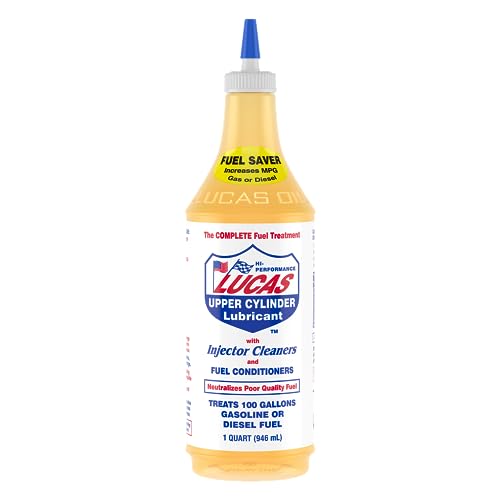
- Restores fuel economy
- Stabilizes ethanol
- Maximizes horsepower
- Improves responsiveness
- For use in both gasoline and diesel engines

Last update on 2026-06-23 / Affiliate links / Images from Amazon Product Advertising API
If the PDF is very large, it may not load in the preview below.
Some older TSBs had multiple PDFs — visit the NHTSA Website to view all PDFs.
If the TSB PDF does not show, download or view it on the NHTSA Website.
Click on the (+) Plus Sign
Then Click on Associated Document(s)
Search NHTSA Database for Recalls
Search NHTSA Database for Vehicle Investigations
View Latest Vehicle Investigations
Search NHTSA Database for Vehicle Complaints
View Latest Vehicle Complaints
TSB/Document ID: P8315
Replacement Service Bulletin Number:
MFR Communication Date: 2018-07-20
MFR Internal Campaign ID/Software Version:
Communication Type: Service Bulletin/Repair Instructions
NHTSA Components: FUEL SYSTEM, GASOLINE
MFR Component System:
MFR Component Subsystem:
Previous TSB | Next TSB |

- [2026 Top-Tier Hardware and Software Upgrade]: Topdon ArtiDiag900 Lite scanner has enhanced hardware and latest features, including Android 11.0, 5x faster CPU, 10000mAh battery for 12 hours of continuous operation, stable wireless diagnosis with Bluetooth 5.0, 8-inch touchscreen. Added bi-directional control, wireless diagnosis, battery testing (optional), and DTC repair guide
- [TOPDON Bidirectional Scan Tool]: This bidirectional obd2 scanner sends commands to the vehicle's ECU for active testing, enabling users to accurately and quickly locate faulty components such as injectors, coolant pumps, windows, wipers, headlights, mirrors, etc. The bidirectional control scanner is the ideal choice for workshops/automotive repair shops as it significantly reduces mechanic's diagnostic time.
- [Wireless Bluetooth Diagnostic Experience]: The AD900 Lite scan tool comes with a Bluetooth 5.0 VCI, supporting a wireless diagnostic range of up to 33 feet (10 meters), allowing you to diagnose without being confined to cables or tight spaces. Stable and fast wireless diagnosis provides a comfortable repair environment. It also offers VCI cables to increase connectivity options.
- [DTC Repair Guide Function]: Easily diagnose issues with your vehicle and receive guidance on repairs with the topdon scan tool's fault code definitions for all systems,maximize your diagnostic capabilities. This function is compatible with Chrysler
 /Dodge/Jeep/Fiat 2010-2014 and expanding with continual updates,the AritDiag 900 Lite car diagnostic scanner is the must-have tool for any technician or DIY enthusiast.
 - [OE-Level Full System Diagnostics]:AritDiag900 Lite full system diagnostic scanner can scan ALL available modules(Engine, Transmission, Airbag, ABS, ESP, TPMS, Gateway, Steering, Radio, Air conditioning, ect.) to✔read ECU info, ✔read/clear codes, ✔view live data stream, ✔retrieves freeze-frame, ✔perform active tests, and more. With just a simple click, it provides you with accurate and in-depth diagnostics.
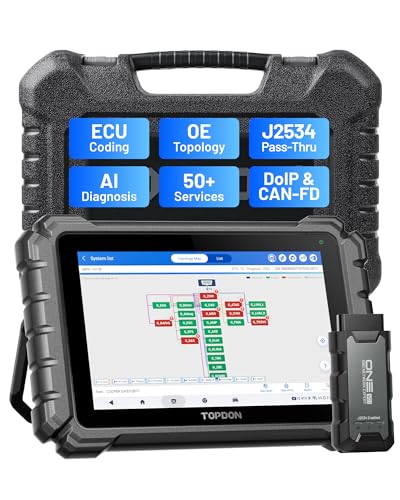
- Dual WiFi & 10.1" Touchscreen: Provides a stable, high-speed wireless link 3x faster than bluetooth, and a responsive, professional interface. Topdon ONE obd2 scanner diagnostic tool ensures smooth, non-lagging diagnostic scan, boosting mechanic efficiency
- J2534 Pass-Thru Support: The included ONE VCI supports the J2534 standard, allowing it to function as a pass-thru device when paired with OEM diagnostic software.Through TOPDON’s RLink platform, technicians can perform dealer-level coding, expanding in-house capabilities without investing in multiple factory automotive scan tools
- OE Topology Mapping: Visualize the vehicle’s ECU network exactly as it’s built.Zoom, pan, and highlight specific modules to pinpoint component issues with precision.Topology mapping displays real-time communication between modules
- 50 Plus Service Functions: Covers high-demand services like ADAS calibration, DPF regen, TPMS reset, ABS bleed, and throttle adaptation.Expands your service menu, allows you to charge premium rates, and turns away zero jobs due to lack of tooling. Vehicle-specific functionality may vary
- Advaned ECU Coding: 10 of the most serviced brands in North America, including full ECU coding and flash hidden support for BMW, VW, Au-di, Benz, Porsche, Toyota, Ni ssan and more. Enables module replacement, feature customization, and personal settings with automatic backup or restore.Lets your shop safely offer high-margin customization services, attracting more customers and boosting profit

- Bi-Directional Control, Quickly Locate Problems: Turn your phone into a professional diagnostic tool. You can send commands from your phone to the ECU to test injectors, cooling fans, headlights, A/C clutch, windows, wipers, and more. See which one doesn't respond. Helps you quickly locate the problem and save time. No need to tear things apart, avoid blind disassembly.
- Flexible Subscription, Choose Advanced Features as Needed: TopScan Lite provides free-for-life access to core diagnostics, including full system scan, code reading, performance tests, and repair information. After purchase, advanced features (bi-directional control, service operations, live data, code clearing, and AI functions) are free-for-the-first-year. After the first year, if you want to use advanced features, you need to subscribe on a monthly, quarterly, or yearly basis. As new models and reset functions are updated, the tool will also be continuously upgraded.
- Full System Diagnostics, No Fault Hides: Unlike basic diagnostic tools that only cover 4 systems, TopScan can scan all systems. Read and clear trouble codes, view live data streams, and generate a complete vehicle health report – all issues are clear at a glance. Covers 10,000+ vehicle models and is compatible with 99.99% of vehicles.
- AI Assistant - TopFix: Think of TopFix as your personal AI mechanic. It leverages a repair database and OEM data to deliver clear, step-by-step repair solutions. Features include AI Q&A, one-click translation, and a full repair log, making your diagnostic process simpler and more efficient.
- 8+ Hot Resets, Keep Your Car in Top Shape: One-tap resets for oil, throttle, EPB, steering angle, DPF, ABS, BMS, and airbag. It enables car owners to easily perform essential maintenance, ensuring the vehicle stays in optimal condition and extends its service life.
Last update on 2026-06-23 / Affiliate links / Images from Amazon Product Advertising API
This product presentation was made with AAWP plugin.