
NHTSA ID Number: 10137255
Manufacturer Communication Number: 00-03-10-006L
TSB/Document Date: 2018-05-21
Summary
This informational bulletin provides additional information to the technician on how to check for Tire Radial Force Variations and the difference between balancing a flange and flangeless rim.
If the PDF is very large, it may not load in the preview below.
Some older TSBs had multiple PDFs — visit the NHTSA Website to view all PDFs.
If the TSB PDF does not show, download or view it on the NHTSA Website.
Click on the (+) Plus Sign
Then Click on Associated Document(s)
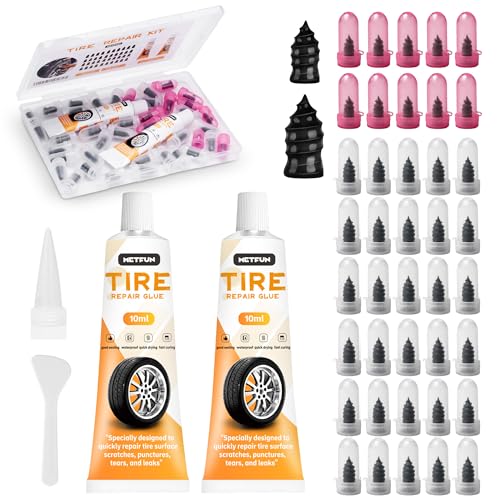
- 【Perfect Emergency Repair Solution】This kit includes...
- 【Premium Materials for Safe Repairs】Our tire screw plugs...
- 【2 Sizes for Every Puncture】Choose the right size for...
- 【5-Minute DIY Repair】Skip the auto shop and fix flats...
- 【Emergency-Ready Design】Compact & ready for...
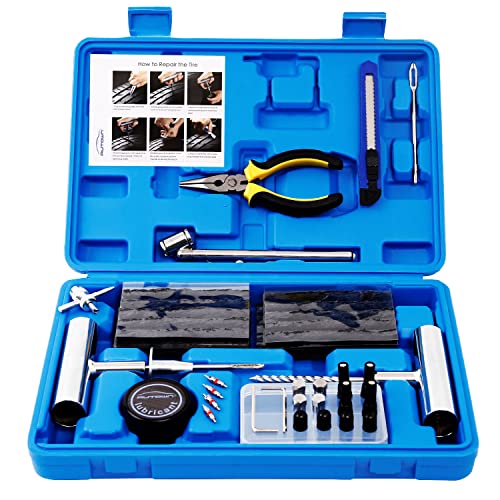
- [PROFESSIONAL QUALITY ] - AUTOWN Tire Repair Kits are made...
- [DURABLE & SAFE ] - The tire puncture repair set own great...
- [MULTIPLE USES ] - The AUTOWN 68 pcs tire repair heavy duty...
- [EASY TO USE ] - Our tire plug kits have everything you need...
- [QUICK ACTION] - We care about every customer's sense of...
This product presentation was made with AAWP plugin.
Search NHTSA Database for Recalls
Search NHTSA Database for Vehicle Investigations
View Latest Vehicle Investigations
Search NHTSA Database for Vehicle Complaints
View Latest Vehicle Complaints
TSB/Document ID: 00-03-10-006L
Replacement Service Bulletin Number:
MFR Communication Date: 2015-11-25
MFR Internal Campaign ID/Software Version:
Communication Type: Service Bulletin/Repair Instructions
NHTSA Components: TIRES:TREAD/BELT
MFR Component System:
MFR Component Subsystem:
Previous TSB | Next TSB |
Bulletin No.: 00-03-10-006L
Date: Nov-2015
Subject:
Information on Tire Radial Force Variation (RFV)
Models:
2016 and Prior GM Passenger Cars and Light Duty Trucks
Attention:
This Bulletin also applies to any of the above models that may be Export vehicles.
This Bulletin has been revised to add the 2016 Model Year and remove references to EVA. Please discard Corporate Bulletin
Number 00-03-10-006K.
Important:
•
Before measuring tires on GM approved tire force variation measurement equipment, the vehicle MUST be driven a minimum of 24 km (15 mi) to ensure
removal of any flat-spotting. Refer to the latest version of Corporate Bulletin Number 03-03-10-007: Tire/Wheel Characteristics of GM Original
Equipment Tires.
•
GM approved tire force variation measurement equipment MUST be calibrated prior to measuring tire/wheel assemblies for each vehicle.
Note: If the equipment being used is capable of performing a centering check, the centering check must be completed before taking measurements of balance
or RFV.
The purpose of this bulletin is to provide guidance to GM dealers when using GM approved tire force variation measurement equipment. This type of equipment
can be a valuable tool in diagnosing vehicle ride concerns. The most common ride concern involving tire radial force variation is highway speed (105-115 km/h
(65-70 mph) shake on smooth roads.
Tire related smooth road highway speed shake can be caused by three conditions: imbalance, out of round and tire force variation. These three conditions are
not necessarily related. All three conditions must be addressed.
Imbalance is normally addressed first, because it is the simpler of the three to correct. Off-vehicle, two plane dynamic wheel balancers are readily available and
can accurately correct imbalance. Balancer calibration and maintenance, proper attachment of the wheel to the balancer, and proper balance weights, are all
factors required for a quality balance. However, a perfectly balanced tire/wheel assembly can still be “oval shaped” and cause a vibration.
Before balancing, perform the following procedures.
Set the tire pressure to the placard values.
2.
With the vehicle raised, ensure the wheels are centered on the hub by loosening all wheel nuts and hand-tightening all nuts first by hand while shaking
the wheel, then torque to specifications using a torque wrench, NOT a torque stick.
3.
Visually inspect the tires and the wheels. Inspect for evidence of the following conditions and correct as necessary:
•
•
•
•
•
•
•
Missing balance weights
Bent rim flange
Irregular tire wear
Incomplete bead seating
Tire irregularities (including pressure settings)
Mud/ice build-up in wheel
Stones in the tire tread
1
•
Remove any aftermarket wheels and/or tires and restore vehicle to original condition prior to diagnosing a smooth road shake condition.
4.
Road test the vehicle using the PicoScope (CH-51450) essential tool. Drive within posted speed limits at 105-115 km/h (65-70 mph) for a sufficient
distance on a known, smooth road surface to duplicate the condition. Determine if the vehicle is sensitive to brake apply. If the brakes are applied lightly
and the pulsation felt in the steering wheel increases, refer to the Brakes section of the service manual that deals with brake-induced pulsation. If you
can start to hear the vibration as a low boom noise (in addition to feeling it), but cannot see it, the vehicle likely has a first order (one pulse per propshaft
revolution) driveline vibration. Driveline first order vibrations are high enough in frequency that most humans can start to hear them at highway speeds,
but are too high to be able to be easily seen. These issues can be caused by driveline imbalance or misalignment. If the vehicle exhibits this low boom
and the booming pulses in-and-out on a regular basis (like a throbbing), chances are good that the vehicle could have driveline vibration. This type of
vibration is normally felt more in the “seat of the pants” than the steering wheel.
5.
Next, record the Hertz (Hz) reading as displayed by the PicoScope onto the tire data worksheet found at the end of this bulletin. This should be done
after a tire break-in period of at least 24 km (15 mi) at 72 km/h (45 mph) or greater, in order to eliminate any possible tire flat-spotting. This reading
confirms what the vehicle vibration frequency is prior to vehicle service and documents the amount of improvement occurring as the result of the
various steps taken to repair. Completing the Steering Wheel Shake Worksheet below is required. A copy of the completed worksheet must be saved
with the R.O. and a copy included with any parts returned to the Warranty Parts Center for analysis. A reading of 35 to 50 Hz typically indicates a first
order propshaft vibration. Generally, a reading between 10 and 20 Hz indicates a tire/wheel vibration and if this is the reading obtained, continue using
this bulletin.
If the tire 1st order vibration goes away and stays away during this evaluation, the cause is likely tire flat-spotting. Tire flat-spotting vibration may come
and go at any speed over 72 km/h (45 mph) during the first 10 minutes of operation, if vibration continues after 10 minutes of driving at speeds greater
than 72 km/h (45 mph), tire flat-spotting can be ruled out as the cause for vibration.
6.
If flat-spotting is the cause, provide the explanation that this has occurred due to the vehicle being parked for long periods of time and that the nature of
the tire is to take a set. Refer to the latest version of Corporate Bulletin Number 03-03-10-007: Information on Tire/Wheel Characteristics (Vibration,
Balance, Shake, Flat Spotting) of GM Original Equipment Tires.
7.
If the road test indicates a shake/vibration exists, check the imbalance of each tire/wheel assembly on a known, calibrated, off-car dynamic balancer.
Make sure the mounting surface of the wheel and the surface of the balancer are absolutely clean and free of debris. Be sure to choose the
proper cone/collet for the wheel, and always use the pilot bore for centering. Never center the wheel using the hub-cap bore since it is not
a precision machined surface. Perform the centering check if the equipment is capable of a centering check. If any assembly calls for more than ¼
ounce on either rim flange, remove all balance weights and rebalance to as close to zero as possible. If you can see the vibration (along with feeling it) in
the steering wheel (driving straight without your hands on the wheel), it is very likely to be a tire/wheel first order (one pulse per revolution) disturbance.
First order disturbances can be caused by imbalance as well as non-uniformities in tires, wheels or hubs. This first order frequency is too low for a
human to hear, but if the amplitude is high enough, it can be seen.
If a vibration or shake still exists after balancing, any out of round conditions, of the wheel, and force variation conditions of the tire, must be addressed. GM
approved tire force variation measurement equipment can address both (it is also a wheel balancer).
Tire radial force vibration (RFV) can be defined as the amount of stiffness variation the tire will produce in one revolution under a constant load. Radial force
variation is what the vehicle feels because the load (weight) of the vehicle is always on the tires. Although free runout of tires (not under load) is not always a
good indicator of a smooth ride, it is critical that total tire/wheel assembly runout be within specification.
Tire force variation measurement equipment loads the tire, similar to on the vehicle, and measures radial force variation of the tire/wheel assembly. Note that
the wheel is affecting the tire's RFV measurement at this point. To isolate the wheel, its runout must be measured. This can be easily done on GM approved tire
force variation measurement equipment, without the need to set up dial indicators. If the wheel meets the runout specification, the tire's RFV can then be
addressed.
After measuring the tire/wheel assembly under load, and the wheel alone, the machine then calculates (predicts) the radial force variation of the tire. However,
because this is a prediction that can include mounting inaccuracies, and the load wheel is much smaller in diameter than used in tire production, this type of
service equipment should NOT be used to audit new tires. Rather, it should be used as a service diagnostic tool to minimize radial force variation of the
tire/wheel assembly.
GM approved tire force variation measurement equipment does an excellent job of measuring wheel runout, and of finding the low point of the wheel (for runout)
and the high point of the tire (for radial force variation). This allows the tire to be matched mounted to the wheel for lowest tire/wheel assembly force variation.
The machine will simplify this process into easy steps. The following assembly radial force variation numbers should be used as a guide:
P-Metric tires of passenger cars
18 lbs (8 kg) or less
P-Metric tires on light trucks
24 lbs (11 kg) or less
LT-tires on light trucks
35 lbs (16 kg) or less
When measuring RFV and match mounting tires perform the following steps.
Measuring Wheel Runout and Assembly Radial Force Variation
2
Important: The completed worksheet at the end of this bulletin must be attached to the hard copy of the repair order.
•
Measure radial force variation and radial runout.
•
If a road force/balancing machine is used, record the radial force variation (RFV) on the worksheet at the end of this bulletin. It may be of benefit to have
the lowest RFV assembly to the front left corner . If the machine is not available and the PicoScope data suggests there is an issue, swap the tire and
wheel assemblies from the front to the back. Re-check on the PicoScope and if the problem still exists, test another vehicle to find assemblies that do
not exhibit the same frequency. If the subject vehicle exhibits vibration in the seat, then swap only the rear assemblies and see if the problem continues.
If the subject vehicle exhibits vibration in the steering wheel, swap only the front assemblies and see if the problem continues. If the subject vehicle
continues to vibrate after swapping two assemblies then swap all four. If the vibration still exists, continue below.
•
If a runout/balancing machine is used, record the radial runout of the tire/wheel assemblies on the worksheet at the end of this bulletin. If one or more of
the tire/wheel assemblies are more than 0.040 in (1.02 mm), match mount the tire to the wheel to get below 0.040 in (1.02 mm). For sensitive
customers, readings of 0.030 inch (0.76 mm) or less are preferable, it may also be of benefit to have the lowest runout assembly to the front left corner.
If the machine is not available and the PicoScope data suggests there is an issue, swap the tire and wheel assemblies from the front to the back. Recheck on the PicoScope and if the problem still exists, test another vehicle to find tires that do not exhibit the same frequency and swap those tires onto
the subject vehicle.
•
After match mounting, the tire/wheel assembly must be rebalanced.
If match mounting tires to in-spec wheels produces assembly values higher than these, tire replacement may be necessary. Replacing tires at lower values will
probably mean good tires are being condemned. Because tires can sometimes become temporarily flat-spotted, which will affect force variation, it is important
that the vehicle be driven at least 24 km (15 mi) at 89 km (55 mph) or more prior to measuring. Tire pressure must also be adjusted to the usage pressure on
the vehicle's tire placard prior to measuring.
Most GM vehicles will tolerate radial force variation up to these levels. However, some vehicles are more sensitive, and may require lower levels. Also, there
are other tire parameters that GM approved tire force variation measurement equipment cannot measure that may be a factor. In such cases, TAC should be
contacted for further instructions.
Important:
•
When mounting a GM wheel to a wheel balancer/force variation machine, always use the wheel's center pilot hole. This is the primary centering
mechanism on all GM wheels; the bolt holes are secondary. Usually a back cone method to the machine should be used. For added accuracy and
repeatability, a flange plate should be used to clamp the wheel onto the cone and machine. This system is offered by all balancer manufacturers in
GM's dealer program.
•
Any type of service equipment that removes tread rubber by grinding, buffing or truing is NOT recommended, and may void the tire warranty. However,
tires may have been ground by the tire company as part of their tire manufacturing process. This is a legitimate procedure.
•
If the equipment being used is capable of performing a centering check, the centering check must be completed before taking measurements of balance
or RFV.
Steering Wheel Shake Worksheet
When diagnosing vibration concerns, use the following worksheet in conjunction with the appropriate Vibration Analysis-Road testing procedure in the Vibration
Correction sub-section in SI.
Refer to the appropriate section of SI for specifications and repair procedures that are related to the vibration concern.
Steering Wheel Shake Worksheet
To:
Dealer:
Fax Number:
VIN__ __ __ __ __ __ __ __ __ __ __ __ __ __ __ __ __
Procedure Performed By:
Date:
Model:
Year:
3
Date:
Model:
Year:
Odometer:
VIN __ __ __ __ __ __ __ __ __ __ __ __ __ __ __ __ __
TAC Case #, if applicable:
Conditions During Road Test Procedures
As condition occurs: Engine RPM_____________
Vehicle Speed__________________
Vibration/Noise detected during the following road test procedures:
Engine RPM_______________ Vehicle Speed_______________
Slow Acceleration Test: Yes__________ No__________
Neutral Coast-Down Test: Yes__________ No__________
Downshift Test: Yes__________ No__________
Neutral Run-Up Test: Yes__________ No__________
Steering Input Test: Yes__________ No__________
When using the PicoScope, always take a snapshot. This will help determine which vibration shows up the most.
Important: Vibrate software can also be used to assist in vibration diagnosis. Refer to Vibrate Software Description and Operation in SI.
Vibration Analyzer Readings
Refer to Electronic Vibration Analyzer (EVA) Description and Operation in SI for more detailed information.
Important: As a reminder, place the PicoScope sensor where the vibration is mostly felt. Ensure the word “UP” on the sensor is physically
facing up. The typical areas are the seat track, the steering column or the instrument panel. Locating the PicoScope sensor on additional
area (i.e. the right fender, left fender, right quarter panel, left quarter panel, rear seat track, etc.) may also assist in determining the
component causing the vibration/noise. The key is to look for the same Hz reading with the greatest amplitude G readings.
FILL OUT ONLY THE APPLICABLE PORTION OF THE WORKSHEET THAT APPLIES TO THE VIBRATION/NOISE:
Sensor at Steering Column:
1st Line MPH/KPH:__________ HZ:__________ Gs:__________
2nd Line MPH/KPH:__________ HZ:__________ Gs:__________
Sensor at Roof:
1st Line MPH/KPH:__________ HZ:__________ Gs:__________
2nd Line MPH/KPH:__________ HZ:__________ Gs:__________
Sensor at Passenger Seat Rail:
1st Line MPH/KPH:__________ HZ:__________ Gs:__________
2nd Line MPH/KPH:__________ HZ:__________ Gs:__________
Tire Size and Brand:_____________________________________
Wheel/Tire Runouts on vehicle (max. 0.050 in (1.27 mm))
Refer to the latest version of Corporate Bulletin Number 00-03-10-006 for tire radial force variation.
Right rear: Inner lateral:__________ Center radial:__________
Left rear: Inner lateral:__________ Center radial:__________
Right front: Inner lateral:__________ Center radial:__________
Left front: Inner lateral:__________ Center radial:__________
Mounting surface runouts (max. 0.005 in (0.127 mm))
Flange, right rear:__________ Hub, right front:__________
4
GM bulletins are intended for use by professional technicians, NOT a "do-it-yourselfer". They are written to inform these technicians of conditions that may
occur on some vehicles, or to provide information that could assist in the proper service of a vehicle. Properly trained technicians have the equipment, tools,
safety instructions, and know-how to do a job properly and safely. If a condition is described, DO NOT assume that the bulletin applies to your vehicle, or that
your vehicle will have that condition. See your GM dealer for information on whether your vehicle may benefit from the information.
WE SUPPORT VOLUNTARY TECHNICIAN CERTIFICATION
5
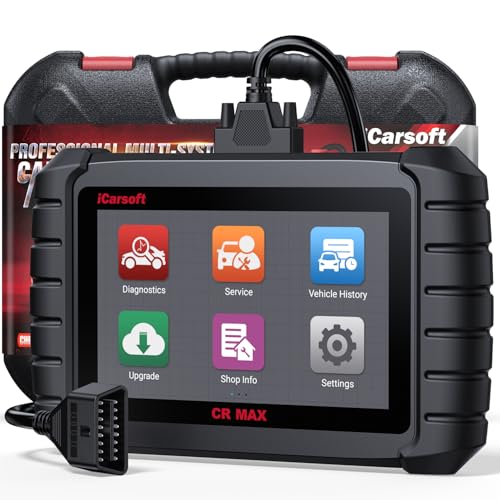
- WHY CHOOSE THE 2025 CR MAX -Upgrade the latest diagnostic capabilities for all vehicles after 1996: upgrade to 49+maintenance services; 46 extra specific functions; real all systems/all control modules diagnose; over 40K+ bidirectional actuation tests for diagnosing all control moduels of cars; Powerful full OBD2 Functions; built-in ECU Coding for BMW
 / Audi/ VW/ RollsRoyce; Fr ee V.A.G Guide Function; Battery retistration for new battery adaptation and more. It covers all vehicle diagnostic services and some special professional vehicle maintenance servces, assists you to do home DIY vehicle maintenance or car repair as a pro technician.
 - NEWEST IN INNOVATION FULL OBD2 SERVICES- iCarsoft auto car diagnostic scanner compatible with CAN-FD, CR MAX can do it all-reads and clears trouble codes, ALL SYSTEM DIAGNOSIS such as engine, transmission, ABS and airbag etc. CR MAX code reader for all cars can perform I/M Readiness, Live Data, Freeze Frame, Vehicle Information, Monitor Test, On-Board Monitor, E vap System Test,O2 Sensor Test,DTC Library Lookup,etc. (Warm Tips: If you car is after 2023,please contact us for compatibility; 3. It comes with 16PIN OBD2 diagnostic adapter, please check your car diagnostic socket if it is 16pin socket, if your car is 14pin diagnostic socket please contact us for the solution.)
- 49 RESET+ 46 SERVICES- Performs: Oil Reset, EPB,SAS,Throttle, D-P - F, Battery, ABS, Injector, TPMS, Suspension, AC, Head Lamp, Body Stablity, Engine, Tramsmission, Airbag, Seat, Door-Win-Roof, Fuel Pump, Door, E-G- R.+21 NEWEST SERVICES( Need update scanner)-AdBlue, Clutch, Crankshaft, High Voltage Battery, Cruise Control, NO xSensor, Rain Sensor, Stop And Start, Turbocharger, Head Up Display, Radar Camera, Vehicle Setup, Cyliner Misfire Check,Speedlimitassist, ControlUnitReset,OxygenSensor, Seatbelt. Extra 46+ extra services based on car brand.(Tips: Quantity of reset/ calibration fucitons are based on car system that your vehicle model has)
- REVOLUTIONARY 40000+BIDIRECTIONAL ACTIVE TESTS: Upgraded CR Max scanner equip with numberous of actuational test items for covering all available vehicle control modules, no longer only do simple light test or window test like other scanners, performs hardware modules test and software control modules test for checking car units or new updated control moduels work well or not after maintenance/ repair/ re-installation/ control system updated (Example for Benz- Roller Sun Blind test; Backup Camera test ;Self-test; EPB test; Transport Mode test;Boost Pressure Positioner test; Fuel Pump test; AND MORE!!).(Warm tip: The available test items are based on control modules your car has)
- ECU CODING+ BATTERY REGISTRATION- Powerful ECU Coding service for BMW/MINI/RollsRoyce / Audi/VW/Seat/Skoda/Bentley/Bugatti/Lamborghini, Improves Engine Power Performance and Optimizes Fuel Efficiency and Match New Hardware Unit to car and Customized a comfortable Driving Modes and Fixes & Updates Original Software Bug. The battery test function for checking car battery health, perform battery reset (BMS ) for replacing a damaged or aging car battery with a new one and register new battery to car ECU
 /
/ 
- Scanner POR V2.0 with all obd2 services
- Do the scanning for engine
- Support OBDII/EOBD Ten Modes of Operation

- 【Designed for Most Mercedes-Benz, Sprinter and Smart from 1996-2023】As every car model of Benz has its-owned specific car system and ECUs, not all models are equipped with a complete vehicle ECU, which may cause the scanner to be unable to perform all listed reset services on some models, or even completely incompatible. Like For Sprinter's newer models, it support diagnostic functions only, lacking support for specialized service functions.. So please tell us the car's VIN and required service before purchase for compatibility check. You may also refer to the instructions in the eighth image of the main product photos to perform your inquiry.
- 【Up to 38 Reset Services】MB V3.0 2026 Version diagnostic tool performs Up to 38 maintenance services - Oil Rest , SAS, EPB, ETC, D-P-F, TPMS, ABS, Suspension, Air Conditioner, Head Lamp, Body Stability, Engine Control, Seat, Fuel Pump, Air-Filter, Engine Idle, Door, Im-mo-bilizer, Injector Coding, Transmission Control, Miscellaneous, Adblue, BMS, Cluth, Water Pump, NOxSensor, Rain/Light Sensor, Start/Stop, Radar/Camera, Cylinder Shutoff Test, Speed Limit Assist, Control Unit Reset, Oxygen Sensor, Seat Belt, Cruise Control System, Turbocharger, Crankshaft, Language Setting and etc. (Tips: Please update the software after receiving the product to obtain new service functions)
- 【OE-Level All System OBD2 Scanner】iCarsoft MB V3.0 (2026 Version) diagnostic scanner offers comprehensive OBDII services, allowing you to quickly scan all systems, including the Engine, ABS, SAS, SRS, TPMS, TCM, Fuel Pump System, ESP, EPB, EPS, Suspension, SCM, Adaptive Systems, and more. It supports functions such as reading and erasing codes, checking I/M readiness, viewing freeze frame data, performing O2 sensor tests, conducting on-board monitoring, testing the evap system, auto VIN retrieval, and reading both generic and specific codes, as well as DTCs and battery tests.
- 【Bidirectional Scan Tool】iCarsoft MB V3.0 (2026 Version) Bidirectional scanner supports activate or control a vehicle system or component, allows commanding cars’ modules and receiving info from the ECU to perform active tests on individual components, including EVAP/ABS Motor Pump/Windows/Sunroof and more, to pinpoint fault causes & resolve issues,and allows you to re-learn certain components after making repairs or replacement.
- 【Real Time Record & Graph View】iCarsoft MB V3.0 (2026 Version) can automatically record vehicle text history and identify vehicle information. Preserve real-time data information. View & Graph Live Data. Support Data Review and Print. Multi-language: English, German, Dutch, Spanish, French and so on. We promise to offer Lifetime updates (Lifetime free Update via PC), and confidence in products. We also provide 1 year warranty + extra lifetime hardware free repair if you need it in the future. We prioritize user experience & strive to meet your expectations. Please do feel free to reach out to us if you have any question or problem about the usage, our tech team will service you in time.

This product presentation was made with AAWP plugin.
Last update on 2026-05-11 / Affiliate links / Images from Amazon Product Advertising API