
NHTSA ID Number: 10129016
Manufacturer Communication Number: ZR-TSIB-012-A
TSB/Document Date: 2018-02-21
Summary
This bulletin, previously released in December 2017, has been updated to provide a consolidated parts list. This bulletin instructs how to remove the Zero Radius? (ZR) grabber carriage motor bolts and replace with studs if the motor bolts are loosening.
Technical Service Information Bulletin
Installing Studs to Attach the Grabber
Carriage Motors to the Grabber Carriage
on the Zero Radius
Date: January 3, 2018
Bulletin Name: ZR-TSIB-012-A
Model: Zero Radius Model 48
Model Years: 2009 - 2017
Purpose:
This bulletin instructs to how remove the Zero Radius™ (ZR) grabber carriage motor bolts and replace with studs
if the motor bolts are loosening.
Notice:
• This bulletin should be read and understood in its
entirety before performing this update procedure.
• All procedures outlined in the bulletin must be
performed by skilled service personnel. Refer to the
product service manual for descriptions of maintenance
procedures.
SAFETY NOTICE
Perform your company’s Lockout/Tagout
procedure. If your company does not have a
Lockout/Tagout procedure, follow OSHA
1910.147 and 1910.146 Confined Space as
appropriate.
SAFETY NOTICE
Use appropriate Personal Protective
Equipment (PPE) as required by your
company.
1
Equipment Required:
Customer to supply:
•
•
•
•
•
•
•
•
•
•
•
•
•
•
•
•
•
•
•
•
•
Brake cleaner
Electric drill and assorted drill bits
3/8”-16 tapered tap
3/8”-16 bottoming tap
3/8” tube brush
Bristle brush
Air compressor
Rotary sander
Rubber mallet
Overhead crane or lifting device and chains
Hydraulic fitting caps/plugs
Loctite® 263 (or equivalent)
Loctite® 515 (or equivalent)
Loctite® 680 (or equivalent)
9/16” ratchet side wrench
9/16” wrenches and socket wrench
Torque wrench
Gloves (such as industrial nitrile gloves)
Rolling head pry bar
EP No. 2 lithium grease
Wire brush
Parts Required:
Purchase from McNeilus Truck and Manufacturing, Inc. by calling 888-686-7278 or visiting
www.streetsmartparts.com.
Item
Part Number
Description
1
1580897
DOUBLE STUD, 3/8-16, 3/8-24, GR 8
8
2
0621024
WASHER, SPR, SPT .38 X .68 X .09 ZC
24
3
1141067
NUT, HEX, LKDT, .38-24 GC ZC
8
4
0120266
NUT, JAM, .38-24 GA ZC (For temporary use)
1
5
1427860
SCR, CAP, SOC .38-16 X 1.50 574 ZC
16
2
Qty.
Procedure 1: Remove the Grabber Assembly from the Mast
1. Perform your company’s Lockout/Tagout procedure. If your company does not have a Lockout/Tagout
procedure, follow OSHA 1910.147 and 1910.146 Confined Space as appropriate.
2. Remove the grabber faceplate. Retain it and its hardware for reinstallation (Figure 1).
Grabber Faceplate
Figure 1
3. Attach chains and a crane to the grabber carriage assembly to support the assembly when it is removed from
the mast.
4. Remove and retain all four grabber roller sets that hold the grabber carriage assembly to the mast — Figure
2 shows one of the top sets and Figure 3 shows the bottom sets. A set consists of a roller, bracket, and bolts
(and proximity switch flag bracket if installed).
5. Inspect the rollers for wear and replace if necessary by calling 888-686-7278. If a roller needs to be replaced,
it is recommended to replace all rollers at the same time.
Bracket
Bolts
Figure 2
3
Proximity Flag Bracket
Figure 3
Figure 3 Close-up
6. Remove the hydraulic lines and plug fittings with caps. Retain all hydraulic lines and hardware as well as a
record of the hydraulic line routing.
7. Remove the grabber carriage assembly from the mast and place the assembly on the ground or a work
bench. Keep the chains/crane attached to the assembly for safety.
8. Remove and inspect the double check valve from the Over Center Manifold Valve for contaminates (location
shown on Figure 4).
• If contaminates are found or the double check valve is broken, stop working on this bulletin. The entire
Over Center Manifold Valve block must be replaced before continuing with this bulletin. Contact McNeilus
at 888-686-7278 or visit www.streetsmartparts.com to order a new Over Center Manifold Valve Block. Call a
McNeilus National Service Representative at 888-686-7278 for installation information.
• If contaminates are not found, replace the double check valve and continue with this bulletin.
Over Center Manifold Double
Check Valve Location
Figure 4
4
NOTE: The next steps detail work conducted on the backside of the grabber carriage assembly (see
Figure 5).
9. If there are locking tabs that hold the bolts connecting the motors to the grabber carriage assembly, remove
and discard the tabs from both motors.
10. Remove the motors, grabber gear, and all related hardware (Figure 5). Retain these items until further notice
in this bulletin.
11. Inspect the motors, grabber gear, thrust washers (found near motor spline), motorshaft support bearing, and
4-hole bearing retainer plate for damage. If damage is found, stop working on this bulletin and order a new
part by calling 888-686-7278 or visiting www.streetsmartparts.com. Continue with this bulletin once you have
the new part.
Figure 5
5
Procedure 2: Cleaning Procedures
2.1 Cleaning the Grabber Carriage Assembly
1. Residual Loctite must be removed from specific bolt holes. On each side of
the grabber carriage assembly, at the location where the motors attach to the
grabber assembly, clean the four (4) bolt holes and the large hole for the motor
shaft.
a. Start by cleaning inside the bolt holes with a tube brush on an electric drill
(see Figure 6 for location of holes). Clean the bolt holes on both sides of the
grabber assembly where the motors are bolted onto the grabber assembly.
The residue from the Loctite is hard and is a contaminate for the installation of
the new hardware if it is left in place. The holes are clean when all of the Loctite
is removed; do not grind the holes.
b. Clean the large hole for the motor shaft (see Figure 6) with a tube brush on
an electric drill. Clean both of the large holes on both sides of the grabber
assembly. The holes are clean when all of the Loctite is removed; do not grind
the holes.
c. Use a rotary sander on the outside and inside of the cleaned area to remove
rust, paint, or other contaminates.
Figure 6
2.2 Cleaning the Motors and Grabber Rollers
1. Set the motors upright with the mounting holes facing upright (Figure 7).
2. Use a clean 3/8”-16 tapered tap and an electric drill to push the tap into each mounting hole and back out to
clean the holes of contaminates.
3. Use a clean 3/8”-16 finishing tap and electric drill to push the tap into each mounting hole and back out to
clean the holes of contaminates.
4. Repeat Steps 2 and 3 on the other motor.
Figure 7
6
5. Wear gloves for the next cleaning steps. Spray the brake cleaner in the mounting holes and on top of
the flange of both motors. The brake cleaner removes the rust inhibitor on the motor and any remaining
contaminates so Loctite will adhere to the motor flange.
6. Use a clean 3/8” tube brush and the electric drill to clean each mounting hole. DO NOT put the drill in
reverse — the brush will get stuck in the mounting hole. Instead, pull the brush out of the mounting holes.
7. Turn the motors on their sides to drain the brake cleaner into an appropriate containment pad or berm.
8. Spray more brake cleaner on the top of the motor flange and into the mounting holes.
9. Clean the area with the bristle brush (see Figure 8). DO NOT use a wire brush on the seal in the shaft.
Figure 8
10. Repeat Steps 5-9 of the Motor Cleaning Procedure until all mounting holes are clean and the area is free from
rust inhibitor and oil/contaminates.
11. Use compressed air on the motors to push out any remaining contaminates from the mounting holes and to
dry the flanges of the motors. The flanges should be free from oil residue and should be a dull gray color with
no shine.
12. Use a rotary sander on the flat surface (mating side) of each 4-hole retainer plate to clean it.
13. Spray brake cleaner on the flat side of each 4-hole retainer plate. Then spray them with compressed air to
remove contaminates and to dry the retainer plates.
14. Clean the grabber roller thread holes with a clean 3/8”-16 tapered tap and an electric drill to push the tap into
each mounting hole and back out and with a clean 3/8”-16 finishing tap and electric drill to push the tap into
each mounting hole and back out to clean the holes of contaminates.
15. Clean the roller thread holes with a wire brush.
7
Procedure 3: Installation of Motors and Grabber Gear
Because of the application of Loctite®, it is important you get all of the necessary items ready for installation
before beginning the procedure.
You will need:
• Eight (8) double end studs (PN 1580897)
• Twenty-four (24) washers (PN 0621024)
• Loctite® 680
• Eight (8) locknuts (PN 1141067)
• Loctite® 263
• One (1) temporary jam nut (PN 0120266)
• Loctite® 515
• Brake cleaner
• Sixteen (16) bolts (PN 1427860)
3.1 Installing Motor Components
1. Stand the motors upright with the mounting holes facing up.
2. Clean the studs with the brake cleaner and air compressor.
3. Inspect the existing motorshaft support bearings for quality. If the inside race turns freely, the bearing can
be reused. If not, purchase and replace with a new bearing (PN 1414603). Clean the bearing outer diameter
(Figure 12) with brake cleaner and compressed air to remove contaminates.
4. Apply one (1) drop of Loctite 263 in each stud mounting hole on the flange side of both motors. Do not apply
more than one drop. Excessive Loctite in the holes of the motor will not allow the studs to install completely.
5. Apply Loctite 515 to the top of the flange on each motor (Figure 9). DO NOT get Loctite in the mounting holes.
DO NOT get Loctite on the shaft seal.
Figure 9
Apply Loctite 515 to the flange of each motor.
6. Apply one (1) drop of Loctite 263 on the coarse thread end of a stud (PN 1580897). Do not apply more than
one drop. Excessive Loctite in the holes of the motor will not allow the studs to install completely.
7. Screw the coarse thread end of the stud into the mounting hole of a motor (Figure 10).
8. Install one (1) temporary jam nut halfway down on the fine thread end of the stud (Figure 10).
9. Install one (1) temporary locknut (PN 1141067) on top of the jam nut (Figure 10). Finger tighten the nuts until
they meet.
10. Use 9/16” wrenches on each nut and tighten the jam nut to the backside of the locknut.
11. Use a torque wrench on the locknut to torque the stud into the motor at 37 ft.-lbs. This will seat the coarse
thread end of the stud into the motor.
12. Use a 9/16” wrench on each nut to loosen the jam nut and remove each temporary nut off the fine thread end
of the stud without compromising the seating of the stud.
8
13. Repeat Steps 6-12 on the remaining three (3) studs of this motor and again for the other motor and (4) studs.
Locknut
Jam Nut
Stud
Figure 10
14. Apply Loctite 515 Gasket Eliminator on the flat side (mating side) of each 4-hole bearing retainer plate
(Figure 11).
Figure 11
Apply Loctite 515 to the 4-hole bearing retainer plate.
9
15. Apply Loctite 680 on the (flat) outside edge of the motorshaft support bearings (see Figure 12 and Figure
13).
16. Insert the motorshaft support bearing into the large motor shaft hole on the grabber carriage assembly (the
hole you already prepped) (see Figure 6). Use the bearing retainer to assist in locating the bearing position.
Do this on both motor shaft holes — one bearing per large hole.
Figure 12
Figure 13
Insert the support bearing in the large hole that is already prepped.
NOTE: The visible green gel is Loctite 680.
10
3.2 Installing the Motors and Grabber Gear on the Grabber
NOTE: The drive motor is always placed on the left side and the brake motor is always placed on the
right side of the grabber carriage assembly when you are facing the back of the grabber assembly.
1. Install the 4-hole bearing retainer plate to the inside of the grabber carriage assembly over the
motorshaft support bearing (Figure 14). The Loctite applied side of the plate must be against the grabber
carriage assembly. The large hole in the bearing retainer plate matches the location with the large hole on the
grabber assembly. Repeat on the other inside side of the grabber carriage assembly.
2.
Drive Motor: Install the drive motor in place on the grabber carriage assembly on the left side (Figure 14).
Install the motor just enough to allow the thrust washer (when it is installed in the next step) to hang on the
shaft.
NOTE: Remember the hydraulic tube ports on the motor must be facing UP. The motor’s flange side with
the Loctite must be placed flush against the outside of the carriage assembly with the motor spline pushed
through the large hole.
3. Install a thrust washer in place around the drive motor spline on the inside side (Figure 14).
Drive Motor
Thrust Washer
4-Hole Bearing Retainer Plate on Brake
Motor Inside Side.
4-Hole Bearing
Retainer Plate
Figure 14
Install the drive motor with the spline going through the large hole. Add the thrust washer.
4. Install the grabber gear onto the drive motor spline (Figure 15).
Drive
Motor
4-Hole Retainer Plate
and Thrust Washer
Grabber Gear
Figure 15
11
5. Apply one (1) drop of Loctite 263 to each stud. Do not apply more than one drop.
6. Install a washer (PN 0621024) and a nut (PN 1141067) per stud (on the fine threaded end of the stud) on the
drive motor (Figure 15).
7. Hand tighten the nuts to the 4-hole retainer plate as needed to make sure the motor and grabber gear stay
where placed and still allow the gear to be wiggled to allow installation of the brake motor.
Brake Motor: Install the brake motor on the right side of the grabber assembly. Do not push the motor flush
against the grabber assembly until the thrust washer is installed (see Step 9) (Figure 16). It may be necessary
to turn the drive motor enough to correctly position the spline to allow the brake motor to be installed.
8.
NOTE: Remember the hydraulic tube ports on the motor must be facing UP. The motor’s flange side with
the Loctite must be placed flush against the outside of the carriage assembly with the motor spline pushed
through the large hole.
9. Install a thrust washer in place around the brake motor spline (Figure 16).
Thrust Washer
Brake Motor
Figure 16
Install the thrust washer between the spline of the brake motor and the grabber gear.
10. Apply one (1) drop of Loctite 263 to each stud. Do not apply more than one drop.
11. Install a washer (PN 0621024) and a locknut (PN 1141067) per stud on the fine threaded end on the brake
motor (Figure 16).
12. Once the motor splines are aligned, use a rubber mallet to push the splines into the grabber gear, then seat
the motor.
13. Hand tighten the nuts on the studs as needed to make sure the motor and grabber gear stay where placed.
14. Use the ratchet side wrench to tighten all nuts on studs.
15. Use a torque wrench with a 9/16” socket to tighten the studs to 37 ft.-lbs. Do this in a crisscrossing tightening
pattern (Figure 20).
Tightening
Pattern
1
3
4
2
Figure 17
12
16. Strike against the ends of both motors using the rubber mallet in order to seat all parts again.
17. Use the torque socket wrench again to tighten the bolts to 37 ft.-lbs.
18. Repeat Steps 16 and 17 until there is no movement from the socket wrench.
19. Center the grabber gear by placing a rolling head (centering) pry bar through the open hole next to the motor/
grabber gear on the grabber assembly contacting the metal part of the grabber gear (Figure 18) —
Not Against the Plastic Grabber Gear! Strike the pry bar with the rubber mallet to center the grabber gear.
Striking and aligning the motors may force the grabber gear into misalignment. Striking the grabber gear will
realign it to the center.
Figure 18
20. Grease the couplers on the gear with EP No. 2 lithium grease (Figure 19).
Figure 19
Grease points.
13
21. If you replaced an existing motor with a new motor, remove the shipping plug and washer before installing
hydraulic lines (Figure 20).
Figure 20
22. Use the crane to position the grabber assembly in location on the ZR mast.
23. Reinstall all four roller sets: the bracket (the upper brackets have an angled bump stop; the lower brackets do
not), roller (if it slid out during disassembly from the mast).
24. Apply one (1) drop of Loctite 263 to the new bolts (PN 1427860) and washers (quantity 16) (PN 0621024)
and install them in each roller.
25. Use a torque wrench to torque each bolt to 38 ft.-lbs.
26. Reinstall the proximity switch flag bracket and hardware if previously installed.
27. Use a torque wrench to torque each bolt to 23 ft.-lbs.
28. Remove the chains and crane.
29. Route and reattach all hydraulic lines on the grabber assembly in the correct routing positions.
30. Remove your company’s Lockout/Tagout procedure. If your company does not have a Lockout/Tagout
procedure, follow OSHA 1910.147 and 1910.146 Confined Space as appropriate.
31. Run the arm and grabber functions, checking for proper function.
• If the arm and grabber do not function correctly, call a McNeilus National Service Representative at
888-686-7278 for further instruction.
32. Check for leaks at the hydraulic fittings. Tighten fittings as needed.
33. Reinstall the grabber faceplate using the retained hardware.
34. Use a torque wrench to torque bolts to 15 ft.-lbs.
35. Return vehicle to service after ensuring there are no leaks and the arm and grabber function correctly.
Continuous Improvement:
The change included in this document is part of the
McNeilus Continuous Improvement Process.
McNeilus’s quality policy is providing customer satisfaction
through innovative products, dedicated service, and a
constant focus on continuous improvement.
14
(888) 686-7278
www.streetsmartparts.com
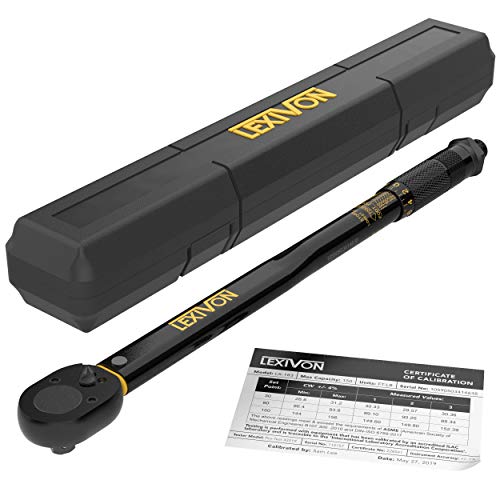
- PRECISE & HIGH QUALITY - Manufactured in Taiwan, our torque...
- DURABLE - Built to last, featuring a reinforced ratchet gear...
- LONGEVITY - Protect your investment with our proprietary...
- PERFORMANCE - Easily read and set torque levels with our...
- OMFORT - Equipped with a reversible ratchet head that drives...

- 【9-in-1 Torque Solution】Complete set includes...
- 【High Precision & Dual Scales】Factory-calibrated to...
- 【Clear & Safe Audible Click】Upgraded loud "Click" sound...
- 【Smooth 72-Tooth Ratchet & Quick Release】Reversible...
- 【Durable Construction & Wide Use】Hardened Cr-V steel...
If the PDF is very large, it may not load in the preview below.
Some older TSBs had multiple PDFs — visit the NHTSA Website to view all PDFs.
If the TSB PDF does not show, download or view it on the NHTSA Website.
Click on the (+) Plus Sign
Then Click on Associated Document(s)
Search NHTSA Database for Recalls
Search NHTSA Database for Vehicle Investigations
View Latest Vehicle Investigations
Search NHTSA Database for Vehicle Complaints
View Latest Vehicle Complaints
TSB/Document ID: ZR-TSIB-012-A
Replacement Service Bulletin Number:
MFR Communication Date: 2018-01-03
MFR Internal Campaign ID/Software Version:
Communication Type: Service Bulletin/Repair Instructions
NHTSA Components: ENGINE AND ENGINE COOLING
MFR Component System:
MFR Component Subsystem:
Previous TSB | Next TSB |
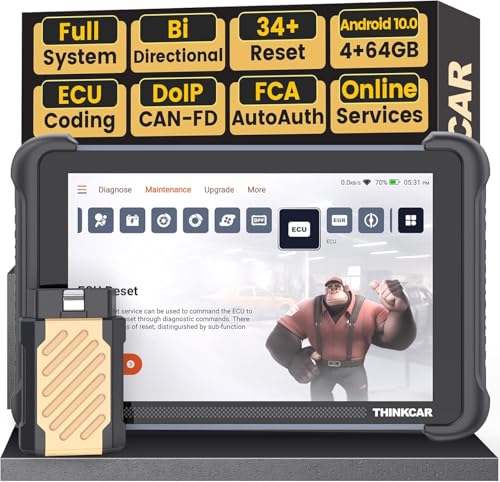
- [Notice] When you receive a used device, it may be a customer return resold by Amazon without inspection. You can exchange it for a new one through Amazon. As this situation is unavoidable, we sincerely apologize. For any issues, contacting us via Amazon's "Messages" is the best way. THINKSCAN 689BT Bidirectional Scan Tool Can Be Used Immediately After It is Turned On, Without Complicated Registration Process, Which is More Convenient & Quick.
- Full Bi-Directional Control & 3000+ Active Tests: Take control and test components like actuators, fuel injectors, relays, and cooling fans in real time. You’ll quickly see if the problem is in the part itself or the control module — saving you hours of guesswork and frustrating trial-and-error.
- Advanced ECU Coding Capabilities: Handle module matching and hidden feature activation with confidence. When you replace an ECU or want to customize settings, this obd2 scanner diagnostic bi directional tool gives you the professional-level capabilities you need without the dealership price tag.
- 34+ Useful Reset and Maintenance Functions: Complete everyday service tasks smoothly with a wide range of helpful reset and maintenance functions. Whether you’re keeping up with regular upkeep or tackling a specific job, this scanner makes maintenance simpler and less stressful for both DIYers and pros.
- Comprehensive Full System Diagnostics: Diagnose every major system — Engine, Transmission
 , ABS, SRS, TPMS, and more — all in one place. Finally stop wondering if you’re missing something important; get the full picture and clear codes with ease.
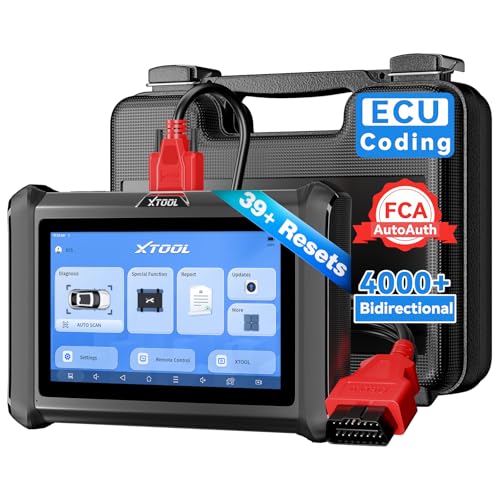
- Top Reasons to Choose the D7S OBD2 Scanner: XTOOL D7S car scan tool, an upgrade of XTOOL D7, offers comprehensive features for automotive technicians, workshops, and DIY enthusiasts 1. Upgraded Hardware: 2+64GB memory, rear camera, intuitive interface, foldable bracket 2. Complete Diagnostics: FCA Autoauth, OE-level all system scan, 39+ maintenance services, 4K+ bidirectional, CANFD/DoIP protocol 3. Advanced Capabilities: ECU coding, PMI functions 4. Wide Compatibility: Support 10,000+ models, covering 99% vehicle brands 5. Multi-language: Available in 22+ languages, No IP Restrictions 6. 3-Year Updates: Save 300 bucks on software updates for the latest features and optimizations
- 2026 Upgraded D7S Car Scanner Features: The newly 2026 D7S V2.0 scanner for car brings exciting features for advanced vehicle diagnostics and enhanced user experience 1. FCA AutoAuth: Now supports FCA SGW module for Chrysler, for Jeep, for Dodge (2018+), for Fiat (2017+), enabling faster vehicle communication without gateway restrictions 2. PMI (Offline ECU Programming): Allows for Ford, for Lincoln, and for Mazda ECU programming for new modules 3. Optimized Diagnostic Report 2.0: Personalized reports with logos and customer info for auto shops. Note: Compatibility varies by cars, please check before order
- Cost-effective ECU Coding Scan Tool for Specific Brands: Enhance your vehicle's performance with XTOOL D7S! This obd2 scanner all systems bidirectional offers advanced capabilities at an affordable price, supports online for BMW, for Benz and offline for BENZ, for MIT, along with PMI functions for Ford, for Mazda, and for Lincoln. Ideal for technicians and DIY enthusiasts, this automotive scanner diagnostic tool optimizes vehicle performance and enhances the driving experience. Note: Not for all cars and modules, please send car VIN to check the compatibility before purchase
- OE All System Diagnostic & 8 Pids Graphing: XTOOL D7S is a comprehensive all system bi directional obd2 scanner that delivers dealer-level diagnostics, completely controlling over your vehicle’s performance and health. This automotive scan tool can read and clear DTCs, view live data and ECU information, retrieve freeze frames, and perform active tests and full obd2 functions. This bi-directional scan tool can can identify your vehicle's make, model, and year information with just one click and show up to 8 PIDs live data with options for CSV viewing, playback, and recording for in-depth analysis. It is easy-to-use for both professionals and beginners, helping pinpoint issues efficiently
- 3 Years Software Update, Value for Money: With 3 years of software updates and 22+ languages(no IP restrictions), XTOOL D7S auto scanner code scanner ensures ongoing compatibility for the latest car models and improved diagnostic functions. This all system vehicle diagnostic scanner comes with a 30-day return policy and a 24-month repair for dependable performance. XTOOL are dedicated to your satisfaction, so enjoy seamless support and lifetime expert assistance. Should you encounter any issues or concerns, don’t hesitate to reach out XTOOL. D7S with newest update with 22 languages freely transfer without authorization, check details from setting-language or from XTOOL
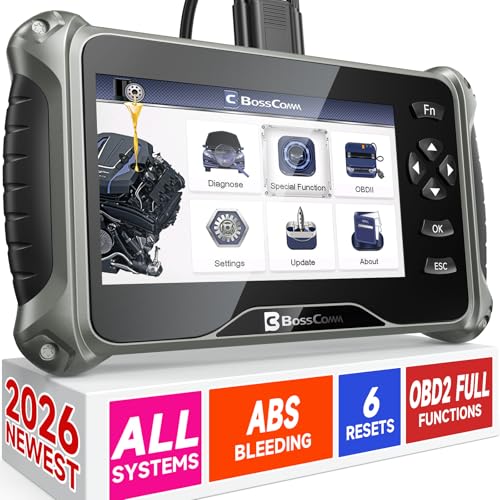
- 【✅Compared to BOSSCOMM IF742, IF745 Offers Full-System Diagnostics】The BOSSCOMM IF745 car diagnostic scanner is an upgraded model of IF742. In addition to supporting all OBD2 Code Reader functions and 6 reset options (ABS/EPB/SAS/BMS/Oil/Throttle), it expands diagnostics from 4 systems (Check Engine/ABS/SRS/Transmission) to vehicle All systems, including Steering, Suspension, and Body Electronics. This provides deeper, more comprehensive diagnostic capabilities.
- 【✨6 Essential Resets: ABS Bleeding, Oil, EPB, SAS, Throttle, BMS】The BOSSCOMM IF745 obd2 scanner diagnostic tool swiftly purges air from brake lines to restore braking sensitivity, fine-tunes maintenance cycles to eliminate false alerts, resolves parking brake issues with one-click control, recalibrates steering sensors for stability, optimizes engine idling/acceleration for smoother performance, and deeply resets battery systems to extend lifespan and range via precise parameter adjustments.❗NOTE: Does NOT support bidirectional control, coding, or programming.
- 【✨Deep Diagnostics for All Vehicle System Modules】Beyond code reading/clearing and ECU information retrieval, our all-in-one data stream feature lets you inspect all current fault codes and their locations across the vehicle’s systems. This vehicle code reader helps you turn off dashboard warning lights and perform a comprehensive self-check of your car at home—no more back-and-forth trips to the repair shop or hefty inspection fees.
- 【✨10 OBD2 Functions】The BOSSCOMM IF745 scan tool’s DTC Lookup instantly translates fault codes into user-friendly explanations, its I/M Readiness feature streamlines emissions testing with a single tap, and Freeze Frame lets you pinpoint the exact moment of a fault for in-depth root-cause diagnosis. Combined with a live data dashboard and advanced diagnostics (O2S, OBMon, EVAP), it delivers comprehensive insights for confident troubleshooting.
- 【✨10,000+ Car Models, AutoVIN, 13 Languages】The BOSSCOMM IF745 vehicle scanner diagnostic tool covers 73+ global car brands and offers support in 13 languages, making it perfect for DIYers, auto mechanics, or as a thoughtful gift. With a single-click AutoVIN feature, it instantly retrieves vehicle serial numbers, streamlining diagnostics for users globally. This adaptable tool balances user-friendliness with precision, catering to both personal and professional requirements.✅Unsure about compatibility? Compatibility will vary on vehicles' model and year, pls reach us via 📧 [email protected] 📧 before purchase.
This product presentation was made with AAWP plugin.