
NHTSA ID Number: 10122715
Manufacturer Communication Number: SSP 920213
TSB/Document Date: 2017-11-08
Summary
This document contains the Self-Study Program that provides introductory information regarding the design and function of the new second generation 3.0L V6 TDI engine.
Self-Study Program 920213
The Second Generation 3.0L V6 TDI Engine
Audi of America, LLC
Service Training
Printed in U.S.A.
Printed 9/2012
Course Number 920213
©2012 Audi of America, LLC
All rights reserved. Information contained in this manual is
based on the latest information available at the time of printing
and is subject to the copyright and other intellectual property
rights of Audi of America, LLC., its affiliated companies and its
licensors. All rights are reserved to make changes at any time
without notice. No part of this document may be reproduced,
stored in a retrieval system, or transmitted in any form or by
any means, electronic, mechanical, photocopying, recording or
otherwise, nor may these materials be modified or reposted to
other sites without the prior expressed written permission of
the publisher.
All requests for permission to copy and redistribute
information should be referred to Audi of America, LLC.
Always check Technical Bulletins and the latest electronic
service repair literature for information that may supersede any
information included in this booklet.
Table of Contents
Introduction . . . . . . . . . . . . . . . . . . . . . . . . . . . . . . . . . . . . . . . 1
Technical Features . . . . . . . . . . . . . . . . . . . . . . . . . . . . . . . . . . . . . . . . . . . . . . . . . . . 2
Specifications . . . . . . . . . . . . . . . . . . . . . . . . . . . . . . . . . . . . . . . . . . . . . . . . . . . . . . . 4
Engine Design . . . . . . . . . . . . . . . . . . . . . . . . . . . . . . . . . . . . . 5
Cylinder Block . . . . . . . . . . . . . . . . . . . . . . . . . . . . . . . . . . . . . . . . . . . . . . . . . . . . . . . 5
Crankshaft Assembly . . . . . . . . . . . . . . . . . . . . . . . . . . . . . . . . . . . . . . . . . . . . . . . . 6
Chain Drive System . . . . . . . . . . . . . . . . . . . . . . . . . . . . . . . . . . . . . . . . . . . . . . . . . . 7
Cylinder Head . . . . . . . . . . . . . . . . . . . . . . . . . . . . . . . . . . . . . . . . . . . . . . . . . . . . . . . 8
Oil Circuit . . . . . . . . . . . . . . . . . . . . . . . . . . . . . . . . . . . . . . . . . . 9
Oil Circuit . . . . . . . . . . . . . . . . . . . . . . . . . . . . . . . . . . . . . . . . . . . . . . . . . . . . . . . . . . . 9
Engine Oil Pump with Integral Vacuum Pump . . . . . . . . . . . . . . . . . . . . . . . . . . 10
Engine Oil Cooler with Thermostat Controlled Bypass Port. . . . . . . . . . . . . . 11
Cooling System . . . . . . . . . . . . . . . . . . . . . . . . . . . . . . . . . . .12
Overview . . . . . . . . . . . . . . . . . . . . . . . . . . . . . . . . . . . . . . . . . . . . . . . . . . . . . . . . . . 12
Coolant Circuit and Thermal Management System . . . . . . . . . . . . . . . . . . . . . 13
Cylinder Head Cooling Circuit . . . . . . . . . . . . . . . . . . . . . . . . . . . . . . . . . . . . . . . . 14
Cylinder Block Cooling Circuit. . . . . . . . . . . . . . . . . . . . . . . . . . . . . . . . . . . . . . . . 15
Exhaust Gas Recirculation . . . . . . . . . . . . . . . . . . . . . . . . . .16
Overview . . . . . . . . . . . . . . . . . . . . . . . . . . . . . . . . . . . . . . . . . . . . . . . . . . . . . . . . . . 16
Active EGR Cooler . . . . . . . . . . . . . . . . . . . . . . . . . . . . . . . . . . . . . . . . . . . . . . . . . . 17
Intake Air Ducting . . . . . . . . . . . . . . . . . . . . . . . . . . . . . . . . .18
Turbocharging . . . . . . . . . . . . . . . . . . . . . . . . . . . . . . . . . . . .19
Charge Air Cooling . . . . . . . . . . . . . . . . . . . . . . . . . . . . . . . . . . . . . . . . . . . . . . . . . 20
Common Rail Injection System . . . . . . . . . . . . . . . . . . . . .21
Chain-Driven Injection System . . . . . . . . . . . . . . . . . . . . . . . . . . . . . . . . . . . . . . . 21
Fuel Delivery System . . . . . . . . . . . . . . . . . . . . . . . . . . . . . . . . . . . . . . . . . . . . . . . 22
Engine Management . . . . . . . . . . . . . . . . . . . . . . . . . . . . . . .24
System Overview . . . . . . . . . . . . . . . . . . . . . . . . . . . . . . . . . . . . . . . . . . . . . . . . . . 24
Special Tools and Workshop Equipment . . . . . . . . . . . . .26
Knowledge Assessment . . . . . . . . . . . . . . . . . . . . . . . . . . .29
i
The Self-Study Program provides introductory information regarding the design
and function of new models, automotive components, or technologies.
The Self-Study Program is not a Repair Manual!
All values given are intended as a guideline only.
For maintenance and repair work, always refer to current technical literature.
ii
Reference
Note
!
Introduction
The success story for V6 TDI engines at Audi
began in 1997 with the introduction of the
world’s first four-valve 2.5 liter V6 TDI with a
distributor injection pump fuel system.
In late 2003, this engine was followed by a 3.0
liter V6 TDI with common rail fuel injection. A
power reduced 2.7 liter version was introduced
in 2004 but was not offered in the U.S. market.
The second generation 3.0L V6 TDI engine
features state-of-the-art diesel technology, such
as a common rail fuel system with piezo fuel
injectors, systematic thermal management, and
extensive friction reducing improvements. This
ensures that lower emissions and higher fuel
economy are achieved.
V6 TDI engines have evolved with much success
in various Audi and VW Group models.
479_001
1
Technical Features
Bosch CRS 3.3 common
rail injection system
479_008
Intake manifold with
a single swirl flap
479_012
Chain drive
479_003
2
Turbocharger module
479_005
Exhaust gas
recirculation
479_002
479_004
Thermal management system
479_010
3
Specifications
268.2 hp (200 kW)
442.5 lb ft (600 Nm)
234.6 hp (175 kW)
405.6 lb ft (550 Nm)
201.1 hp (150 kW)
368.7 lb ft (500 Nm)
167.6 hp (125 kW)
331.9 lb ft (450 Nm)
134.1 hp (100 kW)
295.0 lb ft (400 Nm)
Power in hp (kW)
Torque in lb ft (Nm)
hp (kW)
lb ft (Nm)
67.05 hp (50 kW)
221.2 lb ft (300 Nm)
0
1000
2000
3000
4000
5000
6000
479_019
4
Engine Code (model dependent)
Q7: CNRB, Q5: CPHA, A8: CPNA
Engine type
Six-cylinder 90° V-engine
Displacement
181.0 cu in (2967 cm3)
Stroke
3.59 in (91.4 mm)
Bore
3.26 in (83 mm)
Cylinder spacing
3.54 (90 mm)
Number of valves per cylinder
4
Firing order
1-4-3-6-2-5
Compression ratio
16.8 : 1
Power output
246.7 hp (184 kW) @ 4000 rpm
Torque
405.6 lb ft (550 Nm) @ 1250–3000 rpm
Fuel
Diesel to EN 590
Engine management
Bosch CRS 3.3
Emissions standard
ULEV Tier II Bin5
Engine Design
Cylinder Block
The cylinder block is made from vermicular
graphite cast iron (CJV-450). This material
provides high strength and load capacity. The
proven bearing frame design principle from the
previous generation V6 TDI engine has been
adopted for the crankshaft bearings of this
engine.
The weight of the cylinder block has been
reduced by 17.6 lb (8.0 kg) when compared
to the first generation V6 TDI engine. This
was accomplished partly through systematic
reductions in wall thickness.
Cylinder block
Balance shaft
Dividing plane at
center of crankshaft
Crankshaft
Oil pan
upper section
479_013
Bearing frame
To ensure a perfectly round cylinder shape, the
cylinder block is plate honed during the final
machining processes. A special plate is mounted
on the cylinder block to simulate the effect of an
installed cylinder head.
At the final stage of cylinder bore machining,
the UV photon exposure process is applied. This
ensures that a smooth cylinder bore surface is
obtained without necessitating mechanical work
(wear-in) by the piston.
A round bore ensures a substantial reduction
in piston ring pre-stress which results in lower
blow-by gases and less mechanical friction.
5
Crankshaft Assembly
The forged 42 CrMo54 crankshaft has a split pin
design to achieve identical firing intervals.
The forged connecting rods are diagonally split
and cracked at the big end.
Due to the strong shear forces to which the
crankshaft is subjected, both the main bearing
journals and connecting rod journals are
induction hardened.
Approximately 2683.1 psi (185 bar) are generated
during the combustion process. For optimal
cooling of the piston ring assembly and recess
rim, the aluminum pistons have an annular salt
core cooling gallery and are sprayed from below
by oil jets mounted on the cylinder block.
Weight to the crankshaft assembly has
been reduced by eliminating the center
counterweights and machining relief bores in
the main journals.
Annular oil
cooling gallery
Trapezoidal
connecting rod
Split pin connecting
rod bearing journal
Oil supply port of the
connecting rod bearings
Transverse bore
in the crankshaft
Connecting
rod bearing
Connecting
rod cap
479_016_018
6
Chain Drive System
The second generation V6 TDI engine has a
new chain drive layout compared to the first
generation V6 TDI.
The new chain layout reduces the number of
chains and chain tensioners from four to two
and eliminates the need for idler sprockets.
A relatively long roller chain (206 links) is used
to drive the intake camshafts and balance shaft.
To counteract chain elongation, the chain pins
have a wear-resistant coating.
The auxiliary drive chain is also a roller-type. It
drives the high-pressure fuel injection pump
in the rear inner Vee of the engine, and the
combined oil pump/vacuum pump.
High-pressure
pump CP4.2
Balance shaft
Timing gear for camshafts
and balance shafts
Timing drive
chain tensioner
Auxiliary drive
chain tensioner
Vacuum pump
Crankshaft
479_003
Two-stage variable
oil pump
Auxiliary drive
7
Cylinder Head
The proven first generation V6 TDI four-valve
cylinder head design has been adapted for the
second generation engine.
This new engine features swirl ports and
charging ports in the intake, both of which have
been redesigned to enhance swirl and throughflow, while the exhaust side has two exhaust
ports merging into a Y-branch pipe.
The cylinder head cooling concept has been
revised to reduce component temperatures
around the combustion chamber despite
increased engine power output.
The exhaust valves have been reduced in size
and moved further apart. This reduces the
area needed to be cooled. The cylinder head is
designed for directional coolant flow with high
flow rates. This ensures that optimal cooling
is provided between the valves and the fuel
injector bore, which are in close proximity to the
combustion chamber.
The Hydro-formed hollow camshafts are
mounted on the cylinder heads on split twin
bearing pedestals rather than a ladder frame.
The camshafts have been repositioned inward
(or closer to each other) allowing them to be
designed without additional clearances to
access the head bolts.
To minimize friction in the valve train, the
diameter of the camshaft bearings has been
reduced to 0.9 in (24.0 mm) from 1.25 in
(32.0 mm).
The crankcase ventilation system (both coarse
and fine oil separators) has been moved from the
Vee of the engine into the cylinder head covers.
Both crankcase vents lead to the pressure
control valve and from there to the intake side of
the turbocharger.
Action spring
Swirls
Sealing cover
with swirl port
Constant-pressure
valve
Oil return
line
Fine oil
separator
Oil separator
module
Blow-by
gas inlet
Composite hollow
camshafts
Camshaft bearing
pedestals
Pretensioned gears
to drive the
exhaust camshafts
Glow plug
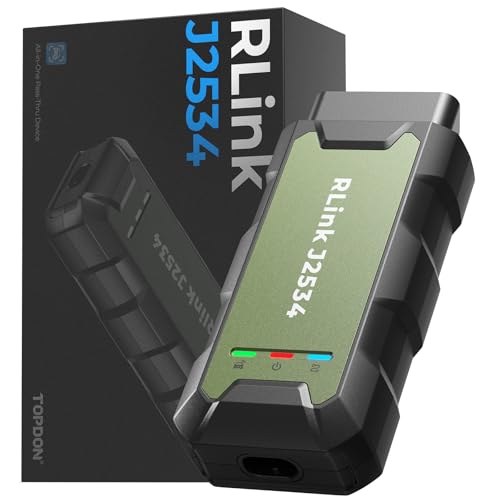
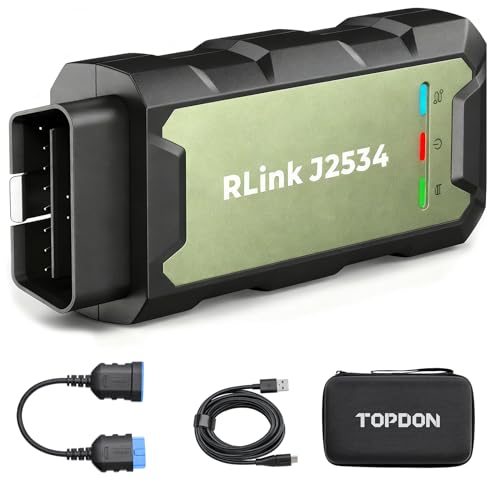
- Advanced VCI Box, Industry-leading J2534 Pass-Thru...
- High-Speed OEM-Level Diagnostics & Programming: Unlock true...
- Coverage for 17 Car Brands & Ultra Reliability: Works...
- User-Friendly RLink Platform & Expert Support: TOPDON’s...
- 6.6 ft USB-C Cable & Portable Storage Case: The RLink J...
Last update on 2026-06-23 / Affiliate links / Images from Amazon Product Advertising API
If the PDF is very large, it may not load in the preview below.
Some older TSBs had multiple PDFs — visit the NHTSA Website to view all PDFs.
If the TSB PDF does not show, download or view it on the NHTSA Website.
Click on the (+) Plus Sign
Then Click on Associated Document(s)
Search NHTSA Database for Recalls
Search NHTSA Database for Vehicle Investigations
View Latest Vehicle Investigations
Search NHTSA Database for Vehicle Complaints
View Latest Vehicle Complaints
TSB/Document ID: SSP 920213
Replacement Service Bulletin Number:
MFR Communication Date: 2012-10-01
MFR Internal Campaign ID/Software Version:
Communication Type: Service Bulletin/Repair Instructions
NHTSA Components: EQUIPMENT
MFR Component System:
MFR Component Subsystem:
Previous TSB | Next TSB |
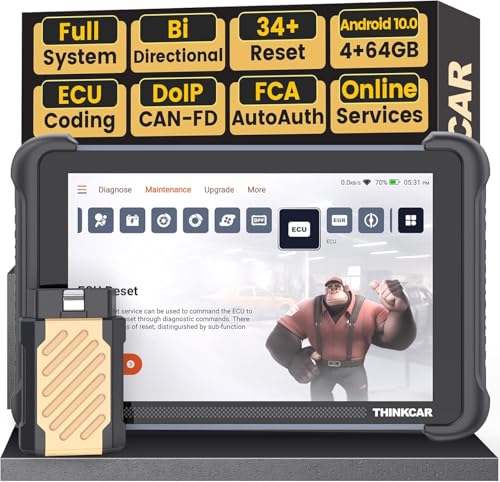
- [Notice] When you receive a used device, it may be a customer return resold by Amazon without inspection. You can exchange it for a new one through Amazon. As this situation is unavoidable, we sincerely apologize. For any issues, contacting us via Amazon's "Messages" is the best way. THINKSCAN 689BT Bidirectional Scan Tool Can Be Used Immediately After It is Turned On, Without Complicated Registration Process, Which is More Convenient & Quick.
- Full Bi-Directional Control & 3000+ Active Tests: Take control and test components like actuators, fuel injectors, relays, and cooling fans in real time. You’ll quickly see if the problem is in the part itself or the control module — saving you hours of guesswork and frustrating trial-and-error.
- Advanced ECU Coding Capabilities: Handle module matching and hidden feature activation with confidence. When you replace an ECU or want to customize settings, this obd2 scanner diagnostic bi directional tool gives you the professional-level capabilities you need without the dealership price tag.
- 34+ Useful Reset and Maintenance Functions: Complete everyday service tasks smoothly with a wide range of helpful reset and maintenance functions. Whether you’re keeping up with regular upkeep or tackling a specific job, this scanner makes maintenance simpler and less stressful for both DIYers and pros.
- Comprehensive Full System Diagnostics: Diagnose every major system — Engine, Transmission, ABS
 , SRS, TPMS, and more — all in one place. Finally stop wondering if you’re missing something important; get the full picture and clear codes with ease.
Last update on 2026-07-02 / Affiliate links / Images from Amazon Product Advertising API
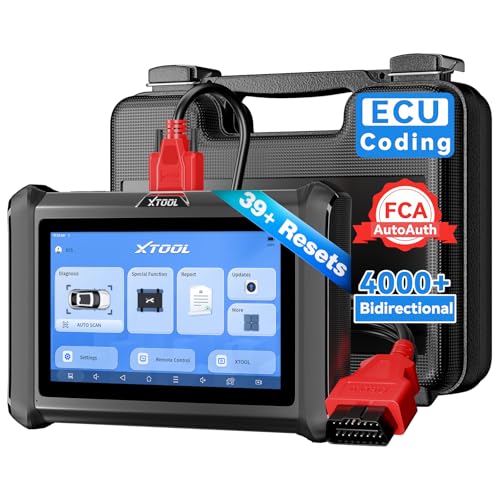
- Top Reasons to Choose the D7S OBD2 Scanner: XTOOL D7S car scan tool, an upgrade of XTOOL D7, offers comprehensive features for automotive technicians, workshops, and DIY enthusiasts 1. Upgraded Hardware: 2+64GB memory, rear camera, intuitive interface, foldable bracket 2. Complete Diagnostics: FCA Autoauth, OE-level all system scan, 39+ maintenance services, 4K+ bidirectional, CANFD/DoIP protocol 3. Advanced Capabilities: ECU c0ding, PMI functions 4. Wide Compatibility: Support 10,000+ models, covering 99% vehicle brands 5. Multi-language: Available in 22+ languages, No IP Restrictions 6. 3-Year Updates: Save 300 bucks on software updates for the latest features and optimizations
- 2026 Upgraded D7S Car Scanner Features: The newly 2026 D7S V2.0 scanner for car brings exciting features for advanced vehicle diagnostics and enhanced user experience 1. FCA AutoAuth: Now supports FCA SGW module for Chrysler, for Jeep, for Dodge (2018+), for Fiat (2017+), enabling faster vehicle communication without gateway restrictions 2. PMI (Offline ECU Pr0gramming): Allows for Ford, for Lincoln, and for Mazda ECU pr0gramming for new modules 3. Optimized Diagnostic Report 2.0: Personalized reports with logos and customer info for auto shops. Note: Compatibility varies by cars, please check before order
- 39+ Services/Resets/Adaptations/Relearns/Calibrations: XTOOL D7S full system car scanner diagnostic tool tackles 99% of common car issues through its 36+ special functions, including Oil Reset, EPB, SAS, BMS, Throttle Reset, Injector C0ding, ABS Bleed, TPMS Reset, Power Balance, etc and also covers specific-vehicle functions like Crank Sensor Relearn, ABS Initialization, Cylinder Power Balance, Fuel Trim Reset, Idle Relearn etc. This car diagnostic scanner enhances efficiency, making repairs and maintenance hassle-free. Tip: DO NOT for All vehicles, please check compatibility first
- Cost-effective ECU C0ding Scan Tool for Specific Brands: Enhance your vehicle's performance with XTOOL D7S! This obd2 scanner all systems bidirectional offers advanced capabilities at an affordable price, supports online for BMW, for Benz and offline for BENZ, for MIT, along with PMI functions for Ford, for Mazda, and for Lincoln. Ideal for technicians and DIY enthusiasts, this automotive scanner diagnostic tool optimizes vehicle performance and enhances the driving experience. Note: Not for all cars and modules, please send car VIN to check the compatibility before purchase
- OE All System Diagnostic & 8 Pids Graphing: XTOOL D7S is a comprehensive all system bi directional obd2 scanner that delivers dealer-level diagnostics, completely controlling over your vehicle’s performance and health. This automotive scan tool can read and clear DTCs, view live data and ECU information, retrieve freeze frames, and perform active tests and full obd2 functions. This bi-directional scan tool can can identify your vehicle's make, model, and year information with just one click and show up to 8 PIDs live data with options for CSV viewing, playback, and recording for in-depth analysis. It is easy-to-use for both professionals and beginners, helping pinpoint issues efficiently
Last update on 2026-06-30 / Affiliate links / Images from Amazon Product Advertising API
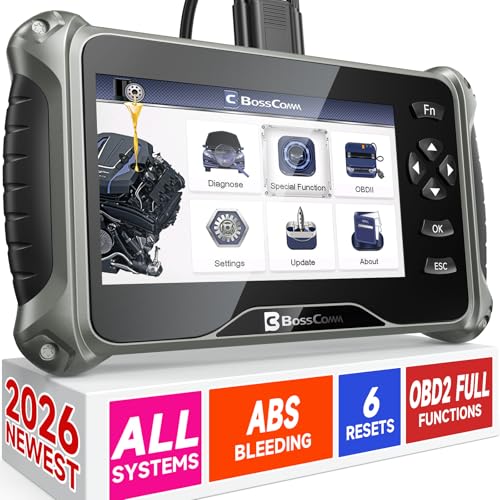
- 【✅Compared to BOSSCOMM IF742, IF745 Offers Full-System Diagnostics】The BOSSCOMM IF745 car diagnostic scanner is an upgraded model of IF742. In addition to supporting all OBD2 Code Reader functions and 6 reset options (ABS/EPB/SAS/BMS/Oil/Throttle), it expands diagnostics from 4 systems (Check Engine/ABS/SRS/Transmission) to vehicle All systems, including Steering, Suspension, and Body Electronics. This provides deeper, more comprehensive diagnostic capabilities.
- 【✨10 OBD2 Functions】The BOSSCOMM IF745 scan tool’s DTC Lookup instantly translates fault codes into user-friendly explanations, its I/M Readiness feature streamlines emissions testing with a single tap, and Freeze Frame lets you pinpoint the exact moment of a fault for in-depth root-cause diagnosis. Combined with a live data dashboard and advanced diagnostics (O2S, OBMon, EVAP), it delivers comprehensive insights for confident troubleshooting.
- 【✨Deep Diagnostics for All Vehicle System Modules】Beyond code reading/clearing and ECU information retrieval, our all-in-one data stream feature lets you inspect all current fault codes and their locations across the vehicle’s systems. This vehicle code reader helps you turn off dashboard warning lights and perform a comprehensive self-check of your car at home—no more back-and-forth trips to the repair shop or hefty inspection fees.
- 【✨6 Essential Resets: ABS Bleeding, Oil, EPB, SAS, Throttle, BMS】The BOSSCOMM IF745 obd2 scanner diagnostic tool swiftly purges air from brake lines to restore braking sensitivity, fine-tunes maintenance cycles to eliminate false alerts, resolves parking brake issues with one-click control, recalibrates steering sensors for stability, optimizes engine idling/acceleration for smoother performance, and deeply resets battery systems to extend lifespan and range via precise parameter adjustments.❗NOTE: Does NOT support bidirectional control, coding, or programming.
- 【✨10,000+ Car Models, AutoVIN, 13 Languages】The BOSSCOMM IF745 vehicle scanner diagnostic tool covers 73+ global car brands and offers support in 13 languages, making it perfect for DIYers, auto mechanics, or as a thoughtful gift. With a single-click AutoVIN feature, it instantly retrieves vehicle serial numbers, streamlining diagnostics for users globally. This adaptable tool balances user-friendliness with precision, catering to both personal and professional requirements.✅Unsure about compatibility? Compatibility will vary on vehicles' model and year, pls reach us via 📧 [email protected] 📧 before purchase.
Last update on 2026-07-02 / Affiliate links / Images from Amazon Product Advertising API
This product presentation was made with AAWP plugin.