
NHTSA ID Number: 10122615
Manufacturer Communication Number: V481406 2038140
TSB/Document Date: 2017-11-08
Summary
Technical Bulletin (Vibrations in Steering Wheel): After a short stationary period (sometimes as little as a few hours) flat spots can develop after the warm tire has cooled down. The effect the flat spotted tire has on the vehicles performance depends on the type, dimension, make, and pressure of the tire. This document informs how to identifiy Flat spots that alter the radial force variation and must be driven out before balancing the wheel.
Technical Bulletin
Model(s)
Year
Eng. Code
Trans. Code
VIN Range From
VIN Range To
Touareg
2011-2014
All
All
All
All
Condition
48 14 06 November 19, 2014 2038140 Supersedes Technical Bulletin V481404 dated September 3, 2014 to
include additional content.
Vibrations in Steering Wheel
The customer may state:
1. Shimmy/rotational vibration in the steering wheel at constant speed.
Shimmy/rotational vibrations in the steering wheel at various speeds.
2. Shimmy/rotational vibrations in the steering wheel when braking.
3. Vibration felt in the entire vehicle:
The vibration can be felt in the seat surfaces, in the underbody, in the foot well, or in the pedal.
The vibration is more prevalent when braking/accelerating.
Technical Background
Flatspots:
After a short stationary period (sometimes as little as a few hours) flat spots can develop after the warm tire has
cooled down. The effect the flat spotted tire has on the vehicles performance depends on the type, dimension,
make, and pressure of the tire.
Flat spots alter the radial force variation and must be driven out before balancing the wheel.
Effects of increased radial forces on the vehicle:
Increased radial forces on the front or rear tires cause vibrations in the vehicle.
Increased radial forces on the front tires amplified by braking can also lead to vibrations in the vehicle.
Page 1 of 8
© 2014 Volkswagen Group of America, Inc.
All rights reserved. Information contained in this document is based on the latest information available at the time of printing and is subject to the copyright and other
intellectual property rights of Volkswagen Group of America, Inc., its affiliated companies and its licensors. All rights are reserved to make changes at any time without notice.
No part of this document may be reproduced, stored in a retrieval system, or transmitted in any form or by any means, electronic, mechanical, photocopying, recording, or
otherwise, nor may these materials be modified or reposted to other sites, without the prior expressed written permission of the publisher.
Technical Bulletin
Explanations and definitions:
Radial force variation (RFV)
The radial force or wheel load is the force with
which a tire is compressed (Figure 1) Tires have
softer and stiffer areas along their circumference,
which is illustrated using springs (Figure 1, A and
B). Figure 1 shows the same tire at different points
of rotation (A and B), as it rolls on level road with
constant load (radial force).
Figure 1
Tip:
If this wheel rolls, the center of the wheel rises and falls X distance with a constant wheel load (illustration 1, arrow
1). This change in arrow 1 by X distance can be felt in the vehicle as vibration or shaking of the steering wheel.
Note:
The attached questionnaires must be filled out and submitted to the chassis team email box
VWGoA.Chassis@vw.com and kept on file for warranty purposes.
Production Solution
No production change required.
Service
Procedure:
• Complete the following steps to eliminate vibrations (flat spots) and radial force fluctuations.
Page 2 of 8
© 2014 Volkswagen Group of America, Inc.
All rights reserved. Information contained in this document is based on the latest information available at the time of printing and is subject to the copyright and other
intellectual property rights of Volkswagen Group of America, Inc., its affiliated companies and its licensors. All rights are reserved to make changes at any time without notice.
No part of this document may be reproduced, stored in a retrieval system, or transmitted in any form or by any means, electronic, mechanical, photocopying, recording, or
otherwise, nor may these materials be modified or reposted to other sites, without the prior expressed written permission of the publisher.
Technical Bulletin
Warm balancing / matching of wheels
1. Check all tires for the following points:
• Tread and side wall damage (for example: broken tread, impact damage/bubbles and so on).
• Tread depth.
WARNING:
The manufacturer recommends:
Replace tires damaged by external influences (for example impact damage/bubbles and so on). Damaged tires
are an increased safety risk.
Replace tires with a tread depth of under 4 mm, otherwise this procedure will not be totally effective.
2. Check and correct the tire pressure of every wheel to at least 36 PSI or the permitted maximum specified value.
3. Perform a test drive of at least 18 miles, if possible on a highway, traffic and road conditions permitting over
different speed ranges (up to 60 mph).
Note:
Make sure that you do not endanger yourself or others during the test drive.
During the test drive observe all traffic laws.
4. After the road test, raise the vehicle immediately and begin removing the wheels for balancing.
Tip:
New flat spots can develop during a short stationary period while the tires cool down so it is important to put the
vehicle on the lift immediately following the test drive.
5. Balance the wheels on a stationary balancing machine.
Tip:
The manufacturer recommends to balance / road force the wheels on the -VAS 6230 A/B- Hunter machine.
Measure, balance and (if necessary) match the wheel according to the instructions of the equipment.
When tightening the wheel on the balancing machine make sure the contact surfaces of flange and wheel are
clean, the wheel is correctly centered and a suitable cone and/or flange are used. We recommend the use of a
five-finger flange.
Page 3 of 8
© 2014 Volkswagen Group of America, Inc.
All rights reserved. Information contained in this document is based on the latest information available at the time of printing and is subject to the copyright and other
intellectual property rights of Volkswagen Group of America, Inc., its affiliated companies and its licensors. All rights are reserved to make changes at any time without notice.
No part of this document may be reproduced, stored in a retrieval system, or transmitted in any form or by any means, electronic, mechanical, photocopying, recording, or
otherwise, nor may these materials be modified or reposted to other sites, without the prior expressed written permission of the publisher.
Technical Bulletin
Note:
The fluctuation of the radial force does not depend on the turning direction and is measured as the difference
between maximum and minimum radial force (road force).
If the radial force cannot be reduced below the specified value of 26 lbs. by matching, replace the tire.
The wheels must be installed on the vehicle according to the instructions of the manufacturer and the repair
manual.
Securing the wheel on the vehicle
Note:
This is the most sensitive and critical portion of the repair!
• Check whether the contact surfaces on the brake disc and wheel are free of corrosion and dirt, clean if
necessary.
• Check whether the centering hole of the wheel and the centering of the hub are free of corrosion and dirt, clean
if necessary.
• The wheels holes and the wheel bolts must be free of dirt and corrosion. It must be possible to lightly turn the
wheel bolts by hand without using a tool.
Note:
Severely corroded or damaged bolts must be replaced according to the repair manual/ETKA.
• Make sure that the wheel bolts are the correct version and length.
Each wheel bolt hole is assigned a number from 1
to 5. These numbers will be referenced below.
(Star pattern)
Figure 2
Page 4 of 8
© 2014 Volkswagen Group of America, Inc.
All rights reserved. Information contained in this document is based on the latest information available at the time of printing and is subject to the copyright and other
intellectual property rights of Volkswagen Group of America, Inc., its affiliated companies and its licensors. All rights are reserved to make changes at any time without notice.
No part of this document may be reproduced, stored in a retrieval system, or transmitted in any form or by any means, electronic, mechanical, photocopying, recording, or
otherwise, nor may these materials be modified or reposted to other sites, without the prior expressed written permission of the publisher.
Technical Bulletin
• Align the position of the brake disc holes/hub threads as shown in Figure 3 below.
Example of proper brake disc hole/hub thread
positioning.
• The brake disc bolt should be in the 6 o’clock
position as seen in the picture.
• Wheel bolt hole number 1 should be in the 12
o’clock position. See Figure 2 above for wheel
bolt hole numbering.
• One of the three hub flanges should also be in the
12 o’clock position.
Figure 3
• The reason this position is important is the weight of the wheel must be supported in order for proper centering
to occur. When the there is one of the hub flanges on top the weight of the wheel is supported while the wheel
is secured in wheel bolt hole number 1.
Example of improper positioning.
Figure 4
Page 5 of 8
© 2014 Volkswagen Group of America, Inc.
All rights reserved. Information contained in this document is based on the latest information available at the time of printing and is subject to the copyright and other
intellectual property rights of Volkswagen Group of America, Inc., its affiliated companies and its licensors. All rights are reserved to make changes at any time without notice.
No part of this document may be reproduced, stored in a retrieval system, or transmitted in any form or by any means, electronic, mechanical, photocopying, recording, or
otherwise, nor may these materials be modified or reposted to other sites, without the prior expressed written permission of the publisher.
Technical Bulletin
Example of improper positioning.
Figure 5
• Insert the wheel on the hub and secure it loosely by hand it starting with wheel bolts number 1 and 2 (See
figure 2 above 4).
• Screw in the remaining wheel bolts by hand in the star pattern specified in Figure 5. This will ensure precise
centering of the wheel. Initially tighten the wheel bolts to 30 Nm.
Tighten all the wheel bolts in the star pattern
specified in the picture.
Tighten the wheel bolts to the specified tightening
torque with a torque wrench by hand.
Note:
Do not use a pneumatic impact gun to install the
wheel bolts.
Figure 6
• Lower the vehicle until the tires just begin to touch the floor. Torque the bolts by hand to the specified value in
ElsaPro using a torque wrench.
• Lower the vehicle to the floor.
• Ensure the correct vehicle-related tire pressure.
• Test drive the vehicle.
• Assess the vehicle again in the affected speed range.
Page 6 of 8
© 2014 Volkswagen Group of America, Inc.
All rights reserved. Information contained in this document is based on the latest information available at the time of printing and is subject to the copyright and other
intellectual property rights of Volkswagen Group of America, Inc., its affiliated companies and its licensors. All rights are reserved to make changes at any time without notice.
No part of this document may be reproduced, stored in a retrieval system, or transmitted in any form or by any means, electronic, mechanical, photocopying, recording, or
otherwise, nor may these materials be modified or reposted to other sites, without the prior expressed written permission of the publisher.
Technical Bulletin
Tip:
If the vibrations persist, call the helpline for further assistance. Before calling the helpline all steps in this bulletin
must be completed and documented. Please be as specific as possible regarding the steps used and customer
complaint when calling the helpline.
Warranty
To determine if this procedure is covered under Warranty, always refer to the Warranty Policies and
1)
Procedures Manual
Model(s)
Year(s)
Eng. Code(s)
Trans. Code(s)
VIN Range From
VIN Range To
Touareg
2011-2014
All
All
All
All
SAGA Coding
Claim Type:
Use applicable Claim Type
1)
Damage
Service Number:
HST
Damage Location
(Depends on Service No.)
--
Use applicable when
indicated in ElsaWeb
(L/R)
Code
4405
0013
Parts Manufacturer
Touareg
WWO
2)
3)
Labor Operation :
Balance 2 wheels
44059400 = 50 TU
Or
Balance 4 wheels
44059404 = 90 TU
3)
Labor Operation :
Clean 2 front wheel hubs
40643050 = 10 TU
AND/OR
Clean 2 rear wheel hubs
42683050 = 10 TU
Page 7 of 8
© 2014 Volkswagen Group of America, Inc.
All rights reserved. Information contained in this document is based on the latest information available at the time of printing and is subject to the copyright and other
intellectual property rights of Volkswagen Group of America, Inc., its affiliated companies and its licensors. All rights are reserved to make changes at any time without notice.
No part of this document may be reproduced, stored in a retrieval system, or transmitted in any form or by any means, electronic, mechanical, photocopying, recording, or
otherwise, nor may these materials be modified or reposted to other sites, without the prior expressed written permission of the publisher.
Technical Bulletin
Causal Part: Select Labor Operation
4405940*
Diagnostic Time
4)
GFF Time expenditure
01500000 = 00 TU max.
NO
Road Test
01210002 = 10 TU
YES
01210004 = 10 TU
Technical Diagnosis: Check all
tires:
01320000 = 10 TU max.
YES
• Damage
• Tread depth
• Tire pressure
Claim Comment: Input “As per Technical Bulletin 2038140” in comment section of Warranty Claim.
1)
Vehicle may be outside any Warranty in which case this Technical Bulletin is informational only
2)
Code per warranty vendor code policy.
3)
Labor Time Units (TUs) are subject to change with ELSA updates.
4)
Documentation required per Warranty Policy Procedures Manual.
Required Parts and Tools
Part No:
Part Description
Quantity
See ETKA
Wheel Weights
As required
Tool Description
Tool No:
Wheel Balacing Machine
VAS 6230 A/B- Hunter
Or equivalent
Additional Information
All part and service references provided in this Technical Bulletin are subject to change and/or removal.
Always check with your Parts Dept. and Repair Manuals for the latest information.
Page 8 of 8
© 2014 Volkswagen Group of America, Inc.
All rights reserved. Information contained in this document is based on the latest information available at the time of printing and is subject to the copyright and other
intellectual property rights of Volkswagen Group of America, Inc., its affiliated companies and its licensors. All rights are reserved to make changes at any time without notice.
No part of this document may be reproduced, stored in a retrieval system, or transmitted in any form or by any means, electronic, mechanical, photocopying, recording, or
otherwise, nor may these materials be modified or reposted to other sites, without the prior expressed written permission of the publisher.
Tire information sheet
1. Customer complaint
_____________________________________________________________________________________
_____________________________________________________________________________________
_____________________________________________________________________________________
Be as specific as possible. Speed range, vibrations in complete vehicle, vibrations (only) in steering wheel, during
acceleration, vibrations (only) when braking or accelerating, vibrations permanently or from stop, etc.
2. Vehicle data
VIN number:_______________
Vehicle delivery date: _____/______/_____
Mileage of affected tires:____________
Vehicle mileage:____________
Urban/country/highway driving in %: ______/_______/______ Part number of wheel:____________
3. Tire information (cold condition)
Wheels installed? Factory
…VW accessories
…After Market
Make of tire: __________________
Tire type: __________________
Dimension: _______________
Manufacturer code: ____________(e.g.: AO, AOE, R01)
Make of balancing machine:_____________
Last calibration date of machine: ___________
Front left
Front right
Rear left
Rear right
DOT (last four digits mm-yy)
Tyre pressure in bar
Tire pressure according to label
correct
correct
correct
correct
incorrect
incorrect
incorrect
incorrect
Tread depth in mm
outside / center / inside
Existing wheel weights
Outer/inner balancing track (size)
Damage on tire (yes/no)
Damage on wheel (yes/no)
4. Tire information after the balancing
Warm Balance
(Conduct a test drive of at least 13 miles, at highway speeds (60 mph) if possible)
Front left
Front right
Tire pressure in bar
Road force value in pounds (lbs)
before matching
Road force value in pounds (lbs) after
matching
Missing weight per level/track
in gram outside/inside
*Road force values can be established with Hunter tester VAS 6230
Rear left
Rear right
Vibrations, steering wheel vibrations and juddering
A test drive with the customer is necessary.
Divide the complaint into the following symptoms:
VIN number: ______________
FRED report number: ______________
The complaint occurs …
at the beginning of the journey and gradually eases or disappears altogether
at constant speed the and remains while driving at that speed
in acceleration and overrun and when pressing the clutch or in the N position
in acceleration and overrun, but not when pressing the clutch or in the N position
in acceleration and overrun. It involves a juddering/vibrating in driving direction
with pressed clutch or position N at an engine speed range of
rpm to
rpm.
stronger when accelerating. Occurs in acceleration and overrun, but eases when the vehicle is put in N
only when braking, whereby the pedal pressure is
light,
medium,
when braking the complaint gets worse, when the pedal pressure is
strong
light,
medium,
strong
The complaint can be felt in the*:
driver or passenger seat,
shifter lever,
pedal,
footwell,
centre console or tunnel,
rear seats.
It involves*:
vehicle vibrations,
steering wheel vibrations,
traction disruption,
juddering,
misfiring,
humming or droning noises.
Additional information*:
speed of
mph to
mph
since when does the complaint occur?
with summer
or winter
in which gears or driving modes:
(since x weeks, since vehicle purchase or tire change,…)
*select all that apply
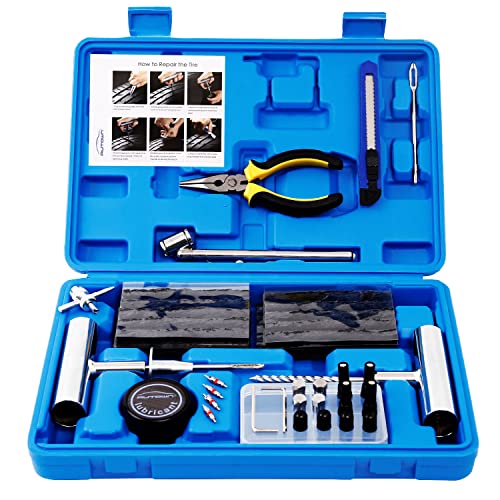

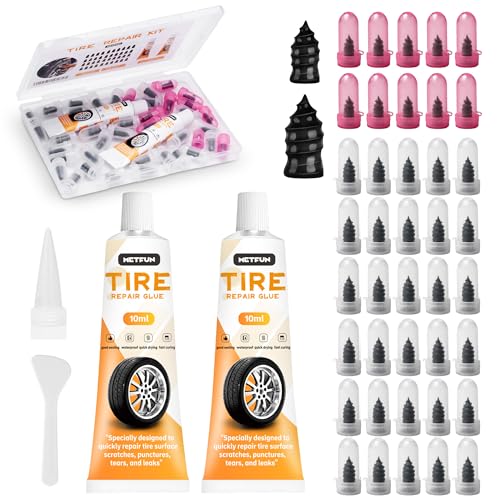
- 【Perfect Emergency Repair Solution】This kit includes...
- 【Premium Materials for Safe Repairs】Our tire screw plugs...
- 【2 Sizes for Every Puncture】Choose the right size for...
- 【5-Minute DIY Repair】Skip the auto shop and fix flats...
- 【Emergency-Ready Design】Compact & ready for...
Last update on 2026-06-23 / Affiliate links / Images from Amazon Product Advertising API
If the PDF is very large, it may not load in the preview below.
Some older TSBs had multiple PDFs — visit the NHTSA Website to view all PDFs.
If the TSB PDF does not show, download or view it on the NHTSA Website.
Click on the (+) Plus Sign
Then Click on Associated Document(s)
Search NHTSA Database for Recalls
Search NHTSA Database for Vehicle Investigations
View Latest Vehicle Investigations
Search NHTSA Database for Vehicle Complaints
View Latest Vehicle Complaints
TSB/Document ID: V481406 2038140
Replacement Service Bulletin Number:
MFR Communication Date: 2014-11-19
MFR Internal Campaign ID/Software Version:
Communication Type: Service Bulletin/Repair Instructions
NHTSA Components: STEERING
MFR Component System:
MFR Component Subsystem:
Previous TSB | Next TSB |

- [Notice] When you receive a used escaner automotriz device, it may be a customer return resold by Amazon without inspection. You can exchange it for a new one through Amazon. As this situation is unavoidable, we sincerely apologize. For any issues, contacting us via Amazon's "Messages" is the best way, and we’ll provide a solution within 24 hours. THINKSCAN 689BT Can Be Used Immediately After It is Turned On, Without Complicated Registration Process, Which is More Convenient & Quick.
- [Good News] THINKSCAN 689BT is the most competitive automotive scan tool to date, offering wireless updates with no subscription fees(valued 500Buc.ks) . With all the features of THINKTOOL PD8,PRO, built on Android 10 platform with 4-core CPU, 4GB RAM
 and 64GB ROM, serving up to 5X faster than older MAX/MINI/PLUS vehicle scanners escaner automotriz, no more slow and delayed feedbacks, it's time to update your garage tool.
 - [Big Money Saver] Premium THINKSCAN 689BT Wireless Diagnostic Scanner Escaner Automotriz, save up to 400USD per year, includes all useful features: Full bi-directional controls, ECU coding, 34+ services, OEM all system diagnostics, Worldwide vehicles coverage, CAN FD & DoIP, FCA AutoAuth(The 689BT only provides a login and purchase portal, and users are required to register for an FCA account and pay a membership fee in order to perform the relevant automotive diagnostics)
- [3000+ Active Tests]Active testing is one of the most useful features in automotive maintenance and greatly improves mechanic efficiency. THINKCAR 689BT bidirectional scanner can send action commends to vehicle sub-systems or components for active test without using vehicle controls. It can perform various tests such as: EVAP Test, Fuel Trim Reset, Injector Buzz Test, Window/ Mirror/ Door Lock Test, Pump and Value Tests, etc. Get functions from "Diagnose>Car Model>System>Active Test".
- [Hot Advanced Features] 689BT bidirectional tool scanner for car newly adds ECU Coding, Power Balance, Flash Hidden Functions, Reset Adaptive Data, Match Replaced Components, Customize OE-Settings. Such as: 1. changing the color of interior lights 2. switching on/off the auto hold, 3. customizing dash kits 4. activating the auto side mirror folding function 5. disables auto start-stop. Note: Coding functions vary by model&year.

- 【15+ Advanced Reset & Calibration Functions】The Thinkdiag scanner provides 15+ professional maintenance functions, including:✔ Oil Reset | ✔ ABS Bleeding | ✔ Injector Coding | ✔ SAS Reset✔ TPMS Reset | ✔ BMS Reset | ✔ Transmission Adaptation | ✔ AFS Reset | ✔ Sunroof Calibration | ✔ Brake Reset | ✔ Suspension Relearn | ✔ Electronic Throttle Relearn | ✔ Seat Calibration | + More reset/relearn/calibrate/adaptive functions under automotive full systems diagnostic menu. Ideal professional OBDII scanner for mechanics and DIY enthusiasts, Thinkdiag delivers professional OE-level diagnostics with adaptive relearn capabilities for precise vehicle servicing.
- 【Full-System Diagnostics OBD2 Scanner Bluetooth】 Thinkdiag OBD2 Scanner supports all Systems diagnostic function, it can read/clear DTCs, read live data, read control module information, actuation tests and maintenance functions for ECM, BCM, SRS, TCM, BMS, TPMS, SAS, A/C system etc... It works with most car models after 1996, cover more than 120+ car brands. All car make and reset software come with 1 year update without any charge, much valuable and powerful than 1000 dollars level scanners in the market.
- 【Potential Feature Activation】 Thinkdiag diagnose obd2 scanner Bluetooth allows you to match the replaced components with ECU, activate potential functions for BMW, for GM, for Benz etc. Adjust some annoying features, adapt vehicle's settings to improve performance. No matter you are private owner or professional technician, Thinkdiag is a powerful and handy scanner in your repair tool list. Potential features are not suitable for every car models, please check with us before purchase. This superior function required newest Android OS device, it performs better on Android cell phone.
- 【Bidirectional Test/Active Test】 Thinkdiag car code reader actuates solenoids and actuators for active testing, send commands to systems/components to test their real-time working status, without using manual vehicle controls which saves much diagnostic time and effort to identify malfunction causes. You can check windows, doors, mirrors, sunroof, fans, fuel pump and other parts working status by actuation test function, thinkdiag supports 10000+ active tests. When you process Automotive full system diagnostic, you can do active test on every supported module.
- 【Intelligent Diagnostic Tool with Auto-VIN】Thinkdiag Bluetooth OBD2 scanner makes your smart phone device become a professional vehicle diagnostic tool, it compatible with Android and iOS system. Auto-VIN function supports the Thinkdiag identifies the most car models automatically, if autovin failed, you can choose car info manually. Full system Vehicle health report will be automatically created after diagnosis, report can be shared. Live Data Stream combined 4-in-1 Graphing+Data Record better for monitoring vehicle performance and analyze the abnormal parameter.

- 【Powerful Bidirectional Control -- Active Test】Good News! The THINKSCAN 662 obd2 scanner has bidirectional control function,which is the most popular feature among mechanics.This function is mainly used to test whether the executing components in the electronic control system can work normally,By requesting information from the vehicle's ECU or sending commands to the ECU module to execute commands and identify maintenance status,quickly locate the cause of the fault.Such as ABS,Fuel Injectors,Adjusting Throttle,Coolant Fans,Radiator Fans,Coolant Pumps,EV.AP Test, Fuel Trim Reset,Injector Buzz Test,Pump/ Value Test,etc. Effectively shorten diagnosis time and reduce diagnosis costs.
- 【Unlock Pro-Level Diagnostics With Half Costs】 THINKSCAN 662 obd2 scanner diagnostic tool Delivers Premium Scanning Power for Half the Price! The OBD2 scanner can handle common issues with ECM,TCM,ABS,SRS. It can easily read and clear fault codes, analyze data streams, and ensure quick identification of problems. THINKSCAN 662 bidirectional scan tool has 12 practical reset functions, including Airbag Reset,ABS Bleeding,BMS,Brake Reset, D.P.F,Throttle Adaptation,Injector Coding,OIL Reset,steering angle Reset,Gearbox,TPMS,and more. The car scanner diagnostic tool very suitable for DIY enthusiasts, car repair technicians, and small and medium-sized repair shops.
- 【Multi Functional Intelligent Car Scanner Diagnostic Tool】 Automatic VIN + Real-time Data + DTC Lookup + Historical Diagnostic Records: This OBD2 scanner features auto serch technology, allowing for car recognition without the need for manual input. The real-time data of the car ECU is read and displayed in the form of text or a 4-in-1 merged waveform chart. You can save, share, print or send the entire inspection report via email for analysis. Historical diagnostic reports help you quickly identify vehicle issues and understand the condition of the vehicle. The built-in 'feedback' module provides customized repair Operation recommendations from our certified professionals.
- 【Upgraded Hardware + Ergonomically Engineered】 THINKSCAN 662 OBD2 scanner has a friendly combination of touch screen and physical buttons with an ergonomic appearance for comfortable use.Experience 2x faster scans and 50% longer lifespan vs standard models.This scanner para autos boast a 4-core 1.8GHz CPU,6.2-inch HD touch screen,2GB RAM + 32GB ROM storage capacity,a long-lasting 4150mAh battery,Android 8 ensures lightning-fast bootup and processing.The scanner is robust with rubberized protection that you can store and use in the trunk or garage.Whether you are engaged in Home car maintenance or road rescue car repair,this car scanner can help you perfectly solve car problems.
- 【Effortless Setup & Scanning - Intuitive for All Skill Levels】No More Complicated Scanners! The User Interface is as User-Friendly as THINKCAR 689BT! Truly Plug-and-Play,The downward sliding setup shortcut portal and drawer function shortcut portal make you use this scan tool as easy as using your own cell phone.The car scanner supports setup screenshot,screen recording,volume adjustment,this scan tool includes product e-manuals,instructional videos,and fault code libraries,users can check the usage guide,perfect for DIY car owners,Maintenance technician.If your father,husband,brother,boyfriend enjoys car repairs,THINKSCAN 662 is a great gift choice, and it has amazing family value.
Last update on 2026-06-23 / Affiliate links / Images from Amazon Product Advertising API
This product presentation was made with AAWP plugin.