
NHTSA ID Number: 10122181
Manufacturer Communication Number: A011460 2033919-
TSB/Document Date: 2017-11-08
Summary
Supersedes Technical Service Bulletin Group 01 number 13-34 dated October 8, 2013. The MIL is on. DTCs are stored in the ECM. There may be slight power reduction at high RPMs. One of the vacuum actuators on intake runner bank 1 or bank 2 is defective. It is possible that the membrane on the vacuum actuator may tear. As a result, the intake manifold flaps do not function.
Technical Service Bulletin
01 MIL on (DTC P2006(00) or P2007(00))
01 14 60 2033919/12 January 21, 2014. Supersedes Technical Service Bulletin Group 01 number 13-34 dated
October 8, 2013 for reasons listed below.
Model(s)
Year
VIN Range
Vehicle-Specific Equipment
S4, S5, S5
Cabriolet, A6,
A7, Q5, Q7
2013
All
3.0 FSI Engine
Condition
REVISION HISTORY
Revision
Date
Purpose
12
-
Revised header data (Updated engine codes)
Revised Service (Modified step 2 under Service heading)
11
10/8/2013
Revised Service (Added Tip)
10
8/29/2013
Revised Service (Added Tips)
9
8/2/2013
Revised Service (Added steps)
Revised Warranty (Updated labor operations)
8
7/19/2013
Revised Required Parts and Tools (Updated part numbers)
7
7/9/2013
Revised header data (Added model year)
6
6/26/2013
Revised Service (Replace both actuators)
5
6/18/2013
Revised Required Parts and Tools (Updated quantity)
4
6/7/2013
Revised Service (Removed step regarding calling TAC)
3
5/29/2013
Revised header data (updated engine codes)
2
5/28/2013
Revised Service (Added steps and image)
1
5/16/2013
Initial publication
• MIL on.
• One or both of the following DTCs is stored in the engine control module, J623 (address word 01):
• DTC P2006(00) (Intake Manifold Runner Control Stuck Closed, Bank 1).
• DTC P2007(00) (Intake Manifold Runner Control Stuck Closed, Bank 2).
• There may be slight power reduction at high RPMs.
© 2014 Audi of America, Inc.
Page 1 of 11
All rights reserved. Information contained in this document is based on the latest information available at the time of printing and is subject to the copyright and other intellectual property rights of
Audi of America, Inc., its affiliated companies and its licensors. All rights are reserved to make changes at any time without notice. No part of this document may be reproduced, stored in a retrieval
system, or transmitted in any form or by any means, electronic, mechanical, photocopying, recording, or otherwise, nor may these materials be modified or reposted to other sites, without the prior
expressed written permission of the publisher.
Technical Service Bulletin
Technical Background
One of the vacuum actuators on intake runner bank 1 or bank 2 is defective. It is possible that the membrane on
the vacuum actuator may tear. As a result, the intake manifold flaps do not function.
Production Solution
Updated vacuum actuator.
Service
1.
Ensure that the fault is not caused by a
defective vacuum line by using the vacuum
pump (Figure 1) to confirm there is no leak
in the vacuum supply to the actuators.
The vacuum lines are working correctly if
they are able to maintain vacuum while the
actuators are disconnected and the lines are
plugged up.
Figure 1. Vacuum pump VAS 6213
2.
After confirming that the fault is not due to defective vacuum lines, test the vacuum actuator. Apply vacuum
to at least 15” of water. If the vacuum does not hold (goes all the way to zero), replace both vacuum
actuators (bank 1 and bank 2 actuator) by following the instructions below. Both actuators must be replaced
in order to prevent any repeat repairs.
© 2014 Audi of America, Inc.
Page 2 of 11
All rights reserved. Information contained in this document is based on the latest information available at the time of printing and is subject to the copyright and other intellectual property rights of
Audi of America, Inc., its affiliated companies and its licensors. All rights are reserved to make changes at any time without notice. No part of this document may be reproduced, stored in a retrieval
system, or transmitted in any form or by any means, electronic, mechanical, photocopying, recording, or otherwise, nor may these materials be modified or reposted to other sites, without the prior
expressed written permission of the publisher.
Technical Service Bulletin
Replacing the passenger side vacuum actuator
1.
Unclip the secondary air injection line from
the bracket (Figure 2, 1) and disconnect the
coupling (Figure 2, 2) by pushing both
release tabs at the same time (one in the
front one in the back).
Figure 2. Bracket (1) and coupling (2) to disconnect from the
secondary air injection line
2.
Remove the intake manifold runner position
sensor by using a ball head torx bit to
remove the screws (Figure 3, arrows).
Note:
To prevent the sensor from falling, do not
disconnect the connector.
Tip: Place a shop rag under the screws
to catch any screws that drop.
Tip: To prevent losing the screws, use
a non-bonding adhesive on the tip of the ball
torx bit and use a magnet to hold them
during removal.
Figure 3. Intake manifold sensor (1) and bolts (arrows)
© 2014 Audi of America, Inc.
Page 3 of 11
All rights reserved. Information contained in this document is based on the latest information available at the time of printing and is subject to the copyright and other intellectual property rights of
Audi of America, Inc., its affiliated companies and its licensors. All rights are reserved to make changes at any time without notice. No part of this document may be reproduced, stored in a retrieval
system, or transmitted in any form or by any means, electronic, mechanical, photocopying, recording, or otherwise, nor may these materials be modified or reposted to other sites, without the prior
expressed written permission of the publisher.
Technical Service Bulletin
Tip: The T10 ball head torx bit is sourced locally (Figure
4). Examples include: Snap-on Tools SDM32KT or SDMBT10,
or VIM Tools VIS108 or VIS112.
Figure 4. T10 ball head torx bit.
3.
Disconnect the vacuum hose (Figure 5, 1),
then pry the vacuum actuator (Figure 5, 2)
off of the ball head (Figure 5, 3).
Figure 5. Vacuum hose (1), vacuum actuator (2), and ball
head (3)
4.
Reinstall the new actuator by following the above steps in reverse order.
© 2014 Audi of America, Inc.
Page 4 of 11
All rights reserved. Information contained in this document is based on the latest information available at the time of printing and is subject to the copyright and other intellectual property rights of
Audi of America, Inc., its affiliated companies and its licensors. All rights are reserved to make changes at any time without notice. No part of this document may be reproduced, stored in a retrieval
system, or transmitted in any form or by any means, electronic, mechanical, photocopying, recording, or otherwise, nor may these materials be modified or reposted to other sites, without the prior
expressed written permission of the publisher.
Technical Service Bulletin
Tip: If the intake runner position sensor has lost its zero position, ensure that the rectangular hole of
the sensor lines up with the rectangular shaft. The zero position of the bank 1 sensor is ~15° off the
clockwise end stop and the bank 2 sensor is ~15° off the counterclockwise end stop. Do not use any force to
install the sensor.
Replacing the driver side vacuum actuator
1.
Raise the vehicle and remove the front noise insulation panel.
2.
Remove the screw (Figure 6, arrow) from
the coolant line and upper section of oil
pan. This will allow the coolant lines to be
moved out of the way when removing the
sensor.
Figure 6. Screw to be removed from coolant line and upper
section of oil pan (arrow)
3.
Place the drip tray for workshop crane VAS 6208 under the engine.
4.
Disconnect the following (Figure 7):
• Charge air pressure sensor
• Engine coolant temperature sensor
• Camshaft position sensor
• Solenoid valve
Figure 7. Sensors and valve that need to be disconnected are
circled in red.
5.
Lay the wiring harness aside.
© 2014 Audi of America, Inc.
Page 5 of 11
All rights reserved. Information contained in this document is based on the latest information available at the time of printing and is subject to the copyright and other intellectual property rights of
Audi of America, Inc., its affiliated companies and its licensors. All rights are reserved to make changes at any time without notice. No part of this document may be reproduced, stored in a retrieval
system, or transmitted in any form or by any means, electronic, mechanical, photocopying, recording, or otherwise, nor may these materials be modified or reposted to other sites, without the prior
expressed written permission of the publisher.
Technical Service Bulletin
6.
Disconnect the vacuum hose (Figure 8,
arrow) from the vacuum pump and lay it
aside.
Figure 8. Vacuum hose (arrow)
7.
Remove the bolt as shown in the image at
right (Figure 9, 2)
Figure 9. Bolt to be removed (2)
© 2014 Audi of America, Inc.
Page 6 of 11
All rights reserved. Information contained in this document is based on the latest information available at the time of printing and is subject to the copyright and other intellectual property rights of
Audi of America, Inc., its affiliated companies and its licensors. All rights are reserved to make changes at any time without notice. No part of this document may be reproduced, stored in a retrieval
system, or transmitted in any form or by any means, electronic, mechanical, photocopying, recording, or otherwise, nor may these materials be modified or reposted to other sites, without the prior
expressed written permission of the publisher.
Technical Service Bulletin
8.
Remove coolant hoses (Figure 10, arrows)
and close them off with fitting caps (yellow
caps from VAS 6122). Move the coolant
hoses to the side for access to the intake
runner position sensor.
Figure 10. Coolant hoses (arrows)
9.
Collect any coolant that is draining.
10. Remove the intake manifold runner
position sensor by using a ball head torx
bit to remove the bolts. To ensure good
torx bit to bolt head contact, apply force in
the direction of the arrow (Figure 11,
arrow).
Note:
To prevent the sensor from falling, do not
disconnect the connector.
Figure 11. Apply force in the direction of the arrow.
© 2014 Audi of America, Inc.
Page 7 of 11
All rights reserved. Information contained in this document is based on the latest information available at the time of printing and is subject to the copyright and other intellectual property rights of
Audi of America, Inc., its affiliated companies and its licensors. All rights are reserved to make changes at any time without notice. No part of this document may be reproduced, stored in a retrieval
system, or transmitted in any form or by any means, electronic, mechanical, photocopying, recording, or otherwise, nor may these materials be modified or reposted to other sites, without the prior
expressed written permission of the publisher.
Technical Service Bulletin
Tip: Place a shop rag under the
screws to catch any screws that drop
(Figure 12).
Figure 12. Place a shop rag under the screws.
Tip: To prevent losing the screws, use a nonbonding adhesive on the tip of the ball torx bit and
use a magnet to hold them during removal (Figure
13).
Figure 13. Use a magnet (arrow) to hold the screws
during removal.
© 2014 Audi of America, Inc.
Page 8 of 11
All rights reserved. Information contained in this document is based on the latest information available at the time of printing and is subject to the copyright and other intellectual property rights of
Audi of America, Inc., its affiliated companies and its licensors. All rights are reserved to make changes at any time without notice. No part of this document may be reproduced, stored in a retrieval
system, or transmitted in any form or by any means, electronic, mechanical, photocopying, recording, or otherwise, nor may these materials be modified or reposted to other sites, without the prior
expressed written permission of the publisher.
Technical Service Bulletin
11. Pry the vacuum actuator (Figure 14, 2) off of
the ball head (Figure 14, 3), then disconnect
the vacuum hose (Figure 14, 1).
Figure 14. Vacuum hose (1), vacuum actuator (2), and ball
head (3)
12. Reinstall the new actuator by following the above steps in reverse order.
Tip: If the intake runner position sensor has lost its zero position, ensure that the rectangular hole of
the sensor lines up with the rectangular shaft. The zero position of the bank 1 sensor is ~15° off the
clockwise end stop and the bank 2 sensor is ~15° off the counterclockwise end stop. Do not use any force to
install the sensor.
13. Top off coolant, if necessary.
© 2014 Audi of America, Inc.
Page 9 of 11
All rights reserved. Information contained in this document is based on the latest information available at the time of printing and is subject to the copyright and other intellectual property rights of
Audi of America, Inc., its affiliated companies and its licensors. All rights are reserved to make changes at any time without notice. No part of this document may be reproduced, stored in a retrieval
system, or transmitted in any form or by any means, electronic, mechanical, photocopying, recording, or otherwise, nor may these materials be modified or reposted to other sites, without the prior
expressed written permission of the publisher.
Technical Service Bulletin
Warranty
Claim Type:
Use applicable claim type. If vehicle is outside any warranty, this Technical
Service Bulletin is informational only.
Service Number:
2464
Damage Code:
0010
Labor Operations:
Both vacuum actuators remove+reinstall
2464 2099
90 TU
Diagnostic Time:
GFF
0150 0000
Time stated
on diagnostic
protocol
(Max 20 TU)
Road test prior to service procedure
No allowance 0 TU
Road test after service procedure
0121 0004
10 TU
Technical diagnosis at dealer’s discretion
(Refer to Section 2.2.1.2 and Audi Warranty Online for DADP allowance details)
Claim Comment:
As per TSB # 2033919/12
All warranty claims submitted for payment must be in accordance with the Audi Warranty Policies and Procedures
Manual. Claims are subject to review or audit by Audi Warranty.
Required Parts and Tools
Part number
Part Description
Quantity
06E133159M
Actuator left
1
06E133159N
Actuator right
1
G 012A8G1G
Coolant top-off
0.3
N 10201801
Clamp
1
Tool Number
Tool Description
VAS 6213
Vacuum pump
VAS 6122
Coolant hose cap-off set
© 2014 Audi of America, Inc.
Page 10 of 11
All rights reserved. Information contained in this document is based on the latest information available at the time of printing and is subject to the copyright and other intellectual property rights of
Audi of America, Inc., its affiliated companies and its licensors. All rights are reserved to make changes at any time without notice. No part of this document may be reproduced, stored in a retrieval
system, or transmitted in any form or by any means, electronic, mechanical, photocopying, recording, or otherwise, nor may these materials be modified or reposted to other sites, without the prior
expressed written permission of the publisher.
Technical Service Bulletin
Additional Information
All parts and service references provided in this TSB (2033919) are subject to change and/or removal. Always
check with your Parts Department and service manuals for the latest information.
© 2014 Audi of America, Inc.
Page 11 of 11
All rights reserved. Information contained in this document is based on the latest information available at the time of printing and is subject to the copyright and other intellectual property rights of
Audi of America, Inc., its affiliated companies and its licensors. All rights are reserved to make changes at any time without notice. No part of this document may be reproduced, stored in a retrieval
system, or transmitted in any form or by any means, electronic, mechanical, photocopying, recording, or otherwise, nor may these materials be modified or reposted to other sites, without the prior
expressed written permission of the publisher.
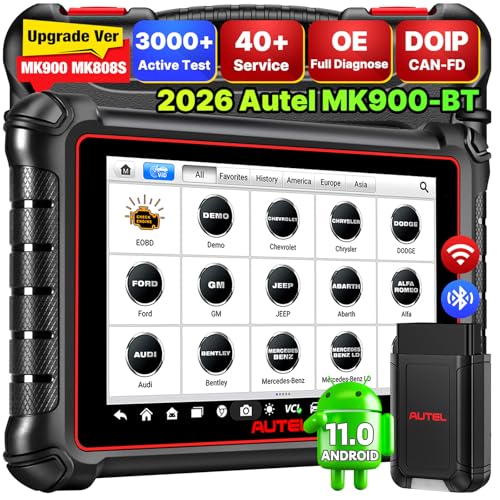
- 💯【Conta.ct us for Support Directly】If you met any...
- 🔥🔥🔥【2026 AUTEL FLAGSHIP MK900BT MK900-BT, NEW...
- 🚗【3000+ ACTIVE TESTS (50➡3000+), SAME AS MS...
- 🚗【40+ HOT SERVICES FOR 150 MAKES (28+➡40+)】Full...
- 🚗【OE ALL SYSTEM DIAGNOSE, AUTO SCAN 2.0: SCAN LICENSE...

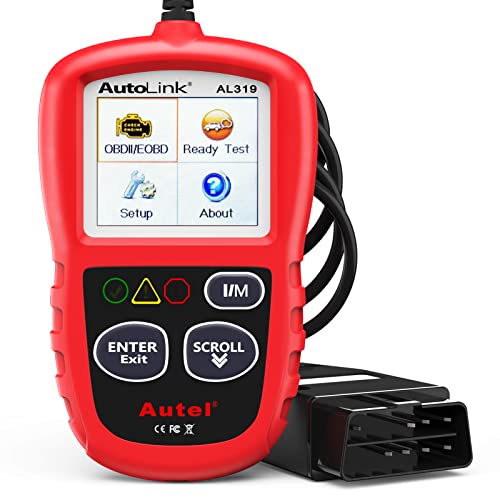
- 【TURN OFF CEL】 This AL319 car scanner diagnostic tool...
- 【EXTENSIVE APPLICATION】 Autel AL319 Compatible with...
- 【FOR END USER & DIYERS】 This error code reader AL319 is...
- 【USER-FRIENDLY DESIGN】 This OBD2 scanner and check...
- 【HIGH-QUALITY SERVICES】 12 months war.ranty from the...
Last update on 2026-06-12 / Affiliate links / Images from Amazon Product Advertising API
If the PDF is very large, it may not load in the preview below.
Some older TSBs had multiple PDFs — visit the NHTSA Website to view all PDFs.
If the TSB PDF does not show, download or view it on the NHTSA Website.
Click on the (+) Plus Sign
Then Click on Associated Document(s)
Search NHTSA Database for Recalls
Search NHTSA Database for Vehicle Investigations
View Latest Vehicle Investigations
Search NHTSA Database for Vehicle Complaints
View Latest Vehicle Complaints
TSB/Document ID: A011460 2033919-
Replacement Service Bulletin Number:
MFR Communication Date: 2014-01-21
MFR Internal Campaign ID/Software Version:
Communication Type: Service Bulletin/Repair Instructions
NHTSA Components: POWER TRAIN
MFR Component System:
MFR Component Subsystem:
Previous TSB | Next TSB |
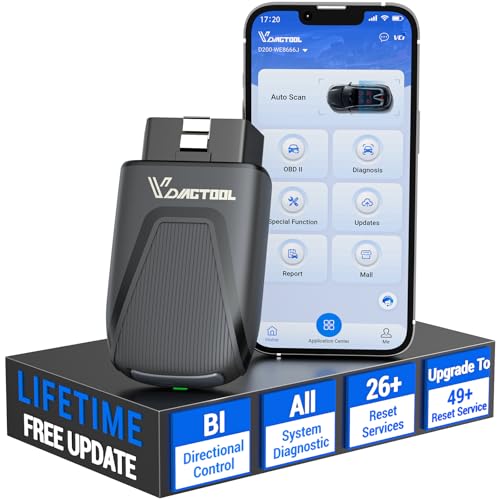
- 【OE-Level Full System Diagnostics-Lifetime F*REE Software Updates】The VDIAGTOOL D200 OBD2 Scanner for cars is a all system bidirectional scan tool that enjoy lifetime f*ree software updates, delivers complete system coverage. reading/clearing codes across engine, transmission, ABS, SAS, EPB, TPMS plus full access to body, chassis, powertrain and all control modules. This D200 Bidirectional car scanner works with most 1996+ OBD2 gasoline and hybrid
 cars and light trucks. It does NOT support pure electric and heavy-duty trucks. PLEASE CHECK COMPATIBILITY BEFORE ORDERING or Contact us with VIN to confirm compatibility.
 - 【Supports OBD2 Full Functions-ZERO Subscription Fees】D200 Bidirectional OBD2 Scanner is a upgarde of universal car code reader. It supports OBD2 full functions to help you turn off the annoying instrument fault indicator, such as read/clear codes, O2 sensor test, I/M readiness, on-board monitor test, datastream, freeze frame, E-VAP system test, and retrieve vehicle information. This professional obd2 scanner diagnostic tool can full access to diagnostics, reset tools and maintenance features with a single payment. NOTE: The fault code can only be cleared after the vehicle's malfunction has been repaired; please ensure the vehicle issue is fixed before clearing the code.
- 【D200 Hidden 2 Advantages: 1. $169 Expandable 49+ Advanced Resets. 2. $199 Get J2534 P*a*s*s-Thru Programming】Your core car diagnostics and 26 reset remain lifetime f*ree for everyday maintenance. When you need deeper repair capability, upgrade with 3-year access for $169 in Store on VDIAGTOOL App, gaining 49+ advanced resets. D200 configured with J2534 hardware, upgrade only when you need without replacing the entire device. You also can Lifetime Unlock for $199 in Store one-time, perform module programming, software re~flashing and ECU data updates directly. Supports 17+ major brands, including for BMW, for Audi, for GM, for Ford and more. Note:D200 does‘t provide any OE software.
- 【Full Bidirectional Control / Active Tests】The D200 car scanner diagnostic tool is a true bidirectional scan tool that lets you send commands directly to the vehicle’s ECU for active tests. Quickly test fuel pumps, relays, solenoids, injectors, cooling fans, windows, sunroofs and more to verify operation instantly. Get dealership-level diagnostic control at a fraction of the cost (ofter $100-200$ per diagnostic visit), reduce guessworkand confirm repairs faster, avoid unnecessary parts replacement, towing fees and wait times.
- 【26 F*ree Essential Reset & Relearn Functions – Everyday Maintenance Made Easy】Handle common maintenance and repair jobs without visiting the shop. The D200 code readers & scan tools includes 26 f*ree high-demand reset functions, including Oil Reset, EPB Service, SAS Calibration, ABS Brake Bleeding, Throttle Relearn, Injector Coding, Headlight Adjustment, Tire Size Reset and more. Perfect for home car owners, mechanics and DIYers – just plug and diagnose anytime, anywhere! Note: Service functions vary by vehicle model—please confirm compatibility.
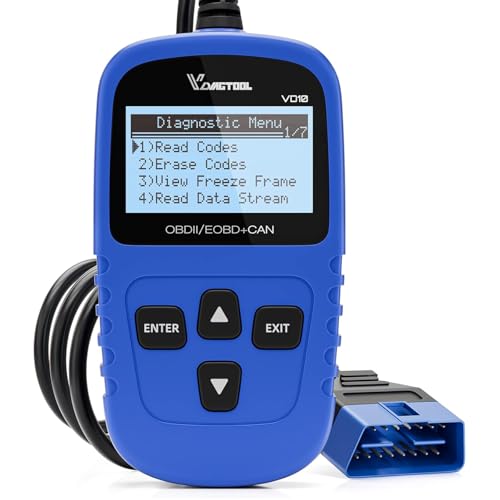
- 【A MUST-HAVE TOOL FOR DIYERS】 - VDIAGTOOL VD10 car code reader is an incredibly useful obd scanner for each car owner or hobbyist, even for those with little to no experience when it comes to vehicle mechanics! Similar to a fixd car diagnostic tool, using this car diagnostic scanner is extremely easy. All you have to do is attach it to your car OBDII port and you can diagnose car problems in seconds! Read Codes (DTCs); Clear Codes; Live Data; View Freeze Frame; I/M Readiness; Vehicle Information.
- 【KEEP ENGINE IN GOOD STATUS】 - VDIAGTOOL check engine code reader brings a fast access to scan, read the car fault code, show its definition on the screen instantly, troubleshooting to find the root causes of problems, erase the engine fault code and turn off the MIL (Malfunction Indicator Light). Similar to a fixd car diagnostic tool, this car code reader helps ensure your engine stays in top condition.
- 【READ/CLEAR CODES & DTC LOOKUP】- No search online & saving your time, this vehicle car code reader retrieves generic (P0, P2, P3, and U0), manufacturer specific (P1, P3, and U1) codes, pending codes and displays DTC definitions based on the built-in database(more than 3000 codes) on the TFT screen, find out the root causes and clear the codes after fixed.
- 【LIVE DATA & RETRIEVE FREEZE FRAME】 - This diagnostic scan tool for accurate diagnosis enables you to retrieve data from vehicle sensors, such as Engine RPM, Intake air temperature, Short/Long term fuel, Misfire data and etc. The freeze frame is stored in the PCM together with the diagnostic trouble code (DTC) related to the fault. Comparable to a fixd car diagnostic tool, the VD10 car code reader car scanner can be a valuable & practical diagnostic aid and also greatly help when diagnosing intermittent problems.
- 【I/M READINESS for THE S-nn-0-g CHECK】- OBDII vehicle may not pass the annual inspection unless the required monitors since reset are complete. So you should at least read the readiness monitors and make sure they are ready. This car obd2 scanner diagnostic tool is equipped with I/M readiness function to check the operations of the e-m-issi0n system on OBD2 compliant vehicles, run I/M monitor readiness test, checking if the pass vehicle s-m-0-g inspection.

- Pro Features, Home Mechanic Budget: Why pay thousands for factory scan tool? The VD70S scan tool delivers advanced professional diagnostic at an affordable price, including 10x faster 33-66ft wireless scanning, 4000+ active tests, 36+ hot services, ECU coding, PMI function, and OE-level full-system scan with 8-in-one data graph. It rivals expensive shop tools - perfect for DIYer, technician and small shop. Get dealer-grade power without the cost - the VD70S obd2 scanner diagnostic tool makes pro diagnostic accessible to all. The available function tests vary by model—please check compatibility via vdiagtool2 @ outlook . c o m before purchase
- Full Bidirectional Control for Precision Repair: VD70S obd2 scanner gives you direct vehicle module control to test components like fuel pump, injector, A/C clutch, window and more, enabling you to accurately and quickly locate faulty components. Unlike basic obd2 code reader, our advanced bidirectional control lets you actively command system - like triggering the ABS pump to confirm your fix worked. With pinpoint component testing and real-time validation, you can diagnose intermittent issues faster and prevent costly return visits. The VD70S auto diagnostic scanner transforms complex diagnostic into precise, time-saving repair - giving professional-grade accuracy at an unbeatable value
- 33-66FT Wireless Freedom - Faster & More Stable: Say goodbye to 2M cable limits. Easily Perform bi-directional tests like folding mirror, activating light or fuel pump while walking freely around your vehicle - no more cable dragging or repositioning your tool. Unlike other 33ft BT obd2 scanner that still need a cable to handle DOIP vehicle diagnostics, the VD70S bidirectional scan tool delivers a truly cable-free experience - with up to 66ft stable transmission range and faster, more reliable data transfer. With VD70S scanner, you get pro-level flexibility, faster workflow and stable diagnostics without cable clutter or wireless dropouts
- Powerful & Affordable Auto Scanner with 36+ Special Functions: Take control of your vehicle maintenance and save hundreds in shop fees with the VD70S car diagnostic tool. This car tool performs 36+ hot services including ✔Crank Sensor Relearn, Oil Reset, EPB, TPMS Reset, Throttle Adaptation, Injector Coding, ABS Bleed and more. ✔Besides, the VD70S bidirectional obd2 scanner unlocks 100+ advanced vehicle-specific functions under specific system menu, including Idle Relearn, VIN Write, Crankshaft Sensor Relearn, Fuel Trim Reset, ABS Initialization and more. These features help you solve complex system error and restore optimal vehicle performance. Text us your VIN we’ll check the compatibility
- OE-Level Full System Diagnostic, Simplified Workflow: The VD70S car diagnostic scanner delivers OE-level full system scanning (ABS/ECM/BCM/SRS/TCM and more) without the dealership cost. ✔Easily view 8 live data streams, retrieve freeze frame and run active test to quickly identify problem. ✔With advanced bidirectional control, test components like fuel injector and sensor directly to verify repair with certainty. ✔The 8-in-one graphing tracks performance trend to catch intermittent issue like a pro. Whether you're a technician or car owner, the diagnostic scanner provides shop-quality diagnostic to optimize performance and prevent costly repair - all in one affordable tool
Last update on 2026-06-12 / Affiliate links / Images from Amazon Product Advertising API
This product presentation was made with AAWP plugin.