
NHTSA ID Number: 10118336
Manufacturer Communication Number: SSP 990263 C
TSB/Document Date: 2017-10-04
Summary
This Self Study Program describes the design and functioning of the Audi A4 in which answers questions regarding the new features of the body, the new features of the occupant protection system, the new power transmission features, the new chassis features, the function of the surround camera, and the new features of the climate control system.
Emergency release cable
Turn the socket wrench clockwise
as far as it will go and then push it down.
3
Actuator unit for parking lock
emergency release mechanism
1
Insert emergency release socket wrench
into the actuator unit as shown.
644_078
When the parking lock emergency release mechanism is actuated, the yellow warning lamp and
the drive position indicator N light up in the
instrument cluster.
The following message is also displayed in the
instrument cluster: Vehicle may roll away!
P cannot be selected. Please apply parking
brake.
3
Deactivating the emergency release mechanism
(P-ON position)
Hold the socket wrench with both hands and carefully pull
it out – item (3). Use one hand to guide the socket wrench,
to avoid damaging other adjacent parts. If the wrench is
tight, it is easier to remove if it is turned slightly clockwise.
Note: Do not under any circumstances turn the socket
wrench back (counter-clockwise) as this will damage the
actuator unit.
45
Tip-shifting in D/S
Special features of the steering wheel Tiptronic function
Manual gearshifts can be executed at any time using the
shift paddles on the steering wheel positions D/S. If Tiptronic is activated, the transmission switches to manual
mode for a limited time.
• After a long duration pull of the Tip- shift paddle (long
pull-), the transmission shifts down into the lowest
possible gear.
If the vehicle is in a normal, constant driving state for a
period of about 8 seconds, the transmission shifts back into
drive position D or S.
The countdown from about 8 seconds is stopped in the
following cases:
•
•
•
•
A sporty driving style is detected.
When cornering.
If over-run mode is detected.
Selection of another gear with the steering wheel
Tiptronic.
It is possible to return to automatic mode before this in
various ways:
• Pull the selector lever back one position (position B1).
• Move the selector lever from the Tiptronic gate and back
into the automatic gate.
• Long duration pull of the Tip+ shift paddle (long pull+).
46
• After a long duration pull of the Tip+ shift paddle, the
transmission switches from temporary Tiptronic mode to
automatic mode.
• If a system malfunction occurs in the selector mechanism, drive positions P, R, N and D can be selected by
simultaneously pulling both shift paddles, provided that
the vehicle is stationary and the brake is applied.
Launch control program
The Launch Control Program regulates the maximum
acceleration of the vehicle from a standing start. Refer to
the Owner’s Manual for operating instructions and other
information.
Audi drive select
With Audi drive select, it is possible to select between
different vehicle setups.
Transmission setups are tailored to the customer's requirements in a country-specific manner. For this reason, only
typical differences between the various modes can be
shown here.
Mode
Transmission setup
comfort
This setup is especially comfort-oriented with soft gear shifts and low engine speeds. As is the case in auto
mode, gear selections are made with the aid of the driver type recognition feature.
auto
Driver type recognition in drive positions D and S: In drive positions D and S a driver type recognition is made
on the basis of the driver's driving style. Criteria for driver type recognition include the mode of actuation of
the brake and accelerator, the speed of the vehicle as well as transverse and longitudinal acceleration within
defined periods. Accordingly, an economical driving style leads to early upshifts and late downshifts. A sporty
driving style leads to late upshifts and early downshifts. The driving phases in which the driver adopts an efficient, economical, sporty or manual driving style can be seen using the VAS Scan Tool.
Selector position D: Gearshifts are comfort-oriented and shift point selection is adapted to the driver's driving
style with the aid of driver type recognition.
Selector position S1): In Sport mode, the shift points are sporty and adapted to the performance range of the
engine. The shift points are configured with the aid of driver type recognition. Shift times and shift points vary
from driving in the standard sport program to a handling course setup with short, noticeable shift cycles.
dynamic
If dynamic mode is selected, transmission control module activates the sport program (drive position S).
In dynamic mode, both the Tiptronic functions and drive position D are available. If selector position D is activated before shutting off the engine, selector position (D) is again activated when the engine is subsequently
started1). If the driver wishes to have selector position S, he must select it.
individual
In individual mode, the driver can freely select the transmission setup irrespective of other vehicle systems.
1)
Based on the emission class, the drive programs of selector position D are always pre-selected when the vehicle is restarted.
Note
In the case of certain engine-transmission combinations, maximum speed is only achieved in the auto and dynamic modes.
Reference
For further information about Audi drive select, refer to eSelf-Study Program 970563, The 2017 A4 Electronic and Electrical
Systems.
47
Towing
If a disabled vehicle with an automatic transmission
requires towing, the usual restrictions apply:
• Actuate the parking lock's emergency release
mechanism.
• Maximum towing speed of approximately 34 mph
(50 km/h).
• Maximum towing distance of approximately 34 miles
(50 km).
To tow the vehicle with an axle raised, the instructions in
the Owner's Manual must be followed.
Note
For further information, please refer to the Owner’s Manual.
Transmission warning lamps and driver information
The transmission control module provides information and
fault messages about transmission operation that are
displayed in the Driver’s Information System according to
their priority. Please refer to the Owner’s Manual for
further information.
48
Running gear
Overall concept
The suspension of the 2107 A4 is a new development
compared to the previous model. It is the second Audi
model to use the new modular longitudinal platform
(MLBevo).
A key development goal was to achieve systematic lightweight construction while resolving any conflict of objectives between high ride comfort and outstanding driving
dynamics.
644_119
The following suspension variants are available for the 2017 Audi A4:
Suspension variants
Features
Standard suspension (1BA)1)
This is standard equipment for all models.
Sports suspension (1BE)
This chassis version is optional. For all models, ride height is approximately 0.9 in
(23 mm) lower than that of the standard suspension. The distinctly sporty suspension setup is achieved by using special springs, dampers and anti-roll bars.
Suspension with electronic damper
control (1BL)1)
The suspension with electronic damper control is an option for the Prestige
model. Ride height is approximately 0.4 in (10 mm) lower than that of the standard suspension.
1)
1)
Production control number
49
Axles and wheel alignment
Front axle
The system components are basically identical in design
and function to those of the front axle on the Audi Q7.
The Audi A4 adopts the tried and tested five-link axle
concept already used on other Audi models.
Cross strut
• Steel construction
• bolted to sub-frame
to increase rigidity
Damper
• Single-tube damper1)
• Twin-tube damper1)
• Polyurethane auxiliary spring
• Low-friction axial bearings
for upper strut mountings (new development)
Spring
• Steel springs with linear characteristic
Pivot bearing
• Forged aluminum
construction
Engine/transmission mount
• Cast aluminum node
Lower ball joint
• Spherical joint as connection between
wishbone and pivot bearing
• Aluminum housing
Suspension strut knuckle
• Cast aluminum construction
• Bolted to support link
Upper link
• Forged aluminum construction
• Mounted directly to body without
separate bearing pedestal
Support link
• Forged aluminum construction
Anti-roll bar
• Tubular anti-roll bars
Guide link
• Forged
aluminum construction
Wheel bearing
• Second generation
wheel bearing
Anti-roll bar link rod
• Aluminum housing with
rubber-metal bearings
Wheel hub
• Steel construction
644_120
1)
Depending on suspension version.
50
Rear axle
The system components are basically identical in design
and function to those of the rear axle on the Audi Q7.
Upper rear wishbone
• Steel construction
Track link
• Steel construction
Spring
• Steel spring with linear spring characteristic
Upper front wishbone
• Forged aluminum design
• Attachment of the anti-roll bar coupling rod and
the linkage of the level control system sensor
Damper
• Single-tube damper with
additional polyurethane spring
Engine/transmission mount
• Steel construction
• Flexible body attachment, achieved using rubber-metal
bearings at the rear and hydraulic bearings at the front
• 2 variants for front-wheel drive / quattro drive
Wheel carrier
• Aluminum casting
• 2 versions based on different wheel bearings
Aero trim
• Attached to the spring link
at the bottom by clips
• Reduces lift and drag coefficient
• Stone guard
Spring link
• Shaped aluminum extrusion profile
• Attachment of spring and damper
• Concealed by aero trim in diagram
Anti-roll bar
• Tubular anti-roll bar
• 2-piece bearing shells, loose
and bolted using steel clamps
Tie rod
• Aluminum extrusion
profile with rubber-metal bearings
Lower front wishbone
• Steel construction
• Carryover from
Audi Q7
Wheel bearing
• Second generation wheel
bearing
• 2 variants for front-wheel
drive / quattro drive
644_121
51
Wheel alignment
The left and right toe values on the front axle can be
adjusted separately by altering the length of the track rods.
The camber can be balanced (centered) within narrow limits
by shifting the sub-frame transversely. Individual tracking
values and individual camber values can be adjusted on the
five-link rear suspension.
Rear axle
Toe adjustment at attachment point
of track link and sub-frame
(not shown in graphic)
Toe adjustment at attachment point
Spring link sub-frame
(concealed by aero trim)
Front axle
Direction of travel
Cam
ber
bala
ncin
g
Toe adjustment
52
644_127
Suspension with electronic damper control (1BL)
The 1BL system is based on that of the predecessor A4. A
key new feature is Drivetrain Control Module J775. This new
module incorporates the previously separate body acceleration sensors in addition to sensors for measuring torque
around the X and Y axes (pitch and roll rates).
To determine the required damping forces, the control
software has a modular design. The vertical module evaluates lift, pitching and rolling movements of the body structure on the basis of the sensors integrated in the control
module.
CDCivo dampers ("continuously damping control internal
evolution") are used. The "internal" designation refers to
the integration of the solenoid valve into the damper. The
addition "evolution" refers to the latest technically
advanced damper generation.
The transverse module uses the measured data from the
steering angle sensor and the transverse acceleration
sensor of the Airbag Control Module to determine the
transverse dynamics.
The control module activates the solenoid valve by a PWM
signal directly and bypasses the piston valves. Depending
on the opening cross-section of the valve, the damping
forces can be varied in the tension and compression stages.
Activation is wheel-selective.
The longitudinal module assesses the vehicle's longitudinal
dynamics by evaluating the measured data for brake pressure from the ABS Control Module and the driver's torque
input from the ECM. A higher-level system module serves
to respond to the actions of other systems (ESC, EPB, brake
assist etc.).
In addition, the speed of the vehicle and the road conditions (surface unevenness – determined from the measured data supplied by the body acceleration sensor from
Drivetrain Control Module J775) are incorporated into the
control process.
Left Rear Damping
Adjustment Valve
N338
Left Rear Level Control
System Sensor
G76
Instrument Cluster
Control Module
J285
Left Front Level Control
System Sensor
G78
Left Front Damping Adjustment
Valve
N336
Right Front Level
Control System Sensor
G289
Right Rear Damping
Adjustment Valve
N339
Drivetrain Control
Module
J775
Control Unit 1 for Driving And ConRight Rear Level
venience Functions E791
Control System Sensor
(the drive program can also be conG77
figured in the MMI)
Right Front Damping
Adjustment Valve
N337
644_128
53
Drivetrain Control Module J775
Drivetrain Control Module J775 was first introduced in the
2017 Audi Q7. As mentioned earlier, the sensors to
measure vertical acceleration (Z) as well as torque around
the longitudinal axis (X) and the transverse direction (Y) are
integral with J775.
J775 also computes the vehicle’s dynamics for the sport
differential (not available at vehicle introduction). The
module is mounted on the center tunnel at the front of the
vehicle and communicates over the FlexRay data bus.
644_129
System behavior
The electronic damper control system has three different
damping characteristics. Depending on the setting chosen in
Audi drive select, the system activates maps which provide a
medium, comfort-oriented or sporty characteristic.
When the ignition is switched on (terminal 15), the damper
valves are activated with short pulses to activate the
control system and vent the valves. If the vehicle is stationary and terminal 15 is on, the damper valves are activated
by applying about 400 mA (low damping forces – "soft"
characteristic). The highest damping forces are produced
when a current of about 1.9 A is applied.
If a damper becomes defective or if there is no longer any
measured data available from a level control system sensor,
the control system is deactivated.
The damper valves are designed in such a way that medium
damping forces (basic damping) are produced in a neutral
(non-activated) state. The vehicle remains dynamically
stable despite the corresponding loss of comfort.
The system shutdown is indicated to the driver in the DIS
by a yellow pictogram (damper icon) and by text message.
54
Reference
For further information about Audi drive select, refer to Self-Study Program
970563, The 2017 A4 Electronic and Electrical Systems.
644_130a
Service operations
J775 is encoded online. The following three basic settings
are available for the electronic damper control system:
• Program tension stop
Raise the vehicle on a hoist until the wheels do not touch
the ground and the dampers can be moved to their
tension stops. The corresponding measured data from
the level control system sensor is stored in the control
module.
644_129
• Program zero position of height sensors
This process follows the same approach as the other
Audi models with adaptive air suspension or damper
control (= programming the default suspension height).
The distance from the center of the wheel to the wing
cutout is measured at all four wheel positions and indicated to the VAS Scan Tool. The control module stores
the corresponding measured data from the level control
system sensor. Together with the data for the tension
stops, the positions of the pistons in the dampers can be
determined using the measured data from the level
control system sensors.
• Calibrate inertial sensors
This basic setting is used to calibrate the sensors in the
control module for measuring the pitching and rolling
movements as well as the body acceleration in the z axis.
The basic settings can be performed separately or collectively. The activation of the damper valves can be checked
by performing an output check.
644_131
55
Brake system
During the development of the brakes, special attention
was given to lightweight construction. A weight savings of
up to approximately 11.0 lb (5 kg) has been achieved compared with the previous model. The brake pads are now
copper-free and meet the mandatory regulations which do
not come into effect until 2021. An electro-mechanical
parking brake is standard equipment for the Audi A4.
Front axle
The ninth-generation Electronic Stability Control (ESC)
system by Robert Bosch GmbH is a adapted from the
Audi Q7. The control software has been configured for use
in the Audi A4. Compared with the previous model, the
brake circuit layout has been modified from diagonal to a
split between the front brakes and rear brakes.
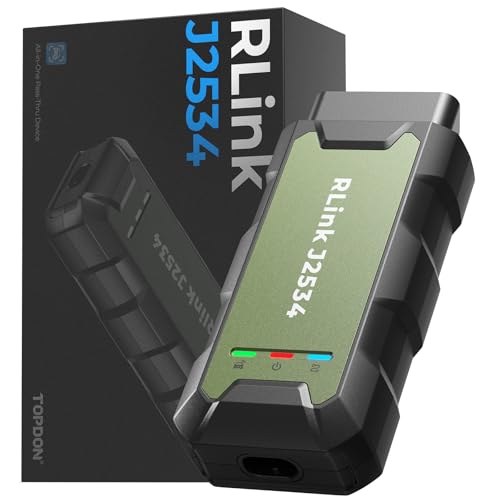
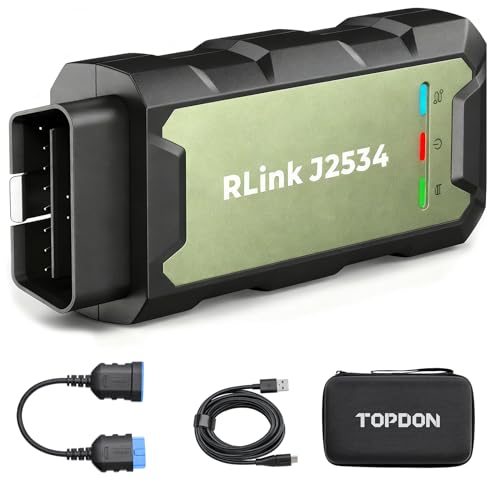
- Advanced VCI Box, Industry-leading J2534 Pass-Thru...
- High-Speed OEM-Level Diagnostics & Programming: Unlock true...
- Coverage for 17 Car Brands & Ultra Reliability: Works...
- User-Friendly RLink Platform & Expert Support: TOPDON’s...
- 6.6 ft USB-C Cable & Portable Storage Case: The RLink J...
If the PDF is very large, it may not load in the preview below.
Some older TSBs had multiple PDFs — visit the NHTSA Website to view all PDFs.
If the TSB PDF does not show, download or view it on the NHTSA Website.
Click on the (+) Plus Sign
Then Click on Associated Document(s)
Search NHTSA Database for Recalls
Search NHTSA Database for Vehicle Investigations
View Latest Vehicle Investigations
Search NHTSA Database for Vehicle Complaints
View Latest Vehicle Complaints
TSB/Document ID: SSP 990263 C
Replacement Service Bulletin Number:
MFR Communication Date: 2015-01-12
MFR Internal Campaign ID/Software Version:
Communication Type: Service Bulletin/Repair Instructions
NHTSA Components: POWER TRAIN:AUTOMATIC TRANSMISSION
MFR Component System:
MFR Component Subsystem:
Previous TSB | Next TSB |
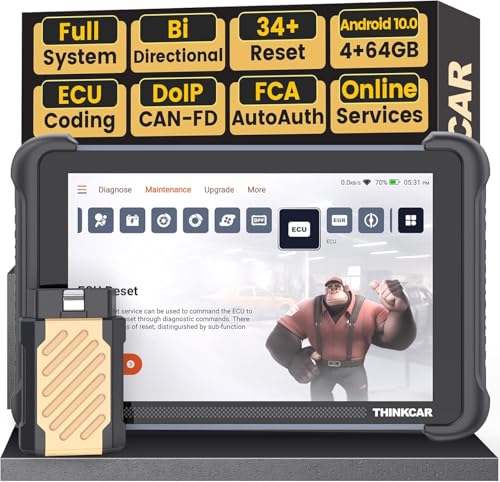
- [Notice] When you receive a used device, it may be a customer return resold by Amazon without inspection. You can exchange it for a new one through Amazon. As this situation is unavoidable, we sincerely apologize. For any issues, contacting us via Amazon's "Messages" is the best way. THINKSCAN 689BT Bidirectional Scan Tool Can Be Used Immediately After It is Turned On, Without Complicated Registration Process, Which is More Convenient & Quick.
- Full Bi-Directional Control & 3000+ Active Tests: Take control and test components like actuators, fuel injectors, relays, and cooling fans in real time. You’ll quickly see if the problem is in the part itself or the control module — saving you hours of guesswork and frustrating trial-and-error.
- Advanced ECU Coding Capabilities: Handle module matching and hidden feature activation with confidence. When you replace an ECU or want to customize settings, this obd2 scanner diagnostic bi directional tool gives you the professional-level capabilities you need without the dealership price tag.
- 34+ Useful Reset and Maintenance Functions: Complete everyday service tasks smoothly with a wide range of helpful reset and maintenance functions. Whether you’re keeping up with regular upkeep or tackling a specific job, this scanner makes maintenance simpler and less stressful for both DIYers and pros.
- Comprehensive Full System Diagnostics: Diagnose every major system — Engine, Transmission, ABS, SRS, TPMS, and more — all in one place. Finally stop wondering if you’re missing something important; get the full picture and clear codes with ease.
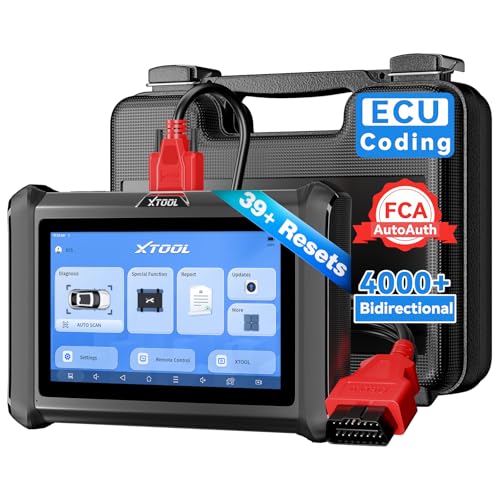
- Top Reasons to Choose the D7S OBD2 Scanner: XTOOL D7S car scan tool, an upgrade of XTOOL D7, offers comprehensive features for automotive technicians, workshops, and DIY enthusiasts 1. Upgraded Hardware: 2+64GB memory, rear camera, intuitive interface, foldable bracket 2. Complete Diagnostics: FCA
 Autoauth, OE-level all system scan, 39+ maintenance services, 4K+ bidirectional, CANFD/DoIP protocol 3. Advanced Capabilities: ECU c0ding, PMI functions 4. Wide Compatibility: Support 10,000+ models, covering 99% vehicle brands 5. Multi-language: Available in 22+ languages, No IP Restrictions 6. 3-Year Updates: Save 300 bucks on software updates for the latest features and optimizations
 - 2026 Upgraded D7S Car Scanner Features: The newly 2026 D7S V2.0 scanner for car brings exciting features for advanced vehicle diagnostics and enhanced user experience 1. FCA AutoAuth: Now supports FCA SGW module for Chrysler, for Jeep, for Dodge (2018+), for Fiat (2017+), enabling faster vehicle communication without gateway restrictions 2. PMI (Offline ECU Pr0gramming): Allows for Ford, for Lincoln, and for Mazda ECU pr0gramming for new modules 3. Optimized Diagnostic Report 2.0: Personalized reports with logos and customer info for auto shops. Note: Compatibility varies by cars, please check before order
- 39+ Services/Resets/Adaptations/Relearns/Calibrations: XTOOL D7S full system car scanner diagnostic tool tackles 99% of common car issues through its 36+ special functions, including Oil Reset, EPB, SAS, BMS, Throttle Reset, Injector C0ding, ABS Bleed, TPMS Reset, Power Balance, etc and also covers specific-vehicle functions like Crank Sensor Relearn, ABS Initialization, Cylinder Power Balance, Fuel Trim Reset, Idle Relearn etc. This car diagnostic scanner enhances efficiency, making repairs and maintenance hassle-free. Tip: DO NOT for All vehicles, please check compatibility first
- Cost-effective ECU C0ding Scan Tool for Specific Brands: Enhance your vehicle's performance with XTOOL D7S! This obd2 scanner all systems bidirectional offers advanced capabilities at an affordable price, supports online for BMW, for Benz and offline for BENZ, for MIT, along with PMI functions for Ford, for Mazda, and for Lincoln. Ideal for technicians and DIY enthusiasts, this automotive scanner diagnostic tool optimizes vehicle performance and enhances the driving experience. Note: Not for all cars and modules, please send car VIN to check the compatibility before purchase
- OE All System Diagnostic & 8 Pids Graphing: XTOOL D7S is a comprehensive all system bi directional obd2 scanner that delivers dealer-level diagnostics, completely controlling over your vehicle’s performance and health. This automotive scan tool can read and clear DTCs, view live data and ECU information, retrieve freeze frames, and perform active tests and full obd2 functions. This bi-directional scan tool can can identify your vehicle's make, model, and year information with just one click and show up to 8 PIDs live data with options for CSV viewing, playback, and recording for in-depth analysis. It is easy-to-use for both professionals and beginners, helping pinpoint issues efficiently
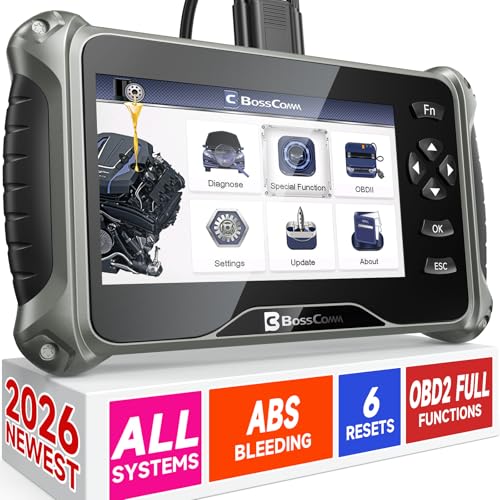
- 【✅Compared to BOSSCOMM IF742, IF745 Offers Full-System Diagnostics】The BOSSCOMM IF745 car diagnostic scanner is an upgraded model of IF742. In addition to supporting all OBD2 Code Reader functions and 6 reset options (ABS/EPB/SAS/BMS/Oil/Throttle), it expands diagnostics from 4 systems (Check Engine/ABS/SRS/Transmission) to vehicle All systems, including Steering, Suspension, and Body Electronics. This provides deeper, more comprehensive diagnostic capabilities.
- 【✨10 OBD2 Functions】The BOSSCOMM IF745 scan tool’s DTC Lookup instantly translates fault codes into user-friendly explanations, its I/M Readiness feature streamlines emissions testing with a single tap, and Freeze Frame lets you pinpoint the exact moment of a fault for in-depth root-cause diagnosis. Combined with a live data dashboard and advanced diagnostics (O2S, OBMon, EVAP), it delivers comprehensive insights for confident troubleshooting.
- 【✨Deep Diagnostics for All Vehicle System Modules】Beyond code reading/clearing and ECU information retrieval, our all-in-one data stream feature lets you inspect all current fault codes and their locations across the vehicle’s systems. This vehicle code reader helps you turn off dashboard warning lights and perform a comprehensive self-check of your car at home—no more back-and-forth trips to the repair shop or hefty inspection fees.
- 【✨6 Essential Resets: ABS Bleeding, Oil, EPB, SAS, Throttle, BMS】The BOSSCOMM IF745 obd2 scanner diagnostic tool swiftly purges air from brake lines to restore braking sensitivity, fine-tunes maintenance cycles to eliminate false alerts, resolves parking brake issues with one-click control, recalibrates steering sensors for stability, optimizes engine idling/acceleration for smoother performance, and deeply resets battery systems to extend lifespan and range via precise parameter adjustments.❗NOTE: Does NOT support bidirectional control, coding, or programming.
- 【✨10,000+ Car Models, AutoVIN, 13 Languages】The BOSSCOMM IF745 vehicle scanner diagnostic tool covers 73+ global car brands and offers support in 13 languages, making it perfect for DIYers, auto mechanics, or as a thoughtful gift. With a single-click AutoVIN feature, it instantly retrieves vehicle serial numbers, streamlining diagnostics for users globally. This adaptable tool balances user-friendliness with precision, catering to both personal and professional requirements.✅Unsure about compatibility? Compatibility will vary on vehicles' model and year, pls reach us via 📧 [email protected] 📧 before purchase.

This product presentation was made with AAWP plugin.