
NHTSA ID Number: 10116567
Manufacturer Communication Number: 17-NA-020
TSB/Document Date: 2017-08-31
Summary
This New Model Feature Informational Bulletin provides General Information, Training Courses Information, Special Tools Information and other Topics to help the Service and Sales Personnel become familiar with the features of the 2018 Chevrolet Equinox.
•
Crankshaft: The crankshaft is forged micro alloy steel. It is supported in 5 main journals with main bearings which have oil clearance for lubricating. The
thrust bearing is located in the 4th position which controls proper crankshaft axial end play. The crankshaft is also comprised of 8 counterweights that
have been scalloped for mass reduction and topped for precise engine balance. A harmonic balancer is used to control torsional vibration.
•
Cylinder Block: The cylinder block is constructed of aluminum alloy by high-pressure die casting with 4 cast-in-place iron cylinder liners arranged in-line.
The block has 5 crankshaft bearings with the thrust bearing located on the second bearing from the rear of the engine. The cylinder block incorporates
a bedplate design that forms an upper and lower crankcase. This design promotes cylinder block rigidity and reduced noise and vibration.
•
Cylinder Head: The cylinder head is DOHC type with 2 camshafts that open 4 valves per cylinder using hydraulic valve lash adjusters. The camshaft
sprocket wheels are installed in front of the camshafts. The cylinder head is made of cast aluminum alloy for better strength in hardness and light weight.
The combustion chamber of the cylinder head is designed to increase the squish and swirl efficiency, which maximizes the combustion process. The
exhaust manifold is integrated into the cylinder head.
•
Continuously Variable Valve Timing: Continuously Variable Valve Timing (VVT) brings an optimal balance of strong performance and low fuel
consumption. Aluminum cam phasers enable variable timing for the opening and closing of the inlet and exhaust valves, optimizing fuel consumption and
performance under a wide variety of engine load conditions.
6
•
Ignition System: The ignition system is coil-on-plug.
•
Intake Manifold: The intake manifold is made of composite plastic. The intake manifold incorporates a distribution and control system for positive
crankcase ventilation (PCV) gases.
•
Integrated Exhaust Manifold: The exhaust manifold is integrated in the DOHC cylinder head. The single-piece design results in quicker engine warmup, which contributes to better emissions performance and enhances durability by eliminating the need for gasket sealing around the exhaust ports, as
well as offering an underhood packaging advantage.
•
Math-Modeled Combustion System: The Math-modeled combustion system used one-dimensional and three-dimensional math-based models in order
to refine the parameters of the combustion system design. This process determined the optimal 6-degree injector angle, as well as the shape of the
chamber itself and the complementing piston dish, which is shaped to help direct the fuel spray for a more complete burn of the mixture.
•
Oil Pump: The oil pump is a crankshaft driven oil pump integrated in the pump module. The oil pump draws engine oil from the oil pan and feeds it under
pressure to the various parts of the engine. An oil strainer is mounted before the inlet of the oil pump to remove impurities which could clog or damage
the oil pump or other engine components. When the crankshaft rotates, the oil pump driven gear rotates. This causes the space between the gears to
constantly open and narrow, pulling oil in from the oil pan when the space opens and pumping the oil out to the engine as it narrows. At high engine
speeds, the oil pump supplies a much higher amount of oil than required for lubrication of the engine. The oil pressure regulator prevents too much oil
from entering the engine lubrication passages.
•
Piston and Connecting Rod: The pistons are cast aluminum. The pistons use 2 compression rings and 1 oil control ring assembly. The piston is a low
friction, lightweight design with a recessed top and barrel shaped skirt. The piston pins are chromium steel and are a full-floating design. The connecting
rods are powdered metal. The connecting rods are fractured at the connecting rod journal and then machined for the proper clearance. All applications
use a piston with a graphite coated skirt. The piston and pin are to be serviced as an assembly.
•
Turbocharger: The turbocharger consists of a turbine and compressor on a common shaft. The shaft bearing is constructed for very high rotation
speeds and is lubricated by engine oil. The turbocharger is water cooled for improved durability. The turbine wheel is driven by exhaust emissions. The
compressor wheel compresses the intake air. A wastegate bypass valve regulates the charging pressures as needed.
•
Upper Oil Pan: The oil pan is a structural aluminum oil pan with transmission attachment. It includes the oil suction pipe which is connected with the oil
pump. The oil pan is attached at the lower crankcase.
•
Valves: There are 2 intake and 2 exhaust valves per cylinder. Positive valve stem seals are used on all valves.
•
Valve Lash Adjusters: The valve train uses a roller finger follower actuated by a hydraulic lash adjuster. The roller finger follower greatly reduces friction
and noise.
Engine Specifications
•
Displacement: 1.5L (92 cubic inches)
•
Bore x Stroke: 74mm x 86.6mm
•
Compression Ratio: 10.0:1
•
Firing Order: 1-3-4-2
•
Horsepower: 170 Horsepower (127 kW) @ 5,600 RPM (GM Estimate)
•
Torque: 203 lb-ft (275 Nm) @ 1,800-4,200 RPM (GM Estimate)
•
Valves: 2 intake and 2 exhaust valves per cylinder
•
Valve Lash Adjusters: Roller finger follower acted on by a hydraulic lash adjuster
•
Recommended Fuel: Regular unleaded gasoline rated 87 octane or higher
Engine — 2.0L Turbocharged Gasoline — RPO LTG
7
Typical View of the 2.0L Turbocharged Engine — RPO LTG
Overview
Performance from GM’s Ecotec family of engines continues to advance with the 2.0L Turbocharged — RPO LTG, which is based on a generation of large
displacement four cylinder engines which are designed for greater efficiency. The turbocharger generates up to 20 pounds (138 kPa) of boost and its twin-scroll
design helps optimize the usable power from the engine, virtually eliminating turbo lag and helping deliver a broad power band. It also gives the engine the rapid
throttle responsiveness associated with a higher displacement naturally aspirated high performance engine. Electronically controlled turbocharger supporting
components including the wastegate and bypass valve, help optimize performance and efficiency. The trailering capability of the Equinox when equipped with
this engine is 3,500 lbs (1,588 kg).
Engine and Fuel — 2.0L LTG
•
Cam-Driven High Pressure Fuel Pump: A high pressure, cam-driven fuel pump provides the higher fuel pressure required by the direct injection
system. The engine mounted fuel pump is augmented by a conventional electrically operated supply pump in the fuel tank. The fuel delivery system
features a high-pressure stainless steel feed line and a pressure regulated fuel rail without a conventional fuel return line from the engine to the tank.
Fuel pressure varies from about 750 psi (5,171 kPa) at idle to 2,250 psi (15,513 kPa) at wide open throttle (WOT).
•
Cylinder Block: The sand-cast aluminum 319T7 cylinder block is a superior refinement of previous Ecotec engine block castings. It is dimensionally
similar with previous Ecotec turbo block variants, while providing improved structural support, as well as enabling greater control of noise, vibration and
harshness. The main bearing bulkheads, which support the crank bearings, as well as the cylinder bore walls have been significantly strengthened to
support increased engine loads. Refinements to the oil distribution system enable improved oil flow throughout the engine and an expansion of the
coolant jacket, along with the use of cast-in-place bore liners, allows more precise bore roundness and improves the block’s ability to dissipate heat.
•
Cylinder Head — Rotocast Aluminum with Sodium Filled Exhaust Valves: The Ecotec 2.0L turbo's A356T6 aluminum cylinder head is cast using a
Rotocast process for high strength, reduced machining and improved port flow. The head is also designed specifically for direct injection. The 2.0L turbo
head has unique injector mounting locations below the ports. Apart from injector installation, the head has conventional port and combustion chamber
designs, both are optimized for direct injection and high boost pressure. The head uses stainless steel intake valves that are nitrided for improved
durability and undercut to improve flow and reduce weight. The exhaust valves have sodium-filled stems that promote valve cooling. At normal engine
operating temperatures, the sodium inside the valve stem fuses and becomes liquid. The liquid sodium improves conductivity, promoting heat transfer
away from the valve face and valve guide to the cooler end of the stem, where it more readily dissipates. This helps maintain a lower, more uniform
valve temperature, reducing wear on the valve guide for better alignment and a consistent seal between the valve seat and valve face over the life of the
engine. The exhaust manifold is mounted to the cylinder head and is made of cast stainless steel. It is extremely durable and delivers exceptional airflow
qualities.
•
DOHC with Continuously Variable Valve Timing: Overhead cams are the most direct, efficient means of operating the valves, while four valves per
cylinder increase airflow in and out of the engine. This arrangement is integrated on the lightweight aluminum cylinder head. Continuously variable valve
timing optimizes the engine's turbocharging system by adjusting valve timing at lower rpm for improved turbo response and greater torque delivery. Both
the intake and exhaust cams have hydraulically operated vane-type phasers that are managed by a solenoid and directed by the engine control module
(ECM). The phasers turn the camshaft relative to the drive sprocket, allowing intake and exhaust valve timing to be adjusted independently. Cam
phasing changes the timing of valve operation as conditions such as rpm and engine load vary. This provides an outstanding balance of smooth torque
delivery over a broad rpm range, high specific output and improves fuel consumption.
8
•
Ignition System: The ignition system is coil-on-plug.
•
Rotating Assembly: The crankshaft is made of drop forged steel with induction heat-treated fillets and cross-drilled chamfered oil passages for racing
grade lubrication characteristics. Forged powdered metal connecting rods incorporate a larger, forged I-beam cross section for added strength in this
turbocharged application. The pistons in the 2.0L turbo are lightweight cast aluminum, which reduces reciprocating mass inside the engine. This
enhances efficiency and the feeling of performance as the rpm increases. The tops of the pistons have a dish shape that deflects injected fuel. Each
piston has its own directed jet that sprays oil toward its skirt, coating its underside and the cylinder wall with an additional layer of lubricant. The extra
lubrication cools the pistons, reduces both friction and operational noise and bolsters engine durability.
•
Side Direct Fuel Injection: Side direct fuel injection moves the point where fuel feeds into an engine cylinder closer to the point where it ignites, enabling
greater combustion efficiency. It fosters a more complete burn of the fuel in the air-fuel mixture, and operates at a lower temperature than conventional
port injection. This allows the mixture to be leaner (less fuel and more air), so less fuel is required to produce the equivalent horsepower of a
conventional, port-injection fuel system. Direct injection also delivers reduced emissions, particularly cold-start emissions, by about 25 percent. The
higher compression ratio with direct injection is possible because of a cooling effect as the injected fuel vaporizes in the combustion chamber, which
reduces the charge temperature to lessen the likelihood of spark knock. The direct injection fuel injectors have been developed to withstand the greater
heat and pressure inside the combustion chamber, and feature multiple outlets for best injection control.
•
Two Stage Variable Displacement Oil Pump: The variable flow oiling system helps maximize fuel efficiency. Rather than the linear operation of a
conventional fixed flow pump, it is accomplished with a crankshaft driven oil pump that matches the oil supply to the engine load. The engine’s variable
flow pump changes its capacity based on the engine’s demand for oil. This prevents using energy to pump oil that is not required for proper engine
operation. An engine oil cooler helps maintain optimum oil temperatures. It has a heat exchanger incorporated into the oil filter housing. Coolant to the
heat exchanger is provided by the engine’s coolant circuit. The design optimizes oil cooling with a minimal pressure loss. During the cold starting, the
system also enables faster heating of the engine oil for an earlier reduction of internal engine friction.
•
Twin-Scroll Turbocharger: An advanced, electronically controlled turbocharger with a unique twin-scroll design is used to increase power in the engine.
Each of the two scrolls on the turbine is fed by a separate exhaust passage, one from cylinders one and four, the other from cylinders two and three and
virtually eliminates turbo lag at low engine speeds, giving the engine immediate throttle response associated with a naturally aspirated high-performance
engine. The turbocharger generates a maximum boost of approximately 20 psi (138 kPa). Because direct injection cools the intake process it allows the
engine to safely operate at higher boost and a relatively higher compression (9.5:1) ratio than a conventional turbo engine, increasing both output and
efficiency.
–
Air-to-Air Charge Air Cooler: The turbocharger intake system is supported by an air-to-air charge air cooler system, which uses fresh air drawn
through a heat exchanger to reduce the temperature of the hot compressed air exiting the turbo compressor, prior to delivery to the engine
combustion system. Inlet air temperature can be reduced by up to 100°C (180°F), which enhances performance. This is due to the higher density of
oxygen in the cooled air, which promotes optimal combustion. The charge air cooler is connected to the turbocharger and to the throttle body by
flexible ductwork that requires the use of special high torque fastening clamps. In order to prevent any type of air leak when servicing the ductwork,
the tightening specifications, cleanliness and proper positioning of the clamps is critical, and must be strictly adhered to.
–
Cam-Driven Vacuum Pump: A cam-driven vacuum pump ensures the availability of vacuum under all conditions, especially under boost, when
the engine produces the opposite of vacuum. The pump is mounted at the rear of the cylinder head and is driven by the exhaust camshaft.
Engine Specifications
•
Displacement: 2.0L (1998cc) — (122 cubic inches)
•
Bore x Stroke : 86mm (3.39 inches) x 86mm (3.39 inches)
•
Compression Ratio: 9.5:1
•
Firing Order: 1-3-4-2
•
Horsepower: 250 Horsepower (186 kW) (GM Estimate)
•
Torque: 260 lb ft (353 Nm) (GM Estimate)
•
Maximum Engine Speed: 7,000 rpm
•
Valves: 2 intake and 2 exhaust valves per cylinder
•
Valve Lifters: Hydraulic roller finger follower
•
Recommended Fuel: Premium unleaded
•
Emissions controls: Evaporative system, Catalytic converters (close coupled and underfloor) and Positive Crankcase Ventilation (PCV)
Engine Oil — dexos1® — Gasoline Engines
9
Ask for and use engine oils that meet the dexos® specification. Engine oils that have been approved by GM as meeting the dexos1® specification are marked
with either of the approved logos as shown. For additional information, visit this General Motors website: http://www.gmdexos.com
Viscosity Grade
1.5L — RPO LYX Engine: Use ACDelco® dexos1® SAE 0W-20 viscosity grade engine oil.
2.0L — RPO LTG Engine: Use ACDelco® dexos1® SAE 5W-30 viscosity grade engine oil. In an area of extreme cold, where the temperature is less than
−20°F (−29°C), use SAE 0W-30 viscosity grade engine oil. An oil of this viscosity grade will provide easier cold starting for the engine at these colder
temperatures.
Engine Oil Life System
The vehicle features GM’s engine oil life system, which better protects engines by recommending oil changes based on a computer software algorithm using
actual engine operating conditions and can save the vehicle owner money by avoiding unnecessary oil changes.
Engine — 1.6L Turbocharged Diesel — RPO LH7
Typical View of the 1.6L Turbocharged Diesel Engine — RPO LH7
Overview
The all-new 2018 Equinox after the initial launch, will offer a segment-first 1.6L — RPO LH7 turbocharged diesel engine that is efficient, very quiet and fun to
drive. The engine was designed by GM engineers from the ground up to meet global requirements, leveraging the corporation’s technical resources throughout
the world. As such, every part on the engine, down to excruciating details were also designed with quiet running operation in mind. It is barely noticeable that it is
a diesel, even at idle. This diesel engine provides more low-speed torque than its gas counterparts making the vehicle feel very lively from a stop. The 1.6L
turbocharged diesel engine has undergone grueling testing, including being subjected to extreme ambient and engine operating temperatures. Extensive time
was devoted to developing the engine cold start calibration to ensure it functions optimally no matter the weather, allowing the vehicle to start at a wide range of
altitudes and environmental ambient temperatures. The trailering capability of the Equinox when equipped with this engine is 1,500 lbs (680 kg).
Engine and Fuel — 1.6L LH7
10
•
Camshaft: Two camshafts are used, one for all intake valves, one for all exhaust valves. The camshafts are cast iron. The camshafts are driven by a
cam to cam gear. The exhaust camshaft has a split gear.
•
Cylinder Block: The cylinder block is light weight aluminium and the cap inserts are a nodular cast iron. The block has 5 crankshaft bearings with the
thrust bearing located on the third bearing from the front of the engine.
•
Cylinder Head: The cylinder head is made of cast aluminum alloy for better strength and light weight. The cylinder head is a dual over head camshaft
(DOHC) type having 2 camshafts that open 4 valves per cylinder with roller finger followers and valve bridges. The cam follower is of the hydraulic type
and does not require adjustment for valve clearance. The combustion chamber is designed to increase squish and swirl efficiency, maximizing the
combustion process.
•
Crankshaft: The crankshaft is a forged steel crankshaft with 4 counterweights. It is supported in 5 main journals with main bearings which have oil
clearance for lubricating. The 3rd bearing of the 5 main bearings is the thrust bearing and controls the crankshaft axial end play. A crankshaft balancer is
used to control torsional vibration.
•
Diesel Exhaust Fluid System: NOx emissions are controlled via a Selective Catalytic Reduction (SCR) aftertreatment system that uses urea-based
diesel exhaust fluid (DEF), which is housed in a 4.9-gallon (18.5 L) tank. It needs to be replenished about every 7,500 miles (12,070 km), the same as
the vehicle’s recommended oil change interval during typical operation. An information graphic on the Driver Information Center displays OK until the
DEF reaches a predetermined amount of remaining life expectancy, at which point the remaining DEF life is displayed in percentages, enabling the driver
to plan their DEF fluid refill with plenty of notice. The DEF fill point is located in the fuel-filler door for optimal convenience. Electrically heated lines feed the
DEF to the SCR system to ensure adequate delivery in cold weather.
•
ECU: GM-developed engine control unit and software for more robust engine calibration, quicker engine response, improved accuracy, quieter engine
operation and precision of overall engine control.
•
Fuel System — Brushless Fuel Pump Motor The turbocharged diesel engine will feature a brushless fuel pump motor to improve the life of the fuel
system. Brushed motor fuel pumps create heat due to the brushes rubbing against a commutator. This rubbing wears away both the brushes and the
commutator, making the fuel pump a wear item similar to brake pads and rotors. The pumping and pressurizing of fuel also generates additional heat.
Brushless motors do not suffer from the friction and wear found on a brushed motor and they generate less heat. That’s because nothing touches
outside of a few bearings and it uses a controller to determine speed and output. The controller has the ability to lower output when less pressure is
needed and to increase output when more pressure is needed. This results in a significantly reduced fuel temperature.
•
Ignition System: Compression ignition.
•
Intake Manifold: The intake manifold is made of a composite material for increased strength and reduced weight.
•
Oil Pan: The oil pan includes the oil suction pipe, which is connected with the oil pump. The oil pan is attached at the lower crankcase.
•
Oil Pump: The oil pump is a variable displacement type.
•
Piston: Aluminum pistons with shallow-dish bowl profile.
•
Recommended Fuel (U.S.): Diesel fuel with ultra low sulfur content (15 ppm, maximum) is required. For best results use No. 2-D diesel fuel year-round
because it is blended for seasonal temperature differences, both above and below freezing conditions.
Biodiesel: Blends up to B5 must meet ASTM D975 (Grades No. 2-D or No. 1-D S15 Ultra Low Sulfur Diesel). Blends containing more than 5% and up
to 20% biodiesel must meet ASTM specification D7467. For additional information visit www.bq-9000.org for a list of certified marketers.
•
Recommended Fuel (Canada): Diesel fuel with ultra low sulfur content (15 ppm, maximum) is required. Use diesel fuel that meets the CAN/CGSB-3.517
specification in Canada. For best results use Ultra Low Sulfur Type B Diesel. This fuel is blended for seasonal changes.
Biodiesel: Biodiesel blends that meet the CAN/ CGSB-3.522 specifications up to 20% (B20) can be used. Avoid the use of biodiesel blends above
20%, as they may damage the engine and fuel system. For additional information visit http://www.nrcan.gc.ca/energy/alternative-fuels/fuelfacts/biodiesel/3515
•
Recommended Fuel (Mexico): Use diesel fuel specification NOM-086 Pemex UBA, which meets the Ultra Low Sulfur Diesel fuel requirement of 15 ppm
sulfur maximum. This fuel is not available in all regions of Mexico.
•
Variable Geometry Turbocharger: A variable geometry turbocharger (VGT) is used on the engine. VGTs have a minimal amount of lag, have a low
boost threshold, and are very efficient at higher engine speeds. VGTs do not require a wastegate.
Engine Specifications
•
Displacement: 1.6L (1,600 cc)
•
Bore x Stroke : 79.70 mm (3.137 inches) x 80.10 mm (3.153 inches)
11
•
Compression Ratio: 16.0:1
•
Firing Order: 1-3-4-2
•
Horsepower: 137 Horsepower (102 kW) (GM Estimate)
•
Torque: 240 lb ft (325 Nm) (GM Estimate)
•
Maximum Engine Speed: 5,000 rpm
•
Valves: 2 intake and 2 exhaust valves per cylinder
Engine Oil — dexos2® — Diesel Engines
Ask for and use engine oils that meet the dexos® specification. Engine oils that have been approved by GM as meeting the dexos2® specification are marked
with an approved logo as shown. For additional information, visit this General Motors website: http://www.gmdexos.com
Viscosity Grade
1.6L — RPO LH7 Engine: Use ACDelco® dexos2® SAE 5W-30 viscosity grade engine oil. In an area of extreme cold, where the temperature is less than
−20°F (−29°C), use SAE 0W-40 viscosity grade engine oil. An oil of this viscosity grade will provide easier cold starting for the engine at these colder
temperatures.
Engine Oil Life System
The vehicle features GM’s engine oil life system, which better protects engines by recommending oil changes based on a computer software algorithm using
actual engine operating conditions and can save the vehicle owner money by avoiding unnecessary oil changes.
Engine — Stop/Start Technology
Engine Stop/Start Overview — 1.5L and 2.0L Gasoline and 1.6L Diesel
All three Equinox engines come with standard fuel-saving stop/start technology, which shuts down the engine in certain conditions to reduce fuel consumption.
There are no buttons to push or procedures to learn. The technology automatically shuts down the engine when the Equinox comes to a stop under certain
driving conditions, such as at a stoplight. The engine automatically restarts when the driver takes their foot off the brake. An advanced algorithm determines
when driving conditions are optimal for shut-off. The system monitors vehicle speed, climate control system operation and other conditions to determine
whether it is efficient to shut OFF the engine. In some cases, such as heavy stop-and go traffic, the engine will not shut down. The engine-stop function is not
indefinite. The engine automatically restarts after approximately two minutes if the driver hasn’t removed their foot from the brake pedal. The technology also
reduces emissions.
Unique components used with stop/start technology include:
•
A tandem-solenoid starter that enables the engine to restart quicker and more smoothly, even if the engine hasn’t come to a complete stop.
•
A unique DC-DC module that maintains voltage during a stop/start event to avoid lighting fluctuations and potential resets/noise in the audio/infotainment
system.
•
An electronically controlled accumulator retains the transmission fluid pressure to keep the clutches engaged for immediate takeoff when the driver
removes their foot from the brake pedal.
•
Torque-reaction engine mounts that dampen the vibrations associated with a restart, helping to deliver smooth, nearly imperceptible performance.
HVAC
The HVAC system has a more simplified control head and the front vents have been repositioned to better distribute airflow to the front seat occupants. Rear
vents have been added for the back seat passengers. There is a brushless motor to make the HVAC system operation noticeably quieter.

- 💯【Conta.ct us for Support Directly】If you met any...
- 🔥🔥🔥【2026 AUTEL FLAGSHIP MK900BT MK900-BT, NEW...
- 🚗【3000+ ACTIVE TESTS (50➡3000+), SAME AS MS...
- 🚗【40+ HOT SERVICES FOR 150 MAKES (28+➡40+)】Full...
- 🚗【OE ALL SYSTEM DIAGNOSE, AUTO SCAN 2.0: SCAN LICENSE...


- 📌【We are Here for You】Dear valued customer, please be...
- 🚀【5X Faster Next-Level Hardware, Same as MK900/ MX...
- 🔥【3000+ Active Tests = MK900/MK900BT but...
- 📢【2026 U.S. Version, All-in-One as MK808S/ MK808Z...
- 🔥【28+ Hot Services for 150+ Brands】Same as MaxiCOM...
If the PDF is very large, it may not load in the preview below.
Some older TSBs had multiple PDFs — visit the NHTSA Website to view all PDFs.
If the TSB PDF does not show, download or view it on the NHTSA Website.
Click on the (+) Plus Sign
Then Click on Associated Document(s)
Search NHTSA Database for Recalls
Search NHTSA Database for Vehicle Investigations
View Latest Vehicle Investigations
Search NHTSA Database for Vehicle Complaints
View Latest Vehicle Complaints
TSB/Document ID: 17-NA-020
Replacement Service Bulletin Number:
MFR Communication Date: 2017-01-26
MFR Internal Campaign ID/Software Version:
Communication Type: Service Bulletin/Repair Instructions
NHTSA Components: EQUIPMENT:OTHER:OWNERS/SERVICE/OTHER MANUAL
MFR Component System:
MFR Component Subsystem:
Previous TSB | Next TSB |
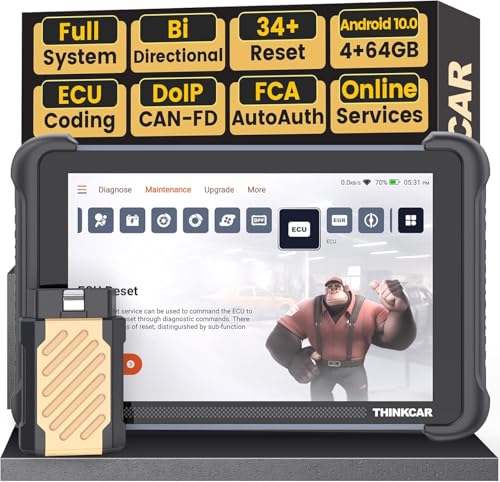
- [Notice] When you receive a used device, it may be a customer return resold by Amazon without inspection. You can exchange it for a new one through Amazon. As this situation is unavoidable, we sincerely apologize. For any issues, contacting us via Amazon's "Messages" is the best way. THINKSCAN 689BT Bidirectional Scan Tool Can Be Used Immediately After It is Turned On, Without Complicated Registration Process, Which is More Convenient & Quick.
- Full Bi-Directional Control & 3000+ Active Tests: Take control and test components like actuators, fuel injectors, relays, and cooling fans in real time. You’ll quickly see if the problem is in the part itself or the control module — saving you hours of guesswork and frustrating trial-and-error.
- Advanced ECU Coding Capabilities: Handle module matching and hidden feature activation with confidence. When you replace an ECU or want to customize settings, this obd2 scanner diagnostic bi directional tool gives you the professional-level capabilities you need without the dealership price tag.
- 34+ Useful Reset and Maintenance Functions: Complete everyday service tasks smoothly with a wide range of helpful reset and maintenance functions. Whether you’re keeping up with regular upkeep or tackling a specific job, this scanner makes maintenance simpler and less stressful for both DIYers and pros.
- Comprehensive Full System Diagnostics: Diagnose every major system — Engine, Transmission
 , ABS, SRS, TPMS, and more — all in one place. Finally stop wondering if you’re missing something important; get the full picture and clear codes with ease.
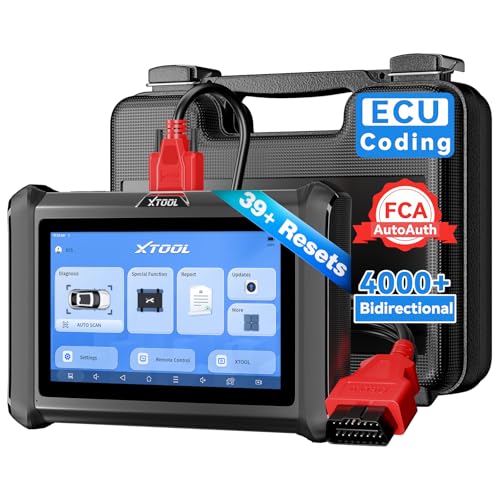
- Top Reasons to Choose the D7S OBD2 Scanner: XTOOL D7S car scan tool, an upgrade of XTOOL D7, offers comprehensive features for automotive technicians, workshops, and DIY enthusiasts 1. Upgraded Hardware: 2+64GB memory, rear camera, intuitive interface, foldable bracket 2. Complete Diagnostics: FCA Autoauth, OE-level all system scan, 39+ maintenance services, 4K+ bidirectional, CANFD/DoIP protocol 3. Advanced Capabilities: ECU coding, PMI functions 4. Wide Compatibility: Support 10,000+ models, covering 99% vehicle brands 5. Multi-language: Available in 22+ languages, No IP Restrictions 6. 3-Year Updates: Save 300 bucks on software updates for the latest features and optimizations
- 2026 Upgraded D7S Car Scanner Features: The newly 2026 D7S V2.0 scanner for car brings exciting features for advanced vehicle diagnostics and enhanced user experience 1. FCA AutoAuth: Now supports FCA SGW module for Chrysler, for Jeep, for Dodge (2018+), for Fiat (2017+), enabling faster vehicle communication without gateway restrictions 2. PMI (Offline ECU Programming): Allows for Ford, for Lincoln, and for Mazda ECU programming for new modules 3. Optimized Diagnostic Report 2.0: Personalized reports with logos and customer info for auto shops. Note: Compatibility varies by cars, please check before order
- Cost-effective ECU Coding Scan Tool for Specific Brands: Enhance your vehicle's performance with XTOOL D7S! This obd2 scanner all systems bidirectional offers advanced capabilities at an affordable price, supports online for BMW, for Benz and offline for BENZ, for MIT, along with PMI functions for Ford, for Mazda, and for Lincoln. Ideal for technicians and DIY enthusiasts, this automotive scanner diagnostic tool optimizes vehicle performance and enhances the driving experience. Note: Not for all cars and modules, please send car VIN to check the compatibility before purchase
- OE All System Diagnostic & 8 Pids Graphing: XTOOL D7S is a comprehensive all system bi directional obd2 scanner that delivers dealer-level diagnostics, completely controlling over your vehicle’s performance and health. This automotive scan tool can read and clear DTCs, view live data and ECU information, retrieve freeze frames, and perform active tests and full obd2 functions. This bi-directional scan tool can can identify your vehicle's make, model, and year information with just one click and show up to 8 PIDs live data with options for CSV viewing, playback, and recording for in-depth analysis. It is easy-to-use for both professionals and beginners, helping pinpoint issues efficiently
- 3 Years Software Update, Value for Money: With 3 years of software updates and 22+ languages(no IP restrictions), XTOOL D7S auto scanner code scanner ensures ongoing compatibility for the latest car models and improved diagnostic functions. This all system vehicle diagnostic scanner comes with a 30-day return policy and a 24-month repair for dependable performance. XTOOL are dedicated to your satisfaction, so enjoy seamless support and lifetime expert assistance. Should you encounter any issues or concerns, don’t hesitate to reach out XTOOL. D7S with newest update with 22 languages freely transfer without authorization, check details from setting-language or from XTOOL
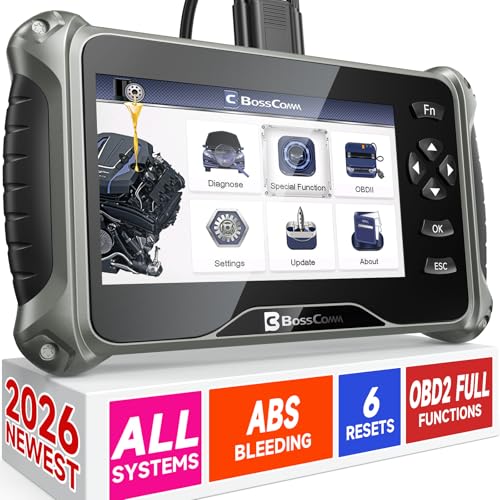
- 【✅Compared to BOSSCOMM IF742, IF745 Offers Full-System Diagnostics】The BOSSCOMM IF745 car diagnostic scanner is an upgraded model of IF742. In addition to supporting all OBD2 Code Reader functions and 6 reset options (ABS/EPB/SAS/BMS/Oil/Throttle), it expands diagnostics from 4 systems (Check Engine/ABS/SRS/Transmission) to vehicle All systems, including Steering, Suspension, and Body Electronics. This provides deeper, more comprehensive diagnostic capabilities.
- 【✨6 Essential Resets: ABS Bleeding, Oil, EPB, SAS, Throttle, BMS】The BOSSCOMM IF745 obd2 scanner diagnostic tool swiftly purges air from brake lines to restore braking sensitivity, fine-tunes maintenance cycles to eliminate false alerts, resolves parking brake issues with one-click control, recalibrates steering sensors for stability, optimizes engine idling/acceleration for smoother performance, and deeply resets battery systems to extend lifespan and range via precise parameter adjustments.❗NOTE: Does NOT support bidirectional control, coding, or programming.
- 【✨Deep Diagnostics for All Vehicle System Modules】Beyond code reading/clearing and ECU information retrieval, our all-in-one data stream feature lets you inspect all current fault codes and their locations across the vehicle’s systems. This vehicle code reader helps you turn off dashboard warning lights and perform a comprehensive self-check of your car at home—no more back-and-forth trips to the repair shop or hefty inspection fees.
- 【✨10 OBD2 Functions】The BOSSCOMM IF745 scan tool’s DTC Lookup instantly translates fault codes into user-friendly explanations, its I/M Readiness feature streamlines emissions testing with a single tap, and Freeze Frame lets you pinpoint the exact moment of a fault for in-depth root-cause diagnosis. Combined with a live data dashboard and advanced diagnostics (O2S, OBMon, EVAP), it delivers comprehensive insights for confident troubleshooting.
- 【✨10,000+ Car Models, AutoVIN, 13 Languages】The BOSSCOMM IF745 vehicle scanner diagnostic tool covers 73+ global car brands and offers support in 13 languages, making it perfect for DIYers, auto mechanics, or as a thoughtful gift. With a single-click AutoVIN feature, it instantly retrieves vehicle serial numbers, streamlining diagnostics for users globally. This adaptable tool balances user-friendliness with precision, catering to both personal and professional requirements.✅Unsure about compatibility? Compatibility will vary on vehicles' model and year, pls reach us via 📧 [email protected] 📧 before purchase.
This product presentation was made with AAWP plugin.