
NHTSA ID Number: 10114313
Manufacturer Communication Number: 13-05-22-001C
TSB/Document Date: 2017-08-15
Summary
This informational bulletin is to inform dealers of an improved service strategy to aid in the replacement of hydraulic brake pipes, Customer Care and Aftersales (CCA) has released pre-formed and pre-flared hydraulic brake pipe kits.
If the PDF is very large, it may not load in the preview below.
Some older TSBs had multiple PDFs — visit the NHTSA Website to view all PDFs.
If the TSB PDF does not show, download or view it on the NHTSA Website.
Click on the (+) Plus Sign
Then Click on Associated Document(s)

- Mixes well with conventional fluids
- Low-moisture formula provides excellent vapor lock...
- Ideal for hydraulic and disc brakes


- Provides an extra margin of safety in extreme braking...
- Mix of polyglycol ethers ensures hot brake-system operation...
- Excellent for ABS, disc and drum brake systems
- Delivers braking power when needed by avoiding a spongy...
- Both wet and dry boiling points exceed the minimum...
This product presentation was made with AAWP plugin.
Search NHTSA Database for Recalls
Search NHTSA Database for Vehicle Investigations
View Latest Vehicle Investigations
Search NHTSA Database for Vehicle Complaints
View Latest Vehicle Complaints
TSB/Document ID: 13-05-22-001C
Replacement Service Bulletin Number:
MFR Communication Date: 2014-10-24
MFR Internal Campaign ID/Software Version:
Communication Type: Service Bulletin/Repair Instructions
NHTSA Components: SERVICE BRAKES, HYDRAULIC
MFR Component System:
MFR Component Subsystem:
Previous TSB | Next TSB |
File in Section:
Service Bulletin
Bulletin No.:
Date:
05 - Brakes
13-05-22-001C
October, 2014
INFORMATION
Subject:
Pre-Formed and Pre-Flared Hydraulic Brake Pipe Kits Now Available for Service
Models:
2000-2006 Cadillac Escalade Models
2000-2006 Chevrolet Avalanche, Suburban, Tahoe
1999-2007 Chevrolet Silverado
2000-2006 GMC Yukon Models
1999-2007 GMC Sierra
This bulletin has been revised to include a suggested labor time at the end of the bulletin.
Please discard Corporate Bulletin Number 13-05-22-001B.
The purpose of this bulletin is to inform dealers of an improved service strategy to aid in the replacement of hydraulic
brake pipes for the above listed vehicles. Customer Care and Aftersales (CCA) has released pre-formed and
pre-flared hydraulic brake pipe kits.
These kits can be used anytime replacement of the entire brake pipe assemblies is required. These kits include all
the pre-formed and pre-flared brake pipes needed when replacing the entire brake pipe assembly, except the rear
axle crossover pipe. If the rear axle crossover pipe requires replacement, refer to the appropriate parts catalog for
ordering and the Brake Pipe Replacement procedure in SI for installation instructions. The following procedure
describes how to install these kits.
Replacement Procedure (Pickup and Cab Chassis)
Removal
Warning: Brake fluid may irritate eyes and skin. In case of contact, take the following actions:
• Eye contact—rinse thoroughly with water.
• Skin contact—wash with soap and water.
• If ingested—consult a physician immediately.
Caution: Avoid spilling brake fluid onto painted surfaces, electrical connections, wiring, or cables. Brake fluid will
damage painted surfaces and cause corrosion to electrical components. If any brake fluid comes in contact with
painted surfaces, immediately flush the area with water. If any brake fluid comes in contact with electrical
connections, wiring, or cables, use a clean shop cloth to wipe away the fluid.
Caution: Care should be taken to ensure that dirt, water, grease, or other contaminants do not enter the new brake
pipes and threaded end fittings when the pipes are being installed into the vehicle. Use tape or other appropriate
methods to cover the threaded end fittings and the ends of the pipes to prevent dirt, water, grease, or other
contaminants from entering the pipes. Remove all protective measures before connecting the end fittings to the
master cylinder, brake pressure proportioning valve (where equipped), brake pressure modulator valve (BPMV), or
flexible brake hoses.
Caution: Cleanliness is important for the proper function of the hydraulic brake system. Clean all dirt, water, rust,
etc from the areas adjacent to each brake pipe tube nut before removing the brake pipe tube nuts. Take care to
ensure that no contaminants enter any hydraulic fittings or openings during removal or installation of the brake pipes.
Caution: Before removing any brake pipes from the master cylinder, ABS module (BPMV), and the brake pressure
proportioning valve (where equipped) identify the port locations. On the BPMV identify the port location for each
hydraulic component (e.g., Master Cylinder Primary, Master Cylinder Secondary, LF corner, RF corner, LR corner,
RR corner, Rear Brake). On the brake pressure proportioning valve identify the port locations for each hydraulic
component (e.g. master cylinder primary inlet, master cylinder primary outlet, master cylinder secondary inlet,
master cylinder secondary outlet, pre-charge pump). When installing the replacement pipes, ensure that the
replacement pipes are installed in the correct port locations on the master cylinder, BPMV, and brake pressure
proportioning valve, where equipped. If the pipes are not installed in the correct port locations on all the hydraulic
components, the brake system including the ABS system and/or TCS/VSES Stabiltrak system (where equipped) will
not operate correctly and may result in damage to the hydraulic brake components.
Note: This procedure does not comprehend specific vehicle models or brake system configurations. The
illustrations may not exactly reflect the vehicle being repaired. Some LD pickups and LD SUVs may be equipped
with a brake pressure combination valve and a brake pressure modulator valve pre-charge pump. The brake pipes
attached to these components should be removed and replaced with the replacement pipes provided in the
service kit.
Note: This procedure is not intended for the repair or replacement of a single damaged brake pipe. This procedure
is for the replacement of the entire brake pipe assemblies with pre-formed and pre-flared components.
Note: Remove the brake pipes from the existing routing clips carefully to avoid damaging the clips as all the clips
will be re-used. The new brake pipes will be reinstalled into the existing clips. After installing the new brake pipes,
inspect the routing of the brake pipes to ensure that the new brake pipes do not contact or rub on any frame, body, or
chassis components. Carefully bend the pipes to increase clearance as required.
Note: The brake pipes in these kits are not an exact duplicate of the pipes currently installed on the vehicle. These
pipes have a nylon coating to provide better corrosion protection and may have slightly different shapes and bends
and may not exactly match the brake pipes being replaced. Some original equipment pipes may use flexible hose
sections near the master cylinder or brake pressure proportioning valve that attaches to the master cylinder to brake
booster mounting studs. The replacement pipes in this kit will not use the flexible hose sections. The replacement
pipes have been designed to fit each vehicle application. Because of the nylon coating on the outside of the brake
pipes, the outside diameter of the pipe is slightly larger than the original pipes, Extra effort may be required to insert
the pipes into the existing mounting clips. It is recommended to finger start all the threaded end fittings into the
master cylinder, brake pressure proportioning valve, brake pressure modulation valve, and flexible brake hoses
before performing the final tightening and torque of each fitting.
Note: The brake pipes in these kits may have additional large radius shipping bends to allow the pipes to fit within
the cardboard box. Those pipes with additional shipping bends will have tags on either side of each shipping bend.
Carefully straighten the section of pipe between the tags to remove the shipping bend. Take care not to kink or
damage the brake pipes. If a brake pipe becomes kinked or damaged while removing the shipping bends, it must be
repaired or replaced before installation into the vehicle. Take care not to cut, nick, abrade or otherwise damage the
nylon coating on the brake pipes during installation.
Note: For Chassis Cab models, due to the installation and mounting of the aftermarket equipment/body on the rear
of the chassis (i.e. flatbed, stake bed, box van, dump body, etc) by the second stage manufacturer or vehicle upfitter,
it may be difficult or prohibitive to remove the aftermarket body to enable replacement of the OEM rear brake pipe.
Each vehicle will need to be assessed individually, however, it may be preferable to hand bend a service
replacement brake pipe using GM P/N 88936298 PIPE, BRK (STEEL) (1/4" X 16 FT ROLL) nylon coated bulk tubing
available separately from GM dealers, using GM P/N 15103241 Fitting, BRK PIPE (1/2-20-2A THD) (1/4 TUBE STL)
to attach to the ABS module (BPMV) and GM P/N 11609443 Tube Nut (7/16-24 UNS-2A THD) to attach to the rear
axle jounce hose. These tube nuts are designed to properly fit over the nylon coated brake tubing. The tube nuts can
also be removed from the replacement rear pipe included in the brake pipe service kit and installed on the hand bent
service replacement pipe. Route the hand bent service replacement pipe from the ABS module (BPMV) to the rear
axle jounce hose ensuring adequate clearance is maintained between the pipe and surrounding components to
ensure that the pipe is not damaged in service. Attach the hand bent service replacement brake pipe securely to the
chassis using brake pipe clips, rubber coated P-clips, or other suitable methods. The maximum distance between
attachment points or clips should not exceed 457 mm (18"). If a brake pipe has a directional change (bend) of 30
degrees or more, a clip needs to be located as close as possible to the bend.
3339728
1. Disconnect the master cylinder secondary (1) and primary (2) brake pipe fittings from the master cylinder.
2. Plug the master cylinder outlet ports to prevent brake fluid loss and contamination.
3339729
3. For vehicles equipped with a combination valve, disconnect the master cylinder secondary (1) and
primary (2) brake pipe fittings from the combination valve.
4. Plug the combination valve inlet ports to prevent brake fluid loss and contamination.
3339730
5. For vehicles equipped with a combination valve, disconnect the secondary (1) and primary (2) brake pipe fittings
from the combination valve.
6. Raise and support the vehicle. Refer to Lifting and Jacking the Vehicle in SI.
7. Remove the front and rear tire and wheel assemblies. Refer to Tire and Wheel Removal and Installation in SI.
8. Apply ACDelco Rust Penetrant and Inhibitor 10-4020 (GM P/N 88862628) or equivalent penetrating lubricant to
the bleeder screws of the following components:
• Front brake calipers
• Rear brake calipers
9. Apply ACDelco Rust Penetrant and Inhibitor 10-4020 (GM P/N 88862628) or equivalent penetrating lubricant to
the brake pipe fitting tube nuts at the following locations:
• Front brake hoses
• Brake pressure modulator valve (BPMV)
• Rear brake hose(s)
10. Remove the left and right front wheelhouse panels. Refer to Wheelhouse Panel Replacement in SI.
11. Remove the engine protection shield, if equipped. Refer to Engine Protection Shield Replacement in SI.
12. Reference mark the parking brake front cable adjuster nut at the equalizer and disconnect the parking brake
front cable. Refer to Parking Brake Front Cable Replacement in SI.
13. Disconnect any wiring ground harnesses from the body to the frame. Refer to Power and Grounding Component
Views in SI
14. Remove the 3 left side body mount bolts and the core support mount bolt. Refer to Drivetrain and Front
Suspension Frame Insulator Replacement in SI.
Note: Only raise the body enough to gain hand access to the brake pipe routing clips. Pay careful attention to avoid
stressing hoses and wiring harnesses.
15. Carefully raise the left side of the body from inboard of the frame rails approximately 51 mm (2 in).
Note: Place the support blocks inboard of the frame rails and as close to the body mounting points as possible to
evenly distribute the weight of the vehicle body.
16. Place blocks or supports inboard of the frame side rails to support the body in at least 3 locations.
17. Remove the left side pickup box bolts and loosen, but do not remove, the right side pickup box bolts. Refer to
Pickup Box Replacement in SI.
Note: Only raise the pickup box enough to gain hand access to the brake pipe routing clips. Pay careful attention to
avoid stressing hoses and wiring harnesses.
18. Carefully raise the left side of the pickup box approximately 51 mm (2 in).
Note: Place the support blocks as close to the pickup box mounting points as possible to evenly distribute the
weight of the vehicle body.
19. Place blocks or supports inboard of the frame side rails to support the pickup box in at least 3 locations.
20. Release the body wiring harness conduit from the brake pipe retainers on the left side of the vehicle.
21. Position and secure the wiring harness aside.
2727389
22. Using side cutters, cut the right front brake pipe as close as possible to the brake pipe fitting (1) at the
brake hose.
23. Using a 6 point socket, remove and discard the right front brake pipe fitting tube nut.
24. Disconnect the left front wheel speed sensor electrical connector and remove the sensor harness retaining clips
from the top of the left frame rail.
2728189
25. Release the right front brake pipe from the clips (1) on the right frame rail.
2728198
26. Release the right front brake pipe from the front frame crossmember clips (1).
2728205
27. Release the right front brake pipe from the left front frame rail clips (1).
2728215
28. Using side cutters, cut the left front brake pipe as close as possible to the brake pipe fitting (1) at the brake hose.
29. Using a 6 point socket, remove and discard the left front brake pipe fitting tube nut.
30. Release the front brake pipes assembly from the left frame rail clip (2).
2728220
31. Release the front brake pipes assembly from the left frame rail clips (1).
32. Clean the area surrounding the brake pipe fittings on the BPMV thoroughly to remove all dirt and debris.
3339723
Note: Due to the similarity of the brake pipe fitting tube nuts, it is imperative to identify the individual brake pipe
locations on the BPMV to ensure correct assembly.
33. Identify the brake pipe port locations at the BPMV prior to disconnecting the brake pipe fittings.
2728225
34. Using side cutters, cut the left front (1) and right front (2) brake pipes as close as possible to the brake pipe
fittings at the BPMV.
35. Using a 6 point socket, remove and discard the front brake pipe fitting tube nuts.
2728241
36. Using side cutters, cut the master cylinder primary (1) and secondary (2) brake pipes as close as possible to the
brake pipe fitting at the BPMV.
37. Using a 6 point socket, remove and discard the brake pipe fitting tube nuts.
38. Carefully remove the brake pipe routing clips from the front brake pipe assembly.
39. Maneuver the front brake pipes one at a time and remove the brake pipes from the vehicle.
2728234
40. Using side cutters, cut the rear brake pipe (1) as close as possible to the brake pipe fitting at the BPMV.
41. Using a 6 point socket, remove and discard the brake pipe fitting tube nut.
2728250
42. Release the rear brake pipe from the left frame rail clips (1).
2728259
43. Release the rear brake pipe from the left frame rail clips (1).
2728497
44. Using side cutters, cut the rear brake pipe (1) as close as possible to the brake pipe fitting at the rear
brake hose.
45. Using a 6 point socket, remove and discard the rear brake pipe fitting tube nut.
46. Remove the rear brake pipe from the vehicle.
Installation
Caution: Use the correct fastener in the correct location. Replacement fasteners must be the correct part number
for that application. Do not use paints, lubricants, or corrosion inhibitors on fasteners, or fastener joint surfaces,
unless specified. These coatings affect fastener torque and joint clamping force and may damage the fastener. Use
the correct tightening sequence and specifications when installing fasteners in order to avoid damage to parts and
systems. When using fasteners that are threaded directly into plastic, use extreme care not to strip the mating plastic
part(s). Use hand tools only, and do not use any kind of impact or power tools. Fastener should be hand tightened,
fully seated, and not stripped.
2728497
1. Install the rear brake pipe.
2. Install the rear brake pipe fitting tube nut (1).
Tighten
Tighten the nut to 25 Y (18 lb ft)
2728259
3. Install the rear brake pipe to the left frame rail clips (1).
2728250
4. Install the rear brake pipe to the left frame rail clips (1).
3339723
Note: Due to the similarity of the brake pipe fitting tube nuts, it is imperative to identify the individual brake pipe
locations on the BPMV to ensure correct assembly.
5. Connect the brake pipe fittings to the BPMV port locations identified during removal.
2728225
6. Install the right front brake pipe fitting tube nut (2).
Tighten
Tighten the nut to 25 Y (18 lb ft)
7. Install the left front brake pipe fitting tube nut (1).
Tighten
Tighten the nut to 25 Y (18 lb ft)
2728234
8. Install the rear brake pipe fitting tube nut (1).
Tighten
Tighten the nut to 25 Y (18 lb ft)
Note: Install the brake pipes to the routing clips and retaining clips after all the brake pipes are fitted to the vehicle.
9. Install the master cylinder primary and secondary brake pipe assembly to the vehicle.
2728241
10. Install the master cylinder primary brake pipe fitting tube nut (1).
Tighten
Tighten the nut to 25 Y (18 lb ft)
11. Install the master cylinder secondary brake pipe fitting tube nut (2).
Tighten
Tighten the nut to 25 Y (18 lb ft)
2728220
12. Install the front brake pipes assembly to the left frame rail clips (1).
2728215
13. Install the left front brake pipe fitting tube nut (1).
Tighten
Tighten the nut to 25 Y (18 lb ft)
14. Install the front brake pipes assembly to the left frame rail clip (2).
2728205
15. Install the right front brake pipe to the left front frame rail clips (1).
2728198
16. Install the right front brake pipe to the front frame crossmember clips (1).
2728189
17. Install the right front brake pipe to the clips (1) on the right frame rail.
2727389
18. Install the right front brake pipe fitting tube nut (1).
Tighten
Tighten the nut to 25 Y (18 lb ft)
19. Reposition the body wiring harness into the brake pipe retaining clips.
20. Remove the blocks, lower the body and install the 3 left side body mount bolts. Refer to Drivetrain and Front
Suspension Frame Insulator Replacement in SI.
21. Remove the blocks, lower the pickup box and install the pickup box bolts. Refer to Pickup Box Replacement
in SI.
22. Inspect the pickup box for correct alignment.
23. Connect any wiring ground harnesses from the body to the frame. Refer to Power and Grounding Component
Views in SI.
24. Connect the parking brake front cable. Refer to Parking Brake Front Cable Replacement in SI.
25. Connect the left front wheel speed sensor electrical connector and install the sensor harness retaining clips to
the top of the left frame rail.
26. Install the engine protection shield, if equipped. Refer to Engine Protection Shield Replacement in SI.
27. Install the left and right front wheelhouse panels. Refer to Wheelhouse Panel Replacement in SI.
28. Lower the vehicle enough to access the combination valve and master cylinder brake pipe fittings.
3339730
29. For vehicles equipped with a combination valve, connect the secondary (1) and primary (2) brake pipe fittings to
the combination valve.
Tighten
Tighten the brake pipe fittings to 25 Y (18 lb ft).
3339729
30. For vehicles equipped with a combination valve, connect the master cylinder secondary (1) and
primary (2) brake pipe fittings to the combination valve.
Tighten
Tighten the brake pipe fittings to 25 Y (18 lb ft).
3339728
31. Connect the master cylinder secondary (1) and primary (2) brake pipe fittings to the master cylinder.
Tighten
Tighten the nut to 25 Y (18 lb ft)
32. Bleed the hydraulic brake system. Refer to Hydraulic Brake System Bleeding in SI.
33. Install the front and rear tire and wheel assemblies. Refer to Tire and Wheel Removal and Installation in SI.
Replacement Procedure (Utilities)
Removal
Warning: Brake fluid may irritate eyes and skin. In case of contact, take the following actions:
• Eye contact—rinse thoroughly with water.
• Skin contact—wash with soap and water.
• If ingested—consult a physician immediately.
Caution: Avoid spilling brake fluid onto painted surfaces, electrical connections, wiring, or cables. Brake fluid will
damage painted surfaces and cause corrosion to electrical components. If any brake fluid comes in contact with
painted surfaces, immediately flush the area with water. If any brake fluid comes in contact with electrical
connections, wiring, or cables, use a clean shop cloth to wipe away the fluid.
Caution: Care should be taken to ensure that dirt, water, grease, or other contaminants do not enter the new brake
pipes and threaded end fittings when the pipes are being installed into the vehicle. Use tape or other appropriate
methods to cover the threaded end fittings and the ends of the pipes to prevent dirt, water, grease, or other
contaminants from entering the pipes. Remove all protective measures before connecting the end fittings to the
master cylinder, brake pressure proportioning valve (where equipped), brake pressure modulator valve (BPMV), or
flexible brake hoses.
Caution: Cleanliness is important for the proper function of the hydraulic brake system. Clean all dirt, water, rust,
etc from the areas adjacent to each brake pipe tube nut before removing the brake pipe tube nuts. Take care to
ensure that no contaminants enter any hydraulic fittings or openings during removal or installation of the brake pipes.
Caution: Before removing any brake pipes from the master cylinder, ABS module (BPMV), and the brake pressure
proportioning valve (where equipped) identify the port locations. On the BPMV identify the port location for each
hydraulic component (e.g., Master Cylinder Primary, Master Cylinder Secondary, LF corner, RF corner, LR corner,
RR corner, Rear Brake). On the brake pressure proportioning valve identify the port locations for each hydraulic
component (e.g. master cylinder primary inlet, master cylinder primary outlet, master cylinder secondary inlet,
master cylinder secondary outlet, pre-charge pump). When installing the replacement pipes, ensure that the
replacement pipes are installed in the correct port locations on the master cylinder, BPMV, and brake pressure
proportioning valve, where equipped. If the pipes are not installed in the correct port locations on all the hydraulic
components, the brake system including the ABS system and/or TCS/VSES Stabiltrak system (where equipped) will
not operate correctly and may result in damage to the hydraulic brake components.
Note: This procedure does not comprehend specific vehicle models or brake system configurations. The
illustrations may not exactly reflect the vehicle being repaired. Some LD pickups and LD SUVs may be equipped
with a brake pressure combination valve and a brake pressure modulator valve pre-charge pump. The brake pipes
attached to these components should be removed and replaced with the replacement pipes provided in the
service kit.
Note: This procedure is not intended for the repair or replacement of a single damaged brake pipe. This procedure
is for the replacement of the entire brake pipe assemblies with pre-formed and pre-flared components.
Note: Remove the brake pipes from the existing routing clips carefully to avoid damaging the clips as all the clips
will be re-used. The new brake pipes will be reinstalled into the existing clips. After installing the new brake pipes,
inspect the routing of the brake pipes to ensure that the new brake pipes do not contact or rub on any frame, body, or
chassis components. Carefully bend the pipes to increase clearance as required.
Note: The brake pipes in these kits are not an exact duplicate of the pipes currently installed on the vehicle. These
pipes have a nylon coating to provide better corrosion protection and may have slightly different shapes and bends
and may not exactly match the brake pipes being replaced. Some original equipment pipes may use flexible hose
sections near the master cylinder or brake pressure proportioning valve that attaches to the master cylinder to brake
booster mounting studs. The replacement pipes in this kit will not use the flexible hose sections. The replacement
pipes have been designed to fit each vehicle application. Because of the nylon coating on the outside of the brake
pipes, the outside diameter of the pipe is slightly larger than the original pipes, Extra effort may be required to insert
the pipes into the existing mounting clips. It is recommended to finger start all the threaded end fittings into the
master cylinder, brake pressure proportioning valve, brake pressure modulation valve, and flexible brake hoses
before performing the final tightening and torque of each fitting.
Note: The brake pipes in these kits may have additional large radius shipping bends to allow the pipes to fit within
the cardboard box. Those pipes with additional shipping bends will have tags on either side of each shipping bend.
Carefully straighten the section of pipe between the tags to remove the shipping bend. Take care not to kink or
damage the brake pipes. If a brake pipe becomes kinked or damaged while removing the shipping bends, it must be
repaired or replaced before installation into the vehicle. Take care not to cut, nick, abrade or otherwise damage the
nylon coating on the brake pipes during installation.
3339728
1. Disconnect the master cylinder secondary (1) and primary (2) brake pipe fittings from the master cylinder.
2. Plug the master cylinder outlet ports to prevent brake fluid loss and contamination.
3339729
3. Disconnect the master cylinder secondary (1) and primary (2) brake pipe fittings from the combination valve.
4. Plug the combination valve inlet ports to prevent brake fluid loss and contamination.
3339730
5. Disconnect the secondary (1) and primary (2) brake pipe fittings from the combination valve.
6. Plug the combination valve outlet ports to prevent brake fluid loss and contamination.
3339731
7. If equipped, disconnect the BPMV front brake pipe fitting (1) from the combination valve.
8. Plug the combination valve port to prevent brake fluid loss and contamination.
3339732
9. If equipped, disconnect the BPMV front brake pipe fitting (1) from the brake pressure modulator valve (BPMV)
pre-charge pump.
10. Plug the BPMV pre-charge pump port to prevent brake fluid loss and contamination.
11. Lower the spare tire and wheel assembly.
12. Raise and support the vehicle. Refer to Lifting and Jacking the Vehicle in SI.
13. Remove the front and rear tire and wheel assemblies. Refer to Tire and Wheel Removal and Installation in SI.
14. Apply ACDelco Rust Penetrant and Inhibitor 10-4020 (GM P/N 88862628 ) or equivalent penetrating lubricant to
the bleeder screws of the following components:
• Front brake calipers
• Rear brake calipers
15. Apply ACDelco Rust Penetrant and Inhibitor 10-4020 (GM P/N 88862628 ) or equivalent penetrating lubricant to
the brake pipe fitting tube nuts at the following locations:
• Front brake hoses
• Brake pressure modulator valve (BPMV)
• Rear brake hose(s)
16. Remove the left and right front wheelhouse panels. Refer to Wheelhouse Panel Replacement in SI.
17. Remove the engine shield, if equipped. Refer to Engine Shield Replacement in SI.
18. Reference mark the parking brake front cable adjuster nut at the equalizer and disconnect the parking brake
front cable. Refer to Parking Brake Front Cable Replacement in SI.
19. Disconnect any wiring ground harnesses from the body to the frame. Refer to Power and Grounding Component
Views in SI.
20. Remove the 6 left side body mount bolts and the core support mount bolt. Refer to Drivetrain and Front
Suspension Frame Insulator Replacement in SI.
Note: Only raise the body enough to gain hand access to the brake pipe routing clips. Pay careful attention to avoid
stressing hoses and wiring harnesses.
21. Carefully raise the left side of the body from inboard of the frame rails approximately 51 mm (2 in).
Note: Place the support blocks inboard of the frame rails and as close to the body mounting points as possible to
evenly distribute the weight of the vehicle body.
22. Place blocks or supports inboard of the frame side rails to support the body in at least 3 locations.
23. Release the body wiring harness conduit from the brake pipe retainers on the left side of the vehicle.
24. Position and secure the wiring harness aside.
2727389
25. Using side cutters, cut the right front brake pipe as close as possible to the brake pipe fitting (1) at the
brake hose.
26. Using a 6 point socket, remove and discard the right front brake pipe fitting tube nut.
27. Disconnect the left front wheel speed sensor electrical connector and remove the sensor harness retaining clips
from the top of the left frame rail.
2728189
28. Release the right front brake pipe from the clips (1) on the right frame rail.
2728198
29. Release the right front brake pipe from the front frame crossmember clips (1).
2728205
30. Release the right front brake pipe from the left front frame rail clips (1).
2728215
31. Using side cutters, cut the left front brake pipe as close as possible to the brake pipe fitting (1) at the brake hose.
32. Using a 6 point socket, remove and discard the left front brake pipe fitting tube nut.
33. Release the front brake pipes assembly from the left frame rail clip (2).
2973737
34. Release the front brake pipes assembly from the left frame rail clips (1).
35. Clean the area surrounding the brake pipe fittings on the BPMV thoroughly to remove all dirt and debris.
3339723
Note: Due to the similarity of the brake pipe fitting tube nuts, it is imperative to identify the individual brake pipe
locations on the BPMV to ensure correct assembly.
36. For vehicles not equipped with RPO JL4, identify the brake pipe port locations at the BPMV prior to
disconnecting the brake pipe fittings.
3339725
Note: Due to the similarity of the brake pipe fitting tube nuts, it is imperative to identify the individual brake pipe
locations on the BPMV to ensure correct assembly.
37. For model year 2002 vehicles equipped with RPO JL4, identify the brake pipe port locations at the BPMV prior to
disconnecting the brake pipe fittings.
3339724
Note: Due to the similarity of the brake pipe fitting tube nuts, it is imperative to identify the individual brake pipe
locations on the BPMV to ensure correct assembly.
38. For model year 2003-2008 vehicles equipped with RPO JL4, identify the brake pipe port locations at the BPMV
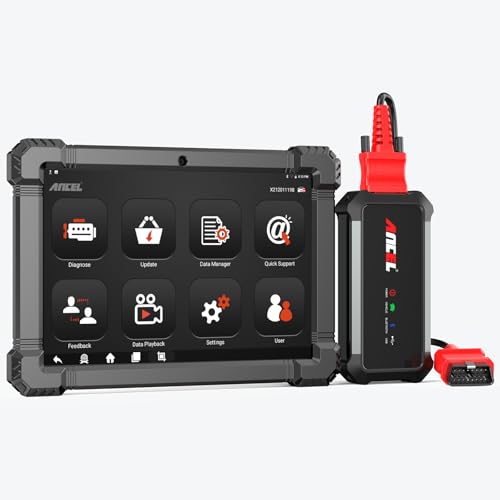
- 🔥🔥🔥2026 New Functions Making X7HD the Top Dog - Big Surprise!!! ANCEL X7HD truck scanner 10 major functional advantages .✅>Full HDOBD/OBD2 Function ✅>ALL System Diagnostic ✅>42+ Reset Function ✅>Active Test / Bi-Directional Control✅>ECU Coding✅>Graphing Live Data✅>Wide Compatibility ✅>2 Yrs Free Update✅>Remote Operation✅>Bluetooth 5.0 & Wifi In addition, 8 major hardware advantages: ✅>6000 mAh✅>10.1 inch Tablet✅>2G RAM
 ✅>32G ROM (Expandable to 128GB)✅>Data Record & Replay & Print✅>Android 10.0✅>Bluetooth 5.0 & Wifi✅>14 Languages
 - 🚛OEM DPF Forced Regen & Cylinder Cutout Test & more - ANCEL X7HD diesel scanner diagnostic tool not only supports DPF regeneration, DPF reset, DPF related information reset, DPR state reset, DPD forced regeneration etc, which helps you better solve the exhaust aftertreatment system problems, but also supports activate motor to do exhaust air in ABS Automatically. Moreover, it features TPMS activation, cylinder cut-off and learning functions
- 🚛Advanced ECU Coding & Programming - ANCEL X7HD 10.1inch truck scanner diagnostic tool is equipped with advanced ECU coding, supports Level calibration, Idle speed learning and Adjustment, Camshaft timing control learning, Control unit adaptations, Injector Codes, Read/Write VIN, Road speed limit optional vehicle speed set, etc... PLEASE NOTE that ECU codes are not compatible with all vehicles, please send us your VIN# to check vehicle compatibility
- 🚛42+ Reset Functions & Bidirectional Control - 2026 newest top heavy duty truck scan tool, comes with 42+ special services (ECU, Speed Limit and Idle Reset, Oil Reset, Injector Coding, EPB, ABS, SRS, Suspension, Throttle, etc. and always keep growing), which meet all your various needs for service and maintenance
- 🚛10 Inch All Systems Diesel Scanner & Full HDOBD/OBD2 Modes - ANCEL X7HD diesel truck scan tool supports all systems scan, such as Engine, Brake, Retarder, TECU Transmission, Tachograph, ABS, SRS, TPMS, EPB, SAS, ESP, and other vehicle systems, comes with 10 obd2 service modes: read/erase error codes, Data Stream, I/M Readiness, Vehicle Information, Actuations, DTC Lookup, EVAP, view freeze frame, etc
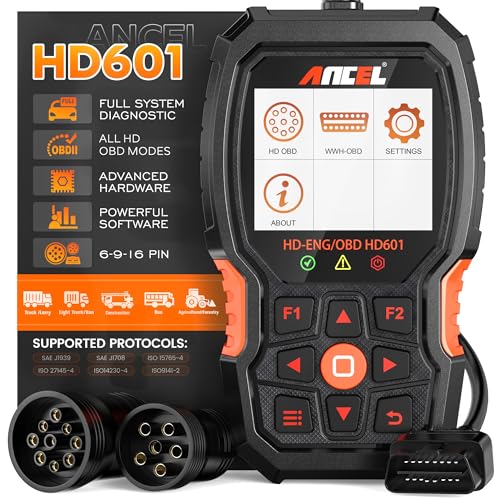
- 【Extensive Compatibility】HD601 heavy duty truck scanner supports 12V & 24V commercial vehicles and all major truck models that comply with standard protocols (SAE J1939, SAE J1708, ISO 14230-4, ISO 15765-4 and ISO 9141-2, ISO 27145-4 and Euro6). Fits for Cummins, Paccar, Detroit, Caterpillar, Freightliner, International, Peterbilt, Ford Heavy Truck, Class 4-Class 8 trucks, etc. It also supports engine diagnosis on most cars, minivans, light trucks and pickups
- 【 Full System Diagnostic】HD601 Diesel Scanner supports all system scans of heavy trucks compliant with standard protocols SAE J1939 & J1708, such as Engine, ABS, Transmission, Braking System, ESP, EPS, Fuel System, etc, It is a great scan tool for Cummins, Caterpillar, Detroit, Caterpillar, Maxxforce, Bendix,Wabash, Wabaco, Haldex, Allison, Eaton heavy trucks, With this truck tool, you can get deep analysis data about the system and do some repairs by yourself, saving much time and money. Note: Only heavy truck vehicles that comply with the above protocol can diagnose the entire system
- 【Enhanced Diesel OBD Scanner】The HD601 Diesel OBD Scanner offers unparalleled diagnostic capabilities for heavy-duty trucks. Beyond code reading, clearing, and live data display, it retrieves vehicle information, freeze frames, and DTCs. With 6, 9, and 16 pin cables, it ensures compatibility with various engines. This scanner's real-world testing prowess ensures comprehensive support for a wide array of heavy-duty truck engines, making it an indispensable tool for truck diagnostics
- 【DTC Library】+【Life Time Free Update】The built-in DTC library allows you to retrieve the codes directly without searching for the definition in the book. Whether you are a professional mechanic or a DIY car owner, HD601 diesel scanner explains the existing problem, makes it easier for you to understand code definitions and helps you locate vehicle faults. Note: This device cannot directly solve the fault. Plus, you get a lifetime free internet updates, so you always have the latest software for diagnostics in English and Spanish languages.
- 【Friendly Design, Easy of Use】This scanner is plug and play, simple and convenient, and very friendly for beginners. With improved buttons for easy menu navigation. The excellent 2.8 inch LCD color screen makes it easy to view the displayed results and gives you a better overview of your car's problem areas and the identified codes. In addition, the processor is super-fast and responds without lagging, providing maximum comfort and efficiency in diagnostic and service work
, Isuzu, Freightliner, Caterpillar, Detroit, Peterbilt, 2-in-1 Code Reader Read & Clear Fault Codes for Truck & Car" rel="nofollow noopener sponsored" target="_blank">
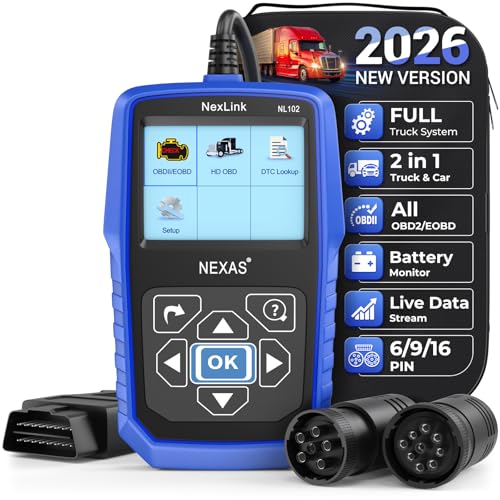
- Why NEXAS NL102 Truck Scan Tool? The NL102 outshines other truck scanner with its extensive diagnostic features. It offers full system diagnostics for major trucks meeting standard protocols, along with complete OBD2 functionality. Beyond read fault codes, clear codes and live data display, it enables vehicle info retrieval, freeze frame capture, and DTC lookup. Equipped with 6-pin, 9-pin, 16-pin connectors, it ensures broad truck compatibility. Plus, enjoy lifetime free updates in English, Spanish, and French, keeping your diagnostic scanner software current.
- Wide Compatibility - Friendly Reminder: To avoid compatibility issues, please confirm with us via Amazon Messages before purchasing. This heavy duty truck scanner is compatible with all heavy-duty trucks and semi that adhere to standard protocols (J1587, J1939, J1708). It covers a wide range of vehicle models, including Cummins, Detroit, Caterpillar, Freightliner, International, Kenworth, John Deere, Peterbilt, Sterling, Mack, Paccar, Western Star, Mercedes-Benz, Volvo, Scania, MAN, Renault, ERF, Foden, Seddon-Atkinson, Iveco, DAF, SISU, STEYR, ISUZU etc. Equipped with 6-pin, 9-pin, and 16-pin connectors for versatile device compatibility, ensuring stable plug-and-play connections.
- Save Hundreds of Money for All Heavy Duty Trucks – This diesel diagnostic scanner supports accurate full-system scans for all heavy-duty trucks that comply with standard protocols (J1587, J1939, and J1708). It can read and clear trouble codes across a range of vehicle systems, including the engine, transmission, instrument panel, drivetrain, brake system, suspension, ABS, ESP, EPS, fuel system, etc. The truck scanner communicates directly with your truck's computer to provide real-time data stream analysis, letting you pinpoint issues with precision. This cuts down on waste from unnecessary part replacements, saving you time and hundreds or even thousands of dollars.
- All OBD2 Functions + Battery Health Monitoring – Unlike many obd2 scanners on the market that only cover partial OBD2 features, ours gives you full OBD2 capability: read & clear codes, live data, freeze frame data, I/M readiness checks, EVAP tests, on-board monitor, O2 sensor tests, vehicle info, and DTC lookup. That means more detailed insights for pros and DIYers alike. The NL102 isn't just a code scanner – it's a battery saver. Regularly check your car's battery health, and catch issues before it dies completely. No more unexpected no-starts in the driveway or on the road. It diagnoses battery condition accurately, helping you avoid costly last-minute repairs.
- Plug and Play & One-click for DTC: NEXAS diesel scanner is user-friendly. It comes with an intuitive screen and easy-to-understand interface, making it accessible even for non-professionals to get started. And the built-in DTC library in the code reader allows you to directly retrieve codes without searching for definitions in books, making it easier to understand the code definitions and solve problems more quickly.
This product presentation was made with AAWP plugin.
Last update on 2026-05-12 / Affiliate links / Images from Amazon Product Advertising API