
NHTSA ID Number: 10078585
Manufacturer Communication Number: SB-16-NA-135
TSB/Document Date: 2016-08-10
Summary
THIS INFORMATIONAL BULLETIN PROVIDES INFORMATION TO INTRODUCE THE 2017 GMC ACADIA TO HELP THE SERVICE DEPARTMENT PERSONNEL BECOME FAMILIAR WITH SOME OF THE VEHICLES NEW FEATURES AND TO DESCRIBE SOME OF THE ACTION THEY WILL NEED TO TAKE TO SERVICE THIS VEHICLE.
sprocket to take up virtually all the tension. This
allows for smoother meshing of the chain links to
the sprocket teeth, the cause of most noise in
chain drive systems. The chain to sprocket tooth
impact is greatly reduced with the inverted tooth
design (also known as a silent chain drive), which
virtually eliminates noise and enhances durability.
Cylinder Block: The Ecotec 2.5L's sand-cast
cylinder block is a superior refinement of previous
Ecotec engine block castings. It is dimensionally
similar with previous variants, while providing
Bulletin No.: 16-NA-135
•
•
•
May, 2016
excellent structural support, as well as enabling
greater control of noise, vibration and harshness.
The main bearing bulkheads, which support the
crank bearing, as well as the cylinder bore walls,
have been significantly strengthened to support
increased engine loads. Also, refinements to the
oil distribution system enable improved oil flow
throughout the engine; and an expansion of the
coolant jacket, along with the use of cast-in-place
bore liners, allows more precise bore roundness
and improves the block’s ability to dissipate heat.
Cylinder Head and Valves: The Ecotec 2.5L has
a 356T6 aluminum cylinder head that is cast with
advanced semi-permanent mold technology. This
provides excellent strength, reduced machining
and optimal port flow. There is no need for heat
treatment to the casting, which reduces residual
stress and, consequently, enhances the engine's
durability. The cylinder head is designed
specifically for direct injection into each
combustion chamber. This is accomplished by
positioning an injector under the intake port of
each cylinder, so it protrudes into the chamber.
The combustion chambers and ports are
optimized for direct injection and high port flow.
The cylinder head includes premium valve seat,
valve guide and valve materials. They were
selected for minimum wear while operating in
more severe conditions associated with direct
injection. These premium materials, along with a
hydraulic lash-adjusting lifter, ensure good
durability without required lash adjustments. The
cylinder head also has integral cast oil passages
that feed a set of internal oil control valves that
activate cam phasers, enabling variable valve
timing.
Direct Injection: Direct injection (DI) moves the
point where fuel feeds into an engine closer to the
point where it ignites, enabling greater combustion
efficiency. It fosters a more complete burn of the
fuel in the air-fuel mixture, and operates at a lower
temperature than conventional port injection. This
allows the mixture to be leaner (less fuel and more
air), so less fuel is required to produce the
equivalent horsepower of a conventional,
port-injection fuel system. DI also delivers reduced
emissions, particularly cold start emissions, by
about 25 percent. The fuel system operates at
pressures as high as 2,250 psi (15,513 kPa)
compared to about 60 psi (414 kPa) in
conventional port-injected engines.
DOHC with Continuously Variable Valve
Timing: Overhead cams are the most direct,
efficient means of operating the valves, while four
valves per cylinder increase airflow in and out of
the engine. This arrangement is integrated on the
Ecotec 2.5L's lightweight aluminum cylinder head.
Both the intake and exhaust cams have
hydraulically operated vane-type phasers that are
managed by a solenoid and directed by the engine
control module (ECM). The phasers turn the
camshaft relative to the drive sprocket, allowing
intake and exhaust valve timing to be adjusted
independently. Cam phasing changes the timing
of valve operation as conditions such as rpm and
•
•
•
•
•
•
Page 7
engine load vary. It allows an outstanding balance
of smooth torque delivery over a broad rpm range,
high specific output and good specific fuel
consumption. Cam phasing also provides another
effective tool for controlling exhaust emissions.
Because it manages valve overlap at optimum
levels, it eliminates the need for a separate
exhaust gas recirculation (EGR) system.
Forged Steel Crankshaft: Engineers selected a
forged steel crankshaft for the 2.5L because,
along with its strength and durability, it is stiffer
than a conventional cast iron crankshaft. That
reduces noise and vibration at mid- and high-rpm
levels, enhancing the engine’s smoothness.
Four-Wheel Drive Oil Pan: The oil filter for the
LCV truck applications is now on the right hand
side of the oil pan. The oil pan has specially
integrated oil passages cast into the pan to
transport oil to and from the oil filter. In addition,
the oil pan features a deep rear sump allowing for
clearance to the front axle.
In-Pan Oil Pump Assembly: Another significant
change from previous Ecotec engines is the
relocation of the oil pump assembly from the front
of the crankshaft to within the oil pan, where it is
driven by the second balance shaft. This reduces
noise from the front cover area, an aluminum
intensive area that radiates noise and provides a
small drag torque to ensure quiet balance shaft
gear operation. Also the oil-sump location
minimizes the potential for pump cavitation noise.
Iron Main Bearing Cap Inserts: Iron inserts are
cast into the 2.5L aluminum cylinder block
bedplate, enhancing the structure at the main
bearings, for greater smoothness and quietness.
The bedplate provides stiffness to the bottom of
the cylinder block and incorporates the main
bearing caps, the components used to secure the
crankshaft within the block. The iron insert
material ensures close main bearing tolerances
over a wide range of engine operating
temperatures, for quieter engine lower end noise.
Isolated Fuel Rail: The isolated fuel rail helps
achieve overall quietness. The fuel rail is a tube
like component that supplies gasoline to the DI
injectors. To reduce the noise associated with this
efficiency enhancing system, the injectors are
suspended and the fuel rail is attached to the
cylinder head with rubber isolated, compression
limiting mounting provisions.
Relocated Balance Shafts: The 2.5L’s balance
shafts which are commonly used in four cylinder
engines to reduce vibration are located in a
cassette in the oil pan. It’s a move from previous
Ecotec engines’ cylinder block-mounted shafts,
which helps reduce noise through three key
design features: a shorter, quieter drive chain,
precision shaft-to-shaft reversing gears and light
drag torque from driving the oil pump. The short
drive chain eliminates the previous long, winding
“bushed” chain that included driving the water
pump. It uses a premium inverted tooth chain
design instead of a conventional roller-type chain,
for quieter performance. The shaft-to-shaft
Page 8
•
•
•
•
•
May, 2016
reversing gear set allows the drive gears of the
shafts to mesh directly, eliminating the need for a
chain to “back drive” the second shaft, which must
rotate in the opposite direction of the first shaft.
The second shaft also drives the oil pump,
providing a light drag torque to preload the
reversing gear teeth for smooth, rattle free and
quiet operation.
Structural Camshaft Cover: As a cast aluminum
part mounted on the very top of the engine
assembly, the camshaft cover can be a significant
source of noise. That’s not the case with the 2.5L,
due to a new, structural cover design that is stiffer
and mounts more rigidly to the engine. It features
increased ribbing and additional attachment bolts
down the center, all of which increase the cover’s
stiffness to help push the engine’s sound
frequency above 2,000 hertz. It also enables
excellent oil sealing for valvetrain oil control
passages integrated within the cover.
Structural Front Cover: Similar to the structural
camshaft cover, the front cover which covers both
the camshaft drive system and balancer drive
systems, was designed with extra ribbing and
secured with extra fasteners, including a new row
of attachments down the middle of the cover. Like
the camshaft cover, the result is a stiffer, more
rigid, quieter cover that contributes to reduced
engine noise.
Two Piece Oil Pan: When it came to the oil pan,
engineers faced a conundrum: Aluminum provides
stiffening structure to an engine, but it radiates
noise. Stamped steel, on the other hand, radiates
less noise, but doesn’t offer the structural benefits
needed for a stiff powertrain assembly. Their
solution was to combine the materials to create a
unique, two piece oil pan that features a stiff
aluminum upper section to support the engine’s
structure, maintaining the Ecotec engine’s
signature full perimeter transmission mounting
surface and a stamped steel lower section to
provide greater overall sound performance.
Two-Stage Thermostat: The coolant
thermostat’s operating point is electronically
controlled to optimize engine temperatures during
different phases of operation to enhance fuel
efficiency. The engine control module monitors
sensors and controls the thermostat based on
mapping that takes into account the wide range of
engine operating conditions, including
temperature and load. The thermostat opens
partially at 194°F (90°C) and fully opens at 221°F
(105°C).
Two-Stage Variable Displacement Oil Pump:
The variable-flow oiling system helps maximize
fuel efficiency. Rather than the linear operation of
a conventional fixed-flow pump, it is accomplished
with a crankshaft-driven oil pump that matches the
oil supply to the engine load. The engine’s
variable-flow pump changes its capacity based on
the engine’s demand for oil. This prevents using
energy to pump oil that is not required for proper
engine operation. An engine oil cooler helps
maintain optimum oil temperatures. It has a heat
exchanger incorporated into the oil filter housing.
•
Bulletin No.: 16-NA-135
Coolant to the heat exchanger is provided by the
engine’s coolant circuit. The design optimizes oil
cooling with a minimal pressure loss. During cold
starting, the system also enables faster heating of
the engine oil for an earlier reduction of internal
engine friction.
Vacuum Pump: A cam driven vacuum pump
ensures the availability of vacuum under all
conditions, especially under boost, when the
engine produces the opposite of vacuum. The
pump is mounted at the rear of the cylinder head
and is driven by the exhaust camshaft via a
flexible coupling.
Engine Specifications
•
•
•
•
•
•
•
•
•
Displacement: 2.5L (150 cubic inches)
Bore x Stroke : 3.46 inches (88.0 mm) x
3.976 inches (101.0 mm)
Compression Ratio: 11.3:1
Horsepower: 194 Horsepower (145 kW) @
6,300 RPM (SAE Certified)
Maximum Engine Speed: 6,850 RPM
Torque: 190 lb-ft (258 Nm) @ 4400 RPM (SAE
Certified)
Valves: 2 intake and 2 exhaust valves per
cylinder
Valve Lifters: Hydraulic roller finger follower
Recommended Fuel: Regular unleaded
3.6L V6 Engine — RPO LGX
The V6 3.6L engine ushers in new benchmarks for
efficiency, refinement and durability. The clean-sheet
engine redesign represents the fourth generation of
GM’s acclaimed DOHC V6 engine family and
incorporates Active Fuel Management (AFM) also
known as cylinder deactivation technology to enhance
fuel economy. The 3.6L also advances performance
and fuel economy by optimizing technologies
introduced on previous generations, including direct
injection (DI) and continuously variable valve
timing (VVT).
Bulletin No.: 16-NA-135
May, 2016
•
4473946
•
4439358
Shown are typical views of the 3.6L V6 Engine.
Engine Component Description and Operation
•
Active Fuel Management System: The Active
Fuel Management System (AFM) consists of the
camshafts, valves, the switching roller finger
followers (SRFF), also known as the valve
switching rocker arm, the dual feed hydraulic lash
adjusters and the oil control valve (OCV) which is
also known as the valve rocker arm oil control
valve.
Depending on engine RPM, the ECM sends a
signal to the OCV commanding it either ON
or OFF.
Page 9
With the AFM system ON, the OCV directs oil to
the dual feed hydraulic lash adjuster unlatching
the switching roller finger followers creating zero
lift and not allowing the valves to open on
cylinders two and five. AFM is active at this time.
With the AFM system OFF, the OCV is not active
and no oil is directed to the dual feed hydraulic
lash adjuster. The switching roller finger followers
operate as normal rocker arms. AFM is inactive at
this time.
Camshaft Drive System: The camshaft drive
system consists of two timing drive chains driven
by the crankshaft which drives the respective
cylinder head's intake and exhaust camshaft
position actuators. Cushioned actuator chain
sprockets have been added contributing to quieter
engine operation. The timing drive chains use
moveable timing drive chain guides and a
hydraulic-actuated tensioner. The tensioner
minimizes timing drive chain noise and provides
accurate valve action by keeping slack out of the
timing drive chains and continuously adjusting for
timing drive chain wear. The tensioner
incorporates a plunger that adjusts out with wear
allowing only a minimal amount of backlash. The
tensioners are sealed to the head or block using a
rubber coated steel gasket. The gasket traps an
adequate oil reserve to ensure quiet start-up.
Camshaft Position Actuator System: The
engine incorporates a camshaft position actuator
for each intake and exhaust camshaft. Camshaft
phasing changes valve timing as engine operating
conditions vary. Dual camshaft phasing allows the
further optimization of performance, fuel economy
and emissions without compromising overall
engine response and driveability. Variable valve
timing also contributes to a reduction in exhaust
emissions. It optimizes exhaust and inlet valve
overlap and eliminates the need for an exhaust
gas recirculation (EGR) system.
The camshaft position actuator is a hydraulic
vane-type actuator that changes the camshaft
lobe timing relative to the camshaft drive sprocket.
Engine oil is directed by a camshaft position
actuator oil control valve to the appropriate
passages in the camshaft position actuator. Oil
acting on the vane in the camshaft position
actuator rotates the camshaft relative to the
sprocket. At idle, both camshafts are at the default
or "home" position. At this position, the exhaust
camshaft is fully advanced and the intake is fully
retarded to minimize valve overlap for smooth idle.
In addition, this engine has intermediate park
technology, which incorporates an
intermediate-lock intake variable valve timing cam
phaser, allowing the cams to be parked at the
most favorable position for cold starting. Under
other engine operating conditions, the camshaft
position actuator is controlled by the engine
control module (ECM) to deliver optimal intake and
exhaust valve timing for performance, driveability
and fuel economy. The camshaft position actuator
incorporates an integral trigger wheel, which is
sensed by the camshaft position sensor mounted
in the front cover, to accurately determine the
Page 10
•
•
•
•
•
May, 2016
position of each camshaft. The exhaust camshaft
position actuator has a different internal
configuration than the intake camshaft position
actuator since the exhaust camshaft position
actuator phases in the opposite direction relative
to the inlet camshaft position actuator.
The camshaft position actuator oil control
valve (OCV) directs oil from the oil feed in the
head to the appropriate camshaft position actuator
oil passages. There is one OCV for each camshaft
position actuator. The OCV is sealed and mounted
to the front cover. The ported end of the OCV is
inserted into the cylinder head with a sliding fit. A
filter screen protects each OCV oil port from any
contamination in the oil supply.
Cooling System: This engine has a targeted
cooling system which sends coolant
simultaneously to each water jacket in the heads
and block. This new, parallel-flow design
maximizes heat extraction in the area of the upper
deck, intake and exhaust valve bridges in the
heads and integrated exhaust manifold with a
minimal amount of coolant. The result is more
even and consistent cooling, which enhances
performance, and faster engine warm up, which
improves cold-start efficiency and reduces
emissions.
Connecting Rods and Pistons: The connecting
rods are sinter-forged with a high copper content
and have press-in-place piston pin bushings. The
connecting rods and rod cap are aligned by dowel
pins retained in the cap. The cast aluminum
pistons incorporate a polymer-coated skirt to
reduce friction. The pistons are unique to the LGX
both for compression ratio and combustion
efficiency. The piston uses two low tension
compression rings and one multi-piece oil
control ring.
Crankshaft: The crankshaft is a hardened,
forged steel design with 4 main bearings.
Crankshaft thrust is controlled by the upper
portion of the number 3 main bearing. The
crankshaft position reluctor wheel is pressed onto
the rear of the crankshaft in front of the rear main
journal. A micro encapsulated adhesive is used on
the reluctor wheel to aid retention. This crankshaft
is internally balanced.
Cylinder Block: Stronger, stiffer aluminum block
with increased structure in the bulkheads for
superior rigidity.
Cylinder Heads: The cylinder heads are a two
piece design consisting of a head and a camshaft
carrier which are cast aluminum with powdered
metal valve seat inserts and valve guides. The two
piece design allows for the Active Fuel
Management (AFM) System. The cylinder heads
also feature integrated exhaust manifolds; the
exhaust manifolds are incorporated into the head
casting. Two intake valves and two exhaust valves
are actuated by roller finger followers pivoting on a
stationary hydraulic lash adjuster (SHLA). In the
LGX engine, the valves and seats are constructed
with specialized materials and coatings, and the
exhaust valves are sodium filled for robustness.
•
•
•
•
Bulletin No.: 16-NA-135
The cylinder heads also feature a “high-tumble”
port design, and are sealed with LGX specific
head gaskets. The head gaskets are also specific
to the LH and RH sides.
Separate exhaust and intake camshafts are
supported by bearings machined into the
camshaft carrier. The front camshaft bearing cap
is used as a thrust control surface for each
camshaft. Each spark plug is shielded by a tube
that is pressed into the cylinder head. Each spark
plug ignition coil is also mounted through the
spark plug tube. The LGX engine uses specific
spark plugs and a different spark plug gap from
other HFV6 engines. The engine coolant
temperature (ECT) sensor is mounted in the
thermostat housing near the flywheel end of the
engine. With direct injection, the high pressure
injectors are located in machined bores below the
intake ports. A stainless steel, high pressure fuel
rail is attached to the intake side of the head. The
LGX engine has unique higher-flow injectors and
fuel pump. The cylinder head has a larger bore for
the new larger diameter fuel pump follower that
operates the higher-flow pump. The fuel injectors
are retained to the fuel rail in a new “twist-lock”
retention scheme that does not require special
tools for service.
Fuel Injectors and Spark Plugs: The injector
angle was changed to 24 degrees from
22 degrees to reduce emissions and oil dilution. A
smaller 12 mm spark plug, down from 14 mm,

- 💯【Conta.ct us for Support Directly】If you met any...
- 🔥🔥🔥【2026 AUTEL FLAGSHIP MK900BT MK900-BT, NEW...
- 🚗【3000+ ACTIVE TESTS (50➡3000+), SAME AS MS...
- 🚗【40+ HOT SERVICES FOR 150 MAKES (28+➡40+)】Full...
- 🚗【OE ALL SYSTEM DIAGNOSE, AUTO SCAN 2.0: SCAN LICENSE...


- 【TURN OFF CEL】 This AL319 car scanner diagnostic tool...
- 【EXTENSIVE APPLICATION】 Autel AL319 Compatible with...
- 【FOR END USER & DIYERS】 This error code reader AL319 is...
- 【USER-FRIENDLY DESIGN】 This OBD2 scanner and check...
- 【HIGH-QUALITY SERVICES】 12 months war.ranty from the...
If the PDF is very large, it may not load in the preview below.
Some older TSBs had multiple PDFs — visit the NHTSA Website to view all PDFs.
If the TSB PDF does not show, download or view it on the NHTSA Website.
Click on the (+) Plus Sign
Then Click on Associated Document(s)
Search NHTSA Database for Recalls
Search NHTSA Database for Vehicle Investigations
View Latest Vehicle Investigations
Search NHTSA Database for Vehicle Complaints
View Latest Vehicle Complaints
TSB/Document ID: SB-16-NA-135
Replacement Service Bulletin Number:
MFR Communication Date: 2016-04-29
MFR Internal Campaign ID/Software Version:
Communication Type: Service Bulletin/Repair Instructions
NHTSA Components: EQUIPMENT:OTHER:OWNERS/SERVICE/OTHER MANUAL
MFR Component System:
MFR Component Subsystem:
Previous TSB | Next TSB |
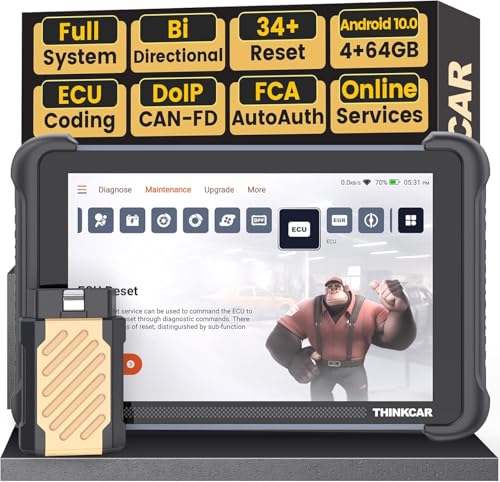
- [Notice] When you receive a used device, it may be a customer return resold by Amazon without inspection. You can exchange it for a new one through Amazon. As this situation is unavoidable, we sincerely apologize. For any issues, contacting us via Amazon's "Messages" is the best way. THINKSCAN 689BT Bidirectional Scan Tool Can Be Used Immediately After It is Turned On, Without Complicated Registration Process, Which is More Convenient & Quick.
- Full Bi-Directional Control & 3000+ Active Tests: Take control and test components like actuators, fuel injectors, relays, and cooling fans in real time. You’ll quickly see if the problem is in the part itself or the control module — saving you hours of guesswork and frustrating trial-and-error.
- Advanced ECU Coding Capabilities: Handle module matching and hidden feature activation with confidence. When you replace an ECU or want to customize settings, this obd2 scanner diagnostic bi directional tool gives you the professional-level capabilities you need without the dealership price tag.
- 34+ Useful Reset and Maintenance Functions: Complete everyday service tasks smoothly with a wide range of helpful reset and maintenance functions. Whether you’re keeping up with regular upkeep or tackling a specific job, this scanner makes maintenance simpler and less stressful for both DIYers and pros.
- Comprehensive Full System Diagnostics: Diagnose every major system — Engine, Transmission, ABS, SRS, TPMS, and more — all in one place. Finally stop wondering if you’re missing something important; get the full picture and clear codes with ease.

- Top Reasons to Choose the D7S OBD2 Scanner: XTOOL D7S car scan tool, an upgrade of XTOOL D7, offers comprehensive features for automotive technicians, workshops, and DIY enthusiasts 1. Upgraded Hardware: 2+64GB memory, rear camera, intuitive interface, foldable bracket 2. Complete Diagnostics: FCA
 Autoauth, OE-level all system scan, 39+ maintenance services, 4K+ bidirectional, CANFD/DoIP protocol 3. Advanced Capabilities: ECU c0ding, PMI functions 4. Wide Compatibility: Support 10,000+ models, covering 99% vehicle brands 5. Multi-language: Available in 22+ languages, No IP Restrictions 6. 3-Year Updates: Save 300 bucks on software updates for the latest features and optimizations
 - 2026 Upgraded D7S Car Scanner Features: The newly 2026 D7S V2.0 scanner for car brings exciting features for advanced vehicle diagnostics and enhanced user experience 1. FCA AutoAuth: Now supports FCA SGW module for Chrysler, for Jeep, for Dodge (2018+), for Fiat (2017+), enabling faster vehicle communication without gateway restrictions 2. PMI (Offline ECU Pr0gramming): Allows for Ford, for Lincoln, and for Mazda ECU pr0gramming for new modules 3. Optimized Diagnostic Report 2.0: Personalized reports with logos and customer info for auto shops. Note: Compatibility varies by cars, please check before order
- 39+ Services/Resets/Adaptations/Relearns/Calibrations: XTOOL D7S full system car scanner diagnostic tool tackles 99% of common car issues through its 36+ special functions, including Oil Reset, EPB, SAS, BMS, Throttle Reset, Injector C0ding, ABS Bleed, TPMS Reset, Power Balance, etc and also covers specific-vehicle functions like Crank Sensor Relearn, ABS Initialization, Cylinder Power Balance, Fuel Trim Reset, Idle Relearn etc. This car diagnostic scanner enhances efficiency, making repairs and maintenance hassle-free. Tip: DO NOT for All vehicles, please check compatibility first
- Cost-effective ECU C0ding Scan Tool for Specific Brands: Enhance your vehicle's performance with XTOOL D7S! This obd2 scanner all systems bidirectional offers advanced capabilities at an affordable price, supports online for BMW, for Benz and offline for BENZ, for MIT, along with PMI functions for Ford, for Mazda, and for Lincoln. Ideal for technicians and DIY enthusiasts, this automotive scanner diagnostic tool optimizes vehicle performance and enhances the driving experience. Note: Not for all cars and modules, please send car VIN to check the compatibility before purchase
- OE All System Diagnostic & 8 Pids Graphing: XTOOL D7S is a comprehensive all system bi directional obd2 scanner that delivers dealer-level diagnostics, completely controlling over your vehicle’s performance and health. This automotive scan tool can read and clear DTCs, view live data and ECU information, retrieve freeze frames, and perform active tests and full obd2 functions. This bi-directional scan tool can can identify your vehicle's make, model, and year information with just one click and show up to 8 PIDs live data with options for CSV viewing, playback, and recording for in-depth analysis. It is easy-to-use for both professionals and beginners, helping pinpoint issues efficiently
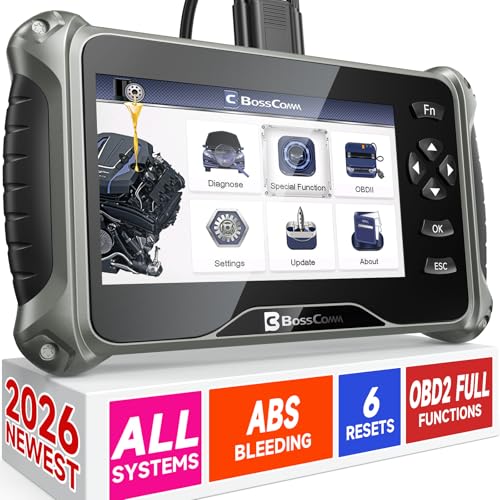
- 【✅Compared to BOSSCOMM IF742, IF745 Offers Full-System Diagnostics】The BOSSCOMM IF745 car diagnostic scanner is an upgraded model of IF742. In addition to supporting all OBD2 Code Reader functions and 6 reset options (ABS/EPB/SAS/BMS/Oil/Throttle), it expands diagnostics from 4 systems (Check Engine/ABS/SRS/Transmission) to vehicle All systems, including Steering, Suspension, and Body Electronics. This provides deeper, more comprehensive diagnostic capabilities.
- 【✨10 OBD2 Functions】The BOSSCOMM IF745 scan tool’s DTC Lookup instantly translates fault codes into user-friendly explanations, its I/M Readiness feature streamlines emissions testing with a single tap, and Freeze Frame lets you pinpoint the exact moment of a fault for in-depth root-cause diagnosis. Combined with a live data dashboard and advanced diagnostics (O2S, OBMon, EVAP), it delivers comprehensive insights for confident troubleshooting.
- 【✨Deep Diagnostics for All Vehicle System Modules】Beyond code reading/clearing and ECU information retrieval, our all-in-one data stream feature lets you inspect all current fault codes and their locations across the vehicle’s systems. This vehicle code reader helps you turn off dashboard warning lights and perform a comprehensive self-check of your car at home—no more back-and-forth trips to the repair shop or hefty inspection fees.
- 【✨6 Essential Resets: ABS Bleeding, Oil, EPB, SAS, Throttle, BMS】The BOSSCOMM IF745 obd2 scanner diagnostic tool swiftly purges air from brake lines to restore braking sensitivity, fine-tunes maintenance cycles to eliminate false alerts, resolves parking brake issues with one-click control, recalibrates steering sensors for stability, optimizes engine idling/acceleration for smoother performance, and deeply resets battery systems to extend lifespan and range via precise parameter adjustments.❗NOTE: Does NOT support bidirectional control, coding, or programming.
- 【✨10,000+ Car Models, AutoVIN, 13 Languages】The BOSSCOMM IF745 vehicle scanner diagnostic tool covers 73+ global car brands and offers support in 13 languages, making it perfect for DIYers, auto mechanics, or as a thoughtful gift. With a single-click AutoVIN feature, it instantly retrieves vehicle serial numbers, streamlining diagnostics for users globally. This adaptable tool balances user-friendliness with precision, catering to both personal and professional requirements.✅Unsure about compatibility? Compatibility will vary on vehicles' model and year, pls reach us via 📧 [email protected] 📧 before purchase.
This product presentation was made with AAWP plugin.