
NHTSA ID Number: 10066037
Manufacturer Communication Number: 2022563/11
TSB/Document Date: 2016-05-19
Summary
SUMMARY TO BE PROVIDED ON A FUTURE DATE.
Technical Service Bulletin
44 Steering wheel shimmy, vibration, and/or oscillation
44 14 56 2022563/11 December 8, 2014. Supersedes Technical Service Bulletin Group 44 number 14-50 dated
May 14, 2014 for reasons listed below.
Model(s)
Year
VIN Range
Vehicle-Specific Equipment
All
2008 - 2016
All
Not Applicable
Condition
REVISION HISTORY
Revision
Date
Purpose
11
-
Revised header data (Added models and model years)
Revised Service (Revised instructions)
Revised attachments (Updated Tire Data Sheet)
10
5/14/2014
Revised attachments (Updated Tire Data Sheet)
9
4/17/2014
Revised header data (Removed models)
Revised Condition (Updated Tip)
8
11/21/2013
Revised Condition (Removed scenarios)
Revised Service (Revised instructions)
7
9/27/2013
Revised header data (Updated customer codes)
Revised Condition (Clarified description; added scenarios)
Revised Technical Background (Removed RFV description; added table and
reference to Elsa)
Revised Service (Revised instructions)
6
2/18/2013
Revised title (corrected ElsaWeb error)
• Customer feels vibration in the seat, vehicle floor, footwell, pedals, or steering wheel. This condition does not
lead to any handling concerns or loss of vehicle control.
• Customer feels the vibration while driving at highway speeds from 55 – 80 mph (88 – 128 km/h).
Tip: This bulletin is not applicable if this vehicle has a Repair Authorization on this topic. If an applicable
Repair Authorization is not followed, the claim will not be paid.
© 2014 Audi of America, Inc.
Page 1 of 7
All rights reserved. Information contained in this document is based on the latest information available at the time of printing and is subject to the copyright and other intellectual property rights of
Audi of America, Inc., its affiliated companies and its licensors. All rights are reserved to make changes at any time without notice. No part of this document may be reproduced, stored in a retrieval
system, or transmitted in any form or by any means, electronic, mechanical, photocopying, recording, or otherwise, nor may these materials be modified or reposted to other sites, without the prior
expressed written permission of the publisher.
Technical Service Bulletin
Technical Background
The vibrations felt by the customer could be a result of the harmonic vibrations caused by the radial force
variation (RFV) of the tires or an imbalance of the wheel and tire assembly.
Tire RFV (also referred to as tire uniformity):
To understand the effects of RFV, imagine the tire as a collection of springs between the rim and the tire tread. If
the “springs” are not uniform stiffness, a varied force is exerted on the axle as the tire rotates and flexes (Figure
1). This creates a vibration in the vehicle.
Figure 1. Vibration source from radial force variation (A).
The table below explains common causes of wheel-related and tire-related vibrations in the vehicle. Refer to
Elsa>>Wheel and Tire Guide >> Diagnosis and Testing for further diagnostic procedures and other possible
causes of vibration.
Vibration Description
Possible Cause
Vibration felt in the steering wheel while at
constant speed
Increased radial forces or imbalance on the
front tires
Vibration in the entire vehicle
Increased or critical radial forces or imbalance
on the rear tires and possible on the front tires.
Tip: Tires with higher mileage and/or wear should be inspected to determine the best correction for the issue
(repair or replacement). Tire life and condition should be determined prior to starting any diagnosis or repair for a
vibration.
© 2014 Audi of America, Inc.
Page 2 of 7
All rights reserved. Information contained in this document is based on the latest information available at the time of printing and is subject to the copyright and other intellectual property rights of
Audi of America, Inc., its affiliated companies and its licensors. All rights are reserved to make changes at any time without notice. No part of this document may be reproduced, stored in a retrieval
system, or transmitted in any form or by any means, electronic, mechanical, photocopying, recording, or otherwise, nor may these materials be modified or reposted to other sites, without the prior
expressed written permission of the publisher.
Technical Service Bulletin
Production Solution
Not applicable.
Service
Note that for all warranty vibration repairs, a completed Tire Data Sheet and Hunter RFV printouts must be
retained for warranty claim payment. Failure to do so will result in non-payment of the claim.
Sections 1-4 must be completed in their entirety and in the order listed:
1. Prepare Tires for RFV Measurement:
Tip: Flat spots are not a sign of a defect and therefore are not a warrantable condition. More information
about flat spots is available in Elsa under Repair Manual >> Suspension, Wheels, Steering >> Wheel and Tire
Guide >> 44 Wheels, Tires, Wheel Alignment >> Diagnosis and Testing >> Wheel and Tire Vibration >> Tire Flat
Spots from Standing.
Temporary flat spots falsify the radial force fluctuation and must be driven out before the balance and the radial
force are checked. Flat spots develop after a warm tire has cooled down after a stationary period of a few hours.
Flat spots vary based on the type, size, and make of the tire.
• To eliminate temporary flat spots:
• Set all tire pressures according to the owner’s manual based on customer’s requirements (normal load vs.
full load).
• Test drive the vehicle a distance of at least 12-15 miles at various speeds (up to 62 mph). Some tires may
require longer test drives to eliminate these temporary flat spots.
• Raise the vehicle on a lift/hoist immediately after the test drive in order to check the balance and RFV
before the tires cool down again.
© 2014 Audi of America, Inc.
Page 3 of 7
All rights reserved. Information contained in this document is based on the latest information available at the time of printing and is subject to the copyright and other intellectual property rights of
Audi of America, Inc., its affiliated companies and its licensors. All rights are reserved to make changes at any time without notice. No part of this document may be reproduced, stored in a retrieval
system, or transmitted in any form or by any means, electronic, mechanical, photocopying, recording, or otherwise, nor may these materials be modified or reposted to other sites, without the prior
expressed written permission of the publisher.
Technical Service Bulletin
2. Measure RFV and balance:
• Ensure that the contact surfaces of the tire balancer
flange and wheel are clean. It is mandatory that the
appropriate centering collet (Figure 3, A)--not a cone
(Figure 3, B)--and a five-finger style clamping plate
(Figure 4, A) are used to mount the wheel on the
balancer.
Use of these tools ensures proper centering and
mounting of the wheel on the balancer. Audirecommended collets can be ordered through
Equipment Solutions (part number HUN2018451).
An incorrect style of clamp could damage the wheel
(Figure 4, C).
Figure 3. Example of a collet (A) vs. a centering cone
(B).
Figure 4. Five-finger style clamping plate (A), wheel
properly mounted with a five-finger style clamp (B), and
wheel mounted using an incorrect clamping tool/method
(C).
• Set the tire pressure of each wheel to 36 psi (2.5 bar). Use this pressure during all measurements.
• Perform a CenteringCheck to ensure that the wheel has been properly mounted on the VAS 6230/Hunter
®
GSP9700 Road Force Measurement system.
®
• With the SmartWeight feature turned on, measure the RFV and balance of the wheel and tire assembly. This
feature will check both static (hop) and couple (wobble) vibrations to give the best possible weight and
placement. Do not use “Quick Match” mode since it does not measure radial force.
®
© 2014 Audi of America, Inc.
Page 4 of 7
All rights reserved. Information contained in this document is based on the latest information available at the time of printing and is subject to the copyright and other intellectual property rights of
Audi of America, Inc., its affiliated companies and its licensors. All rights are reserved to make changes at any time without notice. No part of this document may be reproduced, stored in a retrieval
system, or transmitted in any form or by any means, electronic, mechanical, photocopying, recording, or otherwise, nor may these materials be modified or reposted to other sites, without the prior
expressed written permission of the publisher.
Technical Service Bulletin
3. Optimize RFV and balance:
Tip: If a tire needs to be repositioned (match-mounted) on a wheel, use adequate lubrication to properly
seat the tire on the wheel:
• Not enough lubricant can prevent the tire from properly seating on the wheel.
• Excessive lubricant may cause the tire to slip on the wheel, impacting the balance and RFV values.
Correct the balance and, if necessary, reduce RFV by match-mounting each wheel according to the instructions
from the machine. Use 18lbs (80N) or less for the first harmonic vibration as the maximum. If the first harmonic of
the radial force of the tire that is the source of the vibration cannot be reduced to 18lbs (80N) or less, it should be
replaced.
After balancing and/or optimizing the RFV, perform a “check-spin” to ensure balance values are consistent. If
consistent values cannot be obtained, check the following:
• Calibration of the machine.
• Wheel and tire assembly mounting to the machine.
4. Reinstall Wheel and Tire Assemblies:
Follow the instructions in Elsa under Repair Manual >> Chassis >> Wheels and Tire General Information >> 44
Wheels, Tires, Wheel Alignment >> Wheels/Tires/Tire Pressure Monitoring Assembly >> Wheel, Changing and
Mounting.
Install the wheels according to VAS 6230 instructions for lowest vibration. The wheel/tire assembly with the lowest
road force values should be installed closest to the driver:
• Lowest road force value: Left front
• Second-lowest road force value: Right front
• Third-lowest road force value: Left rear
• Highest road force value: Right rear
• Set all tire pressures according to the owner’s manual based on customer’s requirements (normal load vs. full
load).
• Test drive the vehicle at the speed at which the customer felt the vibrations to verify that the condition is
repaired.
© 2014 Audi of America, Inc.
Page 5 of 7
All rights reserved. Information contained in this document is based on the latest information available at the time of printing and is subject to the copyright and other intellectual property rights of
Audi of America, Inc., its affiliated companies and its licensors. All rights are reserved to make changes at any time without notice. No part of this document may be reproduced, stored in a retrieval
system, or transmitted in any form or by any means, electronic, mechanical, photocopying, recording, or otherwise, nor may these materials be modified or reposted to other sites, without the prior
expressed written permission of the publisher.
Technical Service Bulletin
If vibration is still present:
Open a TAC ticket and include the following for each wheel and tire assembly:
• A completed Tire Data Sheet (attached to this TSB)
• A copy of the RFV printout from the VAS 6230/Hunter GSP9700 Road Force Measurement system
®
If any of the documents cannot be uploaded to the TAC ticket, email them to chassis@audi.com and state in the
TAC ticket that these documents were emailed instead of being attached.
The e-mail subject line must include the TAC Access Code and the complaint.
• Example: 1234567_Tire vibration
Failure to upload the RFV printouts will result in non-payment of the claim.
Warranty
Claim Type:
Use applicable claim type. If vehicle is outside any warranty, this Technical
Service Bulletin is informational only.
Service Number:
4412
Damage Code:
0013
Labor Operations:
Balance and radial force balance all 4 wheels (A 4412 9999
copy of the before-and-after radial force and
balance values must be attached to the Repair
Order).
190 TU
Includes additional time for extended road test
prior to service procedure.
2 wheels, remove and reinstall
4405 2000
20 TU
(per axle)
Diagnostic Time:
GFF
No allowance
0 TU
Road test prior to service procedure
0121 0002
10 TU
Road test after service procedure
0121 0004
10 TU
Technical diagnosis at dealer’s discretion
(Refer to Section 2.2.1.2 and Audi Warranty Online for DADP allowance
details)
Claim Comment:
© 2014 Audi of America, Inc.
As per TSB #2022563/11
Page 6 of 7
All rights reserved. Information contained in this document is based on the latest information available at the time of printing and is subject to the copyright and other intellectual property rights of
Audi of America, Inc., its affiliated companies and its licensors. All rights are reserved to make changes at any time without notice. No part of this document may be reproduced, stored in a retrieval
system, or transmitted in any form or by any means, electronic, mechanical, photocopying, recording, or otherwise, nor may these materials be modified or reposted to other sites, without the prior
expressed written permission of the publisher.
Technical Service Bulletin
All warranty claims submitted for payment must be in accordance with the Audi Warranty Policies and Procedures
Manual. Claims are subject to review or audit by Audi Warranty.
Tire Warranty
Audi of America, Inc. does not warranty tires originally installed or sold as replacement for use on Audi
vehicles. Individual tire manufacturers provide all the underlying tire warranties.
Please refer to Audi Tire Center website for tire warranty coverage and claim submission details.
Required Parts and Tools
Tools
• Use VAS 6230/Hunter GSP9700 Road Force Measurement® System to check balance, Road Force values,
and to make necessary adjustments.
• Use centering collet in conjunction with VAS 6243 model-specific clamping plate (5 finger clamping device) or
similar device to ensure proper mounting of wheel and to prevent damage to wheels.
• Vetronix MTS 4100 NVH Analyzer is helpful when diagnosing vibration concerns and can help narrow the list of
possible sources of the vibration.
Additional Information
More information can be found in the following resources:
• ElsaWeb: Wheel and Tire Guide >> Diagnosis and Testing
• SSP: Noise, Vibration, and Harshness 961403
The following repair procedure(s) will be necessary to complete this procedure:
• Chassis >> Wheel and Tire Guide >> Diagnosis and Testing
All parts and service references provided in this TSB (2022563) are subject to change and/or removal. Always
check with your Parts Department and service manuals for the latest information.
© 2014 Audi of America, Inc.
Page 7 of 7
All rights reserved. Information contained in this document is based on the latest information available at the time of printing and is subject to the copyright and other intellectual property rights of
Audi of America, Inc., its affiliated companies and its licensors. All rights are reserved to make changes at any time without notice. No part of this document may be reproduced, stored in a retrieval
system, or transmitted in any form or by any means, electronic, mechanical, photocopying, recording, or otherwise, nor may these materials be modified or reposted to other sites, without the prior
expressed written permission of the publisher.

- 💯【Conta.ct us for Support Directly】If you met any...
- 🔥🔥🔥【2026 AUTEL FLAGSHIP MK900BT MK900-BT, NEW...
- 🚗【3000+ ACTIVE TESTS (50➡3000+), SAME AS MS...
- 🚗【40+ HOT SERVICES FOR 150 MAKES (28+➡40+)】Full...
- 🚗【OE ALL SYSTEM DIAGNOSE, AUTO SCAN 2.0: SCAN LICENSE...

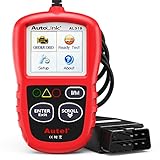
- 【TURN OFF CEL】 This AL319 car scanner diagnostic tool...
- 【EXTENSIVE APPLICATION】 Autel AL319 Compatible with...
- 【FOR END USER & DIYERS】 This error code reader AL319 is...
- 【USER-FRIENDLY DESIGN】 This OBD2 scanner and check...
- 【HIGH-QUALITY SERVICES】 12 months war.ranty from the...
Last update on 2026-06-23 / Affiliate links / Images from Amazon Product Advertising API
If the PDF is very large, it may not load in the preview below.
Some older TSBs had multiple PDFs — visit the NHTSA Website to view all PDFs.
If the TSB PDF does not show, download or view it on the NHTSA Website.
Click on the (+) Plus Sign
Then Click on Associated Document(s)
Search NHTSA Database for Recalls
Search NHTSA Database for Vehicle Investigations
View Latest Vehicle Investigations
Search NHTSA Database for Vehicle Complaints
View Latest Vehicle Complaints
TSB/Document ID: 2022563/11
Replacement Service Bulletin Number:
MFR Communication Date: 2014-12-08
MFR Internal Campaign ID/Software Version:
Communication Type: Service Bulletin/Repair Instructions
NHTSA Components: STEERING
MFR Component System:
MFR Component Subsystem:
Previous TSB | Next TSB |

- WHY CHOOSE THE 2025 CR MAX -Upgrade the latest diagnostic capabilities for all vehicles after 1996: upgrade to 49+maintenance services; 46 extra specific functions; real all systems/all control modules diagnose; over 40K+ bidirectional actuation tests for diagnosing all control moduels of cars; Powerful full OBD2 Functions; built-in ECU Coding for BMW
 / Audi/ VW/ RollsRoyce; Fr ee V.A.G Guide Function; Battery retistration for new battery adaptation and more. It covers all vehicle diagnostic services and some special professional vehicle maintenance servces, assists you to do home DIY vehicle maintenance or car repair as a pro technician.
 - NEWEST IN INNOVATION FULL OBD2 SERVICES- iCarsoft auto car diagnostic scanner compatible with CAN-FD, CR MAX can do it all-reads and clears trouble codes, ALL SYSTEM DIAGNOSIS such as engine, transmission, ABS and airbag etc. CR MAX code reader for all cars can perform I/M Readiness, Live Data, Freeze Frame, Vehicle Information, Monitor Test, On-Board Monitor, E vap System Test,O2 Sensor Test,DTC Library Lookup,etc. (Warm Tips: If you car is after 2023,please contact us for compatibility; 3. It comes with 16PIN OBD2 diagnostic adapter, please check your car diagnostic socket if it is 16pin socket, if your car is 14pin diagnostic socket please contact us for the solution.)
- 49 RESET+ 46 SERVICES- Performs: Oil Reset, EPB,SAS,Throttle, D-P - F, Battery, ABS, Injector, TPMS, Suspension, AC, Head Lamp, Body Stablity, Engine, Tramsmission, Airbag, Seat, Door-Win-Roof, Fuel Pump, Door, E-G- R.+21 NEWEST SERVICES( Need update scanner)-AdBlue, Clutch, Crankshaft, High Voltage Battery, Cruise Control, NO xSensor, Rain Sensor, Stop And Start, Turbocharger, Head Up Display, Radar Camera, Vehicle Setup, Cyliner Misfire Check,Speedlimitassist, ControlUnitReset,OxygenSensor, Seatbelt. Extra 46+ extra services based on car brand.(Tips: Quantity of reset/ calibration fucitons are based on car system that your vehicle model has)
- REVOLUTIONARY 40000+BIDIRECTIONAL ACTIVE TESTS: Upgraded CR Max scanner equip with numberous of actuational test items for covering all available vehicle control modules, no longer only do simple light test or window test like other scanners, performs hardware modules test and software control modules test for checking car units or new updated control moduels work well or not after maintenance/ repair/ re-installation/ control system updated (Example for Benz- Roller Sun Blind test; Backup Camera test ;Self-test; EPB test; Transport Mode test;Boost Pressure Positioner test; Fuel Pump test; AND MORE!!).(Warm tip: The available test items are based on control modules your car has)
- ECU CODING+ BATTERY REGISTRATION- Powerful ECU Coding service for BMW/MINI/RollsRoyce / Audi/VW/Seat/Skoda/Bentley/Bugatti/Lamborghini, Improves Engine Power Performance and Optimizes Fuel Efficiency and Match New Hardware Unit to car and Customized a comfortable Driving Modes and Fixes & Updates Original Software Bug. The battery test function for checking car battery health, perform battery reset (BMS ) for replacing a damaged or aging car battery with a new one and register new battery to car ECU
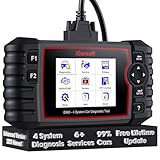
- 【Looking for More Professional Vehicle Scan Tool?】iCarsoft E660 2026 Upgrade Version OBD2 scan tool can do it all-reads and clears trouble codes on Engine system, ABS system, Transmission system and Airbag system, And with 6 reset function. It covers more than 59 vehicle makes from 1996-2023 models ( included most USA/ Asia / EU vehicle brand) with full OBDII. (As every car model has its-owned specific car system and ECUs, not all car models have full car ECUs which may prevent the scanner from performing all listed system diagnostics or reset services. Therefore, please email to us with car VIN and services required to do scanner's services for a compatibility check before purchasing.)
- 【OE-Level 4 Systems OBD2 Scanner】iCarsoft E660 2026 Upgrade Version diagnostic scanner offers comprehensive OBDII services, allowing you to quickly scan Engine system. It supports functions such as reading and erasing codes, checking I/M readiness, viewing freeze frame data, performing O2 sensor tests, conducting on-board monitoring, testing the evap system, auto VIN retrieval, and reading both generic and specific codes, as well as DTCs and battery tests.
- 【4 Systems Diagnosis for 10000+ Vehicles】 iCarsoft E660 2026 Upgrade Version adopts unique diagnostic software, works well for most Porsche, Benz, BMW, US Ford, Land Rover, Jaguar, Audi, VW, Volvo, Honda, Nissan, Infiniti, Toyota, Lexus, Scion, Isuzu, Hyundai, Kia, Daewoo, Mazda, Sprinter, Mini, Seat, Skoda, SAAB, EU Ford, Holden, AUS Ford, Acura, Subaru, Mitsubishi, Dacia, Renault, Fiat, GM, Chrysler, Citroen, Peugeot, Opel, Smart,Suzuki, Vauxhall, Alfa-Romeo, Lancia and etc.
- 【6 Reset Services】iCarsoft E660 2026 Upgrade Version is a diagnostic tool that offers professional maintenance services, including Oil Reset, EPB, BMS, ETC, SAS, TPMS Reset. It can help you easily reset oil change indicators, recalibrate steering angle sensors, relearn replaced electric parking brake and so on. For optimal vehicle performance and maintenance convenience. (Tips: Please update the softwareafter receiving the product to obtain new service functions)
- 【118+ Real Time Record & Live Graph View】iCarsoft E660 2026 Upgrade Version can automatically record vehicle text history and identify vehicle information. Preserve real-time data information. View & Graph Live Data. Support Data Review and Print. 15 languages: English, German, Dutch, Spanish, French and so on. We promise to offer Lifetime updates (Lifetime free Update via PC), and confidence in products. We also provide 1 year warranty + extra lifetime hardware free repair if you need it in the future. We prioritize user experience & strive to meet your expectations. Please do feel free to reach out to us if you have any question or problem about the usage.

- 【All-in-One Diagnostic Tool for Porsche + 2 Extra Vehicle Brands】New POR V4.0 is a professional car scanner specifically engineered with dedicated software pre-installed for Porsche. You can also download 2 additional software packages FOR FREE from 26 supported brands (e.g., for Benz, for BMW, for Audi, for Land Rover).Upgraded to adopt quad-core 1.3GHz processor and HD touchscreen and professional diagnsotic OS for faster& smooth diagnsotic.LIFETIME FREE UPDATES, NO SUBSCRIPTION COST! PLEASE TELL US YOUR CAR INFORMATION TO OBTAIN A LIST OF ALL COMPATIBLE SERVICES FOR YOUR CAR FIRST (FOR EXAMPLE: BATTERY REGISTRATION FUNCTION IS NOT COMPATIBLE WITH PORSCHE 997.2)
- 【29 MAINTENANCE SERVICES FOR PORSCHE SERIES CARS】 It can perform the 29 reset service for Porsche series cars-Oil Reset; SAS; EPB; BMS; ETC; DP ; ABS Bleeding; Injector Coding; TPMS; Air Suspension; Air Conditioner; Head Lamp; Body Stablity Control; Engine Control; Transmission; AirBag; Seat; DWR; MIS; EG; ODO; Clutch; High Voltage Battery; Cruise Control; Radar/Camera; Vehicle Setup,etc. Up to 49 vehicle-maintenance-services for the extra 2 vehicle brands you installed (Tip: Not all services will be worked on every car mode. Some vehicle models may be lack of certain ECU-control modules to make some services may not work).
- UPGRADE SERVICES: Breaks down 29 services to 234 sub-service for car owners/machinist to perform maintenance based on corresponding sub-modules! The detailed sub-service for sub-modules assist to perform precise vehicle maintenance.Improving the accuracy of car maintenance and reducing potential failure risks caused by whole-module maintenance to main modules.such as Oil Reset is refined into Reset maintenance interval/Reset service interval/Service Reset; Engine Control Reset is refined into Delete adaptation data/Short tests/System tests/Swirl-flap actuator/Bleeding high temperature coolant circuit and more.(sub-services vary based on vehicle model/year)
- 【EXTRA VEHICLE MAINTENANC SERVICES FOR SPECIFIC SYSTEMS】Have no ability to perferm calibration to special/specific systems/modules? This OBD2 scanner solve your troubles- for common systems/modules & for specific sytems/modules, assist you to perform diagnsing/calibration/reset/relearn services for non-common modules to finish your car maintenance/ diagnostic (eg: Central Computer system/module :Function activation/Multimedia interface test/AM Field Strength/Current FM Field Strength/FM Field Strength/MOST system reserve/Self-test/Deactivate Production Mode/Reset to factory settings/MOST System Test). (Tip: The services vary based on the vehicle brands)
- 【 MORE PROFESSIONAL BI-DIRECTIONAL ACTUATION TESET 】Exclusive POR V4.0 comes with powerful bidirectional testing capability,do actuaction test for deeper unit-checking after replacement or overhaul (1333 test items for Porsche, like:Fuel high-pressure fuel injector 1-4, Empty tank, Radiator fan, OTA-FC Connectivity, backrest, Backup battery, and more; 2136 test items for Audi; 1670 test items for Benz; 1599 test items for Volvo; 1360 test items for VW; 2705 test items for GM etc.). Help to check your car units work well or not after vehicle maintenance or daily car-body check, keep drives always in safety.(Warm tip:The quantity of test item is based on the units your car has)
Last update on 2026-06-23 / Affiliate links / Images from Amazon Product Advertising API
This product presentation was made with AAWP plugin.