
NHTSA ID Number: 10057323
Manufacturer Communication Number: 0104-15
TSB/Document Date: 2015-05-14
Summary
DETROIT DEMAND PERFORMANCE:UPDATED INFORMATION ON THE TURBOCHARGER WASTEGATE SPN 3464/FMI 16-GHG14. *LJ
SB-10057323-2957
1
01 04-15
01 04-15
SUBJECT
DATE
SPN 3464/ FMI 16, 18 (MCM) (GHG14)
January 2015
Additions, Revisions, or Updates
Publication Number / Title
Platform
Section Title
Change
DDC-SVC-MAN-0084
DD Platform
SPN 3464/ FMI 16, 18 - GHG14
This is an updated section with new diagnostics
including turbocharger wastegate.
All information subject to change without notice.
01 04-15
Copyright © 2015 DETROIT DIESEL CORPORATION
3
2 SPN 3464/FMI 16 – GHG14
2
SPN 3464/FMI 16 – GHG14
Intake Manifold Pressure Too High (Restricted Mode)
Table 1.
SPN 3464/FMI 16 - GHG14
Description
Intake Manifold Pressure Over-boost Detected During a Regeneration
Monitored Parameter
Intake Manifold Pressure
Typical Enabling Conditions
General Enabling Condition: Engine is in normal mode (not regeneration), steady state operation
(highway cruise operation)
Specific Enabling Conditions: See table below
Engine Parameter
Min
Max
Engine Speed (rpm)
1130
1810
Engine Torque N·m (lb·ft)
1100 (811)
Intake Air Throttle Position (%)
5
Engine Coolant Outlet
Temperature °C (°F)
65 (149)
Barometric Pressure (mbar)
755
Ambient Temperature °C (°F)
-8 (18)
Engine Speed Gradient (rpm/s)
-10
10
Fuel Mass Gradient ((mg/
stroke)/s)
-10
10
Monitor Sequence
None
Execution Frequency
Continuous when enabling conditions met
Typical Duration
15 Seconds
Dash Lamps
MIL, CEL
Engine Reaction
None
Verification
Once engine is at standard operating temperature, drive at highway speed with loaded trailer above
1130 rpm continuously for five minutes.
Check as follows:
1. Turn the ignition ON (key ON, engine OFF).
2. Check for other codes. Are any other fault codes present?
a. Yes; repair those faults first.
b. No; Go to step 3.
3. Check the Motor Control Module (MCM) software level. Compare the current MCM software level to the server. Is the
MCM software at the latest level?
a. Yes; Go to step 4.
b. No; update the MCM software level and perform the verification procedure in the table above. If the fault code
does not return, release the vehicle. If the fault code returns, Go to step 4.
4. Inspect the front grill for air blockage including winter fronts, plows, or large hose reels. Is any blockage found?
a. Yes; repair as needed.
b. No; Go to step 5.
5. Inspect hood seals. Are seals missing or damaged?
a. Yes; repair as needed.
b. No; Go to step 6.
6. Using DiagnosticLink ®, measure barometric pressure. Is barometric pressure above 69 kPa (10 psi) and below 110 kPa
(16 psi)?
a. Yes; Go to step 7.
4
All information subject to change without notice.
Copyright © 2015 DETROIT DIESEL CORPORATION
01 04-15
01 04-15
7.
8.
9.
10.
11.
12.
13.
14.
b. No; replace the MCM. Refer to section "Removal of the Motor Control Module". Verify repairs.
Measure the inlet manifold pressure and the barometric pressure. Is the inlet manifold pressure within 10.3 kPa (1.5
psi) of barometric pressure?
a. Yes; Go to step 10.
b. No; Go to step 8.
Disconnect the inlet manifold pressure sensor harness connector .
.
Inspect the inlet manifold pressure sensor and harness connector for signs of damaged, bent, spread, corroded or
unseated (pushed out) pins and signs of moisture in the connector or wire damage near the connector. Is any damage
present?
a. Yes; repair as necessary.
b. No; replace the inlet manifold pressure sensor. Refer to section "Removal of the Intake Pressure/Temperature
Sensor".
Check for engine type. Is engine equipped with an Asymmetrical Turbocharger (AT)?
a. Yes; Go to step 11.
b. No; Go to step 30.
Turn the ignition OFF.
Inspect the wastegate actuator and the plumbing to and from the actuator. Verify wastegate linkage. Is any damage
found?
a. Yes; repair as necessary. Verify repair.
b. No; Go to step 13.
Inspect the air line connection to the wastegate solenoid for leaks. Are any air leaks found?
a. Yes; repair or replace as necessary. Verify repair.
b. No; Go to step 14.
Turn the ignition ON (key ON, engine OFF).
NOTE: Wastegate will not remain open if DiagnosticLink slide control is set above 95%.
15. Using DiagnosticLink, activate turbo control (wastegate) from the I/O Control window. Run slide control up to 95% adjust Duration to 20 seconds- (Click Set). Wastegate will open with air psi available. Does wastegate open when
commanded?
a. Yes; Go to step 16.
b. No; Go to step 17.
16. Does wastegate close when the duration timer expires?
a. Yes; Go to step 30.
b. No; Go to step 17.
17. Drain air tanks. Refer to OEM literature for details.
18. Install a suitable air pressure gauge in the inlet air pressure line to the waste gate solenoid from the vehicle.
WARNING: ENGINE EXHAUST
To avoid injury from inhaling engine exhaust, always operate the engine in a well-ventilated area.
Engine exhaust is toxic.
WARNING: PERSONAL INJURY
To avoid injury before starting and running the engine, ensure the vehicle is parked on a level
surface, parking brake is set, and the wheels are blocked.
All information subject to change without notice.
01 04-15
Copyright © 2015 DETROIT DIESEL CORPORATION
5
2 SPN 3464/FMI 16 – GHG14
WARNING: HOT EXHAUST
During parked regeneration the exhaust gases will be extremely HOT and could cause a fire if
directed at combustible materials. The vehicle must be parked outside.
19. Start engine to stabilize the vehicle air pressure.
20. With a suitable air pressure gauge installed, measure the inlet air pressure to the waste gate solenoid from the vehicle.
Is the pressure at least 599 kPa (87psi)?
a. Yes; restore air hose connection. Go to step 21.
b. No; refer to OEM troubleshooting for air pressure issues.
21. Turn the ignition OFF.
22. With the vehicle air pressure stabilized, use a suitable air pressure gauge to measure the outlet air pressure from the
solenoid to the turbocharger wastegate.
23. Turn the ignition ON (key ON, engine OFF).
24. Is the pressure out of the wastegate solenoid less than one psi?
a. Yes; Go to step 25.
b. No; Go to step 27.
25. Using DiagnosticLink, activate turbo control (wastegate) from I/O Control window. Run slide control up to 50% adjust Duration to 20 seconds- (Click Set). Is the pressure out of the wastegate solenoid between 117 and 158 kPa
(17-23 psi)?
a. Yes; Go to step 26.
b. No; Go to step 27.
26. Using DiagnosticLink, activate turbo control (wastegate) from I/O Control window. Run slide control up to 95% adjust Duration to 20 seconds- (Click Set). Is the pressure out of the wastegate solenoid between 241 and 275 kPa (35 40 psi)?
a. Yes; Go to step 30.
b. No; Go to step 27.
27. Turn the ignition OFF.
28. Disconnect the wastegate solenoid harness connector.
29. Inspect the wastegate solenoid and harness connector for signs of damaged, bent, spread, corroded or unseated (pushed
out) pins and signs of moisture in the connector or wire damage near the connector. Is any damage found?
a. Yes; repair as necessary. Verify repair.
b. No; replace the wastegate solenoid.
Refer to section "Removal of the DD13 Wastegate Solenoid" .
Refer to section "Removal of the GHG14 DD15 Asymmetrical Turbocharger Wastegate Solenoid". Verify
repairs.
30. Turn the ignition OFF.
31. Disconnect the MCM 120-pin connector.
32. Inspect the MCM 120-pin connector and the 120-pin harness connector for signs of corrosion, spread, unseated (pushed
out) or damaged pins, connector seal for damage (signs of water or oil intrusion) or signs of wire damage. Is any
damage found?
a. Yes; repair as necessary. Verify repair.
b. No; Go to step 33.
33. Install a test MCM and retest with verification cycle. Does fault code return?
a. Yes; Go to step 34.
b. No; replace MCM. Refer to section "Removal of the Motor Control Module" . Verify repairs.
34. Install original MCM. Bring to operating temperature of 71°C (160°F). Road test the vehicle. Drive at highway speed
with loaded trailer above 1130 rpm continuously for five minutes. Does fault become active?
a. Yes; replace turbocharger.
Refer to section "Removal of the DD13 Turbocharger".
Refer to section "Removal of the DD15 and the DD16 Turbocharger".
b. No; replace the MCM. Refer to section "Removal of the Motor Control Module".
6
All information subject to change without notice.
Copyright © 2015 DETROIT DIESEL CORPORATION
01 04-15
01 04-15
3
SPN 3464/FMI 18 - GHG14
Intake Manifold Pressure Too Low (Restricted Mode)
Table 2.
SPN 3464/FMI 18 - GHG14
Description
Intake Manifold Pressure Lower than Expected During a Regeneration
Monitored Parameter
Intake Manifold Pressure
Typical Enabling Conditions
General Enabling Condition: Engine is in normal mode (not regeneration), steady state operation
(highway cruise operation)
Specific Enabling Conditions: See table below
Engine Parameter
Min
Max
Engine Speed (rpm)
1130
1810
Engine Torque N·m (lb·ft)
1100 (811)
Intake Air Throttle Position (%)
5
Engine Coolant Outlet
Temperature °C (°F)
65 (149)
Barometric Pressure (mbar)
755
Ambient Temperature °C (°F)
-8 (18)
Engine Speed Gradient (rpm/s)
-10
10
Fuel Mass Gradient ((mg/
stroke)/s)
-10
10
Monitor Sequence
None
Execution Frequency
Continuous when enabling conditions met
Typical Duration
15 Seconds
Dash Lamps
MIL, CEL
Engine Reaction
None
Verification
Once engine is at standard operating temperature, drive at highway speed with loaded trailer above
1130 rpm continuously for five minutes.
Check as follows:
1. Turn the ignition ON (key ON, engine OFF).
2. Check for other codes. Are any other fault codes present?
a. Yes; repair those faults first.
b. No; Go to step 3.
3. Check the Motor Control Module (MCM) software level. Compare the current MCM software level to the server. Is the
MCM software at the latest level?
a. Yes; Go to step 4.
b. No; update the MCM software level and perform the verification procedure in the table above. If the fault code
does not return, release the vehicle. If the fault code returns, Go to step 4.
4. Inspect the front grill for air blockage including winter fronts, plows, or large hose reels. Is any blockage found?
a. Yes; repair as needed.
b. No; Go to step 5.
5. Inspect hood seals. Are seals missing or damaged?
a. Yes; repair as needed.
b. No; Go to step 6.
6. Inspect the entire air intake system, including the Charge Air Cooler (CAC), for leaks and/or restrictions. Are any air
intake system leaks or restrictions found?
All information subject to change without notice.
01 04-15
Copyright © 2015 DETROIT DIESEL CORPORATION
7
3 SPN 3464/FMI 18 - GHG14
a. Yes; repair as necessary. Verify repairs. Retest with verification cycle; once engine is at standard operating
temperature, drive at highway speed with loaded trailer above 1130 rpm continuously for five minutes.
b. No; Go to step 7.
7. Using DiagnosticLink ®, measure barometric pressure. Is barometric pressure above 69 kPa (10 psi) and below 110 kPa
(16 psi)?
a. Yes; Go to step 8.
b. No; replace the MCM. Refer to section "Removal of the Motor Control Module". Verify repairs.
8. Using DiagnosticLink, compare inlet manifold pressure to barometric pressure. Is the inlet manifold pressure within
10.3 kPa (1.5 psi) of barometric pressure?
a. Yes; Go to step 11.
b. No; Go to step 9.
9. Disconnect the inlet manifold pressure sensor harness connector.
10. Inspect the inlet manifold pressure sensor and harness connector for signs of damaged, bent, spread, corroded or
unseated (pushed out) pins and signs of moisture in the connector or wire damage near the connector. Is any damage
found?
a. Yes; repair as necessary. Verify repairs.
b. No; replace the inlet manifold pressure sensor. Refer to section "Removal of the Intake Pressure/Temperature
Sensor". Verify repairs.
11. Visually inspect exhaust system for leaks or damage, including manifold, gaskets, turbine housing, EGR valve, and
Aftertreatment Device (ATD). Are any leaks found?
a. Yes; repair as necessary. Verify repairs. Retest with verification cycle; once engine is at standard operating
temperature, drive at highway speed with loaded trailer above 1130 rpm continuously for five minutes. If fault
code returns, Go to step 12.
b. No; Go to step 12.
12. Check for engine type. Is engine equipped with an asymmetrical turbocharger?
a. Yes; Go to step 13.
b. No; Go to step 30.
13. Turn the ignition OFF.
14. Inspect the wastegate actuator and the plumbing to and from the actuator. Verify wastegate linkage. Is any damage
found?
a. Yes; repair as necessary. Verify repairs.
b. No; Go to step 15.
15. Inspect the air line connection to the wastegate solenoid for leaks. Are any air leaks found?
a. Yes; repair or replace as necessary. Verify repairs.
b. No; Go to step 16.
16. Turn the ignition ON (key ON, engine OFF).
NOTE: Wastegate will not remain open if DiagnosticLink slide control is set above 95%.
17. Using DiagnosticLink, activate turbo control (wastegate) from I/O Control window. Run slide control up to 95% adjust Duration to 20 seconds- (Click Set). Wastegate will open with air psi available. Does wastegate open when
commanded?
a. Yes; Go to step 18.
b. No; Go to step 19.
18. Does wastegate close when the duration timer expires?
a. Yes; Go to step 30.
b. No; Go to step 19.
19. Drain air tanks. Refer to OEM literature for details.
20. Install a suitable air pressure gauge in the inlet air pressure line to the waste gate solenoid from the vehicle.
8
All information subject to change without notice.
Copyright © 2015 DETROIT DIESEL CORPORATION
01 04-15
01 04-15
WARNING: ENGINE EXHAUST
To avoid injury from inhaling engine exhaust, always operate the engine in a well-ventilated area.
Engine exhaust is toxic.
WARNING: PERSONAL INJURY
To avoid injury before starting and running the engine, ensure the vehicle is parked on a level
surface, parking brake is set, and the wheels are blocked.
WARNING: HOT EXHAUST
During parked regeneration the exhaust gases will be extremely HOT and could cause a fire if
directed at combustible materials. The vehicle must be parked outside.
21. Start engine to stabilize vehicle air pressure.
22. With a suitable air pressure gauge installed, measure the inlet air pressure to the wastegate solenoid from the vehicle. Is
the pressure at least 599 kPa (87psi)?
a. Yes; restore air hose connection. Go to step 23.
b. No; refer to OEM troubleshooting for air pressure issues.
23. Turn the ignition OFF.
24. With the vehicle air pressure stabilized, use a suitable air pressure gauge to measure the outlet air pressure from the
solenoid to the turbocharger wastegate.
25. Turn the ignition ON (key ON, engine OFF). Is the pressure out of the wastegate solenoid less than one psi?
a. Yes; Go to step 26.
b. No; Go to step 28.
26. Using DiagnosticLink, activate turbo control (wastegate) from I/O Control window. Run slide control up to 50% adjust Duration to 20 seconds- (Click Set). Is the pressure out of the wastegate solenoidbetween 117 and 158 kPa
(17-23 psi)?
a. Yes; Go to step 27.
b. No; Go to step 28.
27. Using DiagnosticLink, activate turbo control (wastegate) from I/O Control window. Run slide control up to 95% adjust Duration to 20 seconds- (Click Set). Is the pressure out of the wastegate solenoid between 241 and 275 kPa
(35-40 psi)?
a. Yes; Go to step 30.
b. No; Go to step 28.
28. Disconnect the wastegate solenoid harness connector.
29. Inspect the wastegate solenoid and harness connector for signs of damaged, bent, spread, corroded or unseated (pushed
out) pins and signs of moisture in the connector or wire damage near the connector. Is any damage found?
a. Yes; repair as necessary. Verify repairs.
b. No; replace the wastegate solenoid.
Refer to section "Removal of the DD13 Wastegate Solenoid".
Refer to section "Removal of the GHG14 DD15 Asymmetrical Turbocharger Wastegate Solenoid".
Verify repairs.
30. Turn the ignition OFF.
31. Inspect the turbocharger for damage. Is any damage present?
a. Yes; repair as necessary. Verify repairs.
If fault returns, for AT engines, Go to step 33.
If fault returns, for Turbo-Compound (TC) engines, Go to step 32.
b. No; for AT engines, Go to step 33.
For TC engines, Go to step 32.
32. Inspect the axial power turbine for damage. Is any damage present?
All information subject to change without notice.
01 04-15
Copyright © 2015 DETROIT DIESEL CORPORATION
9
3 SPN 3464/FMI 18 - GHG14
a. Yes; repair as necessary. Clear codes and verify repairs. Retest with verification cycle; once engine is at standard
operating temperature, drive at highway speed with loaded trailer above 1130 rpm continuously for five minutes.
If fault returns, Go to step 33.
b. No; Go to step 33.
33. Turn the ignition ON (key ON, engine OFF).
34. Inspect the Diesel Oxidation Catalyst (DOC) pressure sensor tube and elbow and the Diesel Particulate Filter (DPF)
pressure sensor tube and elbow for leaks, kinks, or blockages. Are any leaks, kinks, or blockages found?
a. Yes; repair as necessary.
b. No; Go to step 35.
WARNING: ENGINE EXHAUST
To avoid injury from inhaling engine exhaust, always operate the engine in a well-ventilated area.
Engine exhaust is toxic.
WARNING: PERSONAL INJURY
To avoid injury before starting and running the engine, ensure the vehicle is parked on a level
surface, parking brake is set, and the wheels are blocked.
WARNING: HOT EXHAUST
During parked regeneration the exhaust gases will be extremely HOT and could cause a fire if
directed at combustible materials. The vehicle must be parked outside.
35. Start engine, allow to warm up so coolant temperature is greater than 65°C (149°F).
NOTE: Normal DOC pressure is less than 10 kPa (1.5 psi) for a 1-box ATS and 13 kPa (1.9 psi) for a 2-box ATS.
36. Using DiagnosticLink, monitor DOC Inlet Pressure while performing a parked regeneration. Refer to section
"Performing a Parked Regeneration Using DiagnosticLink®". Does the DOC Inlet Pressure start out high and stay
high?
a. Yes; the DOC(s) are plugged. Refer to 13TS-15 (http://ddcsn-ddc.freightliner.com/cps/rde/xbcr/ddcsn/
13TS15Rev.pdf) for DOC inspection, cleaning, and replacement procedures.
b. No; if DOC Inlet Pressure starts out high and then decreases, the DOCs were plugged and the parked regen
cleared them. Clear any fault codes. Verify repairs. If DOC pressure reading is low or fault code returns, Go to
step 37.
37. Turn the ignition OFF.
38. Disconnect the MCM 120-pin connector.
39. Inspect the MCM 120-pin connector and the 120-pin harness connector for signs of corrosion, spread, unseated (pushed
out) or damaged pins, connector seal for damage (signs of water or oil intrusion) or signs of wire damage. Are any
signs of damage found?
a. Yes; repair as necessary. Verify repairs.
b. No; Go to step 40.
40. Install a test MCM and retest with verification cycle. Does fault code return?
a. Yes; Go to step 41.
b. No; replace MCM. Refer to section "Removal of the Motor Control Module". Verify repairs.
41. Install original MCM. Bring to operating temperature of 71°C (160°F). Road test the vehicle. Drive at highway speed
with loaded trailer above 1130 rpm continuously for five minutes. Does fault become active?
a. Yes; replace turbocharger.
Refer to section "Removal of the DD13 Turbocharger"
Refer to section "Removal of the GHG14 DD15 Asymmetrical Turbocharger"
b. No; replace the MCM. Refer to section "Removal of the Motor Control Module" Verify repairs.
10
All information subject to change without notice.
Copyright © 2015 DETROIT DIESEL CORPORATION
01 04-15
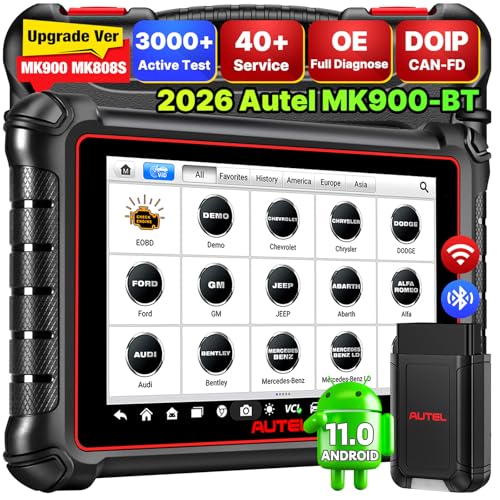
- 💯【Conta.ct us for Support Directly】If you met any...
- 🔥🔥🔥【2026 AUTEL FLAGSHIP MK900BT MK900-BT, NEW...
- 🚗【3000+ ACTIVE TESTS (50➡3000+), SAME AS MS...
- 🚗【40+ HOT SERVICES FOR 150 MAKES (28+➡40+)】Full...
- 🚗【OE ALL SYSTEM DIAGNOSE, AUTO SCAN 2.0: SCAN LICENSE...

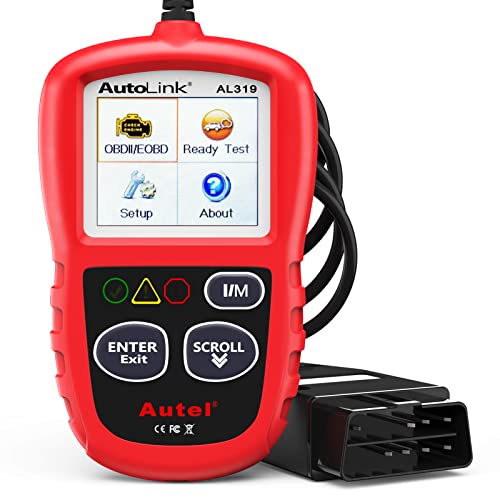
- 【TURN OFF CEL】 This AL319 car scanner diagnostic tool...
- 【EXTENSIVE APPLICATION】 Autel AL319 Compatible with...
- 【FOR END USER & DIYERS】 This error code reader AL319 is...
- 【USER-FRIENDLY DESIGN】 This OBD2 scanner and check...
- 【HIGH-QUALITY SERVICES】 12 months war.ranty from the...
Last update on 2026-06-23 / Affiliate links / Images from Amazon Product Advertising API
If the PDF is very large, it may not load in the preview below.
Some older TSBs had multiple PDFs — visit the NHTSA Website to view all PDFs.
If the TSB PDF does not show, download or view it on the NHTSA Website.
Click on the (+) Plus Sign
Then Click on Associated Document(s)
Search NHTSA Database for Recalls
Search NHTSA Database for Vehicle Investigations
View Latest Vehicle Investigations
Search NHTSA Database for Vehicle Complaints
View Latest Vehicle Complaints
TSB/Document ID: 0104-15
Replacement Service Bulletin Number:
MFR Communication Date: 2015-01-01
MFR Internal Campaign ID/Software Version:
Communication Type: Service Bulletin/Repair Instructions
NHTSA Components: ELECTRICAL SYSTEM:SOFTWARE
MFR Component System:
MFR Component Subsystem:
Previous TSB | Next TSB |
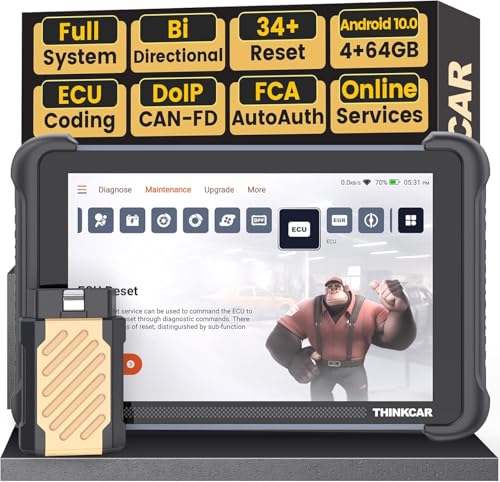
- [Notice] When you receive a used device, it may be a customer return resold by Amazon without inspection. You can exchange it for a new one through Amazon. As this situation is unavoidable, we sincerely apologize. For any issues, contacting us via Amazon's "Messages" is the best way. THINKSCAN 689BT Bidirectional Scan Tool Can Be Used Immediately After It is Turned On, Without Complicated Registration Process, Which is More Convenient & Quick.
- Full Bi-Directional Control & 3000+ Active Tests: Take control and test components like actuators, fuel injectors, relays, and cooling fans in real time. You’ll quickly see if the problem is in the part itself or the control module — saving you hours of guesswork and frustrating trial-and-error.
- Advanced ECU Coding Capabilities: Handle module matching and hidden feature activation with confidence. When you replace an ECU or want to customize settings, this obd2 scanner diagnostic bi directional tool gives you the professional-level capabilities you need without the dealership price tag.
- 34+ Useful Reset and Maintenance Functions: Complete everyday service tasks smoothly with a wide range of helpful reset and maintenance functions. Whether you’re keeping up with regular upkeep or tackling a specific job, this scanner makes maintenance simpler and less stressful for both DIYers and pros.
- Comprehensive Full System Diagnostics: Diagnose every major system — Engine, Transmission, ABS
 , SRS, TPMS, and more — all in one place. Finally stop wondering if you’re missing something important; get the full picture and clear codes with ease.
Last update on 2026-07-02 / Affiliate links / Images from Amazon Product Advertising API
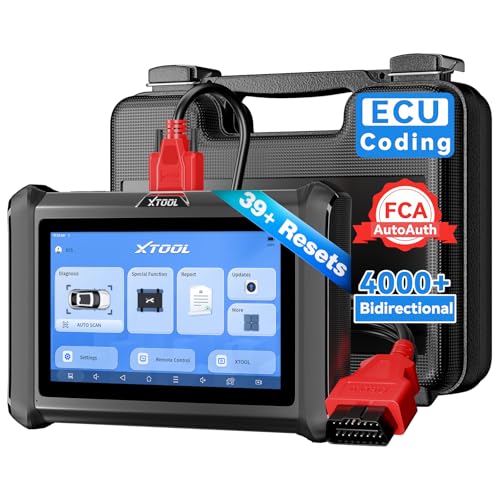
- Top Reasons to Choose the D7S OBD2 Scanner: XTOOL D7S car scan tool, an upgrade of XTOOL D7, offers comprehensive features for automotive technicians, workshops, and DIY enthusiasts 1. Upgraded Hardware: 2+64GB memory, rear camera, intuitive interface, foldable bracket 2. Complete Diagnostics: FCA Autoauth, OE-level all system scan, 39+ maintenance services, 4K+ bidirectional, CANFD/DoIP protocol 3. Advanced Capabilities: ECU c0ding, PMI functions 4. Wide Compatibility: Support 10,000+ models, covering 99% vehicle brands 5. Multi-language: Available in 22+ languages, No IP Restrictions 6. 3-Year Updates: Save 300 bucks on software updates for the latest features and optimizations
- 2026 Upgraded D7S Car Scanner Features: The newly 2026 D7S V2.0 scanner for car brings exciting features for advanced vehicle diagnostics and enhanced user experience 1. FCA AutoAuth: Now supports FCA SGW module for Chrysler, for Jeep, for Dodge (2018+), for Fiat (2017+), enabling faster vehicle communication without gateway restrictions 2. PMI (Offline ECU Pr0gramming): Allows for Ford, for Lincoln, and for Mazda ECU pr0gramming for new modules 3. Optimized Diagnostic Report 2.0: Personalized reports with logos and customer info for auto shops. Note: Compatibility varies by cars, please check before order
- 39+ Services/Resets/Adaptations/Relearns/Calibrations: XTOOL D7S full system car scanner diagnostic tool tackles 99% of common car issues through its 36+ special functions, including Oil Reset, EPB, SAS, BMS, Throttle Reset, Injector C0ding, ABS Bleed, TPMS Reset, Power Balance, etc and also covers specific-vehicle functions like Crank Sensor Relearn, ABS Initialization, Cylinder Power Balance, Fuel Trim Reset, Idle Relearn etc. This car diagnostic scanner enhances efficiency, making repairs and maintenance hassle-free. Tip: DO NOT for All vehicles, please check compatibility first
- Cost-effective ECU C0ding Scan Tool for Specific Brands: Enhance your vehicle's performance with XTOOL D7S! This obd2 scanner all systems bidirectional offers advanced capabilities at an affordable price, supports online for BMW, for Benz and offline for BENZ, for MIT, along with PMI functions for Ford, for Mazda, and for Lincoln. Ideal for technicians and DIY enthusiasts, this automotive scanner diagnostic tool optimizes vehicle performance and enhances the driving experience. Note: Not for all cars and modules, please send car VIN to check the compatibility before purchase
- OE All System Diagnostic & 8 Pids Graphing: XTOOL D7S is a comprehensive all system bi directional obd2 scanner that delivers dealer-level diagnostics, completely controlling over your vehicle’s performance and health. This automotive scan tool can read and clear DTCs, view live data and ECU information, retrieve freeze frames, and perform active tests and full obd2 functions. This bi-directional scan tool can can identify your vehicle's make, model, and year information with just one click and show up to 8 PIDs live data with options for CSV viewing, playback, and recording for in-depth analysis. It is easy-to-use for both professionals and beginners, helping pinpoint issues efficiently
Last update on 2026-06-30 / Affiliate links / Images from Amazon Product Advertising API
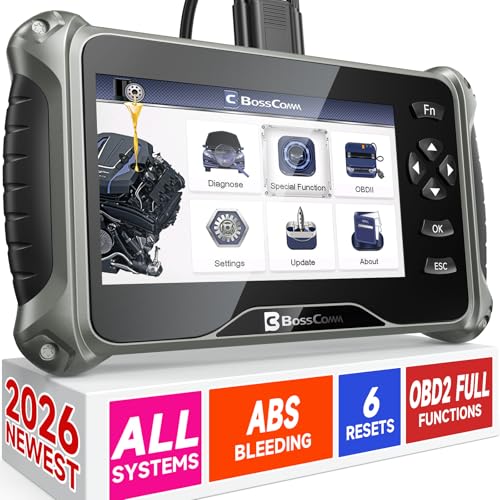
- 【✅Compared to BOSSCOMM IF742, IF745 Offers Full-System Diagnostics】The BOSSCOMM IF745 car diagnostic scanner is an upgraded model of IF742. In addition to supporting all OBD2 Code Reader functions and 6 reset options (ABS/EPB/SAS/BMS/Oil/Throttle), it expands diagnostics from 4 systems (Check Engine/ABS/SRS/Transmission) to vehicle All systems, including Steering, Suspension, and Body Electronics. This provides deeper, more comprehensive diagnostic capabilities.
- 【✨10 OBD2 Functions】The BOSSCOMM IF745 scan tool’s DTC Lookup instantly translates fault codes into user-friendly explanations, its I/M Readiness feature streamlines emissions testing with a single tap, and Freeze Frame lets you pinpoint the exact moment of a fault for in-depth root-cause diagnosis. Combined with a live data dashboard and advanced diagnostics (O2S, OBMon, EVAP), it delivers comprehensive insights for confident troubleshooting.
- 【✨Deep Diagnostics for All Vehicle System Modules】Beyond code reading/clearing and ECU information retrieval, our all-in-one data stream feature lets you inspect all current fault codes and their locations across the vehicle’s systems. This vehicle code reader helps you turn off dashboard warning lights and perform a comprehensive self-check of your car at home—no more back-and-forth trips to the repair shop or hefty inspection fees.
- 【✨6 Essential Resets: ABS Bleeding, Oil, EPB, SAS, Throttle, BMS】The BOSSCOMM IF745 obd2 scanner diagnostic tool swiftly purges air from brake lines to restore braking sensitivity, fine-tunes maintenance cycles to eliminate false alerts, resolves parking brake issues with one-click control, recalibrates steering sensors for stability, optimizes engine idling/acceleration for smoother performance, and deeply resets battery systems to extend lifespan and range via precise parameter adjustments.❗NOTE: Does NOT support bidirectional control, coding, or programming.
- 【✨10,000+ Car Models, AutoVIN, 13 Languages】The BOSSCOMM IF745 vehicle scanner diagnostic tool covers 73+ global car brands and offers support in 13 languages, making it perfect for DIYers, auto mechanics, or as a thoughtful gift. With a single-click AutoVIN feature, it instantly retrieves vehicle serial numbers, streamlining diagnostics for users globally. This adaptable tool balances user-friendliness with precision, catering to both personal and professional requirements.✅Unsure about compatibility? Compatibility will vary on vehicles' model and year, pls reach us via 📧 [email protected] 📧 before purchase.
Last update on 2026-07-02 / Affiliate links / Images from Amazon Product Advertising API
This product presentation was made with AAWP plugin.